Posted on

Bring it on Nvidia – AMD confirms new Radeon RX 9000 series GPUs will launch in early March, rivaling Team Green’s rumored RTX 5060 Ti and 5060 launch

  • AMD looks set to hit back against Nvidia amid speculation of a March launch for the RTX 5060 Ti and 5060
  • The new Radeon RX 9000 series will launch in early March
  • A press conference for the new GPU lineup is rumored to happen at the end of February

CES 2025 showcased what to expect regarding this generation’s GPUs, with Nvidia taking the spotlight at the convention with its new RTX 5000 series GPUs (currently sold out) – and now, AMD is finally about to join the race after the initial reveal of its new GPUs.

As reported by VideoCardz, AMD’s CEO Lisa Su confirmed the Radeon RX 9000 series GPUs will launch in March after previous reports that the lineup would, and just days after rumors of Nvidia’s RTX 5060 Ti and 5060’s potential launch began circulating. The RDNA 4 architecture for the upcoming GPUs promises to enhance ray tracing performance while utilizing Team Red’s new FSR 4 feature for greater image stabilization when upscaling.

VideoCardz also recently relayed rumors of AMD holding an RX 9070 series press conference at the end of February – considering the activity from its main rival Nvidia, it’s about time for AMD to properly enter the picture and show us all how its new lineup of graphics cards stack up against Team Green’s. From what we’ve already seen, the Radeon RX 9070 XT doesn’t appear to be a midrange GPU, supposedly providing top-tier performance at native 4K without using FSR.

Since Nvidia’s aggressive pricing for its premium GPUs could be a dealbreaker for many, AMD has the chance to gain an advantage in the GPU race with more affordable prices (especially if those initial performance results are accurate).

AMD CEO Lisa Su

Time for another showdown between Lisa Su and Jensen Huang… who, just incidentally, are actually cousins. (Image credit: AMD)

Is this a reaction to speculation on Nvidia’s RTX xx60-class launch rumors?

While it’s definitely possible that AMD had already planned for launch in March as most reports suggested, this feels like smart timing from Team Red. It’s obvious that Nvidia is in the lead with its RTX 5000 series GPU lineup (as it has been for a while now), and the rumors of an RTX xx60-class launch in March would directly rival AMD’s potential hype.

The end of this month feels like the ideal time to unveil the new Radeon RX GPU lineup, but there’s also a strong chance that Nvidia will end up doing the same thing. We’ve only seen the RTX 5090, 5080, 5070 Ti, and 5070 (with the latter launching on a currently undisclosed date later this month), so it’s only a matter of time before we see the RTX 5060 Ti and 5060.

Personally, I’m hoping AMD’s new GPUs can provide a strong alternative for gamers to Nvidia’s cards, as the GPU market is very much in need of competition – if strong competition comes in the form of high-tier performance at generous prices, it could lead to some potential RTX buyers turning their heads to reconsider. We’ll just have to wait and see what Team Red has in store for us…

{ window.reliablePageLoad.then(() => { var componentContainer = document.querySelector(“#slice-container-newsletterForm-articleInbodyContent-C3p88S68DjiCn3TRS8gPpa”); if (componentContainer) { var data = {“layout”:”inbodyContent”,”header”:”Get daily insight, inspiration and deals in your inbox”,”tagline”:”Sign up for breaking news, reviews, opinion, top tech deals, and more.”,”formFooterText”:”By submitting your information you agree to the Terms & Conditions and Privacy Policy and are aged 16 or over.”,”successMessage”:{“body”:”Thank you for signing up. You will receive a confirmation email shortly.”},”failureMessage”:”There was a problem. Please refresh the page and try again.”,”method”:”POST”,”inputs”:[{“type”:”hidden”,”name”:”NAME”},{“type”:”email”,”name”:”MAIL”,”placeholder”:”Your Email Address”,”required”:true},{“type”:”hidden”,”name”:”NEWSLETTER_CODE”,”value”:”XTR-D”},{“type”:”hidden”,”name”:”LANG”,”value”:”EN”},{“type”:”hidden”,”name”:”SOURCE”,”value”:”60″},{“type”:”hidden”,”name”:”COUNTRY”},{“type”:”checkbox”,”name”:”CONTACT_OTHER_BRANDS”,”label”:{“text”:”Contact me with news and offers from other Future brands”}},{“type”:”checkbox”,”name”:”CONTACT_PARTNERS”,”label”:{“text”:”Receive email from us on behalf of our trusted partners or sponsors”}},{“type”:”submit”,”value”:”Sign me up”,”required”:true}],”endpoint”:”https://newsletter-subscribe.futureplc.com/v2/submission/submit”,”analytics”:[{“analyticsType”:”widgetViewed”}],”ariaLabels”:{}}; var triggerHydrate = function() { window.sliceComponents.newsletterForm.hydrate(data, componentContainer); } if (window.lazyObserveElement) { window.lazyObserveElement(componentContainer, triggerHydrate); } else { triggerHydrate(); } } }).catch(err => console.error(‘%c FTE ‘,’background: #9306F9; color: #ffffff’,’Hydration Script has failed for newsletterForm-articleInbodyContent-C3p88S68DjiCn3TRS8gPpa Slice’, err)); }).catch(err => console.error(‘%c FTE ‘,’background: #9306F9; color: #ffffff’,’Externals script failed to load’, err)); ]]>

Sign up for breaking news, reviews, opinion, top tech deals, and more.

You may also like…

Source

Posted on

New Nvidia GeForce RTX 5060 Ti and RTX 5060 rumor suggests they could end up being great budget buys

  • New rumor suggests Nvidia GeForce RTX 5060 Ti and RTX 5060 won’t need a 12VHPWR power connector
  • Should make upgrading a lot easier
  • If you have a 650W PSU or higher, you should also be fine

It looks like the upcoming Nvidia GeForce RTX 5060 Ti and RTX 5060 graphics cards could prove to be even better value for money than initially thought, as a new rumor suggests that the mid-range graphics cards won’t require Nvidia’s 12VHPWR connector (which the powerful RTX 5090 and RTX 5080 use).

Instead, as VideoCardz reports, a new rumor from Brother Pan Talks Computers (BPTC) claims that the two upcoming GPUs will use standard 8-pin power connectors. BPTC is a Chinese website that appears to have inside knowledge about Zotac, a components company that makes (among other things) third-party GPUs. While this is still an unconfirmed rumor, there could be some truth to it.

The same rumor suggests that the Nvidia GeForce RTX 5060 Ti and RTX 5060 graphics cards will require 650W power supply units (PSUs), much less than the RTX 5080’s 850W PSU demands.

The 4 8-pin to 16-pin 12VHPWR adapter included with the Nvidia GeForce RTX 5090

(Image credit: Future / John Loeffler)

Less to upgrade, less to spend

If this all seems like a load of numbers and jargon – don’t worry. Essentially, if this rumor is correct, it should be good news for people considering the RTX 5060 Ti or RTX 5060, as it looks like you won’t have to upgrade your PSU or buy any new cables.

This will make upgrading to the GPUs easier and less expensive because if you did need to upgrade your PSU to support the new GPUs, you’d need to spend extra money – and because the PSU is used to power various parts of your PC, swapping it out can be a time-consuming and frustrating experience – trust me.

As with previous xx60 GPUs, like the RTX 4060 and RTX 3060, the RTX 5060 Ti and RTX 5060 will likely be aimed at budget-conscious gamers, so the fact they will likely not need to buy a new PSU will undoubtedly be welcome. Further, it would certainly make them a good value pick (assuming the price, which hasn’t been confirmed, is correct).

Of course, there are caveats to this. First, this is all rumor and speculation, so we won’t know for sure until Nvidia gives us more information about these cards (a recent rumor suggests they’ll launch in March).

{ window.reliablePageLoad.then(() => { var componentContainer = document.querySelector(“#slice-container-newsletterForm-articleInbodyContent-YzZudNGZg7p9xTK8Fsd3eQ”); if (componentContainer) { var data = {“layout”:”inbodyContent”,”header”:”Get daily insight, inspiration and deals in your inbox”,”tagline”:”Sign up for breaking news, reviews, opinion, top tech deals, and more.”,”formFooterText”:”By submitting your information you agree to the Terms & Conditions and Privacy Policy and are aged 16 or over.”,”successMessage”:{“body”:”Thank you for signing up. You will receive a confirmation email shortly.”},”failureMessage”:”There was a problem. Please refresh the page and try again.”,”method”:”POST”,”inputs”:[{“type”:”hidden”,”name”:”NAME”},{“type”:”email”,”name”:”MAIL”,”placeholder”:”Your Email Address”,”required”:true},{“type”:”hidden”,”name”:”NEWSLETTER_CODE”,”value”:”XTR-D”},{“type”:”hidden”,”name”:”LANG”,”value”:”EN”},{“type”:”hidden”,”name”:”SOURCE”,”value”:”60″},{“type”:”hidden”,”name”:”COUNTRY”},{“type”:”checkbox”,”name”:”CONTACT_OTHER_BRANDS”,”label”:{“text”:”Contact me with news and offers from other Future brands”}},{“type”:”checkbox”,”name”:”CONTACT_PARTNERS”,”label”:{“text”:”Receive email from us on behalf of our trusted partners or sponsors”}},{“type”:”submit”,”value”:”Sign me up”,”required”:true}],”endpoint”:”https://newsletter-subscribe.futureplc.com/v2/submission/submit”,”analytics”:[{“analyticsType”:”widgetViewed”}],”ariaLabels”:{}}; var triggerHydrate = function() { window.sliceComponents.newsletterForm.hydrate(data, componentContainer); } if (window.lazyObserveElement) { window.lazyObserveElement(componentContainer, triggerHydrate); } else { triggerHydrate(); } } }).catch(err => console.error(‘%c FTE ‘,’background: #9306F9; color: #ffffff’,’Hydration Script has failed for newsletterForm-articleInbodyContent-YzZudNGZg7p9xTK8Fsd3eQ Slice’, err)); }).catch(err => console.error(‘%c FTE ‘,’background: #9306F9; color: #ffffff’,’Externals script failed to load’, err)); ]]>

Sign up for breaking news, reviews, opinion, top tech deals, and more.

Also, as VideoCardz points out, if the RTX 5060 Ti and RTX 5060 will indeed require a 650W PSU, that is a bump up from the 550W requirements of the RTX 4060 and RTX 4060 Ti. This means that some people might still need to upgrade their PSU to use these GPUs, and that will drastically reduce the value proposition for those gamers.

Hopefully, we’ll find out soon when Nvidia provides more information about these hotly-anticipated GPUs, especially as the RTX 5090 and RTX 5080 have sold out and are hard to find.

You might also like

Source

Posted on

Nvidia could be drastically reducing RTX 4060 GPU supply right now – another heavy hint that the RTX 5060 is imminent

  • Nvidia is apparently scaling back RTX 4060 production, big time
  • This is another hint that the RTX 5060 could be arriving in March
  • Don’t panic if you want an RTX 4060, though, as they aren’t going to be disappearing off shelves anytime soon

Nvidia is now drastically reducing the production volume of its RTX 4060 graphics cards, if fresh speculation from those apparently in the know is correct.

The first thing to be aware of is that this comes from the Board Channels forum in China (via VideoCardz), a regular source of gossip on hardware-related happenings populated by folks who are close to the supply chain over in Asia.

As such, the rumor pertains specifically to that region, but if Nvidia is pulling back supply of chips for RTX 4060 graphics cards in Asia, the same thing will surely be happening on a global scale.

According to the post on the forum, from February – so this is already underway – Nvidia is reducing RTX 4060 chip supply to its third-party graphics card manufacturing partners by at least 60% (compared to the final quarter of 2024).

Put simply, that means we could be looking at only a third of the volume of chips being produced by Nvidia and supplied to card makers, which would mean an identical drop in the level of new RTX 4060 (and 4060 Ti) graphics cards coming to the market.

As ever, though, this is just a rumor, so be careful about believing it too readily.

An Nvidia GeForce RTX 4060 on a table with its retail packaging

(Image credit: Future / John Loeffler)

Analysis: Even if this is correct, the move will take time to filter through

The reason why Nvidia might be running down production – to a large extent – on a popular graphics card would seem to be obvious. In short, this is another clear indication that the RTX 5060 is imminent, with a number of rumors suggesting that this graphics card is set to launch in March 2025.

{ window.reliablePageLoad.then(() => { var componentContainer = document.querySelector(“#slice-container-newsletterForm-articleInbodyContent-bZrJovFHGG9JzqKLwyf76g”); if (componentContainer) { var data = {“layout”:”inbodyContent”,”header”:”Get daily insight, inspiration and deals in your inbox”,”tagline”:”Sign up for breaking news, reviews, opinion, top tech deals, and more.”,”formFooterText”:”By submitting your information you agree to the Terms & Conditions and Privacy Policy and are aged 16 or over.”,”successMessage”:{“body”:”Thank you for signing up. You will receive a confirmation email shortly.”},”failureMessage”:”There was a problem. Please refresh the page and try again.”,”method”:”POST”,”inputs”:[{“type”:”hidden”,”name”:”NAME”},{“type”:”email”,”name”:”MAIL”,”placeholder”:”Your Email Address”,”required”:true},{“type”:”hidden”,”name”:”NEWSLETTER_CODE”,”value”:”XTR-D”},{“type”:”hidden”,”name”:”LANG”,”value”:”EN”},{“type”:”hidden”,”name”:”SOURCE”,”value”:”60″},{“type”:”hidden”,”name”:”COUNTRY”},{“type”:”checkbox”,”name”:”CONTACT_OTHER_BRANDS”,”label”:{“text”:”Contact me with news and offers from other Future brands”}},{“type”:”checkbox”,”name”:”CONTACT_PARTNERS”,”label”:{“text”:”Receive email from us on behalf of our trusted partners or sponsors”}},{“type”:”submit”,”value”:”Sign me up”,”required”:true}],”endpoint”:”https://newsletter-subscribe.futureplc.com/v2/submission/submit”,”analytics”:[{“analyticsType”:”widgetViewed”}],”ariaLabels”:{}}; var triggerHydrate = function() { window.sliceComponents.newsletterForm.hydrate(data, componentContainer); } if (window.lazyObserveElement) { window.lazyObserveElement(componentContainer, triggerHydrate); } else { triggerHydrate(); } } }).catch(err => console.error(‘%c FTE ‘,’background: #9306F9; color: #ffffff’,’Hydration Script has failed for newsletterForm-articleInbodyContent-bZrJovFHGG9JzqKLwyf76g Slice’, err)); }).catch(err => console.error(‘%c FTE ‘,’background: #9306F9; color: #ffffff’,’Externals script failed to load’, err)); ]]>

Sign up for breaking news, reviews, opinion, top tech deals, and more.
So, if the successor to the RTX 4060 is due to be unleashed next month, it’d fully make sense that this current-gen graphics card would start to be ushered out the door by Nvidia from around about now.

Again, exercise caution around the rumors for the RTX 5060 launch, but all these small pieces of the puzzle seem to be fitting together nicely enough.

Does this mean that, in theory, you soon won’t be able to buy an RTX 4060? No, it’s not as simple as that. Even if this two-thirds slashing of production is underway right now, it will take a while before that impact is felt on graphics cards that are actually shipping. Furthermore, there’s going to be quite a lot of stock in warehouses and other parts of the distribution cycle, too, and even when all of that sells through, there will still be some RTX 4060 boards being made.

This graphics card is still going to be on shelves for some time, then, but it will become rarer as this year rolls on, assuming this rumor is correct, as the RTX 5060 takes the limelight on the lower-mid-range GPU stage.

I’ll put my hands up and admit, I was skeptical that Nvidia would launch the RTX 5060 as soon as March, following the RTX 5070 so closely – but it increasingly seems like this is going to be the case.

It’s also worth noting that we just heard another positive rumor on the topic of the RTX 5060 and its cabling, with the GPU apparently not needing a 12VHPWR power connector (which will make upgrading a lot easier, and we go into exactly why this is the case here, if you’re interested).

You might also like

Source

Posted on

When will Apple start beta testing iOS 18.4?

Now that iOS 18.3 has been available for almost two weeks now, we’re all wondering what the release date of iOS 18.4 beta 1 will be. Unlike the previous version, iOS 18.4 is expected to be one of the most important updates of the iOS 18 cycle. That said, here’s what we know about iOS 18.4 and when Apple could start beta testing it.

iOS 18.4 beta 1 release date based on previous x.4 updates

It’s been almost ten days since Apple released iOS 18.3. In the past, this is how long Apple has taken to start beta testing an x.4 update after releasing an x.3 update:

  • iOS 17.4: 3 days
  • iOS 16.4: 24 days
  • iOS 15.4: 1 day
  • iOS 14.4: 2 days

With iOS 13.4, Apple took an incredible 57 days to start beta testing it. However, you shouldn’t have to worry about waiting that long, as the company promised Apple Intelligence would expand to more languages in April, confirming iOS 18.4 will launch by then.

In addition, iOS 16.4 wasn’t a very notable update, with the most impressive features being new emoji and Crash Detection optimization. With that in mind, there wasn’t a good reason for the company to delay the start of its beta testing.

Tech. Entertainment. Science. Your inbox.

Sign up for the most interesting tech & entertainment news out there.

By signing up, I agree to the Terms of Use and have reviewed the Privacy Notice.

That said, BGR has reason to believe Apple could seed iOS 18.4 beta 1 any day now. While previous x.4 betas had two to five builds, it’s possible that Apple will spend longer testing this upcoming version, as it has important in store for iOS as a whole.

iPhone 16Image source: José Adorno for BGR

These are the most important features we hope Apple adds in iOS 18.4

Unlike the previous versions, iOS 18.4 is expected to open the path for a truly competitive Siri, a personal assistant that can finally understand context and look through your messages and apps to find precisely what you need. While it’s unclear if these features will be ready in iOS 18.4 beta 1, the company will likely start adding these Apple Intelligence improvements over the coming months.

In this update, Apple says its AI platform will support Chinese, English (India), English (Singapore), French, German, Italian, Japanese, Korean, Portuguese, Spanish, and Vietnamese. Apple is also expected to offer other minor features, such as creating images in Image Playground in Sketch style and a better display of Priority Notifications across Apple and third-party apps. Finally, new emojis might be available with this update.

Source

Posted on

DeepSeek: Welcome to US artificial intelligence’s Sputnik moment

Following last weekend’s introduction of the latest large language model (LLM) from DeepSeek, ChatGPT’s new artificial intelligence (AI) rival has topped the Apple App Store for iPhone downloads.

The DeepSeek R1 LLM is open source and uses reasoning combined with what the company calls “cold start data”, which means that rather than trawling the internet and social media sites to amass vast quantities of machine learning data, it relies instead on reinforced learning to improve accuracy.

On its GitHub page, the developers of DeepSeek describe R1 as a large-scale reinforcement learning on the base model. “We directly apply reinforcement learning to the base model without relying on supervised fine-tuning as a preliminary step,” it says. “This approach allows the model to explore chain-of-thought for solving complex problems.”

An estimated 2.1 million searches for DeepSeek were recorded over the weekend, with at least 1.6 million of these on Sunday 26 January alone. This is 12.3% of ChatGPT’s 13 million searches in the same timeframe.

Along with taking a different approach to ChatGPT, the interest in DeepSeek is also being driven by competitive pricing and the fact that the code is open source.

While OpenAI, the maker of ChatGPT, charges $2.50 per million input tokens for its GPT-4o model, DeepSeek is priced at $0.14 per million input tokens in situations where the AI engine is able to draw on previously cached information. Non-cached inputs are priced at $0.55 per million tokens.

The extent of interest in the AI from the Chinese firm resulted in turmoil in the valuation of tech stocks in the US. Reuters reported that Nvidia saw its share price drop 17%, which effectively wiped $593bn off its market valuation.

Wake-up call

In a speech on Monday, US president Donald Trump described DeepSeek as a wake-up call for the US tech sector.

Among the numerous subjects Trump spoke about in his speech to Republican party members of Congress were the executive orders revoking the AI regulations introduced under former president Joe Biden. “We don’t want to have any future president ever sabotage our economy with out-of-control regulations,” he said. “Last week I signed an order revoking Joe Biden’s destructive artificial intelligence regulations so that AI companies can once again focus on being the best, not just being the most woke.”

He then referenced DeepSeek as he continued talking about why deregulation is important for AI in the US. “Today and over the last couple of days I’ve been reading about China and [one Chinese company] in particular coming up with a faster method of AI and a much less expensive method. Hopefully the release of DeepSeek AI from a Chinese company should be a wake-up call for our industries that we need to be laser-focused on competing to win.”

DeepSeek’s developers have been able to combine cutting-edge algorithms to slash the energy demands of AI training and deployment. In his speech, Trump described what DeepSeek had achieved as “good”, since companies aiming to develop AI applications that use DeepSeek do not have to spend as much money compared with rival LLMs. “I view that as a positive, as an asset,” he added.
 
Commenting on what the rise of DeepSeek has meant to financial markets, Charu Chanana, chief investment strategist at investment platform Saxo, pointed out that DeepSeek took only two months to develop and less than $6m to build, using reduced-capability chips from Nvidia. This is significant given that the Biden administration banned the export of high-end Nvidia graphics processors (GPUs) to China in 2023.

“US tech companies are trading at premium valuations, with major AI players like Nvidia, Microsoft and Alphabet commanding forward P/E [price to earnings] multiples far above historical averages,” she said. “With these stocks priced for perfection, even minor disruptions, such as DeepSeek proving advanced AI can be built without top-tier chips, could weigh heavily on share prices. For Nvidia, in particular, its role as a key supplier of AI chips makes it vulnerable if demand for its high-end products wanes.”

The idea of lower-cost and more energy-efficient AI coming from DeepSeek appears to have an immediate impact both on the US tech giants and the energy sector, which has been banking on the growth of AI-fuelled power consumption.

“DeepSeek’s breakthrough signals a shift toward efficiency in AI, which will redefine both energy and AI markets,” said Nigel Green, the CEO of global financial advisory giant DeVere Group. “The opportunities for investors willing to act now are enormous.

“This challenges the assumption that AI’s growth is tied to ever-increasing energy consumption. While the market is reacting to short-term uncertainty, efficiency-driven AI models will expand adoption into new markets and industries. This means more widespread use, deeper integration and, ultimately, sustained demand for energy solutions.”

Arguably, it’s the fact that DeepSeek has been able to achieve results using inferior hardware and offer its LLM at a highly competitive price that is set to change every organisation’s approach to AI: it doesn’t necessarily require throwing vast amounts of costly GPUs at the hardware and having to recoup these costs by charging end users a premium.

“By developing cutting-edge generative AI models without relying on the latest, most expensive hardware, DeepSeek has demonstrated that agility and strategy can outpace raw computational power,” said Kjell Carlsson, head of AI strategy at Domino Data Lab. “Their achievements also highlight the vulnerability of incumbents in the generative AI space – proving that open-source innovation continues to be a powerful equaliser, enabling challengers to match and even surpass established players years into the revolution.”

What all this means is that DeepSeek signifies Chinese competition to Silicon Valley’s existing AI models and is a demonstration of how the pace of AI development is pushing boundaries and lowering costs. 

Source

Posted on

Some RTX 5090 and 5080 GPUs have seriously inflated price tags, climbing as high as 70% over MSRP in the case of one Asus model

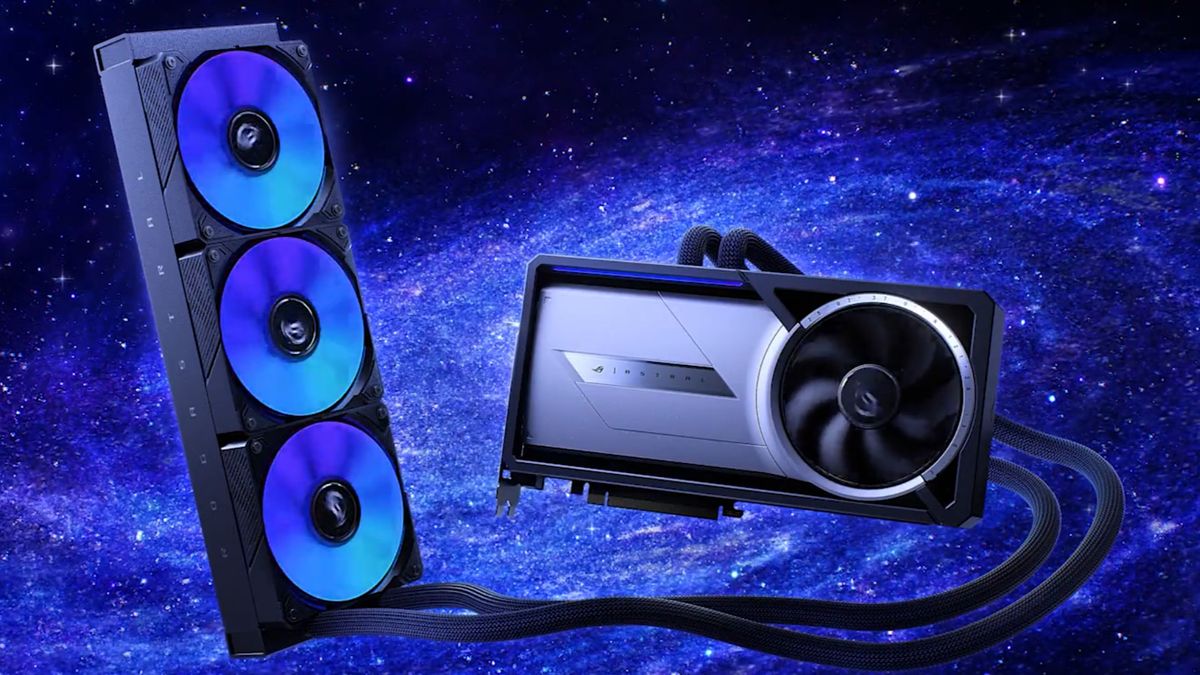
  • The Asus ROG Astral LC RTX 5090 tips the scales at $3,409
  • Some other RTX 5090 and 5080 models also command a hefty premium over MSRP
  • Stock of these GPUs remains vanishingly thin anyway

Nvidia’s RTX 5090 and 5080 GPUs are off to a shaky start, not just because of the fact that these new Blackwell graphics cards aren’t available to buy – they sold out immediately, more or less – but also due to pricing on third-party boards.

Wccftech has been scanning pricing across the Asus and MSI Blackwell ranges, and the findings will likely scare, if not terrify, gamers out there who are mulling a high-end GPU purchase.

When stock does come back in – there are smatterings of live pre-orders here and there right now, but not much else, although be sure to keep an eye on our guides on where to buy the RTX 5090 and also the RTX 5080 GPU – price tags are looking seriously steep.

The crown for the most eye-watering price of all is awarded to the Asus ROG Astral LC RTX 5090, a behemoth of a flagship that admittedly pulls out all the proverbial stops (the ‘LC’ refers to the incorporated liquid cooling system), but it’ll set you back $3,409 in the US currently at the graphics card maker’s own store.

Even the cheapest RTX 5090 GPU that Asus currently sells, the TUF Gaming model, is a weighty $2,749, which is over a third more expensive than the MSRP as set by Nvidia (and the asking price for its Founders Edition). Remember, this is the base model from Asus, you can’t go any lower.

At least with the RTX 5080, there is an Asus model at the MSRP of $999 on its web store, the Prime model – so that’s something. If you want the TUF Gaming model of the RTX 5080, though, this will set you back $1,484, quite a hefty hike for a variant that isn’t a top-end card. (The ROG Astral, air cooled, RTX 5080 touches $1,649, all prices correct at the time of writing).

MSI does somewhat better at keeping a lid on pricing, but there are some difficult to swallow price tags nonetheless. There are no RTX 5080 models at MSRP on MSI’s US store, and the cheapest is the Ventus 3X at $1,139, although that’s not a big jump. The top-end RTX 5080 Suprim Liquid SOC is pitched lower than the Asus ROG Astral, though, at $1,499.

{ window.reliablePageLoad.then(() => { var componentContainer = document.querySelector(“#slice-container-newsletterForm-articleInbodyContent-GPPoi3rexnspjEDGXdhMuJ”); if (componentContainer) { var data = {“layout”:”inbodyContent”,”header”:”Get daily insight, inspiration and deals in your inbox”,”tagline”:”Sign up for breaking news, reviews, opinion, top tech deals, and more.”,”formFooterText”:”By submitting your information you agree to the Terms & Conditions and Privacy Policy and are aged 16 or over.”,”successMessage”:{“body”:”Thank you for signing up. You will receive a confirmation email shortly.”},”failureMessage”:”There was a problem. Please refresh the page and try again.”,”method”:”POST”,”inputs”:[{“type”:”hidden”,”name”:”NAME”},{“type”:”email”,”name”:”MAIL”,”placeholder”:”Your Email Address”,”required”:true},{“type”:”hidden”,”name”:”NEWSLETTER_CODE”,”value”:”XTR-D”},{“type”:”hidden”,”name”:”LANG”,”value”:”EN”},{“type”:”hidden”,”name”:”SOURCE”,”value”:”60″},{“type”:”hidden”,”name”:”COUNTRY”},{“type”:”checkbox”,”name”:”CONTACT_OTHER_BRANDS”,”label”:{“text”:”Contact me with news and offers from other Future brands”}},{“type”:”checkbox”,”name”:”CONTACT_PARTNERS”,”label”:{“text”:”Receive email from us on behalf of our trusted partners or sponsors”}},{“type”:”submit”,”value”:”Sign me up”,”required”:true}],”endpoint”:”https://newsletter-subscribe.futureplc.com/v2/submission/submit”,”analytics”:[{“analyticsType”:”widgetViewed”}],”ariaLabels”:{}}; var triggerHydrate = function() { window.sliceComponents.newsletterForm.hydrate(data, componentContainer); } if (window.lazyObserveElement) { window.lazyObserveElement(componentContainer, triggerHydrate); } else { triggerHydrate(); } } }).catch(err => console.error(‘%c FTE ‘,’background: #9306F9; color: #ffffff’,’Hydration Script has failed for newsletterForm-articleInbodyContent-GPPoi3rexnspjEDGXdhMuJ Slice’, err)); }).catch(err => console.error(‘%c FTE ‘,’background: #9306F9; color: #ffffff’,’Externals script failed to load’, err)); ]]>

Sign up for breaking news, reviews, opinion, top tech deals, and more.

MSI’s RTX 5090 graphics cards kick off with the Ventus 3X which is at $2,379 on its store, more reasonably priced than the baseline flagship from Asus, but still a 20% hike (almost) over the MSRP. If you’re looking at the RTX 5090 Suprim Liquid SOC, though, this graphics card is an eye-watering $2,789 on the MSI store.

An unhappy PC Gamer sat at their desk

(Image credit: Shutterstock)

Analysis: Okay, so a liquid-cooled flagship was never going to be cheap, but…

Before the new Blackwell graphics cards emerged, the prediction was that they could be priced considerably higher than the MSRPs. And that has indeed broadly come true, although part of the problem here is that third-party board makers seem to have inflated prices even further after all the clamor and stock shortages around the RTX 5090 and 5080 GPUs.

As an example at the highest-end, the mentioned Asus ROG Astral LC RTX 5090 is the priciest of all Blackwell GPUs at $3,409. However, it was announced at $3,100 (on Reddit, and caused quite a stir at that price), so somehow, there’s been another $300 heaped on top of the already exorbitant asking price.

I’m not impressed with these kinds of shenanigans as it’s bad enough that stock is stupidly difficult to get hold of, and scalpers are causing huge price inflation by reselling RTX 5080 and 5090 graphics cards, without the actual board makers themselves deciding to try and push even harder for profits.

Is this just market dynamics – a reflection of thin supply and big demand? Well, yes, it is to an extent, and doubtless pricing will settle down eventually anyway, if you can be patient. (Indeed, there are still some big question marks over how long we might be waiting for pricing to even out to a more acceptable level overall).

Meanwhile, it’s clearly true that asking prices remain something of a moot point seeing as there are hardly any RTX 5090 or 5080 graphics cards for sale at all, whether at recommended pricing, or third-party pricing.

You might also like…

Source

Posted on

ChatGPT no longer requires you to have an account to search

Google’s dominance in online search has been virtually undisputed for over 20 years, but a real challenger might have finally arrived. As of Wednesday, OpenAI no longer requires you to log in to use ChatGPT’s search engine. In fact, you don’t even need an account.

“ChatGPT search is now available to everyone in regions where ChatGPT is available,” OpenAI noted on its website in an update. “No signup required.”

OpenAI launched its search engine on October 31st, 2024, granting access to paid subscribers and SearchGPT waitlist users. It then rolled out to free users on December 16, but now, anyone can search on ChatGPT by visiting ChatGPT.com and clicking the “Search” button.

“The search model is a fine-tuned version of GPT-4o, post-trained using novel synthetic data generation techniques, including distilling outputs from OpenAI o1-preview,” OpenAI explained last year. “ChatGPT search leverages third-party search providers, as well as content provided directly by our partners, to provide the information users are looking for.”

Tech. Entertainment. Science. Your inbox.

Sign up for the most interesting tech & entertainment news out there.

By signing up, I agree to the Terms of Use and have reviewed the Privacy Notice.

Now that everyone has unrestricted access to ChatGPT search, it will be fascinating to see how many people try to ditch Google for good, and how successful they are at doing so.

This is the latest in a flood of major updates and new releases from OpenAI in recent weeks as the company pushes back against DeepSeek mania. Within the last two weeks alone, OpenAI has launched two AI agents: Operator and Deep Research.

Source

Posted on

Rumored prices for third-party RTX 5080 graphics cards soar above Nvidia’s MSRP, and I’m worried entry-level models will sell out in a flash

  • A Finnish retailer has aired price tags for Gigabyte’s RTX 5080 models
  • Only the WindForce variant is at the MSRP
  • The six other RTX 5080 boards shown are 15% to 35% pricier

Nvidia’s RTX 5080 is priced at an MSRP of $999 in the US – and in line with that in other regions – which was a pleasant surprise, but it seems that the worst fears of some gamers might be realized, if pricing on some third-party boards that just popped up is anything to go by.

This info come from a Finnish retailer, Proshop, which has jumped the gun and listed Gigabyte’s RTX 5080 models with pricing, and only one graphics card is set at the MSRP in Finland (€1,229) out of a total of seven boards.

As VideoCardz reports, only the Gigabyte WindForce model is pitched at that €1,229, with the other six variants being a good deal more expensive.

Even the most affordable of those non-WindForce offerings, the Gaming OC and Aero OC, are both €1,419, which is a considerable premium over the baseline graphics card.

The Aorus variants are a good deal more expensive still, with the priciest version of those, the Aorus Xtreme WaterForce, reaching €1,669.

What this means is that Gigabyte has one RTX 5080 board, the WindForce, at the MSRP, and the other flavors are between 15% and 35% pricier. Obviously we should exercise a whole lot of caution around these prices, in case they turn out to be wrong somehow, or placeholders, but we’re very close to release now (and they sound plausible).

The Nvidia RTX 5080 GPU on a green background.

(Image credit: Nvidia)

Analysis: An ominous sign – but don’t panic yet

As noted at the outset, this was the worry I – and many others – expressed at the time of Nvidia’s announcement of the RTX 5080 pricing.

{ window.reliablePageLoad.then(() => { var componentContainer = document.querySelector(“#slice-container-newsletterForm-articleInbodyContent-RYYhBZP66KHgRYrhAzZF4X”); if (componentContainer) { var data = {“layout”:”inbodyContent”,”header”:”Get daily insight, inspiration and deals in your inbox”,”tagline”:”Sign up for breaking news, reviews, opinion, top tech deals, and more.”,”formFooterText”:”By submitting your information you agree to the Terms & Conditions and Privacy Policy and are aged 16 or over.”,”successMessage”:{“body”:”Thank you for signing up. You will receive a confirmation email shortly.”},”failureMessage”:”There was a problem. Please refresh the page and try again.”,”method”:”POST”,”inputs”:[{“type”:”hidden”,”name”:”NAME”},{“type”:”email”,”name”:”MAIL”,”placeholder”:”Your Email Address”,”required”:true},{“type”:”hidden”,”name”:”NEWSLETTER_CODE”,”value”:”XTR-D”},{“type”:”hidden”,”name”:”LANG”,”value”:”EN”},{“type”:”hidden”,”name”:”SOURCE”,”value”:”60″},{“type”:”hidden”,”name”:”COUNTRY”},{“type”:”checkbox”,”name”:”CONTACT_OTHER_BRANDS”,”label”:{“text”:”Contact me with news and offers from other Future brands”}},{“type”:”checkbox”,”name”:”CONTACT_PARTNERS”,”label”:{“text”:”Receive email from us on behalf of our trusted partners or sponsors”}},{“type”:”submit”,”value”:”Sign me up”,”required”:true}],”endpoint”:”https://newsletter-subscribe.futureplc.com/v2/submission/submit”,”analytics”:[{“analyticsType”:”widgetViewed”}],”ariaLabels”:{}}; var triggerHydrate = function() { window.sliceComponents.newsletterForm.hydrate(data, componentContainer); } if (window.lazyObserveElement) { window.lazyObserveElement(componentContainer, triggerHydrate); } else { triggerHydrate(); } } }).catch(err => console.error(‘%c FTE ‘,’background: #9306F9; color: #ffffff’,’Hydration Script has failed for newsletterForm-articleInbodyContent-RYYhBZP66KHgRYrhAzZF4X Slice’, err)); }).catch(err => console.error(‘%c FTE ‘,’background: #9306F9; color: #ffffff’,’Externals script failed to load’, err)); ]]>

Sign up for breaking news, reviews, opinion, top tech deals, and more.

On the one hand, it was great to see that $999 MSRP attached to the RTX 5080, when rumors had suggested Nvidia might sell it at $1,200 in the US (and proportional to that elsewhere), or maybe a good chunk more than that. Especially considering that the RTX 5090 price got jacked up.

On the other hand, the main concern was that most third-party models wouldn’t be at MSRP, and that scenario is exactly what appears to be playing out with Gigabyte’s RTX 5080 graphics cards – at least if the info from Proshop is correct. And it may not be, as already mentioned, so we mustn’t jump to any conclusions yet.

This remains just an ominous hint at the moment, then, although even if it proves right, there’s a chance that other graphics card makers won’t follow suit, and may have more models at the MSRP level. Or rather, their second-tier above baseline models hopefully won’t have a 15% hike, and instead exhibit a more modest increase.

If there are very few third-party RTX 5080 models on sale at the MSRP (or close), then the likelihood is that at launch – and maybe for quite some time after – those boards will sell out in a flash (along with Nvidia’s Founders Edition). Making the reality of getting an RTX 5080 at the MSRP level a shaky prospect, in short, but there’s still hope yet that this scenario won’t play out.

You might also like…

Source

Posted on

Nvidia RTX 5050 was missing in action at CES 2025 – but the budget GPU might just have been spotted in a surprising laptop

  • LG Gram marketing materials show the laptop with an RTX 5050 GPU
  • The rest of the promo blurb indicates an RTX 4050 graphics card, though
  • This suggests Nvidia delayed the RTX 5050, but it’s likely not that far off

Nvidia revealed its new Blackwell laptop GPUs alongside RTX 5000 desktop graphics cards recently at CES 2025, but we’ve just got a sighting of the lowest-tier mobile card that wasn’t aired at the show.

You may recall that past rumors claimed Nvidia might unveil the full suite of RTX 5000 laptop GPUs at CES, from the RTX 5050 up to the RTX 5090, but we only got RTX 5070 models and upwards – the RTX 5060 and 5050 weren’t anywhere to be seen.

However, in the latter case, promotional material for the LG Gram for 2025 shows the laptop equipped with an RTX 5050 GPU – while the provided specs refer to an RTX 4050 model, confusingly.

As discovered by BullsLab Jay on X – check out the above post – we see the RTX 5050, except with the accompanying details showing a GPU with the Lovelace architecture (RTX 4000) and GDDR6 VRAM.

What could have happened theoretically – add plenty of seasoning – is that LG was planning on the RTX 5050 for the launch of this notebook, but Nvidia delayed the GPU. So LG switched to the RTX 4050 instead, but someone made a mistake and left the RTX 5050 name in, by the look of things.

LG Gram Pro 16 OLED

(Image credit: Valerio Porcu)

Analysis: A delayed Nvidia RTX 5050?

This theory seems plausible enough given that we heard more than one piece of chatter from the grapevine that Nvidia would be showing off the RTX 5050 to 5090 mobile GPUs at CES 2024. Which would also mirror what happened at the Lovelace notebook launch, where the RTX 4050 and upwards were all revealed.

The upshot is that it seems likely the RTX 5050 will get an airing in the future, the question being: how long will we have to wait? To an extent, that’s anyone’s guess, but if this purported GPU was indeed sidelined late in the game by Nvidia, just before CES 2025, there must be a good reason for that. So, don’t expect to see the RTX 5050 soon, but I’d be surprised if we have to wait all that long for this mobile graphics card to turn up.

{ window.reliablePageLoad.then(() => { var componentContainer = document.querySelector(“#slice-container-newsletterForm-articleInbodyContent-RnTCseSExUzQ8LqPXnQmUj”); if (componentContainer) { var data = {“layout”:”inbodyContent”,”header”:”Get daily insight, inspiration and deals in your inbox”,”tagline”:”Sign up for breaking news, reviews, opinion, top tech deals, and more.”,”formFooterText”:”By submitting your information you agree to the Terms & Conditions and Privacy Policy and are aged 16 or over.”,”successMessage”:{“body”:”Thank you for signing up. You will receive a confirmation email shortly.”},”failureMessage”:”There was a problem. Please refresh the page and try again.”,”method”:”POST”,”inputs”:[{“type”:”hidden”,”name”:”NAME”},{“type”:”email”,”name”:”MAIL”,”placeholder”:”Your Email Address”,”required”:true},{“type”:”hidden”,”name”:”NEWSLETTER_CODE”,”value”:”XTR-D”},{“type”:”hidden”,”name”:”LANG”,”value”:”EN”},{“type”:”hidden”,”name”:”SOURCE”,”value”:”60″},{“type”:”hidden”,”name”:”COUNTRY”},{“type”:”checkbox”,”name”:”CONTACT_OTHER_BRANDS”,”label”:{“text”:”Contact me with news and offers from other Future brands”}},{“type”:”checkbox”,”name”:”CONTACT_PARTNERS”,”label”:{“text”:”Receive email from us on behalf of our trusted partners or sponsors”}},{“type”:”submit”,”value”:”Sign me up”,”required”:true}],”endpoint”:”https://newsletter-subscribe.futureplc.com/v2/submission/submit”,”analytics”:[{“analyticsType”:”widgetViewed”}],”ariaLabels”:{}}; var triggerHydrate = function() { window.sliceComponents.newsletterForm.hydrate(data, componentContainer); } if (window.lazyObserveElement) { window.lazyObserveElement(componentContainer, triggerHydrate); } else { triggerHydrate(); } } }).catch(err => console.error(‘%c FTE ‘,’background: #9306F9; color: #ffffff’,’Hydration Script has failed for newsletterForm-articleInbodyContent-RnTCseSExUzQ8LqPXnQmUj Slice’, err)); }).catch(err => console.error(‘%c FTE ‘,’background: #9306F9; color: #ffffff’,’Externals script failed to load’, err)); ]]>

Sign up for breaking news, reviews, opinion, top tech deals, and more.

Away from LG’s Gram notebook, the RTX 5050 (and RTX 5060) will enable cheaper gaming laptops to be pepped up with next-generation GPUs, and that includes the use of DLSS 4, which will help to speed up frame rates for on-the-go gaming.

In theory, the RTX 5050 will run with 8GB of VRAM, which would be a solid allocation for this level of GPU – considering it’ll match not just the RTX 5060 (in theory), but also the RTX 5070, which we know has controversially stuck with 8GB of video RAM (perhaps the reason why the mobile side of Blackwell was a rather lowkey affair at the recent CES).

However, Nvidia does have neural shader tricks up its sleeve for textures which, just like DLSS 4, the company argues is going to make a huge difference to RTX 5000 graphics cards.

You might also like

Source

Posted on

Taylor Swift singing in Japanese: Mind-blowing new AI tech from China

Less than a year ago, Microsoft’s VASA-1 blew my mind. The company showed how it could animate any photo and turn it into a video featuring the person in the image. This wasn’t the only impressive part, as the subject of the image would also be able to speak in the video.

VASA-1 surpassed anything we’d seen back then. This was April 2024, when we had already seen Sora, OpenAI’s text-to-video generation tool that would not be released until December. Sora did not feature similarly advanced face animation and audio synchronization technologies.

Unlike OpenAI, Microsoft never intended to make VASA-1 available to the project. I said then that a public tool like VASA-1 could harm, as anyone could create misleading videos of people saying whatever the creator conceives. Microsoft’s research project also indicated that it would be only a matter of time before others could develop similar technology.

Now, TikTok parent company ByteDance has developed an AI tool called OmniHuman-1 that can replicate what VASA-1 did while taking things to a whole new level.

Tech. Entertainment. Science. Your inbox.

Sign up for the most interesting tech & entertainment news out there.

By signing up, I agree to the Terms of Use and have reviewed the Privacy Notice.

The Chinese company can take a single photo and turn it into a fully animated video. The subject in the image can speak in sync with the provided audio, similar to what the VASA-1 examples showed. But it gets crazier than that. OmniHuman-1 can also animate body part movements and gestures, as seen in the following examples.

The similarities to VASA-1 shouldn’t be surprising. The Chinese researchers mention on the OmniHuman-1’s research page that they used VASA-1 as a template, and even took audio samples from Microsoft and other companies.

According to Business Standard, OmniHuman-1 uses multiple input sources simultaneously, including images, audio, text, and body poses. The result is a more precise and fluid motion synthesis.

ByteDance used 19,000 hours of video footage to create OmniHuman-1. That’s how they were able to teach the AI to create video sequences that are almost indiscernible from real video footage. Some of the samples above are practically perfect. In others, it’s clear that we’re looking at AI generating movement, especially the subject’s mouth.

The Albert Einstein speech in the clip above is certainly a highlight for OmniHuman-1. Taylor Swift singing the theme song from the anime Naruto in Japanese in the video below is another example of OmniHuman-1 in action:

OmniHuman-1 can be used to create AI-generated videos showing human subjects (real or fabricated) speaking or singing in all sorts of instances. This opens the service for abuse, as I’m sure some people, including malicious actors, would use the service to impersonate celebrities for scams or misleading purposes.

OmniHuman-1 also works well for animating cartoon and video game characters. This could be a great use for the technology, as it could help creators more accurately animate facial expressions and speech for such characters.

Also interesting is the claim that OmniHuman-1 can generate videos of unlimited length. The examples available range between five and 25 seconds. The memory is apparently a bottleneck, not the AI’s ability to create longer clips.

Business Standard points out that ByteDance’s OmniHuman-1 is an expected development from the Chinese company. ByteDance also unveiled INFP recently, an AI project aimed to animate facial expressions in conversations. ByteDance is also well-known for its CapCut editing app, that was removed from app stores alongside TikTok a few weeks ago.

It’s only natural to see ByteDance expand its AI video generation capabilities and introduce services like OmniHuman-1.

It’s unclear when OmniHuman-1 will be availabel to users, if ever. ByteDance has a website at this link where you can read more details about the AI research project and see more samples.

ByteDance researchers also mention “ethics concerns” in the document, which is great to see. This signals that ByteDance might take a more cautious approach to deploying the product, though I’m just speculating here.

But if OmniHuman-1 is released in the wild too soon, it’ll only be a matter of time before someone creates lifelike videos of real-life celebrities or made-up humans who say (or sing) anything the creator wants them to, in any language. And it won’t always be just for entertainment purposes.

Source