Posted on

Nvidia GeForce RTX 5080 appears to leak ahead of possible CES 2025 announcement

  • Images purporting to be of the MSI Gaming Trio RTX 5080 appear online – but are quickly deleted
  • The images, if legitimate, support rumors that the RTX 5080 graphics card will be the first to launch after CES 2025
  • The pictures also appear to confirm some of the specs for the upcoming GPU

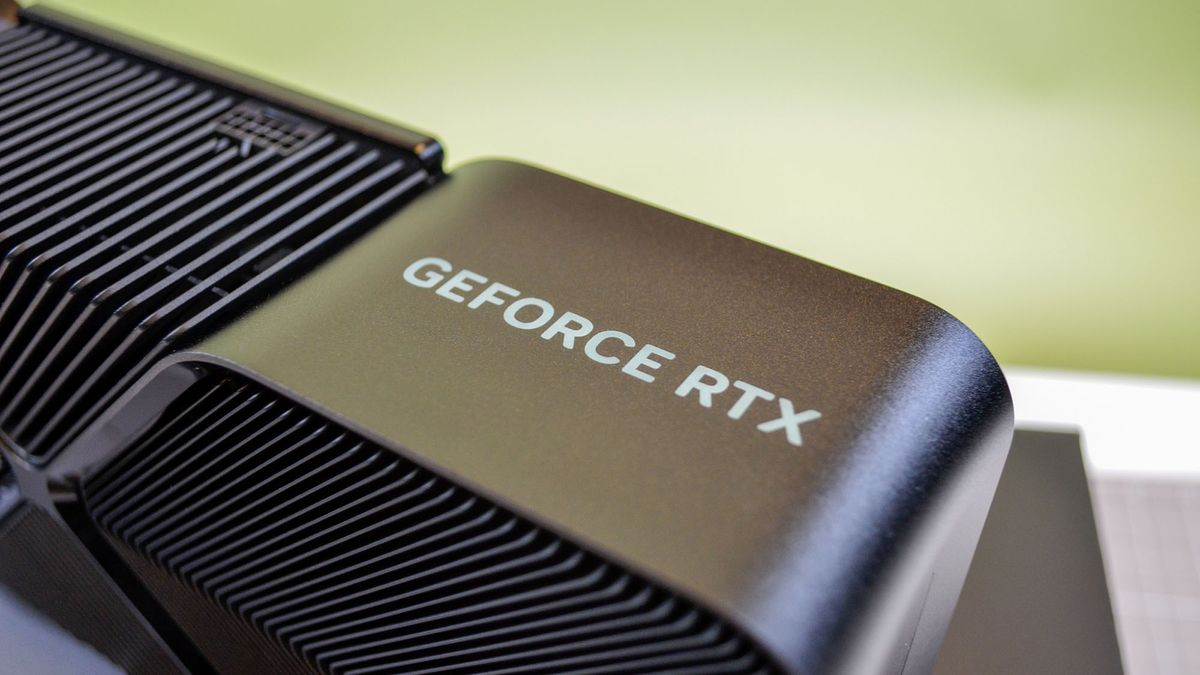
The Nvidia GeForce RTX 5080 appears to have leaked online, thanks to a couple of photos of the retail packaging for what appears to be an overclocked (OC) version of the card from one of Nvidia’s third-party partners.

Appearing on a now-deleted ChipHell forum post (according to VideoCardz, which says it managed to grab the photos posted to the forum before the post was deleted), the retail packaging for what may be the MSI Gaming Trio RTX 5080 is shown from the front and the back, appearing to confirm some key details about the new card.

While it has to be said that ChipHell’s forums have sometimes produced genuine photos and detail leaks of graphics cards and PC processors in the past, it’s also an internet forum, so you’ll want to take anything posted there with a grain of salt. After all, you can do amazing things with PhotoShop these days and if there’s one thing to know about forum posters, it’s that they are notorious clout-chasers, so they’ve been known to make stuff up for clicks, as well as be very susceptible for falling for fake photos and ‘leaks’ in the past.

That said, the photos do look pretty genuine at first glance, and the inclusion of the back of the retail box appears to confirm a few rumored spec details, and the fact that the photos purport to be of the RTX 5080 and not the flagship RTX 5090, does line up with rumors that the RTX 5080 will be the first Nvidia Blackwell GPU to hit the shelves, possibly as soon as January 21, 2025.

Confirmation of new specs?

Image 1 of 2

The purported retail packaging for the MSI Gaming Trio RTX 5080 graphics card(Image credit: ChipHell / Via VideoCardz)The purported retail packaging for the MSI Gaming Trio RTX 5080 graphics card(Image credit: ChipHell / Via VideoCardz)


Other than their mere existence, the two photos also reveal some new details about the new GPU, assuming they are legit.

First, the new card will apparently include 16GB GDDR7 memory, as has long been speculated. It may also feature a 256-bit memory bus, much like its predecessor. These two specs alone mean it will likely be a monster of a GPU for 4K gaming.

VideoCardz goes on to claim that the card is expected to be the first consumer card to use the PCIe 5.0 interface standard and that the RTX 5080 will use Nvidia’s GB203-400 Blackwell GPU, which is expected to have 10,752 CUDA cores.

{ window.reliablePageLoad.then(() => { var componentContainer = document.querySelector(“#slice-container-newsletterForm-articleInbodyContent-inwJ2HEE7w52VDGYymKHue”); if (componentContainer) { var data = {“layout”:”inbodyContent”,”header”:”Get daily insight, inspiration and deals in your inbox”,”tagline”:”Sign up for breaking news, reviews, opinion, top tech deals, and more.”,”formFooterText”:”By submitting your information you agree to the Terms & Conditions and Privacy Policy and are aged 16 or over.”,”successMessage”:{“body”:”Thank you for signing up. You will receive a confirmation email shortly.”},”failureMessage”:”There was a problem. Please refresh the page and try again.”,”method”:”POST”,”inputs”:[{“type”:”hidden”,”name”:”NAME”},{“type”:”email”,”name”:”MAIL”,”placeholder”:”Your Email Address”,”required”:true},{“type”:”hidden”,”name”:”NEWSLETTER_CODE”,”value”:”XTR-D”},{“type”:”hidden”,”name”:”LANG”,”value”:”EN”},{“type”:”hidden”,”name”:”SOURCE”,”value”:”60″},{“type”:”hidden”,”name”:”COUNTRY”},{“type”:”checkbox”,”name”:”CONTACT_OTHER_BRANDS”,”label”:{“text”:”Contact me with news and offers from other Future brands”}},{“type”:”checkbox”,”name”:”CONTACT_PARTNERS”,”label”:{“text”:”Receive email from us on behalf of our trusted partners or sponsors”}},{“type”:”submit”,”value”:”Sign me up”,”required”:true}],”endpoint”:”https://newsletter-subscribe.futureplc.com/v2/submission/submit”,”analytics”:[{“analyticsType”:”widgetViewed”}],”ariaLabels”:{}}; var triggerHydrate = function() { window.sliceComponents.newsletterForm.hydrate(data, componentContainer); } if (window.lazyObserveElement) { window.lazyObserveElement(componentContainer, triggerHydrate); } else { triggerHydrate(); } } }).catch(err => console.error(‘%c FTE ‘,’background: #9306F9; color: #ffffff’,’Hydration Script has failed for newsletterForm-articleInbodyContent-inwJ2HEE7w52VDGYymKHue Slice’, err)); }).catch(err => console.error(‘%c FTE ‘,’background: #9306F9; color: #ffffff’,’Externals script failed to load’, err)); ]]>

Sign up for breaking news, reviews, opinion, top tech deals, and more.

If Nvidia’s Blackwell architecture keeps the same SM structure as Lovelace (which is likely), that means the RTX 5080 will also have 84 SMs, so 84 ray-tracing cores and 84 tensor cores, altogether a 5% increase in core counts over the RTX 4080 Super.

None of this appears on the packaging, however, so at this point, this is all speculation, but with CES 2025 right around the corner, we can expect to know for sure by this time next week.

You may also like…

Source

Posted on

Innovation, insight and influence: the CISO playbook for 2025 and beyond

As 2024 comes to a close and we reach the midpoint of a decade that might generously be described as having so far been ‘turbulent’, I’d like to inject a note of positivity regarding the outlook for the second half of the 2020s. 

Before you dismiss me as naïve or irrationally optimistic, please hear me out. I’m not claiming that the cyber security threats facing CISOs and their teams aren’t extremely problematic. On the contrary, threat actors are adopting AI to mount more complex and sophisticated attacks. This is a trend we can expect to continue in the second half of the 2020s. 

But this is exactly why we cyber security professionals cannot afford to be immobilised by fear, uncertainty and doubt. To borrow a line from the Frank Herbert sci-fi epic Dune, “Fear is the mind killer.” And the broader business community must avoid paralysis too. What’s clear is, the nature of today’s threat landscape demands a united front.

To help allay fear, cyber security professionals can create a robust plan and a playbook of strategies that we can be confident will service us well. With that in mind, I’d like to propose that CISOs and their teams focus on continuing to build three key attributes in 2025 and beyond: innovation, insight and influence. 

Innovation is vital

Innovation is a vital element of the CISO playbook for 2025 and beyond. In the next five years, all analysis points to an escalation of cyber security threats driven by artificial intelligence (AI), and I firmly believe we must fight fire with fire. In other words, just as malicious actors have been quick to master and weaponise AI to conduct their attacks, AI can help cyber security teams build robust defences. 

Cyber criminals are already using AI to automate attacks, to identify vulnerabilities in corporate systems, and to create attacks that are more likely to evade detection. In response, cyber security teams should be using AI to proactively patch any points of weakness, to spot suspicious anomalies in traffic flows and user behaviours, and to stop them in their tracks. AI provides the bridge between security data and actionable knowledge at scale. 

In short, smart cyber security teams will get AI working for them. They will tap into its analytic powers and automation capabilities to craft proactive and adaptive strategies that reduce their reliance on traditional rules-based detection and manual effort.  

Insight matters

Insight matters because we need to recognise and acknowledge that cyber threats are changing. Ransomware, phishing, zero-day exploits haven’t gone away – but increasingly, cyber security teams must also consider their approach to deepfake attacks, based on fraudulent but highly convincing images and multimedia files purporting to relate to real people. 

The use of deepfakes by malicious actors is on the rise. In February 2024, Hong Kong police authorities reported that a finance worker at a multinational firm was tricked into paying out $25m to fraudsters who use deepfake technology to pose as the company’s own chief financial officer in a video conference call. The firm was later revealed to be engineering giant Arup

In May, Mark Read, the CEO of the world’s largest advertising company WPP, became the target of an elaborate deepfake scam, in which fraudsters created a WhatsApp account with a publicly available image of Read and used it to set up a Microsoft Teams meeting that appeared to be with him and another senior WPP executive. In this case, the attempt to solicit money and personal data was unsuccessful. 

Other firms will be targeted, as the underlying technology becomes more accessible and affordable for threat actors. According to IT market analyst company Gartner, by 2026, almost one-third of organisations (30%) will consider their current authentication or digital ID tooling inadequate to fight deepfakes. 

With that in mind, during 2025, IT security teams must step up and play an instrumental role in helping to counter this kind of sophisticated social engineering attack, by educating executives and employees on the risk, training them to spot deepfakes, and putting advanced AI and machine learning capabilities to work on identifying and deterring them. 

Security influencers

Finally, CISOs must continue to engage more broadly with business to understand its priorities. The CISO’s expertise and opinions must directly impact business strategy and they are important interlocutors in boardroom discussions about organisational risk. 

Today’s CISO is more frequently involved in strategic conversations and needs a sound understanding of overall business priorities in order to build programmes that manage risk exposure effectively. In short, the role is expanding significantly as cyber attacks become an ever-more complex and prominent part of the overall enterprise risk picture. 

This trend will see CISOs working more closely than ever with other senior executives, including those involved in overseeing finance, legal, HR and operations, as well as with those at the very top of the corporate hierarchy. A recent survey from Deloitte Global, for example, shows that one in five businesses worldwide now has the CISO report directly to the CEO, rather than the chief information officer.

According to the report’s authors: “Today CISOs are not only protectors against outside threats, but key players helping their organisation find success by integrating cyber considerations in the strategic decision-making process.”

I couldn’t agree more. Innovation, insight and influence are just three elements of my own strategy for 2025 and beyond – others include inclusivity and imagination – but I believe they will go a long way in helping us to face the future with determination and a positive mindset.

Source

Posted on

iOS 19 will reportedly work on every iPhone that supports iOS 18

Reports in the past few weeks claimed that Apple’s main focus remains Apple Intelligence. The company was working on the now-released iOS 18.2, which brings ChatGPT integration to the iPhone and iPad, and iOS 18.4, which will deliver a smarter Siri.

Those reports said work on iOS 19 had been delayed. Therefore, some iOS 19 Apple Intelligence features might see delays similar to what happened this year.

As for the non-AI features in iOS 19, I said at the time that I expect Apple to ship novelties in next year’s operating system. After all, Apple Intelligence will only work on the iPhone 17, iPhone 16, and the iPhone 15 Pros.

While we’re yet to find out the big non-AI features of iOS 19, there is good news for iPhone owners that use older models. A leak says that all the models that can run iOS 18 will also run iOS 19 next year. The only compatibility change will impact the iPad, as certain models will lose support for iOS 19.

Tech. Entertainment. Science. Your inbox.

Sign up for the most interesting tech & entertainment news out there.

By signing up, I agree to the Terms of Use and have reviewed the Privacy Notice.

French blog iPhoneSoft learned from a purported source inside Apple that development work on iOS 19 had not started for this particular person. That’s a first for the leaker compared to previous years. Instead, they’re supposedly working on iOS 18.x updates and visionOS.

This person reportedly learned the iPhone models that will run iOS 19 next year, telling the blog that all the iPhones compatible with iOS 18 will also support the next OS upgrade. iPhoneSoft listed all the iPhones that will support iOS 19 next year, including the unreleased iPhone 17 and iPhone SE 4 models:

  • iPhone 17, 17 Air, 17 Pro, 17 Pro Max (2025)
  • iPhone 16, 16 Plus, 16 Pro, 16 Pro Max (2024)
  • iPhone 15, 15 Plus, 15 Pro, 15 Pro Max (2023)
  • iPhone 14, 14 Plus, 14 Pro, 14 Pro Max (2022)
  • iPhone 13, 13 Mini, 13 Pro, 13 Pro Max (2021)
  • iPhone 12, 12 Mini, 12 Pro, 12 Pro Max (2020)
  • iPhone 11, 11 Pro, 11 Pro Max (2019)
  • iPhone XS / XS Max (2018)
  • iPhone XR (2018)
  • iPhone SE (4th generation) (2025)
  • iPhone SE (3rd generation) (2022)
  • iPhone SE (2nd generation) (2020)

Regarding iPadOS 19, Apple will stop models for some older iPads that can still run iPadOS 18. You’ll need an iPad with an A12 chip or later to run iPadOS 19 next year. Here’s the list of supported iPads: 

  • iPad mini (5th generation or later)
  • iPad (8th generation or later)
  • iPad Air (3rd generation or later)
  • iPad Pro (2018 or later)

While these early iOS 19 and iPadOS 19 compatibility claims make sense, there’s no way to confirm any of them. Apple will hold its WWDC 2025 event next June. We’ll see plenty of iOS rumors by then, which will shed further light on the features Apple might be working with and the devices that will support them.

Source

Posted on

AMD in 2024: year in review

What sort of 2024 did AMD experience? This year was quiet in some respects for Team Red – with not much activity in the GPU space, save for one notable exception – but there was more happening on the CPU front, although the introduction of new Zen 5 processors proved controversial.

New laptop chips for Copilot+ PCs and a fresh X3D offering were definite highlights, so without any further preamble, let’s dig into what was good, bad, or indifferent for AMD in 2024.

AMD CPU with Ryzen 9000 Series label

(Image credit: AMD)

Vanilla Ryzen 9000 CPUs fizzled upon launch

This year we received new Ryzen processors, although the launch of these Zen 5 chips was pushed back a month from July to August – a delay which some regarded as ominous at the time. Those more pessimistic mutterings turned into something of an online outcry when the Ryzen 9000 range did eventually arrive, with the PC community seemingly quick to label the new processors a flop.

That’s a harsh conclusion to jump to, perhaps, although it’s undeniable that Ryzen 9000 did not meet the expectations of would-be CPU buyers, particularly for gaming performance, where uplifts were widely reported to be closer to 5% than the 10% AMD was touting prerelease (which is where the ‘Zen 5%’ joke comes from). The better news is that Ryzen 9000 swiftly received better performance thanks to fine-tuning work in Windows 11 24H2 – though crucially, Ryzen 7000 chips got close to the same (major) uplift.

Following rather shaky reviews of the mainstream Ryzen 9700X and 9600X offerings, sales appeared to flag out of the gate – partly due to Ryzen 7000 chips still being around with pretty deep discounts applied, making them comparatively more tempting.

So, the flak AMD caught from a gaming angle wasn’t good at all here, but Team Red did have a couple of things in its favor. Its desktop CPU rival, Intel, spent the whole of 2024 dealing with way worse issues than a lukewarm reception around gaming prowess – with Team Blue’s 13th and 14th-gen processors being plagued by nasty instability issues (that were eventually fixed). On top of that, Intel’s new Core Ultra 200S (Arrow Lake) desktop CPUs fared just as badly as Ryzen 9000 – actually, worse – out of the gate in terms of gaming performance.

That gave AMD some breathing room, and then Team Red shot back with a powerful volley to entice PC gamers in terms of a swift launch of its new 3D V-Cache processors.

{ window.reliablePageLoad.then(() => { var componentContainer = document.querySelector(“#slice-container-newsletterForm-articleInbodyContent-qPnV8YUS5mb3WiyePpf48N”); if (componentContainer) { var data = {“layout”:”inbodyContent”,”header”:”Get daily insight, inspiration and deals in your inbox”,”tagline”:”Sign up for breaking news, reviews, opinion, top tech deals, and more.”,”formFooterText”:”By submitting your information you agree to the Terms & Conditions and Privacy Policy and are aged 16 or over.”,”successMessage”:{“body”:”Thank you for signing up. You will receive a confirmation email shortly.”},”failureMessage”:”There was a problem. Please refresh the page and try again.”,”method”:”POST”,”inputs”:[{“type”:”hidden”,”name”:”NAME”},{“type”:”email”,”name”:”MAIL”,”placeholder”:”Your Email Address”,”required”:true},{“type”:”hidden”,”name”:”NEWSLETTER_CODE”,”value”:”XTR-D”},{“type”:”hidden”,”name”:”LANG”,”value”:”EN”},{“type”:”hidden”,”name”:”SOURCE”,”value”:”60″},{“type”:”hidden”,”name”:”COUNTRY”},{“type”:”checkbox”,”name”:”CONTACT_OTHER_BRANDS”,”label”:{“text”:”Contact me with news and offers from other Future brands”}},{“type”:”checkbox”,”name”:”CONTACT_PARTNERS”,”label”:{“text”:”Receive email from us on behalf of our trusted partners or sponsors”}},{“type”:”submit”,”value”:”Sign me up”,”required”:true}],”endpoint”:”https://newsletter-subscribe.futureplc.com/v2/submission/submit”,”analytics”:[{“analyticsType”:”widgetViewed”}],”ariaLabels”:{}}; var triggerHydrate = function() { window.sliceComponents.newsletterForm.hydrate(data, componentContainer); } if (window.lazyObserveElement) { window.lazyObserveElement(componentContainer, triggerHydrate); } else { triggerHydrate(); } } }).catch(err => console.error(‘%c FTE ‘,’background: #9306F9; color: #ffffff’,’Hydration Script has failed for newsletterForm-articleInbodyContent-qPnV8YUS5mb3WiyePpf48N Slice’, err)); }).catch(err => console.error(‘%c FTE ‘,’background: #9306F9; color: #ffffff’,’Externals script failed to load’, err)); ]]>

Sign up for breaking news, reviews, opinion, top tech deals, and more.

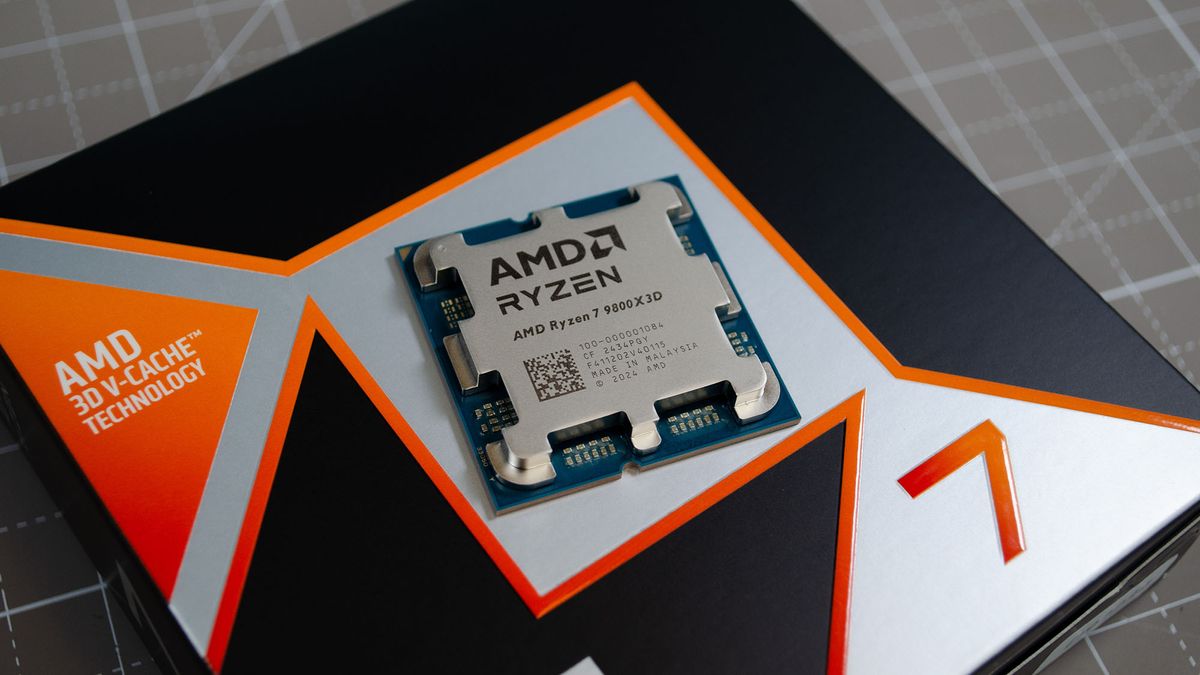
An AMD Ryzen 7 9800X3D in a masculine hand

(Image credit: Future / John Loeffler)

Ryzen 9800X3D to the rescue

Last year, we saw the introduction of 3D V-Cache for Zen 4 CPUs, and the Ryzen 7800X3D caught fire as the most popular gaming CPU out there. While normally AMD takes some time to push out X3D chips for any given generation, with Zen 5, these gaming-focused processors arrived very swiftly. Indeed, the Ryzen 9800X3D debuted in the first week of November, only a few months after Ryzen 9000 chips.

You could argue that this hasty appearance was pushed through to take away the bad taste from Ryzen 9000, and indeed the Ryzen 9800X3D did exactly that for PC gamers. As we found in our review, this CPU is seriously pepped up (with the ability to be overclocked for the first time, too), and an excellent gaming chip – we called it the best processor release of 2024, in fact.

The sticking point for the 9800X3D was the slightly hiked MSRP, along with the initial stock selling out very quickly, a situation compounded by scalping woes. Still, this clearly was the piece of silicon AMD needed to get out of the door to recover its CPU reputation, and really take the fight to Intel.

Also, i’s worth noting that we were treated to a welcome wallet-friendly last-gen offering from AMD, the Ryzen 7600X3D, as a budget gaming CPU (and a great fit for small form-factor builds) – but as a Micro Center exclusive in the US (again).

An ASRock Steel Series Radeon RX 7900 GRE on a desk

(Image credit: Future / John Loeffler)

GPU disappointment – with a big saving grace

AMD was a hive of activity with graphics cards last year, filling out the RDNA 3 series with various models of GPU, from the lower-end RX 7600, through the mid-range territory with the RX 7700 XT and 7800 XT. Before that in 2022, we only had high-end models with the RDNA 3 family.

To say this year was a bit of a contrast is an understatement. At the very start of 2024, we did get a new RX 7600 XT, the pepped-up take on the most wallet-friendly RDNA 3 GPU, but it was a modest upgrade, not all that compelling in the value stakes, and overall it didn’t stand up well compared to its Nvidia rival (the RTX 4060).

We were hoping for some new entrants at the true budget end of the GPU market in 2024, below the RX 7600, but the rumored RX 7400 and 7300 never showed. (Although bizarrely, we did get some milking of ancient low-end Radeon GPUs).

We were also hoping for RDNA 4 with even more eagerness, of course, but that didn’t happen either. Despite the rumor mill firmly believing these next-gen graphics cards could debut later in 2024, they didn’t – and the grapevine now has a Q1 2025 launch predicted. Overall, the no-show from RDNA 4 – which is rumored to top out at the mid-range, with an RX 8700 XT flagship in theory – was one of the biggest disappointments in the PC sphere for us in 2024.

What we did get, though, was a rocket-powered rabbit – a Golden Rabbit Edition, or GRE, version of the RX 7900, to be precise. Now, this was a GPU that was launched in China in the middle of 2023, but it was only released globally in February 2024. At that point, the RX 7900 GRE stormed our list of the best GPUs and stole the top position, arguably being the best entry-level option for 4K gaming.

So, it wasn’t a complete washout for Team Red after all, particularly when you consider that the RX 7800 XT also topped our best GPU list when it emerged last year. The GRE was the only thing that was GRE-at (sorry) about 2024 for AMD’s GPUs, though.

An AMD Ryzen AI 300 series chip against a stylized background

(Image credit: AMD)

Ryzen AI 300 bursts onto the scene to take on Qualcomm Snapdragon X

As you doubtless noticed, 2024 was the year that Copilot+ PCs launched, and the only chips powering these AI laptops were Qualcomm’s Snapdragon X SoCs to begin with.

AMD and Intel weren’t that far behind with CPUs that had a beefy enough NPU to qualify as the engine of a Copilot+ PC, though, and Team Red’s Ryzen AI 300 (x86) processors (also known as Strix Point) arrived in laptops starting from July 2024. However, the available models were very thin on the ground to begin with, and indeed the amount of choice with Strix Point notebooks remains limited even as this year draws to a close.

Ryzen AI 300 proved to be strong for AI, and also general performance and mobile gaming, too, easily matching Qualcomm’s effort – with the advantage of having none of the compatibility issues that the Arm-based Snapdragon X CPUs have as baggage.

That said, Intel also debuted Lunar Lake mobile (x86) processors for Copilot+ PCs in 2024, and these also proved to be very strong CPUs – and a match for Ryzen AI 300 in many respects. In short, two great x86 alternatives to Qualcomm Snapdragon X-powered Copilot+ PCs emerged in 2024, albeit we need more laptops packing this silicon.

An AMD Radeon RX 7900 GRE from PowerColor on a desk with its retail packaging

(Image credit: Future / John Loeffler)

Concluding thoughts

Other notable happenings for AMD in 2024 included the release of FSR 3.1 – which remains lagging behind Nvidia DLSS, although maybe AI will fix that – and an eye-opening achievement in outgunning Intel in the data center arena in terms of overall revenue.

While the launch of Ryzen 9000 CPUs caused some wobbles, we have to remember that these aren’t bad chips by any means – they just didn’t meet (gaming) expectations, and didn’t seem all that great value compared to previous-gen processors (at heavily cut prices) which are still very much on shelves (for the time being).

Ryzen 9000’s time will doubtless come, and at any rate, AMD recovered suitably with the Ryzen 9800X3D – and wasn’t exactly under pressure from Intel, either, as Team Blue had bigger worries than the criticisms Team Red faced.

GPU launches were thin on the ground from AMD, and rather disappointing – save for that RX 7900 GRE – and RDNA 4 failing to appear this year was a further source of some dismay.

Unfortunately, 2024 also saw AMD implement major layoffs, with the company making no bones about an increasing focus on the world of AI, where plentiful profits are to be made.

Is that increased leaning into AI anything to do with pushing back RDNA 4 graphics cards, perhaps? We don’t know that, and wouldn’t get carried away with any paranoia around AMD deprioritizing consumer GPUs yet – it’s probably more to do with market conditions and selling through current-gen RDNA 3 stock. Furthermore, you could apply that line of worried thinking to Nvidia equally, with next-gen Blackwell gaming GPUs also failing to turn up this year, and perhaps set to launch in the shadow of much bigger potential AI profits.

You might also like

Source

Posted on

Got an Intel Core Ultra 200S CPU? These are the patches you need to help gaming performance – with one more update coming in January 2025

  • Intel has issued a full and detailed report on Arrow Lake’s subpar performance
  • Five separate problems were highlighted, four of which are now fixed
  • You’ll need to update your BIOS and Windows 11 to get those fixes

Intel has finished its deep-dive investigation into problems with its Core Ultra 200S processors, and has presented the full results – with most of the issues now fixed, and one remaining remedy to be taken in January 2025.

As you may recall, these Arrow Lake desktop CPUs, launched in October, disappointed with their initial performance – particularly for PC games – and Intel subsequently admitted that Core Ultra 200S CPUs weren’t performing as well as expected, but that fixes were in the pipeline.

We were promised cures for a “series of multifactor issues” in fact, and now we have the full lowdown on those gremlins in the silicon works.

In a lengthy blog post, coined a ‘field update’ (part one of two), Intel observed that: “Editorial conclusions on gaming performance were more polarized, with noteworthy statistical variation from one article to the next. These results were inconsistent with our internal testing.”

Team Blue then says “we have determined that there are five distinct topics that could alter performance or functionality,” before going on to list those areas. They are as follows:

  • A missing Performance & Power Management (PPM) package
  • Intel Application Performance Optimizer (APO) could not take effect
  • BSODs when attempting to launch game titles utilizing the Easy Anti-Cheat service
  • Select performance settings misconfigured on reviewer or early enabling BIOSes
  • New BIOS performance optimizations

All of these issues have been ‘root caused’ – meaning Intel has got to the bottom of why they’re happening – and the first four have been resolved by updates that are already out there.

To get the benefit of these solutions, you need to avail yourself of two main updates. Firstly, update Windows 11 to build 26100.2314 (or newer), which is the November cumulative update for the 24H2 version. (We presume that the 23H2 update for the same month will also work – but Team Blue doesn’t mention this, so that isn’t clear). This will deal with issues number one and two as listed above.

{ window.reliablePageLoad.then(() => { var componentContainer = document.querySelector(“#slice-container-newsletterForm-articleInbodyContent-Jft9z9XLXPXMSG8VGZsEig”); if (componentContainer) { var data = {“layout”:”inbodyContent”,”header”:”Get daily insight, inspiration and deals in your inbox”,”tagline”:”Sign up for breaking news, reviews, opinion, top tech deals, and more.”,”formFooterText”:”By submitting your information you agree to the Terms & Conditions and Privacy Policy and are aged 16 or over.”,”successMessage”:{“body”:”Thank you for signing up. You will receive a confirmation email shortly.”},”failureMessage”:”There was a problem. Please refresh the page and try again.”,”method”:”POST”,”inputs”:[{“type”:”hidden”,”name”:”NAME”},{“type”:”email”,”name”:”MAIL”,”placeholder”:”Your Email Address”,”required”:true},{“type”:”hidden”,”name”:”NEWSLETTER_CODE”,”value”:”XTR-D”},{“type”:”hidden”,”name”:”LANG”,”value”:”EN”},{“type”:”hidden”,”name”:”SOURCE”,”value”:”60″},{“type”:”hidden”,”name”:”COUNTRY”},{“type”:”checkbox”,”name”:”CONTACT_OTHER_BRANDS”,”label”:{“text”:”Contact me with news and offers from other Future brands”}},{“type”:”checkbox”,”name”:”CONTACT_PARTNERS”,”label”:{“text”:”Receive email from us on behalf of our trusted partners or sponsors”}},{“type”:”submit”,”value”:”Sign me up”,”required”:true}],”endpoint”:”https://newsletter-subscribe.futureplc.com/v2/submission/submit”,”analytics”:[{“analyticsType”:”widgetViewed”}],”ariaLabels”:{}}; var triggerHydrate = function() { window.sliceComponents.newsletterForm.hydrate(data, componentContainer); } if (window.lazyObserveElement) { window.lazyObserveElement(componentContainer, triggerHydrate); } else { triggerHydrate(); } } }).catch(err => console.error(‘%c FTE ‘,’background: #9306F9; color: #ffffff’,’Hydration Script has failed for newsletterForm-articleInbodyContent-Jft9z9XLXPXMSG8VGZsEig Slice’, err)); }).catch(err => console.error(‘%c FTE ‘,’background: #9306F9; color: #ffffff’,’Externals script failed to load’, err)); ]]>

Sign up for breaking news, reviews, opinion, top tech deals, and more.

Secondly, you need to get the latest BIOS update for your motherboard, which cures problem number four. As for issue three, that’s resolved by an Easy Anti-Cheat driver update (that’ll be piped through with the game that uses this anti-cheat system, which has been problematic with Arrow Lake on Windows 11 24H2).

The final problem, number five, is the one that’ll be fixed in January 2025 with a new BIOS update, which will provide a further performance uptick.

Intel Arrow Lake Performance Update Details

(Image credit: Intel)

Analysis: Initial double-digit boost, then a single-digit follow-up

As Intel notes, you might just want to wait until next month anyway, then do your BIOS update and grab the fixes for issues four and five in one fell swoop.

Whereas the exact gaming (and app) performance increase you get will depend on your exact mix of PC components and system configuration – as ever – it seems to be the case that the first BIOS update (for problem four) is going to give you at least a boost of a few percent, or perhaps a double-digit uplift (up to 14% in theory, a pretty wide range). The second patch (for problem five, coming in January) is likely to provide a “modest performance improvement in the single-digit range,” we’re told.

So, both of these BIOS updates will likely provide a similar uplift of around 5% or so, maybe a bit more, but if you get lucky – or unlucky depending on how you look at it – you’ll get an even bigger boost (because your system was more hamstrung by these issues in the first place).

We should also point out that fix number two is for Intel APO (Application Performance Optimization) tech, so only a small number of games will benefit from that (those that support APO).

Intel has been commendably transparent in this process, and in revealing the detailed results of its investigation – as the company promised it would. So, that’s a definite tick for Team Blue, and hopefully any Arrow Lake gaming sluggishness will be pretty much ironed out by the time we get to the end of January 2025.

Via VideoCardz

You might also like…

Source

Posted on

iPhone 18 Pro details and M5 Mac release date both might’ve leaked

In a blog post on Medium, Apple insider Ming-Chi Kuo revealed interesting details about Apple’s future iPhone 18 and M5 Mac releases. According to the analyst, BE Semiconductor will drastically benefit from Apple’s upcoming products as the company has business with Apple’s manufacturers.

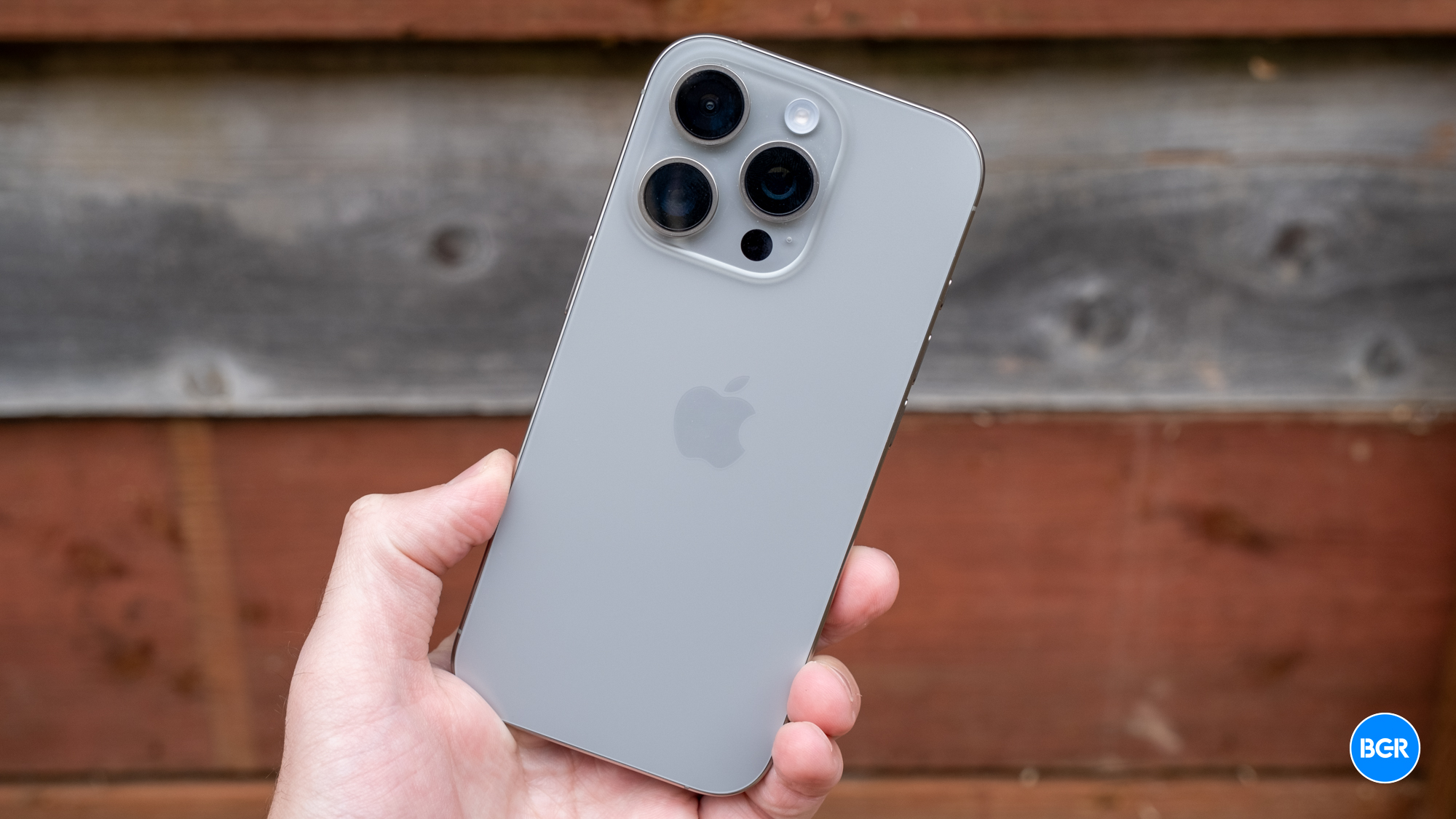
Kuo says that the iPhone 18 Pro’s wide camera will be upgraded to variable aperture in 2026, and BESI is the supplier of assembly equipment for aperture blades, a critical component of this upgrade. Last month, Kuo already revealed that Apple planned to add this change to the iPhone.

At the time, the analyst wrote that the “2026 high-end iPhone 18” will feature a wide camera lens with a variable aperture, “significantly enhancing the user photography experience.” The insider, known for his generally accurate predictions about unreleased iPhones, probably refers to the iPhone 18 Pro or iPhone 18 Pro Max. Apple has introduced new camera features with the iPhone Pro Max model before making them available to other models.

Apple wouldn’t be the first smartphone vendor to adopt cameras with variable apertures. Earlier this year, we saw similar features from phones like the Xiaomi 14 Ultra and the Honor Magic 6 Pro. Before that, Samsung phones like the Galaxy S9 and S10 featured cameras with variable apertures.

Tech. Entertainment. Science. Your inbox.

Sign up for the most interesting tech & entertainment news out there.

By signing up, I agree to the Terms of Use and have reviewed the Privacy Notice.

Besides the iPhone 18 Pro improvements, the analyst also leaked information about Apple’s upcoming M5 chips. According to him, the M5 processors will adopt TSMC’s N3P node, which is known as the third generation of the 3nm process. With that, mass production for upcoming chips is expected in this timeline:

  • Base-model M5: 1H25
  • M5 Pro and M5 Max: 2H25
  • M5 Ultra: 1H26

That said, Apple will likely unveil M5 Macs by the second half of 2025, as it still has some M4 Macs to unveil throughout 2025.

In addition, the analyst says Apple will continue to build out it’s Private Cloud Compute infrastructure by producing high-end M5 chips, which will be better suited for AI inferencing. Previously, rumors revealed Apple wanted to ask other companies to create specific chips for its PCC infrastructure starting in 2026.

BGR will let you know once we learn more about future Apple products.

Source

Posted on

Latest attempt to override UK’s outdated hacking law stalls

Two amendments to the Data (Access and Use) Bill that would have established a statutory legal defence for security professionals and ethical hackers to protect them from prosecution under the 1990 Computer Misuse Act (CMA) have failed to make it beyond a House of Lords committee hearing after being withdrawn.

The 34-year-old CMA broadly defines the offence of “unauthorised access to a computer” that is frequently relied upon in the UK when prosecuting cyber criminals, but given it became law when Margaret Thatcher was prime minister, it has not been updated to reflect the emergence, and practices, of the legitimate cyber security profession.

Campaigners say this is putting the UK at a competitive disadvantage because security pros fear they may be prosecuted simply for doing their jobs – for example, by accessing a system during the course of an incident investigation – while their employers lose out to companies located in more permissive jurisdictions.

Introduced by Lord Chris Holmes and Lord Tim Clement-Jones, the changes would have introduced two amendments into the Data Bill to amend the CMA such that security professionals could prove their actions were “necessary for the detection or prevention of crime” or “justified as being in the public interest”.

Speaking in support of the amendment on 18 December 2024, Holmes spoke about how the CMA was introduced to defend telephony exchanges in an era when 0.5% of the population was online, and if that was the act’s sole purpose, that alone would indicate it needs updating given the profound advances in technology made in the past three-and-a-half decades.

“The Computer Misuse Act 1990 is not only out of date but inadvertently criminalising the cyber security professionals we charge with the job of keeping us all safe. They oftentimes work, understandably, under the radar, behind not just closed but locked doors, doing such important work. Yet, for want of these amendments, they are doing that work, all too often, with at least one hand tied behind their back,” said Holmes.

The Computer Misuse Act 1990 is not only out of date but inadvertently criminalising the cyber security professionals we charge with the job of keeping us all safe Lord Chris Holmes

“Let us take just two examples: vulnerability research and threat intelligence assessment and analysis. Both could find that cyber security professional falling foul of the provisions of the CMA 1990. Do not take my word for it: look to the 2024 annual report of the National Cyber Security Centre, which rightly and understandably highlights the increasing gap between the threats we face and its ability, and the ability of the cyber security professionals community, to meet those threats.

“These amendments, in essence, perform one simple but critical task: to afford a legal defence for legitimate cyber security activities,” he said. “That is all, but it would have such a profound impact for those whom we have asked to keep us safe and for the safety they can thus deliver to every citizen in our society.

“It’s not time, it’s well over time that these amendments become part of our law. If not now, then when? If not these amendments, what amendment? And if not these amendments, what will the government say to all those people who will continue to be put in harm’s way for want of these protective provisions?” added Holmes.

Government responds

During the hearing in Westminster, other parliamentarians, including the amendment’s co-sponsor Lord Clement-Jones and Lord James Arbuthnot, better known for his campaigning work in the Post Office Horizon scandal, spoke in favour of reform, but to no avail.

Lord Timothy Kirkhope said: “This just demonstrates, yet again, that unless we pull ourselves together, with better smart legislation that moves faster, we will never ever catch up with developments in technology and AI [artificial intelligence]. This has been demonstrated dramatically by these amendments. I express concerns that the government move at a pace that government always moves at, but in this particular field it is not going to work.”

Responding to the meeting, under-secretary of state at the Department for Science, Innovation and Technology (DSIT) Baroness Margaret Jones said the government agreed the UK needed a revised legislative framework to enable the authorities to tackle the harms posed by cyber criminals, and that it was committed to ensuring the CMA remains up to date and is effective in this regard.

However, said Jones, reform is a “complex and ongoing” issue that is being considered as part of a Home Office review of the CMA itself.

“We are considering improved defences by engaging extensively with the cyber security industry, law enforcement agencies, prosecutors and system owners. However, engagement to date has not produced a consensus on the issue, even within the industry, and that is holding us back at this moment – but we are absolutely determined to move forward with this and to reach a consensus on the way forward,” she said.

“The specific amendments … are premature, because we need a stronger consensus on the way forward, notwithstanding all the good reasons … given for why it is important that we have updated legislation. With these concerns and reasons in mind, I hope that the noble Lord [Holmes] will feel able to withdraw his amendment,” said Jones.

Katharina Sommer, group head of government affairs at cyber firm NCC Group, said she was thrilled to see such passionate calls for reform, and that the session had rightly highlighted the outdated nature of the CMA and how it holds back cyber security professionals.

“We need a statutory defence, like that proposed by Lord Holmes’ welcome amendment, to allow this vital work to proceed unimpeded, at a time where the cyber threat is rising unabatedly. Reforming the CMA would unlock huge opportunities, strengthen our defences, and help the UK compete on the world stage,” she said.

“It is heartening to see the minister recognise the need to provide legal protections for legitimate cyber security activities, and hear about her determination to reach consensus on the way forward, particularly as this follows her colleague the security minister’s recent commitment to reviewing the CMA,” said Sommer.

“We do hope sincerely that all those involved in keeping the UK safe in cyberspace are prepared to work together, and find compromise rather than risk deadlock. We look forward to working with the government and all partners to ensure the UK’s cyber laws reflect 21st century threats.”

Disappointment

Andrew Jones, strategy director at The Cyber Scheme, a supporter of the CyberUp Campaign for legal reform, said: “Whilst we are slightly disappointed by the government’s decision not to seize this opportunity to bring the Computer Misuse Act into the 21st century, we are encouraged by their recent comments suggesting a review of the act is being considered. Until then, the CMA will remain an outdated piece of legislation, preventing our cyber security professionals from defending organisations effectively and leaving us lagging behind peer nations, as the US and EU move to safeguard ethical cyber security work as a cornerstone of national resilience.

“With the CEO of the National Cyber Security Centre recently acknowledging that hostile activity in UK cyberspace has increased in ‘frequency, sophistication and intensity’, it is vital that the UK takes measures to upgrade its cyber resilience. 

He added: “The statutory defence we propose – drafted in consultation with industry and legal experts – would protect legitimate cyber security professionals, strengthen UK cyber defences, and reinforce its place as a cyber security leader. We are fully prepared to work with the government to help implement this necessary change in the future, as soon as it is ready to act.”

Source

Posted on

Asus gaming laptops leak with RTX 5090, 5080 and 5070 Ti GPUs, sparking excitement about a CES 2025 reveal

  • Retailers have leaked incoming laptops from Asus with RTX 5000 GPUs
  • Nvidia RTX 5090, 5080 and 5070 Ti models have been spotted
  • This is a hint that rumors of a desktop RTX 5070 Ti are on the money

Asus has some new gaming laptops incoming with Nvidia’s next-gen Blackwell mobile GPUs on board – and Intel Arrow Lake chips, too – with the details having been spilled by some leaks from online retailers.

VideoCardz was on the case here, noticing the leaks that reveal five different Asus laptops with Nvidia RTX 5000 graphics cards, including a really beefy-sounding ROG Strix notebook.

Add seasoning appropriately here as with any leak, and we should note upfront that the Nvidia Blackwell GPU models aren’t listed by their full name, such as RTX 5090. Instead, codenames are used – for example, GN22-X11 in the case of the flagship. We know what graphics cards those codenames correspond to based on a bunch of previous leaks, but still, we must be cautious about making too many assumptions.

In theory, then, the Asus ROG Strix G835 will have that RTX 5090 on board (with 16GB of VRAM) and an Intel Core Ultra 9 275HX (Arrow Lake) processor, backed with 64GB of DDR5 system memory. A power-packed set of components indeed, and the G835 will run with an 18-inch display sporting a 2048 x 1536 resolution, based on its leaked listing.

We can also see the Asus ROG Zephyrus GU605 which will apparently offer options on three Nvidia GPUs: the RTX 5090, 5080 and 5070 Ti. That notebook is set to use an Intel Core Ultra 9 285H CPU, again with 64GB of DDR5 system RAM, and a 16-inch screen.

Two Asus ROG Strix Scar 18 laptops, and a ROG Strix G16 model, have also had their specs spilled online, so three in total, running with RTX 5090, 5080 and 5070 Ti GPUs respectively.

Nvidia geforce 4070

(Image credit: Nvidia)

Analysis: A raft of Blackwell launches at CES 2025?

This appears to back up some previous rumors which have suggested we will see RTX 5000 laptop GPUs at CES 2025, alongside Blackwell desktop graphics cards.

{ window.reliablePageLoad.then(() => { var componentContainer = document.querySelector(“#slice-container-newsletterForm-articleInbodyContent-7h9xcZpPkMdEvfuADNow9k”); if (componentContainer) { var data = {“layout”:”inbodyContent”,”header”:”Get daily insight, inspiration and deals in your inbox”,”tagline”:”Sign up for breaking news, reviews, opinion, top tech deals, and more.”,”formFooterText”:”By submitting your information you agree to the Terms & Conditions and Privacy Policy and are aged 16 or over.”,”successMessage”:{“body”:”Thank you for signing up. You will receive a confirmation email shortly.”},”failureMessage”:”There was a problem. Please refresh the page and try again.”,”method”:”POST”,”inputs”:[{“type”:”hidden”,”name”:”NAME”},{“type”:”email”,”name”:”MAIL”,”placeholder”:”Your Email Address”,”required”:true},{“type”:”hidden”,”name”:”NEWSLETTER_CODE”,”value”:”XTR-D”},{“type”:”hidden”,”name”:”LANG”,”value”:”EN”},{“type”:”hidden”,”name”:”SOURCE”,”value”:”60″},{“type”:”hidden”,”name”:”COUNTRY”},{“type”:”checkbox”,”name”:”CONTACT_OTHER_BRANDS”,”label”:{“text”:”Contact me with news and offers from other Future brands”}},{“type”:”checkbox”,”name”:”CONTACT_PARTNERS”,”label”:{“text”:”Receive email from us on behalf of our trusted partners or sponsors”}},{“type”:”submit”,”value”:”Sign me up”,”required”:true}],”endpoint”:”https://newsletter-subscribe.futureplc.com/v2/submission/submit”,”analytics”:[{“analyticsType”:”widgetViewed”}],”ariaLabels”:{}}; var triggerHydrate = function() { window.sliceComponents.newsletterForm.hydrate(data, componentContainer); } if (window.lazyObserveElement) { window.lazyObserveElement(componentContainer, triggerHydrate); } else { triggerHydrate(); } } }).catch(err => console.error(‘%c FTE ‘,’background: #9306F9; color: #ffffff’,’Hydration Script has failed for newsletterForm-articleInbodyContent-7h9xcZpPkMdEvfuADNow9k Slice’, err)); }).catch(err => console.error(‘%c FTE ‘,’background: #9306F9; color: #ffffff’,’Externals script failed to load’, err)); ]]>

Sign up for breaking news, reviews, opinion, top tech deals, and more.

Based on this spillage, we’re going to see three mobile models on offer, in the form of the RTX 5090, 5080 and 5070 Ti, although there could be lower-tier models as well.

When Nvidia launched its current-gen of mobile GPUs back at CES 2023, we got a full house of the entire range presented to us: the RTX 4050, 4060, 4070, 4080 and 4090 GPUs. Note that they were all vanilla versions, so it’s interesting to see a purported mobile RTX 5070 Ti creeping in this time around.

On the desktop front, the grapevine reckons that of Nvidia’s next-gen offerings, we’ll see RTX 5090 and 5080 models at CES in January, and possibly one or other of the RTX 5070 or RTX 5070 Ti – maybe even both of those.

So, is the mobile RTX 5070 Ti popping up a sign that we’ll get this on the desktop, too? It could be, but whatever the case, we’re seemingly going to see a fair few Blackwell GeForce GPUs being revealed for both desktop PCs and gaming laptops at CES 2025. We might also see Nvidia DLSS 4, too.

You might also like

Source

Posted on

Challenging the cloud giants: Is a new era of competition on the horizon?

The UK’s Competition and Markets Authority (CMA) sent shockwaves through the tech industry in October 2023 when it announced its investigation into potential anti-competitive practices in the UK cloud infrastructure services market.

The CMA is not ploughing a lonely furrow: regulators across the world – from Spain and Denmark to South Africa and (if reports are to be believed) the United States – are examining various aspects of cloud computing and its impact on competition.

This scrutiny is long overdue, and it marks a significant step forward. For too long, regulators have looked the other way as the Western world’s cloud market quietly amalgamated around just two cloud providers.

While these tech giants have undoubtedly played their part in a global digital industrial revolution, their dominance is often accepted as an inevitable and unchangeable reality – even if it may have been achieved by anti-competitive practices. 

This implicit acceptance of the status quo is a false narrative because there are alternatives. Challenger cloud providers stand ready to compete, asking for nothing more than a level playing field.

For inquiries like the CMA’s to succeed, it is crucial that decision-makers do not allow the dominant cloud providers to monopolise the conversation and they need to give equal weight to the voices of those challengers.

At the beginning of next year, we will learn about the CMA’s provisional opinion on the four “theories of harm” under investigation.

These range from concerns about exploitative pricing practices to barriers that restrict customers from switching providers.

During the summer, the CMA proposed numerous remedies to combat these. While we can’t second guess the exact conclusions, one thing is clear: challenger cloud providers hold strong and united views, based on decades of cumulative experience.

These challengers offer a vital dose of reality to what can often become dry, legalistic debates.

 While the industry may be guilty of using jargon like “data egress fees” and “anti-competitive licensing practices”, these terms have real-world consequences. 

Ask a challenger provider to explain what these practices mean for their business, and you’ll hear stories of dominant players charging exorbitant fees to customers who try to leave their platforms or dramatically increasing the cost of widely-used software when it’s run on a competitor’s cloud. These practices have profound implications for competition.

If the CMA can create a framework that enables competition, the benefits will ripple through the market. Challenger cloud providers, with their agility and innovation, will drive down prices, expand consumer choice and spur further technological advances. They will also help to address critical concerns like cloud concentration risk and digital resilience, which become ever more pressing as our dependence on cloud services grows.

The stakes couldn’t be higher. This isn’t just about today’s challengers and consumers; it’s about future-proofing the entire cloud ecosystem. Emerging markets such as AI and quantum computing – both heavily reliant on cloud infrastructure – must not fall victim to a “winner takes all” scenario.

 Such an outcome would stifle innovation and concentrate power in ways that could threaten global digital resilience and even national security.

The CMA, alongside its international counterparts, has a unique and urgent opportunity to reset the dial. This is a moment to usher in a new era of openness, competition, and fairness in the cloud market.

Challenger cloud providers will be watching closely to see how the CMA’s provisional decision translates into meaningful solutions that benefit not only the industry but also consumers, the wider economy, and the future of digital innovation.

While the last twelve months may have fired the starting gun on investigating the cloud market, the next twelve could be when we see real change begin.

Source

Posted on

Top 10 data and ethics stories of 2024

In 2024, Computer Weekly’s data and ethics coverage continued to focus on the various ethical issues associated with the development and deployment of data-driven systems, particularly artificial intelligence (AI).

This included reports on the copyright issues associated with generative AI (GenAI) tools, the environmental impacts of AI, the invasive tracking tools in place across the internet, and the ways in which autonomous weapons undermine human moral agency.

Other stories focused on the wider social implications of data-driven technologies, including the ways they are used to inflict violence on migrants, and how our use of technology prefigures certain political or social outcomes.

In an analysis published 14 January 2024, the IMF examined the potential impact of AI on the global labour market, noting that while it has the potential to “jumpstart productivity, boost global growth and raise incomes around the world”, it could just as easily “replace jobs and deepen inequality”; and will “likely worsen overall inequality” if policymakers do not proactively work to prevent the technology from stoking social tensions.

The IMF said that, unlike labour income inequality, which can decrease in certain scenarios where AI’s displacing effect lowers everyone’s incomes, capital income and wealth inequality “always increase” with greater AI adoption, both nationally and globally.

“The main reason for the increase in capital income and wealth inequality is that AI leads to labour displacement and an increase in the demand for AI capital, increasing capital returns and asset holdings’ value,” it said.

“Since in the model, as in the data, high income workers hold a large share of assets, they benefit more from the rise in capital returns. As a result, in all scenarios, independent of the impact on labour income, the total income of top earners increases because of capital income gains.”

In January, GenAI company Anthropic claimed to a US court that using copyrighted content in large language model (LLM) training data counts as “fair use”, and that “today’s general-purpose AI tools simply could not exist” if AI companies had to pay licences for the material.

Anthropic made the claim after, a host of music publishers including Concord, Universal Music Group and ABKCO initiated legal action against the Amazon- and Google-backed firm in October 2023, demanding potentially millions in damages for the allegedly “systematic and widespread infringement of their copyrighted song lyrics”.

However, in a submission to the US Copyright Office on 30 October (which was completely separate from the case), Anthropic said that the training of its AI model Claude “qualifies as a quintessentially lawful use of materials”, arguing that, “to the extent copyrighted works are used in training  data, it is for analysis (of statistical relationships between words and concepts) that is unrelated  to any expressive purpose of the work”.

On the potential of a licensing regime for LLM’s ingestion of copyrighted content, Anthropic argued that always requiring licences would be inappropriate, as it would lock up access to the vast majority of works and benefit “only the most highly resourced entities” that are able to pay their way into compliance.

In a 40-page document submitted to the court on 16 January 2024 (responding specifically to a “preliminary injunction request” filed by the music publishers), Anthropic took the same argument further, claiming “it would not be possible to amass sufficient content to train an LLM like Claude in arm’s-length licensing transactions, at any price”.

It added that Anthropic is not alone in using data “broadly assembled from the publicly available internet”, and that “in practice, there is no other way to amass a training corpus with the scale and diversity necessary to train a complex LLM with a broad understanding of human language and the world in general”. 

Anthropic further claimed that the scale of the datasets required to train LLMs is simply too large to for an effective licensing regime to operate: “One could not enter licensing transactions with enough rights owners to cover the billions of texts necessary to yield the trillions of tokens that general-purpose LLMs require for proper training. If licences were required to train LLMs on copyrighted content, today’s general-purpose AI tools simply could not exist.”

Computer Weekly spoke to members of the Migrants Rights Network (MRN) and Anti-Raids Network (ARN) about how the data sharing between public and private bodies for the purposes of carrying out immigration raids helps to prop up the UK’s hostile environment by instilling an atmosphere of fear and deterring migrants from accessing public services.

Published in the wake of the new Labour government announcing a “major surge in immigration enforcement and returns activity”, including increased detentions and deportations, a report by the MRN details how UK Immigration Enforcement uses data from the public, police, government departments, local authorities and others to facilitate raids.

Julia Tinsley-Kent, head of policy and communications at the MRN and one of the report’s authors, said the data sharing in place – coupled with government rhetoric about strong enforcement – essentially leads to people “self-policing because they’re so scared of all the ways that you can get tripped up” within the hostile environment.

She added this is particularly “insidious” in the context of data sharing from institutions that are supposedly there to help people, such as education or healthcare bodies.

As part of the hostile environment policies, the MRN, the ARN and others have long argued that the function of raids goes much deeper than mere social exclusion, and also works to disrupt the lives of migrants, their families, businesses and communities, as well as to impose a form of terror that produces heightened fear, insecurity and isolation.

At the very end of April, military technology experts gathered in Vienna for a conference on the development and use of autonomous weapons systems (AWS), where they warned about the detrimental psychological effects of AI-powered weapons.

Specific concerns raised by experts throughout the conference included the potential for dehumanisation when people on the receiving end of lethal force are reduced to data points and numbers on a screen; the risk of discrimination during target selection due to biases in the programming or criteria used; as well as the emotional and psychological detachment of operators from the human consequences of their actions.

Speakers also touched on whether there can ever be meaningful human control over AWS, due to the combination of automation bias and how such weapons increase the velocity of warfare beyond human cognition.

The second global AI summit in Seoul, South Korea saw dozens of governments and companies double down on their commitments to safely and inclusively develop the technology, but questions remained about who exactly is being included and which risks are given priority. 

The attendees and experts Computer Weekly spoke with said while the summit ended with some concrete outcomes that can be taken forward before the AI Action Summit due to take place in France in early 2025, there are still a number of areas where further movement is urgently needed.

In particular, they stressed the need for mandatory AI safety commitments from companies; socio-technical evaluations of systems that take into account how they interact with people and institutions in real-world situations; and wider participation from the public, workers and others affected by AI-powered systems.

However, they also said it is “early days yet” and highlighted the importance of the AI Safety Summit events in creating open dialogue between countries and setting the foundation for catalysing future action.

Over the course of the two-day AI Seoul Summit, a number of agreements and pledges were signed by the governments and companies in attendance.

For governments, this includes the European Union (EU) and a group of 10 countries signing the Seoul Declaration, which builds on the Bletchley Deceleration signed six months ago by 28 governments and the EU at the UK’s inaugural AI Safety Summit. It also includes the Seoul Statement of Intent Toward International Cooperation on AI Safety Science, which will see publicly backed research institutes come together to ensure “complementarity and interoperability” between their technical work and general approaches to AI safety.

The Seoul Declaration in particular affirmed “the importance of active multi-stakeholder collaboration” in this area and committed the governments involved to “actively” include a wide range of stakeholders in AI-related discussions.

A larger group of more than two dozen governments also committed to developing shared risk thresholds for frontier AI models to limit their harmful impacts in the Seoul Ministerial Statement, which highlighted the need for effective safeguards and interoperable AI safety testing regimes between countries.

The agreements and pledges made by companies include 16 AI global firms signing the Frontier AI Safety Commitments, which is a specific voluntary set of measures for how they will safely develop the technology, and 14 firms signing the Seoul AI Business Pledge, which is a similar set of commitments made by a mixture of South Korean and international tech firms to approach AI development responsibly.

One of the key voluntary commitments made by the AI companies was not to develop or deploy AI systems if the risks cannot be sufficiently mitigated. However, in the wake of the summit, a group of current and former workers from OpenAI, Anthropic and DeepMind – the first two of which signed the safety commitments in Seoul – said these firms cannot be trusted to voluntarily share information about their systems capabilities and risks with governments or civil society.

 Dozens of university, charity and policing websites designed to help people get support for serious issues such as sexual abuse, addiction or mental health are inadvertently collecting and sharing site visitors’ sensitive data with advertisers.  

A variety of tracking tools embedded on these sites – including Meta Pixel and Google Analytics – mean that when a person visits them seeking help, their sensitive data is collected and shared with companies like Google and Meta, which may become aware that a person is looking to use support services before those services can even offer help.

According to privacy experts attempting to raise awareness of the issue, the use of such tracking tools means people’s information is being shared inadvertently with these advertisers, as soon as they enter the sites in many cases because analytics tags begin collecting personal data before users have interacted with the cookie banner.

Depending on the configuration of the analytics in place, the data collected could include information about the site visitor’s age, location, browser, device, operating system and behaviours online.

While even more data is shared with advertisers if users consent to cookies, experts told Computer Weekly the sites do not provide an adequate explanation of how their information will be stored and used by programmatic advertisers.

They further warned the issue is “endemic” due a widespread lack of awareness about how tracking technologies like cookies work, as well as the potential harms associated with allowing advertisers inadvertent access to such sensitive information.

Computer Weekly spoke to author and documentary director Thomas Dekeyser about Clodo, a clandestine group of French IT workers who spent the early 1980s sabotaging technological infrastructure, which was used as the jumping off point for a wider conversation about the politics of techno-refusal.

Dekeyser says a major motivation for writing his upcoming book on the subject is that people refusing technology – whether that be the Luddites, Clodo or any other radical formation – are “all too often reduced to the figure of the primitivist, the romantic, or the person who wants to go back in time, and it’s seen as a kind of anti-modernist position to take”.

Noting that ‘technophobe’ or ‘Luddite’ have long been used as pejorative insults for those who oppose the use and control of technology by narrow capitalist interests, Dekeyser outlined the diverse range of historical subjects and their heterogenous motivations for refusal: “I want to push against these terms and what they imply.”

For Dekeyser, the history of technology is necessarily the history of its refusal. From the Ancient Greek inventor Archimedes – who Dekeyser says can be described as the first “machine breaker” due to his tendency to destroy his own inventions – to the early mercantilist states of Europe backing their guild members’ acts of sabotage against new labour devices, the social-technical nature of technology means it has always been a terrain of political struggle.

Hundreds of workers on Amazon’s Mechanical Turk (MTurk) platform were left unable to work after mass account suspensions caused by a suspected glitch in the e-commerce giant’s payments system.

Beginning on 16 May 2024, a number of US-based Mechanical Turk workers began receiving account suspension forms from Amazon, locking them out of their accounts and preventing them from completing more work on the crowdsourcing platform.

Owned and operated by Amazon, Mechanical Turk allows businesses, or “requesters”, to outsource various processes to a “distributed workforce”, who then complete tasks virtually from wherever they are based in the world, including data annotation, surveys, content moderation and AI training.

According to those Computer Weekly spoke with, the suspensions were purportedly tied to issues with the workers’ Amazon Payment accounts, an online payments processing service that allows them to both receive wages and make purchases from Amazon. The issue affected hundreds of workers.

MTurk workers from advocacy organisation Turkopticon outlined how such situations are an on-going issue that workers have to deal with, and detailed Amazon’s poor track record on the issue.

Refugee lawyer and author Petra Molnar spoke to Computer Weekly about the extreme violence people on the move face at borders across the world, and how increasingly hostile anti-immigrant politics is being enabled and reinforced by a ‘lucrative panopticon’ of surveillance technologies.

She noted how – because of the vast array of surveillance technologies now deployed against people on the move – entire border-crossing regions have been transformed into literal graveyards, while people are resorting to burning off their fingertips to avoid invasive biometric surveillance; hiding in dangerous terrain to evade pushbacks or being placed in refugee camps with dire living conditions; and living homeless because algorithms shielded from public scrutiny are refusing them immigration status in the countries they’ve sought safety in.

Molnar described how lethal border situations are enabled by a mixture of increasingly hostile anti-immigrant politics and sophisticated surveillance technologies, which combine to create a deadly feedback loop for those simply seeking a better life.

She also discussed the “inherently racist and discriminatory” nature of borders, and how the technologies deployed in border spaces are extremely difficult, if not impossible, to divorce from the underlying logic of exclusion that defines them.

The potential of AI to help companies measure and optimise their sustainability efforts could be outweighed by the huge environmental impacts of the technology itself.

On the positive side, speakers at the AI Summit London outlined, for example, how the data analysis capabilities of AI can assist companies with decarbonisation and other environmental initiatives by capturing, connecting and mapping currently disparate data sets; automatically pin point harmful emissions to specific sites in supply chains; as well as predict and manage the demand and supply of energy in specific areas.

They also said it could help companies better manage their Scope 3 emissions (which refers to indirect greenhouse gas emissions that occur outside of a company’s operations, but that are still a result of their activities) by linking up data sources and making them more legible.

However, despite the potential sustainability benefits of AI, speakers were clear that the technology itself is having huge environmental impacts around the world, and that AI itself will come to be a major part of many organisations Scope 3 emissions.

One speaker noted that if the rate of AI usage continues on its current trajectory without any form of intervention, then half of the world’s total energy supply will be used on AI by 2040; while another pointed out that, at a time when billions of people are struggling with access to water, AI-providing companies are using huge amounts of water to cool their datacentres.

They added AI in this context could help build in circularity to the operation, and that it was also key for people in the tech sector to “internalise” thinking about the socio-economic and environmental impacts of AI, so that it is thought about from a much earlier stage in a system’s lifecycle.

Source