Posted on

TfL cyber attack cost over £30m to date

The September 2024 cyber attack that forced Transport for London (TfL) to suspend multiple services across the capital has cost it more than £30m to date, it has emerged.

In a financial update to its board, TfL said that previous forecasts of an operating surplus of £61m had now been slashed to £23m, largely due to the financial impact of the security incident. It currently has an operating deficit of £37m, which is £122m lower than initially budgeted for.

The organisation revealed that it has spent £5m on incident response, investigation and remedial cyber security measures in the past three months.

The incident began on 1 September when defenders detected suspicious activity on TfL’s network. Likely fearing ransomware, the IT security teams limited and shut off several systems to ensure the impact was minimised.

Fortunately, the impact of the incident on London’s bus, Tube and other services was limited, but multiple other services were affected. Most prominently, passengers were left unable to access their account logins for contactless and Oyster payment services, APIs used by third parties including Citymapper went offline, and the Dial-a-Ride service for disabled people had to be briefly suspended.

Although initially TfL said that it did not believe passenger data had been affected,, it later found that data on 5,000 people was accessed, including names, contact details and in some cases bank account data. All of these people have been contacted and the incident has been referred to the Information Commissioner’s Office (ICO). Subsequently, the National Crime Agency (NCA) arrested and later bailed a 17-year-old boy on suspicion of offences under the Computer Misuse Act.

In the report, TfL commissioner Andrew Lord thanked the thousands of TfL employees who have “really pulled together” in recent weeks to address the disruption and maintain key services, and passengers for their patience.

Lord added that TfL had received wide praise and recognition for its response, but said that the consequences of the incident will continue for some months to come. He promised a full review of the incident in due course, although stressed that publicly available information will remain limited as it relates to an ongoing criminal case.

More services restored

In recent days, TfL has been able to restart a number of services that were disrupted during the cyber attack, including the contactless.tfl.gov.uk service.

This means passengers who use pay-as-you-go with a contactless credit or debit card, or on their smartphones, are now able to see their full journey history again.

Additionally, it means that TfL can also once again provide photocards for Zip cards for five to 17 year-olds, 60+ London Oyster, and 18+ Student Oyster. It has already dispatched over 30,000 Zip passes, 40,000 new student passes and 13,000 pensioners’ passes since reopening applications.

TfL said that it was encouraging parents and guardians to apply for updated Zip photocards as a matter of urgency – expired 5-10 and 11-15 Zips are being accepted on TfL and surface rail services in London at present, but this concession will end on New Year’s Eve.

The organisation warned customers would still see some residual delays when contacting customer services, particularly with regard to refunds for overpayments for concessionary cardholders affected by the cyber attack.

Shashi Verma, chief technology officer at TfL, said: “We’re pleased that customers can now access their contactless journey history again, meaning that all TfL fares services impacted by the recent cyber incident are now reinstated. We apologise for any inconvenience that this incident has caused our customers,” said TfL CTO Shashi Verma.

“We are now able to process contactless and Oyster refunds for those requiring them, though customers should anticipate there may be some delays due to the expected backlog. We have also contacted all new photocard customers who were impacted by not being able to apply for their new photocard. I want to also personally thank our engineers and customer services teams who have worked hard during this incident to support customers and restore services.”

SonicWall EMEA executive vice-president, Spencer Starkey, commented: “Due to [its] importance, safeguarding critical national infrastructure [CNI] is vital to maintain order and prevent potential disasters caused by threats such as cyber attacks.

“Ensuring the cyber security of critical national infrastructure requires a comprehensive and ongoing effort. The ramifications of an attack and ensuing outage on CNI can be disastrous and it’s important to place the utmost amount of time, money and efforts on securing them.

“In a divisive landscape, we’re seeing a continued geo-migration of threats, and governments are under constant cyber threat. These cyber attacks raise concerns about a country’s own national security, critical national infrastructure as well as the safety of sensitive information.

“Protecting government networks relies on constant communication and cooperation, working together with the private sector and imposing strict punishments, to deter future attacks,” he added.

Source

Posted on

Trains delayed due to ‘nationwide fault’ with comms system

A “nationwide fault” with the onboard radio communications system used by train drivers and signal operators has caused major disruption across the UK’s rail network, according to National Rail.

The Global System for Mobile Communications-Railway(GSM-R) failure – which is designed to allow continuous digital communication between drivers and signallers in areas such as tunnels that were previously unreachable by analogue systems – was linked to the overnight installation of new hardware at a major telecommunications hub in Stoke.

The unspecified hardware was installed as part of an upgrade to the system, which was rolled out to increase the safety of the UK’s train network and reduce the costs associated with running a patchwork of legacy systems.

National Rail said the fault – which specifically disrupted the GSM-R’s automated login process – “meant trains were unable to register onto their route for the start of service and deregister to end their service”.

This prompted staff to connect manually via a “wild card” code, akin to a Wi-Fi password, that allowed them to once again communicate with the national network. However, use of the manual process delayed many trains by up to 15 minutes, while others were subject to cancellations or alterations as a result.

The BBC reported that the “well-rehearsed” implementation of the manual backup system meant no safety-critical issues occurred while the fix was underway.

The problem affected at least 10 rail lines across the country, including Great Northern, Northern, ScotRail, Southeastern, Southern, South Western Railway, Thameslink, Gatwick Express, Heathrow Express and the Elizabeth tube line.

Although the problem was fixed within around three hours of being reported, National Rail said there may be some residual disruption while timetables are restored.

For those seeking compensation, it added that customers should keep hold of train tickets and make a note of their journey, as both would support any claim.

Source

Posted on

Apple’s first smart display might launch much later than expected

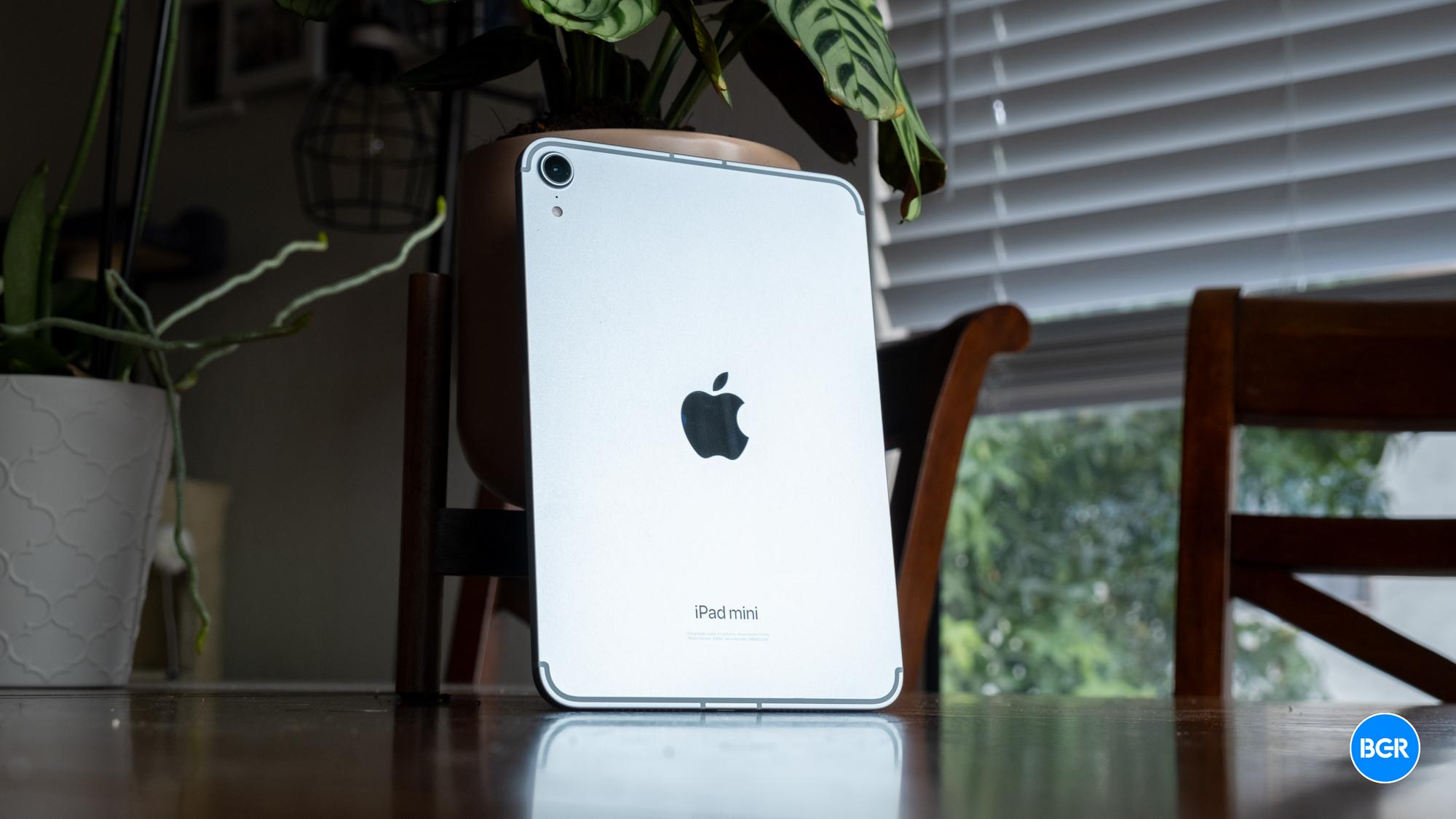
Reports last month said that Apple would introduce a wall-mountable smart display for the home as soon as March 2025. The device would look like an iPad, though it would be smaller than the iPad mini. It would run a new homeOS operating system that would feature elements from watchOS and iOS.

Those reports already gave us an idea of how Apple’s smart display will work, but the software experience might not be ready for a March launch. That’s what Ming-Chi Kuo said in a new note, indicating that the smart display’s release date was postponed to the second half of 2025.

Kuo wrote on Medium that the “display-equiped HomePod” mass production had been delayed multiple times.

Apple supposedly wanted to release it in 2024 but postponed it to the first quarter of 2025. More recently, Apple moved the smart display’s release to after WWDC 2025 or to the third quarter of 2025.

Tech. Entertainment. Science. Your inbox.

Sign up for the most interesting tech & entertainment news out there.

By signing up, I agree to the Terms of Use and have reviewed the Privacy Notice.

“The delay in production is mainly due to software development,” Kuo said without offering specifics.

Kuo did mention some of the smart display’s specs, which are in line with previous reports. The display-equipped Homepod should feature an A18 processor and a 6-inch to 7-inch screen. That A18 chip means the smart display will support Apple Intelligence. Previous reports also said that Apple Intelligence will be available on the device.

Kuo also says the smart display will “emphasize smart home functionalities more.” That’s what other reports have also claimed. The smart display will act as the central hub of the smart home, allowing users to control various features and devices from a single place.

The analyst also reiterated that Apple will make a smart home surveillance camera in 2026. The camera will eventually connect to the smart display wirelessly.

Kuo estimates that Apple will sell about 500,000 units in the second half of 2025. If the smart display becomes popular, annual shipments could reach million-unit levels. In a separate report, Kuo identified BYD Electronic and Tianma Microelectronics as the main beneficiaries of Apple’s orders for the smart display.

The only thing missing from these reports is the price of Apple’s home display. It’ll be interesting to see how much Apple will charge for a device that will essentially be a smaller iPad for the home.

Source

Posted on

How AI can help you attract, engage and retain the best talent in 2025

As we move into 2025, the landscape of human resources (HR) is heading for a significant transformation. Artificial intelligence (AI) is set to revolutionise workforce collaboration, efficiency, and talent management.

For HR leaders, harnessing the power of AI will be essential to attract, engage, and retain top talent in an increasingly competitive market.

Enhancing HR performance

AI is reshaping and revamping HR by automating routine and mundane tasks such as interview scheduling, data entry, and CV screenings. This automation allows HR teams to focus on strategic initiatives that add real value to employees, such as developing diverse cultures, offering tailored development programmes, and increasing engagement.

AI-powered analytics can identify workforce trends, predict employee turnover, and suggest to retain top talent. These insights enable HR leaders to make data-driven decisions to support a high-performance culture, ultimately improving employee engagement and organisational performance.

Just look at Unilever, which uses AI to streamline its recruitment process. By using AI-driven assessments and video interview analytics, Unilever has significantly reduced time-to-hire while enhancing the candidate experience. Additionally, AI can streamline performance management by providing continuous feedback and personalised development plans. This shift towards real-time performance management fosters a culture of continuous improvement, where the team receives timely feedback and support to achieve their goals, leading to higher engagement levels and better retention rates.

Talent attraction and retention

As the demand on sourcing talent with scarce skills continues in 2025, attracting top talent needs innovative strategies. AI can play a pivotal role in enhancing the candidate experience. Imagine AI-driven chatbots engaging with candidates in real-time, answering their questions and providing personalised information about the company and the role. This immediate engagement can significantly improve the candidate experience, making the organisation more attractive.

AI can also help create a more inclusive hiring processes by eliminating unconscious biases from recruitment. AI algorithms can analyse job descriptions to ensure they are free from biased language and assess candidates based on objective criteria. This is an incredibly important step to support organisations in attracting and growing a more diverse and inclusive workforce, which is crucial for driving innovation and business success.

Retaining your team is equally important as attracting it. AI can help HR leaders identify early signs of people’s disengagement or dissatisfaction. For instance, AI-powered sentiment analysis can monitor employee communications and flag any negative sentiments, allowing HR and managers to intervene proactively. By addressing issues before they escalate, organisations can improve the satisfaction, happiness and ultimately retention of the team.  

AI can also facilitate personalised employee development. By analysing skills, performance data, and career aspirations, AI can recommend tailored development programmes and career paths for each individual. This personalised approach to development can help people feel valued and supported.

Upskilling your team in the New Year

24% of all workers are worried that AI will soon make their job obsolete. HR leaders have a crucial role in addressing these concerns and ensuring their teams are ready for AI integration. Providing training and the right tools to integrate AI smoothly is essential. By fostering a culture of continuous improvement and responsible AI use, HR can drive greater efficiency and empower the entire workforce.

AI is more likely to enhance roles rather than replace them, and HR leaders should embrace AI ethically and transparently. This involves being clear about how AI is used, ensuring data privacy, and maintaining a human touch in all interactions. By doing so, HR can build trust and create a positive environment where AI is seen as a tool for empowerment rather than a threat.

2025 – the future of AI in HR

As we approach 2025 and beyond, the integration of AI in HR will continue to evolve. Future trends may include more sophisticated AI-driven talent management systems, enhanced predictive analytics for workforce planning, and even more personalised employee experiences powered by AI. HR leaders who stay ahead of these trends and continually innovate will be well-positioned to lead their organisations into the future.

Looking to the New Year, AI will play a pivotal role in enhancing HR functions, making them more efficient, strategic, and employee centric. By leveraging AI to attract, engage, and retain top talent, organisations can stay competitive in a rapidly evolving job market. HR leaders who embrace AI responsibly and proactively will be well-positioned to drive their organisations forward, creating workplaces that are both productive and fulfilling for their team.

Toria Walters is chief people officer at ANS, a digital transformation provider and Microsoft’s UK Services Partner of the Year 2024. Headquartered in Manchester, it offers public and private cloud, security, business applications, low code, and data services to thousands of customers, from enterprise to SMB and public sector organisations.

Source

Posted on

New iPad Pro won’t be Apple’s first product with an M5 chip

Apple won’t follow the trend of introducing a brand new chip with its best new iPad models, as it did with the M4 iPad Pro. According to the latest reports, the M5 iPad Pro won’t arrive before late 2025 or even early 2026.

Top insider Ming-Chi Kuo wrote a blog post on Medium saying the M5 iPad Pro is expected to enter mass production in the second half of 2025. “The iPad Pro equipped with the M5 processor is expected to enter mass production in 2H25,” he wrote. “The company’s business momentum in 2H25 is anticipated to benefit significantly from Apple’s new product launches.”

While this might not mean much, Kuo is likely talking about the significant refreshes expected by this time of the year, such as the iPhone, Apple Watch, and possibly a new version of the Apple Vision Pro. That said, users shouldn’t be that worried about their M4 iPad Pro becoming an obsolete product in the near future.

If rumors are accurate, the iPad Pro with the M4 processor could be almost two years old before Apple introduces a new variant. Even when that happens, we don’t expect significant changes. Based on what we’ve heard so far, it seems that the iPad Pro will only get a specs bump with the M5 processor, and the next-generation chip won’t even be such a big deal.

Tech. Entertainment. Science. Your inbox.

Sign up for the most interesting tech & entertainment news out there.

By signing up, I agree to the Terms of Use and have reviewed the Privacy Notice.

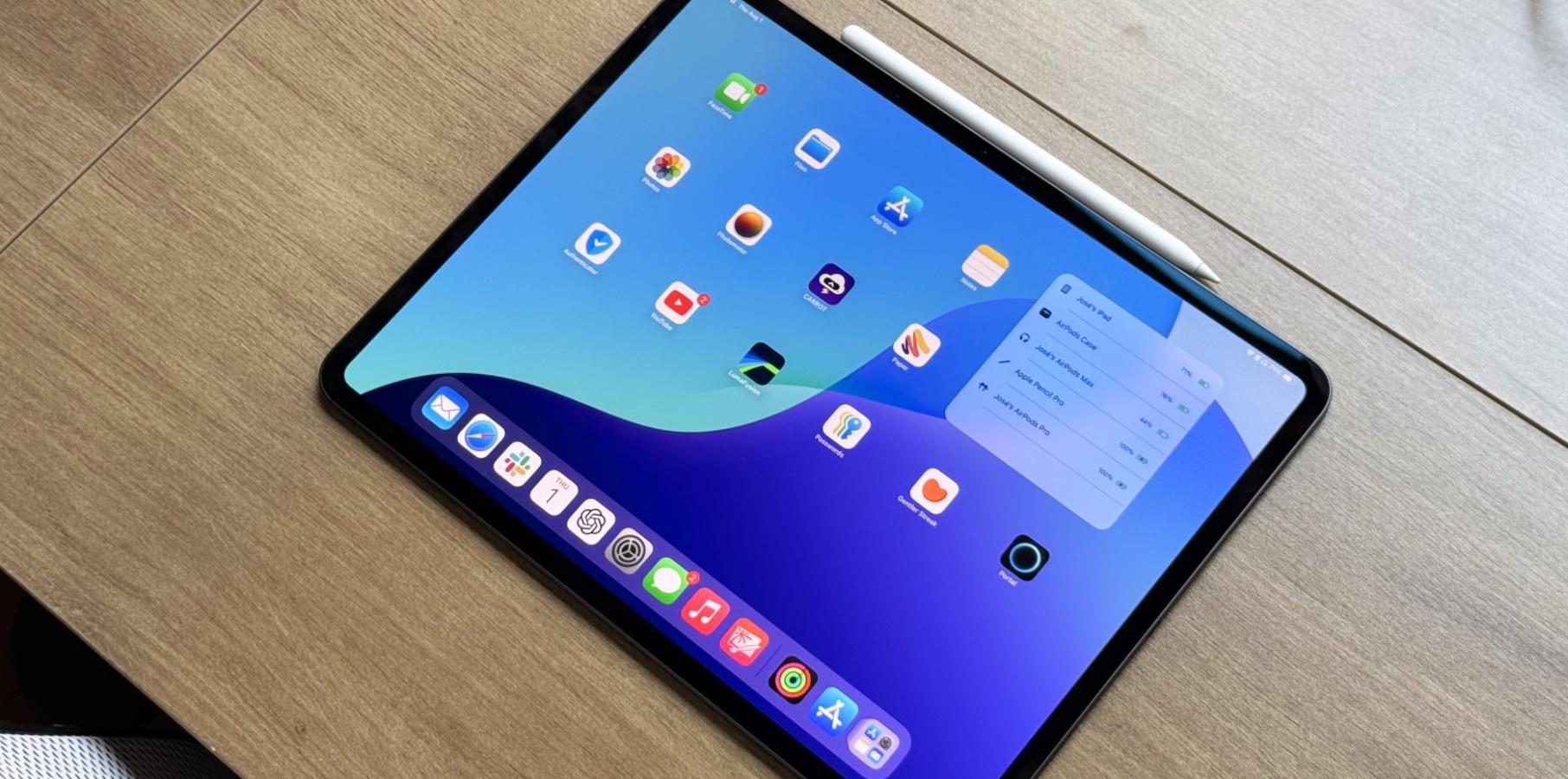
Image source: Apple Inc.

While the M4 greatly improves over the M3, Apple has apparently canceled the M5 with the newer 2nm process developed by TSMC due to cost concerns. According to The Elec, the M5 chip will adopt a new System On Integrated Chip technology, which enhances thermal management and reduces electrical leakage.

With that, we could see enhancements in performance and efficiency and a broader focus on Neural Engine tasks for AI and Apple Intelligence. While knowing that Apple has moved on to producing its newer processors, we still have several months with M4 products, including some new ones that need to be unveiled.

When will Apple start introducing new M5 products?

If the company follows the schedule analysts predict, the M5 family won’t be available before the end of next year. Here’s what we expect:

  • Late 2025: Apple should unveil at least new M5 MacBook Pro models with the M5 Pro and M5 Max options; the company could also update the Mac mini and iMac, although it’s unclear at this moment;
  • Late 2025/Early 2026: Apple introduces the M5 iPad Pro;
  • Early 2026/Mid 2026: Cupertino unveils new MacBook Air models with the M5 processor;
  • Mid 2026/Late 2026: Apple expands the M5 chips for the Mac Studio and potentially to Mac Pro, depending on the upgrades expected for this processor.

It’s important to note that bigger changes are expected to start appearing by 2026 or 2027, when Apple will unveil a new OLED display technology for the MacBook Pro, followed by an improved display on the iPad Pro. In the next couple of years, we could also see Apple unveiling its first foldable products as well.

Source

Posted on

US TikTok ban imminent after appeal fails

An appeals court in the United States has upheld a law passed by Congress earlier in 2024 to ban China-owned video-sharing social media platform TikTok in the US on national security and data protection grounds

The law sailed through the US legislature back in April, after being included in a wider package of aid for Israel, Taiwan and Ukraine. It gives TikTok’s parent, ByteDance, notice to either sell TikTok to a US-based entity or be removed from online app stores for good – with both Apple and Google facing financial penalties if they do not comply.

The law’s passage came amid a growing freeze in relations between the US and China, and a spate of accusations from Western cyber security agencies claiming widespread Chinese cyber espionage.

TikTok appealed against this, but the US Court of Appeals for the District of Columba Circuit today [6 December] unanimously denied this petition.

In the court’s opinion on the case of TikTok and ByteDance Ltd versus Merrick Garland [US attorney general], judge Douglas Ginsberg said the decision had significant implications for both TikTok and its users, because unless ByteDance divests the business by 19 January 2025, or the president grants a 90-day extension, the TikTok platform will “effectively be unavailable in the United States…. Consequently, TikTok’s millions of users will need to find alternative media of communication.”

Ginsberg wrote this burden was attributable to China’s hybrid commercial threat to US security and not the US government, which he wrote has been engaged with TikTok for some time in efforts to find alternative solutions.

Ginsberg also dismissed TikTok’s arguments that a ban infringed its First Amendment rights – the First Amendment, dating back to December 1791, guarantees freedom of speech and the press in the US.

“The First Amendment exists to protect free speech in the United States. Here the government acted solely to protect that freedom from a foreign adversary nation and to limit that adversary’s ability to gather data on people in the United States,” he wrote.

“The Supreme Court has an established historical record of protecting Americans’ right to free speech, and we expect they will do just that on this important constitutional issue,” a TikTok spokesperson said, via social media site X.

“Unfortunately, the TikTok ban was conceived and pushed through based upon inaccurate, flawed and hypothetical information, resulting in outright censorship of the American people. The TikTok ban, unless stopped, will silence the voices of over 170 million Americans here in the US and around the world on 19 January 2025.”

According to US news network CNBC, TikTok plans to seek an injunction to have the case heard before the US Supreme Court in Washington DC.

Trump’s change of heart?

The one saving grace for TikTok may yet be the incoming Republican administration led by president elect Donald Trump, who returns to the White House in January for an historic second term.

Prior to the 2020 election Trump had led calls for a ban on TikTok, and came close to achieving this goal. However, after the Biden administration’s legal intervention, he now appears to have had a change of heart. Indeed, back in September, he briefly positioned it as a campaign issue, encouraging TikTok users to cast their vote for him. At the time of going to press, however, Trump had not stated whether he will actually enforce a ban.

Time’s up

Craig Singleton, senior fellow and China program director at the Foundation for Defense of Democracies, who contributed extensively to an amicus brief on which the court heavily relied, said the ruling underscored a growing consensus that time was up for TikTok, at least in its current form.

“The unanimous decision is a clear warning shot to foreign companies operating in sensitive sectors – they must play by the rules or face the consequences,” said Singleton.

“Expect TikTok to pull every lever – lobbying, lawsuits, and public pressure – to stall divestiture. But. the bipartisan appetite for action means the company’s runway is rapidly shrinking.”

The ruling also serves as a bellwether for how the US, and by extension its core allies including the UK, confront tech threats from authoritarian regimes, and for policymakers, the saga so far serves as a test of whether the law can keep up with emerging threats, he said.

“For Beijing, this is more than just about TikTok – it’s a symbolic and strategic loss in the broader tech competition with Washington,” added Singleton. “There can be no doubt that this ruling undercuts Beijing’s ability to use TikTok as a powerful tool for influence, data collection, and narrative control within the US, marking a significant strategic loss.

“China has few meaningful options apart from retaliatory rhetoric or tit-for-tat measures targeting U.S. companies operating in China,” Singleton told Computer Weekly in emailed comments.

“While Beijing is likely to issue strong condemnations, we shouldn’t expect any dramatic responses – China may complain loudly, but with its economy under strain, this is more a diplomatic headache than an immediate crisis.”

Source

Posted on

Intel announces its new Battlemage graphics cards, and they might just be the 1440p budget champions we’ve been waiting for

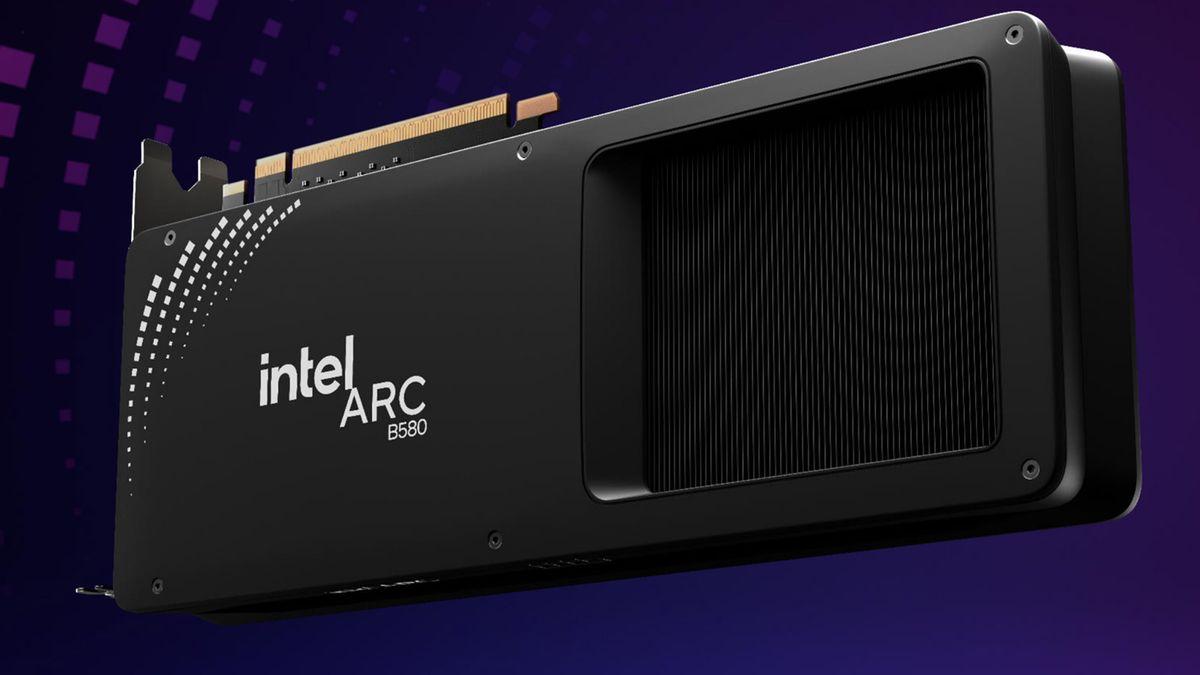
Intel officially announced its latest discrete graphics cards on this week, the Intel Arc B580 and Intel Arc B570, based on its next-gen Xe2 graphics architecture.

Targeting the budget gaming segment, the new flagship Intel Arc B580 GPU features 20 Xe-cores, 20 ray tracing units, 160 XMX AI Engines and 12GB GDDR6 memory with a 192-bit memory interface, specs that could make it a very competitive 1440p graphics card.

The Intel Arc B570, meanwhile, features 18 Xe-cores, 18 ray tracing units, 144 XMX AI Engines, and 10GB GDDR6 memory with a 160-bit memory interface. And while this is less than the Arc B580, it is more memory bandwidth than the Nvidia RTX 4060 Ti and AMD Radeon RX 7600 XT, both of which struggled when it came to 1440p gaming in gaming benchmarks due to their constrained memory bandwidth.

What might be even more compelling for gamers right now, though, is the launch price of the two cards, with the Intel reference cards debuting at $249 (about £195/AU$385) and $219 (about £175/AU$340), respectively, though third-party cards from Acer, ASRock, Gunnir, and others will vary in price.

The Arc B580 will launch first on December 13, 2024, with the Arc B570 going on sale the following month on January 16, 2025.

Swipe to scroll horizontally

Intel Arc B-series graphics card specs

Header Cell – Column 0 Intel Arc B580 Intel Arc B570
Price $249 (about £195/AU$385) $219 (about £175/AU$340)
Xe-cores 20 18
Render Slices 5 5
Ray Tracing Units 20 18
XMX AI Engines 160 144
Graphics clock 2,670Mhz 2,500MHz
Memory 12GB 10GB
Memory Interface 192-bit 160-bit
Memory Bandwidth 456GB/s 380GB/s
Peak TOPS 233 203
Total Board Power 190W 150W
Power Connector 1 x 8-pin 1 x 8-pin
PCIe Interface PCIe 4.0 PCIe 4.0
Media Accelerators AV1, HEVC, AVC, VP9, XAVC-H AV1, HEVC, AVC, VP9, XAVC-H
Display output 3x DisplayPort 2.1, 1x HDMI 2.1 3x DisplayPort 2.1, 1x HDMI 2.1

Intel’s new card might be the RTX 3060 Ti successor we’ve been missing

When it launched a couple of years back, the Nvidia RTX 3060 Ti was a much more powerful card than it had a right to be, especially for it’s initial launch price. It ended up being one of the most popular graphics cards of the entire Nvidia Ampere generation, and so when the RTX 4060 Ti launched last year, fans of the 3060 Ti had high hopes for its successor.

Unfortunately, the RTX 4060 Ti was hamstrung out the gate by a memory interface that made it effectively impossible to process textures at 1440p with any kind of speed or efficiency, even when opting for the variant with the larger 16GB memory pool.

{ window.reliablePageLoad.then(() => { var componentContainer = document.querySelector(“#slice-container-newsletterForm-articleInbodyContent-nG8a8nka92YcKVHyEBsQs4”); if (componentContainer) { var data = {“layout”:”inbodyContent”,”header”:”Get the best Black Friday deals direct to your inbox, plus news, reviews, and more.”,”tagline”:”Sign up to be the first to know about unmissable Black Friday deals on top tech, plus get all your favorite TechRadar content.”,”formFooterText”:”By submitting your information you agree to the Terms & Conditions and Privacy Policy and are aged 16 or over.”,”successMessage”:{“body”:”Thank you for signing up. You will receive a confirmation email shortly.”},”failureMessage”:”There was a problem. Please refresh the page and try again.”,”method”:”POST”,”inputs”:[{“type”:”hidden”,”name”:”NAME”},{“type”:”email”,”name”:”MAIL”,”placeholder”:”Your Email Address”,”required”:true},{“type”:”hidden”,”name”:”NEWSLETTER_CODE”,”value”:”XTR-D”},{“type”:”hidden”,”name”:”LANG”,”value”:”EN”},{“type”:”hidden”,”name”:”SOURCE”,”value”:”60″},{“type”:”hidden”,”name”:”COUNTRY”},{“type”:”checkbox”,”name”:”CONTACT_OTHER_BRANDS”,”label”:{“text”:”Contact me with news and offers from other Future brands”}},{“type”:”checkbox”,”name”:”CONTACT_PARTNERS”,”label”:{“text”:”Receive email from us on behalf of our trusted partners or sponsors”}},{“type”:”submit”,”value”:”Sign me up”,”required”:true}],”endpoint”:”https://newsletter-subscribe.futureplc.com/v2/submission/submit”,”analytics”:[{“analyticsType”:”widgetViewed”}],”ariaLabels”:{}}; var triggerHydrate = function() { window.sliceComponents.newsletterForm.hydrate(data, componentContainer); } if (window.lazyObserveElement) { window.lazyObserveElement(componentContainer, triggerHydrate); } else { triggerHydrate(); } } }).catch(err => console.error(‘%c FTE ‘,’background: #9306F9; color: #ffffff’,’Hydration Script has failed for newsletterForm-articleInbodyContent-nG8a8nka92YcKVHyEBsQs4 Slice’, err)); }).catch(err => console.error(‘%c FTE ‘,’background: #9306F9; color: #ffffff’,’Externals script failed to load’, err)); ]]>

Sign up to be the first to know about unmissable Black Friday deals on top tech, plus get all your favorite TechRadar content.

For $399 (about £315/AU$615) at launch, the card was a disappointment, as this was way too much money to spend on what was effectively a 1080p graphics card, whereas the RTX 3060 Ti, with a memory interface twice as large as the RTX 4060 Ti’s, could easily play games at 1440p with moderate to high settings at respectable framerates.

The only graphics cards to really make a splash in the sub-$400 segment over the past year and a half have been the Nvidia RTX 4060 and AMD RX 7600, and only really because of their pricing after the wild GPU price inflation on some of Nvidia and AMD’s flagship cards. And neither of those cards could handle 1440p gaming.

With the new Intel Arc B580 and Arc B570, however, it’s entirely possible that we might be able to see a new graphics card in the budget segment capable of tackling 1440p, the fastest-growing resolution for PC gaming, where their competitors at this price point cannot.

That’s something that’s been sorely missed these last couple of years, and while we’ll have to test the cards ourselves before we can say for certain, I’ve been impressed with Intel’s Xe2 cores in its Lunar Lake laptops, so I, for one, cannot wait to get my hands of the desktop version to take it for a spin.

You may also like…

Source

Posted on

Six trends that will define cyber through to 2030

Guessing the future is always a difficult task. Six trends for the next five years seem more apparent than others, and it will be interesting to re-read this article in 2029 to assess its accuracy. In the meantime, the six trends standing out as top priorities, in no particular order, are:

Preparing the post-quantum cryptographic migration, including raising top management awareness to provide sufficient resources.

There will be a need to identify where cryptography is used in the organisation, which can be found in several places, including libraries, the Internet of Things (IoT), communication protocols, storage systems, and databases. Prioritizing systems for the transition will be paramount, taking care to clearly identify your critical systems.

Choosing how to manage the transition will also be essential since it may hinder the organisation. More precisely, hybrid protocols, mixing classical and post-quantum cryptography, could be an interesting option to consider, since it allows your clients to migrate at their own pace.

Also, testing will be mandatory, while deploying a realistic test environment might be complex. Finally, the right migration time will be hard to establish, even if governments provide guidelines.

Finalising operational technologies (OT) oversight, improving their cyber resilience, and integrating them into existing cyber security operations.

This convergence started more than 10 years ago and is still ongoing. OT cyber security must include addressing human safety concerns and intensive collaboration with engineering.

The monitoring approach should rely on artificial intelligence (AI) to identify abnormal behaviour, from weak signals, to support advanced persistent threat hunting. Since some systems are legacy, they may lack the necessary features to directly collect the information needed. Encapsulating with an intermediate security system could be a viable solution.

A layered defence strategy and a movement toward a zero-trust architecture might help minimise the attack surface.

Improving cyber security fundamentals, including identity management and network micro-segmentation, and supporting zero-trust architecture while enabling automated threat response.

This leads to implementing robust identity and access management that enforces least-privilege principles and multi-factor authentication.

By integrating policy-based automation, access management becomes more dynamic, transparent and enforceable. Continuous monitoring and real-time analytics should be used to detect anomalies and unauthorised activities, including user behaviour, device posture and geolocation.

Learning how to conduct cyber security for artificial intelligence pipelines (AIOps) while constructing a business case for artificial intelligence-based cyber security, like zero-day attack detection.

This dual focus addresses the sharply increasing complexity of cyber threats and the pervasiveness of AI. As AI continues to revolutionise the landscape, international and domestic regulations are being defined and will become vital to ensure its compliance, resilience and trustworthiness.

Addressing increasing regulations to maintain global compliance, notably for privacy, critical infrastructure, and business continuity.

As stricter rules are adopted, like European Union’s (EU’s) General Data Protection Regulation (GDPR) and AI Act, California’s Consumer Privacy Act (CCPA) for privacy, as well as European Network and Information Systems Directive 2 (NIS2) and CISA guidelines in the United States for critical industries, and more specific requirements from the EU’s Digital Operational Resilience Act (DORA) for the financial industry, organisations need to contextualize these requirements and integrate them into their security posture.

Collaborating closely with third parties, including identifying their Software Bill of Materials (SBOM), and communicating any vulnerability along the supply chain. This will remain an important priority for security leaders as the global enterprise landscape becomes increasingly interconnected.

This should ensure a better understanding of the dependencies toward the third parties, and when an organisation becomes more mature, the broader interdependencies of their ecosystem.

In conclusion, while predicting the near future remains a challenging task, these six top priorities will play a pivotal role in organisational resilience.

As we look ahead, there seems to be a distant echo on the horizon. Let’s hope it is not your next threat!

Pierre-Martin Tardif is a member of the ISACA Emerging Trends Working Group. A longstanding IT and cyber security professional and educator, he is based in Quebec, Canada.

Source

Posted on

AMD announces CES 2025 launch event on January 6, 2025 – and drops a heavy hint that new RDNA 4 GPUs will be revealed

  • AMD announced its CES 2025 event will happen on Monday January 6
  • Jack Huynh, SVP of Computing and Graphics, will helm the press event
  • Huynh dropped a heavy hint on X that we’ll see RDNA 4 graphics cards

AMD has revealed when its press event is happening at CES 2025, and dropped a heavy hint that we will indeed see RDNA 4 desktop graphics cards at the show.

Notably, the event, which is scheduled for Monday January 6, 2025, at 11am PT (2pm EST, 7pm in the UK), is not referred to as a keynote. Also, rather than being delivered by CEO Lisa Su, it’s Jack Huynh, SVP and GM, Computing and Graphics at AMD, who will be presenting Team Red’s latest goodies.

The official AMD web page for the event just went live (as VideoCardz noticed), but that doesn’t give us anything beyond the date, and the teaser that we’ll get to “hear how AMD is expanding its leadership across PCs and gaming.”

However, in a post on X, Huynh specifically mentions AMD’s “next generation of innovation across gaming” which surely refers to the firm’s RDNA 4 GPUs, and likely new APUs too.

As we’ve heard before, RDNA 4 GPUs are rumored for CES 2025, as well as a bunch of Ryzen processors that’ll be of interest to gamers – including Strix Halo laptop APUs and Ryzen Z2 flavors for handhelds.

On top of that, we should see other mobile APUs and the Ryzen 9950X3D plus 9900X3D processors, and more besides. It’s going to be an event jam-packed with product launches if the grapevine is correct.

An AMD Radeon RX 7800 XT on a table

(Image credit: Future / John Loeffler)

Analysis: Exciting times, especially if latest RDNA 4 rumors are right

Earlier this year, the hope was very much that AMD would push out new RDNA 4 graphics cards – which will purportedly only land in the mid-range this time around, with no challenger for Nvidia’s next-gen flagship – late in 2024.

{ window.reliablePageLoad.then(() => { var componentContainer = document.querySelector(“#slice-container-newsletterForm-articleInbodyContent-NyxsCpBf57gEs2EdgWPLGS”); if (componentContainer) { var data = {“layout”:”inbodyContent”,”header”:”Get the best Black Friday deals direct to your inbox, plus news, reviews, and more.”,”tagline”:”Sign up to be the first to know about unmissable Black Friday deals on top tech, plus get all your favorite TechRadar content.”,”formFooterText”:”By submitting your information you agree to the Terms & Conditions and Privacy Policy and are aged 16 or over.”,”successMessage”:{“body”:”Thank you for signing up. You will receive a confirmation email shortly.”},”failureMessage”:”There was a problem. Please refresh the page and try again.”,”method”:”POST”,”inputs”:[{“type”:”hidden”,”name”:”NAME”},{“type”:”email”,”name”:”MAIL”,”placeholder”:”Your Email Address”,”required”:true},{“type”:”hidden”,”name”:”NEWSLETTER_CODE”,”value”:”XTR-D”},{“type”:”hidden”,”name”:”LANG”,”value”:”EN”},{“type”:”hidden”,”name”:”SOURCE”,”value”:”60″},{“type”:”hidden”,”name”:”COUNTRY”},{“type”:”checkbox”,”name”:”CONTACT_OTHER_BRANDS”,”label”:{“text”:”Contact me with news and offers from other Future brands”}},{“type”:”checkbox”,”name”:”CONTACT_PARTNERS”,”label”:{“text”:”Receive email from us on behalf of our trusted partners or sponsors”}},{“type”:”submit”,”value”:”Sign me up”,”required”:true}],”endpoint”:”https://newsletter-subscribe.futureplc.com/v2/submission/submit”,”analytics”:[{“analyticsType”:”widgetViewed”}],”ariaLabels”:{}}; var triggerHydrate = function() { window.sliceComponents.newsletterForm.hydrate(data, componentContainer); } if (window.lazyObserveElement) { window.lazyObserveElement(componentContainer, triggerHydrate); } else { triggerHydrate(); } } }).catch(err => console.error(‘%c FTE ‘,’background: #9306F9; color: #ffffff’,’Hydration Script has failed for newsletterForm-articleInbodyContent-NyxsCpBf57gEs2EdgWPLGS Slice’, err)); }).catch(err => console.error(‘%c FTE ‘,’background: #9306F9; color: #ffffff’,’Externals script failed to load’, err)); ]]>

Sign up to be the first to know about unmissable Black Friday deals on top tech, plus get all your favorite TechRadar content.

Obviously that didn’t happen, and as noted, rumors have been saying for some time now that we’ll see these graphics cards at CES 2025. If there’s one key piece of AMD’s next generation of gaming, it’s RDNA 4, so Huynh’s comment pretty much solidifies all the evidence around the launch of what could be the RX 8800 XT (and likely a partner GPU, such as the 8700 XT perhaps).

In theory, the 8800 XT could turn out to be a big leap in ray tracing performance for AMD – if fresh speculation is right – and a good upgrade for rasterized (non-ray tracing) frame rates, too. As ever, a lot will ride on the price tag Team Red pins on the GPU, and whatever else RDNA 4 might have to offer.

You might also like

Source

Posted on

Schwarz Group partners with Google on EU sovereign cloud

Google has partnered with retail giant Schwarz Group to deliver what the pair claim is truly secure and sovereign cloud-based collaboration for German and European regulated industries.

Through the partnership, Schwarz Group’s StackIT, the cloud provider for the retailer, which operates as an independent company offering sovereign cloud capabilities, will provide client-side encryption of customers’ Google Workspace data.

StackIT said customers’ data will remain resident within the European Union (EU), with full redundancy offered by backups hosted solely in its European datacentres to meet customer demands around data protection, data residency and data resiliency.

“Germany and the EU have until now lacked enterprise-grade cloud collaboration solutions that fully address the sovereignty requirements of regulated industries, including ensuring all data is secured and backed up on local soil with absolutely no opportunity for access by foreign nations or platform providers,” said Rolf Schumann, co-CEO of Schwarz Digits, the IT and digital division of the Schwarz Group.

“Our partnership and new offering with Google Cloud will fill this gap with an entirely new business model.”

Client-side encryption means Google has no access to customers’ data. According to Schwarz and Google, this safeguards the sovereignty of not only Schwarz Group, but also all customers who value the independence of their operations, giving them full confidence that their data is always in their control.

“This new partnership will enable the companies of Schwarz Group to combine its leadership in digital transformation with Google Cloud’s strengths in productivity, collaboration and security, enabled by our cutting-edge AI,” said Sundar Pichai, CEO of Google and Alphabet. “Together, we are opening up a world of new, sovereign opportunities for European organisations to innovate and build on our joint solutions, accelerating a new era of innovation.”

Through the partnership, Google Cloud’s security will be integrated with those of XM Cyber, Schwarz Digits’ hybrid cloud security company. This integrated offering will then be distributed to customers via the Google Cloud Marketplace.

According to Google and Schwarz, this integrated security will help German and European organisations, particularly those in highly regulated industries, raise the bar on their enterprise and multi-cloud security. In addition, XM Cyber’s Continuous Exposure Management will be embedded into the sovereign Google Workspace office productivity suite offered to European enterprises.

“This partnership changes the game for regulated industry players in Europe by removing the sovereignty and security concerns that often hold back more ambitious adoption of the cloud for productivity and collaboration,” said Thomas Kurian, CEO of Google Cloud. “Our alliance with companies of Schwarz Group will enable entire industries in Europe to deliver digital innovation with security and compliance at its core.”

Schwarz Group is Europe’s largest retailer, and the fourth-largest in the world. The company plans to transition its global office workforce to Google Workspace. The partnership with Google, according to Schwarz Group, enables critical workplace data to be protected against third-party access including foreign government institutions, and also transferred to alternate service providers if needed.

“Switching to Google Workspace is an important step for us out of legacy and into innovative, efficient and future-proof cloud-based collaboration,” said Christian Müller, Co-CEO of Schwarz Digits. “Google Workspace is the most secure and reliable productivity platform in the industry today, and we expect our organisation-wide migration to have significant flow-on benefits to all areas of operations from simplifying IT management to rendering our point-of-sale workflows significantly more efficient.”

Source