Posted on

AMD Strix Halo leak suggests chips are imminent, but gives me a couple of reasons to worry about the flagship laptop CPU

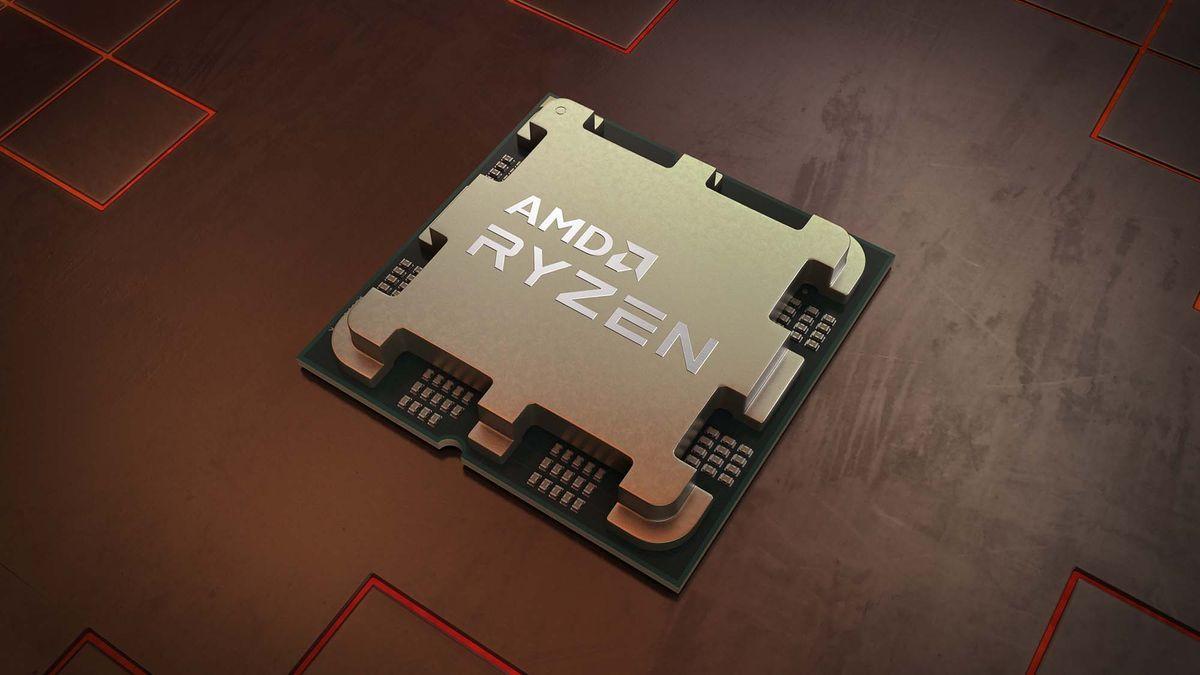
One of AMD’s incoming Strix Halo chips has been spotted in a benchmark for the first time, and this is the flagship APU in fact, indicating that as rumors suggest, these Ryzen laptop processors are nearing release.

VideoCardz noticed the Geekbench result for a 16-core (Zen 5) Strix Halo chip with Radeon 8060S integrated graphics.

The APU – which is AMD’s fancy name for an all-in-one processor with an integrated GPU and NPU – is called the AMD Ryzen AI Max+ Pro 395, and is shown as boosting up to 5.1GHz.

As for the actual benchmark result, the test run is Vulkan performance, which interestingly is a graphics metric. However, the score of 67,004 is slower than expected – but there’s a reason for that, which I’ll discuss next.

Canva

(Image credit: Canva)

Analysis: GPU performance and workstation-only worries

That’s a relatively disappointing score, because as VideoCardz points out, the RX 7600 desktop graphics card hits about 90,000 in that test. The hope is that the Radeon 8060S integrated GPU in the Strix Halo flagship will be able to get a lot closer to the RX 7600 than this, based on prerelease hype – which has compared it to an Nvidia RTX 4070 discrete mobile GPU in the past – and it might well do, in the end.

Remember, this is still an early sample chip, so the finished Ryzen AI Max+ Pro 395 will undoubtedly run faster. It’s too soon to make judgments, especially based on just a single leak (from Geekbench – which is hardly the first pick for graphics benchmarks, of course).

This leak is more about the fact that the Strix Halo flagship is floating around being tested, rather than the actual result itself. It’s another hefty hint that the rumors of AMD launching the new range of APUs at CES 2025 are correct.

{ window.reliablePageLoad.then(() => { var componentContainer = document.querySelector(“#slice-container-newsletterForm-articleInbodyContent-pJ7zySXWLXuUu2JSotoCZK”); if (componentContainer) { var data = {“layout”:”inbodyContent”,”header”:”Get daily insight, inspiration and deals in your inbox”,”tagline”:”Sign up for breaking news, reviews, opinion, top tech deals, and more.”,”formFooterText”:”By submitting your information you agree to the Terms & Conditions and Privacy Policy and are aged 16 or over.”,”successMessage”:{“body”:”Thank you for signing up. You will receive a confirmation email shortly.”},”failureMessage”:”There was a problem. Please refresh the page and try again.”,”method”:”POST”,”inputs”:[{“type”:”hidden”,”name”:”NAME”},{“type”:”email”,”name”:”MAIL”,”placeholder”:”Your Email Address”,”required”:true},{“type”:”hidden”,”name”:”NEWSLETTER_CODE”,”value”:”XTR-D”},{“type”:”hidden”,”name”:”LANG”,”value”:”EN”},{“type”:”hidden”,”name”:”SOURCE”,”value”:”60″},{“type”:”hidden”,”name”:”COUNTRY”},{“type”:”checkbox”,”name”:”CONTACT_OTHER_BRANDS”,”label”:{“text”:”Contact me with news and offers from other Future brands”}},{“type”:”checkbox”,”name”:”CONTACT_PARTNERS”,”label”:{“text”:”Receive email from us on behalf of our trusted partners or sponsors”}},{“type”:”submit”,”value”:”Sign me up”,”required”:true}],”endpoint”:”https://newsletter-subscribe.futureplc.com/v2/submission/submit”,”analytics”:[{“analyticsType”:”widgetViewed”}],”ariaLabels”:{}}; var triggerHydrate = function() { window.sliceComponents.newsletterForm.hydrate(data, componentContainer); } if (window.lazyObserveElement) { window.lazyObserveElement(componentContainer, triggerHydrate); } else { triggerHydrate(); } } }).catch(err => console.error(‘%c FTE ‘,’background: #9306F9; color: #ffffff’,’Hydration Script has failed for newsletterForm-articleInbodyContent-pJ7zySXWLXuUu2JSotoCZK Slice’, err)); }).catch(err => console.error(‘%c FTE ‘,’background: #9306F9; color: #ffffff’,’Externals script failed to load’, err)); ]]>

Sign up for breaking news, reviews, opinion, top tech deals, and more.

However, perhaps everyone should temper their expectations a little in some respects. Yes, the Strix Halo flagship’s Radeon GPU has 40 CUs and is based on a refreshed take of RDNA 3 (dubbed RDNA 3.5) – compared to 32 CUs and vanilla RDNA 3 in the RX 7600 – but the latter is still a discrete desktop GPU, and integrated solutions are clearly more limited in terms of design and thermals.

We will just have to see how performance shakes out when it comes to reviews, of course, or indeed further leaks. What I’m betting we can all agree on, most likely, is that name, which seems very clunky – but it also carries another worrying hint.

The ‘Pro’ in the name (Ryzen AI Max+ Pro 395) indicates that this is a workstation part. Now, there could be a Ryzen AI Max+ 395 (non-Pro) counterpart for thin-and-light gaming laptops that come with the same CPU and GPU configuration – or, as previous chatter on the grapevine has suggested, AMD might reserve this flagship APU for workstations only.

Gaming notebooks may only get a lesser Ryzen AI Max+ chip, and this is a hint that this is the case, albeit an admittedly thin one. Again, all we can do is keep watching the leaks, but we’ll likely find out at CES 2025 with that big Strix Halo reveal: will it be workstation-only, or not, for the flagship?
You might also like

Source

Posted on

I’ve never taken Intel’s GPU competition seriously, but the Arc B580 has left me no choice

  • Intel’s Battlemage Arc B580 GPU just scored higher than the RTX 4060 in Vulkan testing
  • AMD’s RX 7600 loses to both Nvidia and Intel GPUs in Vulkan tests
  • The new GPU will launch on December 13, for $249 / £249 / around AU$439

It’s easy to place AMD and Nvidia as leaders within the GPU market, with the latter’s RTX 4000 series currently dominating over the RX 7000 series – but Intel is about to shake things up, with the Arc B580 defeating both the RTX 4060 and RX 7600 GPUs in Vulkan benchmark tests.

According to Tom’s Hardware (based on public benchmark tests), the Intel Arc B580 loses out to Nvidia’s RTX 4060 in OpenCL API (which is irrelevant for gaming) but successfully defeats Team Green’s GPU with a 6% lead in Vulkan (one of the APIs used for most games).

The Battlemage GPU is priced at $249 / £249 / around AU$439 which is cheaper than the RTX 4060 at MSRP ($299 / £289 / AU$545), and it’s purported to be the faster GPU (especially equipped with 12GB of VRAM). If there’s anything to take from this, it’s that Intel is suddenly in pole position to reignite the budget GPU market and take the lead – though doing so will depend on AMD and Nvidia’s CES 2025 reveals.

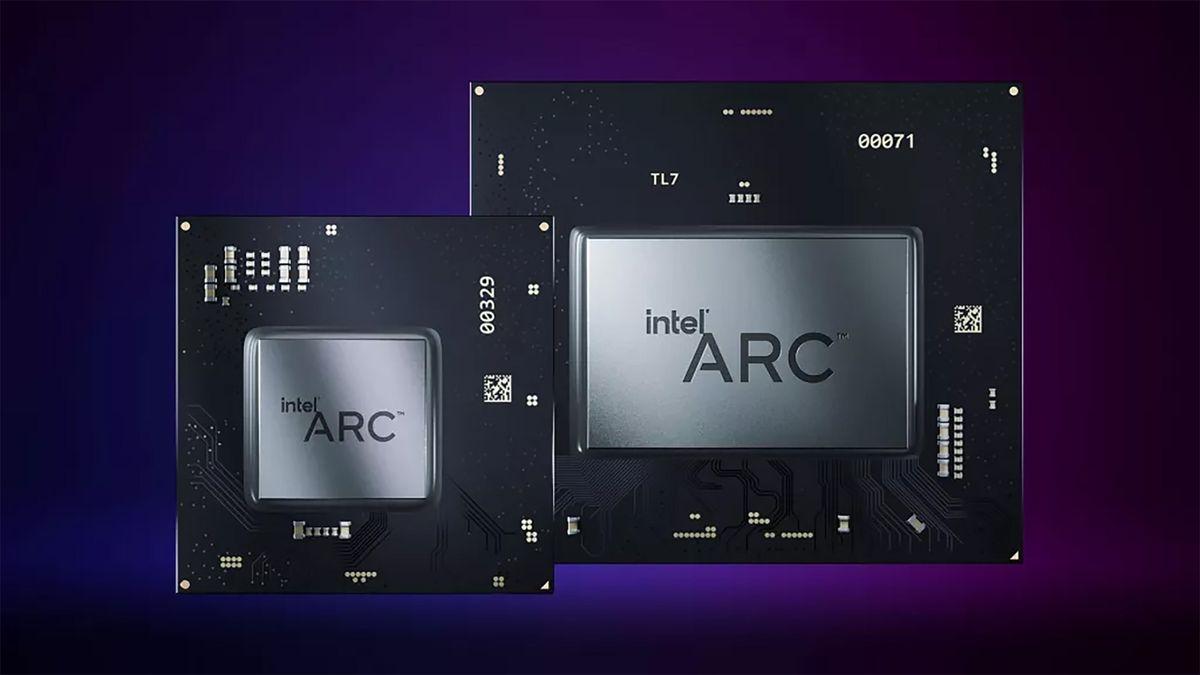
The Intel Arc logo against a blue and purple backdrop

(Image credit: Intel)

Say goodbye to 8GB GPUs with Intel…

Team Red has already made it clear that its focus has shifted from high-end GPUs to mid-range options, with a strong emphasis on AI upscaling going forward with FSR 4 (much like Nvidia’s continuing focus on AI for DLSS 3’s successor). With this in mind, I’m optimistic about what both have to offer at CES in January when it comes to budget options.

The Intel Arc B580 will feature 12GB of VRAM, while the cheaper B570 will utilize 10GB of VRAM – 8GB of VRAM is nowhere near enough to tackle games today, and it’s great to see that Intel abandoning this long-standing staple of affordable GPUs. More and more triple-A titles are demanding more VRAM for consistent performance and after Apple’s move away from 8GB of unified memory (shared RAM between the CPU and GPU) for Macs, I’m expecting Nvidia and AMD to follow suit.

Spotted by VideoCardz, XeSS Frame Generation has been leaked and is now available for Intel GPU owners to use via Nexus Mods – AI upscaling has been the talk of the town for PC gaming for improved frame rates and image quality, and now that Team Blue has joined the party, there is room for competition in the budget GPUs arena.

You might also like…

{ window.reliablePageLoad.then(() => { var componentContainer = document.querySelector(“#slice-container-newsletterForm-articleInbodyContent-k9f3g8H8RCwAPYgRmn35nZ”); if (componentContainer) { var data = {“layout”:”inbodyContent”,”header”:”Get daily insight, inspiration and deals in your inbox”,”tagline”:”Sign up for breaking news, reviews, opinion, top tech deals, and more.”,”formFooterText”:”By submitting your information you agree to the Terms & Conditions and Privacy Policy and are aged 16 or over.”,”successMessage”:{“body”:”Thank you for signing up. You will receive a confirmation email shortly.”},”failureMessage”:”There was a problem. Please refresh the page and try again.”,”method”:”POST”,”inputs”:[{“type”:”hidden”,”name”:”NAME”},{“type”:”email”,”name”:”MAIL”,”placeholder”:”Your Email Address”,”required”:true},{“type”:”hidden”,”name”:”NEWSLETTER_CODE”,”value”:”XTR-D”},{“type”:”hidden”,”name”:”LANG”,”value”:”EN”},{“type”:”hidden”,”name”:”SOURCE”,”value”:”60″},{“type”:”hidden”,”name”:”COUNTRY”},{“type”:”checkbox”,”name”:”CONTACT_OTHER_BRANDS”,”label”:{“text”:”Contact me with news and offers from other Future brands”}},{“type”:”checkbox”,”name”:”CONTACT_PARTNERS”,”label”:{“text”:”Receive email from us on behalf of our trusted partners or sponsors”}},{“type”:”submit”,”value”:”Sign me up”,”required”:true}],”endpoint”:”https://newsletter-subscribe.futureplc.com/v2/submission/submit”,”analytics”:[{“analyticsType”:”widgetViewed”}],”ariaLabels”:{}}; var triggerHydrate = function() { window.sliceComponents.newsletterForm.hydrate(data, componentContainer); } if (window.lazyObserveElement) { window.lazyObserveElement(componentContainer, triggerHydrate); } else { triggerHydrate(); } } }).catch(err => console.error(‘%c FTE ‘,’background: #9306F9; color: #ffffff’,’Hydration Script has failed for newsletterForm-articleInbodyContent-k9f3g8H8RCwAPYgRmn35nZ Slice’, err)); }).catch(err => console.error(‘%c FTE ‘,’background: #9306F9; color: #ffffff’,’Externals script failed to load’, err)); ]]>

Sign up for breaking news, reviews, opinion, top tech deals, and more.

Source

Posted on

GPU sales have slumped badly as PC gamers wait for next-gen AMD and Nvidia graphics cards – and I don’t blame them

  • GPU sales for Q3 are down almost 8% year-on-year
  • This is normally a strong period for sales of discrete graphics cards
  • It seems that gamers are holding off for RTX 5000 and RDNA 4 GPUs

Normally, this time of year would witness strong sales in the desktop GPU market, but one analyst firm observes that Q3 2024 has seen a distinct drop in buying activity.

This comes from Jon Peddie Research (JPR), which has compiled figures for Q3 sales of ‘graphics add-in boards’ (meaning standalone GPUs that slot into desktop PCs) finding that 8.1 million units were shifted in the quarter.

That’s down 7.9% on the same quarter in 2023, a fairly hefty drop, and it’s also down compared to Q2 2024, with an even larger decrease of 14.5%.

AMD lost a bit more ground here, too, as Nvidia now has 90% of the discrete graphics card market (up from 88% in Q2), with Team Red holding the remaining 10% (down from 12%). Intel Arc products don’t register on the scales for standalone GPUs, sadly for Team Blue – though unsurprisingly it still holds the majority share when it comes to CPU-integrated graphics.

The future also looks gloomy, JPR forecasts, as discrete GPUs are forecast to have a negative compound annual growth rate of -6%, with the market set to shrink further through to 2028.

A trio of Nvidia RTX 40-series Super GPU against a green and black background

(Image credit: Nvidia)

Analysis: Buyers are playing a waiting game

Obviously, this isn’t great news for any of the GPU giants, but AMD will be particularly displeased to see more market share slip away from it – the company is only just clinging onto double digits at this point.

A year ago, Team Red had a 17% share of the market. So, despite some notably successful Radeon GPU launches in recent times – namely the RX 7900 GRE, which in fact tops our list of the best graphics cards, and the RX 7800 XT, a strong mid-range offering that headed up that list when it came out last year – AMD is floundering, at least according to these stats.

{ window.reliablePageLoad.then(() => { var componentContainer = document.querySelector(“#slice-container-newsletterForm-articleInbodyContent-5LYiGr5H6ymd53PNgNAASY”); if (componentContainer) { var data = {“layout”:”inbodyContent”,”header”:”Get daily insight, inspiration and deals in your inbox”,”tagline”:”Sign up for breaking news, reviews, opinion, top tech deals, and more.”,”formFooterText”:”By submitting your information you agree to the Terms & Conditions and Privacy Policy and are aged 16 or over.”,”successMessage”:{“body”:”Thank you for signing up. You will receive a confirmation email shortly.”},”failureMessage”:”There was a problem. Please refresh the page and try again.”,”method”:”POST”,”inputs”:[{“type”:”hidden”,”name”:”NAME”},{“type”:”email”,”name”:”MAIL”,”placeholder”:”Your Email Address”,”required”:true},{“type”:”hidden”,”name”:”NEWSLETTER_CODE”,”value”:”XTR-D”},{“type”:”hidden”,”name”:”LANG”,”value”:”EN”},{“type”:”hidden”,”name”:”SOURCE”,”value”:”60″},{“type”:”hidden”,”name”:”COUNTRY”},{“type”:”checkbox”,”name”:”CONTACT_OTHER_BRANDS”,”label”:{“text”:”Contact me with news and offers from other Future brands”}},{“type”:”checkbox”,”name”:”CONTACT_PARTNERS”,”label”:{“text”:”Receive email from us on behalf of our trusted partners or sponsors”}},{“type”:”submit”,”value”:”Sign me up”,”required”:true}],”endpoint”:”https://newsletter-subscribe.futureplc.com/v2/submission/submit”,”analytics”:[{“analyticsType”:”widgetViewed”}],”ariaLabels”:{}}; var triggerHydrate = function() { window.sliceComponents.newsletterForm.hydrate(data, componentContainer); } if (window.lazyObserveElement) { window.lazyObserveElement(componentContainer, triggerHydrate); } else { triggerHydrate(); } } }).catch(err => console.error(‘%c FTE ‘,’background: #9306F9; color: #ffffff’,’Hydration Script has failed for newsletterForm-articleInbodyContent-5LYiGr5H6ymd53PNgNAASY Slice’, err)); }).catch(err => console.error(‘%c FTE ‘,’background: #9306F9; color: #ffffff’,’Externals script failed to load’, err)); ]]>

Sign up for breaking news, reviews, opinion, top tech deals, and more.

Why are overall GPU sales down in a reversal of the normal picture for the third quarter? That’s surely due to the proximity of next-gen graphics cards from AMD and Nvidia, which are about to launch, in theory, at CES 2025 in both cases.

Gamers are likely holding off for those RTX 5000 GPUs and RDNA 4 GPUs – I know I am, as it just makes sense at this stage of the launch timeframe. Indeed, sales may have been affected earlier this year, too, as would-be buyers may have still been hopeful that these next-gen graphics cards could turn up late in 2024 – along with Intel’s Battlemage desktop GPUs (2nd-gen models that were recently revealed). We’re also likely to see some potential RTX 4000 and RX 7000 price drops when the new cards are revealed, which cash-strapped PC gamers could be waiting for.

A further issue that Jon Peddie points out is that the attach rate of discrete GPUs relative to CPUs in desktop PCs has dropped, meaning that more PCs are shipping with no discrete graphics card, relying on integrated graphics instead. That attach rate fell by 26.9% in Q3 compared to the previous quarter, which again is a shaky sign for GPU makers.

Finally, the reason for the prediction of negative growth through to 2028 is Trump coming into office in the US and imposing import tariffs (particularly on China) that are potentially going to push up the price of PCs and components by a hefty amount.

So those who are waiting for next-gen GPUs in the US might need to move pretty swiftly when these models (hopefully) go on sale early next year, before potentially major price hikes start kicking in for all manner of consumer electronics.

Via Tom’s Hardware

You might also like

Source

Posted on

Nvidia cranks RTX 5000 GPU hype machine up to full speed, teasing ‘GeForce at CES 2025’ as Witcher 4 trailer drops a big hint

  • Nvidia has teased revelations about ‘GeForce at CES 2025’
  • This must surely be next-gen GPUs, likely the RTX 5090 and 5080
  • Witcher 4 trailer also drops a big clue the RTX 5090 may be imminent

Nvidia has finally discarded what’s been one of the worst kept secrets in the tech world this year – alongside Apple’s M4 Macs – and teased that it is indeed about to reveal new GeForce products at CES 2025.

The teaser (highlighted by VideoCardz) stops short of mentioning RTX 5000, or RTX 50 series, or Blackwell, or any specific name at all, and just mentions ‘GeForce at CES 2025’ – but of course, this must surely be the launch of the next-gen graphics cards.

Previously, Nvidia has let us know about its CES 2025 keynote – which CEO Jensen Huang will give – but not what it’ll be about. Now we know it’s GeForce-related, and will surely consist of an RTX 5090 reveal, and probably other GPUs too (the RTX 5080 is another strong possibility, going by the rumors – and likely next-gen Blackwell laptop GPUs, as well).

Backing this up is the fact that the Witcher 4 has seen its first cinematic trailer aired at The Game Awards, and interestingly, there’s a mention of this footage being “pre-rendered in Unreal Engine 5 on an unannounced Nvidia GeForce RTX GPU.”

That must surely be the flagship RTX 5090, and this represents another weighty hint that said graphics card is about to be announced at CES, which is only a few weeks away now.

Nvidia GeForce CES 2025 Teaser

(Image credit: Nvidia / VideoCardz)

Analysis: Exciting times just around the corner

At this point, the RTX 5000 reveal is as confirmed as it’s going to be – without mentioning any product names – until Jensen takes the stage on January 6, at CES 2025, and actually unveils the RTX 5090 and probably RTX 5080 too. There’s further chatter about the possibility of the RTX 5070 turning up alongside them, but that GPU might be saved for a bit later – though it’s still expected to arrive early in 2025, going by the grapevine.

I certainly hope that the RTX 5070 is in the mix for an early launch, as this is the GPU that I’m most interested in regarding a near-future upgrade for my gaming PC. On the Nvidia side, that is – I’m also very keen to see how the rumored RX 8800 XT shapes up in comparison, particularly in terms of pricing (or whatever RDNA 4 products are revealed by AMD, also at CES 2025, as they’re almost certainly going to be strong mid-range offerings).

{ window.reliablePageLoad.then(() => { var componentContainer = document.querySelector(“#slice-container-newsletterForm-articleInbodyContent-RWutzCTEfuAS6smSi5f4LA”); if (componentContainer) { var data = {“layout”:”inbodyContent”,”header”:”Get daily insight, inspiration and deals in your inbox”,”tagline”:”Sign up for breaking news, reviews, opinion, top tech deals, and more.”,”formFooterText”:”By submitting your information you agree to the Terms & Conditions and Privacy Policy and are aged 16 or over.”,”successMessage”:{“body”:”Thank you for signing up. You will receive a confirmation email shortly.”},”failureMessage”:”There was a problem. Please refresh the page and try again.”,”method”:”POST”,”inputs”:[{“type”:”hidden”,”name”:”NAME”},{“type”:”email”,”name”:”MAIL”,”placeholder”:”Your Email Address”,”required”:true},{“type”:”hidden”,”name”:”NEWSLETTER_CODE”,”value”:”XTR-D”},{“type”:”hidden”,”name”:”LANG”,”value”:”EN”},{“type”:”hidden”,”name”:”SOURCE”,”value”:”60″},{“type”:”hidden”,”name”:”COUNTRY”},{“type”:”checkbox”,”name”:”CONTACT_OTHER_BRANDS”,”label”:{“text”:”Contact me with news and offers from other Future brands”}},{“type”:”checkbox”,”name”:”CONTACT_PARTNERS”,”label”:{“text”:”Receive email from us on behalf of our trusted partners or sponsors”}},{“type”:”submit”,”value”:”Sign me up”,”required”:true}],”endpoint”:”https://newsletter-subscribe.futureplc.com/v2/submission/submit”,”analytics”:[{“analyticsType”:”widgetViewed”}],”ariaLabels”:{}}; var triggerHydrate = function() { window.sliceComponents.newsletterForm.hydrate(data, componentContainer); } if (window.lazyObserveElement) { window.lazyObserveElement(componentContainer, triggerHydrate); } else { triggerHydrate(); } } }).catch(err => console.error(‘%c FTE ‘,’background: #9306F9; color: #ffffff’,’Hydration Script has failed for newsletterForm-articleInbodyContent-RWutzCTEfuAS6smSi5f4LA Slice’, err)); }).catch(err => console.error(‘%c FTE ‘,’background: #9306F9; color: #ffffff’,’Externals script failed to load’, err)); ]]>

Sign up for breaking news, reviews, opinion, top tech deals, and more.

The worries for Nvidia’s next-gen GeForce graphics cards are that pricing might be pushed harder again (groan), and that VRAM loadouts could be thin, with perhaps only 16GB for the RTX 5080 and 12GB for the RTX 5070. That said, there may be mitigating circumstances to some extent with VRAM performance, but still, those video RAM allocations look distinctly shaky in terms of future-proofing – add seasoning appropriately, as all these specs are still rumors.

You might also like

Source

Posted on

iPhone 17 Air will feature ProMotion, but I’d buy it either way

I’m ready to buy the iPhone 17 Air, even if that means dealing with several compromises Apple will have to make to create a thinner iPhone than ever before. By that, I mean I’m ready for a single-lens camera, potentially worse battery life than what you’d expect from a typical 6.6-inch iPhone, and a single speaker on the bottom.

I’d even be ready to use a 60Hz display rather than one that supports ProMotion. After all, I did that for two years with the iPhone 14 Pro. That actually might have helped me get used to the iPhone 16 Plus’s 60Hz screen. I had no problem transitioning to a non-ProMotion screen during my two-month stint with the iPhone 16 Plus.

However, it looks like the iPhone 16 will be the last generation in which the non-Pro iPhones lack 120Hz refresh rate support. We have already seen a series of reports saying that Apple will bring LTPO tech to all iPhone 17 models, including the iPhone 17 Air, and there’s another story out that seemingly confirms this development.

LTPO is a key display tech that allows Apple to offer dynamic refresh rates on ProMotion devices with OLED panels. The refresh rate adapts to what’s showing on the screen, dropping as low as 1Hz in some instances rather than staying at 120Hz, regardless of what you might be doing. The benefit of dynamic refresh rate screens is that they conserve battery life.

Tech. Entertainment. Science. Your inbox.

Sign up for the most interesting tech & entertainment news out there.

By signing up, I agree to the Terms of Use and have reviewed the Privacy Notice.

On that note, that’s probably one way I improved battery life on the iPhone 14 Pro, as my refresh rate moves between 1Hz and 60Hz rather than the full 120Hz.

My display preferences aside, plenty of iPhone users have rightly called out Apple for restricting the ProMotion displays to the Pro models. Meanwhile, many Android vendors ship mid-range phones that support 120Hz refresh rates.

Thankfully, all iPhone models will get ProMotion screens, starting with the iPhone 17 series. Korean website DT penned the latest report that says Apple suppliers are preparing to meet Apple’s OLED panel needs for the iPhone 17.

The report says that all four iPhone 17 models will use LTPO OLED panels, which implies that the iPhone 17 Air will support 120Hz refresh rates. The story doesn’t single out the ultra-thin iPhone or the other three models, instead focusing on the suppliers.

If the information is accurate, LG Display will be the big winner of Apple’s iPhone 17 screen orders. The Korean company had a 10% share of orders last year, which grew to 30% this year. LG’s share will continue to rise next year when it will account for 40% of Apple’s OLED panel needs.

Chinese company BOE is apparently the big loser, as it is unable to manufacture the LTPO panels Apple wants for the iPhone 17.

Samsung will continue to get the lion’s share of OLED panels for the iPhone, likely accounting for 60% of orders.

M4 iPad Pro Home Screen running iPadOS 18M4 iPad Pro OLED display. Image source: José Adorno for BGR


The inability of OLED panel vendors to meet Apple’s production needs might explain why Apple has kept using LTPS 60Hz OLED panels in non-Pro handsets so far, but that’s just speculation from this iPhone user. Apple sells over 200 million iPhones every year, so its display needs dwarf those of rivals.

The DT story implies that supply is an issue, as it explains that LG will not build new manufacturing lines to accommodate a larger influx of orders from Apple. Instead, LG will retool its iPad Pro OLED screen production line to manufacture iPhone displays.

Apple’s M4 iPad Pro hasn’t been selling as well as expected, so LG’s move makes sense. While the Korean company won’t confirm such changes, it did say during the Q3 earnings report that it plans to adapt its production infrastructure to market conditions.

LG adapting to Apple’s needs will have an unwanted side effect. The report says LG’s investments in a next-gen supply facility of OLED panels for tablets and laptops will be slightly delayed. Interestingly, Apple is expected to use OLED panels in more products, including the iPad mini, MacBook Air, and a foldable Mac/iPad set to launch sometime in the next four years.

Back to the iPhone 17, the report doesn’t mention screen sizes for the four phones. I’d expect Apple to stick with the 6.1-inch, 6.3-inch, and 6.9-inch screen sizes for the iPhone 17, 17 Pro, and 17 Pro Max, respectively. Rumors say the iPhone 17 Air should feature a 6.6-inch display.

Source

Posted on

How to share lost AirTag location with an airline

iOS 18.2 has just been released, and it’s full of Apple Intelligence features. However, there’s one feature available to everyone that might greatly improve their next trip.

The new Share Item Location feature lets iPhone and iPad users share their AirTag or third-party item tracker location with another person or an airline. It was first available as part of the iOS 18.2 beta and is now rolling out to everyone.

According to Apple, over 15 airlines are planning support for this Find My feature: Aer Lingus, Air Canada, Air New Zealand, Austrian Airlines, British Airways, Brussels Airlines, Delta Air Lines, Eurowings, Iberia, KLM Royal Dutch Airlines, Lufthansa, Qantas, Singapore Airlines, Swiss International Air Lines, Turkish Airlines, United, Virgin Atlantic, and Vueling.

Suppose you lose your keychain in a restaurant. You can send the manager a link using Share Item Location, and they can track your AirTag using their iPhone 11 or newer with Precision Find.

Tech. Entertainment. Science. Your inbox.

Sign up for the most interesting tech & entertainment news out there.

By signing up, I agree to the Terms of Use and have reviewed the Privacy Notice.

Additionally, you can already share your AirTag location with friends and family members using the Find My network.

How to share a Lost AirTag using Find My

If you have an AirTag and your iPhone is updated to iOS 18.2, follow the steps below:

  • Open the Find My app and open the “Items” tab.
  • Select the lost AirTag and scroll down the menu.
  • Tap “Show Contact Info” so people can contact you when they find your item.
  • Lastly, tap “Share Item Location” so you can create a link that people can click to see your AirTag location for a limited time.

Apple says the “Show Contact Info” feature lets others hold your AirTag close to the top of their phone to open a website with more information, including your phone number or email address, so they can contact you to let you know they found your device.

Below, you can learn more about the latest iOS 18.2 features.

Source

Posted on

NCA takes out network that laundered ransomware payments

The UK’s National Crime Agency (NCA) has exposed and disrupted two Russian money laundering networks that handled cash stolen by the Ryuk ransomware gang, among others.

Operation Destabilise took out the Smart and TGR criminal networks, which besides providing services to cyber criminals also played a key role in drugs and firearms trafficking into the UK.

The two networks also helped Russian clients bypass financial restrictions to invest money illegally in the UK, transferred money to support the activities of a sanctioned Russian-language media organisation, alleged to be banned propaganda network Russia Today (RT), and provided financial assistance to fund Russian espionage activities.

The NCA said it had also demonstrated clear links between the cryptocurrency addresses used by Smart and TGR, and sanctioned crypto exchange Garantex, which allegedly has links to payments made for weapons components for Russian troops in Ukraine.

“Operation Destabilise has exposed billion-dollar money laundering networks operating in a way previously unknown to international law enforcement or regulators,” said Rob Jones, NCA director general of operations.

“For the first time, we have been able to map out a link between Russian elites, crypto-rich cyber criminals and drugs gangs on the streets of the UK. The thread that tied them together – the combined force of Smart and TGR – was invisible until now.

For the first time, we have been able to map out a link between Russian elites, crypto-rich cyber criminals and drugs gangs on the streets of the UK. The thread that tied them together – the combined force of Smart and TGR – was invisible until now Rob Jones, NCA

“The NCA and partners have disrupted this criminal service at every level. We have identified and acted against the Russians pulling the strings at the very top, removing the air of legitimacy that enabled them to weave illicit funds into our economy,” he added.

“We also took out the key coordinators that enabled the cash-based element of their operation in the UK, making it extremely difficult for them to operate here and sending a clear message that this is not a safe haven for money laundering,” said Jones.

The NCA also named six key players in the two networks, all of whom have been sanctioned by the United States Office of Foreign Assets Control (OFAC) today: Ekaterina Zhdanova, Khadzi-Murat Magomedov and Nikita Krasnov, who between them led the Smart operation; and George Rossi, Elena Chirkinyan and Andrejs Bradens (aka Andrejs Carenoks), who headed up TGR.

The NCA said that dating back to 2021, Zhdanova played a key role in laundering $2.3m (£1.8m) of crypto-based ransoms paid to the Ryuk ransomware crew. The Ryuk gang – a predecessor to Conti – callously targeted health sector organisations in both the UK and US during the Covid-19 pandemic in 2020.

Members of Ryuk, sanctioned by the UK in 2023, were responsible for extorting over £27m from at least 149 known victims in the UK – the gang’s true impact was likely much higher.

“This is stellar work from the NCA, OFAC and partners, demonstrating the simple truth that paying ransoms contributes to crime on the streets in the UK and other countries,” said Don Smith, vice-president of threat intelligence at the Secureworks Counter Threat Unit.

“Paying ransoms is, and always has been, nothing more than putting funds in the hands of criminals,” he said.

84 arrests

NCA-coordinated activity against Smart and TGR has so far resulted in 84 arrests, with many individuals already behind bars and over £20m in assets seized.

The networks formed the core of a complex scheme that collected money in one jurisdiction and performed a series of crypto-for-cash swaps to make the equivalent value available elsewhere. In this manner, they were able to not only launder money for cyber criminals, but also streamline the movement of money made by other organised crime gangs and help Russian oligarchs and elites bypass sanctions.

This is stellar work from the NCA, OFAC and partners, demonstrating the simple truth that paying ransoms contributes to crime on the streets in the UK and other countries. Paying ransoms is nothing more than putting funds in the hands of criminals Don Smith, Secureworks Counter Threat Unit

The UK unwittingly played a key role as a hub for Smart and TGR, with investigators frequently witnessing in-person, street-level cash handovers, which were followed almost immediately by cryptocurrency movements.

After receiving their crypto funds back, the networks enabled criminals to reinvest in drugs or firearms without needing to move actual money across borders, perpetuating a cycle of violence and harm in Britain.

“The networks disrupted by Operation Destabilise were hidden in plain sight, operating from within our communities, moving vast sums of money linked to the drugs trade and serious violence on our streets,” said Nik Adams, T/assistant commissioner for City of London Police and National Police Chiefs’ Council lead for economic crime.

Cash couriers run by Smart and TCG used over 50 different locations in England, Scotland, Wales and even the Channel Islands over a four-month period, to swap funds for more than 20 distinct criminal groups. One of the couriers, Fawad Saiedi, who is now serving a four-year and four-month prison sentence, personally oversaw the laundry of £15m of funds.

A different group, coordinated by Krasnov, ran couriers to launder over £12m in just two-and-a-half months. Three individuals are currently serving time for these offences in the UK and Ireland.

The NCA also revealed how its investigation did not go unnoticed by the networks, with many members speaking openly about their reservations over operating in London as the agency and its partners slowly turned up the heat.

By summer 2024, a few short months ago, Russian money laundering networks in London were charging extremely high commission rates as it became harder and harder for them to work in the city. This proved costly to both groups, which were operating on extremely low profit margins.

Source

Posted on

Shared digital gateway was source of three NHS ransomware attacks

Liverpool’s Alder Hey Children’s NHS Foundation Trust has revealed that a shared service operated by itself and Liverpool Heart and Chest Hospital NHS Foundation Trust was the source of an INC Ransom intrusion that has affected patient data at both hospitals, as well as Royal Liverpool University Hospital.

The attack, which came to light on 28 November, has seen data exfiltrated from the Trusts’ IT systems, but is not linked to a separate ransomware attack against Wirral University Hospitals NHS Foundation trust, which unfolded a few days earlier and has been linked to the RansomHub crew.

In an update shared on 4 December, Alder Hey said: “Criminals gained unlawful access to data through a digital gateway service shared by Alder Hey and Liverpool Heart and Chest Hospital.

“This has resulted in the attacker unlawfully getting access to systems containing data from Alder Hey Children’s NHS Foundation Trust, Liverpool Heart and Chest Hospital, and a small amount of data from Royal Liverpool University Hospital.

The Trust said its investigation into exactly what data has been stolen is ongoing, and this may take some time. It warned that there was a possibility that the ransomware gang may publish the data before its investigation is complete, an indication that it is standing firm and resisting demands, as is public sector policy in the UK.

“As soon as we are able to update on the impact to people’s data, we will provide a further update. Work is continuing with the National Crime Agency to secure impacted systems and to take further steps in line with law enforcement advice. We are also following guidance from the Information Commissioner’s Office and will ensure that anyone impacted by this data breach is contacted directly and supported,” Alder Hey said.

It emphasised that its core frontline services remain unaffected and are running as usual – patients should still attend appointments as scheduled.

The Trust’s added that its recovery efforts were making strong headway, saying: “As part of our response to this threat we have made progress in securing impacted systems and ensuring the attackers do not have continued access. This means that we are in a position to begin to reconnect our systems when it is safe to do so.”

Was Citrix Bleed involved?

Alder Hey’s assertion that a digital gateway service served as the entry point for INC Ransom’s operators appears to confirm earlier reports – per Infosecurity – that the gang attacked a Citrix instance operated by the Trust.

If this was the case, the gang likely used a critical vulnerability in Citrix NetScaler Application Delivery Controller (ADC) and Citrix NetScaler Gateway appliances, tracked as CVE-2023-4966, but more commonly known as Citrix Bleed.

Discovered towards the end of 2023, Citrix Bleed enables both session hijacking and data disclosure. It is one of the most widely exploited zero-days of the past 12 months and has been widely used in ransomware attacks – notably a number of high-profile incidents involving the LockBit gang. According to Secureworks’ intelligence, INC Ransom has also targeted it with great enthusiasm.

Rafe Pilling, director of threat intelligence at the Secureworks Counter Threat Unit, said: “Criminal gangs are opportunistic in the hunt for the next pay-out, the impact of their actions is not their concern. The fact that this is a highly specialist children’s hospital will not cause them to lose any sleep. We have previously seen Gold Ionic – the group that operates INC ransomware – hit NHS Dumfries and Galloway. These attacks on front line healthcare underline that this sector, is a vulnerable target and must be protected.

“INC ransom was one of the most active threat groups the Secureworks CTU observed over the past year, having started operating in July 2023. Its victims are predominantly based in the US, however it’s global reach is growing. Its victims represent a wide range of sectors, but the most common are industrial, healthcare and education organisations.”

Source

Posted on

CMA gives Vodafone-Three merger green light

The UK’s Competitions and Markets Authority (CMA) has cleared the Vodafone-Three merger, subject to legally binding commitments. It’s expected to formally complete in the first half of 2025.

The CMA had previously warned that the proposed merger of Vodafone and Three would likely lead to higher prices and reduced service. The deal is subject to Vodafone-Three delivering a joint network plan, which sets out the network upgrade, integration and improvements the two companies will make to their combined network across the UK over the next eight years.

Vodafone and Three will also need to cap selected mobile tariffs and data plans for three years, which the CMA said would directly protect large numbers of Vodafone-Three customers from short-term price rises in the early years of the network plan. The merged company will also be required to offer pre-set prices and contract terms for wholesale services for three years, to ensure that virtual network providers can obtain competitive terms and conditions as the network plan is rolled out.

The merger of Vodafone and Three is regarded as Vodafone’s response to BT’s 2016 purchase of EE, and the 2021 merger of Virgin Media and O2 to form VMO2.

Margherita Della Valle, Vodafone Group’s CEO, described the combination as being “great for customers, great for competition and great for the country”.

The two companies have committed to investing £11bn to create what they claim is one of Europe’s most advanced 5G networks. The aim is to reach 99% of the population and benefit over 50 million customers. The investment in mobile networking promises better quality, greater reliability and enhanced capacity for handling ever-increasing data demand, according to Vodafone and Three, who see demand for mobile data servers increasing with more widespread adoption of new technology, such as artificial intelligence (AI).

“The CMA’s decision is not a surprise – it has signalled for some time that it was receptive to approving the merger subject to appropriate concessions from the parties,” said Alex Haffner, a competition partner at Fladgate. “Nevertheless, it is noteworthy in that it has permitted a ‘4-3’ merger in the mobile sector on the basis of purely behavioural remedies – over the past decade, a multitude of ‘4-3’ mobile network mergers across Europe have been permitted only on the basis of significant structural remedies being conceded by the merging parties. In doing so, the CMA has displayed a degree of pragmatism, sensing that consumers will ultimately benefit more from competition between three well-resourced mobile operators in the UK market.”

Kester Mann, director of consumer and connectivity at CCS Insight, described the deal as “one of the most significant moments in the history of UK mobile”, heralding the arrival of a new market leader with a combined 29 million customers.

“The CMA’s decision to approve the merger is the right one, and largely strikes a good balance between nurturing competition and encouraging investment,” he said. “It should pave the way for more efficient investments to bring about much-needed improvements to mobile services in the UK.”

However, as Matthew Howett, founder and CEO at Assembly Research, noted, there is still a chance Sky may seek to challenge the decision. He nonetheless said a successful appeal to the CMA’s decision would be hard-fought, expensive and face a high bar. “We expect positive implications overall, not only for investment in, and the quality of, networks (including standalone 5G), but also for the wholesale customers, consumers and businesses that rely on them,” he said.

For Howett, telco regulator Ofcom has a significant new role focused on the oversight of the Vodafone-Three merger. “The regulator seems emboldened to assume these responsibilities,” he said. “Its monitoring will need to be carried out in an agile a way as possible to ensure the merged entity is living up to expectations, and to minimise any risk of circumvention or market distortions that some have warned about.”

Source

Posted on

Here’s why I’d cancel Netflix before ChatGPT Plus

As I type these lines, we’re halfway through OpenAI’s big “12 Days” of ChatGPT event, which brought us several exciting features. ChatGPT o1 is out of beta, as is the Canvas mode, with the latter delivering a big UI change for the ChatGPT experience. OpenAI also released the text-to-video Sora service to the public and brought live video streaming and screen sharing to GPT-4o’s Advanced Voice Mode.

As a ChatGPT Plus user, I’d have early access to all of them, but since I’m in the European Union, OpenAI is more cautious with its releases here. As such, Sora and the live video streaming support for Advanced Voice Mode are not available in the region. The latter is especially exciting, as the AI will get eyes in specific conversations.

These developments made me realize, again, that the Plus subscription isn’t as good in Europe as elsewhere. Still, I’m not going to cancel it, as I find that ChatGPT has become too valuable to me, both for work and personal computing. I also thought that, if I were to choose, I’d rather cancel Netflix than ChatGPT Plus at this particular point in my life.

It’s an apples-to-oranges comparison, sure. The two products aren’t actual competitors. If anything, I found that ChatGPT can be a great companion for streaming certain Netflix shows.

Tech. Entertainment. Science. Your inbox.

Sign up for the most interesting tech & entertainment news out there.

By signing up, I agree to the Terms of Use and have reviewed the Privacy Notice.

It just happens that I’m not binging Netflix like I would have done years ago. I skip some of the shows completely.

Meanwhile, Netflix has tightened its password-sharing crackdown to the point where circumventing it is almost impossible.

Separately, YouTube got a massive price hike this week, which, combined with OpenAI’s ongoing event, made me compare streaming subscriptions like Netflix to ChatGPT Plus. It’s not just Google that’s periodically increasing prices; Netflix is doing it, too, as I just got one such price hike notification for my region.

I often argued that the password-sharing ban and price hikes are worth dealing with, considering what you’re getting in return. I said that I’ll keep my Netflix subscription as long as I spend more money on coffee when going out. The latter consideration also applies to ChatGPT Plus.

What I’m getting at is that I’m not in a position where I have to choose between the various software and service subscriptions I might pay each month and cut some of the costs.

But if I were to start cutting something, streaming services would go well before ChatGPT Plus. Netflix could be on the chopping block too.

At $20/month, ChatGPT Plus is actually more expensive than what I pay for Netflix. But combine all the streaming subscriptions I’m subscribed to, and ChatGPT Plus is the cheaper option. Also, those costs add up over a year, according to an Excel doc where I keep track of everything.

Ted Danson in A Man on the Inside on NetflixTed Danson as Charles in “A Man on the Inside.” Image source: Colleen E. Hayes/Netflix


I reduced my streaming time so I could focus on exercising more. I run marathons now, which means I’m spending hours running and walking outside. Watching Netflix isn’t what it used to be, and it has nothing to do with the time I spend on ChatGPT.

As for the AI chatbot, I’ve been using it increasingly more in the past year, especially since I jumped on the Plus subscription. It’s not just for work, though; as you can imagine, keeping tabs on all things AI is a good reason to have an active premium AI subscription. I use ChatGPT for more complex research, which would take a lot longer to use traditional search engines.

I’m still questioning what the AI is telling me, but with the addition of ChatGPT Search, OpenAI has made a big move towards showing the sources of ChatGPT’s claims. By the way, ChatGPT Search continues to be exclusive to premium tiers like ChatGPT Plus.

I use ChatGPT to plan workouts and travel, and I use it to ask any question I can think of, including the sillier kind. That latter part actually comes in handy while traveling to all sorts of places and visiting museums and other landmarks. ChatGPT can be an invaluable source of information, and it’ll be an even better tool once video streaming support rolls out to Advanced Voice Mode.

I wouldn’t have necessarily expected it earlier this year, but a premium AI subscription is a top priority for me. Even if I cancel ChatGPT Plus, I’d consider a premium replacement from the competition. The Netflix subscription, meanwhile, is much lower on that priorities list, and I’m sure I’d cancel it long before I ditch ChatGPT Plus.

Source