Posted on

A jobseeker’s guide to using AI and what it means for employers

Artificial intelligence (AI) is a powerful tool to help jobseekers find roles and make their applications, with ever more people using it. Multiple published surveys have suggested this figure could be as high as 50% of applicants. But while AI is undoubtedly a great support tool, it can create issues if individuals use it to present a misleading impression of themselves and their capabilities. So how can it best be used – and what are the do’s and don’ts for jobseekers to think about?

At the same time, the growing use of AI presents new challenges for employers. In some cases, it is dramatically increasing the number of applications for employers to work through. Figures from the Institute of Student Employers show a 59% rise in the average number of applications being received for graduate jobs (140 per position) with recruiters in higher-paid and growth sectors, such as digital and IT, receiving as many as 205 applications per vacancy – and at Harvey Nash, we are seeing as many as 500 in some instances. The institute says AI is the driver of these increases. Moreover, can employers trust that applications actually represent candidates faithfully and honestly? In this article, I’ll highlight some advice points for them to consider too.

How jobseekers can use generative AI

There are multiple ways in which AI tools can help jobseekers in their efforts to land that dream role. Some of the best-known tools include ChatGPT, Microsoft Copilot, Gemini and Bard – with many other more specialised tools available for job searches and application support.

Tailored applications

Understanding descriptions: Generative AI tools can instantly summarise complex job descriptions, helping candidates quickly understand core responsibilities and requirements, allowing them to tailor their applications effectively.
Highlighting relevant experience: By extracting key information from job descriptions, candidates can emphasise relevant skills and experience in their CVs and cover letters.

CV improvement and optimisation

AI-driven CV refinement: Jobseekers can use generative AI to enhance their CVs. Tools can suggest improvements, optimise formatting and ensure that critical details stand out.
Keyword optimisation: AI can identify relevant keywords for specific roles, improving a CV’s chance of passing automated screening tools.

Interview preparation

Mock interview simulators: AI-powered simulators can help candidates better prepare for interviews. By posing common interview questions and provide feedback, they help to build a candidate’s confidence and enhance their overall interview performance.

Job matching

AI-powered job search: Many tools can match candidates with suitable roles based on their skills and experience. This streamlines the job search process and helps candidates identify the roles they are most suited for.

The benefits that AI can bring

Using AI tools in this way brings a number of benefits to jobseekers, most notably:

Efficiency: Generative AI accelerates tasks like summarising job descriptions, refining CVs and preparing for interviews.
Productivity boost: AI can act as a ‘work buddy’, helping candidates better manage and prepare when applying for multiple vacancies.
Improved quality: AI can help candidates better communicate their strengths and present themselves more effectively, increasing their chances of being shortlisted or interviewed.
Advanced options: Many AI tools are freely available, but there are also paid-for versions of tools that offer even greater functionality and have a greater ability to learn from previously produced content to reflect an individual’s tone of voice or style of language.

Do’s and Don’ts for candidates

While these are all compelling benefits, nevertheless the use of AI does present various potential issues. AI tools can have the effect of making everyone’s applications and the way they present information look the same. There is a danger of losing individuality as applications become more vanilla and standardised. Here are some advice points accordingly:

Do…

  • Use your own words and language as much as possible to keep it authentic and bring out your own character. If using AI to create your CV, stand back from it and ask yourself whether the structure of it is bringing out your unique qualities and experience effectively.
  • Avoid generic phrasing that feels stilted or impersonal – otherwise there is a danger of a “sea of sameness”.
  • Answer interview questions/tasks on your own. You may want to use AI to refine them afterwards, but always start with your own answers. It’s your own knowledge and ability that you’re being assessed on – and you might get caught out later on.
  • Use AI as a support tool – not to do the whole job for you. It can help you make the process quicker and more efficient, but shouldn’t become a substitute for you putting in the appropriate level of effort yourself.

Don’t…

  • Lie or exaggerate to give a false impression, otherwise there is a danger of AI becoming like ‘catfishing’ for job applications. Checks in the process later on will almost certainly expose any untruths.
  • Use AI to send off reams of untargeted applications on the off-chance you might be successful. This will ultimately waste your own time as well as the employer’s.
  • Use Americanisms and American spellings (if you’re in the UK) which many generative AI tools are programmed with. Adapt what AI produces so that it’s suitable for the market you are in.
  • Pass off AI-generated answers or content as your own. You need to build relationships with recruitment agencies and prospective employers and will lose their trust if they realise you have been leaning excessively on AI.

What does this mean for employers and recruiters?

The use of AI by candidates and jobseekers is something that employers have become increasingly aware of. There is no problem in principle with a candidate using AI – indeed, it shows initiative and with many organisations embedding AI into their own process and systems, it would likely often be seen as a positive. Nevertheless, it is having some impacts that employers need to manage.

Firstly, as I have noted, AI is ramping up the number of applications that employers are receiving, almost becoming a barrage in some instances. This creates a workload issue, with teams having to sift through many more applications, cover letters and CVs to produce their shortlist of candidates.

Secondly – and more seriously – AI is making it harder for employers to really know how capable a candidate is, given that applicants may use AI to smarten their CVs, word their covering letters, answer questions on application forms, and assist them with remote/take-home tests and technical exercises like coding challenges.

There are several ways that employers can manage the situation, in particular:

Review your assessment techniques: Look across the questions and tests you set candidates, and consider whether you should introduce more open-ended questions that are harder for AI tools to answer authentically. Use real-world scenarios and situational questions that require human experience to respond to. Also think about using more on the spot tests that candidates take in your offices or assessment centre rather than remotely.
Upskill your teams: Think about providing training for your in-house recruitment team and hiring managers to understand how AI is changing the landscape, and what to look out for. This training could include interview techniques – how to effectively probe candidates on information they have given or skills/experience they say they have.
Consider the recruitment agency option: Depending on the number of vacancies your business has and the number of applications you receive, a good recruitment agency could be a significant support. Experienced recruiters can take the burden away from already stretched in-house teams. Recruiters should be well-versed in the phenomenon of AI and have the tools to screen and assess applications, CVs and other materials. They should also speak or communicate directly with candidates of potential interest (face-to-face, on the phone or video call, and/or via email) before putting them forward for interview – making sure that they are who they say they are and have the skills and capabilities to match.

It is fair to say that AI presents the biggest challenges for enterprises running large-scale recruitment activities such as graduate schemes or other high-volume intakes. These are more prone to candidates trying to ‘game’ the system supported by AI. But it is presenting issues for all employers to be aware of.

For all these challenges, there are nevertheless several benefits that AI can bring employers too. AI tools can help prepare candidate information packs (and agency briefs) more easily and quickly. They can score various types of tests automatically. And AI can be used to support the diversity and inclusion agenda – scanning draft job adverts and role descriptions to identify whether they are optimally worded, including considering the needs of specific groups such as people with disabilities or those who are neuro-diverse.

Making AI beneficial to all

Used well, AI can significantly help both sides – jobseekers and employers alike. One thing is certain: it is here to stay, and indeed can be expected to dramatically grow as tools become more widely available and functionality continues to mature. 

This just underlines the importance for both individuals and employers to understand the dynamics at play and observe the emerging etiquettes – in order to create benefits for everyone while minimising the threat of downsides.

Emma Gardiner is regional director for UK North at Harvey Nash

Source

Posted on

ChatGPT o3 is coming in January, but there’s still no word on GPT-5

OpenAI ended its “12 Days of ChatGPT” announcements on Friday with a bang. The company unveiled the next-gen reasoning model that will power ChatGPT, which is called o3. A ChatGPT o3-mini will also be available to users.

According to OpenAI’s presentation, the o3 models will deliver big performance boosts over their predecessors. OpenAI also revealed that it’s conducting safety training for the new reasoning models and taking registrations for third-party safety testers ahead of the models’ release. OpenAI also revealed that it plans to give o3-mini a late January release date, with o3 to follow.

You wouldn’t be alone if you thought Friday’s ChatGPT surprise might be OpenAI soft-launching GPT-5. However, it turns out that the big upgrade we’re waiting for is reportedly behind schedule and incurring massive costs. Therefore, o3 isn’t the GPT-5 model in disguise, but rather a precursor of that next big ChatGPT upgrade.

Sam Altman & Co. detailed the capabilities of the o3 models during a short live stream on Friday. That’s where he said that OpenAI will launch o3-mini around the end of January, with the full o3 model to follow shortly after that.

Tech. Entertainment. Science. Your inbox.

Sign up for the most interesting tech & entertainment news out there.

By signing up, I agree to the Terms of Use and have reviewed the Privacy Notice.

Then, The Wall Street Journal penned a detailed report about OpenAI’s struggles with GPT-5 development, indicating the o3 models are entirely different projects. It’s unclear when GPT-5 training will be ready, and there’s no release estimate for the next ChatGPT breakthrough model.

The hype around GPT-5 is real, however. The expectation is for the next genAI model to outperform GPT-4o while making fewer errors than its predecessors.

Called Orion internally, GPT-5 has been in development for 18 months. It was initially expected to drop in 2024, but OpenAI encountered unexpected delays while burning through cash. Training GPT-5 might cost up to $500 million per run, and the results aren’t exciting. Training GPT-4 cost the company over $100 million, according to Altman.

One issue with the training process concerns the lack of data. The internet, which OpenAI and others mined for data during the training phases of previous AI models, is finite. OpenAI needs more data of better quality to train the GPT-5.

That data needs to be generated by humans tasked with solving specific problems, whether coding or math. The alternative is the production of synthetic data from a reasoning model like o1.

The GPT-5 training process isn’t just generating high costs for processing all that data. It’s also time-consuming. A training run can take months and can’t guarantee success. If it fails, the teams have to rethink the process and restart it.

The report also details the various staffing problems OpenAI has been dealing with since Sam Altman was ousted and rehired in November 2023. Many high-ranking executives and researchers have left the company.

OpenAI has diverted resources to other products that might have impacted the development of GPT-5. This happened only after OpenAI researchers realized the Orion training runs failed to produce the expected results.

The Journal’s report isn’t the first to say GPT-5 will be delayed. Others said recently that several next-gen AI models deal with the same setbacks, not just GPT-5. With that in mind, it’s unclear when OpenAI will have GPT-5 ready. But, if you had any doubts, o3 isn’t GPT-5 by another name. It’s just a more advanced reasoning AI from OpenAI.

Reasoning could be the key to developing better genAI in the future. The report cites a quote from a recent Ted Talk featuring OpenAI senior research scientist Noam Brown. He said that “having the bot think for just 20 seconds in a hand of poker got the same boost in performance as scaling up the model by 100,000x and training for 100,000 times longer.”

On that note, I’ll speculate that the o3 models may be what OpenAI needs to generate that additional data to train GPT-5. That’s speculation, however, and there’s no indication that’s what’s happening behind the scenes. As for OpenAI, the company is not ready to make any GPT-5 announcements.

Source

Posted on

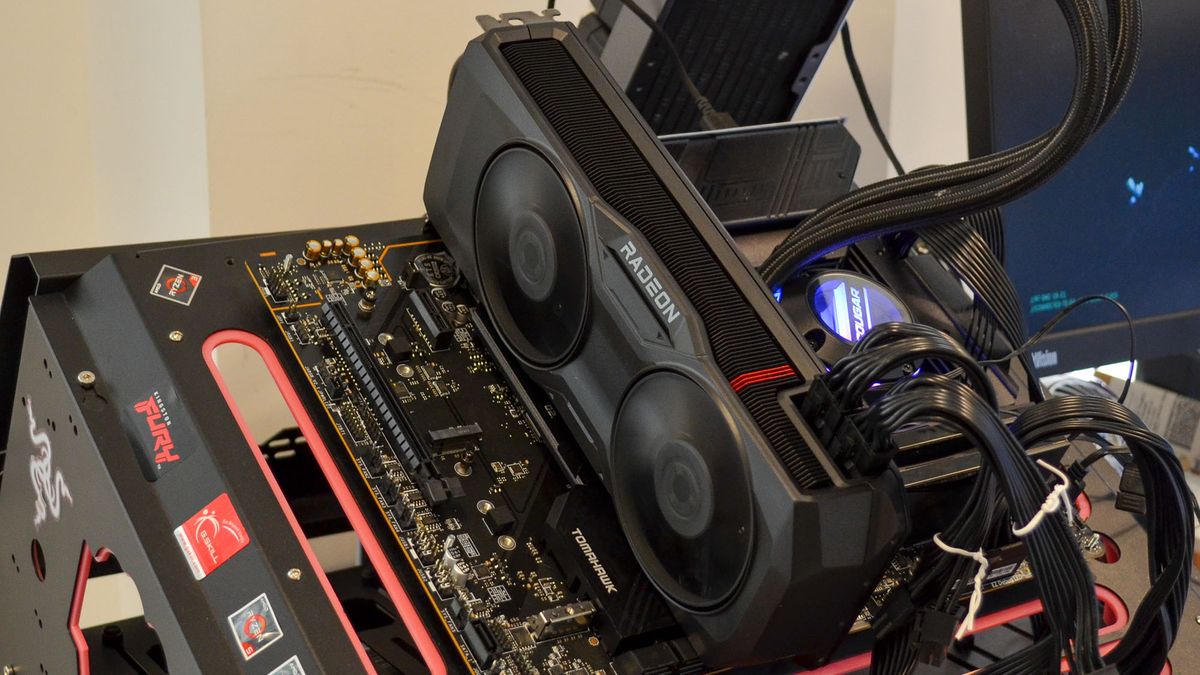
AMD RDNA 4 GPU rumors flood forth, including possible name change to RX 9070 – because bigger is better, compared to Nvidia’s RTX 5070?

  • AMD is supposedly launching RX 9070 XT and RX 9070 next-gen GPUs
  • Previous rumors suggested these would be the RX 8000 series
  • Performance is rumored to be a bit slower than previous chatter from the grapevine

Rumors around AMD’s next-gen GPUs have gone into overdrive this past weekend, and we’ve learned that these RDNA 4 graphics cards may not be the RX 8000 series as previously thought – and we’ve been treated to further speculation on price and performance, too.

So, the theory now is that AMD is going to launch an RX 9070 XT, as first flagged up by an editor on Chiphell, which was pointed out by HXL on X. This will supposedly be the top RDNA 4 GPU, previously rumored to be the RX 8800 XT.

It’ll come alongside a vanilla RX 9070 as a lower-tier offering, if another presence on X – All The Watts, a name we’re not familiar with in the rumor scene – is correct. They believe that the RX 9070 XT will be slightly slower than the current 7900 XT, and that the plain RX 9070 will be about equivalent to the performance of the 7800 XT.

All The Watts spilled some purported price ranges, too, and it seems AMD is looking at around $449 to $649 (in the US) for the Navi 48 graphics cards, which will put the RX 9070 XT at that $650 or so level, and the plain RX 9070 perhaps at $550 to $600. It all feels very vague, though – we’re also told that dropping down a chip, Navi 44 GPUs will range in price from $179 to $349 (RX 9060 models and downwards, presumably).

Another regular rumor peddler on X, Hoang Anh Phu, also shared that the RX 9070 XT is coming at CES 2025, where AMD is rumored to be revealing RDNA 4 – and that FSR 4 will debut alongside it (plus a whole bunch of other stuff, too, in theory).

Finally, Hoang Anh Phu also claimed that a render of a GPU that cropped up in an official AMD advert is supposedly a reference design for one of the next-gen graphics cards from AMD. Season that, and all of this chatter, liberally, of course.

It’s worth further noting that All The Watts reckons there’ll be mobile 9070 variants too, which would be no surprise, but that we may also get some new GPUs for the current RDNA 3 range, namely the RX 7750 and 7650. The latter in particular might be an interesting addition for more affordable GPUs (hopefully).

{ window.reliablePageLoad.then(() => { var componentContainer = document.querySelector(“#slice-container-newsletterForm-articleInbodyContent-2eLwcnqRmu4KoHaWS6ccHP”); if (componentContainer) { var data = {“layout”:”inbodyContent”,”header”:”Get daily insight, inspiration and deals in your inbox”,”tagline”:”Sign up for breaking news, reviews, opinion, top tech deals, and more.”,”formFooterText”:”By submitting your information you agree to the Terms & Conditions and Privacy Policy and are aged 16 or over.”,”successMessage”:{“body”:”Thank you for signing up. You will receive a confirmation email shortly.”},”failureMessage”:”There was a problem. Please refresh the page and try again.”,”method”:”POST”,”inputs”:[{“type”:”hidden”,”name”:”NAME”},{“type”:”email”,”name”:”MAIL”,”placeholder”:”Your Email Address”,”required”:true},{“type”:”hidden”,”name”:”NEWSLETTER_CODE”,”value”:”XTR-D”},{“type”:”hidden”,”name”:”LANG”,”value”:”EN”},{“type”:”hidden”,”name”:”SOURCE”,”value”:”60″},{“type”:”hidden”,”name”:”COUNTRY”},{“type”:”checkbox”,”name”:”CONTACT_OTHER_BRANDS”,”label”:{“text”:”Contact me with news and offers from other Future brands”}},{“type”:”checkbox”,”name”:”CONTACT_PARTNERS”,”label”:{“text”:”Receive email from us on behalf of our trusted partners or sponsors”}},{“type”:”submit”,”value”:”Sign me up”,”required”:true}],”endpoint”:”https://newsletter-subscribe.futureplc.com/v2/submission/submit”,”analytics”:[{“analyticsType”:”widgetViewed”}],”ariaLabels”:{}}; var triggerHydrate = function() { window.sliceComponents.newsletterForm.hydrate(data, componentContainer); } if (window.lazyObserveElement) { window.lazyObserveElement(componentContainer, triggerHydrate); } else { triggerHydrate(); } } }).catch(err => console.error(‘%c FTE ‘,’background: #9306F9; color: #ffffff’,’Hydration Script has failed for newsletterForm-articleInbodyContent-2eLwcnqRmu4KoHaWS6ccHP Slice’, err)); }).catch(err => console.error(‘%c FTE ‘,’background: #9306F9; color: #ffffff’,’Externals script failed to load’, err)); ]]>

Sign up for breaking news, reviews, opinion, top tech deals, and more.

(VideoCardz spotted all these various posts, by the way, so a hefty four hat tips goes their way – 1, 2, 3, 4).

MSI RX 7900 XTX Graphics Card

(Image credit: MSI)

Analysis: Turning it up to 9070?

There’s been a lot of spillage in a very short time around AMD’s next-gen GPUs, and it seems that the RX 9070 XT and 9070 might really be happening. The story is that this was a late switch from AMD in terms of next-gen naming, as until recently, Team Red was going to run with RX 8000 as had been claimed via the rumor mill.

Why switch the name? Well, in some ways, the change to RX 9070 performs that trick of making it seem ‘better’ than Nvidia’s xx70 class graphics card, which this time round will be the RTX 5070 (and 5070 Ti, apparently). So, your mid-range choices early next year could be the RTX 5070 (Ti) or RX 9070 (XT), so the bigger number must be better, right?

It’s that kind of Spinal Tap (turning it up to 11) marketing thinking, we assume (if it happens) – and it’s interesting to note that rather than the 9700 XT, it’s the 9070 XT. (Although that’ll help avoid confusion with AMD’s Ryzen CPU names, to be fair, and the Ryzen 9700X – but it does seem angling very much towards ‘outplaying’ Nvidia too).

The other reason could be that – again, according to rumors – AMD is looking to switch away from the RDNA brand entirely after this next generation of graphics cards. We won’t have RDNA 5, in other words, but UDNA, the ‘U’ meaning unified as this architecture will supposedly bring together CDNA (data center) and RDNA (gaming) under one umbrella.

If that happens, then AMD’s likely to head off the RX x000 naming path entirely, which would make sense rather than go with RX 10000 – which doesn’t work after RX 9000, of course. In other words, the move to UDNA effectively frees up the RX 9000 name for this generation – so why not use it now? We’re just engaging in pure speculation here, mind, but this makes us think it’s perhaps a bit more likely that UDNA, not RDNA 5, comes next on AMD’s GPU roadmap.

As for the performance levels mentioned above for the RX 9070 XT and 9070, they’ll probably come as a bit of a disappointment. The previous hope was that the RDNA 4 top dog GPU could be a bit faster than the 7900 XT, and it’s seemingly slightly slower according to All The Watts – but be particularly skeptical there.

Furthermore, we assume that this is talking about rasterization (non-ray tracing performance), and for ray-traced graphics, AMD supposedly has a much bigger leap in frame rates ready for us, or so other rumors have suggested.

You might also like

Source

Posted on

Interview: Wendy Redshaw, chief digital information officer, NatWest Retail Bank

Wendy Redshaw, chief digital information officer (CDIO) at NatWest Retail Bank, has had a distinguished career leading technology-led change in some of the world’s biggest financial services organisations. Now, she’s using that experience to drive even more innovation.

After four years as CIO for collaborative technology solutions with Deutsche Bank, Redshaw says she was eager to work for a UK finance house. In late 2018, she found the perfect home at NatWest as head of technology and digital distribution for the personal bank.

“The opportunity was interesting because NatWest was ready for digital transformation but wasn’t naturally sitting in a leadership position at that time,” she says. “The role allowed me to land and think about what to do. I found an organisation that was fundamentally focused on its customers and perhaps had less digital experience in-house.”

After working with her team to deliver technological improvements across the personal bank offline and online, Redshaw moved into the CDIO position in February 2020. “It wasn’t just because I wanted a longer acronym than most technologists,” she jokes.

“We created the role so we could sew together business and technology because, as with many organisations, technology had historically been something that happened over there, and the business did their thing, and then they would give the technologists something to work on. We wanted better integration.”

Embracing digital change

Redshaw says the creation of her CDIO role in 2020 was a public statement that NatWest wanted to create a partnership approach to technology and business: “This is a digital bank in the making, and hopefully, with the results that we’ve seen, we’ve achieved our aims.”

The technological transformation in banking services that Redshaw oversees at NatWest today differs greatly from the finance industry she joined as a software engineer in 1987.

“We didn’t call it digital then,” she says. “I remember the focus was on, ‘How do we use technology to make things quicker, simpler and more secure for our customers?’” She points to work on a security module for the London Stock Exchange and the beginning of the settlement systems CHAPS and Euroclear.

“There was a lot of change where technology was being brought in, but it was more for the underpinning services than for the consumer-facing areas,” she says, before fast-forwarding to the present-day bank. “Over that time, we’ve seen that digital is now in the hands of our retail customers.”

Redshaw says the shift in technological focus also helped prompt her switch to the retail side of banking. After a career driving behind-the-scenes IT changes in major firms, such as Lloyds TSB, Barclays Capital and Royal Bank of Scotland, her current role at NatWest is focused on delivering innovative customer services.

“That’s where the exciting stuff is happening. Yes, of course, we use AI across several areas of the organisation – something like 17% of our models are AI-based now, such as for controlling fraud, financial crime and so on,” she says.

“However, in terms of affecting human beings, digital services are at our customers’ fingertips. If you think about my driver for going into the CDIO role, the customer is where I thought I’d have the most impact.”

Delivering pioneering innovations

As CDIO, Readshaw is directly accountable to the group CIO and retail banking CEO. Responsible for digital operations leadership, she manages 4,500 people across four locations globally and leads the delivery of retail banking technology for Royal Bank of Scotland, NatWest and Ulster Bank North.

Redshaw’s team is digitalising services to make life easier for the group’s customers. Their work is supported by a planned investment of £3.5bn from 2023 to 2025, with more than 70% of spending targeted at data and technology.

NatWest has 10.9 million digitally active retail and business banking customers and 3.5 million use online banking platforms. The hard work continues apace. In 2024, Redshaw led the launch of a retail banking app on Apple’s Vision Pro virtual reality headset.

One of her proudest achievements is the introduction of generative AI (GenAI) into the bank’s conversational assistant, Cora. She says the bank made an early move into chatbots. Cora was introduced in 2017. The technology could answer basic questions, but Redshaw wanted it to do more.

“When I joined in 2018, I realised it was quite a good channel to do something with,” she says. “I had some grand ambitions for her – things like digital avatars having a voice, and all these engaging ways of doing things. I said, ‘Look, I see this particular technology being something we could get moving on’.”

Redshaw saw that, while machine learning technology was progressing at pace, it wasn’t quite ready for the giant leap in digital experiences she envisioned. However, the public release of generative AI models in late 2022 helped turn theory into a practical reality. Working with experts from IBM’s client engineering team to develop the initial proof of concept, NatWest launched its next-generation assistant, Cora+, in June 2024.

Cora+ is a multichannel platform that securely accesses data from multiple sources, including products, services and banking information. The virtual assistant technology is powered by IBM’s Watsonx Assistantand built on IBM Cloud. Estimates suggest the technology is creating a 150% improvement in satisfaction for some customer queries.

“It was the perfect example of an interest in technology, an interest in people, and an interest in delivering business value,” she says. “I feel very excited about how we’ve taken something that just answered questions and moved into generative AI at scale for millions of customers. And it’s only the first step. I’ve got big ambitions for what I want to do with that technology.”

Building strong partnerships

Cora+ uses ChatGPT 3.5 alongside an unnamed GPT large language model (LLM). The second model is trained to judge the output of the first model. While the GPT models play an important role in NatWest’s digital strategy, the organisation is eager to keep an open approach to AI and innovation.

Redshaw says the group wants to avoid being locked into a specific LLM. She wants the capability to swap from large to small language models (SLMs). Organisations can use SLMs to derive outputs from constrained amounts of data that require less computing power, which is important for a big business like NatWest that wants to meet sustainability targets.

“As a result, it was a case of, ‘OK IBM, we like working with you, but we want to be able to switch the language models in and out depending on the business requirement’,” she says. “And they were like, ‘Absolutely’. So, that’s great. We have the same mindset around using the best of everything to get value for our customers safely.”

Wendy Redshaw, Natwest

“This is a digital bank in the making, and hopefully, with the results that we’ve seen, we’ve achieved our aims”

Wendy Redshaw, NatWest Retail Bank

In addition to the work on Cora+, Redshaw and her colleagues are analysing how AI can boost customer experiences in other areas. NatWest has worked with IBM to develop a digital legal assistant powered by GenAI. This tool streamlines contract management and enhances accessibility, especially for neurodivergent users. The tool supports colleagues with compliance checks, producing 20% efficiency gains.

More generally, Redshaw is proud her team completes thousands of releases annually. The department’s focus on micro-projects is as important as delivering large-scale initiatives and helps NatWest hit tight transformation deadlines. Across all projects, IBM acts as a key technology partner, with Redshaw suggesting the nature of the long-term working relationship with the tech giant is like interacting with people on the internal team.

John Duigenan, distinguished engineer and general manager of the global financial services industry at IBM, says shifting to constant innovation, experimentation, and learning is typical of the work his company sees in its most pioneering clients. “We got to work with a trusted partner, and we got to learn together,” he said, referring to IBM’s relationship with NatWest.

“It’s great we co-create approaches to using technology and collaborate on innovation. Our teams blend incredibly well, and we deliver together in new ways. We have an approach that says, ‘We know why this work will matter for all of us because we can measure the impact’.”

Providing new experiences

Redshaw reflects on achievements during the past few years. While the benefits of the digital transformation she’s enacted at NatWest are clear, there’s always an opportunity to do more.

She says the rapid pace of transformation makes it difficult to predict with any degree of certainty what will happen next: “What will the success metrics be in three years? We won’t be judged on the same metrics because digital banking is changing quickly.”

However, she expects to see developments in some key areas. “In the AI space, I expect to see more voice,” she says. “At the moment, Cora listens to our telephony and sends a text, a deep link, or something else that’s required. In the future, I think it’ll probably answer the phone and deal with questions.”

Redshaw also expects progress in text-based answering. Her bank’s research suggests people in financial difficulties often prefer having a guilt-free conversation with a bot rather than a human. “I would expect something in that financial health and support space that uses natural language,” she says.

There’s even the potential for advances in unexpected areas. Redshaw says she’s keen to add Cora to ATMs, something that she was previously told was impossible.

“I’ve now spoken to some innovation engineers, and they’ve said they think it might be possible,” she says. “So, I suspect we will see something like a digital point of presence.”

Finally, Redshaw expects the bank to continue honing its approach to mobile. “People now have their bank in their pocket,” she says. “I imagine we will give more richness and engagement through these devices. Even though our mobile strategy is great, I think it will lean towards more engagement and personalisation during the next 24 months.”

Source

Posted on

Nvidia in 2024: year in review

Nvidia experienced a memorable 2024 in some ways, and certainly CEO Jensen Huang won’t forget the year in which his company finally outdid Apple as the most valuable firm in the world.

We also received a clutch of powerful new GeForce GPUs from Team Green, along with a huge move on the software front too, and, inevitably, AI continued to be a massive driving force for Nvidia.

Nvidia’s value exceeded $1 trillion in 2023, but it blew through the roof this year, with its stock heading steeply upwards throughout 2024 – driven, of course, in large part by its AI GPUs.

Indeed, Nvidia became the world’s most valuable company in June 2024, beating out the likes of Apple and Microsoft, exceeding a market cap of $3 trillion. Team Green slipped back a bit as the year went on, but then retook pole position from Apple in November 2024, approaching a $3.5 trillion valuation. Nvidia also barged Intel off the Dow Jones Industrial Average index.

Throughout the year, Jensen was gleefully stoking the AI hype furnace, unsurprisingly. A lot of leather jackets can be bought for the kind of cash Nvidia is now worth, and the swiftness with which this financial rise has occurred has been nothing less than breathtaking.

Is Nvidia going to be the first company to hit the $4 trillion mark? It’s a fair bet if the momentum behind AI keeps on chugging the way it has been – and maybe Nvidia is even set to become a household name eventually (something it most definitely isn’t yet, despite all this success).

An Nvidia GeForce RTX 4080 Super on a desk

(Image credit: Future / John Loeffler)

The year of the Super graphics cards

Nvidia continued to dominate the desktop GPU market in 2024, to no one’s surprise, to the point of a near-monopoly in fact.

{ window.reliablePageLoad.then(() => { var componentContainer = document.querySelector(“#slice-container-newsletterForm-articleInbodyContent-jUamdD2HT8rV4VaGqCApam”); if (componentContainer) { var data = {“layout”:”inbodyContent”,”header”:”Get daily insight, inspiration and deals in your inbox”,”tagline”:”Sign up for breaking news, reviews, opinion, top tech deals, and more.”,”formFooterText”:”By submitting your information you agree to the Terms & Conditions and Privacy Policy and are aged 16 or over.”,”successMessage”:{“body”:”Thank you for signing up. You will receive a confirmation email shortly.”},”failureMessage”:”There was a problem. Please refresh the page and try again.”,”method”:”POST”,”inputs”:[{“type”:”hidden”,”name”:”NAME”},{“type”:”email”,”name”:”MAIL”,”placeholder”:”Your Email Address”,”required”:true},{“type”:”hidden”,”name”:”NEWSLETTER_CODE”,”value”:”XTR-D”},{“type”:”hidden”,”name”:”LANG”,”value”:”EN”},{“type”:”hidden”,”name”:”SOURCE”,”value”:”60″},{“type”:”hidden”,”name”:”COUNTRY”},{“type”:”checkbox”,”name”:”CONTACT_OTHER_BRANDS”,”label”:{“text”:”Contact me with news and offers from other Future brands”}},{“type”:”checkbox”,”name”:”CONTACT_PARTNERS”,”label”:{“text”:”Receive email from us on behalf of our trusted partners or sponsors”}},{“type”:”submit”,”value”:”Sign me up”,”required”:true}],”endpoint”:”https://newsletter-subscribe.futureplc.com/v2/submission/submit”,”analytics”:[{“analyticsType”:”widgetViewed”}],”ariaLabels”:{}}; var triggerHydrate = function() { window.sliceComponents.newsletterForm.hydrate(data, componentContainer); } if (window.lazyObserveElement) { window.lazyObserveElement(componentContainer, triggerHydrate); } else { triggerHydrate(); } } }).catch(err => console.error(‘%c FTE ‘,’background: #9306F9; color: #ffffff’,’Hydration Script has failed for newsletterForm-articleInbodyContent-jUamdD2HT8rV4VaGqCApam Slice’, err)); }).catch(err => console.error(‘%c FTE ‘,’background: #9306F9; color: #ffffff’,’Externals script failed to load’, err)); ]]>

Sign up for breaking news, reviews, opinion, top tech deals, and more.

Helping to maintain its momentum here was a trio of new graphics cards for the Lovelace range which Nvidia revealed as the year kicked off. These fresh additions to the best Nvidia GPUs out there were the GeForce RTX 4070 Super, RTX 4070 Ti Super, and RTX 4080 Super.(And yes, we still can’t get over the fact that Nvidia made a ‘Ti Super’ as a way to jam an extra model into a cluttered mid-to-upper-range space).

These Super GPUs replaced the existing models in all but the case of the RTX 4070, which was kept in production to run alongside the RTX 4070 Super, but at a cheaper price point (obviously).

Overall, the new graphics cards were welcome introductions and powerhouse offerings, but what wasn’t so welcome were the price tags attached to them. In true Nvidia style, these mid-to-higher leaning GPUs were all expensive. Notably, the RTX 4070 Ti Super fell a little short in our review, being rather overshadowed by the RTX 4080 Super, which we declared was the enthusiast GPU we’ve all been waiting for.

Our review of the RTX 4070 Super also represented a big thumbs-up for the GPU, and it proved to be our favorite overall of the new graphics cards (even if its 12GB of VRAM limits the card’s 4K chops – the 4080 Super become the new champ here, of course).

On the issue of priciness, it’s true that some of these new Super variants got price cuts to a limited extent as the year rolled on, but overall, AMD’s mid-range remained the much better value picks compared to Team Green.

Otherwise, we didn’t see much else from Nvidia in the way of GPU releases, save for a fresh spin on the RTX 4070 with slightly slower video RAM. It was effectively the same as the original RTX 4070, though, and a move made by Team Green to ensure supply remained strong, we were told.

An EVGA RTX 3060 on a table in front of its retail packaging

(Image credit: Future/Jackie Thomas)

There was nothing to be seen elsewhere, and once again, tumbleweeds at the lower-end of the market. The old RTX 3060 remained a strong seller as a result – the 12GB flavor, with that VRAM loadout proving a definite carrot for some gamers – despite chatter from the grapevine around the middle of the year that Nvidia might be discontinuing this model.

Indeed, the RTX 3060 is still the most popular GPU out there going by the Steam hardware survey, with the RTX 4060 making good headway too – that graphics card remains our top pick for 1080p gaming (and it’s solid for 1440p as well).

Despite plenty of rumors suggesting a 2024 launch earlier in the year, we didn’t see the RTX 5000 series turn up this year, with the expectation now being that Nvidia will launch new RTX 5090 and 5080 (and possibly RTX 5070) GPUs at the very start of 2025 at CES.

NVIDIA App | Essential Companion for PC Gamers & Creators – YouTube NVIDIA App | Essential Companion for PC Gamers & Creators - YouTube Watch On

There was some super new software, too

Broadly speaking, Nvidia GPU owners have had a somewhat rocky relationship with GeForce Experience. A good chunk of gamers with an Nvidia graphics card preferred to just install the graphics driver, and not bother with the companion software, GeForce Experience, at all – and Team Green took the hint. In 2024, Nvidia canned GeForce Experience and made an all-new official app.

The Nvidia App (oh, the hours upon hours that must’ve been spent in brainstorming marketing meetings coming up with that name) arrived in beta in February 2024. It was billed as an all-in-one replacement for GeForce Experience and the Nvidia Control Panel, plus the RTX Experience. All these separate pieces were instead housed under one convenient umbrella (where driver installs are handled, too).

The Nvidia App emerged as a full release in November, after being worked on extensively during the year. Nvidia even actively solicited feedback from gamers on which legacy features should be preserved, and more besides.

That feedback was listened to in terms of implementing elements such as in-game frame rate and latency info (plus much more) in the revamped overlay for the Nvidia App, and it offered some smart new features such as easy GPU overclocking. The new app was generally well-received, appears to run smoothly and responsively in the main, and fortunately, there are no onerous account or login requirements here either – hopefully that’ll remain the case going forward.

There was one notable niggle that cropped up in mid-December, though, when reports emerged that an option in the Nvidia App could cause considerable slowdown of gaming frame rates. Nvidia is currently investigating that problem (at the time of writing), and there’s a fix (of sorts) for the apparent bug.

Also on the software side of the equation, DLSS continued to dominate the frame rate boosting scene, and remains a powerful weapon in Nvidia’s armory of GPU tricks.

Nvidia CEO Jensen Huang at Nvidia's pre-Computex 2024 keynote showing off Nvidia Rubin

(Image credit: Nvidia)

AI FTW still

Naturally AI remained an area where Nvidia realized some big successes this year, and as we already mentioned, it helped to drive the company’s market value skywards (or moon-wards, perhaps we should say).

Team Green was predictably keen to push forward with new Rubin AI chips, the successor to Blackwell for AI workloads, being announced just a few months after the latter.

It’s possible that Rubin, which was the focus of Computex 2024, could power the GeForce graphics cards that follow the next generation – mirroring the way Blackwell has been deployed for AI GPUs and RTX 5000 desktop boards – so this could have been our first (sort of) sighting of RTX 6000. (If RTX 6000 ever happens, and here at TechRadar, we’ve made arguments as to why there are valid reasons to doubt this – namely the juggernaut profits in the AI world, of which there are a bunch of major concerns around, it has to be said).

GeForce Now 4K streaming on laptop

(Image credit: Nvidia)

GeForce Now continues to evolve – with a catch

Last year was an important one for Nvidia’s streaming service for PC gamers, with the new ‘Ultimate’ subscription coming in (offering up to 240 frames per second, and a less laggy experience – for those with an internet connection up to the task, that is).

Early in 2024, Nvidia introduced a Day Pass for GeForce Now – allowing you to try out the full service for a day, to see how it works for you – and then towards the tail end of the year, a big upgrade was announced for the middle tier ‘Priority’ membership. This was renamed ‘Performance’ and Nvidia boosted its visual quality from 1080p to 1440p resolution (with ultrawide monitor support on top), all with no additional cost.

At least there was no financial cost, but there was a catch in the form of a monthly time limit imposed on these subscribers (and Ultimate tier members too). On the face of it, capping play time was a move to help Nvidia shorten queues and keep the streaming quality running smoothly, but it went down badly with some subscribers, who felt the 100-hour limit was too stingy.

Note that the new time limit doesn’t come into force until 2025 starts, and won’t apply to existing subscribers until 2026. Still, this led to plenty of threats of quitting GeForce Now on online forums – we’ll just have to see if that turns out to be mere noise, or whether a bunch of subscribers are indeed about to exit stage left.

Nvidia CEO Jensen Huang

(Image credit: Nvidia)

Concluding thoughts

In 2024, Nvidia brought some high-quality graphics cards into its Lovelace range, although the more affordable end of the GPU market was totally neglected (again). The company continues to dominate the desktop graphics card arena, and that won’t likely change in the near future – especially not at the higher-end where Nvidia won’t even be challenged going forward, if the rumors are right.

The Nvidia App was a high point for Team Green – and it’s great to see gamer feedback helped to shape the software – with DLSS also helping to build on, and reinforce, its consumer GPU success.

AI was the massive money-spinner, though, and the driving force behind Nvidia exploding to become the world’s most valuable company.

As we touched on above, the worry for PC gamers might be that the blistering success of AI GPUs – if it continues, and it doesn’t seem a good idea to bet against that – could mean Nvidia’s gaming graphics cards are eventually side-lined, or perhaps dispensed with entirely. With AMD also looking to cash in on AI, and Intel’s GPU prospects seeming shakier these days, all this does prompt some concern around the future of desktop graphics cards in the consumer marketplace.

You might also like

Source

Posted on

M4 MacBook Air to launch before iPhone SE 4 and iPad 11

Apple upgraded several Macs to the M4 chip a few weeks ago, including the MacBook Pro, iMac, and Mac mini. The former is easily the most exciting of the three, as Apple gave fans a much-needed upgrade. The M4 MacBook Pro comes with 16GB of RAM instead of 8GB, effectively reducing the laptop’s price for those who would spend extra money for more memory.

It’s all in the name of Apple Intelligence, a suite of genAI features still in its early days. Apple is ensuring that all its devices will have the resources to handle AI and one’s non-AI computing needs.

I said at the time that Apple had no choice but to give the M4 MacBook Air the same 16GB memory upgrade. Apple practically confirmed this during the M4 Mac launch week when it said that existing M2 and M3 MacBook Airs will also come with 16GB of RAM as the new default.

Apple didn’t reveal the M4 MacBook Air release date at the time, but leaks said the 13-inch and 15-inch laptops would drop at some point in the first quarter of 2025. A new update from an insider teases an even faster launch than expected, as Apple might not want to wait until the iPhone SE 4 and iPad 11 are also ready to launch.

Tech. Entertainment. Science. Your inbox.

Sign up for the most interesting tech & entertainment news out there.

By signing up, I agree to the Terms of Use and have reviewed the Privacy Notice.

After the iPhone 16 launch event, we thought we’d get a Mac-centric keynote for the M4 Macs. Apple chose to announce the laptops via press releases, though it also posted extended presentations on YouTube for each of the three Macs that got the M4 treatment.

Before Apple’s announcements in the first quarter of 2025, reports said that the iPhone SE 4 would drop in March. That’s also going to be a rather exciting iPhone for certain buyers.

Considering the mid-ranged iPhone’s rollout expectations and what Apple did with the M4 Macs, it’s easy to assume the company would repeat the play: Pick a week in March and announce a new product each day. We’d get the M4 MacBook Air, the iPhone SE 4, and the iPad 11, in whatever order Apple chooses to do it.

However, Mark Gurman said on X that the M4 MacBook Air launch is coming sooner than expected. He didn’t divulge an actual release date for the M4 MacBook Air models, but he said that the laptops will precede the iPhone SE 4 and iPad 11:

As I wrote in October, new entry level iPads (J481 and J482) are coming in the spring. iPhone SE, new iPad Air are on the same general timeline. The M4 MacBook Air will be earlier.

The Bloomberg reporter also penned a newsletter over the weekend, where he also addressed Apple’s tentative roadmap for the M4 Macs. He said the M4 MacBook Airs will arrive early next year, without mentioning the iPhone SE 4 and iPad 11:

But the real meat of the Mac lineup will get refreshed in the first three quarters of 2025. Things will kick off pretty early next year with M4 versions of the 13-inch and 15-inch MacBook Air (these models are already deep into the manufacturing phase). As the year progresses, there will be a new Mac Studio with a high-end M4 chip. The M4 transition will get completed later in the year with a version of the Mac Pro. This will mark the first time since Apple began using in-house chips that its entire computer portfolio moved to a new M-series generation.

The tweet above gives us a better estimate of when to expect the new MacBook Airs. That said, we have no release dates, so it’s unclear how soon the M4 MacBook Airs will arrive.

Finally, I’ll remind you that Apple has confirmed the M4 MacBook Air in a recent software update. Given Gurman’s claims, Apple’s accidental reveal makes sense if the launch is imminent.

Source

Posted on

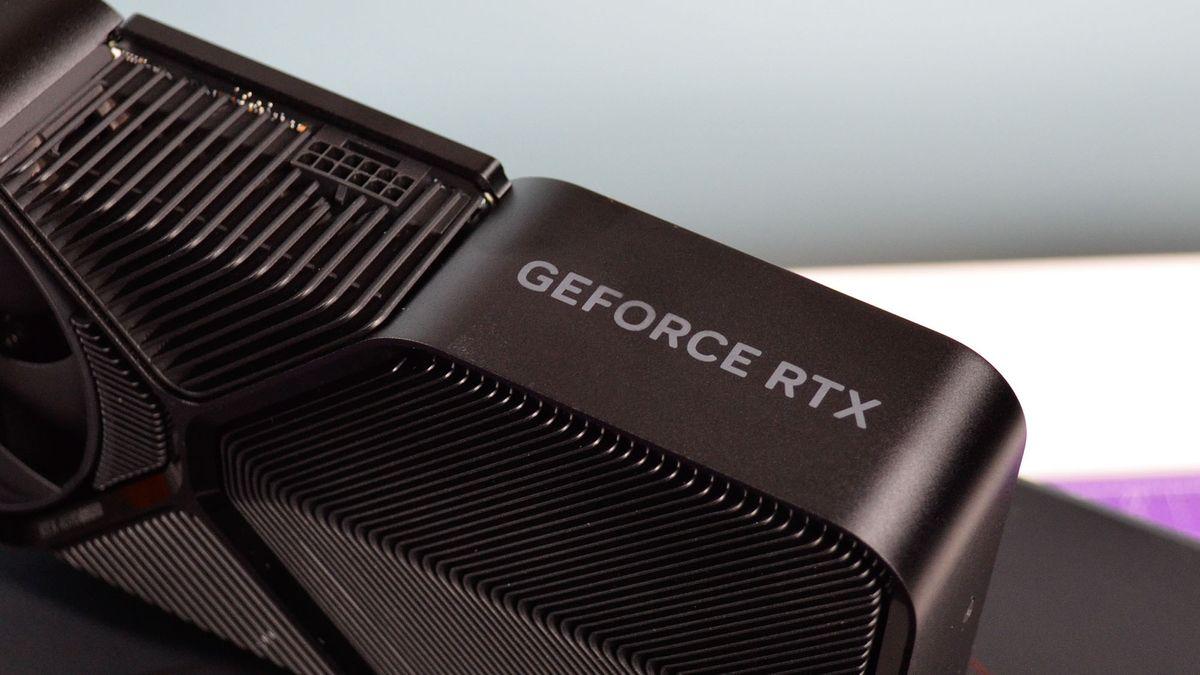
Nvidia RTX 5070 Ti could turn up before RTX 5070 – and new rumor suggests it might be the powerhouse GPU I’ve been waiting for

  • RTX 5070 Ti could have 16GB of VRAM and use 350W of power
  • It may run with the same GPU as the RTX 5080, as previously rumored
  • Also it might be released before the vanilla RTX 5070, very early next year

Nvidia’s RTX 5070 Ti is the subject of a new leak sharing a bunch of juicy details about the GPU – including the fact that this graphics card is supposedly set to arrive before the vanilla edition of the RTX 5070.

Wccftech has spoken to sources who’ve outlined some fresh specs for the purported RTX 5070 Ti, as well as confirming some of the info divulged by previous leaks (as ever, keep shovelfuls of skepticism on hand).

We’re told that past rumors of the RTX 5070 Ti are correct in asserting that it’ll use the GB203 chip, the same GPU as in the RTX 5080, but obviously it will be a cut-down version. (In theory, GB203-300, with 8,960 CUDA cores, as opposed to the full loadout on GB203-400 with the RTX 5080).

We didn’t hear anything about the VRAM configuration in the last rumor dump, but Wccftech’s sources believe the RTX 5070 Ti will sport 16GB of GDDR7 with a 256-bit memory bus. The video RAM will be 28Gbps giving a total memory bandwidth of 896GB/s, closing in on that 1TB/s mark, which is pretty impressive.

Apparently, power usage will run at 350W, which is 50W more than previously believed. There’s a twist here, though, as leaker Kopite7kimi has chipped in on X to note that the “latest data shows 285W” – while admitting that 350W is one of the possible configurations. In other words, this isn’t yet decided, which is certainly plausible.

Finally, Nvidia is theoretically going to launch this RTX 5070 Ti as the third Blackwell GeForce graphics card, after the RTX 5090 and 5080 – meaning it’ll actually arrive ahead of the RTX 5070 itself.

A man's hand holding an Asus Tug Gaming GeForce RTX 4070 Ti against a white spotlit background

(Image credit: Future)

Analysis: A chip off big brother’s block

It’s a bit odd for a Ti version (or a Super, if that’s what it turns out to be) to arrive before the vanilla flavor of a graphics card, although it has happened before occasionally.

{ window.reliablePageLoad.then(() => { var componentContainer = document.querySelector(“#slice-container-newsletterForm-articleInbodyContent-W8LvyudXaBjLjxuEuMQaF8”); if (componentContainer) { var data = {“layout”:”inbodyContent”,”header”:”Get daily insight, inspiration and deals in your inbox”,”tagline”:”Sign up for breaking news, reviews, opinion, top tech deals, and more.”,”formFooterText”:”By submitting your information you agree to the Terms & Conditions and Privacy Policy and are aged 16 or over.”,”successMessage”:{“body”:”Thank you for signing up. You will receive a confirmation email shortly.”},”failureMessage”:”There was a problem. Please refresh the page and try again.”,”method”:”POST”,”inputs”:[{“type”:”hidden”,”name”:”NAME”},{“type”:”email”,”name”:”MAIL”,”placeholder”:”Your Email Address”,”required”:true},{“type”:”hidden”,”name”:”NEWSLETTER_CODE”,”value”:”XTR-D”},{“type”:”hidden”,”name”:”LANG”,”value”:”EN”},{“type”:”hidden”,”name”:”SOURCE”,”value”:”60″},{“type”:”hidden”,”name”:”COUNTRY”},{“type”:”checkbox”,”name”:”CONTACT_OTHER_BRANDS”,”label”:{“text”:”Contact me with news and offers from other Future brands”}},{“type”:”checkbox”,”name”:”CONTACT_PARTNERS”,”label”:{“text”:”Receive email from us on behalf of our trusted partners or sponsors”}},{“type”:”submit”,”value”:”Sign me up”,”required”:true}],”endpoint”:”https://newsletter-subscribe.futureplc.com/v2/submission/submit”,”analytics”:[{“analyticsType”:”widgetViewed”}],”ariaLabels”:{}}; var triggerHydrate = function() { window.sliceComponents.newsletterForm.hydrate(data, componentContainer); } if (window.lazyObserveElement) { window.lazyObserveElement(componentContainer, triggerHydrate); } else { triggerHydrate(); } } }).catch(err => console.error(‘%c FTE ‘,’background: #9306F9; color: #ffffff’,’Hydration Script has failed for newsletterForm-articleInbodyContent-W8LvyudXaBjLjxuEuMQaF8 Slice’, err)); }).catch(err => console.error(‘%c FTE ‘,’background: #9306F9; color: #ffffff’,’Externals script failed to load’, err)); ]]>

Sign up for breaking news, reviews, opinion, top tech deals, and more.

Sometimes this might be related to manufacturing nuances and chip yields, and with the RTX 5070 supposedly using that same GB203 GPU as the RTX 5080, that tracks in this respect. (The RTX 5070 is theoretically a different chip entirely, GB205). At any rate, at this point, Nvidia wouldn’t surprise me if it delivered a Ti Super off the bat…

Speculation about current launch plans has the RTX 5090 and 5080 turning up at CES 2025, and the RTX 5070 – or this 5070 Ti, as is the argument here – arriving perhaps at CES as well, or a bit later in January.

Wccftech also claims that Nvidia is going to launch all its next-gen Blackwell graphics cards in the first half of 2025, and most of them in Q1. So that’d suggest a quick follow-up for the 5070 (or Ti, whichever doesn’t come out in January), and the RTX 5060 debuting perhaps a lot sooner than expected (seeing as the rumors around that have been much scarcer – suggesting it’s still a fair way down the line).

It’s possible that Nvidia fears what AMD might bring out in the way of lower-mid-range GPUs with RDNA 4, and could’ve made a decision to push the RTX 5060 through faster in anticipation of competing better in that space.

Release timings aside, the specs of the RTX 5070 Ti are making me wonder if this might be the new GPU for me. That memory bandwidth of almost 900GB/s is a third faster than the current top dog of the RTX 4070 spins, the RTX 4070 Ti Super.

On the other hand, power usage creeping up isn’t so great, of course – the RTX 4070 Ti Super chugs 285W, so 350W is a fair old step up from that. If it happens, of course, because as noted above, Nvidia could still be sticking with 285W. Team Green is likely still working out the efficiency to performance balancing act – and pricing will be key here, too, as ever.

I really hope that Nvidia can keep some semblance of a lid on that price tag, as if so, there’s a strong possibility that this will be my big GPU upgrade in the New Year. (Something I’ll be writing a feature about very soon, as I’ve got a very specific reason for this graphics card upgrade – so stay tuned).

You might also like

Source

Posted on

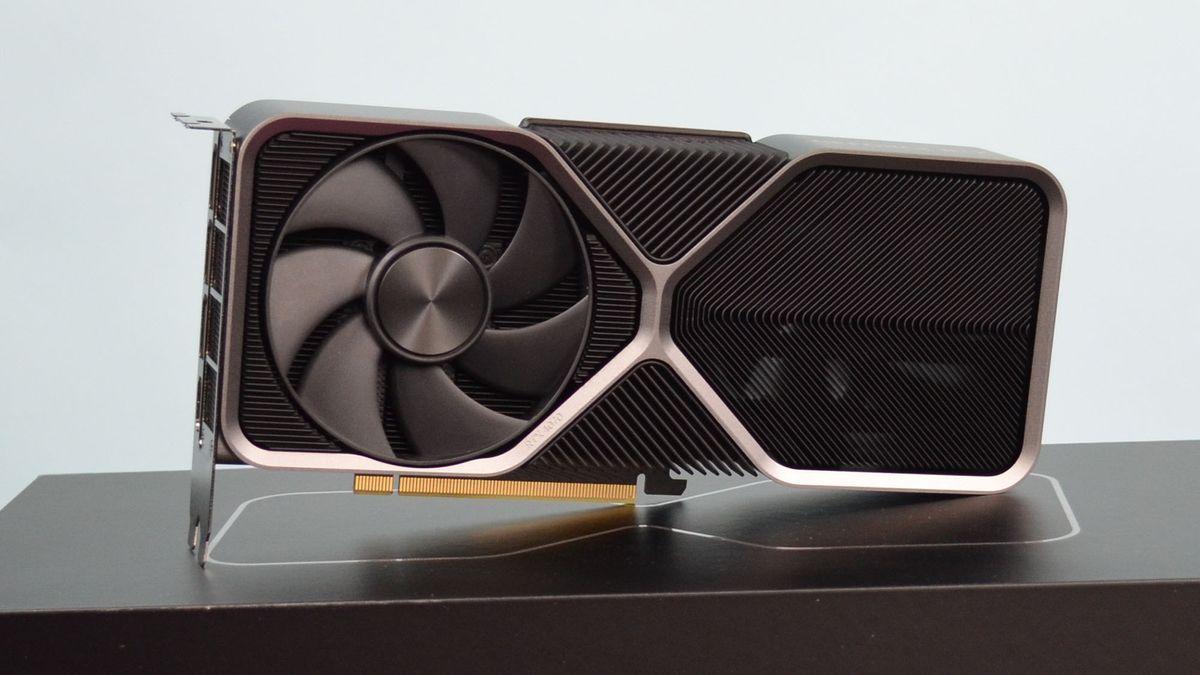
Nvidia RTX 5090 rumor suggests flagship GPU might not guzzle as much power as previously claimed – but don’t get too excited

  • Nvidia RTX 5090 has been rumored to guzzle 600W in the past
  • A leaker on X has suggested it might use ‘slightly’ less power
  • This comes alongside assurances that RTX 5070 Ti won’t be a power hog

Nvidia’s RTX 5090 might not be quite as much of a power hog as some PC gamers fear based on the latest nugget from the GPU grapevine.

As you may recall, the rumor mill has previously insisted that the Blackwell flagship graphics card might tip the scales at a weighty 600W of power use.

According to some fresh info from regular leaker on X, Kopite7kimi, we can at least be somewhat hopeful that the RTX 5090 may not make quite so heavy a demand on your PC’s power supply.

This info popped up in a thread on X which was discussing the purported RTX 5070 Ti – a GPU that could be launched third by Nvidia, after the RTX 5090 and 5080 – and specifically that graphics card’s power requirements of 350W.

Kopite7kimi noted that while 350W is a possible configuration Nvidia is exploring, the latest the leaker has heard is that it’ll be 285W, so considerably less – which prompted an X user to question whether the RTX 5090 might’ve had its power use revised downwards (from 600W), too.

The leaker replied to indicate that yes, this “may” be the case, although it might only be a “slight decrease” in the power chugged by the next-gen flagship.

A mockup of the Gigabyte RTX 4090 Windforce graphics card

(Image credit: Gigabyte)

Analysis: You’ll still need a mighty power supply

Clearly, take all this with plenty of seasoning, but doubtless PC enthusiasts looking at this mighty next-gen flagship will take anything that sounds like remotely good news for the power consumption of the RTX 5090.

{ window.reliablePageLoad.then(() => { var componentContainer = document.querySelector(“#slice-container-newsletterForm-articleInbodyContent-oAyPhb5eLbiHrSmmzZzkWB”); if (componentContainer) { var data = {“layout”:”inbodyContent”,”header”:”Get daily insight, inspiration and deals in your inbox”,”tagline”:”Sign up for breaking news, reviews, opinion, top tech deals, and more.”,”formFooterText”:”By submitting your information you agree to the Terms & Conditions and Privacy Policy and are aged 16 or over.”,”successMessage”:{“body”:”Thank you for signing up. You will receive a confirmation email shortly.”},”failureMessage”:”There was a problem. Please refresh the page and try again.”,”method”:”POST”,”inputs”:[{“type”:”hidden”,”name”:”NAME”},{“type”:”email”,”name”:”MAIL”,”placeholder”:”Your Email Address”,”required”:true},{“type”:”hidden”,”name”:”NEWSLETTER_CODE”,”value”:”XTR-D”},{“type”:”hidden”,”name”:”LANG”,”value”:”EN”},{“type”:”hidden”,”name”:”SOURCE”,”value”:”60″},{“type”:”hidden”,”name”:”COUNTRY”},{“type”:”checkbox”,”name”:”CONTACT_OTHER_BRANDS”,”label”:{“text”:”Contact me with news and offers from other Future brands”}},{“type”:”checkbox”,”name”:”CONTACT_PARTNERS”,”label”:{“text”:”Receive email from us on behalf of our trusted partners or sponsors”}},{“type”:”submit”,”value”:”Sign me up”,”required”:true}],”endpoint”:”https://newsletter-subscribe.futureplc.com/v2/submission/submit”,”analytics”:[{“analyticsType”:”widgetViewed”}],”ariaLabels”:{}}; var triggerHydrate = function() { window.sliceComponents.newsletterForm.hydrate(data, componentContainer); } if (window.lazyObserveElement) { window.lazyObserveElement(componentContainer, triggerHydrate); } else { triggerHydrate(); } } }).catch(err => console.error(‘%c FTE ‘,’background: #9306F9; color: #ffffff’,’Hydration Script has failed for newsletterForm-articleInbodyContent-oAyPhb5eLbiHrSmmzZzkWB Slice’, err)); }).catch(err => console.error(‘%c FTE ‘,’background: #9306F9; color: #ffffff’,’Externals script failed to load’, err)); ]]>

Sign up for breaking news, reviews, opinion, top tech deals, and more.

The catch is that the leaker sounds uncertain, and if there’s some downward movement, it’s not likely to be a great deal. So, are we looking at 570W or 580W maybe? Or something more towards 550W if we’re lucky, perhaps? Obviously it’s guesswork at this point, and Nvidia may not have finalized the exact spec itself (or more likely has just done so, maybe – and the rumor mill is yet to catch up).

With the RTX 5090 about to launch, in theory, inside a few weeks at CES 2025, everything about the board is likely nailed down right about now, and we could hear some more definitive sounding leaks in the next week or so. While the flagship is expected to be a seriously powerful graphics card, aside from the power usage worries, the other main concern is pricing – and how far Nvidia might push that.

We can believe a 550W power usage a lot more readily than Nvidia sticking with the same MSRP as the RTX 4090, and not hiking it at all, put it this way.

You might also like

Source

Posted on

RTX 5060 rumor suggests it’ll have 8GB VRAM and I’m starting to wonder if Nvidia has lost the plot with next-gen GPUs

Nvidia’s next-gen desktop graphics cards have been the subject of a flood of leaks lately, but this time we’re hearing about the RTX 5060 models that’ll sit at the bottom of the Blackwell GeForce stack (assuming there’s no RTX 5050, as there wasn’t a desktop 4050 of course).

Wccftech has word from the usual anonymous sources – be cautious around this rumor, naturally, as with anything from the grapevine – providing some specs of the RTX 5060 Ti and RTX 5060.

The most interesting contention is that regarding the on-board video memory, Nvidia’s RTX 5060 Ti is going to run with 16GB of VRAM, the same as the higher-end flavor of the 4060 Ti – but the bad news is the RTX 5060 is also going to stick on 8GB.

Apparently both graphics cards will use the same board (PG152) and the GB206 Blackwell chip (as previously rumored), with a 128-bit memory bus. With GDDR7 video RAM running at 28Gbps, both of these graphics cards are looking at a memory bandwidth of 448GB/s in theory.

We’re told to expect these GPUs to launch in late February to March of 2025, which backs up another recent rumor on the release timeframe.

An Nvidia GeForce RTX 4060 on a table with its retail packaging

(Image credit: Future / John Loeffler)

Analysis: Video RAM confusion

The idea that the RTX 5060 could stay on an 8GB loadout for VRAM has not gone down well with the followers of GPU rumors, as you might imagine. The RTX 4060 having this memory configuration was controversial, so for a new generation of Nvidia graphics cards to stick at this level will be fuel to the flames (quite literally – Team Green better don its finest fire-retardant suit). If this turns out to be true, of course.

Capacity isn’t the only element of the memory equation here, though, and that GDDR7 VRAM is a big upgrade in itself. That rumored memory bandwidth of 448GB/s for the RTX 5060 and its Ti sibling will be a considerable step up from the RTX 4060 flavors. In fact, it’s 55% faster and 65% faster than the RTX 4060 and 4060 Ti respectively, as Wccftech points out.

{ window.reliablePageLoad.then(() => { var componentContainer = document.querySelector(“#slice-container-newsletterForm-articleInbodyContent-wa2wkuoWTG8G2qkcAgFVwK”); if (componentContainer) { var data = {“layout”:”inbodyContent”,”header”:”Get daily insight, inspiration and deals in your inbox”,”tagline”:”Sign up for breaking news, reviews, opinion, top tech deals, and more.”,”formFooterText”:”By submitting your information you agree to the Terms & Conditions and Privacy Policy and are aged 16 or over.”,”successMessage”:{“body”:”Thank you for signing up. You will receive a confirmation email shortly.”},”failureMessage”:”There was a problem. Please refresh the page and try again.”,”method”:”POST”,”inputs”:[{“type”:”hidden”,”name”:”NAME”},{“type”:”email”,”name”:”MAIL”,”placeholder”:”Your Email Address”,”required”:true},{“type”:”hidden”,”name”:”NEWSLETTER_CODE”,”value”:”XTR-D”},{“type”:”hidden”,”name”:”LANG”,”value”:”EN”},{“type”:”hidden”,”name”:”SOURCE”,”value”:”60″},{“type”:”hidden”,”name”:”COUNTRY”},{“type”:”checkbox”,”name”:”CONTACT_OTHER_BRANDS”,”label”:{“text”:”Contact me with news and offers from other Future brands”}},{“type”:”checkbox”,”name”:”CONTACT_PARTNERS”,”label”:{“text”:”Receive email from us on behalf of our trusted partners or sponsors”}},{“type”:”submit”,”value”:”Sign me up”,”required”:true}],”endpoint”:”https://newsletter-subscribe.futureplc.com/v2/submission/submit”,”analytics”:[{“analyticsType”:”widgetViewed”}],”ariaLabels”:{}}; var triggerHydrate = function() { window.sliceComponents.newsletterForm.hydrate(data, componentContainer); } if (window.lazyObserveElement) { window.lazyObserveElement(componentContainer, triggerHydrate); } else { triggerHydrate(); } } }).catch(err => console.error(‘%c FTE ‘,’background: #9306F9; color: #ffffff’,’Hydration Script has failed for newsletterForm-articleInbodyContent-wa2wkuoWTG8G2qkcAgFVwK Slice’, err)); }).catch(err => console.error(‘%c FTE ‘,’background: #9306F9; color: #ffffff’,’Externals script failed to load’, err)); ]]>

Sign up for breaking news, reviews, opinion, top tech deals, and more.

The worry is that 8GB could really hamstring the RTX 5060 for future-proofing, and consign the card more to 1080p duties, as going forward, 1440p might prove to be more of a struggle for a thin allocation of video memory such as this – even now that’s true to an extent.

More positively, the RTX 5060 Ti could have a healthy 16GB of VRAM, although that doesn’t make a whole lot of sense when you consider the RTX 5070 has been rumored to have 12GB. Now, Nvidia has been known to equip a lower-tier GPU with more VRAM than a higher-up model in the past, but that can sometimes be a case of a beefier model launching down the line – and it doesn’t feel likely Nvidia would push out an RTX 5070 12GB and very quickly follow that with an RTX 5060 Ti 16GB. Particularly when the RTX 5080 theoretically runs with 16GB, too.

In short, we’d regard this leaked info with more skepticism than normal – although it could also be read as a sign that the RTX 5070 12GB info is off the mark (here’s hoping on that score).

Meanwhile, Intel has just brought out its affordable new Battlemage GPU, the B580, and that has 12GB of VRAM, a relatively robust helping for the price bracket this graphics card sits in. Can Nvidia fly in the face of its rivals’ video memory strategies? Well, of course it can, but it remains to be seen if Team Green actually will.

You might also like

Source

Posted on

Mysterious ChatGPT hardware must be smart glasses, given what OpenAI just unveiled

After months of speculation, Jony Ive confirmed in mid-September that he and a team of former Apple designers are working on hardware that will have ChatGPT at the core. While Ive said his LoveFrom design company will be involved in creating the product (or products?), he didn’t reveal what form factor(s) we should expect.

I labeled the product an iPhone competitor because the iPhone is an AI device, just like the Pixel and any other smartphone that can run native or third-party AI apps. The ChatGPT hardware will compete against the iPhone no matter what it looks like. The only thing we know about the gadget is that it “uses AI to create a computing experience that is less socially disruptive than the iPhone.”

Nearly three months later, I believe the ChatGPT device has to feature a key component, a pair of smart glasses that will truly let the user make the most of OpenAI’s AI models. It’s all thanks to what we witnessed on December 12th, a few short hours apart.

First, Samsung and Google unveiled the Android XR experience and teased the first devices with AI at the center. Project Moohan is Samsung’s obvious Vision Pro alternative, and yes, it looks too much like the latter. Project Moohan will be a spatial computer that supports VR, AR, and AI.

Tech. Entertainment. Science. Your inbox.

Sign up for the most interesting tech & entertainment news out there.

By signing up, I agree to the Terms of Use and have reviewed the Privacy Notice.

All the acronyms are there, with AI giving Samsung a theoretical advantage over the Vision Pro. That will be Galaxy AI and Gemini AI, in case you were wondering.

Samsung's Project Moohan Android XR headset.Samsung’s Project Moohan Android XR headset. Image source: Samsung

More interesting than Moohan is Google’s unannounced pair of smart glasses. Samsung is probably working on its own smart glasses, but the company didn’t feel compelled to announce them on Thursday. 

Google demoed the smart glasses during its Gemini 2.0 announcement, showing how Project Astra can work on them. The wearable device is paired with a Pixel phone, which will handle the processing, including Gemini. The glasses give the AI eyes and ears so it can see everything around you and communicate information as you seek help while on the go.

Add the Android XR platform, and you get augmented reality features. Think AI notification summaries, Google Maps navigation, and real-time translation. According to Google’s demo, these are all part of Android XR.

All of that further reinforces my belief that standalone AR glasses are the future of mobile computing. They’ll complement the iPhone first and then replace it.

Google Maps AR navigation on smart glasses.Google Maps AR navigation on smart glasses. Image source: Google

Seeing Samsung and Google’s announcements was enough to make me realize OpenAI will need similar abilities from ChatGPT. And the only way to deliver them is by making smart glasses of its own.

Little did I know that OpenAI’s “12 Days” live stream, which followed Samsung and Google’s surprise announcement, would further drive that point home.

OpenAI on Thursday announced that ChatGPT Advanced Voice Mode is finally getting support for real-time video streaming and screen sharing. We saw these features demoed for GPT-4o back in May, but OpenAI needed time to bring them to all users.

The ChatGPT mobile app will let you use the camera of your iPhone or Android device to see the world and hold a conversation about it with the user.

The demos OpenAI offered showed that the AI can recognize people and remember details about them. Also, the AI can recognize objects and provide tips and tutorials related to them if asked.

When I first tried Advanced Voice Mode, I wanted to use ChatGPT as a museum voice guide. However, the experience lacked a key feature: the live video stream support that OpenAI just made available to ChatGPT users. Instead, I had to upload photos whenever I had questions about something.

Back to Thursday’s OpenAI updates, the ChatGPT demos showed that you can share your phone screen with the AI and ask questions about the content. It’s another way of giving the AI the ability to see what you’re doing.

This settled it for me. Any multimodal AI is a great tool to enhance your productivity, but it can get miles better if the AI gets eyes. Smart glasses are the best way to wear the AI’s eyes. The glasses don’t even have to support augmented reality features. AR would be just the cherry on top. 

It turns out Meta was right all along with the Ray-Ban AI project. As such, I think OpenAI and LoveFrom have to bundle a pair of smart glasses with whatever ChatGPT hardware product they end up making. I don’t think they can make standalone smart glasses. The technology isn’t ready for that.

Solos AirGo Vision ChatGPT smart glasses: Front look.Solos AirGo Vision ChatGPT smart glasses: Front look. Image source: Solos


They could always create only ChatGPT smart glasses that could then connect to the iPhone, Mac, or any smart device. But in such a case, they won’t control the underlying platform. On that note, I did show you a pair of smart glasses earlier this week (above) which put ChatGPT front and center. They might not be a first-party device, but they’re available for preorder.

This is all speculation from this ChatGPT enthusiast. I have no way of knowing what Ive & Co. are actually designing. But smart glasses seem like a key piece of the puzzle. And no, placing a camera on clothing will not work. Humane tried that and failed miserably. Eyewear is a whole different ball game.

Source