Posted on

AMD Strix Halo leak suggests chips are imminent, but gives me a couple of reasons to worry about the flagship laptop CPU

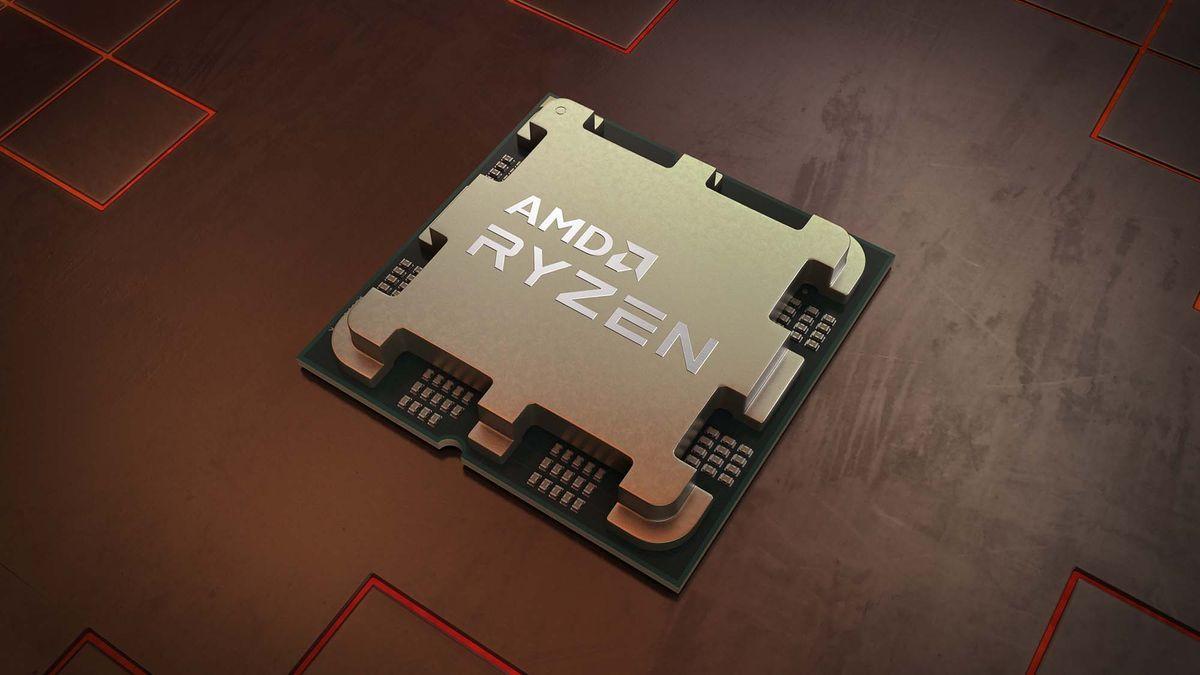
One of AMD’s incoming Strix Halo chips has been spotted in a benchmark for the first time, and this is the flagship APU in fact, indicating that as rumors suggest, these Ryzen laptop processors are nearing release.

VideoCardz noticed the Geekbench result for a 16-core (Zen 5) Strix Halo chip with Radeon 8060S integrated graphics.

The APU – which is AMD’s fancy name for an all-in-one processor with an integrated GPU and NPU – is called the AMD Ryzen AI Max+ Pro 395, and is shown as boosting up to 5.1GHz.

As for the actual benchmark result, the test run is Vulkan performance, which interestingly is a graphics metric. However, the score of 67,004 is slower than expected – but there’s a reason for that, which I’ll discuss next.

Canva

(Image credit: Canva)

Analysis: GPU performance and workstation-only worries

That’s a relatively disappointing score, because as VideoCardz points out, the RX 7600 desktop graphics card hits about 90,000 in that test. The hope is that the Radeon 8060S integrated GPU in the Strix Halo flagship will be able to get a lot closer to the RX 7600 than this, based on prerelease hype – which has compared it to an Nvidia RTX 4070 discrete mobile GPU in the past – and it might well do, in the end.

Remember, this is still an early sample chip, so the finished Ryzen AI Max+ Pro 395 will undoubtedly run faster. It’s too soon to make judgments, especially based on just a single leak (from Geekbench – which is hardly the first pick for graphics benchmarks, of course).

This leak is more about the fact that the Strix Halo flagship is floating around being tested, rather than the actual result itself. It’s another hefty hint that the rumors of AMD launching the new range of APUs at CES 2025 are correct.

{ window.reliablePageLoad.then(() => { var componentContainer = document.querySelector(“#slice-container-newsletterForm-articleInbodyContent-pJ7zySXWLXuUu2JSotoCZK”); if (componentContainer) { var data = {“layout”:”inbodyContent”,”header”:”Get daily insight, inspiration and deals in your inbox”,”tagline”:”Sign up for breaking news, reviews, opinion, top tech deals, and more.”,”formFooterText”:”By submitting your information you agree to the Terms & Conditions and Privacy Policy and are aged 16 or over.”,”successMessage”:{“body”:”Thank you for signing up. You will receive a confirmation email shortly.”},”failureMessage”:”There was a problem. Please refresh the page and try again.”,”method”:”POST”,”inputs”:[{“type”:”hidden”,”name”:”NAME”},{“type”:”email”,”name”:”MAIL”,”placeholder”:”Your Email Address”,”required”:true},{“type”:”hidden”,”name”:”NEWSLETTER_CODE”,”value”:”XTR-D”},{“type”:”hidden”,”name”:”LANG”,”value”:”EN”},{“type”:”hidden”,”name”:”SOURCE”,”value”:”60″},{“type”:”hidden”,”name”:”COUNTRY”},{“type”:”checkbox”,”name”:”CONTACT_OTHER_BRANDS”,”label”:{“text”:”Contact me with news and offers from other Future brands”}},{“type”:”checkbox”,”name”:”CONTACT_PARTNERS”,”label”:{“text”:”Receive email from us on behalf of our trusted partners or sponsors”}},{“type”:”submit”,”value”:”Sign me up”,”required”:true}],”endpoint”:”https://newsletter-subscribe.futureplc.com/v2/submission/submit”,”analytics”:[{“analyticsType”:”widgetViewed”}],”ariaLabels”:{}}; var triggerHydrate = function() { window.sliceComponents.newsletterForm.hydrate(data, componentContainer); } if (window.lazyObserveElement) { window.lazyObserveElement(componentContainer, triggerHydrate); } else { triggerHydrate(); } } }).catch(err => console.error(‘%c FTE ‘,’background: #9306F9; color: #ffffff’,’Hydration Script has failed for newsletterForm-articleInbodyContent-pJ7zySXWLXuUu2JSotoCZK Slice’, err)); }).catch(err => console.error(‘%c FTE ‘,’background: #9306F9; color: #ffffff’,’Externals script failed to load’, err)); ]]>

Sign up for breaking news, reviews, opinion, top tech deals, and more.

However, perhaps everyone should temper their expectations a little in some respects. Yes, the Strix Halo flagship’s Radeon GPU has 40 CUs and is based on a refreshed take of RDNA 3 (dubbed RDNA 3.5) – compared to 32 CUs and vanilla RDNA 3 in the RX 7600 – but the latter is still a discrete desktop GPU, and integrated solutions are clearly more limited in terms of design and thermals.

We will just have to see how performance shakes out when it comes to reviews, of course, or indeed further leaks. What I’m betting we can all agree on, most likely, is that name, which seems very clunky – but it also carries another worrying hint.

The ‘Pro’ in the name (Ryzen AI Max+ Pro 395) indicates that this is a workstation part. Now, there could be a Ryzen AI Max+ 395 (non-Pro) counterpart for thin-and-light gaming laptops that come with the same CPU and GPU configuration – or, as previous chatter on the grapevine has suggested, AMD might reserve this flagship APU for workstations only.

Gaming notebooks may only get a lesser Ryzen AI Max+ chip, and this is a hint that this is the case, albeit an admittedly thin one. Again, all we can do is keep watching the leaks, but we’ll likely find out at CES 2025 with that big Strix Halo reveal: will it be workstation-only, or not, for the flagship?
You might also like

Source

Posted on

I’ve never taken Intel’s GPU competition seriously, but the Arc B580 has left me no choice

  • Intel’s Battlemage Arc B580 GPU just scored higher than the RTX 4060 in Vulkan testing
  • AMD’s RX 7600 loses to both Nvidia and Intel GPUs in Vulkan tests
  • The new GPU will launch on December 13, for $249 / £249 / around AU$439

It’s easy to place AMD and Nvidia as leaders within the GPU market, with the latter’s RTX 4000 series currently dominating over the RX 7000 series – but Intel is about to shake things up, with the Arc B580 defeating both the RTX 4060 and RX 7600 GPUs in Vulkan benchmark tests.

According to Tom’s Hardware (based on public benchmark tests), the Intel Arc B580 loses out to Nvidia’s RTX 4060 in OpenCL API (which is irrelevant for gaming) but successfully defeats Team Green’s GPU with a 6% lead in Vulkan (one of the APIs used for most games).

The Battlemage GPU is priced at $249 / £249 / around AU$439 which is cheaper than the RTX 4060 at MSRP ($299 / £289 / AU$545), and it’s purported to be the faster GPU (especially equipped with 12GB of VRAM). If there’s anything to take from this, it’s that Intel is suddenly in pole position to reignite the budget GPU market and take the lead – though doing so will depend on AMD and Nvidia’s CES 2025 reveals.

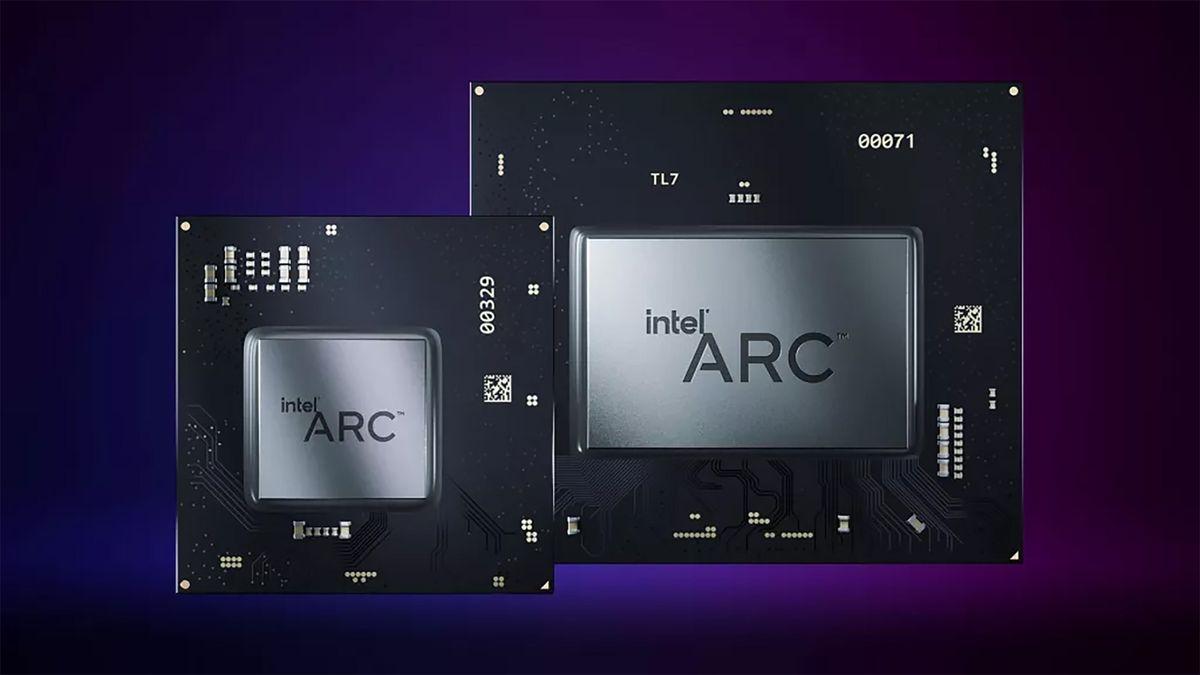
The Intel Arc logo against a blue and purple backdrop

(Image credit: Intel)

Say goodbye to 8GB GPUs with Intel…

Team Red has already made it clear that its focus has shifted from high-end GPUs to mid-range options, with a strong emphasis on AI upscaling going forward with FSR 4 (much like Nvidia’s continuing focus on AI for DLSS 3’s successor). With this in mind, I’m optimistic about what both have to offer at CES in January when it comes to budget options.

The Intel Arc B580 will feature 12GB of VRAM, while the cheaper B570 will utilize 10GB of VRAM – 8GB of VRAM is nowhere near enough to tackle games today, and it’s great to see that Intel abandoning this long-standing staple of affordable GPUs. More and more triple-A titles are demanding more VRAM for consistent performance and after Apple’s move away from 8GB of unified memory (shared RAM between the CPU and GPU) for Macs, I’m expecting Nvidia and AMD to follow suit.

Spotted by VideoCardz, XeSS Frame Generation has been leaked and is now available for Intel GPU owners to use via Nexus Mods – AI upscaling has been the talk of the town for PC gaming for improved frame rates and image quality, and now that Team Blue has joined the party, there is room for competition in the budget GPUs arena.

You might also like…

{ window.reliablePageLoad.then(() => { var componentContainer = document.querySelector(“#slice-container-newsletterForm-articleInbodyContent-k9f3g8H8RCwAPYgRmn35nZ”); if (componentContainer) { var data = {“layout”:”inbodyContent”,”header”:”Get daily insight, inspiration and deals in your inbox”,”tagline”:”Sign up for breaking news, reviews, opinion, top tech deals, and more.”,”formFooterText”:”By submitting your information you agree to the Terms & Conditions and Privacy Policy and are aged 16 or over.”,”successMessage”:{“body”:”Thank you for signing up. You will receive a confirmation email shortly.”},”failureMessage”:”There was a problem. Please refresh the page and try again.”,”method”:”POST”,”inputs”:[{“type”:”hidden”,”name”:”NAME”},{“type”:”email”,”name”:”MAIL”,”placeholder”:”Your Email Address”,”required”:true},{“type”:”hidden”,”name”:”NEWSLETTER_CODE”,”value”:”XTR-D”},{“type”:”hidden”,”name”:”LANG”,”value”:”EN”},{“type”:”hidden”,”name”:”SOURCE”,”value”:”60″},{“type”:”hidden”,”name”:”COUNTRY”},{“type”:”checkbox”,”name”:”CONTACT_OTHER_BRANDS”,”label”:{“text”:”Contact me with news and offers from other Future brands”}},{“type”:”checkbox”,”name”:”CONTACT_PARTNERS”,”label”:{“text”:”Receive email from us on behalf of our trusted partners or sponsors”}},{“type”:”submit”,”value”:”Sign me up”,”required”:true}],”endpoint”:”https://newsletter-subscribe.futureplc.com/v2/submission/submit”,”analytics”:[{“analyticsType”:”widgetViewed”}],”ariaLabels”:{}}; var triggerHydrate = function() { window.sliceComponents.newsletterForm.hydrate(data, componentContainer); } if (window.lazyObserveElement) { window.lazyObserveElement(componentContainer, triggerHydrate); } else { triggerHydrate(); } } }).catch(err => console.error(‘%c FTE ‘,’background: #9306F9; color: #ffffff’,’Hydration Script has failed for newsletterForm-articleInbodyContent-k9f3g8H8RCwAPYgRmn35nZ Slice’, err)); }).catch(err => console.error(‘%c FTE ‘,’background: #9306F9; color: #ffffff’,’Externals script failed to load’, err)); ]]>

Sign up for breaking news, reviews, opinion, top tech deals, and more.

Source

Posted on

GPU sales have slumped badly as PC gamers wait for next-gen AMD and Nvidia graphics cards – and I don’t blame them

  • GPU sales for Q3 are down almost 8% year-on-year
  • This is normally a strong period for sales of discrete graphics cards
  • It seems that gamers are holding off for RTX 5000 and RDNA 4 GPUs

Normally, this time of year would witness strong sales in the desktop GPU market, but one analyst firm observes that Q3 2024 has seen a distinct drop in buying activity.

This comes from Jon Peddie Research (JPR), which has compiled figures for Q3 sales of ‘graphics add-in boards’ (meaning standalone GPUs that slot into desktop PCs) finding that 8.1 million units were shifted in the quarter.

That’s down 7.9% on the same quarter in 2023, a fairly hefty drop, and it’s also down compared to Q2 2024, with an even larger decrease of 14.5%.

AMD lost a bit more ground here, too, as Nvidia now has 90% of the discrete graphics card market (up from 88% in Q2), with Team Red holding the remaining 10% (down from 12%). Intel Arc products don’t register on the scales for standalone GPUs, sadly for Team Blue – though unsurprisingly it still holds the majority share when it comes to CPU-integrated graphics.

The future also looks gloomy, JPR forecasts, as discrete GPUs are forecast to have a negative compound annual growth rate of -6%, with the market set to shrink further through to 2028.

A trio of Nvidia RTX 40-series Super GPU against a green and black background

(Image credit: Nvidia)

Analysis: Buyers are playing a waiting game

Obviously, this isn’t great news for any of the GPU giants, but AMD will be particularly displeased to see more market share slip away from it – the company is only just clinging onto double digits at this point.

A year ago, Team Red had a 17% share of the market. So, despite some notably successful Radeon GPU launches in recent times – namely the RX 7900 GRE, which in fact tops our list of the best graphics cards, and the RX 7800 XT, a strong mid-range offering that headed up that list when it came out last year – AMD is floundering, at least according to these stats.

{ window.reliablePageLoad.then(() => { var componentContainer = document.querySelector(“#slice-container-newsletterForm-articleInbodyContent-5LYiGr5H6ymd53PNgNAASY”); if (componentContainer) { var data = {“layout”:”inbodyContent”,”header”:”Get daily insight, inspiration and deals in your inbox”,”tagline”:”Sign up for breaking news, reviews, opinion, top tech deals, and more.”,”formFooterText”:”By submitting your information you agree to the Terms & Conditions and Privacy Policy and are aged 16 or over.”,”successMessage”:{“body”:”Thank you for signing up. You will receive a confirmation email shortly.”},”failureMessage”:”There was a problem. Please refresh the page and try again.”,”method”:”POST”,”inputs”:[{“type”:”hidden”,”name”:”NAME”},{“type”:”email”,”name”:”MAIL”,”placeholder”:”Your Email Address”,”required”:true},{“type”:”hidden”,”name”:”NEWSLETTER_CODE”,”value”:”XTR-D”},{“type”:”hidden”,”name”:”LANG”,”value”:”EN”},{“type”:”hidden”,”name”:”SOURCE”,”value”:”60″},{“type”:”hidden”,”name”:”COUNTRY”},{“type”:”checkbox”,”name”:”CONTACT_OTHER_BRANDS”,”label”:{“text”:”Contact me with news and offers from other Future brands”}},{“type”:”checkbox”,”name”:”CONTACT_PARTNERS”,”label”:{“text”:”Receive email from us on behalf of our trusted partners or sponsors”}},{“type”:”submit”,”value”:”Sign me up”,”required”:true}],”endpoint”:”https://newsletter-subscribe.futureplc.com/v2/submission/submit”,”analytics”:[{“analyticsType”:”widgetViewed”}],”ariaLabels”:{}}; var triggerHydrate = function() { window.sliceComponents.newsletterForm.hydrate(data, componentContainer); } if (window.lazyObserveElement) { window.lazyObserveElement(componentContainer, triggerHydrate); } else { triggerHydrate(); } } }).catch(err => console.error(‘%c FTE ‘,’background: #9306F9; color: #ffffff’,’Hydration Script has failed for newsletterForm-articleInbodyContent-5LYiGr5H6ymd53PNgNAASY Slice’, err)); }).catch(err => console.error(‘%c FTE ‘,’background: #9306F9; color: #ffffff’,’Externals script failed to load’, err)); ]]>

Sign up for breaking news, reviews, opinion, top tech deals, and more.

Why are overall GPU sales down in a reversal of the normal picture for the third quarter? That’s surely due to the proximity of next-gen graphics cards from AMD and Nvidia, which are about to launch, in theory, at CES 2025 in both cases.

Gamers are likely holding off for those RTX 5000 GPUs and RDNA 4 GPUs – I know I am, as it just makes sense at this stage of the launch timeframe. Indeed, sales may have been affected earlier this year, too, as would-be buyers may have still been hopeful that these next-gen graphics cards could turn up late in 2024 – along with Intel’s Battlemage desktop GPUs (2nd-gen models that were recently revealed). We’re also likely to see some potential RTX 4000 and RX 7000 price drops when the new cards are revealed, which cash-strapped PC gamers could be waiting for.

A further issue that Jon Peddie points out is that the attach rate of discrete GPUs relative to CPUs in desktop PCs has dropped, meaning that more PCs are shipping with no discrete graphics card, relying on integrated graphics instead. That attach rate fell by 26.9% in Q3 compared to the previous quarter, which again is a shaky sign for GPU makers.

Finally, the reason for the prediction of negative growth through to 2028 is Trump coming into office in the US and imposing import tariffs (particularly on China) that are potentially going to push up the price of PCs and components by a hefty amount.

So those who are waiting for next-gen GPUs in the US might need to move pretty swiftly when these models (hopefully) go on sale early next year, before potentially major price hikes start kicking in for all manner of consumer electronics.

Via Tom’s Hardware

You might also like

Source

Posted on

Nvidia cranks RTX 5000 GPU hype machine up to full speed, teasing ‘GeForce at CES 2025’ as Witcher 4 trailer drops a big hint

  • Nvidia has teased revelations about ‘GeForce at CES 2025’
  • This must surely be next-gen GPUs, likely the RTX 5090 and 5080
  • Witcher 4 trailer also drops a big clue the RTX 5090 may be imminent

Nvidia has finally discarded what’s been one of the worst kept secrets in the tech world this year – alongside Apple’s M4 Macs – and teased that it is indeed about to reveal new GeForce products at CES 2025.

The teaser (highlighted by VideoCardz) stops short of mentioning RTX 5000, or RTX 50 series, or Blackwell, or any specific name at all, and just mentions ‘GeForce at CES 2025’ – but of course, this must surely be the launch of the next-gen graphics cards.

Previously, Nvidia has let us know about its CES 2025 keynote – which CEO Jensen Huang will give – but not what it’ll be about. Now we know it’s GeForce-related, and will surely consist of an RTX 5090 reveal, and probably other GPUs too (the RTX 5080 is another strong possibility, going by the rumors – and likely next-gen Blackwell laptop GPUs, as well).

Backing this up is the fact that the Witcher 4 has seen its first cinematic trailer aired at The Game Awards, and interestingly, there’s a mention of this footage being “pre-rendered in Unreal Engine 5 on an unannounced Nvidia GeForce RTX GPU.”

That must surely be the flagship RTX 5090, and this represents another weighty hint that said graphics card is about to be announced at CES, which is only a few weeks away now.

Nvidia GeForce CES 2025 Teaser

(Image credit: Nvidia / VideoCardz)

Analysis: Exciting times just around the corner

At this point, the RTX 5000 reveal is as confirmed as it’s going to be – without mentioning any product names – until Jensen takes the stage on January 6, at CES 2025, and actually unveils the RTX 5090 and probably RTX 5080 too. There’s further chatter about the possibility of the RTX 5070 turning up alongside them, but that GPU might be saved for a bit later – though it’s still expected to arrive early in 2025, going by the grapevine.

I certainly hope that the RTX 5070 is in the mix for an early launch, as this is the GPU that I’m most interested in regarding a near-future upgrade for my gaming PC. On the Nvidia side, that is – I’m also very keen to see how the rumored RX 8800 XT shapes up in comparison, particularly in terms of pricing (or whatever RDNA 4 products are revealed by AMD, also at CES 2025, as they’re almost certainly going to be strong mid-range offerings).

{ window.reliablePageLoad.then(() => { var componentContainer = document.querySelector(“#slice-container-newsletterForm-articleInbodyContent-RWutzCTEfuAS6smSi5f4LA”); if (componentContainer) { var data = {“layout”:”inbodyContent”,”header”:”Get daily insight, inspiration and deals in your inbox”,”tagline”:”Sign up for breaking news, reviews, opinion, top tech deals, and more.”,”formFooterText”:”By submitting your information you agree to the Terms & Conditions and Privacy Policy and are aged 16 or over.”,”successMessage”:{“body”:”Thank you for signing up. You will receive a confirmation email shortly.”},”failureMessage”:”There was a problem. Please refresh the page and try again.”,”method”:”POST”,”inputs”:[{“type”:”hidden”,”name”:”NAME”},{“type”:”email”,”name”:”MAIL”,”placeholder”:”Your Email Address”,”required”:true},{“type”:”hidden”,”name”:”NEWSLETTER_CODE”,”value”:”XTR-D”},{“type”:”hidden”,”name”:”LANG”,”value”:”EN”},{“type”:”hidden”,”name”:”SOURCE”,”value”:”60″},{“type”:”hidden”,”name”:”COUNTRY”},{“type”:”checkbox”,”name”:”CONTACT_OTHER_BRANDS”,”label”:{“text”:”Contact me with news and offers from other Future brands”}},{“type”:”checkbox”,”name”:”CONTACT_PARTNERS”,”label”:{“text”:”Receive email from us on behalf of our trusted partners or sponsors”}},{“type”:”submit”,”value”:”Sign me up”,”required”:true}],”endpoint”:”https://newsletter-subscribe.futureplc.com/v2/submission/submit”,”analytics”:[{“analyticsType”:”widgetViewed”}],”ariaLabels”:{}}; var triggerHydrate = function() { window.sliceComponents.newsletterForm.hydrate(data, componentContainer); } if (window.lazyObserveElement) { window.lazyObserveElement(componentContainer, triggerHydrate); } else { triggerHydrate(); } } }).catch(err => console.error(‘%c FTE ‘,’background: #9306F9; color: #ffffff’,’Hydration Script has failed for newsletterForm-articleInbodyContent-RWutzCTEfuAS6smSi5f4LA Slice’, err)); }).catch(err => console.error(‘%c FTE ‘,’background: #9306F9; color: #ffffff’,’Externals script failed to load’, err)); ]]>

Sign up for breaking news, reviews, opinion, top tech deals, and more.

The worries for Nvidia’s next-gen GeForce graphics cards are that pricing might be pushed harder again (groan), and that VRAM loadouts could be thin, with perhaps only 16GB for the RTX 5080 and 12GB for the RTX 5070. That said, there may be mitigating circumstances to some extent with VRAM performance, but still, those video RAM allocations look distinctly shaky in terms of future-proofing – add seasoning appropriately, as all these specs are still rumors.

You might also like

Source

Posted on

CMA gives Vodafone-Three merger green light

The UK’s Competitions and Markets Authority (CMA) has cleared the Vodafone-Three merger, subject to legally binding commitments. It’s expected to formally complete in the first half of 2025.

The CMA had previously warned that the proposed merger of Vodafone and Three would likely lead to higher prices and reduced service. The deal is subject to Vodafone-Three delivering a joint network plan, which sets out the network upgrade, integration and improvements the two companies will make to their combined network across the UK over the next eight years.

Vodafone and Three will also need to cap selected mobile tariffs and data plans for three years, which the CMA said would directly protect large numbers of Vodafone-Three customers from short-term price rises in the early years of the network plan. The merged company will also be required to offer pre-set prices and contract terms for wholesale services for three years, to ensure that virtual network providers can obtain competitive terms and conditions as the network plan is rolled out.

The merger of Vodafone and Three is regarded as Vodafone’s response to BT’s 2016 purchase of EE, and the 2021 merger of Virgin Media and O2 to form VMO2.

Margherita Della Valle, Vodafone Group’s CEO, described the combination as being “great for customers, great for competition and great for the country”.

The two companies have committed to investing £11bn to create what they claim is one of Europe’s most advanced 5G networks. The aim is to reach 99% of the population and benefit over 50 million customers. The investment in mobile networking promises better quality, greater reliability and enhanced capacity for handling ever-increasing data demand, according to Vodafone and Three, who see demand for mobile data servers increasing with more widespread adoption of new technology, such as artificial intelligence (AI).

“The CMA’s decision is not a surprise – it has signalled for some time that it was receptive to approving the merger subject to appropriate concessions from the parties,” said Alex Haffner, a competition partner at Fladgate. “Nevertheless, it is noteworthy in that it has permitted a ‘4-3’ merger in the mobile sector on the basis of purely behavioural remedies – over the past decade, a multitude of ‘4-3’ mobile network mergers across Europe have been permitted only on the basis of significant structural remedies being conceded by the merging parties. In doing so, the CMA has displayed a degree of pragmatism, sensing that consumers will ultimately benefit more from competition between three well-resourced mobile operators in the UK market.”

Kester Mann, director of consumer and connectivity at CCS Insight, described the deal as “one of the most significant moments in the history of UK mobile”, heralding the arrival of a new market leader with a combined 29 million customers.

“The CMA’s decision to approve the merger is the right one, and largely strikes a good balance between nurturing competition and encouraging investment,” he said. “It should pave the way for more efficient investments to bring about much-needed improvements to mobile services in the UK.”

However, as Matthew Howett, founder and CEO at Assembly Research, noted, there is still a chance Sky may seek to challenge the decision. He nonetheless said a successful appeal to the CMA’s decision would be hard-fought, expensive and face a high bar. “We expect positive implications overall, not only for investment in, and the quality of, networks (including standalone 5G), but also for the wholesale customers, consumers and businesses that rely on them,” he said.

For Howett, telco regulator Ofcom has a significant new role focused on the oversight of the Vodafone-Three merger. “The regulator seems emboldened to assume these responsibilities,” he said. “Its monitoring will need to be carried out in an agile a way as possible to ensure the merged entity is living up to expectations, and to minimise any risk of circumvention or market distortions that some have warned about.”

Source

Posted on

Here’s why I’d cancel Netflix before ChatGPT Plus

As I type these lines, we’re halfway through OpenAI’s big “12 Days” of ChatGPT event, which brought us several exciting features. ChatGPT o1 is out of beta, as is the Canvas mode, with the latter delivering a big UI change for the ChatGPT experience. OpenAI also released the text-to-video Sora service to the public and brought live video streaming and screen sharing to GPT-4o’s Advanced Voice Mode.

As a ChatGPT Plus user, I’d have early access to all of them, but since I’m in the European Union, OpenAI is more cautious with its releases here. As such, Sora and the live video streaming support for Advanced Voice Mode are not available in the region. The latter is especially exciting, as the AI will get eyes in specific conversations.

These developments made me realize, again, that the Plus subscription isn’t as good in Europe as elsewhere. Still, I’m not going to cancel it, as I find that ChatGPT has become too valuable to me, both for work and personal computing. I also thought that, if I were to choose, I’d rather cancel Netflix than ChatGPT Plus at this particular point in my life.

It’s an apples-to-oranges comparison, sure. The two products aren’t actual competitors. If anything, I found that ChatGPT can be a great companion for streaming certain Netflix shows.

Tech. Entertainment. Science. Your inbox.

Sign up for the most interesting tech & entertainment news out there.

By signing up, I agree to the Terms of Use and have reviewed the Privacy Notice.

It just happens that I’m not binging Netflix like I would have done years ago. I skip some of the shows completely.

Meanwhile, Netflix has tightened its password-sharing crackdown to the point where circumventing it is almost impossible.

Separately, YouTube got a massive price hike this week, which, combined with OpenAI’s ongoing event, made me compare streaming subscriptions like Netflix to ChatGPT Plus. It’s not just Google that’s periodically increasing prices; Netflix is doing it, too, as I just got one such price hike notification for my region.

I often argued that the password-sharing ban and price hikes are worth dealing with, considering what you’re getting in return. I said that I’ll keep my Netflix subscription as long as I spend more money on coffee when going out. The latter consideration also applies to ChatGPT Plus.

What I’m getting at is that I’m not in a position where I have to choose between the various software and service subscriptions I might pay each month and cut some of the costs.

But if I were to start cutting something, streaming services would go well before ChatGPT Plus. Netflix could be on the chopping block too.

At $20/month, ChatGPT Plus is actually more expensive than what I pay for Netflix. But combine all the streaming subscriptions I’m subscribed to, and ChatGPT Plus is the cheaper option. Also, those costs add up over a year, according to an Excel doc where I keep track of everything.

Ted Danson in A Man on the Inside on NetflixTed Danson as Charles in “A Man on the Inside.” Image source: Colleen E. Hayes/Netflix
I reduced my streaming time so I could focus on exercising more. I run marathons now, which means I’m spending hours running and walking outside. Watching Netflix isn’t what it used to be, and it has nothing to do with the time I spend on ChatGPT.

As for the AI chatbot, I’ve been using it increasingly more in the past year, especially since I jumped on the Plus subscription. It’s not just for work, though; as you can imagine, keeping tabs on all things AI is a good reason to have an active premium AI subscription. I use ChatGPT for more complex research, which would take a lot longer to use traditional search engines.

I’m still questioning what the AI is telling me, but with the addition of ChatGPT Search, OpenAI has made a big move towards showing the sources of ChatGPT’s claims. By the way, ChatGPT Search continues to be exclusive to premium tiers like ChatGPT Plus.

I use ChatGPT to plan workouts and travel, and I use it to ask any question I can think of, including the sillier kind. That latter part actually comes in handy while traveling to all sorts of places and visiting museums and other landmarks. ChatGPT can be an invaluable source of information, and it’ll be an even better tool once video streaming support rolls out to Advanced Voice Mode.

I wouldn’t have necessarily expected it earlier this year, but a premium AI subscription is a top priority for me. Even if I cancel ChatGPT Plus, I’d consider a premium replacement from the competition. The Netflix subscription, meanwhile, is much lower on that priorities list, and I’m sure I’d cancel it long before I ditch ChatGPT Plus.

Source

Posted on

Intel and AMD may have another desktop competitor

  • A new suggestion from a reliable leaker hints at Qualcomm’s new CPU heading to desktop PCs
  • The 2nd-gen Snapdragon X Elite processor codenamed ‘Project Glymur’ was tested with liquid cooling AIO
  • The chip likely be unveiled at CES 2025 in a few weeks

Both Intel and AMD have dominated the desktop PC scene when it comes to providing powerful processors for productivity and gaming – and now, Qualcomm could be joining the party, with 2nd-gen Snapdragon X Elite processors potentially making their way to desktop PCs.

As highlighted by Notebookcheck, reliable leaker Roland Quandt has hinted at Qualcomm’s new processor coming to desktop PCs as the brand is reportedly testing the SC8480XP (Project Glymur chip codename) with a 120 mm liquid cooling AIO. This assumption comes from the fact that AIOs as such being used for gaming desktop configurations, unlike the cooling mechanisms that would be required in lightweight laptops.

With CES 2025 now only weeks away, we could soon see what Qualcomm has to offer and whether Quandt’s prediction is accurate. The 2nd-gen Snapdragon X Elite processors may take advantage of Oryon V3 cores according to Quandt (based on Qualcomm CEO Cristiano Amon’s ‘next-gen’ CPU statements), so there could be a lot to get excited about here.

Qualcomm Snapdragon X Elite

(Image credit: Qualcomm)

Could 2025’s CES event be one of the best in years?

Considering AMD and Nvidia’s presence at CES 2025 and their inevitable reveals of the Radeon RX 8000 series and RTX 5000 series GPUs, Qualcomm’s inclusion could easily make this one of the more interesting CES events in years.

While a potential new Snapdragon X Elite processor for desktop PCs could be beneficial for gamers with tight budgets (especially as a second-gen version of the existing X Elite), it’s still a little too early to suggest this. On laptops such as the Lenovo Yoga 7x Slim, gaming is possible but certainly not comparable to gaming laptops or handheld gaming PCs, and Qualcomm itself has stated that the X Elite chips are not targeted at serious gamers.

Nonetheless, the Yoga 7x Slim and fellow X Elite laptops come without discrete GPUs – for a desktop gaming PC that has a discrete GPU, a new Snapdragon chip could be promising depending on the improvements made with the new processors; potentially adding to the list of surprises I hope to see at CES 2025. Mind you, I don’t want to have to buy a new motherboard…

You might also like…

{ window.reliablePageLoad.then(() => { var componentContainer = document.querySelector(“#slice-container-newsletterForm-articleInbodyContent-NP89AAthSg9prV59t2ChUN”); if (componentContainer) { var data = {“layout”:”inbodyContent”,”header”:”Get daily insight, inspiration and deals in your inbox”,”tagline”:”Sign up for breaking news, reviews, opinion, top tech deals, and more.”,”formFooterText”:”By submitting your information you agree to the Terms & Conditions and Privacy Policy and are aged 16 or over.”,”successMessage”:{“body”:”Thank you for signing up. You will receive a confirmation email shortly.”},”failureMessage”:”There was a problem. Please refresh the page and try again.”,”method”:”POST”,”inputs”:[{“type”:”hidden”,”name”:”NAME”},{“type”:”email”,”name”:”MAIL”,”placeholder”:”Your Email Address”,”required”:true},{“type”:”hidden”,”name”:”NEWSLETTER_CODE”,”value”:”XTR-D”},{“type”:”hidden”,”name”:”LANG”,”value”:”EN”},{“type”:”hidden”,”name”:”SOURCE”,”value”:”60″},{“type”:”hidden”,”name”:”COUNTRY”},{“type”:”checkbox”,”name”:”CONTACT_OTHER_BRANDS”,”label”:{“text”:”Contact me with news and offers from other Future brands”}},{“type”:”checkbox”,”name”:”CONTACT_PARTNERS”,”label”:{“text”:”Receive email from us on behalf of our trusted partners or sponsors”}},{“type”:”submit”,”value”:”Sign me up”,”required”:true}],”endpoint”:”https://newsletter-subscribe.futureplc.com/v2/submission/submit”,”analytics”:[{“analyticsType”:”widgetViewed”}],”ariaLabels”:{}}; var triggerHydrate = function() { window.sliceComponents.newsletterForm.hydrate(data, componentContainer); } if (window.lazyObserveElement) { window.lazyObserveElement(componentContainer, triggerHydrate); } else { triggerHydrate(); } } }).catch(err => console.error(‘%c FTE ‘,’background: #9306F9; color: #ffffff’,’Hydration Script has failed for newsletterForm-articleInbodyContent-NP89AAthSg9prV59t2ChUN Slice’, err)); }).catch(err => console.error(‘%c FTE ‘,’background: #9306F9; color: #ffffff’,’Externals script failed to load’, err)); ]]>

Sign up for breaking news, reviews, opinion, top tech deals, and more.

Source

Posted on

UK medical trial of four-day week finds staff happier and more productive

Learning technology firm Thrive has taken part in the UK’s first medical trial of the four-day work week, which found that shorter hours lead to happier, more productive staff.

Conducted by Thrive in partnership with the University of Sussex, the trial collected data on 115 Thrive employees between July and October 2024, including research tests such as MRI scans, blood tests and sleep tracking, as well as weekly questionnaires covering their workplace experiences and wellbeing.

Regular feedback was also sought from Thrive customers – which the company supplies with an artificial intelligence (AI)-powered learning management system (LMS) to help them train and upskill their employees faster – to determine the impact of the trial on quality of service, while sales and product metrics were also evaluated to assess the effects on business productivity.

According to the results, there were notable improvements in a number of employee wellbeing metrics – particularly those related to stress levels, sleep quality, and detachment from work – indicating a significant improvement in work-life balance.

This includes a 20% reduction in sleep problems, a “considerable” 8.6% reduction in perceived stress, a 14.7% decrease in “emotional exhaustion”, and a “statistically significant” 5% reduction in anxiety symptoms.

“The results speak for themselves. These significant improvements in areas related to physical and mental wellbeing demonstrate the transformative power of a four-day work week,” said Charlotte Rae, research lead at the University of Sussex. “Improved sleep quality and reduced stress and exhaustion are factors that could have a significant impact on our health, with the potential to enhance our lives in and outside of work. This study provides further compelling evidence for the benefits of flexible working models.”

In terms of the impact on work productivity, the trial found that despite working fewer hours, the task execution of employees remained consistent, with many reporting increased goal attainment and self-efficacy. Researchers said this reflected a boost in their confidence and belief in their ability to achieve desired outcomes at work.

Cassie Gasson, co-CEO at Thrive, said that being a tech-focused business brought a range of advantages to the firm when conducting the trial: “Working in the tech space means our teams are naturally aligned with using tools like AI, which allowed us to streamline workflows and prioritise the work that matters most.

“As creators and users of AI-powered solutions, we’ve seen first-hand how impactful it can be in enabling flexibility without compromising on results, which has proven beneficial in the context of the four-day work week.”

She added that while Thrive’s teams are already equipped with the skills and tech to make the most of a four-day week – as the company has used its platform to continually upskill its own workforce – the trial highlighted that success depends on fostering the right culture to make the working changes sustainable.

“Because of this, we recognise that this approach doesn’t suit every business or team dynamic,” she said. “By balancing flexibility with customer needs, we’re exploring how to make the four-day work week a sustainable option for the future, opting for a seasonal approach going forward.”

Widespread cultural change needed for success

Despite the dual benefits on employee wellbeing and productivity, the trail highlighted the difficulty of providing consistent customer service in a business landscape where most other firms are still operating on the traditional five-day working model.

“Our four-day work week trial revealed incredibly encouraging results and we saw a fantastic impact on the people within our business,” said Gasson. “While we would have loved to implement it on a full-time basis, our experiences in the trial highlighted that the success of a four-day work week will rely on widespread cultural change across the UK business landscape.

“As a business serving hundreds of organisations, it highlighted that five-day coverage for our customers is essential when they’re operating more traditional ways of working.”

Gasson added that the UK government should consider implementing policies to help make a four-day work week a reality: “The benefits are evident through its potential to boost business productivity, increase wellbeing, and generally make the country happier and healthier. The UK has the potential to take the lead on this by pioneering the four-day work week and reaping the rewards.”

Until then, she said Thrive would look to implement a four-day work week on a seasonal basis.

In May 2022, more than 3,000 workers at 60 companies took part in a coordinated, six-month trial of a four-day working week in the UK. Organised by 4-Day Week Global in partnership with think tank Autonomy and the 4-Day Week UK Campaign, the trial saw 60 firms – including several technology companies – adopt a reduced working week with no loss of pay from June to December 2022.

Speaking with Computer Weekly at the time, many of the tech firms highlighted positive results in terms of productivity, as well as talent attraction and retention.

While issues were highlighted for business in sectors such as cyber security, where “switching off” for a day is not necessarily an option, researchers at Autonomy said businesses could circumvent this issue through the introduction of a better rota system or by hiring additional staff. Ultimately, most firms involved deciding to continue with shorter weeks on a permanent basis.

Prior to this, the largest four-day week trial to date was run in Iceland by Reykjavík City Council and the national government, which included more than 2,500 workers. It found that productivity either remained the same or improved in the majority of workplaces involved.

In November 2023, Autonomy published a paper on the potential for AI-driven large language models (LLMs) to shorten people’s work weeks, noting while they could lead to significant reductions in working time without a loss of pay or productivity, realising the benefits of such AI-driven productivity gains in this way will require concerted political action.

Autonomy noted that although people have long been predicting and expecting far shorter working weeks due to technological advances, historical increases in productivity over recent decades have not translated into increased wealth or leisure time for most people, largely as a result of economic inequality.

It said that there is often a sense of pessimism around AI-driven productivity gains, with most conversations emphasising the potential for job losses and degraded working conditions, but that such gains could also be used to deliver shorter working weeks for many while maintaining their pay and performance.

A number of IT firms have moved to a four-day week over the past couple of years due to the benefits, including cloud provider Civo, channel player Highgate IT Solutions, and challenger bank Atom.

Source

Posted on

Nvidia RTX 5000 prediction suggests RTX 5090 will be a monster flagship GPU… but it’s the RTX 5070 I’m worried about

  • Expectation for Nvidia RTX 5090 is a 60% to 70% gen-on-gen uplift
  • RTX 5070 might be way behind that on 20% to 30% faster than 4070
  • With RTX 5080 landing in-between at 30% to 40% quicker than 4080

Nvidia’s RTX 5000 GPUs are just around the corner – Team Green has now officially teased new GeForce graphics cards for CES 2025 – and we’ve just heard some more buzz on the potential performance levels these Blackwell products might achieve.

This is a rumor that you need to load up on the seasoning with, because as the source – regular leaker on X, OneRaichu – points out, these are just their expectations.

In the post which was flagged up by Digital Trends, OneRaichu believes that the flagship (RTX 5090) will be 60% to 70% faster for the GPU’s generational uplift.

The prediction is that ‘high-level’ Blackwell GPUs – which we’d take to mean the RTX 5080 – will be 30% to 40% faster, and for mid-range, that tapers down to 20% to 30% quicker than Nvidia’s predecessor graphics cards. In that latter case, we presume this refers to the RTX 5070 – and maybe to a lesser extent the RTX 5060, although this GPU is likely to be a lot further out, going by the lack of rumored specs (and any performance forecasts) around it.

An Nvidia RTX 4090 in its retail packaging

(Image credit: Future)

Analysis: Great news for PC enthusiasts, in theory – not so much for the mainstream

As noted, these are just expectations, but of course those expectations are built on a bedrock of leaks which OneRaichu has been hearing for some time.

What’s interesting is that regarding the RTX 5090, in past rumors, we’ve been hearing about the next-gen flagship being anything from 50% to 70% faster than the RTX 4090. So, this leaker’s assertion is that it’ll be towards the top-end of those previous estimates, a hint – taken with plenty of skepticism – that this is going to be a mighty graphics card from Nvidia. Likely with an equally mighty price tag (as in you ‘might’ not be able to afford it unless you take out a second mortgage).

On the other hand, the RTX 5070 may be a much more modest gen-on-gen uplift, which is disappointing to me – and all mainstream gamers with more typical gaming PC budgets – and this also fits with some of the rumors that we’ve heard about that graphics card. (Notably the purported 12GB of VRAM which, even if it is much nippier GDDR7, could be a real sticking point for many).

{ window.reliablePageLoad.then(() => { var componentContainer = document.querySelector(“#slice-container-newsletterForm-articleInbodyContent-rTFHvQpyrRA8zPHP37zskZ”); if (componentContainer) { var data = {“layout”:”inbodyContent”,”header”:”Get daily insight, inspiration and deals in your inbox”,”tagline”:”Sign up for breaking news, reviews, opinion, top tech deals, and more.”,”formFooterText”:”By submitting your information you agree to the Terms & Conditions and Privacy Policy and are aged 16 or over.”,”successMessage”:{“body”:”Thank you for signing up. You will receive a confirmation email shortly.”},”failureMessage”:”There was a problem. Please refresh the page and try again.”,”method”:”POST”,”inputs”:[{“type”:”hidden”,”name”:”NAME”},{“type”:”email”,”name”:”MAIL”,”placeholder”:”Your Email Address”,”required”:true},{“type”:”hidden”,”name”:”NEWSLETTER_CODE”,”value”:”XTR-D”},{“type”:”hidden”,”name”:”LANG”,”value”:”EN”},{“type”:”hidden”,”name”:”SOURCE”,”value”:”60″},{“type”:”hidden”,”name”:”COUNTRY”},{“type”:”checkbox”,”name”:”CONTACT_OTHER_BRANDS”,”label”:{“text”:”Contact me with news and offers from other Future brands”}},{“type”:”checkbox”,”name”:”CONTACT_PARTNERS”,”label”:{“text”:”Receive email from us on behalf of our trusted partners or sponsors”}},{“type”:”submit”,”value”:”Sign me up”,”required”:true}],”endpoint”:”https://newsletter-subscribe.futureplc.com/v2/submission/submit”,”analytics”:[{“analyticsType”:”widgetViewed”}],”ariaLabels”:{}}; var triggerHydrate = function() { window.sliceComponents.newsletterForm.hydrate(data, componentContainer); } if (window.lazyObserveElement) { window.lazyObserveElement(componentContainer, triggerHydrate); } else { triggerHydrate(); } } }).catch(err => console.error(‘%c FTE ‘,’background: #9306F9; color: #ffffff’,’Hydration Script has failed for newsletterForm-articleInbodyContent-rTFHvQpyrRA8zPHP37zskZ Slice’, err)); }).catch(err => console.error(‘%c FTE ‘,’background: #9306F9; color: #ffffff’,’Externals script failed to load’, err)); ]]>

Sign up for breaking news, reviews, opinion, top tech deals, and more.

At least we don’t have long to wait to find out how accurate this forecast – and the other speculation from the grapevine – will be, as Nvidia is almost certainly going to reveal RTX 5000 graphics cards at CES 2025, given that fresh teaser. (And the fact that the new Witcher 4 trailer also used an unannounced RTX GPU, likely the 5090).

You might also like

Source

Posted on

8 iOS 18 features that Apple has delayed to 2025

With the launch of iOS 18.2 just around the corner, Apple has a few more iOS 18 features that have now been delayed until 2025.

As excited as we are about all of the new features Apple is bringing to iOS 18, the wait for many of them has been longer than we expected. With that in mind, here are all the features iPhone owners are going to receive sometime next year:

  • Personal context understanding: With Apple Intelligence’s on-device semantic index, Siri can understand emails, messages, photos, calendar events, files, and more and can provide answers to personal questions.
  • In-app actions: Siri can take hundreds of new actions on your behalf in both first- and third-party apps, such as editing a photo, adding a note, and more.
  • Onscreen awareness: Siri will be able to understand and take action with things on your screen, so when a friend texts you recommending a new coffee shop in the neighborhood, you can ask Siri how long it will take to get there.
  • Apple Intelligence expansion: Apple promises Apple Intelligence support will expand to new countries and languages in 2025, most likely around iOS 18.4.
  • Sketch style: With Image Playground, Apple offers animation and illustration styles. However, the Sketch style will likely be delayed. It’s currently available as an option in Image Wand but not for the Image Playground app.
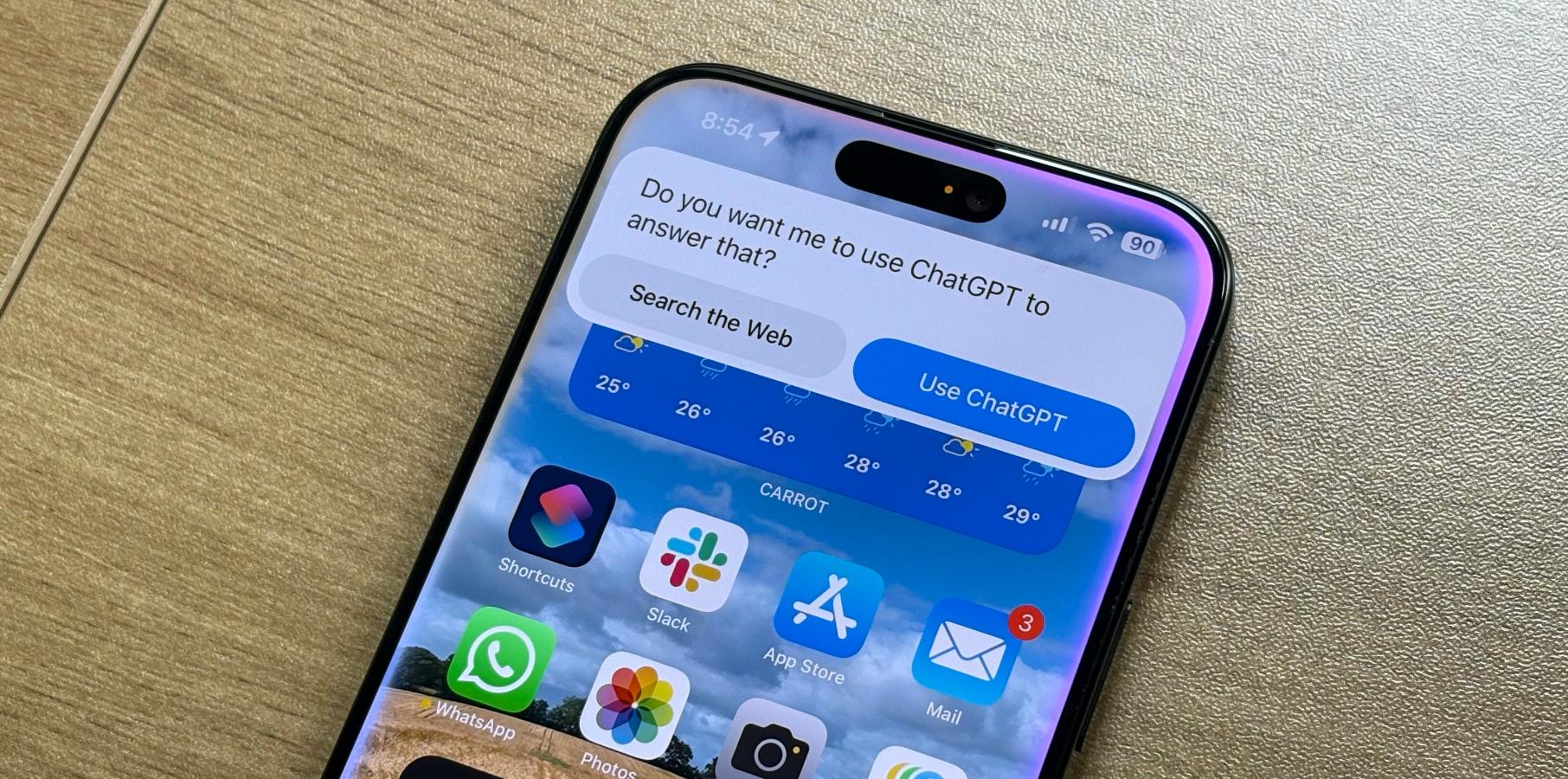
  • Integration with other LLMs: Currently, Apple only offers support for ChatGPT integration with Writing Tools. In the future, the mobile platform is expected to work with other LLMs, such as Google’s Gemini and more.
  • New emoji: Apple usually releases new emojis a few months after its main iOS release. If the company follows the trend, iOS 18.4 could bring new emojis. These are the possible new additions.
  • Robot vacuum cleaners will be compatible with the Home app, so they can participate in automation and scenes and can be activated by a user’s voice using Siri.

iOS 18.1 Apple Intelligence on iPhone 15 Pro all-new Siri designiOS 18.1 Apple Intelligence on iPhone 15 Pro: The all-new Siri design Image source: José Adorno for BGR



While the robot vacuum cleaners feature will likely be released early in 2025 with iOS 18.3, all of these new features will likely be part of iOS 18.4 in the spring.

That being said, it’s possible that most of the Apple Intelligence features related to Siri could be delayed to iOS 19 and beyond. In a previous newsletter, Bloomberg‘s Mark Gurman wrote:

Tech. Entertainment. Science. Your inbox.

Sign up for the most interesting tech & entertainment news out there.

By signing up, I agree to the Terms of Use and have reviewed the Privacy Notice.

These upcoming upgrades will make Siri easier to use on a day-to-day basis, but it’s not the brain transplant that the service really needs. Siri is still based on an outdated infrastructure — AI models that have been overtaken by the technology used by ChatGPT and Google’s Gemini. Siri hasn’t yet been rebuilt for the generative AI age, even if Apple is trying to create the impression that it has.

Wrap up

iOS 18 still has several delayed features that might take a long time to become available. Below, you can learn more about what features iOS 18.2 will bring.

Source