Posted on

US TikTok ban imminent after appeal fails

An appeals court in the United States has upheld a law passed by Congress earlier in 2024 to ban China-owned video-sharing social media platform TikTok in the US on national security and data protection grounds

The law sailed through the US legislature back in April, after being included in a wider package of aid for Israel, Taiwan and Ukraine. It gives TikTok’s parent, ByteDance, notice to either sell TikTok to a US-based entity or be removed from online app stores for good – with both Apple and Google facing financial penalties if they do not comply.

The law’s passage came amid a growing freeze in relations between the US and China, and a spate of accusations from Western cyber security agencies claiming widespread Chinese cyber espionage.

TikTok appealed against this, but the US Court of Appeals for the District of Columba Circuit today [6 December] unanimously denied this petition.

In the court’s opinion on the case of TikTok and ByteDance Ltd versus Merrick Garland [US attorney general], judge Douglas Ginsberg said the decision had significant implications for both TikTok and its users, because unless ByteDance divests the business by 19 January 2025, or the president grants a 90-day extension, the TikTok platform will “effectively be unavailable in the United States…. Consequently, TikTok’s millions of users will need to find alternative media of communication.”

Ginsberg wrote this burden was attributable to China’s hybrid commercial threat to US security and not the US government, which he wrote has been engaged with TikTok for some time in efforts to find alternative solutions.

Ginsberg also dismissed TikTok’s arguments that a ban infringed its First Amendment rights – the First Amendment, dating back to December 1791, guarantees freedom of speech and the press in the US.

“The First Amendment exists to protect free speech in the United States. Here the government acted solely to protect that freedom from a foreign adversary nation and to limit that adversary’s ability to gather data on people in the United States,” he wrote.

“The Supreme Court has an established historical record of protecting Americans’ right to free speech, and we expect they will do just that on this important constitutional issue,” a TikTok spokesperson said, via social media site X.

“Unfortunately, the TikTok ban was conceived and pushed through based upon inaccurate, flawed and hypothetical information, resulting in outright censorship of the American people. The TikTok ban, unless stopped, will silence the voices of over 170 million Americans here in the US and around the world on 19 January 2025.”

According to US news network CNBC, TikTok plans to seek an injunction to have the case heard before the US Supreme Court in Washington DC.

Trump’s change of heart?

The one saving grace for TikTok may yet be the incoming Republican administration led by president elect Donald Trump, who returns to the White House in January for an historic second term.

Prior to the 2020 election Trump had led calls for a ban on TikTok, and came close to achieving this goal. However, after the Biden administration’s legal intervention, he now appears to have had a change of heart. Indeed, back in September, he briefly positioned it as a campaign issue, encouraging TikTok users to cast their vote for him. At the time of going to press, however, Trump had not stated whether he will actually enforce a ban.

Time’s up

Craig Singleton, senior fellow and China program director at the Foundation for Defense of Democracies, who contributed extensively to an amicus brief on which the court heavily relied, said the ruling underscored a growing consensus that time was up for TikTok, at least in its current form.

“The unanimous decision is a clear warning shot to foreign companies operating in sensitive sectors – they must play by the rules or face the consequences,” said Singleton.

“Expect TikTok to pull every lever – lobbying, lawsuits, and public pressure – to stall divestiture. But. the bipartisan appetite for action means the company’s runway is rapidly shrinking.”

The ruling also serves as a bellwether for how the US, and by extension its core allies including the UK, confront tech threats from authoritarian regimes, and for policymakers, the saga so far serves as a test of whether the law can keep up with emerging threats, he said.

“For Beijing, this is more than just about TikTok – it’s a symbolic and strategic loss in the broader tech competition with Washington,” added Singleton. “There can be no doubt that this ruling undercuts Beijing’s ability to use TikTok as a powerful tool for influence, data collection, and narrative control within the US, marking a significant strategic loss.

“China has few meaningful options apart from retaliatory rhetoric or tit-for-tat measures targeting U.S. companies operating in China,” Singleton told Computer Weekly in emailed comments.

“While Beijing is likely to issue strong condemnations, we shouldn’t expect any dramatic responses – China may complain loudly, but with its economy under strain, this is more a diplomatic headache than an immediate crisis.”

Source

Posted on

Intel announces its new Battlemage graphics cards, and they might just be the 1440p budget champions we’ve been waiting for

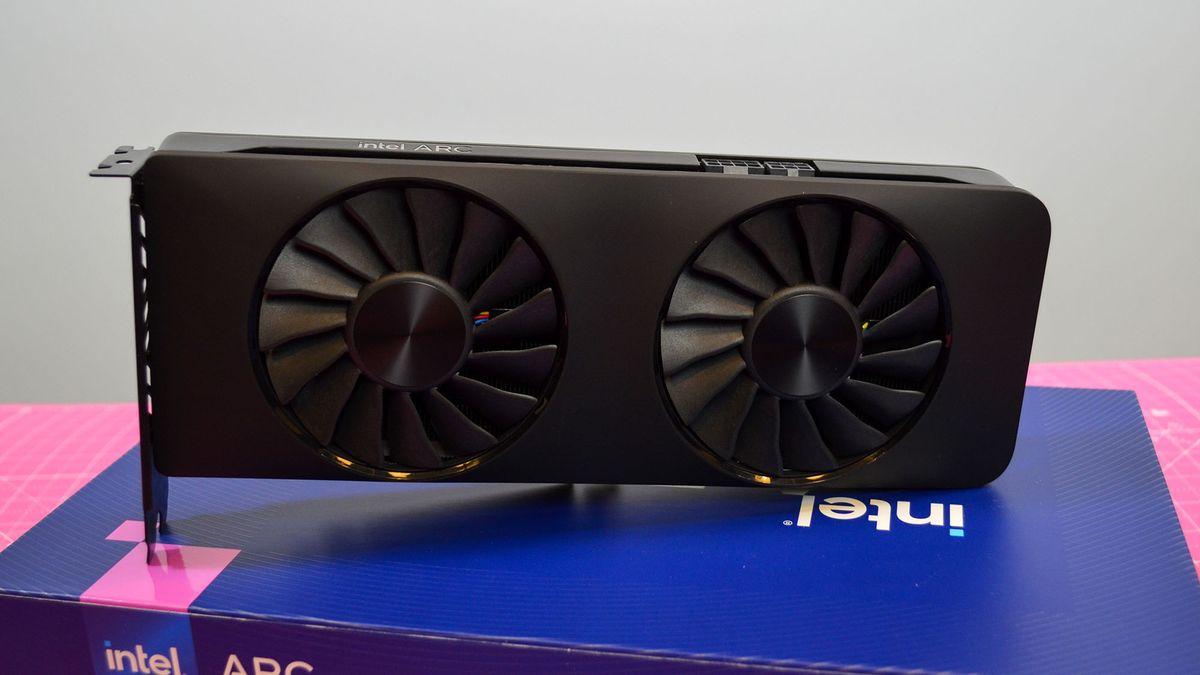
Intel officially announced its latest discrete graphics cards on this week, the Intel Arc B580 and Intel Arc B570, based on its next-gen Xe2 graphics architecture.

Targeting the budget gaming segment, the new flagship Intel Arc B580 GPU features 20 Xe-cores, 20 ray tracing units, 160 XMX AI Engines and 12GB GDDR6 memory with a 192-bit memory interface, specs that could make it a very competitive 1440p graphics card.

The Intel Arc B570, meanwhile, features 18 Xe-cores, 18 ray tracing units, 144 XMX AI Engines, and 10GB GDDR6 memory with a 160-bit memory interface. And while this is less than the Arc B580, it is more memory bandwidth than the Nvidia RTX 4060 Ti and AMD Radeon RX 7600 XT, both of which struggled when it came to 1440p gaming in gaming benchmarks due to their constrained memory bandwidth.

What might be even more compelling for gamers right now, though, is the launch price of the two cards, with the Intel reference cards debuting at $249 (about £195/AU$385) and $219 (about £175/AU$340), respectively, though third-party cards from Acer, ASRock, Gunnir, and others will vary in price.

The Arc B580 will launch first on December 13, 2024, with the Arc B570 going on sale the following month on January 16, 2025.

Swipe to scroll horizontally

Intel Arc B-series graphics card specs

Header Cell – Column 0 Intel Arc B580 Intel Arc B570
Price $249 (about £195/AU$385) $219 (about £175/AU$340)
Xe-cores 20 18
Render Slices 5 5
Ray Tracing Units 20 18
XMX AI Engines 160 144
Graphics clock 2,670Mhz 2,500MHz
Memory 12GB 10GB
Memory Interface 192-bit 160-bit
Memory Bandwidth 456GB/s 380GB/s
Peak TOPS 233 203
Total Board Power 190W 150W
Power Connector 1 x 8-pin 1 x 8-pin
PCIe Interface PCIe 4.0 PCIe 4.0
Media Accelerators AV1, HEVC, AVC, VP9, XAVC-H AV1, HEVC, AVC, VP9, XAVC-H
Display output 3x DisplayPort 2.1, 1x HDMI 2.1 3x DisplayPort 2.1, 1x HDMI 2.1

Intel’s new card might be the RTX 3060 Ti successor we’ve been missing

When it launched a couple of years back, the Nvidia RTX 3060 Ti was a much more powerful card than it had a right to be, especially for it’s initial launch price. It ended up being one of the most popular graphics cards of the entire Nvidia Ampere generation, and so when the RTX 4060 Ti launched last year, fans of the 3060 Ti had high hopes for its successor.

Unfortunately, the RTX 4060 Ti was hamstrung out the gate by a memory interface that made it effectively impossible to process textures at 1440p with any kind of speed or efficiency, even when opting for the variant with the larger 16GB memory pool.

{ window.reliablePageLoad.then(() => { var componentContainer = document.querySelector(“#slice-container-newsletterForm-articleInbodyContent-nG8a8nka92YcKVHyEBsQs4”); if (componentContainer) { var data = {“layout”:”inbodyContent”,”header”:”Get the best Black Friday deals direct to your inbox, plus news, reviews, and more.”,”tagline”:”Sign up to be the first to know about unmissable Black Friday deals on top tech, plus get all your favorite TechRadar content.”,”formFooterText”:”By submitting your information you agree to the Terms & Conditions and Privacy Policy and are aged 16 or over.”,”successMessage”:{“body”:”Thank you for signing up. You will receive a confirmation email shortly.”},”failureMessage”:”There was a problem. Please refresh the page and try again.”,”method”:”POST”,”inputs”:[{“type”:”hidden”,”name”:”NAME”},{“type”:”email”,”name”:”MAIL”,”placeholder”:”Your Email Address”,”required”:true},{“type”:”hidden”,”name”:”NEWSLETTER_CODE”,”value”:”XTR-D”},{“type”:”hidden”,”name”:”LANG”,”value”:”EN”},{“type”:”hidden”,”name”:”SOURCE”,”value”:”60″},{“type”:”hidden”,”name”:”COUNTRY”},{“type”:”checkbox”,”name”:”CONTACT_OTHER_BRANDS”,”label”:{“text”:”Contact me with news and offers from other Future brands”}},{“type”:”checkbox”,”name”:”CONTACT_PARTNERS”,”label”:{“text”:”Receive email from us on behalf of our trusted partners or sponsors”}},{“type”:”submit”,”value”:”Sign me up”,”required”:true}],”endpoint”:”https://newsletter-subscribe.futureplc.com/v2/submission/submit”,”analytics”:[{“analyticsType”:”widgetViewed”}],”ariaLabels”:{}}; var triggerHydrate = function() { window.sliceComponents.newsletterForm.hydrate(data, componentContainer); } if (window.lazyObserveElement) { window.lazyObserveElement(componentContainer, triggerHydrate); } else { triggerHydrate(); } } }).catch(err => console.error(‘%c FTE ‘,’background: #9306F9; color: #ffffff’,’Hydration Script has failed for newsletterForm-articleInbodyContent-nG8a8nka92YcKVHyEBsQs4 Slice’, err)); }).catch(err => console.error(‘%c FTE ‘,’background: #9306F9; color: #ffffff’,’Externals script failed to load’, err)); ]]>

Sign up to be the first to know about unmissable Black Friday deals on top tech, plus get all your favorite TechRadar content.

For $399 (about £315/AU$615) at launch, the card was a disappointment, as this was way too much money to spend on what was effectively a 1080p graphics card, whereas the RTX 3060 Ti, with a memory interface twice as large as the RTX 4060 Ti’s, could easily play games at 1440p with moderate to high settings at respectable framerates.

The only graphics cards to really make a splash in the sub-$400 segment over the past year and a half have been the Nvidia RTX 4060 and AMD RX 7600, and only really because of their pricing after the wild GPU price inflation on some of Nvidia and AMD’s flagship cards. And neither of those cards could handle 1440p gaming.

With the new Intel Arc B580 and Arc B570, however, it’s entirely possible that we might be able to see a new graphics card in the budget segment capable of tackling 1440p, the fastest-growing resolution for PC gaming, where their competitors at this price point cannot.

That’s something that’s been sorely missed these last couple of years, and while we’ll have to test the cards ourselves before we can say for certain, I’ve been impressed with Intel’s Xe2 cores in its Lunar Lake laptops, so I, for one, cannot wait to get my hands of the desktop version to take it for a spin.

You may also like…

Source

Posted on

Six trends that will define cyber through to 2030

Guessing the future is always a difficult task. Six trends for the next five years seem more apparent than others, and it will be interesting to re-read this article in 2029 to assess its accuracy. In the meantime, the six trends standing out as top priorities, in no particular order, are:

Preparing the post-quantum cryptographic migration, including raising top management awareness to provide sufficient resources.

There will be a need to identify where cryptography is used in the organisation, which can be found in several places, including libraries, the Internet of Things (IoT), communication protocols, storage systems, and databases. Prioritizing systems for the transition will be paramount, taking care to clearly identify your critical systems.

Choosing how to manage the transition will also be essential since it may hinder the organisation. More precisely, hybrid protocols, mixing classical and post-quantum cryptography, could be an interesting option to consider, since it allows your clients to migrate at their own pace.

Also, testing will be mandatory, while deploying a realistic test environment might be complex. Finally, the right migration time will be hard to establish, even if governments provide guidelines.

Finalising operational technologies (OT) oversight, improving their cyber resilience, and integrating them into existing cyber security operations.

This convergence started more than 10 years ago and is still ongoing. OT cyber security must include addressing human safety concerns and intensive collaboration with engineering.

The monitoring approach should rely on artificial intelligence (AI) to identify abnormal behaviour, from weak signals, to support advanced persistent threat hunting. Since some systems are legacy, they may lack the necessary features to directly collect the information needed. Encapsulating with an intermediate security system could be a viable solution.

A layered defence strategy and a movement toward a zero-trust architecture might help minimise the attack surface.

Improving cyber security fundamentals, including identity management and network micro-segmentation, and supporting zero-trust architecture while enabling automated threat response.

This leads to implementing robust identity and access management that enforces least-privilege principles and multi-factor authentication.

By integrating policy-based automation, access management becomes more dynamic, transparent and enforceable. Continuous monitoring and real-time analytics should be used to detect anomalies and unauthorised activities, including user behaviour, device posture and geolocation.

Learning how to conduct cyber security for artificial intelligence pipelines (AIOps) while constructing a business case for artificial intelligence-based cyber security, like zero-day attack detection.

This dual focus addresses the sharply increasing complexity of cyber threats and the pervasiveness of AI. As AI continues to revolutionise the landscape, international and domestic regulations are being defined and will become vital to ensure its compliance, resilience and trustworthiness.

Addressing increasing regulations to maintain global compliance, notably for privacy, critical infrastructure, and business continuity.

As stricter rules are adopted, like European Union’s (EU’s) General Data Protection Regulation (GDPR) and AI Act, California’s Consumer Privacy Act (CCPA) for privacy, as well as European Network and Information Systems Directive 2 (NIS2) and CISA guidelines in the United States for critical industries, and more specific requirements from the EU’s Digital Operational Resilience Act (DORA) for the financial industry, organisations need to contextualize these requirements and integrate them into their security posture.

Collaborating closely with third parties, including identifying their Software Bill of Materials (SBOM), and communicating any vulnerability along the supply chain. This will remain an important priority for security leaders as the global enterprise landscape becomes increasingly interconnected.

This should ensure a better understanding of the dependencies toward the third parties, and when an organisation becomes more mature, the broader interdependencies of their ecosystem.

In conclusion, while predicting the near future remains a challenging task, these six top priorities will play a pivotal role in organisational resilience.

As we look ahead, there seems to be a distant echo on the horizon. Let’s hope it is not your next threat!

Pierre-Martin Tardif is a member of the ISACA Emerging Trends Working Group. A longstanding IT and cyber security professional and educator, he is based in Quebec, Canada.

Source

Posted on

AMD announces CES 2025 launch event on January 6, 2025 – and drops a heavy hint that new RDNA 4 GPUs will be revealed

  • AMD announced its CES 2025 event will happen on Monday January 6
  • Jack Huynh, SVP of Computing and Graphics, will helm the press event
  • Huynh dropped a heavy hint on X that we’ll see RDNA 4 graphics cards

AMD has revealed when its press event is happening at CES 2025, and dropped a heavy hint that we will indeed see RDNA 4 desktop graphics cards at the show.

Notably, the event, which is scheduled for Monday January 6, 2025, at 11am PT (2pm EST, 7pm in the UK), is not referred to as a keynote. Also, rather than being delivered by CEO Lisa Su, it’s Jack Huynh, SVP and GM, Computing and Graphics at AMD, who will be presenting Team Red’s latest goodies.

The official AMD web page for the event just went live (as VideoCardz noticed), but that doesn’t give us anything beyond the date, and the teaser that we’ll get to “hear how AMD is expanding its leadership across PCs and gaming.”

However, in a post on X, Huynh specifically mentions AMD’s “next generation of innovation across gaming” which surely refers to the firm’s RDNA 4 GPUs, and likely new APUs too.

As we’ve heard before, RDNA 4 GPUs are rumored for CES 2025, as well as a bunch of Ryzen processors that’ll be of interest to gamers – including Strix Halo laptop APUs and Ryzen Z2 flavors for handhelds.

On top of that, we should see other mobile APUs and the Ryzen 9950X3D plus 9900X3D processors, and more besides. It’s going to be an event jam-packed with product launches if the grapevine is correct.

An AMD Radeon RX 7800 XT on a table

(Image credit: Future / John Loeffler)

Analysis: Exciting times, especially if latest RDNA 4 rumors are right

Earlier this year, the hope was very much that AMD would push out new RDNA 4 graphics cards – which will purportedly only land in the mid-range this time around, with no challenger for Nvidia’s next-gen flagship – late in 2024.

{ window.reliablePageLoad.then(() => { var componentContainer = document.querySelector(“#slice-container-newsletterForm-articleInbodyContent-NyxsCpBf57gEs2EdgWPLGS”); if (componentContainer) { var data = {“layout”:”inbodyContent”,”header”:”Get the best Black Friday deals direct to your inbox, plus news, reviews, and more.”,”tagline”:”Sign up to be the first to know about unmissable Black Friday deals on top tech, plus get all your favorite TechRadar content.”,”formFooterText”:”By submitting your information you agree to the Terms & Conditions and Privacy Policy and are aged 16 or over.”,”successMessage”:{“body”:”Thank you for signing up. You will receive a confirmation email shortly.”},”failureMessage”:”There was a problem. Please refresh the page and try again.”,”method”:”POST”,”inputs”:[{“type”:”hidden”,”name”:”NAME”},{“type”:”email”,”name”:”MAIL”,”placeholder”:”Your Email Address”,”required”:true},{“type”:”hidden”,”name”:”NEWSLETTER_CODE”,”value”:”XTR-D”},{“type”:”hidden”,”name”:”LANG”,”value”:”EN”},{“type”:”hidden”,”name”:”SOURCE”,”value”:”60″},{“type”:”hidden”,”name”:”COUNTRY”},{“type”:”checkbox”,”name”:”CONTACT_OTHER_BRANDS”,”label”:{“text”:”Contact me with news and offers from other Future brands”}},{“type”:”checkbox”,”name”:”CONTACT_PARTNERS”,”label”:{“text”:”Receive email from us on behalf of our trusted partners or sponsors”}},{“type”:”submit”,”value”:”Sign me up”,”required”:true}],”endpoint”:”https://newsletter-subscribe.futureplc.com/v2/submission/submit”,”analytics”:[{“analyticsType”:”widgetViewed”}],”ariaLabels”:{}}; var triggerHydrate = function() { window.sliceComponents.newsletterForm.hydrate(data, componentContainer); } if (window.lazyObserveElement) { window.lazyObserveElement(componentContainer, triggerHydrate); } else { triggerHydrate(); } } }).catch(err => console.error(‘%c FTE ‘,’background: #9306F9; color: #ffffff’,’Hydration Script has failed for newsletterForm-articleInbodyContent-NyxsCpBf57gEs2EdgWPLGS Slice’, err)); }).catch(err => console.error(‘%c FTE ‘,’background: #9306F9; color: #ffffff’,’Externals script failed to load’, err)); ]]>

Sign up to be the first to know about unmissable Black Friday deals on top tech, plus get all your favorite TechRadar content.

Obviously that didn’t happen, and as noted, rumors have been saying for some time now that we’ll see these graphics cards at CES 2025. If there’s one key piece of AMD’s next generation of gaming, it’s RDNA 4, so Huynh’s comment pretty much solidifies all the evidence around the launch of what could be the RX 8800 XT (and likely a partner GPU, such as the 8700 XT perhaps).

In theory, the 8800 XT could turn out to be a big leap in ray tracing performance for AMD – if fresh speculation is right – and a good upgrade for rasterized (non-ray tracing) frame rates, too. As ever, a lot will ride on the price tag Team Red pins on the GPU, and whatever else RDNA 4 might have to offer.

You might also like

Source

Posted on

Schwarz Group partners with Google on EU sovereign cloud

Google has partnered with retail giant Schwarz Group to deliver what the pair claim is truly secure and sovereign cloud-based collaboration for German and European regulated industries.

Through the partnership, Schwarz Group’s StackIT, the cloud provider for the retailer, which operates as an independent company offering sovereign cloud capabilities, will provide client-side encryption of customers’ Google Workspace data.

StackIT said customers’ data will remain resident within the European Union (EU), with full redundancy offered by backups hosted solely in its European datacentres to meet customer demands around data protection, data residency and data resiliency.

“Germany and the EU have until now lacked enterprise-grade cloud collaboration solutions that fully address the sovereignty requirements of regulated industries, including ensuring all data is secured and backed up on local soil with absolutely no opportunity for access by foreign nations or platform providers,” said Rolf Schumann, co-CEO of Schwarz Digits, the IT and digital division of the Schwarz Group.

“Our partnership and new offering with Google Cloud will fill this gap with an entirely new business model.”

Client-side encryption means Google has no access to customers’ data. According to Schwarz and Google, this safeguards the sovereignty of not only Schwarz Group, but also all customers who value the independence of their operations, giving them full confidence that their data is always in their control.

“This new partnership will enable the companies of Schwarz Group to combine its leadership in digital transformation with Google Cloud’s strengths in productivity, collaboration and security, enabled by our cutting-edge AI,” said Sundar Pichai, CEO of Google and Alphabet. “Together, we are opening up a world of new, sovereign opportunities for European organisations to innovate and build on our joint solutions, accelerating a new era of innovation.”

Through the partnership, Google Cloud’s security will be integrated with those of XM Cyber, Schwarz Digits’ hybrid cloud security company. This integrated offering will then be distributed to customers via the Google Cloud Marketplace.

According to Google and Schwarz, this integrated security will help German and European organisations, particularly those in highly regulated industries, raise the bar on their enterprise and multi-cloud security. In addition, XM Cyber’s Continuous Exposure Management will be embedded into the sovereign Google Workspace office productivity suite offered to European enterprises.

“This partnership changes the game for regulated industry players in Europe by removing the sovereignty and security concerns that often hold back more ambitious adoption of the cloud for productivity and collaboration,” said Thomas Kurian, CEO of Google Cloud. “Our alliance with companies of Schwarz Group will enable entire industries in Europe to deliver digital innovation with security and compliance at its core.”

Schwarz Group is Europe’s largest retailer, and the fourth-largest in the world. The company plans to transition its global office workforce to Google Workspace. The partnership with Google, according to Schwarz Group, enables critical workplace data to be protected against third-party access including foreign government institutions, and also transferred to alternate service providers if needed.

“Switching to Google Workspace is an important step for us out of legacy and into innovative, efficient and future-proof cloud-based collaboration,” said Christian Müller, Co-CEO of Schwarz Digits. “Google Workspace is the most secure and reliable productivity platform in the industry today, and we expect our organisation-wide migration to have significant flow-on benefits to all areas of operations from simplifying IT management to rendering our point-of-sale workflows significantly more efficient.”

Source

Posted on

The Loan Charge scandal explained: Everything you need to know

Tens of thousands of IT contractors have been hit with life-changing tax bills relating to projects they worked on over a decade ago after enrolling in remuneration schemes that saw them paid for the work they did in the form of non-taxable loans, rather than a conventional salary.

These loan-based remuneration schemes were typically run by offshore employee benefits trusts (EBTs), and were often erroneously marketed as being an HM Revenue & Customs (HMRC)-compliant means for contractors to bolster their take-home pay, with contractors often advised to join such schemes by respected tax advisers. 

In some instances, contractors were told they would be unable to work for certain organisations unless they agreed to be paid in loans, too.

In recent years, however, scheme participants have found themselves in HMRC’s crosshairs, thanks to the introduction of a piece of retroactive legislation – known as the Loan Charge – that is designed to help the government recoup the tax it claims participants avoided paying between December 2010 and April 2019.

The individuals now being chased for backdated tax payments by HMRC claim they are the victims of mis-selling, given how these schemes were previously marketed to them as safe and compliant to use, and the situation has seen more than 200 MPs from various parties come out in support of their plight.

In the years since the policy was introduced, and details of the toll it is taking on those in its scope have started to emerge, there have been a series of legal actions attempted to overturn the policy.

There have also been calls from MPs for HMRC to stop doggedly pursuing the individuals involved, and start taking punitive measures against the employers, agencies and promotors who advised people to join these schemes in the first place.

At the time of writing, though, the policy remains in place, and there are few signs from the government that it has any intention of revising its contents or how it works.

The situation has drawn parallels with the Post Office Horizon IT scandal, given the people caught in scope of the Loan Charge are widely considered to be victims of mis-selling by accountants and trusted tax advisors who marketed these loan-based remuneration schemes as HMRC-approved.

Sammy Wilson, an MP representing the Democratic Unionist Party (DUP), drew comparisons between the victims of the Post Office scandal and the individuals affected by the Loan Charge during a January 2024 Business Committee Back Bench debate in the House of Commons.

As was the case with the Post Office scandal victims, the Loan Charge story similarly involves a group of people who were “acting in good faith being prosecuted and pursued” when the people who “absolutely knew what they were doing are getting away scot-free”, said Wilson.

In the case of the Loan Charge, the parties responsible for marketing and promoting these loan-based remuneration schemes are not being pursued in the same way as the individuals who participated in them, which he described as wrong.

“HMRC are going after those who they regard as easy targets,” said Wilson. “The promoters of these schemes – not one penny [has been demanded from them].

“Despite the promoters [making] hundreds of millions of pounds of these schemes, [they] have mis-sold the schemes, [and] have disappeared when there is any attempt to get after them,” he added. “Those promoters are not being pursued … and yet individuals are being harassed – harassed to the point that many of them have taken their own lives.”

What is the Loan Charge policy and why was it introduced?

The Loan Charge policy was introduced as part of an ongoing anti-tax avoidance campaign by HMRC, designed to counter the surge in the number of loan-based remuneration schemes in operation.

The policy was put forward by HM Treasury during the 2017 Budget as means of recouping billions of pounds in unpaid taxes the UK government claimed contractors avoided paying by opting to be paid in the form of non-taxable loans rather than receive a conventional salary.

The policy terms initially stated that any contractor who participated in a loan-based remuneration scheme between 6 April 1999 and 5 April 2019 would be in-scope of the policy, and would be expected to pay back any and all tax they avoided while enrolled in these schemes.

The total amounts of unpaid tax HMRC said they owed are what is referred to as the “Loan Charge”.

An independent review of the policy, published in December 2019, concluded the timeframe the policy covers should be shortened by 11 years, so that only individuals who enrolled in schemes after 9 December 2010 would be included.

It is estimated this change resulted in around 10,000 people falling out of scope of the Loan Charge policy.

Why is the policy considered “controversial”?

Much of the controversy surrounding the Loan Charge relates to the retroactive nature of the policy, with critics often taking issue with the fact it effectively introduces a retrospective tax on something – in this case, a loan – that was previously technically considered to be non-taxable.

The timeframe the policy covers also means the final amounts of unpaid tax that individuals can end up owing can end up being life-changing, with many of those affected at risk of financial ruin or facing bankruptcy as a result.

There is also the fact that many of the individuals who participated in these schemes received assurances from trusted tax advisors and accountants that receiving payment for the work they did in this way was permissible and acceptable in the eyes of HMRC.

How much money does HMRC expect to make from the Loan Charge?

When the policy was first introduced, HMRC estimated that implementing the Loan Charge would allow it to recoup £3.2bn in previously unpaid tax over the course of five years, but that figure was later revised up to £3.4bn.  

However, the publication of the independent review into the policy, which resulted in several tweaks being made to how it works, is estimated to have reduced the policy’s overall total tax take by £620m.

How many people are affected by the Loan Charge policy?

HMRC suggests there are around 50,000 individuals affected by the Loan Charge policy, although volunteer-led non-profit the Loan Charge Action Group (LCAG) has previously told Computer Weekly it thinks the number of people affected is far, far higher.

Those affected include a disproportionate number of IT contractors, as well as NHS workers, public sector agency staff, teachers and individuals working in the oil and gas sector.

Why did people use loan-based disguised remuneration schemes?

While the concept of loan-based remuneration schemes pre-dates the onset of the IR35 regulations, the number of these schemes in operation markedly increased in the wake of HMRC introducing these revamped tax avoidance rules in 2000.

The IR35 regulations were introduced as part of a disguised employment push by the government that would see contractors having their engagements classified as being either inside or outside IR35 based on the kind of work they do and how it is carried out.

Contractors that are determined to be working inside IR35 are considered to be employees for tax purposes, meaning they are liable to pay the same employment taxes and national insurance contributions (NICs) as a salaried employee, but are not entitled to employment benefits such as paid sick leave or pension contributions. 

In many cases, contractors were offered the opportunity to side-step the IR35 regulations entirely by opting to close down their limited company and sign on to become the employee of an umbrella company instead.

Some of these umbrella companies operated in a non-compliant manner by promising contractors they could increase their take-home pay by agreeing to be paid in non-taxable loans issued by EBTs that were marketed as HMRC-compliant.

HMRC, however, has always maintained that it has never approved the use of a loan-based remuneration scheme, and has also been of the view that such schemes do not work.   

In addition to that, it has also been repeatedly claimed by many of those affected by the Loan Charge policy that they were unwittingly enrolled in these schemes by umbrella companies that promised them “too-good-to-be-true” amounts of take-home pay without disclosing they would be paid in loans.

What impact has the Loan Charge policy had on those affected?

While HMRC has repeatedly stated that no one in-scope of the Loan Charge will be forced to sell their main home to cover the amounts it claims they owe in unpaid tax, Computer Weekly has heard anecdotal reports from IT contractors who have done exactly that.

HMRC has previously stated that it has no intention to make the individuals in-scope of the Loan Charge policy bankrupt, and that insolvency will only be considered as a last resort if the person involved is actively avoiding paying what they owe or are at risk of accruing further debt.

Even so, members of the Loan Charge APPG have repeatedly spoken out about the toll the policy is taking on the health and well-being of those affected.

There have also been 10 suicides linked to the Loan Charge to-date, as confirmed by HMRC, in a letter signed by its CEO, Jim Harra, in January 2023.

The missive states that HMRC has had cause to refer itself to the Independent Office for Police Conduct on 10 occasions “where a customer has sadly taken their life and had used a disguised remuneration scheme”. 

Do the people affected by the loan charge have to repay their loans?

This question is key to understanding the Loan Charge policy. Loans are typically not considered to be a form of taxable income, but – according to HMRC – the recipients of these loans should pay tax on them because they were never intended to be repaid.

Furthermore, many contractors who participated in these schemes were of the understanding they would never be asked to repay the loans they received.

But – as extensively documented by Computer Weekly – several attempts have been made in recent years by different parties to recall the loans contractors received, meaning – in addition to HMRC – they have also been asked to repay these loans in full, plus interest.

In instances such as this, HMRC has restated that any individual that repays a loan they received during the timeframe covered by Loan Charge policy will still need to repay the tax it claims they still owe.

This is an outcome few, if any, loan scheme participants have ever budgeted for, adding further pressure to their finances.   

How can the Loan Charge issue be resolved? 

Some individuals caught in the policy’s scope have sought settlements with HMRC to bring the matter to a close for them, although there are also anecdotal reports of people who went down this route and then received further payment demands from HMRC afterwards.

There have been numerous legal challenges attempted to overturn the policy, as well as requests made to HMRC to consider letting those unable to pay off the full amounts owed pay a reduced settlement figure, so the government tax collection agency gets some money rather than none.

MPs have also repeatedly called on the government to do more to tackle the people responsible for marketing these schemes, to prevent new schemes from emerging. There are further calls to also spread the tax burden on to the promoters, agencies and employers that encouraged individuals to join these schemes. 

During the Autumn Budget 2024, the government confirmed there would be a second independent review of the policy to bring the matter to a close for all those affected. 

This was on the back of representations made to Treasury Minister James Murray during a meeting facilitated by the APPG in August 2024, where various individuals in-scope of the policy outlined the toll the Loan Charge was taking on their health, well-being and their finances.

At the time of writing, HM Treasury is yet to confirm the scope of the review and who will be tasked with overseeing it. 

In the meantime, Computer Weekly has learned that HMRC is offering to pause the settlement activity of anyone caught by the Loan Charge until the review has concluded

Source

Posted on

IT leaders raise concerns over IT security overspend

IT leaders say they are overspending on cyber security tools, a survey of 800 IT leaders from Flexera has found.

The poll reported that 31% of the IT decision-makers who took part in the survey ranked IT security tools as the top area of overspending. This represents a six-point increase from last year’s survey (25%).

Even though reducing IT security risks ranked second (28%) behind artificial intelligence (AI) in terms of priorities over the next 12 months, the findings suggest that the conversations around the inflation of security tools and difficulties in integrating separate tooling together are ongoing.

Last year, analyst IDC surveyed 503 IT decision-makers in North America looking at cloud-native application protection platforms; data security; endpoint detection and response; extended detection and response; network security; next-generation firewall; security information and event management; security service edge; and vulnerability and exposure management. The respondents had anywhere from 41 to 60 security tools in their environment, with 25% reporting 21 to 40 tools.

Beyond IT security tools, the Flexera survey found that 68% of IT leaders say business units are spending far more on cloud and software as a service (SaaS) than they are aware of.

According to those surveyed, the estimated average amount of overspending across cloud, software, SaaS and hardware is around 20-25%. When asked about their top IT spending challenges, 45% said it was controlling growth in IT spend; for 40%, the biggest challenge was tackling IT spending efficiency and avoiding waste; and 39% saw their biggest challenge as managing price hikes from their software providers. 

Flexera said the responses suggest that IT leaders desire more thorough visibility across their entire technology investment, yet are continually juggling unknowns as they seek to determine the best course of action to correct overspending and better balance their piece of the budget.

The survey results also suggest that AI is redefining IT leaders’ priorities. Almost half (48%) of the IT leaders polled put integrating AI as their top priority for the next 12 months.

“While IT leaders are facing a myriad of challenges and opportunities, artificial intelligence seems to pose the biggest potential gains in the short- and long-term,” said Conal Gallagher, chief information officer at Flexera.

“There’s an extraordinary expense required of AI projects, creating an even greater sense of urgency to not only understand the impact of the investment, but to quickly demonstrate returns that advance core business objectives,” he added.

“AI is not only disrupting and transforming IT – for example, creating more focus on compute resources and data quality – but planting the seeds to change the way we all work. It’s no surprise that IT is at the forefront of recognising and ushering in this disruption, helping to be a guiding force for their organisations.”

Source

Posted on

ChatGPT might get ads

I’ve been a ChatGPT Plus subscriber for a while now, and I don’t plan on switching to the Free tier anytime soon. ChatGPT Plus gives me access to the newest models and features much sooner than the Free tier. Also, the limits with the chatbot are higher on the Plus plan, so you won’t run into interruptions.

Still, the ChatGPT Free option gives you quick access to OpenAI’s chatbot, letting you explore some of its best features to determine whether you’d even want to consider the Plus subscription in the first place.

Also, ChatGPT Free is truly free, as you don’t have to deal with any ads that would help OpenAI pay for your interactions with the AI. You don’t have to agree to have your chats train the AI, either. That’s why it has limits in place.

Unsurprisingly, OpenAI is considering a switch to an ad-based model in ChatGPT at some point in the future. It won’t happen anytime soon, but the company confirmed it’s looking at inserting ads in ChatGPT.

Tech. Entertainment. Science. Your inbox.

Sign up for the most interesting tech & entertainment news out there.

By signing up, I agree to the Terms of Use and have reviewed the Privacy Notice.

OpenAI CFO Sarah Friar told The Financial Times that the company is considering showing ads to non-paying ChatGPT users in the future. Ads could help cover the rising costs of AI servers and even increase profits. OpenAI is no longer a non-profit, after all, so it’ll be chasing revenues like any other tech giant.

We didn’t really need any confirmation from a company that launched a Google Search alternative and is considering a web browser of its own. It goes without saying that ads could be part of the ChatGPT Free experience.

Hopefully, however, OpenAI will not go the same route as Google. The latter made the web discoverable to the world with its Google Search product. But Google also made us hate online ads over the years, and Google Search along with it, because it tracked us everywhere on the web, creating profiles of user preferences for better ad-targeting.

The good news is that OpenAI will not start running ads on ChatGPT Free anytime soon. The company has many concerns about ads, and that’s great to hear. Friar told the Times that OpenAI needs to be “thoughtful about when and where” ads will be implemented.

OpenAI CEO Sam Altman is reportedly warming up to the idea of ads, though he has previously said he’s not a fan of them.

Friar’s remarks aren’t just answers to hypothetical scenarios. OpenAI hired former advertising talents from Meta and Google earlier this year. The only thing they could be working on at OpenAI is ad tech for ChatGPT.

I’ll also remind you of other reports detailing OpenAI’s plans for monetizing ChatGPT in the future that called for much more expensive subscription tiers. Placing ads in the free version of ChatGPT makes even more sense in that context, assuming those reports were accurate.

On the same note, it’ll be interesting to see what comes first: Ads in ChatGPT Free or a Plus subscription increase for premium users.

I will point out that OpenAI might get an influx of extra ChatGPT users in the near future as ChatGPT becomes available through Siri on the iPhone. In turn, iPhone users will be able to buy a Plus subscription from the iPhone’s settings app.

Source

Posted on

Intel unleashes XeSS 2 for Arc GPUs with huge changes to speed up PC games, borrowing a few pages from Nvidia’s DLSS playbook

  • Intel has revealed XeSS 2 which follows in the footsteps of DLSS
  • It’s split into XeSS Frame Generation and XeSS Super Resolution
  • There’s also Xe Low Latency to combat input lag, much like Nvidia Reflex

Intel has just unveiled new Battlemage desktop GPUs, and alongside those graphics cards comes a fresh version of XeSS, its upscaling tech to rival Nvidia DLSS and AMD FSR.

Yes, XeSS 2 is here, and Intel is making some big changes with the technology in this sequel. In fact, XeSS 2 is being split into two core components: XeSS Frame Generation and XeSS Super Resolution.

In other words, this is going the same route as Nvidia, when with DLSS 3, Team Green brought in frame generation – which means artificially inserting extra frames into the game, to make it smoother. It’s a separate technology to the actual upscaling component of DLSS 3, and so this is what Intel has done – split XeSS into Super Resolution (upscaling) and Frame Generation (extra frames generated to bolster the frame rate).

On top of that, Intel is introducing Xe Low Latency, which is essentially equivalent to Nvidia Reflex – a complementary tech to reduce input lag which helps to smooth over the lag wrinkles that are a side effect of frame generation.

In terms of support, only Intel’s Alchemist and Battlemage GPUs will get XeSS 2 – not any third-party GPUs – and on the games side, developers will need to code in support for all these new technologies (including frame generation, and low latency). However, we’ve also seen mentions of manually enabling low latency (at the driver level), so we’ll have to see how that shakes out.

On top of this, Intel has deployed a new control panel for its Arc GPUs which will simply be called ‘Intel Graphics Software’ (in much the same vein as Team Green’s new and renamed Nvidia App).

This is billed as an ‘all-in-one hub’ for all your Arc GPU needs, from updating drivers to game optimization, enabling Intel’s tech such as low latency mode, changing display options, monitoring performance (frame rates and GPU status), along with controls for overclocking.

{ window.reliablePageLoad.then(() => { var componentContainer = document.querySelector(“#slice-container-newsletterForm-articleInbodyContent-7x9uwq6VN9mK5TQ4icjQAX”); if (componentContainer) { var data = {“layout”:”inbodyContent”,”header”:”Get the best Black Friday deals direct to your inbox, plus news, reviews, and more.”,”tagline”:”Sign up to be the first to know about unmissable Black Friday deals on top tech, plus get all your favorite TechRadar content.”,”formFooterText”:”By submitting your information you agree to the Terms & Conditions and Privacy Policy and are aged 16 or over.”,”successMessage”:{“body”:”Thank you for signing up. You will receive a confirmation email shortly.”},”failureMessage”:”There was a problem. Please refresh the page and try again.”,”method”:”POST”,”inputs”:[{“type”:”hidden”,”name”:”NAME”},{“type”:”email”,”name”:”MAIL”,”placeholder”:”Your Email Address”,”required”:true},{“type”:”hidden”,”name”:”NEWSLETTER_CODE”,”value”:”XTR-D”},{“type”:”hidden”,”name”:”LANG”,”value”:”EN”},{“type”:”hidden”,”name”:”SOURCE”,”value”:”60″},{“type”:”hidden”,”name”:”COUNTRY”},{“type”:”checkbox”,”name”:”CONTACT_OTHER_BRANDS”,”label”:{“text”:”Contact me with news and offers from other Future brands”}},{“type”:”checkbox”,”name”:”CONTACT_PARTNERS”,”label”:{“text”:”Receive email from us on behalf of our trusted partners or sponsors”}},{“type”:”submit”,”value”:”Sign me up”,”required”:true}],”endpoint”:”https://newsletter-subscribe.futureplc.com/v2/submission/submit”,”analytics”:[{“analyticsType”:”widgetViewed”}],”ariaLabels”:{}}; var triggerHydrate = function() { window.sliceComponents.newsletterForm.hydrate(data, componentContainer); } if (window.lazyObserveElement) { window.lazyObserveElement(componentContainer, triggerHydrate); } else { triggerHydrate(); } } }).catch(err => console.error(‘%c FTE ‘,’background: #9306F9; color: #ffffff’,’Hydration Script has failed for newsletterForm-articleInbodyContent-7x9uwq6VN9mK5TQ4icjQAX Slice’, err)); }).catch(err => console.error(‘%c FTE ‘,’background: #9306F9; color: #ffffff’,’Externals script failed to load’, err)); ]]>

Sign up to be the first to know about unmissable Black Friday deals on top tech, plus get all your favorite TechRadar content.

Hat tip to VideoCardz for picking up on both of these developments.

An Intel Arc B580 Limited Edition graphics card against a purple background

(Image credit: Intel)

Analysis: Keeping pace with upscaling – the future of gaming

There are some major changes here, as we noted at the outset, and aside from all the new tech – implemented very much along the lines of DLSS – there’s also that switch in support for GPUs. Previously XeSS allowed AMD and Nvidia GPUs (or some of them) to use and benefit from the tech, but that’s no longer the case due to frame generation requiring Intel’s own hardware (XMX AI Engines).

Team Blue might work around that in the future, but for now, XeSS 2 will be for Intel Arc graphics cards only.

It’s not really surprising to see Intel moving in the same direction as Nvidia – after all, DLSS is very much regarded as the killer solution for boosting frame rates. What’s good to see with Team Blue is that XeSS 2 also allows for frame generation with older Alchemist graphics cards, whereas with DLSS 3, only RTX 4000 – the very newest Nvidia GPUs – get the frame generation component. (RTX 3000 graphics cards support everything else in DLSS 3, to be fair, including ray reconstruction – but not frame generation).

If Intel is to stay competitive in the GPU space, it’s certainly important that it keeps XeSS up to speed, as upscaling is regarded as a core piece of the future of gaming. More and more games are relying on such technology to achieve smooth frame rates, particularly at the likes of 4K resolution (or its upscaled equivalent, we should say).

We’re seeing upscaling become a key part of consoles – witness the PlayStation Pro 5 with PSSR – and on PCs, what’ll make it even more prevalent is Microsoft’s move with DirectSR, an effort to make it much easier for game developers to use XeSS, DLSS and FSR in their games.

You might also like

Source

Posted on

This is the closest we’ve come to Tim Cook confirming Apple Glasses

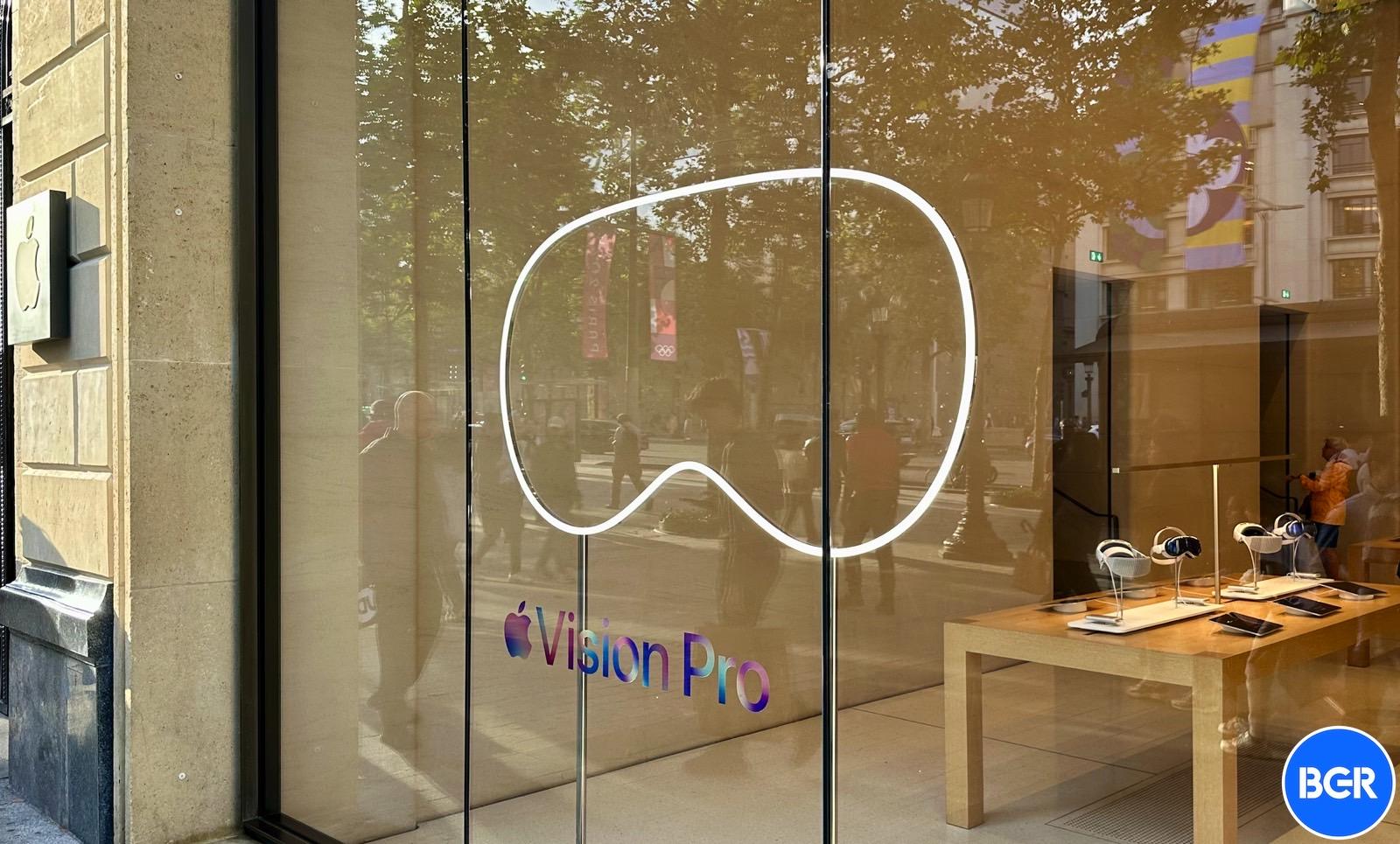
While I haven’t bought the Apple Vision Pro, I’m still a fan of what Apple is doing here because I think the spatial computer debuted key technologies that will lead to the actual head-worn wearable I want: A pair of AR Apple Glasses that might eventually replace the iPhone.

Rumors say that we have a long wait ahead of us before true Apple Glasses become a reality. Apple needs tons of progress with the tech involved before it can create the product it wants. Meta recently showcased the bulky Orion concept of AR glasses that cost $10,000 to make. That’s another clear hint that Apple Glasses will take a while to get here. We need a pair of AR glasses that look much more like regular glasses before consumers will actually adopt them.

Other rumors say that Apple is studying the possibility of developing smart glasses that look like Meta’s Ray-Ban. Those aren’t AR glasses, however. Intead, they just have a camera and Meta AI support. Samsung is expected to unveil a similar gadget in the coming months.

Apple will never confirm work on future products, though it might tease that’s where we’re heading. That’s what Tim Cook did in a recent interview when asked whether Apple Glasses are coming after the Vision Pro.

Tech. Entertainment. Science. Your inbox.

Sign up for the most interesting tech & entertainment news out there.

By signing up, I agree to the Terms of Use and have reviewed the Privacy Notice.

Here’s the actual exchange between Tim Cook and Wired’s Steven Levy:

Wired: Meta and Snap are leading us to mixed-reality glasses that we’d wear continually. Is the bigger, heavier Vision Pro ultimately headed that way?

Tim Cook: Yes, it’s a progression over time in terms of what happens with form factors. AR is a huge deal. With Vision Pro, we’ve progressed to what is clearly the most advanced technology we’ve ever done, and I think, the most advanced technology in the world in terms of electronics problems. We’ll see where it goes.

Tim Cook did not confirm that the tech inside its Vision Pro will eventually shrink down to fit inside Apple Glasses. He offered the obvious answer any CEO would have given, considering the question. Yes, the Vision Pro is a stepping stone towards something better. His “we’ll see where it goes” is the hedge you’d expect from an exec dealing with this question.

Meta Rayban SunglassesRay-Ban Meta smart glasses. Image source: Jonathan S. Geller


I’ve included the question in full because of how it’s framed. Levy asks Cook whether smart glasses like the ones Meta and Snap sell are leading us to mixed-reality glasses that we’d wear continuously. But neither Meta nor Snap have such products. Instead, the two social networks sell smart glasses that are significantly less sophisticated than the Vision Pro. They’re not mixed-reality devices.

Put differently, Apple has developed the tech it needs for Apple Glasses with the Vision Pro. Apple now has to shrink it down to fit inside a pair of normal glasses.

Apple developing a smart glasses product that would support genAI, like Meta’s glasses, would allow Apple to work on the glasses chassis that might one day feature more advanced capabilities that would trickle down from the Vision Pro. There’s no telling how long it’ll take for Apple to come out with Apple Intelligence-ready Apple Glasses.

Cook also addressed questions about lower-than-expected Vision Pro sales in the same interview saying the device is a success.

“It’s an early adopter product, for people who want tomorrow’s technology today,” Cook said. “Those people are buying it, and the ecosystem is flourishing. The ultimate test for us is the ecosystem. I don’t know if you’re using it very much, but I’m on there all the time. I see new apps all the time.”

Source