Posted on

You can no longer stop Alexa from sending voice recordings to Amazon

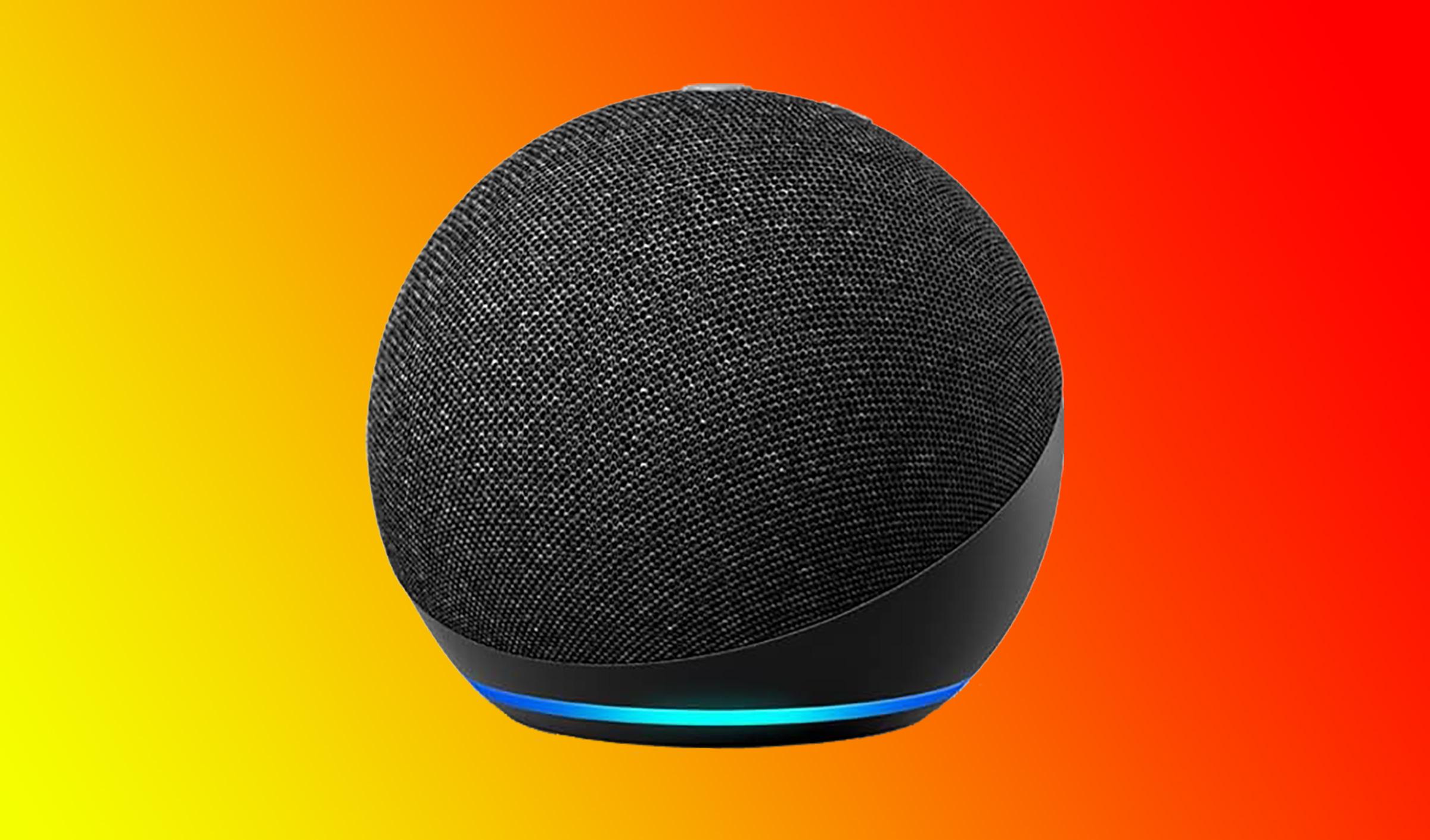
Amazon is killing a feature that lets users of some Echo devices stop Alexa from sending voice recordings to the cloud. As shared on Reddit, Amazon sent out emails to users of affected Echo smart speakers to let them know that the “Do Not Send Voice Recordings” feature will no longer be available starting on March 28, 2025.

In the email to Echo customers, Amazon explained that it decided to stop supporting the feature as the technology company continues to “expand Alexa’s capabilities with generative AI features that rely on the processing power of Amazon’s secure cloud.”

Echo owners who don’t take action will have their Alexa Settings automatically updated to the “Don’t save recordings” option. Voice recordings will then be sent to the cloud and then deleted once Alexa processes them. All saved voice recordings will also be deleted. Furthermore, voice ID will no longer work, and you will not be able to create another voice ID as long as the “Don’t save recordings” option is turned on.

“The Alexa experience is designed to protect our customers’ privacy and keep their data secure, and that’s not changing,” Amazon spokesperson Lauren Raemhild told The Verge on Friday in a statement. “We’re focusing on the privacy tools and controls that our customers use most and work well with generative AI experiences that rely on the processing power of Amazon’s secure cloud. Customers can continue to choose from a robust set of tools and controls, including the option to not save their voice recordings at all. We’ll continue learning from customer feedback and building privacy features on their behalf.”

Tech. Entertainment. Science. Your inbox.

Sign up for the most interesting tech & entertainment news out there.

By signing up, I agree to the Terms of Use and have reviewed the Privacy Notice.

As useful as this soon-to-be-removed feature sounds, there is a good chance the Echo devices you own do not have access to it. As The Verge notes, local processing of voice recordings was only ever available on the Echo Dot (4th Gen), Echo Show 10, and Echo Show 15, and only for users in the US with their devices set to English.

All of this is, of course, in service of the upcoming AI-powered Alexa+. Technically, the upgrade doesn’t have a release date yet, but March 28 could be it. After all, Amazon said at the reveal event for Alexa+ that the rollout would begin in the next few weeks.

Source

Posted on

This new AI voice demo will blow your mind

AI has been developing at an accelerated rate over the past year and a half. We’ve seen major leaps in the advanced capabilities of services like OpenAI’s ChatGPT and advancements in Google’s Gemini AI. But now, one AI voice model outdoes them all. Meet Sesame, a new AI voice model designed around delivering “voice presence” that feels like you’re talking to a real person.

To call the results amazing would be a bit of an understatement. The team at Sesame launched an online demo version of its AI model on the company’s website, where you can chat with the AI as one of two personas—Miles or Maya. Both offer distinct voices for the AI, and both can respond in ways you won’t believe without hearing it yourself.

And so far, people are really taking to Sesame and its capabilities. We’ve already seen some amazing interactions between people and the AI—like an interaction between a Reddit user and the Miles voice, where the user tells the AI to act like a boss being confronted about a secret.

In the video, you can clearly hear how Sesame’s AI model responds quickly to what the user is saying, and while the poster did mention editing the piece down some, they mostly edited down some of their own fumbling, as well as the bit where they told the AI how to react.

Tech. Entertainment. Science. Your inbox.

Sign up for the most interesting tech & entertainment news out there.

By signing up, I agree to the Terms of Use and have reviewed the Privacy Notice.

Others chimed in in the comments about how they tested it themselves, with one mentioning that they were able to get it to respond in quicker and even wittier fashion than the interaction showcased in the video. But that doesn’t downplay how crazy this interaction is on its own—or how promising (and terrifying) this technology is.

We’ve always known that AI voice models were going to be the most dangerous. But if Sesame is able to deliver such a realistic and believable voice presence in a demo like this, it’s hard to imagine what would be possible in a fully fleshed-out version of the model.

You can try out Sesame for yourself by heading over to the company’s website and choosing one of the two demo models available. Having tried it out myself, it’s remarkable how easily it can move between normal, intelligent conversation and more specified roleplay situations like those showcased by users on Reddit.

Many of us have been waiting for the moment that AI truly changes everything. While ChatGPT and other services have been promising, Sesame is probably the most promising opportunity I’ve ever personally experienced in the AI revolution, and I’m excited—and cautiously optimistic—about whats to come next.

Source

Posted on

Ultra-thin iPhone 17 Air may launch alongside Apple’s thickest-ever Pro Max model

While rumors suggest Apple might introduce its thinnest iPhone to date, the new iPhone 17 Air, later this year, the company might also be readying for the same launch its thickest Pro Max model ever made.

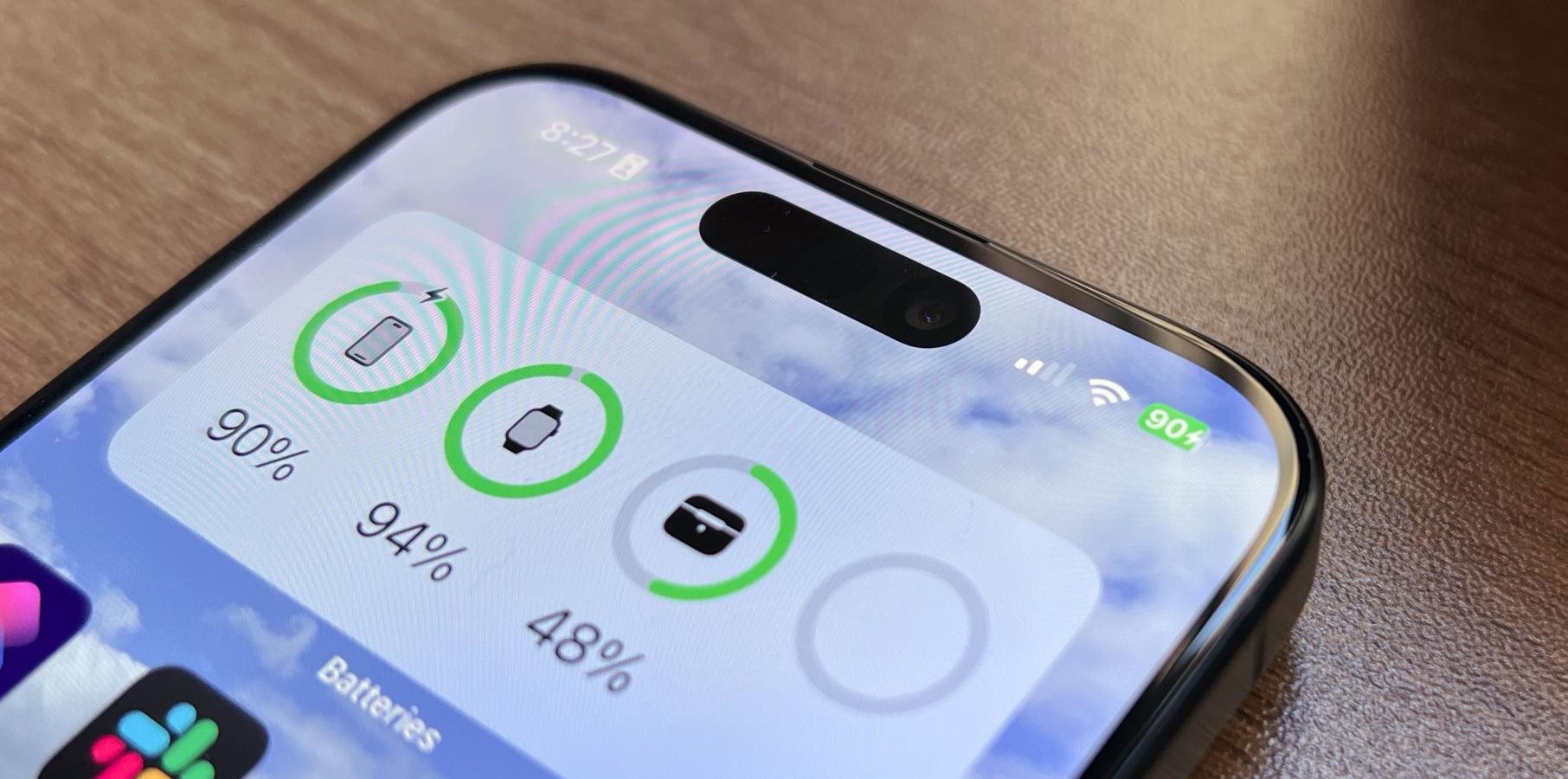
According to Chinese leaker Ice Universe (via MacRumors), Apple plans to increase the thickness of the iPhone from 8.25mm to 8.725mm in the upcoming iPhone 17 Pro Max. The leaker believes this depth increase “surely means a larger battery,” as the rest of the iPhone will remain unchanged.

Ice Universe corroborates previous rumors that Apple will stick with the 6.9-inch display on that model. That said, iPhone Pro Max users have always asked for more battery, even though it’s the most power-efficient iPhone Apple sells. With that in mind, a little more space might be responsible for a lot more battery life.

Besides rumors about the iPhone 17 Air’s battery life, this is the first time we hear about Apple’s plans to improve the battery capacity of the iPhone 17 Pro Max. In addition to that, there’s an ongoing rumor that the entire iPhone 17 lineup will feature the same battery glue tech that Apple used for the iPhone 16 and iPhone 16 Plus.

Tech. Entertainment. Science. Your inbox.

Sign up for the most interesting tech & entertainment news out there.

By signing up, I agree to the Terms of Use and have reviewed the Privacy Notice.

Other reports reveal that Apple has an ambitious plan to redesign most of the iPhone 17 lineup with a new camera bars design. After years of the same “cooktop” look, the company plans to radically change the back of the phone while also returning to the aluminum and glass finish in the Pro lineup.

The iPhone 17 Pro Max is expected to feature the A19 Pro chip, a triple 48MP camera lens, an upgraded front-facing selfie, and now this battery capacity increase.

So far, the reports don’t believe Apple will use the C1 chip on the newer iPhone 17 Pro, but a successor modem might be present in the 2026 lineup.

Below, you can read a full guide on the iPhone 17 expected devices.

Source

Posted on

Apple Watch Series 10 just dropped to $299 and you need one in your life

As a longtime user of most of Apple’s products, I have to say that I’ve been less impressed with the company’s recent updates. Yes, each new iteration of an iPhone or MacBook obviously refines and improves upon the last. But lately, it seems like Apple is focused mainly on trying to catch up in the AI wars, and other things are falling through the cracks.

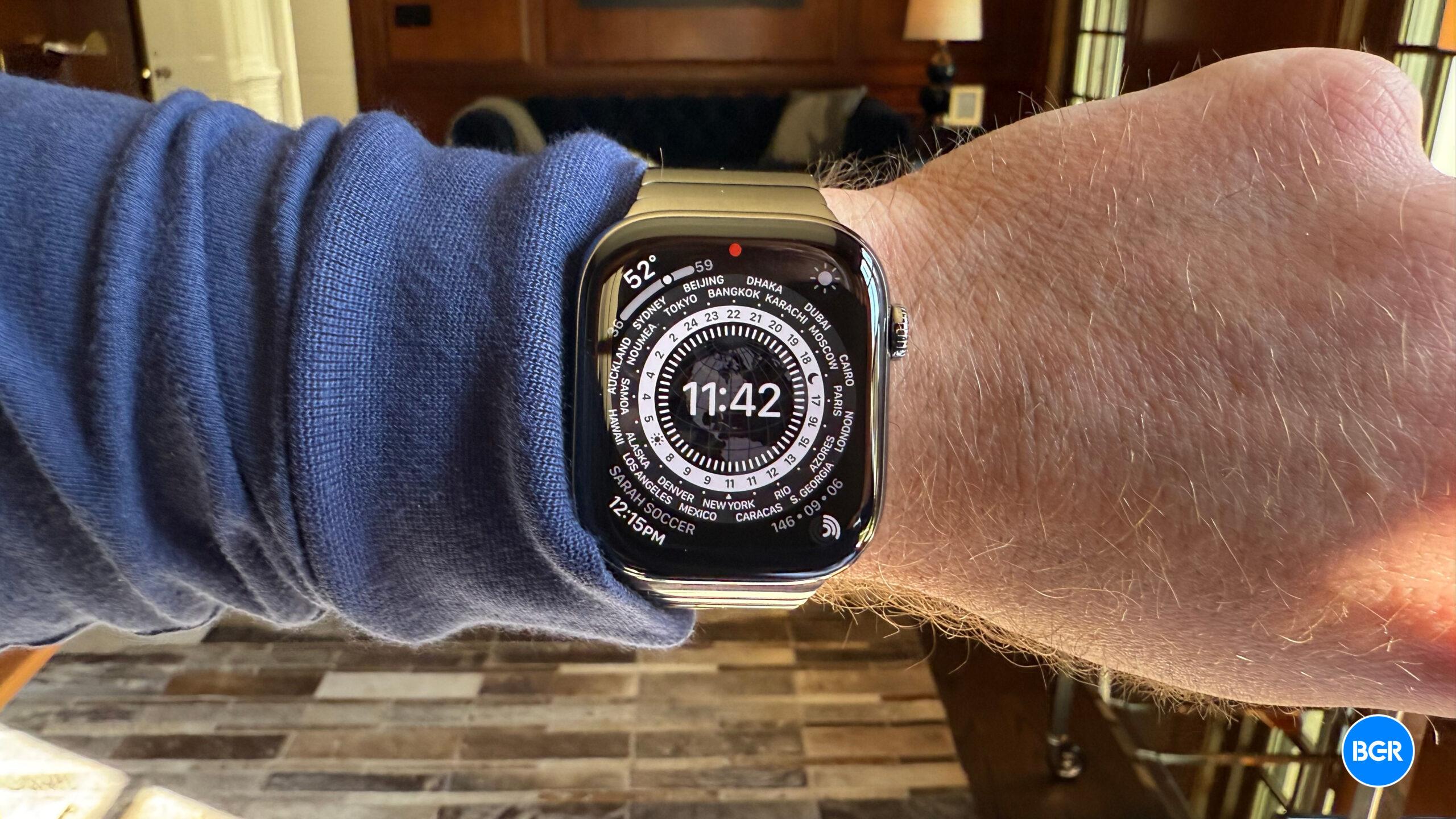
Despite all that, there was one update released last year that I was pretty impressed with — the Apple Watch Series 10. It’s not a massive update with tons of new features, and it’s still missing the pulse oximetry feature that Apple was forced to remove in the US. However, it features a thinner design that’s so much sleeker on the wrist, plus larger displays with narrower bezels around them. It’s absolutely gorgeous, and it’s currently on sale starting at just $299. If ever there was a time to upgrade to a Series 10 model, it’s right now while it’s on sale at all-time low prices.

Amazon Logo See Pricing Amazon Logo See Pricing Amazon Logo See Pricing Amazon Logo See Pricing

The Apple Watch Series 10 is the model that I personally use. To be frank, I have tested dozens of other smartwatch models, and I wouldn’t consider using any of them over the Series 10. With or without a blood oxygen sensor like the older models have, it’s easily the best smartwatch for most Apple users.

Tech. Entertainment. Science. Your inbox.

Sign up for the most interesting tech & entertainment news out there.

By signing up, I agree to the Terms of Use and have reviewed the Privacy Notice.

The only other model that piques my interest is the Apple Watch Ultra 2, which is a fantastic upgrade from Apple’s regular smartwatch models. But it’s also massive, and it’s way too big for my wrist. If you’re interested in the Apple Watch Ultra 2, you should know that it’s currently on sale with a $67 discount if you want the black titanium model. That’s not the best deal I’ve seen, but it’s still a pretty solid bargain.

As for the Series 10 model, it appeals to a much wider range of users. It also comes in two sizes that look great on just about any wrist size. You can read BGR’s in-depth Apple Watch Series 10 review to learn all about what makes this model so impressive.

One of my favorite features is the enhanced sleep tracking that’s bolstered by Apple’s newer temperature sensor. I have issues falling asleep and staying asleep, so it’s great to get some insights into which sleep aids work best when I try new ones. The good news is that Apple’s sleep tracking still works great for me, even without pulse oximetry.

On top of that, the new design with a larger screen is so sleek. I love how thin the Series 10 is on my wrist. Also, believe it or not, the bigger 46mm model actually has a larger display than the Ultra 2, even though the Ultra 2’s overall footprint is bigger. That’s how narrow the bezels are on Apple’s latest model!

Amazon Logo See Pricing Amazon Logo See Pricing

There are plenty of other great features on the Apple Watch Series 10, of course. It’s not Apple’s biggest update ever, but it definitely refines much of what made the Series 8 and Series 9 models so impressive.

Just like I stated earlier, prices start at just $299 right now, and most of Apple’s different colorways are on sale. Also, the 46mm GPS version is on sale starting at $329 instead of $429. Those are both all-time low prices.

If you want cellular connectivity in addition to GPS, prices start at $399 instead of $499 for the 41mm Cellular + GPS Apple Watch Series 10. Again, that’s the lowest price ever for this SKU.

Amazon Logo See Pricing Amazon Logo See Pricing

Be sure to visit our extensive guide for all the best Apple Watch deals on other models, including previous-generation Apple Watches that are on sale with deep discounts.

Source

Posted on

US Congress demands UK lifts gag on Apple encryption order

US lawmakers have hit out at the Home Office for “attempting to gag” US companies by preventing them from telling Congress whether they have been subject to secret UK orders requiring them to hand over their users’ data.

In an unprecedented intervention, five lawmakers from both sides of the US political divide, led by senator Ron Wyden, have written to the UK’s Investigatory Powers Tribunal (IPT) accusing the British government of undermining Congressional oversight and restricting the free speech of US companies.

Their letter comes as the IPT is preparing to hear closed-door arguments from Apple, which is challenging a notice requiring it to extend UK law enforcement’s existing access to encrypted data stored by customers on the Apple iCloud service anywhere in the world to users of Apple’s Advanced Data Protection (ADP) who choose to hold encryption keys privately on their own devices.

British media organisations, including the BBC, The Times, Financial Times, Reuters, The Guardian, The Telegraph and Computer Weekly, have also filed legal submissions with the IPT today, arguing that there is an important public interest in hearing arguments over the UK’s demands against Apple in a public court.

In the Congressional letter, five US senators and congressmen complained to the Investigatory Powers Tribunal that the secrecy surrounding the orders – known as Technical Capability Notices (TCNs) – are impairing Congress’s power and duty to conduct oversight on matters of national security.

The letter disclosed that Apple and Google have informed Congress that were they to have received Technical Capability Notices, they would be barred by UK law from disclosing it to US lawmakers. The UK embassy has also failed to respond to US requests about potential demands by the UK to other US companies.

“By attempting to gag US companies and prohibit them from answering questions from Congress, the UK is both violating the free speech rights of US companies and impairing Congress’s power and duty to conduct oversight on matters of national security,” the lawmakers wrote.

“The UK’s attempted gag has already restricted US companies from engaging in speech that is constitutionally protected under US law and necessary for ongoing Congressional oversight,” they added.

The letter has been signed by democrats senator Ron Wyden from Oregon, who has campaigned for healthcare and the environment; Alex Padilla from California, who is chairman of the Senate Judiciary Subcommittee on Immigration; and Zoe Loefgren, an advocate for digital rights from California.

By attempting to gag US companies and prohibit them from answering questions from Congress, the UK is both violating the free speech rights of US companies and impairing Congress’s power and duty to conduct oversight on matters of national security Congressional letter to the Investigatory Powers Tribunal

Republicans Andy Bigg from Arizona, chair of the House Judiciary Subcommittee on Crime and Federal Government Surveillance and a vocal trump supporter; and Warren Davidson for Ohio, a member of House Financial Services Committee and a former US soldier, have also signed.

Their unified complaint calls on the IPT to apply principles of open justice to the hearing scheduled for Friday, and for all subsequent proceedings in Apple’s appeal against the Technical Capability Notice. 

The lawmakers note that the existence of the TCN has been widely reported and commented on, which makes any argument for closed hearings to keep the existence of the notice secret “unsustainable”.

The existence of the notice has also been confirmed by Apple’s public decision to withdraw its advanced encryption option, known as Advanced Data Protection, for all UK users. Apple would not have done this “unless it felt compelled to do so by a request to insert a backdoor”.

Holding public hearings would allow lawmakers to hear expert evidence from cyber security specialists, civil society representatives and experts on US-UK data flows, enabling the IPT to reach a well-informed decision over the lawfulness of the notice, they said.

Serious concerns over national security 

The lawmakers argue that the UK’s demands against Apple raise “serious concerns which directly impact national security” and therefore warrant public debate. 

As Computer Weekly previously reported, Tulsi Gabbard, the director of national intelligence, stated in a letter to Congress that the UK’s demands would be “a clear and egregious violation of American’s privacy and civil liberties, and open up a serious vulnerability for cyber exploitation by adversarial actors”.

President Donald Trump confirmed in an interview with The Spectator that he had raised the Apple TCN with prime minister Keir Starmer during his visit to Washington, comparing the UK’s actions to the conduct of China.

Chinese exploited US ‘lawful access’

The lawmakers point out that the security of US technology products against surveillance by foreign governments is an important topic for ongoing Congressional oversight following a spate of hacks against the communications of senior US government officials.

China exploited US lawful interception systems in 2023 to reportedly tap the phone calls of Trump and vice-president JD Vance, and to steal millions of phone records after gaining access to major US carriers in the “Salt Typhoon” attack.

In April 2024, hackers stole phone records of “nearly all” AT&T customers, including records of members of the president’s family, the then vice-president, Kamala Harris, and the wife of the now secretary of state, Marco Rubio, in the “snowflake” incident.

And in 2003, China stole more than 60,000 emails from the department of state and compromised the email accounts of US officials and politicians after hacking into Microsoft-hosted US government email accounts.

“The common link between these incidents is that sensitive government data held by third-party companies was not properly secured and subsequently accessed by hackers … most importantly, the Salt Typhoon incident reportedly involved compromising ‘lawful intercept’ systems of the kind that it appears Apple has been ordered to build,” the letter states.

“Given the significant technical complexity of this issue, as well as the important national security harms that will result from weakening cyber security defences, it is imperative that the UK’s technical demands of Apple – and of any other US companies – be subjected to robust, public analysis and debate by cyber security,” the lawmakers wrote.

Vital for US cyber security experts to comment

“Secret court hearings featuring intelligence agencies and a handful of individuals approved by them do not enable robust challenges on highly technical matters. Moreover, given the potential impact on US national security, it is vital that American cyber security experts be permitted to analyse and comment on the security of what is proposed.”

The Home Office’s shocking order to Apple to break encryption represents a huge attack on privacy rights and is unprecedented in any democracy Rebecca Vincent, Big Brother Watch

The lawmakers invited the tribunal to permit US companies to discuss the technical demands they have received under the UK’s Investigatory Powers Act with Congress. The IPT should “invite robust public debate by independent cyber security experts before deciding the merits of the reported challenge that Apple has brought”, they said.

Separately, civil society groups Big Brother Watch, Index on Censorship and Open Rights Group have written to the president of the Investigatory Powers Tribunal, the Rt Hon Lord Justice Singh, calling for the case to be made public.

They argue that the case implicates the privacy rights of millions of British citizens who use Apple’s technology, and those of its overseas customers.

There is a “significant public interest in knowing when and on what basis the UK government believes that it can compel a private company to undermine the privacy and security of its customers”, according to the letter.

Big Brother Watch interim director Rebecca Vincent said the tribunal hearing must not take place in secret. “The Home Office’s shocking order to Apple to break encryption represents a huge attack on privacy rights and is unprecedented in any democracy,” she said.

Index on Censorship CEO Jemimah Steinfeld said breaking encryption would do away with our rights to privacy, make us far less safe and secure online, and challenge the very notion of the UK as a democracy. “With such high stakes, we demand to know what could possibly justify this. We need answers, not more secrecy,” she said.

Open Rights Group executive director Jim Killock said: “If the UK wants to claim the right to make all of Apple’s users more likely to be hacked and blackmailed, then they should argue for that in an open court.”

Source

Posted on

The Security Interviews: Yevgeny Dibrov, Armis

Over the past 20 to 30 years, the intelligence community has generated a stream of cyber security leaders – private cyber security companies are littered with former operatives of the American and British intelligence services.

But in Israel’s case, the intelligence-to-cyber pipeline has produced arguably the highest density of cyber security startups and organisations in the world. The likes of Check Point, CyberArk, Imperva, Palo Alto Networks and Radware can all claim links back to the Israel Defence Force’s (IDF’s) technology units.

Among these units, which likely date back to before Israel’s founding in 1948, are the highly secretive cyber weapons and tech development shop Unit 81, and the more widely known signals intelligence Unit 8200.

Israel’s astonishing concentration of cyber security talent is largely attributable to both Unit 81 and Unit 8200, whose existence has only been fairly recently acknowledged. Mossad may get international attention, but it is Unit 8200 that gets the data to support it and Unit 81 that builds the tech.

Acting as incubators for cyber security and hacking talent, these units benefit from Israel’s compulsory military service laws and intensive screening processes, which divert individuals with potential from frontline armed service, although they also scout after-school computer clubs for likely-looking candidates.

That the IDF is the wellspring of Israel’s cyber talent is these days no secret, but Armis CEO, Yevgeny Dibrov – who is allowed to say little more about the time he served in Unit 81 beyond the fact that he was there – says there’s more to the growth of Israel’s cyber community than just the hothouse conditions at the IDF.

He compares the environment to that of a startup. “When you’re a startup, when you’re building something, you don’t have much budget, but with what you have you still need to do outstanding things that differentiate a lot, that achieve a lot, and that puts you in a great place.

“We don’t have the same budget as the CIA or the NSA, maybe point one of a percent, but we have no choice. There is no other way,” he explains. “We have a lot of enemies and we want to win.”

Make the impossible possible

At first. Dibrov’s pipeline into the IT industry does not seem all that different from most other people’s – stemming from an initial schoolboy interest in computers, maths and physics – but he became hooked when he was tapped for Unit 81 as a fresh-faced teen.

“In the years I spent there I became fascinated by different capabilities, fascinated by this world, fascinated also by working hard for my country,” he says. “Twice during my service I was part of the team that won the Israel Defence Prize, which is for outstanding achievements in the technology space.

“The slogan of our unit was ‘Make the Impossible Possible’,” says Dibrov. “It’s written over the door when you enter. You see it every day, and so you kind of live towards it. It’s not just a cliché.”

Twice during my service [at Unit 81] I was part of the team that won the Israel Defence Prize, which is for outstanding achievements in the technology space Yevgeny Dibrov, Armis

But the intelligence forces serve not only as a hub for creative talent, but a hub for team-building. Indeed, of Armis’s first cohort of employees, about 50% served alongside Dibrov himself at Unit 81, and the others worked alongside his co-founder – and chief technology officer (CTO) – Nadir Izrael at Unit 8200.

“People get to know each other, and during my time at Unit 81, we were always talking to alumni that actually started companies and did great things,” says Dibrov. “I remember my team leader in the army was [Wiz CEO] Assaf Rappaport, so we were always meeting some of the alumni from our unit and learning what they had done.

“It makes you excited,” he says. “It makes you think, ‘Okay, when I’m out, here is what I want to do’. I already knew that I wanted to start a company.”

Alongside heading off to study at Technion, the Israel Institute of Technology, between 2010 and 2013, at the end of his service, Dibrov helped set up Adallom, with which Rappaport was also involved. Adallom was a cloud access security brokerage (CASB) specialising in visibility, governance and protection across business applications such as Box, Google Apps, Microsoft Office 365 and Salesforce.

The firm’s Office 365 work clearly stood out, because in September 2015, Microsoft bought the company for over $300m. Just a couple of months later, Dibrov and Izrael started Armis, with the first employees coming on board in February 2016.

Google Maps, but for vulnerable assets

Asked to “explain like I’m five”, Dibrov describes Armis as a cyber exposure management platform that essentially provides its customers with a Google Map of their IT environment, with every single asset accounted for, whether it’s something run-of-the-mill like a laptop or smartphone, to operational technology (OT) like industrial controllers, even medical equipment.

On top of this basic map, Armis provides additional layers covering security risk discovery, monitoring and management, and ultimately, remediation.

“We want to not just allow you to see your risk, but reduce it, whether through patching devices or mitigating threats with different rules in your technology environment,” he says.

Armis was earlier than many to the OT/internet of things (IoT) side of security, mapping it as a factor early on in its history, before the topic really started to hit mainstream security conversations about six or seven years ago. What was the spark that led Dibrov to make this bet?

“We really started from talking to a lot of customers, talking to a lot of CIOs, and we were hearing about the explosion of connected devices,” he explains. “We looked at the variety of different environments and we saw there was a gap.

“On the one hand, you have laptops and servers that are covered by your antivirus or next-gen antivirus, and then you have everything else. And then everything else changes in different industries. If you look at an airport, they have a big gap around a lot of operational technology stuff. They have different distribution centres, logistics centres and more. They have datacentres. They have buildings with building management systems.”

At about the same time, incidents such as NotPetya and WannaCry were exposing the precarious security of such environments – particularly in healthcare settings – and this helped push people towards a more holistic view of cyber security.

Security teams have no idea what cameras they have, and they’re 90% Chinese, potentially exploited with backdoors, and often in the most critical environments Yevgeny Dibrov, Armis

“It was a huge push across the board,” says Dibrov. “Everyone suddenly understood that they needed to have visibility into what they have in these environments – because imagine if I’m an attacker, why would I attack a laptop if the laptop has 50 agents on it? I attack the most vulnerable thing, and that’s usually devices that don’t run any agents or antivirus, devices that are mostly not updated or cannot be patched, and a bunch of old XP machines in those areas.

“These devices are often the most important in the organisation. Look at a hospital. How can you compare the importance of a laptop versus an MRI scanner?”

Customers took to this like ducks to water, and today Armis works with over 35% of the Fortune 100.

From day-to-day there is no such thing as a typical customer, says Dibrov, but they tend to be larger, distributed organisations with highly complex environments and a lot of devices. Armis claims currently to have approximately 5.3 billion connected devices in harness.

What’s the weirdest ‘thing’ he ever found? “We have things like cars that connect to the company network, to wireless air fryers – we see those a lot. And the amount of types of cameras you would never believe,” says Dibrov. “Security teams have no idea what cameras they have, and they’re 90% Chinese, potentially exploited with backdoors, and often in the most critical environments.”

Like many of its peers, Armis has also been branching out into threat research and frequently publishes its own thought leadership on diverse topics – recent ones include breaking down CISA’s most exploited vulnerabilities and the emergence of DeepSeek.

“We have so much data now, and our customers can benefit from that,” says Dibrov. “We also acquired a company in the space, some super-talented guys who merge a lot of their own data with data we generated to provide early warning, which has been very significant.”

What’s next?

Keeping in touch with Armis’s buyers is a source of pride for Dibrov, who makes a point of frequently checking in with his user advisory board and speaking to six or seven individual customers every day, whether those are long-term existing ones, new ones, or those moving through their procurement or onboarding processes.

“What do they need? What do they think like? What do we need to do different?” says Dibrov. “This is something that is ongoing for us – always listening, always developing, always running fast, and always providing real solutions to real problems.”

Dibrov declares himself particularly paranoid when it comes to the competition, and likes to try to think about 18 months ahead in terms of innovation. “This is something that is always on my mind because that’s the biggest differentiator,” he says. “You need to have first of all the best product, and then to execute from there. That’s what keeps me up at night.”

Armis recently closed a large Series D funding round, raising $200m to take it to a total valuation of over $4bn. And having made two acquisitions in the past 12 months – Silk Security in April 2024 and CTCI in February 2025 – Dibrov is open to more, as well as exploring the possibility of an initial public offering (IPO).

Beyond these goals, Dibrov is, of course, keeping a close eye on the developing threat landscape. His views on where things are going tally with those of many other observers.

“We keep seeing a lot of state actors, from Russia, China, North Korea, Iran. We keep seeing them, and we keep seeing a lot of targeting of EMEA and US critical infrastructure and manufacturing,” he says. “We see them sometimes also leveraging AI [artificial intelligence]. My guess is we’ll see that more and more, and defenders really need to be prepared.”

Source

Posted on

Claude-3.7 outperforms other AI in Super Mario Bros, but it’s still no gamer

Last week, BGR reported on Claude’s journey playing Pokemon Red. While thousands of players playing it at the same time was more efficient—since the AI is still stuck on Mt. Moon—researchers think the next AI breakthrough might be related to live games.

Led by Hao Zhang, an assistant professor at UC San Diego, the research team is developing custom frameworks to test the capabilities of the leading AI models at gaming.

While Claude has been kind of disastrous playing Pokemon Red (it seems it doesn’t have what it takes to become a Pokemon Master), it sucks a little bit less than Gemini-1.5 Pro and GPT-4o. Comparing Claude-3.7 and Claude-3.5, the newer AI is more responsive and seems to know a bit more about what needs to be done in Super Mario Bros. In addition to this classic Nintendo game, the researchers are also testing 2048 and Tetris, with more games coming soon.

Another test is with Roblox. A blog post explains: “We developed a live Roblox game, AI Space Escape, powered by state-of-the-art large language models (LLMs), offering a unique experience to reason with AI. Beyond entertainment, our game generates gaming data for evaluating AI reasoning abilities in real-world scenarios, extending beyond math and coding benchmarks. All gaming data, evaluation scripts, and code are publicly available for further research.”

Tech. Entertainment. Science. Your inbox.

Sign up for the most interesting tech & entertainment news out there.

By signing up, I agree to the Terms of Use and have reviewed the Privacy Notice.

We still have to wait for Claude and other AI improvements to see how these models can continue to evolve playing games. For the Pokemon Red experiment, the developer explained that what sets Claude apart is that it can see what’s happening, understand the game state, and make decisions “similar to how a human player would”—although I might disagree, as the AI is still suffering to pass one of the first “dungeons” of the game.

Source

Posted on

Apple’s big AI-powered Siri upgrade was just delayed to 2026

The long-anticipated personalized Siri allegedly coming with iOS 18.4 has now been delayed to 2026. To Daring Fireball, Apple’s spokeswoman Jacqueline Roy said the more personalized Siri experience powered by Apple Intelligence will take longer to be released.

Here’s what she said: “Siri helps our users find what they need and get things done quickly, and in just the past six months, we’ve made Siri more conversational, introduced new features like type to Siri and product knowledge, and added an integration with ChatGPT. We’ve also been working on a more personalized Siri, giving it more awareness of your personal context, as well as the ability to take action for you within and across your apps. It’s going to take us longer than we thought to deliver on these features, and we anticipate rolling them out in the coming year.”

Bloomberg‘s Mark Gurman had already teased that some of the more personalized Siri features for Apple Intelligence could have been delayed. At the time, the journalist said that the most impressive functions could launch as soon as 2027.

In his Power On newsletter, he revealed that it’s going to take at least two extra years before Apple Intelligence gets somewhat similar to the capabilities OpenAI’s ChatGPT, Google’s Gemini, and Microsoft’s Copilot can deliver today—and, honestly, for at least a year now.

Tech. Entertainment. Science. Your inbox.

Sign up for the most interesting tech & entertainment news out there.

By signing up, I agree to the Terms of Use and have reviewed the Privacy Notice.

According to the journalist, Apple has a long schedule to finally revamp Siri and make it an essential part of the Apple Intelligence platform. This is what you can expect:

  • iOS 18.4: Expected for early April, Apple is expanding the languages available with Apple Intelligence;
  • iOS 18.5: Expected for May, Gurman expected Apple to make Siri tap user data to make it more personalized, but this might have now been scrapped to 2026;
  • iOS 19.4: Expected around April-May of 2026, Siri is getting a new architecture that can operate legacy Siri commands while handling more advanced queries in the same flow;
  • iOS 20: Believe it or not, Gurman’s forecast goes up until 2027, when Apple might be finally able to fix Siri and deliver the LLM Siri, which was technically supposed to be revealed this June.

That said, Apple Intelligence will take much longer to become useful. With that in mind, we now wonder what Apple will do to improve its AI platform.

Source

Posted on

Apple’s iPhone batterygate lawsuit in the UK gets a dramatic new chapter

The iPhone batterygate lawsuit in the UK somehow still hasn’t been fully settled. Three years after consumer rights activist Justin Gutmann filed a case about Apple intentionally throttling iPhone batteries and making the devices slower, the company will have to defend itself in court or pay out $1 billion to UK consumers who suffered from this issue.

In a statement sent to AppleInsider, Gutmann says the UK Court of Appeal just ruled this process: “[The UK] Court of Appeal has given the go-ahead for the so-called ‘Batterygate’ lawsuit — a collective action brought on behalf of millions of UK users, which accuses Apple of intentionally ‘throttling’ iPhone batteries,” says the statement. “Apple will now be forced to defend itself in court after it tried but failed to get the 853 million pounds [$1.1 billion] claim thrown out.”

The activist says approximately 24 million users, including iPhone 6, iPhone 6 Plus, iPhone 6s, iPhone 6s Plus, iPhone SE, iPhone 7, and iPhone 7 Plus owners, had their iPhones “throttled.” Interestingly, around the time people started complaining about this batterygate, Apple issued an apology in 2017 and reduced iPhone battery replacements from 65 pounds to 25 pounds until December 2018, and in the US, it cut to $29.

Still, Gutmann and the UK Court of Appeal understand this hasn’t been enough. UK iPhone users who had these phones can enroll in the public batterygate lawsuit, although they cannot sue Apple on their own. They can enroll in the claim until June 7 through this website.

Tech. Entertainment. Science. Your inbox.

Sign up for the most interesting tech & entertainment news out there.

By signing up, I agree to the Terms of Use and have reviewed the Privacy Notice.

Apple took these measures after the batterygate scandal

After the issue with iPhones throttling due to degraded battery life, Apple started taking action by letting iPhone users know their battery usage percentage, using the iPhone at maximum capacity even if the battery isn’t in the best condition and more.

In the past years, Apple has started offering to limit the charging limit to a certain amount, counting the battery’s cycle, when it was built, when it was first used, and so on.

Even though Apple had a “good reason” to start slowing down older iPhones, at least now new iPhone owners are empowered with all the details about their device’s battery and how to take care the most of it, such as smart charging capabilities that keep the iPhone at 80% during the night.

Still, the company now has to defend itself from the batterygate, and we’ll let you know when it does.

Source

Posted on

Google is testing Gemini AI in Google Calendar

Google is officially testing Gemini integration with Google Calendar. If you’ve been holding out hope that the Google-powered AI would make the jump to your calendar, you likely won’t have to wait much longer.

The feature is currently only available in Workspace Labs, which is essentially Google’s “beta” program for new workspace features that will soon be available in Calendar, Gmail, and the rest of its online workspace apps.

Based on the details outlined in Google’s announcement of the new integration, it looks like only basic commands and prompts are available at the moment. You can ask Gemini to add events, provide details about events, and other things like that. It’s basically everything you’d want to ask an AI assistant to do, and it’s all available in your browser.

Gemini AI assistant in Google Calendar in web browserImage source: Google

Considering Google has slowly been ticking off more features for Gemini on its various platforms—including planning to bring Gemini live video to Android this month—it isn’t all that surprising to see Google Calendar getting Gemini integration finally. We’ve already have integration with the AI in Docs, Sheets, and other Google Worksuite apps, so it was really only a matter of time before Calendar got the same treatment.

Tech. Entertainment. Science. Your inbox.

Sign up for the most interesting tech & entertainment news out there.

By signing up, I agree to the Terms of Use and have reviewed the Privacy Notice.

As usual, you can provide details about how Gemini responds to help Google improve the service, and you even have control over deleting your recent Gemini history. It’s unclear if having Google’s Premium AI subscription and access to the “better” versions of Gemini will make the assistant work any better in Calendar—though it hasn’t ever seemed to make a massive difference in the other Workspace apps.

You can join Google Workspace Labs to get a chance at trying these kind of feature releases early, though keep in mind that the exact way they work, and their reliability may change over time as Google improves them.

Personally, I don’t mind seeing Gemini in Calendar. Even on my iPhone, I’ve used Gemini a good bit to help with minor planning for things, so being able to tell it to add new events to my calendar in my browser will be a welcome addition. Of course, I know not everyone sees the invasion of more AI features in our everyday tools as a good thing, so the usefulness of this new feature will vary greatly depending on how you feel, and how much you even use Google Calendar as a whole.

Source