Posted on

NAO: UK government cyber resilience weak in face of mounting threats

The National Audit Office (NAO) has found the UK government’s cyber resilience to be significantly behind where it needs to be, in the face of mounting and more dangerous threats.

In its Government cyber resilience report, the public spending watchdog warned that the cyber threat to the UK government is “severe and advancing quickly”. It found that 58 critical government IT systems, assessed in 2024, had significant gaps in cyber resilience, and the government does not know how vulnerable at least 228 “legacy” IT systems are to cyber attack.

The report does not cover the cyber resilience of local government, the NHS, or the nation as a whole. Fieldwork for the report was conducted between May and October 2024, with NAO staff interviewing officials from the Cabinet Office about efforts to support government departments in the implementation of the Government Cyber Security Strategy: 2022-2030.

The strategy included a target for key government organisations to be “significantly hardened to cyber attack by 2025”, but the government has not improved its cyber resilience fast enough to meet this aim, said the NAO.

The NAO also interviewed officials from the National Cyber Security Centre (NCSC) and the Central Digital and Data Office (CDDO), along with cyber security civil servants from government departments and the British Library.

The biggest risk to making the UK government resilient to cyber attack is a yawning skills gap, according to the report. It found one in three cyber security roles in government were vacant or filled by temporary – and more expensive – staff in 2023-24, while more than half of cyber roles in several departments were vacant, and 70% of specialist security architects were staff on temporary contracts.

The NAO said departments reported that salaries and civil service recruitment processes are barriers to hiring and keeping people with cyber skills.

Other concerns include a lack of coordination within government, which is jeopardising effective cyber defence. The NAO found that the respective roles of departments and central organisations, such as the NCSC, are “insufficiently understood”, and nor have departmental leaders “consistently recognised the relevance of cyber risk to their strategic goals”.

The government must act now, urged the report’s authors.

Gareth Davies, head of the NAO, said: “The risk of cyber attack is severe, and attacks on key public services are likely to happen regularly, yet government’s work to address this has been slow.

“To avoid serious incidents, build resilience and protect the value for money of its operations, government must catch up with the acute cyber threat it faces.

To avoid serious incidents, build resilience and protect the value for money of its operations, government must catch up with the acute cyber threat it faces Gareth Davies, National Audit Office

“The government will continue to find it difficult to catch up until it successfully addresses the long-standing shortage of cyber skills, strengthens accountability for cyber risk, and better manages the risks posed by legacy IT.”

Cyber resilience gaps

The NAO evaluated whether government is keeping pace with the rapidly evolving cyber threat it faces from hostile actors. It found that it is not.

It spotted that the government’s cyber assurance scheme, GovAssure, which had independently assessed 58 critical departmental IT systems by August 2024, found significant gaps in cyber resilience, with multiple fundamental system controls at low levels of maturity across departments. GovAssure assesses the critical systems of government organisations. It was set up in April 2023.

According to the NAO report, government departments were using at least 228 legacy IT systemsas of March 2024, and the government does not know how vulnerable these systems are to cyber attack.

The report noted that in April 2024, the Cabinet Office Government Security Group (GSG) reported to ministers that some departments had significantly reduced their cyber security improvement programmes to fund other priorities. This was due to “cuts to programme funding, lack of access to cyber skills, challenges with delivery partners, and delays in departmental and cross-government approvals”.

As examples of how damaging cyber attacks can be, the NAO cited the instance, in June 2024, of an attack on a supplier of pathology services to the NHS in south-east London, which led to two NHS foundation trusts postponing 10,152 acute outpatient appointments and 1,710 elective procedures. It also cited the British Library ransomware attack in October 2023, which has already cost £600,000 to rebuild its services. The library expects to spend many times more as it continues to recover.

The report also gave other examples of attacks on the Ministry of Defence and Parliament. In May 2024, the MoD’s payroll contractor’s network was compromised by an attacker – a network that held armed forces staff members’ data. Further back in time, in 2021, a Chinese state-affiliated attacker was, said the report, highly likely responsible for a cyber campaign against the parliamentary email accounts of members across both Houses of Parliament.

The report stated that in March 2024, departments did not have fully funded plans to remediate around half of government’s legacy IT assets – 53%, or 120 out of 228.

The NAO recommends the government develops, shares and starts using a cross-government implementation plan for the Government Cyber Security Strategy within the next six months. It also suggests the whole of government needs to operate differently.

Within the next year, the government should make and enact plans to fill cyber skills gaps in workforces, said the NAO.

Of the technology trumpeted most by the current and previous government – artificial intelligence (AI) – the report said: “AI can improve government’s cyber security, but it can also help threat actors looking to interfere or undermine trust in our democratic system. The NCSC is collaborating with its partners to realise the benefits of AI and protect against the associated security risks.”


Source

Posted on

Foodora tests drone and robot deliveries in Sweden

Foodora Norway, the Oslo-based subsidiary of online quick-commerce (Q-commerce) food delivery brand Foodora Group, has partnered with Nordic communications company Tele2 to pilot test home deliveries using robots and drones supported by 5G internet of things (IoT) technology.

The Stockholm metropolitan area was chosen as the test location for the ground robot and drone delivery trials. The Doora robot will be used in the ground tests while the drone trials are being conducted as part of the parallel Foodora Air project.  

A subsidiary of Berlin-based Delivery Hero, Foodora is currently present in Norway, Sweden and Finland, where the company delivers restaurant food, groceries and other consumer goods using cars and bicycles. Foodora also operates in Austria , Hungary and Czechia.

The collaboration with Tele2 forms part of Foodora’s two-year plan to roll out GPS-based robot home deliveries across the Nordic countries by in 2025 and 2026. The ambitious joint venture with Tele2 is focused on self-driving robots and drones connected to 5G and IoT technologies.

Foodora is hoping to roll out commercial Doora ground robot deliveries in Sweden and Norway by year-end 2025, with drone services introduced in 2026.  

Scandinavian countries are lagging behind the US and Finland as regards the development of self-driving robot food delivery services, said Prashant Søegaard, CEO at Foodora Norway. “Our partnership with Tele2 in Sweden will help identify the opportunities, challenges and physical obstacles we face in making Doora work as a viable and popular form of food delivery across Nordic markets,” he added.

In Finland, S-Group and its S-Market supermarket chain partnered with the Tallinn-based Starship Technologies in 2023 to roll out the Starship Robot. The first autonomous S-Market delivery robots (ADRs) became operational in selected towns during December 2023. Monitored in real-time for disruptions to service, the electric-powered Starship ADRs use artificial intelligence (AI) and GPS to plan routes and complete delivery missions.

Mobile app

The Starship Robot platform, over the five-month operating period to 30 May 2024, delivered 150,000 orders to households. Working off S-Market’s dedicated home delivery mobile app, the service had linked to an initial 100 S-Market grocery stores by the end of November.

The platform currently serves 14 towns and cities across Finland , including Helsinki , Tampere and Espoo . S-Group is estimating full-year 2024 deliveries exceeding 400,000 homes.

Additionally, S-Market is recording downloads of over 20,000 per month for the home delivery app, said Tiina Meyer, a senior business developer of retail ecommerce at S-Group.  

“The robot delivery service is a major retailing innovation boosting our grocery business,” she said. “Because of its convenience, it’s hugely popular. Customers appreciate the convenience of this new technology, the speed at which their orders are processed and delivered, the aesthetically pleasing robots, and especially enjoy the music the robots play upon delivery.”

Starship Technologies was incorporated in 2014 by Janus Friis and Ahti Heinla, the two Estonian co-founders of Skype. Headquartered in San Francisco , the company operates engineering subsidiaries in Tallinn and Helsinki .

Foodora’s pilot trials of the ground delivery Doora in Sweden include specific tests related to how the robot navigates pedestrian crossings and curbs, as well as how the robot recognises its surroundings and communicates.

Test and evaluation

The Doora and Foodora Air projects will help to test and evaluate the full potential of the delivery systems when connected to Tele2’s 5G network and IoT technology, said Stefan Trampus, the executive vice-president of Tele2 B2B.

“Within this project, we will be able to use the robot delivery concept to look at other industries and areas of use,” he said. “We can track how GPS and IoT function, and look to optimise solutions. The 5G IoT technology is essential for the drones’ smooth operation. The target is to achieve rapid response times and substantial data transfer capabilities to ensure safe delivery management.”

The Doora ground robot is designed to transport food and other products up to a maximum weight of 20kg. The delivery robot has a top speed of 6km (3.72 miles) per hour and a battery life of eight hours, with a four-hour charge.

The Foodora Air project’s core focus is on testing the operability of a fleet of battery-powered drones, utilising 5G technology provided by Tele2, to deliver meals from various restaurants located in the Stockholm suburb of Värmdö. The Nimbi drones, developed by Swedish firm Aerit, are integrated into Foodora Air’s technology platform.

The all-weather certified Nimbi drones used by Foodora Air are able to operate within a maximum delivery range of 21km and emit 2g of carbon dioxide per kilometre. The Nimbi has a maximum payload carrying capacity of 4kg (10lb), and features a proprietary winching system that enables package pick-up and drop-off without the need for supporting infrastructure.

As part of the Foodora Air trial, deliveries are being restricted to customers’ properties, including front and back gardens where packages can be safely lowered by cable from airborne drones.

The results, and shared test data, emanating from the Doora robot and Foodora Air trials in Sweden will help to shape how the company rolls out drone and robot-supported delivery services in Norway , said Søegaard. “We are closely following the tests in Sweden and hope to learn from that experience,” he said. “The data we collect from the project and trials will better inform us about the challenges we face in Norway and need to overcome and solve.”

Foodora has opened a dialogue with public and private players to expand robot delivery services across Norway . The first significant hurdle will be to obtain authorisation from the Norwegian Public Roads Administration (Statens Vegvesen), and local municipalities, ahead of launching autonomous robots, and at a later stage, drones, in Norway.

Foodora is hoping to roll out a robot delivery service in Norway during the first half of 2025, in collaboration with Danish autonomous air and ground vehicle firm Holo.

In August, Holo partnered with Foodora Norway to conduct a demonstration test at Fornebu, a suburb of Oslo , using a six-wheeled delivery robot supplied by California-based Cartken. The Cartken robot is equipped with three 5G modems and connectivity to multiple mobile operators to ensure continuous communication to shield against signal drop-off. The Cartken uses a PIN code system enabling customers to unlock and retrieve food and other deliveries.

Holo also collaborated with Posten , Norway ’s state-controlled postal service, on a pilot trial to test electric-powered delivery robot Ottobot. The robot was supplied by New York-based Ottonomy.IO. The test, which was conducted in the Oslo district of Filipstadkaia in November and December 2022, has so far not resulted in a decision by Postern to procure delivery robot units for commercial use.  

The Ottobot pilot test was run as a partnership project with AMOI, Norway ’s largest digital marketplace that connects specialist retailers, including restaurants, with customers ordering home delivery.

Posten has been something of a trailblazer in Norway as regards the testing of ground robot delivery systems. In 2018, the company conducted a pilot trial in Oslo on the Buddy Mobility autonomous parcel delivery robot. However, high operating costs and low demand for the service resulted in Posten shuttering the project in 2019.

Source

Posted on

Apple’s hallucinated AI News summaries were just disabled in iOS 18.3 beta 3

Hallucinations are a part of the early genAI experience. Since the early days of ChatGPT, we have warned that AI will make mistakes and that you should always look for sources and check whether its claims are accurate. As hard as they might have tried, the big tech players were not spared.

Google’s AI Overviews in Search delivered advice on how to put glue on pizza and hallucinate other information, forcing Google to deal with the PR mess that followed and fix the AI before releasing it to a wider audience.

Apple wasn’t spared the hallucination humiliation either, with Apple Intelligence conflating News reports to deliver fake information via the summarization feature for the News app. Apple has decided to pull the feature from the latest iOS 18 beta and deploy the needed fixes.

“With the latest beta software releases of iOS 18.3, iPadOS 18.3, and macOS Sequoia 15.3, Notification summaries for the News & Entertainment category will be temporarily unavailable,” an Apple representative told CNBC.

Tech. Entertainment. Science. Your inbox.

Sign up for the most interesting tech & entertainment news out there.

By signing up, I agree to the Terms of Use and have reviewed the Privacy Notice.

Apple is working on improving the News summarization feature, which will return in a future software update. It’s unclear when the feature will be back, but Apple Intelligence continues to be a top priority for Apple’s software development teams.

As a reminder, iOS 18.4 will bring another set of AI features to iPhone, iPad, and Mac, including the smarter Siri that can control some apps and access more user data on the device to provide more helpful assistance.

Apple Intelligence’s hallucination problems went viral in December when the AI summarized several BBC reports into a single notification that started with “Luigi Mangione shoots himself.” Mangione is the alleged Brian Thompson assassin who did not shoot himself.

Other hallucinations date back to November when the AI might have shown some users The New York Times summaries that claimed Israeli Prime Minister Benjamin Netanyahu had been arrested. That wasn’t the case.

Hallucinating news is a big problem for any AI product, whether Apple Intelligence or ChatGPT. After all, we’ve been worried about AI misleading users with fake information and the manipulation risks that might come from AI products controlled by nefarious actors. Companies like Apple must get any news-related AI features right, especially summarization. Either that or not do it at all.

In addition to disabling Notification Summaries for the News and Entertainment category in iOS 18.3 beta 3, Apple has added a label to the feature noting that summaries can contain errors, as the app is in beta.

Apple made another change to how summaries appear in notifications so you can tell them apart from regular notifications. Starting with iOS 18.3 beta 3, they’ll be italicized.

Finally, Apple Intelligence users who install the latest beta can decide whether to enable or disable summaries for an iPhone app directly from the Lock Screen. Swipe to the left on a Notification Summary to get an options menu that will let you disable them for specific apps. The alternative is going into the Settings app, where you’d have customized the AI summarizations before the new beta.

As an iPhone user in the EU, I still can’t get Apple Intelligence. I couldn’t test it or experience any of the hallucination issues that US iOS 18 beta testers have encountered. Hopefully, the hallucination problem will go away by the time I get my hands on Apple Intelligence on the iPhone.

However, it’s great to see Apple admit the errors and pull the AI summarization feature entirely rather than proceeding with it without a proper fix.

Source

Posted on

Rumor has it AMD’s feeling the heat from Nvidia’s RTX 5000 GPU launch prices – but a decision on RX 9070 pricing must be made soon

  • AMD is purportedly struggling to iron out RX 9070 pricing with retailers
  • The theory is that AMD’s original prices were too high compared to where Nvidia pitched its RTX 5000 GPUs
  • AMD needs to put all this gossip and speculation to bed as soon as possible

More rumors are circulating about AMD’s RDNA 4 graphics cards, due to launch at some point in Q1 2025, and there’s some fresh info about what could potentially be going on behind the scenes.

There’s no denying that the reveal of RX 9070 models at CES 2025 was confusingly brief, though an AMD exec has since clarified why – namely the lack of time for Team Red’s presentation at that event (a flimsy excuse, yes), and an apparent admission (possible translation issues must be noted, mind) that the company wanted to wait and see how Nvidia pitched its RTX 5000 GPUs.

Fresh speculation (via VideoCardz) from a forum moderator (Pokerclock, who recently brought us gossip on Nvidia’s Blackwell stock levels) at German site PC Games Hardware throws something else into the mix.

Namely a theory that pricing for RX 9070 models has proved problematic and that MSRPs have not been officially agreed, because the price tags AMD planned originally ended up too high compared to what Nvidia announced with its next-gen Blackwell graphics cards.

Pokerclock asserts that there are difficulties in rejigging that price and working out how to balance and correct this with what retail partners already paid for these RDNA 4 products. Working out this – and we must be extremely cautious around this rumor – is what’s apparently causing some trouble for AMD, and kind of leaving its RX 9070 graphics cards in a state of launch limbo, as it were.

An AMD Radeon RX 7900 XTX on a table against a white backdrop

(Image credit: Future)

Analysis: Time to take action, AMD

Could there be something in this? Well, it does make sense in some ways, by which I mean that Nvidia’s RTX 5070 and 5080 pricing was certainly surprising – it caught me off guard, and likely AMD, too, I’d imagine. Also, it does fit with what’s happened in terms of AMD’s sort of ‘half-launch’ at CES 2025, and the fact that we still haven’t got a date for the proper launch (an event that could be coming this week, if rumors are right – on January 23 or 24, but that’s very close at hand now, obviously).

Moreover, there are multiple sightings of the RX 9070 graphics cards having arrived at retailers, so that also suggests that the pieces of the launch were all fitting into place, and then suddenly an Nvidia-shaped spanner was chucked into the RDNA 4 works when Blackwell pricing was revealed.

{ window.reliablePageLoad.then(() => { var componentContainer = document.querySelector(“#slice-container-newsletterForm-articleInbodyContent-EWej4GxGwAxjRCyM9d3FQT”); if (componentContainer) { var data = {“layout”:”inbodyContent”,”header”:”Get daily insight, inspiration and deals in your inbox”,”tagline”:”Sign up for breaking news, reviews, opinion, top tech deals, and more.”,”formFooterText”:”By submitting your information you agree to the Terms & Conditions and Privacy Policy and are aged 16 or over.”,”successMessage”:{“body”:”Thank you for signing up. You will receive a confirmation email shortly.”},”failureMessage”:”There was a problem. Please refresh the page and try again.”,”method”:”POST”,”inputs”:[{“type”:”hidden”,”name”:”NAME”},{“type”:”email”,”name”:”MAIL”,”placeholder”:”Your Email Address”,”required”:true},{“type”:”hidden”,”name”:”NEWSLETTER_CODE”,”value”:”XTR-D”},{“type”:”hidden”,”name”:”LANG”,”value”:”EN”},{“type”:”hidden”,”name”:”SOURCE”,”value”:”60″},{“type”:”hidden”,”name”:”COUNTRY”},{“type”:”checkbox”,”name”:”CONTACT_OTHER_BRANDS”,”label”:{“text”:”Contact me with news and offers from other Future brands”}},{“type”:”checkbox”,”name”:”CONTACT_PARTNERS”,”label”:{“text”:”Receive email from us on behalf of our trusted partners or sponsors”}},{“type”:”submit”,”value”:”Sign me up”,”required”:true}],”endpoint”:”https://newsletter-subscribe.futureplc.com/v2/submission/submit”,”analytics”:[{“analyticsType”:”widgetViewed”}],”ariaLabels”:{}}; var triggerHydrate = function() { window.sliceComponents.newsletterForm.hydrate(data, componentContainer); } if (window.lazyObserveElement) { window.lazyObserveElement(componentContainer, triggerHydrate); } else { triggerHydrate(); } } }).catch(err => console.error(‘%c FTE ‘,’background: #9306F9; color: #ffffff’,’Hydration Script has failed for newsletterForm-articleInbodyContent-EWej4GxGwAxjRCyM9d3FQT Slice’, err)); }).catch(err => console.error(‘%c FTE ‘,’background: #9306F9; color: #ffffff’,’Externals script failed to load’, err)); ]]>

Sign up for breaking news, reviews, opinion, top tech deals, and more.

It’s notable that Moore’s Law is Dead also spilled some RDNA 4 details in his latest video on YouTube, and there was no rumored pricing, just a comment that he’s heard a lot of different rumors – from $450 (in the US) upwards.

Again, that paints a picture of everything still being rather up in the air at this late stage for RDNA 4, though the YouTuber gives us a rough guess of $499 (in the US) for the RX 9070 and $599 for the RX 9070 XT. That would, based on some purported internal benchmarks from AMD also shared by the leaker, make for a pair of RDNA 4 graphics cards that would be RTX 5070 and 5070 Ti killers.

Interesting and potentially exciting times indeed, but AMD can’t let these rumors on its next-gen GPU launch and pricing continue to simmer and bubble for too long – it needs to make a final decision on RDNA 4 pricing, if the company hasn’t already, of course. And then those prices need to be aired very soon (which might indeed happen, as noted, if the rumor mill is right).

You might also like

Source

Posted on

Nvidia RTX 5090 FE rumor claims high-end GPU gets loud

  • A new rumor suggests the RTX 5090 will use 600W of power
  • Comments in a Chinese forum point toward the new GPU being much louder
  • Other reports contradict this, however

Update: We’ve updated this story to give more context about the source of this latest rumor, while also highlighting other reports and evidence that suggest the RTX 5090 FE is in fact “very, very quiet”.

Nvidia‘s RTX 5090 promises to provide a step up from the previous generation’s RTX 4090, but that could come at a significant cost according to new rumors – and you might want to invest in a beefy power supply. However, this rumor is contradicted in some other early leaks and previews – so it looks like we won’t get the full picture until reviews for the new flagship GPU land.

As reported by Tomasz Gawronski on X, discussions within Chiphell (a Chinese forum page about the latest PC hardware) suggest that Nvidia’s RTX 5090 Founders Edition GPU will use 600W of power while being much louder compared to the 4090. This is based on what appears to be an upcoming review with the embargo set for January 24, with a post translated from Chinese that says “The editor cursed while testing… After all, the power consumption increased, the current increased, and the screaming also increased~”.

Considering the pricing of the RTX 5090 ($1,999 / £1,939 / AU$4,039) and the reported 30% performance increase (according to Blender benchmarks highlighted by VideoCardz), this rumor likely won’t bode well with anyone intent on upgrading to Team Green’s latest flagship GPU. The RTX 4090’s power consumption is 450W, and while this is still plenty, the rumored jump to 600W isn’t very appealing either.

The Chiphell rumor makes a big deal of the RTX 5090 being a noisy GPU and while there are plenty of legitimate reasons why people are worried about the noise produced by the RTX 5090, due to the built-in fans working hard to keep the powerful components cool, this should also be taken with a huge pinch of salt.

For a start, this is a comment on a Chinese-language website, so translating it, and the context, is difficult. There’s also no evidence provided (that we can see) about this claim.

Meanwhile, while we’re still waiting for in-depth looks at the RTX 5090’s performance – including how noisy it gets – there have been hints that the ‘loud RTX 5090’ rumors are wrong.

{ window.reliablePageLoad.then(() => { var componentContainer = document.querySelector(“#slice-container-newsletterForm-articleInbodyContent-NGVG5TdNPDSoiww56DXyJW”); if (componentContainer) { var data = {“layout”:”inbodyContent”,”header”:”Get daily insight, inspiration and deals in your inbox”,”tagline”:”Sign up for breaking news, reviews, opinion, top tech deals, and more.”,”formFooterText”:”By submitting your information you agree to the Terms & Conditions and Privacy Policy and are aged 16 or over.”,”successMessage”:{“body”:”Thank you for signing up. You will receive a confirmation email shortly.”},”failureMessage”:”There was a problem. Please refresh the page and try again.”,”method”:”POST”,”inputs”:[{“type”:”hidden”,”name”:”NAME”},{“type”:”email”,”name”:”MAIL”,”placeholder”:”Your Email Address”,”required”:true},{“type”:”hidden”,”name”:”NEWSLETTER_CODE”,”value”:”XTR-D”},{“type”:”hidden”,”name”:”LANG”,”value”:”EN”},{“type”:”hidden”,”name”:”SOURCE”,”value”:”60″},{“type”:”hidden”,”name”:”COUNTRY”},{“type”:”checkbox”,”name”:”CONTACT_OTHER_BRANDS”,”label”:{“text”:”Contact me with news and offers from other Future brands”}},{“type”:”checkbox”,”name”:”CONTACT_PARTNERS”,”label”:{“text”:”Receive email from us on behalf of our trusted partners or sponsors”}},{“type”:”submit”,”value”:”Sign me up”,”required”:true}],”endpoint”:”https://newsletter-subscribe.futureplc.com/v2/submission/submit”,”analytics”:[{“analyticsType”:”widgetViewed”}],”ariaLabels”:{}}; var triggerHydrate = function() { window.sliceComponents.newsletterForm.hydrate(data, componentContainer); } if (window.lazyObserveElement) { window.lazyObserveElement(componentContainer, triggerHydrate); } else { triggerHydrate(); } } }).catch(err => console.error(‘%c FTE ‘,’background: #9306F9; color: #ffffff’,’Hydration Script has failed for newsletterForm-articleInbodyContent-NGVG5TdNPDSoiww56DXyJW Slice’, err)); }).catch(err => console.error(‘%c FTE ‘,’background: #9306F9; color: #ffffff’,’Externals script failed to load’, err)); ]]>

Sign up for breaking news, reviews, opinion, top tech deals, and more.

For example, there’s a video from CES from the PC Centric channel (that you can view below), which includes an admittedly basic sound test (the presenter literally puts his ear next to the GPU), where the RTX 5090 is running “very, very quiet”, which is especially impressive as this is after a decent amount of time running the demanding Cyberpunk 2077 at maximum settings. PC Centric’s claim that “for the amount of power and the fact this is a two-slot card, that’s ridiculous,” flies in the face of the latest rumor, and from the video itself, it does indeed seem like the RTX 5090 FE will be impressively quiet – though of course we’ll again have to wait for full reviews, including our own, to really find out just how loud (or not) this monster GPU is.

Gaming On The RTX 5090 With DLSS 4! – YouTube Gaming On The RTX 5090 With DLSS 4! - YouTube Watch On

The mere fact that the RTX 5090 FE has been slimmed down to a dual-slot size, rather than the huge size of the 4090, which was a 3.5 slot behemoth, suggests that Nvidia is in fact pretty bullish about the power requirements and noise of the Founders Edition card.

As mentioned earlier, components, especially powerful GPUs, can run very hot when in use, and this often means the fans kick in to help cool it down – which can end up being distractingly noisy. To combat this, companies will often make their products larger so airflow is better. By making the RTX 5090 FE smaller than the 4090, it feels like Nvidia is confident in the efficiency and quality of the new ‘cooling innovations’ that it’s showcased ahead of launch.

According to Nvidia, the RTX 5090 Founders Edition has been designed with cooling capacity in mind, including improved Liquid Metal thermal interface material (TIM), and a unique three-piece PCB that is designed to maximise cooling without resorting to turning the fans up to max.

So, while some parts of the internet are getting concerned about the rumor from Chiphell, it seems there’s plenty of counter evidence out there that should allay some of those fears.

What does this mean in terms of PSU requirements?

When it comes to the power consumption of the new GPU, it’s again important to note that this is just a rumor, but if it’s legitimate, then RTX 5090 users will certainly have to shell out more than $1,999 / £1,939 / AU$4,039. If you don’t already own a 1000W PSU, then you’ll more than likely need to invest in one – the recommended PSU requirement for the RTX 5090 is 1000W according to Corsair.

This is especially the case if you’ve got a high-end CPU equipped, as you’ll want to avoid any system malfunctions due to your PSU not wielding enough power. Once reviews arrive, we’ll have to measure just how much of a jump the RTX 5000 series flagship GPU is from the previous generation.

If I’m honest, even the RTX 4090 is still overkill for gamers, which will also be true of the RTX 5090 – so if you invest in a new GPU and new PSU, you might have to wait a while to really get the most out of your rig.

You may also like…

Source

Posted on

Rumors are swirling that OpenAI is on the brink of AGI and ASI

We’ve been waiting for a big ChatGPT upgrade for months now, but OpenAI has yet to announce one. Sure, the company had a monster month of announcements in December. OpenAI took the o1 reasoning model out of beta, making it available to more ChatGPT users. The text-to-video Sora tool is now available to users in certain markets. The o3 reasoning model has also been announced and is currently undergoing testing.

These are just a few of the AI announcements OpenAI made in December, but there’s no word on when the GPT-4o upgrade will drop. Unofficially, reports say that ChatGPT GPT-5, or whatever it ends up being called, is running behind schedule, as OpenAI has had issues training the next-gen AI model. OpenAI isn’t the only AI company experiencing such problems.

Sam Altman has been hyping OpenAI’s accomplishments recently, teasing potential ChatGPT features to come in 2025 while also talking about the larger goals. AGI (artificial general intelligence) is the next big thing, an AI that can tackle any task just like a human would. After AGI, we get to artificial superintelligence (ASI), which is AI that exceeds the capabilities of the human mind.

“We are now confident we know how to build AGI as we have traditionally understood it,” Altman said in a blog post recently, adding that OpenAI is already starting to look at superintelligence development.

Tech. Entertainment. Science. Your inbox.

Sign up for the most interesting tech & entertainment news out there.

By signing up, I agree to the Terms of Use and have reviewed the Privacy Notice.

How close are we to that big AI breakthrough? Some people think the recent excitement that some OpenAI engineers are displaying online suggests that the company is indeed close to some sort of big advancement in AI.

Some AI fans noticed the recent teasers from OpenAI employees, as well as an essay from an AI researcher who goes by the name of “Gwern” online.

Gwern theorized that OpenAI may hold the key to developing AGI and superintelligence. A powerful reasoning model like the o1 or o1 pro can produce the data needed to train more advanced reasoning models.

The essay author in the tweet above also said they’re surprised OpenAI isn’t keeping o1-pro private so they can use it for training o3 and newer models. Eventually, AI models will train themselves, leading to the big AGI and ASI breakthroughs we’re waiting for.

Gwern suggests that OpenAI may already be on the verge of a big breakthrough, or they’ve already done it behind closed doors:

If you’re wondering why OAers are suddenly weirdly, almost euphorically, optimistic on Twitter, watching the improvement from the original 4o model to o3 (and wherever it is now!) may be why. It’s like watching the AlphaGo Elo curves: it just keeps going up… and up… and up… 

There may be a sense that they’ve ‘broken out’ and have finally crossed the last threshold of criticality, from merely cutting-edge Al work, which everyone else will replicate in a few years, to takeoff – cracked intelligence to the point of being recursively self-improving and where o4 or o5 will be able to automate AI R&D and finish off the rest.

This isn’t just about OpenAI being close to the next massive improvement in AI but also the future beyond that. Access to superintelligence will make subsequent AI developments easier and more efficient because an AI mind will handle the next innovations.

Also, in a scenario where OpenAI might be close to AGI and ASI, it would obtain an incredible advantage over competitors. Other AI firms that have not established their own superintelligence will have to develop AI with traditional methods. In contrast, OpenAI would have ASI employing its own discoveries to create better AI, and it’ll do it more efficiently.

This is all speculation at this point, as OpenAI has yet to make any announcements. But it’s all based on the recent hype from Sam Altman and other OpenAI engineers. Of course, they always seem to go out of their way to hype OpenAI’s efforts on social media, so this all could simply be more of the same.

Also, if and when ChatGPT AGI and ASI are reached, don’t expect it to be affordable or even available publicly. At least, not initially. OpenAI rivals might be just as close to AGI and ASI, but they might be more restrained in teasing imminent breakthroughs.

Finally, there’s also the safety aspect to consider. Artificial intelligence, from the current ChatGPT models to AGI and ASI, will have to be aligned with humanity’s interests so it doesn’t develop its own agenda, which could almost certainly endanger our species.

Back to GPT-5, it’ll still be interesting to see what OpenAI does next in terms of ChatGPT upgrades. More news about o3 should come soon. Then, GPT-4o will celebrate its first anniversary this summer. Some sort of upgrade for the base ChatGPT model is surely due soon.

Source

Posted on

Revised NHS App key to tackling waiting list

A revised NHS app will form a key part of the government’s Elective Reform Plan to address the NHS waiting times crisis. The Department of Health and Social Care (DHSC) said that the upgraded NHS App will enable patients to choose providers, book appointments in more settings and receive test results all in one place.

NHS chief executive Amanda Pritchard said: “As part of the Elective Reform Plan, we will fully harness the potential of the NHS app, giving patients more information, choice and control over their care while freeing up the time of our staff so they can work more productively.
 
“Using technology to revolutionise access to NHS care, alongside offering more availability of tests, checks and scans closer to people’s homes, will help us to tackle waiting times and put patients in the driving seat of elective care.”
 
The Elective Reform Plan proposes to cut waiting times and reduce waiting times to 18 weeks and offer greater choice and control for patients. As part of its Plan for Change, the new NHS App is among a raft of proposals which the government aims to use to offer patients greater power over how and when they receive elective treatment. 

Missed appointments add significant delay to patients receiving care, increasing pressures on elective services and potentially other areas of the health service. According to the DHSC, the proportion of missing appointments has been shown to fall by up to 80% when patients are sent appointment reminders.
 
In an attempt to reduce the proportion of missed appointments, the government said that the upgrades to the NHS App will enable patients requiring non-emergency elective treatment to view and manage appointments at a time and place that is convenient to them. It added that the app will also enable patients to choose from a wide range of providers, including in the independent sector, and book diagnostic tests through the NHS App at convenient locations, such as a Community Diagnostic Centres (CDCs) in a local shopping centre.

The DHSC said that the health service is working on a pilot AI system that identifies patients more likely to miss appointments and provide support, such as free transport, to those most in need.  
 
The NHS App is also being positioned as a way to speed up the time for processing test results. Currently, most patients receive test results through a phone call from a clinician, or a letter with either the result or instructions to book an appointment to discuss them further. This can be a significant time after the diagnostics took place.

To address this inefficiency, the NHS App will offer a single place where patients can receive test results and book either a follow-up virtual consultation or a surgery visit.  

Health and Social Care secretary Wes Streeting said: “This government’s reform agenda will take the NHS from a one-size-fits-all, top-down, ‘like-it-or-lump-it’ service, to a modern service that puts patients in the driving seat and treats them on time – delivering on our Plan for Change to drive a decade of national renewal.
 
“By bringing our analogue NHS into the digital age, we will cut waiting times from 18 months to 18 weeks and give working class patients the same choice, control and convenience as the wealthy receive.”

Source

Posted on

AMD reveals RX 9070 GPUs won’t go on sale until March, which might be too late to prevent Nvidia cleaning up with RTX 5070 models

  • AMD has confirmed RX 9070 models will be on shelves in March 2025
  • This runs against rumors that suggested a late January launch
  • PC gamers aren’t happy, particularly as stock of RDNA 4 graphics cards is rumored to have shipped to retailers already

AMD has confirmed that its RX 9070 graphics cards, the first initial models from the RDNA 4 family, won’t be available until March.

David McAfee, who is VP and GM of Ryzen CPU and Radeon graphics at AMD, posted on X to share the news.

So, the on-sale date for the initial RX 9070 XT and vanilla 9070 GPUs is March, which has put the cat among the GPU pigeons, to say the least, if you take a brief saunter through the replies on X (and other assorted feedback on Reddit).

What’s got folks annoyed? Well, firstly this is disappointing news based on the rumors that AMD was ready to launch these RX 9070 GPUs later in January to take the mid-range fight to Nvidia, getting in ahead of the release of RTX 5070 variants in February.

Or at least that AMD was going to have a big reveal of RX 9070 graphics cards, possibly later this week, which surely won’t happen now. There’s no point having a big announcement late in January if these next-gen GPUs aren’t turning up for what could be the best part of two months from now.

Part of the problem is that a couple of AMD execs have been dropping hints that the RX 9070 announcement ‘won’t be long’ and will be in the ‘near future’ which to me, and clearly others, suggested it’s pretty imminent.

Granted, all AMD has officially said is that RDNA 4 graphics cards will be launched in Q1 2025, and March still fits that, of course. But based on that timeframe, nothing about March marries with the hints of the full reveal being ‘near’ – indeed it couldn’t really be any further away in this initial quarter of 2025.

{ window.reliablePageLoad.then(() => { var componentContainer = document.querySelector(“#slice-container-newsletterForm-articleInbodyContent-sf6a4h3JvdWGBdH7JZpRXo”); if (componentContainer) { var data = {“layout”:”inbodyContent”,”header”:”Get daily insight, inspiration and deals in your inbox”,”tagline”:”Sign up for breaking news, reviews, opinion, top tech deals, and more.”,”formFooterText”:”By submitting your information you agree to the Terms & Conditions and Privacy Policy and are aged 16 or over.”,”successMessage”:{“body”:”Thank you for signing up. You will receive a confirmation email shortly.”},”failureMessage”:”There was a problem. Please refresh the page and try again.”,”method”:”POST”,”inputs”:[{“type”:”hidden”,”name”:”NAME”},{“type”:”email”,”name”:”MAIL”,”placeholder”:”Your Email Address”,”required”:true},{“type”:”hidden”,”name”:”NEWSLETTER_CODE”,”value”:”XTR-D”},{“type”:”hidden”,”name”:”LANG”,”value”:”EN”},{“type”:”hidden”,”name”:”SOURCE”,”value”:”60″},{“type”:”hidden”,”name”:”COUNTRY”},{“type”:”checkbox”,”name”:”CONTACT_OTHER_BRANDS”,”label”:{“text”:”Contact me with news and offers from other Future brands”}},{“type”:”checkbox”,”name”:”CONTACT_PARTNERS”,”label”:{“text”:”Receive email from us on behalf of our trusted partners or sponsors”}},{“type”:”submit”,”value”:”Sign me up”,”required”:true}],”endpoint”:”https://newsletter-subscribe.futureplc.com/v2/submission/submit”,”analytics”:[{“analyticsType”:”widgetViewed”}],”ariaLabels”:{}}; var triggerHydrate = function() { window.sliceComponents.newsletterForm.hydrate(data, componentContainer); } if (window.lazyObserveElement) { window.lazyObserveElement(componentContainer, triggerHydrate); } else { triggerHydrate(); } } }).catch(err => console.error(‘%c FTE ‘,’background: #9306F9; color: #ffffff’,’Hydration Script has failed for newsletterForm-articleInbodyContent-sf6a4h3JvdWGBdH7JZpRXo Slice’, err)); }).catch(err => console.error(‘%c FTE ‘,’background: #9306F9; color: #ffffff’,’Externals script failed to load’, err)); ]]>

Sign up for breaking news, reviews, opinion, top tech deals, and more.

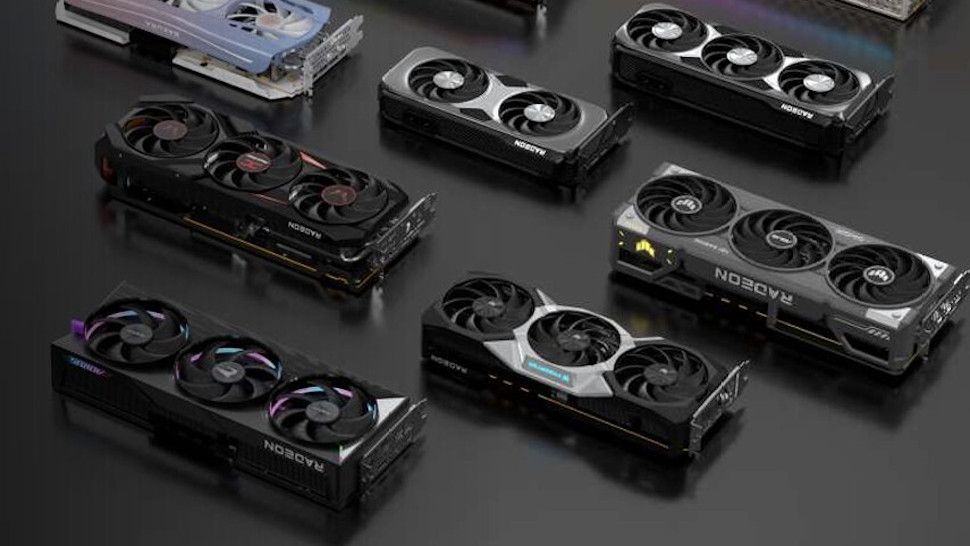
AMD RX 9070 GPU models

(Image credit: AMD / TechPowerup)

Analysis: An unfortunate sense of confusion and chaos

While AMD has not reneged on any of its promises, then, it very much feels like that to some PC gamers. Never mind the theoretically delayed release date, or full reveal, beyond this, why even mention the GPUs at all at CES 2025? Or at least AMD could have made it clear with that teaser that these cards weren’t imminent, which was very much the expectation. (Actually, most folks were, not unreasonably, expecting the full details and unveiling at CES, not a brief glimpse).

Whatever the case, the underlying problem here is that it feels like AMD is bouncing around its RDNA 4 plans, changing directions and generally causing confusion among would-be buyers of the best GPUs as 2025 kicks off. Regardless of what the actual truth is concerning what might be going on behind closed doors at Team Red, based on what we can see, and the rumors flying around, it all feels very chaotic.

We must remember that these are just rumors, but there have been a lot of sightings of RX 9070 models in boxes, ready to go on shelves, at retailers. VideoCardz, which spotted AMD’s post on X, further claims that reviewers have had sample RDNA 4 GPUs even before retailers had them shipped, and so we have all this info bubbling about, causing some bad feeling from gamers.

If stock really is in place now – as it appears to be, with a suitable handful of salt at the ready – why wait? This is where other chatter from behind the scenes comes into play about AMD having unfortunate problems with adjusting launch pricing, after being surprised by where Nvidia pitched its RTX 5070 models (which surprised us all, let’s be honest). And issues therein in dealing with adjusting MSRPs and compensating retailers, although all of that is very much deep into rumor territory.

The trouble is, not a lot else except this scenario makes much sense, and the pieces of the puzzle (curtailed launch, then mostly radio silence following that, save for those mentioned vague hints of a full reveal ‘soon’) seem to fit well enough.

This also leaves AMD in a very weird position. Instead of being able to get in, ahead of the RTX 5070 which turns up in February, Team Red is going to wait until those rival mid-range graphics cards have been out, maybe for a month, so there could be a lot of defectors turning to Team Green. Well, assuming RTX 5070 stock isn’t something of a washout, and that appears to be the main threat to douse Nvidia’s next-gen GPU fire – that there’ll only be a relative trickle of Blackwell graphics cards early in 2025.

I didn’t see the next-gen GPU wars panning out like this, that’s for sure, and maybe AMD really does need to put out a full spec reveal and pricing announcement, sooner rather than later, even if the RDNA 4 on-sale date is March, and this leaves a big gap. Assuming that those MSRPs have even been decided yet, as this would at least allow gamers to know what to expect, perhaps persuading them to not give up and just go RTX 5070 in February, instead of waiting for the RX 9070 GPUs.

However, already there are gamers saying that is forcing them away from a planned next-gen Radeon purchase to Nvidia Blackwell, though how much of that is an initial angry reaction, we shall have to see.

You might also like…

Source

Posted on

G.Skill DDR5 RAM is overclocked to a blazing 12,054MT/s with no liquid nitrogen needed – just air cooling

  • G.Skill Trident Z5 DDR5 was overclocked to 6027MHz or 12,054MT/s
  • That was achieved using just air cooling, with no need for liquid nitrogen
  • There is, however, a catch (of sorts) in how the CPU was configured

G.Skill has again been setting records with its DDR5 RAM, this time with a seriously impressive overclock that doesn’t use any exotic cooling.

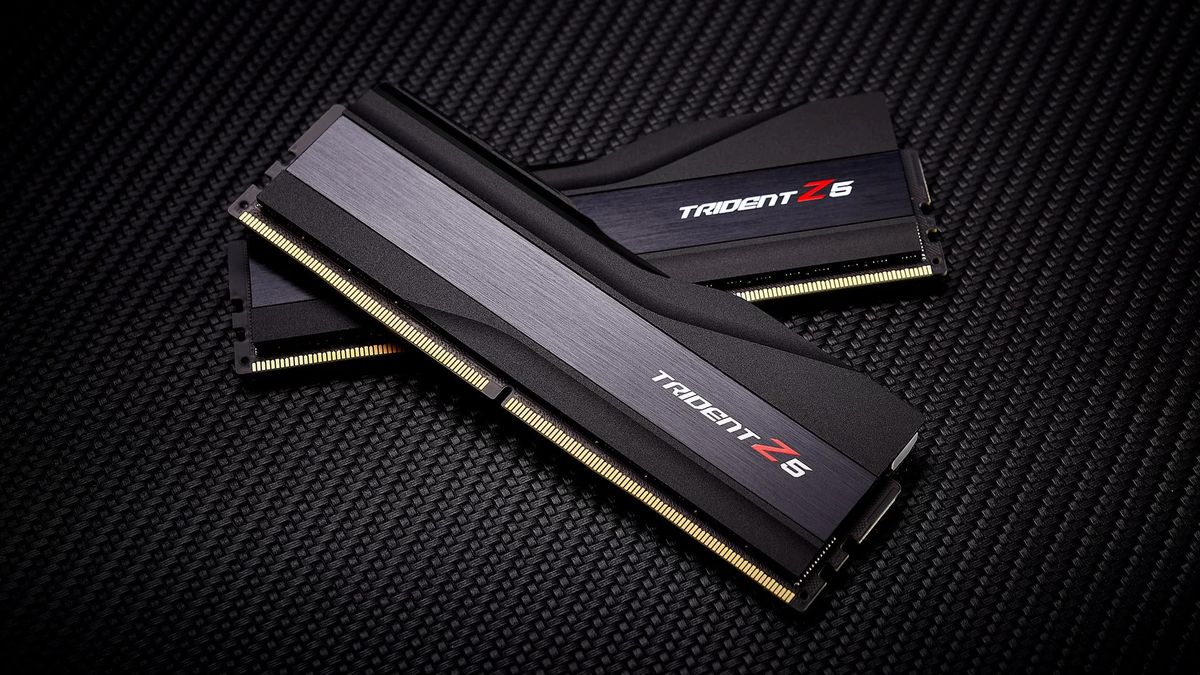
This feat was achieved using G.Skill Trident Z5 DDR5 by an expert overclocker from Indonesia, a certain ‘speed.fastest,’ who managed to crank the RAM up to 6027MHz (or 12,054MT/s).

That isn’t a DDR5 world record, going by HWBot’s rankings – in fact it’s 16th place in the global rankings (at the time of writing) – but all the faster speeds attained used the likes of liquid nitrogen cooling.

The key point here is that just air cooling was used, with a fan pointing at the memory (and water cooling for the CPU). In other words, this was a normal PC (well, almost – it was normal in terms of the components, but not the configuration, and we’ll come back to that in a moment).

As G.Skill tells us: “Previously, reaching the DDR5-12000 milestone required a more extreme cooling method, such as liquid nitrogen or dry ice. These incredible achievements with air cooling demonstrate the amazing overclock potential of modern hardware.”

The record was achieved with a single 24GB stick of RAM from a Trident Z5 DDR5-8000 CL38 2 x 24GB kit. Speed.fastest ran that memory module in a PC with an Intel Core Ultra 9 285K processor and an Asus ROG Maximus Z890 Apex motherboard.

A separate attempt from another overclocker, this time it was ‘saltycroissant’ based in Canada, reached 12,050MT/s, again on air cooling, with the same RAM module (in an ASRock Z890 Taichi OCF motherboard this time).

{ window.reliablePageLoad.then(() => { var componentContainer = document.querySelector(“#slice-container-newsletterForm-articleInbodyContent-gJE9GZ7RVqX7bu5vXtHvZ4”); if (componentContainer) { var data = {“layout”:”inbodyContent”,”header”:”Get daily insight, inspiration and deals in your inbox”,”tagline”:”Sign up for breaking news, reviews, opinion, top tech deals, and more.”,”formFooterText”:”By submitting your information you agree to the Terms & Conditions and Privacy Policy and are aged 16 or over.”,”successMessage”:{“body”:”Thank you for signing up. You will receive a confirmation email shortly.”},”failureMessage”:”There was a problem. Please refresh the page and try again.”,”method”:”POST”,”inputs”:[{“type”:”hidden”,”name”:”NAME”},{“type”:”email”,”name”:”MAIL”,”placeholder”:”Your Email Address”,”required”:true},{“type”:”hidden”,”name”:”NEWSLETTER_CODE”,”value”:”XTR-D”},{“type”:”hidden”,”name”:”LANG”,”value”:”EN”},{“type”:”hidden”,”name”:”SOURCE”,”value”:”60″},{“type”:”hidden”,”name”:”COUNTRY”},{“type”:”checkbox”,”name”:”CONTACT_OTHER_BRANDS”,”label”:{“text”:”Contact me with news and offers from other Future brands”}},{“type”:”checkbox”,”name”:”CONTACT_PARTNERS”,”label”:{“text”:”Receive email from us on behalf of our trusted partners or sponsors”}},{“type”:”submit”,”value”:”Sign me up”,”required”:true}],”endpoint”:”https://newsletter-subscribe.futureplc.com/v2/submission/submit”,”analytics”:[{“analyticsType”:”widgetViewed”}],”ariaLabels”:{}}; var triggerHydrate = function() { window.sliceComponents.newsletterForm.hydrate(data, componentContainer); } if (window.lazyObserveElement) { window.lazyObserveElement(componentContainer, triggerHydrate); } else { triggerHydrate(); } } }).catch(err => console.error(‘%c FTE ‘,’background: #9306F9; color: #ffffff’,’Hydration Script has failed for newsletterForm-articleInbodyContent-gJE9GZ7RVqX7bu5vXtHvZ4 Slice’, err)); }).catch(err => console.error(‘%c FTE ‘,’background: #9306F9; color: #ffffff’,’Externals script failed to load’, err)); ]]>

Sign up for breaking news, reviews, opinion, top tech deals, and more.

PC Gamer looking happy

(Image credit: Shutterstock)

Analysis: Still impractical, but very cool

In case you were thinking of trying this at home, or getting somewhere up towards this level, as VideoCardz points out, while this is air cooling and nothing fancy is used to juice up the DDR5 to incredible speeds, there is a catch. Namely that the CPU is running just a single core at 400MHz, which obviously wouldn’t be any good in any real-world use scenario.

So, while there’s no exotic cooling needed, this still remains an achievement which isn’t useful in a practical sense – save for showing the general overclocking potential of DDR5 in an Arrow Lake system, which remains seriously impressive. Team Blue certainly has a win on its hands in that respect, even if the Arrow Lake launch has been, shall we say, less than ideal (especially given the backdrop of previous-gen instability issues).

You may also like…

Source

Posted on

A possible Nvidia RTX 5090 prototype shows what might have been – an absolute monster with nearly 25K CUDA cores and an 800W TDP

The Nvidia GeForce RTX 5090 is already shaping up to be a beast of a GPU, given the specs unveiled at CES 2025, but if a new report is correct, it could have been even more of a monster.

A well-regarded rumor miller, HXL, shared a post on the Chinese hardware forum ChipHell that claims to show the PCB for an early prototype RTX 5090, along with some rather eye-watering specs well beyond those for the production model RTX 5090 due out next week.

According to the poster, the prototype was an engineering sample produced in mid-July 2024 and was sent to AIB partners to help them prepare their own versions of the GPU. How the user got their hand on the prototype – assuming it’s real, which is not at all certain, so take everything with a heap of salt – they did not say, but they did provide some of the supposed specs on the sample.

This includes the GPU SKU of GB202-200-A1, a CUDA core count of 24,576 (or about 13% more than the 21,760 in the production RTX 5090), a slightly higher clock speed of 2,100MHz base and 2,514MHz boost, and slightly faster GDDR7 memory modules clocked at 32Gbps (compared to the 28 Gbps chips in the production RTX 5090). These would have pushed the card’s memory bandwidth to 2TB/s rather than 1.79TB/s for the production 5090.

Given the CUDA core count, we can also extrapolate that there would have been 192 SMs for the GPU, so 192 ray tracing cores and 768 Tensor cores for AI workloads.

The most incredible spec, however, is the 800W TDP, which is almost double the power draw of the RTX 4090 and about 40% more than the RTX 5090. As such, it would require two 12VHPWR connectors to supply enough power for the card.

Could it be a Blackwell Titan RTX?

As our buddies over at Tom’s Hardware note, this card could also fit the specs of a Titan RTX card built on Blackwell or an RTX 5090 Ti. We haven’t seen a Titan RTX since the Turing era, though the argument can be made (and has) that the RTX 3090 and RTX 4090 graphics cards are the successors to the Titan RTX cards of old, and it’s definitely possible that an RTX 5090 TI could sport these kinds of increased specs.

{ window.reliablePageLoad.then(() => { var componentContainer = document.querySelector(“#slice-container-newsletterForm-articleInbodyContent-rAuEuY2ahPnWWV6NBDY2QL”); if (componentContainer) { var data = {“layout”:”inbodyContent”,”header”:”Get daily insight, inspiration and deals in your inbox”,”tagline”:”Sign up for breaking news, reviews, opinion, top tech deals, and more.”,”formFooterText”:”By submitting your information you agree to the Terms & Conditions and Privacy Policy and are aged 16 or over.”,”successMessage”:{“body”:”Thank you for signing up. You will receive a confirmation email shortly.”},”failureMessage”:”There was a problem. Please refresh the page and try again.”,”method”:”POST”,”inputs”:[{“type”:”hidden”,”name”:”NAME”},{“type”:”email”,”name”:”MAIL”,”placeholder”:”Your Email Address”,”required”:true},{“type”:”hidden”,”name”:”NEWSLETTER_CODE”,”value”:”XTR-D”},{“type”:”hidden”,”name”:”LANG”,”value”:”EN”},{“type”:”hidden”,”name”:”SOURCE”,”value”:”60″},{“type”:”hidden”,”name”:”COUNTRY”},{“type”:”checkbox”,”name”:”CONTACT_OTHER_BRANDS”,”label”:{“text”:”Contact me with news and offers from other Future brands”}},{“type”:”checkbox”,”name”:”CONTACT_PARTNERS”,”label”:{“text”:”Receive email from us on behalf of our trusted partners or sponsors”}},{“type”:”submit”,”value”:”Sign me up”,”required”:true}],”endpoint”:”https://newsletter-subscribe.futureplc.com/v2/submission/submit”,”analytics”:[{“analyticsType”:”widgetViewed”}],”ariaLabels”:{}}; var triggerHydrate = function() { window.sliceComponents.newsletterForm.hydrate(data, componentContainer); } if (window.lazyObserveElement) { window.lazyObserveElement(componentContainer, triggerHydrate); } else { triggerHydrate(); } } }).catch(err => console.error(‘%c FTE ‘,’background: #9306F9; color: #ffffff’,’Hydration Script has failed for newsletterForm-articleInbodyContent-rAuEuY2ahPnWWV6NBDY2QL Slice’, err)); }).catch(err => console.error(‘%c FTE ‘,’background: #9306F9; color: #ffffff’,’Externals script failed to load’, err)); ]]>

Sign up for breaking news, reviews, opinion, top tech deals, and more.

Personally, if the GPU posted to ChipHell is legitimately an early engineering sample of the RTX 5090 that has made its way to production, I think it is simply that: a sample. It’d be analogous to a first- or second-draft GPU before refining the architecture down to the RTX 5090 that will go on sale next week.

While it’s interesting to see some behind-the-scenes engineering compared to the actual production model, ultimately, it probably isn’t much more than that.

You might also like…

Source