Posted on

Nvidia RTX 5090 Founders Edition is possibly the best-looking GPU I’ve seen in a while

Nvidia‘s RTX 5090 Founders Edition GPU is almost here, promising to step performance up across the board from the previous generation’s RTX 4090 – fortunately, we’ve got our hands on it with an early unboxing. While we won’t be able to share more about its performance with the new Multi Frame Generation feature until the January 24 review embargo lifts, today we’re able to unveil its box and everything inside.

RTX 5090’s Box & Power Connector

RTX 5090 FE unboxing

Now, tell me that box doesn’t at least remind you of the PS1 in some way… I’m waiting. (Image credit: Future)

Starting with the box itself, Team Green has changed the packaging, opting for a cool retro design (at least in my eyes) – and I love the look, which reminds me of Sony‘s PlayStation 1 with its grey color scheme for the paperboard design protecting the GPU. This is a huge contrast to the RTX 4090’s packaging, which had a much bigger box catering to the GPU’s large form factor size, and that’s changed here (something I’ll dive into later).

Whilst the box itself is a purely cosmetic change that will likely end up in the garbage of many buyers, the new power connector deserves some attention here – the previous adapter was an issue for myself and many other PC gamers attempting to shut their case or at least maintain an appealing build, with its short and stiff design, while also posing a potential fire hazard based on user reports.

RTX 5090 FE unboxing gif

No more stiff power connectors… I’m forever grateful Nvidia (Image credit: Future)

I had similar troubles with the Asus RTX 4080 Super TUF OC Edition, as I couldn’t close my PC case’s side panel without excessively bending the connector – this eventually forced my hand to buy a more flexible Seasonic 12VHPWR Cable so I could finally shut the case.

With the new power connector, we hopefully won’t need to worry about this, as Nvidia has taken extra care regarding the matter by introducing additional sense wires (which was previously rumored). This should improve and secure the 8-pin connection, while also being much longer and more flexible.

Nvidia RTX 5090 Founders Edition GPU

RTX 5090 FE unboxing gif

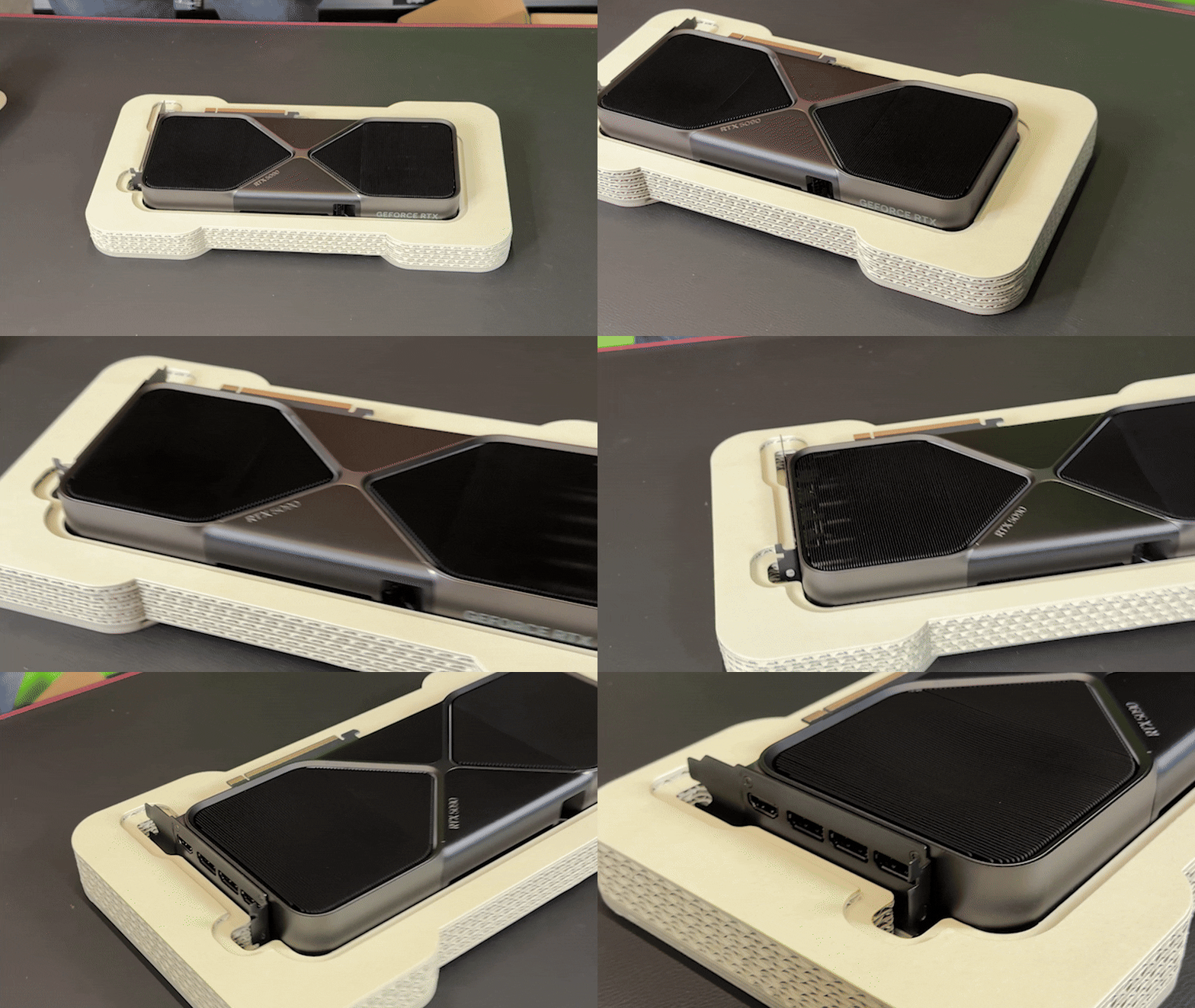
This paperboard packaging is 100% recyclable, which is a nice plus – though as you can see here, it’s a little difficult to get inside! (Image credit: Future)

Now moving on to what you came here for – the RTX 5090 Founders Edition in all its glory is much sleeker with its new design. Team Green has paid attention to those who prefer slim PC builds, as this is much smaller than the previous generation’s flagship GPU – this was evident with the new box used to house the new dual-slot GPU compared to the 4090’s triple-slot design.

While some rumors hinted at the 5090 being much louder compared to previous GPUs, some videos have already been enough to debunk it such as PC Centric’s CES video, showcasing just how quiet it is under heavy load in Cyberpunk 2077.

{ window.reliablePageLoad.then(() => { var componentContainer = document.querySelector(“#slice-container-newsletterForm-articleInbodyContent-UVs9mSsCSbC8LuUZJXtS5i”); if (componentContainer) { var data = {“layout”:”inbodyContent”,”header”:”Get daily insight, inspiration and deals in your inbox”,”tagline”:”Sign up for breaking news, reviews, opinion, top tech deals, and more.”,”formFooterText”:”By submitting your information you agree to the Terms & Conditions and Privacy Policy and are aged 16 or over.”,”successMessage”:{“body”:”Thank you for signing up. You will receive a confirmation email shortly.”},”failureMessage”:”There was a problem. Please refresh the page and try again.”,”method”:”POST”,”inputs”:[{“type”:”hidden”,”name”:”NAME”},{“type”:”email”,”name”:”MAIL”,”placeholder”:”Your Email Address”,”required”:true},{“type”:”hidden”,”name”:”NEWSLETTER_CODE”,”value”:”XTR-D”},{“type”:”hidden”,”name”:”LANG”,”value”:”EN”},{“type”:”hidden”,”name”:”SOURCE”,”value”:”60″},{“type”:”hidden”,”name”:”COUNTRY”},{“type”:”checkbox”,”name”:”CONTACT_OTHER_BRANDS”,”label”:{“text”:”Contact me with news and offers from other Future brands”}},{“type”:”checkbox”,”name”:”CONTACT_PARTNERS”,”label”:{“text”:”Receive email from us on behalf of our trusted partners or sponsors”}},{“type”:”submit”,”value”:”Sign me up”,”required”:true}],”endpoint”:”https://newsletter-subscribe.futureplc.com/v2/submission/submit”,”analytics”:[{“analyticsType”:”widgetViewed”}],”ariaLabels”:{}}; var triggerHydrate = function() { window.sliceComponents.newsletterForm.hydrate(data, componentContainer); } if (window.lazyObserveElement) { window.lazyObserveElement(componentContainer, triggerHydrate); } else { triggerHydrate(); } } }).catch(err => console.error(‘%c FTE ‘,’background: #9306F9; color: #ffffff’,’Hydration Script has failed for newsletterForm-articleInbodyContent-UVs9mSsCSbC8LuUZJXtS5i Slice’, err)); }).catch(err => console.error(‘%c FTE ‘,’background: #9306F9; color: #ffffff’,’Externals script failed to load’, err)); ]]>

Sign up for breaking news, reviews, opinion, top tech deals, and more.

RTX 5090 FE gif

While it’s a lot smaller than the previous RTX 4090 FE, the 5090 FE is still a chunky card. (Image credit: Future)

While the new power connector I mentioned earlier will surely help many PC builders, Nvidia has taken an extra step to alleviate any potential issues by setting the power connector at an angle to avoid cables pushing up against side panels.

It’s insane to imagine that a GPU this small packs greater power than the RTX 4090, so I must say I’m impressed with Nvidia’s efforts here. There’s still a lot left to be unveiled in terms of the power consumption leap from the previous 450W to 575W (with rumors suggesting that it’s actually 600W) and whether an upgrade to this GPU will be worthwhile – but from what I’ve seen so far with the unboxing, it’s certainly so far so good from Team Green.


You may also like…

Source

Posted on

The Data Bill: Considering datacentres’ hunger for power

As the Data Bill continues its legislative journey through the House of Lords, it’s important to also consider where all that data “lives”, including what it costs to house it.

Datacentres, until relatively recently, were a bit of a niche interest, known little outside the technology world. Now, if not everywhere, they are certainly moving into many a community – potentially one near you. Of the many issues we should consider, surely at the top of the list must be how such centres are powered and where that energy is sourced?

For this reason, I put down an amendment to the Data Bill, which says: “Consultation: datacentre power usage. On the day on which this Act is passed, the secretary of state must launch a consultation on the implications of the provisions in this Act for the power usage and energy efficiency of datacentres.”

As I said in the House of Lords debate, “It seems at least curious to have a Data Bill without talking about datacentres in terms of their power usage, their environmental impact…’

This is, rightly, a growing concern. A recent edition of the MIT Technology Review highlighted, “AI emissions [are] set to skyrocket even further”. This “skyrocketing” is seen in a trebling of datacentre emissions since 2018.

The MIT article is based upon a new paper, from teams at the Harvard T.H. Chan School of Public Health and UCLA Fielding School of Public Health, whose research examined 2132 datacentres in the US – representing 78% of all facilities in the country.

It is important for all of us to remember, it’s not just the training of these vast AI models that, particularly in the US, all too often burns coal and fossil fuels – every time we ask a query of any of the models, the power draws on.

Is data growth sustainable?

AI models are moving from mere language to video, music and more and the so need for power more than surges. Also, it’s not just AI, datacentres are the bedrock of so much of what we do, our pictures in the cloud or our work website, all needing that datacentre power.

In the US so much of this power comes from fossil fuels, not least coal due to the location of the centres and that fuel’s ability to deliver to demand all hours, in contrast to renewables. Is any of that sustainable though – both environmentally and energy wise? 

We have a real opportunity in the UK to lead when it comes to datacentre technologies. If the government chooses to, we could also take a positive role when it comes to the power usage, the sustainability and environmental position of these increasingly critical national and global infrastructure.

If the government wants to lead when it comes to green energy, the datacentre question seems very much to be at the centre

It’s far more than a technology question or even simply environmental – in so many senses, it is existential. In short, how do we power our lives? Even if we can generate the renewable energy, there are questions around how to store, how to deploy, how to even get it onto the grid in the first place with current connection constraints.

If the government wants to lead when it comes to green energy, if it wants to lead when it comes to new technologies, the datacentre question seems very much to be, well, at the centre of it.

Currently, power usage effectiveness (PUE) is the accepted measure for datacentre energy efficiency. I’m interested in views as to the effectiveness of this standard. I asked the government, during the debate, about its view of the current PUE standard. Is it something that gives the right measure of confidence to consumers?’

The government promised to write to me with a detailed response on all these issues. It will be good to understand what approach they intend to take on such an important environmental, economic, as well as technological matter. 

In conclusion, it’s abundantly clear that data is far from the “new oil” – rather, it requires multiple supplies of old oil to fuel its flow. We may well, one day, be able to power datacentres through nuclear options and sustainable sources, but even so questions must be asked as to the opportunity cost of using all of that resource against how it may otherwise be deployed. 

Data and the technologies it underpins and enables has such possibilities for our economic, social, and common good. But, as ever, it’s in our human hands – the discourse we drive, the decisions we take and the societies we enable will determine this. Ultimately, positively – we have the power.

Source

Posted on

Nvidia RTX 5090 and 5080 GPU stock shortage rumors are piling high – and now there’s a suggestion the RTX 5070 could be delayed

  • Another rumor hints that Nvidia may not have much stock for the release of its RTX 5090 and 5080 GPUs
  • There are worries about hiked pricing at the launch of the next-gen GPUs, too
  • A further possibility aired is that the RTX 5070 might be delayed until March

More worrying rumors have emerged about Nvidia’s next-gen GPUs, casting doubt on stock levels (again) and also the pricing of the GeForce RTX 5090 and 5080 – and the launch timing of RTX 5070 models, too.

In a report (hat tip to Wccftech) on AMD’s RX 9070 launch (now confirmed for March), Chinese tech site Benchlife also touches on Nvidia’s incoming Blackwell graphics cards, telling us that the RTX 5090 and 5080 will be short on supply. Apparently this is “mainly due to some communication issues between Nvidia and AIC partners” (AIC stands for add-in card, meaning graphics card makers).

Another issue is the Chinese New Year (and related manufacturing slowdowns, due to holidays and factories being shut), but the better news is that the situation is expected to improve in February.

Benchlife also claims that the RTX 5070 Ti will appear in mid-to-late February – so far, Nvidia has only said February for both 5070 models, and we don’t have a firm date, but it seems that it could be later, rather than sooner.

And then the report drops something of a bombshell in mentioning that the RTX 5070 may not be available until early March.

Wccftech also flags a report from UDN (also in China, via Dan Nystedt, a financial analyst on X), which underlines the stock woes around the initial Blackwell GPUs (but appears to be mostly based on a previous video from a YouTube leaker). However, this article also highlights that consumers might have to pay increased prices for Blackwell GPUs initially, even to the tune of them being doubled.

That’s in Asia, of course, so may not reflect the situation elsewhere – and indeed it may be completely off the mark full-stop. I’d hope so, and it doesn’t seem realistic that graphics cards could be selling for double their MSRP – well, at least not at retailers (though maybe on auction sites where scalpers will sell their ill-gotten gains).

{ window.reliablePageLoad.then(() => { var componentContainer = document.querySelector(“#slice-container-newsletterForm-articleInbodyContent-RU39d7LPiWDnzCJNKWZMDd”); if (componentContainer) { var data = {“layout”:”inbodyContent”,”header”:”Get daily insight, inspiration and deals in your inbox”,”tagline”:”Sign up for breaking news, reviews, opinion, top tech deals, and more.”,”formFooterText”:”By submitting your information you agree to the Terms & Conditions and Privacy Policy and are aged 16 or over.”,”successMessage”:{“body”:”Thank you for signing up. You will receive a confirmation email shortly.”},”failureMessage”:”There was a problem. Please refresh the page and try again.”,”method”:”POST”,”inputs”:[{“type”:”hidden”,”name”:”NAME”},{“type”:”email”,”name”:”MAIL”,”placeholder”:”Your Email Address”,”required”:true},{“type”:”hidden”,”name”:”NEWSLETTER_CODE”,”value”:”XTR-D”},{“type”:”hidden”,”name”:”LANG”,”value”:”EN”},{“type”:”hidden”,”name”:”SOURCE”,”value”:”60″},{“type”:”hidden”,”name”:”COUNTRY”},{“type”:”checkbox”,”name”:”CONTACT_OTHER_BRANDS”,”label”:{“text”:”Contact me with news and offers from other Future brands”}},{“type”:”checkbox”,”name”:”CONTACT_PARTNERS”,”label”:{“text”:”Receive email from us on behalf of our trusted partners or sponsors”}},{“type”:”submit”,”value”:”Sign me up”,”required”:true}],”endpoint”:”https://newsletter-subscribe.futureplc.com/v2/submission/submit”,”analytics”:[{“analyticsType”:”widgetViewed”}],”ariaLabels”:{}}; var triggerHydrate = function() { window.sliceComponents.newsletterForm.hydrate(data, componentContainer); } if (window.lazyObserveElement) { window.lazyObserveElement(componentContainer, triggerHydrate); } else { triggerHydrate(); } } }).catch(err => console.error(‘%c FTE ‘,’background: #9306F9; color: #ffffff’,’Hydration Script has failed for newsletterForm-articleInbodyContent-RU39d7LPiWDnzCJNKWZMDd Slice’, err)); }).catch(err => console.error(‘%c FTE ‘,’background: #9306F9; color: #ffffff’,’Externals script failed to load’, err)); ]]>

Sign up for breaking news, reviews, opinion, top tech deals, and more.

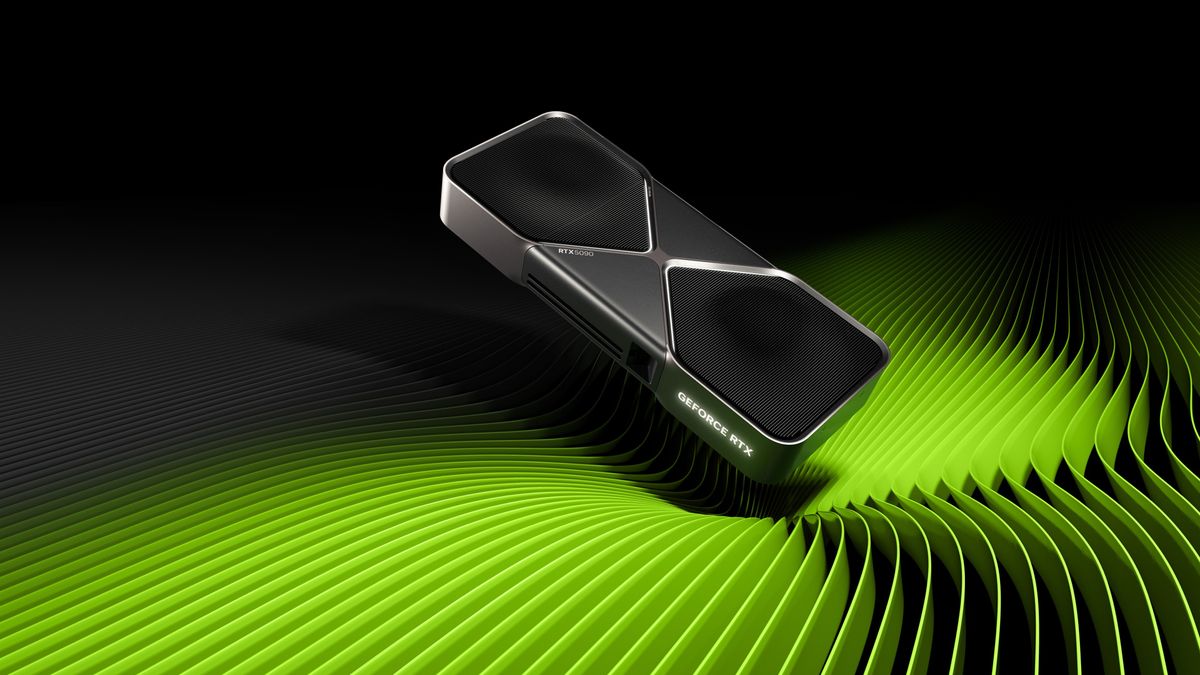
An Nvidia RTX 5000 series graphics card against a green and black background

(Image credit: Nvidia)

Analysis: A touch of hysteria?

On the one hand, the sheer number of concerns being raised about RTX 5000 stock and Nvidia’s next-gen launch has got to be a worry. Although on the other, I’m tempted to say it feels like a touch of hysteria (and/or limelight grabbing) is creeping in at this point.

There’s not usually smoke without fire, though, as they say, and given the widespread chatter about worryingly low initial stock levels for the RTX 5090 and 5080, I’m bracing myself for this to be the case, at this stage.

There’s something even worse to fret about here, of course, for the mainstream GPU buyers who’ll be looking at a mid-range graphics card, and not the much pricier Blackwell models – and that’s this sudden theory that the RTX 5070 could be delayed, and not make the promised February launch.

This seems unlikely, though, that Nvidia would break that promise – although there’s always the prospect of a so-called ‘paper launch’ with hardly any boards released initially. With all the negativity flying around regarding stock levels, this idea might be easier to believe.

A further thought is that this could also explain why AMD has just announced that its RX 9070 models won’t launch until March, much later than expected. Maybe Team Red got wind of rumors from distributors relating to Nvidia’s launch plans, and knows that there’s no rush to get its RDNA 4 mid-range GPUs to market before March – if the rival RTX 5070 isn’t going to be around in any quantity.

Take all this with a wheelbarrow full of salt, and remember that AMD purportedly has its own issues to sort out around RX 9070 pricing. For now, I’m not going to buy these suggestions of an RTX 5070 delay – at least not until we hear this from other corners of the rumor mill.

You might also like…

Source

Posted on

Microsoft 365 price hike: Are you forced to pay more even if you don’t want AI?

If you thought Microsoft’s forcing Windows 10 users to upgrade to Windows 11 to keep using Microsoft 365 Office apps was bad, you haven’t seen anything yet. Microsoft will further annoy many of its customers by embedding Copilot AI into all Office apps and charging an extra $3 per month for it. Microsoft announced the price hike for the Office 365 apps in a blog post explaining the changes.

Yes, AI development is expensive, and I absolutely agree that we, as end users, have to pay for access. That’s why I’m a ChatGPT Plus subscriber and won’t ditch that $20/month subscription anytime soon. If anything, I’m ready to pay for additional AI products that might improve aspects of my life. Take Apple Intelligence; I’ll keep buying expensive iPhones, iPads, and Macs, which will pay for Apple’s AI.

However, as a Microsoft 365 subscriber who has no interest in Copilot AI at this point, I’m not too thrilled about potentially having to shell out an extra $3 per month for my Family subscription. AI should be optional rather than mandatory in all apps. So, is there a way to keep your current subscription price if you’re like me and you don’t want Copilot AI? Well, it’s complicated.

Microsoft is forcing Copilot AI on millions of users

Microsoft 365 Personal and Family subscribers will get Copilot AI and a new Designer AI image generation app in most markets. This will lead to a price hike of $3 per month in the US, Microsoft’s first price hike for the productivity bundle subscription in 12 years. You’ll have to check your local Microsoft 365 portal to see the price increase in your local market.

Tech. Entertainment. Science. Your inbox.

Sign up for the most interesting tech & entertainment news out there.

By signing up, I agree to the Terms of Use and have reviewed the Privacy Notice.

Microsoft says that most of its 84 million consumer subscribers will have access to Copilot in Office apps whether they want it or not.

The new Copilot AI integration is separate from the Microsoft Copilot Pro subscription, which costs $20 per month. Copilot will be available in Word, Excel, PowerPoint, Outlook, OneNote, and the new Designer app.

To use the latter, Microsoft 365 Personal and Family subscribers will use AI credits that come with their subscription. The monthly allotment of AI credits applies to all Office apps and should be “enough for most subscribers.”

Let’s appreciate the good things

Microsoft knows that Copilot shouldn’t always be active in Office apps, so it’s giving users the ability to turn it off. That’s good news for students who rely on Office apps for taking notes during class.

Also important here is Microsoft’s commitment to privacy. I might not like the price hike because I don’t plan to use Copilot AI in Office apps anytime soon, but I appreciate the fact that Microsoft will not use any Office app AI data to train its models:

To protect your privacy, we do not use your prompts, responses, or file content (such as Word documents or Excel spreadsheets) when you use Copilot in the Microsoft 365 apps to train our foundation models.

You can opt out, for now

Microsoft is aware that not all Office app users will want access to Copilot AI, so there are ways to opt out and keep your current subscription price. That’s another thing I can appreciate. But there are big caveats here.

First, you have to be an existing Microsoft 365 subscriber to opt out of the Copilot AI price hike. Second, you must enable recurring billing to avoid the price increase. Those who don’t have it enabled, such as myself, won’t be able to stick with the non-AI versions of the apps.

Users with recurring billing can switch to a Basic plan, or they can keep their current plan as it exists today by switching to the new Personal Classic or Family Classic plans “for a limited time.” Once these plan options disappear, you’ll only have access to Copilot AI plans.

In other words, you’ll still be forced to pay for AI you might not want if you miss the opportunity to grab one of these limited-time plans.

Finally, there’s another big issue with the non-AI plans here. Microsoft says it will maintain the Basic and Classic plans “as they exist today,” but you risk not getting new features. For “certain new innovations and features you’ll need a Microsoft 365 Personal and Family subscription,” Microsoft says. Therefore, you’ll need to pay that extra $3 per month, or whatever it converts to in your local currency.

Should you cancel Microsoft 365?

Don’t get me wrong, I don’t think access to Copilot AI is a bad thing. It’s certainly a great tool and much more useful than, say, AI chatbots ruining WhatsApp. As you can see in the examples above, Copilot can be quite helpful in all sorts of instances using Office apps.

However, it should be up to the customer to choose to use AI. There’s no reason for Microsoft not to continue supporting non-AI Office apps in the future other than greed. That’s what it looks like, at least.

Also, since I’ve defended Netflix price hikes in the past, I’d do the same with Microsoft 365 prices if they were to go up.

My first reaction wasn’t to cancel my subscription or opt for the non-Copilot Office experience. I wanted to ask family members in the group if they wanted any built-in AI access. But I can’t even do that, considering that Copilot AI will only be available to me, the subscription owner.

Source

Posted on

AMD CES 2025 Keynote live blog: as it happened

Refresh

2025-01-06T18:40:08.666Z

Good morning folks. We’re queueing up outside the South Seas Ballroom at Mandalay Bay, awaiting the start of AMD’s CES 2025 keynote, and it’s sure to be a packed 45 minutes to an hour. I’ll be here bringing you all the latest news as it breaks, as well as my thoughts on what’s being announced.

I’ll keep you updated once I’m in my seat, so stay tuned!

2025-01-06T18:58:45.541Z

The stage at AMD's CES 2025 press conference

(Image credit: Future / John Loeffler)

We’re five minutes away from the start of AMD’s press conference, so it’s time to settle in.

2025-01-06T19:03:53.280Z

AMD Senior VP Jack Huynh is taking the stage now, No Lisa Su this time.

2025-01-06T19:06:21.698Z

The AMD Ryzen 9 9950X3D and 9900X3D are up first.

2025-01-06T19:09:16.673Z

Slides from the AMD CES 2025 keynote

(Image credit: Future / John Loeffler)
Not to brag or anything…

2025-01-06T19:11:58.810Z

An AMD executive presenting at CES 2025

(Image credit: Future / John Loeffler)

Ryzen 9 9950X3D and 9900X3D coming in March 2025.

2025-01-06T19:13:32.508Z

AMD Ryzen 9 9955HX3D coming to laptops, along with a pair of non-X3D HX chips (I missed the model names of the other two, I’ll grab those in a sec).

2025-01-06T19:15:08.368Z

An AMD executive presenting at CES 2025

(Image credit: Future / John Loeffler)

AMD’s SVP of Client Business Rahul Tikoo is on stage now to talk about AI PCs.

New Ryzen AI 300 chips, targeting the midrange user with Ryzen AI 7 350 and Ryzen 5 340.

2025-01-06T19:25:28.725Z

Image 1 of 4

A slide showing the new AMD Ryzen AI Max skus(Image credit: Future / John Loeffler)Slides showing Ryzen AI Max benchmarks at CES 2025(Image credit: Future / John Loeffler)Slides showing Ryzen AI Max benchmarks at CES 2025(Image credit: Future / John Loeffler)Slides showing Ryzen AI Max benchmarks at CES 2025(Image credit: Future / John Loeffler)

Now we’re moving on to the new Ryzen AI Max series, which are workstation CPUs with up to 40 RDNA 3.5 compute units, which is a hell of a lot for an integrated GPU. Up to 50 TOPS XDNA 2 NPU, and up to 256GB/s memory bandwidth.

2025-01-06T19:27:19.802Z

Ok, so we’re on to enterprise products, namely AMD Epyc and AMD Instinct data center CPU and GPUs.

2025-01-06T19:28:02.748Z

We’ve also got some discussion of AMD Ryzen AI 300 Pro.

2025-01-06T19:30:49.763Z

I have no idea what TCO means, but Shell says AMD Ryzen CPUs offer the best, so there’s that.

2025-01-06T19:32:27.820Z

Now PC manufacturer executives are singing AMD’s praises, including HP, Lenovo, and Asus.

2025-01-06T19:38:46.234Z

An AMD and Dell Executive talking about the new Dell Pro portfolio at CES 2025

(Image credit: Future / John Loeffler)

So Dell is now on stage with AMD talking about the first Dell professional PCs and laptops to feature AMD chips. Oh, and Dell is completely rebranding its entire product portfolio, but that’s for another news story.

2025-01-06T19:41:09.567Z

Everyone keeps talking about the ‘AI revolution’, but honestly, I’ve yet to see anything from AI PCs so far that is truly revolutionary. I’m sure its coming at some point in the future, but the future isn’t here just yet.

2025-01-06T19:47:13.070Z

OK, so the press conference has wrapped, and there was no discussion of AMD Radeon graphics cards, as we were expecting, but we know they’re coming so there might be more to come on that over the next few days.

For now, though, the big news is the new Ryzen 9 9950X3D and Ryzen 9 9900X3D chips due out in March, as well as new high-performance mobile ships for both enthusiasts, gamers, and enterprise users.

There’ll be more from me today, but for now, we have to clear out of the ballroom, so stay tuned for more from us here at CES 2025.

Source

Posted on

Saudi Arabia calls for humanitarian AI after tightening screws on rights protesters

Saudi Arabia (KSA) has called for a global agreement to govern artificial intelligence (AI) with humanitarian and democratic values, earning the incredulity of rights activists campaigning to free people imprisoned for decades for criticising the Gulf state on social media. 

Using the diplomatic honour the United Nations (UN) bestowed on it by allowing it to host the annual UN Internet Governance Forum (IGF) in Riyadh, its capital, in December 2024, the oppressive state opened the vast meeting by calling for a global agreement to make AI accountable, transparent and fair, and ensure it was used to increase the well-being of all people.

States should make AI trustworthy as well, it said, by creating a global digital identity system, putting it at the core of AI, and taking steps to make sure everyone in the world used it. 

Groups campaigning for digital, political and civil liberties said it was hypocrisy for KSA to host IGF 2024, a primary theme of which was human rights, while it continued to prosecute people, imprison them for decades, and “forcibly disappear and intimidate them into silence for expressing themselves on social media”.

While making IGF host preparations in September last year, Saudi Arabia commuted to 30 years imprisonment a death sentence it placed on Saudi citizen Nasser al-Ghamdi under a terrorism law for writing X posts criticising the regime, according to Amnesty International.

Saudi Arabia is among the 20 most oppressive countries in the world, alongside Myanmar, Belarus and Somalia – and worse even than Iran, Russia and China – according to data compiled by campaign group Freedom House. Its repressions of internet users make it the eighth-worst country for “internet freedom” among 72 nations whose digital rights the organisation studied.

Freedom House accused it and other autocratic regimes of wrangling the chair of international fora to “normalise” their extreme surveillance, censorship and prosecution of dissent. They used such positions to design international treaties that would bring “global … internet governance closer to their own authoritarian worldviews”. KSA was using IGF to do this, and to “sanitise its track record”, by hosting IGF, the campaigner group said in a statement on the forum’s eve.

Riyadh AI Declaration

KSA opened IGF with a diplomatic showpiece it dubbed the Riyadh AI Declaration, in which it said it wanted to build “a world in which technology is equitable and accessible to all”, in which people were “empowered”, nobody was excluded, and discrimination, bullying and abuse were banished online. 

It called for a global agreement to stop AI being used to spread misinformation and disinformation, “especially on social media”, where it was already rife. A global digital ID system would meanwhile make sure AI worked “in the public interest”. It wanted a global consensus on ethics that protected people from “unauthorised surveillance” powered by AI, and guarded their privacy. 

KSA’s calls for equitable access to AI included a demand that the highly contested, valuable and scarce resources that power AI – its data, compute resources and algorithms – were distributed equally among all nations, echoing statements calling for a global redistribution of wealth between rich and poor nations by the autocrat-led Brics group of nations, with which it has been flirting. 

The humanitarian aspect of the Gulf state’s stance conflicted with accounts of campaigners, who said many were afraid to attend the conference for fear of being detained and prosecuted. 

“Saudi Arabia uses technology to maintain power, not to benefit humanity,” said Duaa Dhainy, a researcher at the European Saudi Organization for Human Rights, who was aghast at the Saudi Declaration. 

“We fear [KSA] will use AI to pursue human rights defenders,” she said. “They have been using many [software] programs to spy on activists. We are afraid of using technology. So, how can they call for this agreement?

“It is a country where there is no transparency at all, where you can be punished just for asking for information to be published,” said Dhainy. “In Saudi Arabia, transparency is from the government’s perspective. When we ask for numbers of people on death row, we get no response. Human rights defenders can be arrested when they ask for information, so how can [KSA] ask for transparency?”

Calls for political freedom

Many rights campaigners did attend the conference and held meetings addressing repression in the Middle East and Africa, using their platform to cite state abuse and call for political freedom. Some said it was the first time they had been in KSA for a decade. But protests emerged during the event of sessions being hacked as they were streamed to audiences online, and of Saudi authorities censoring campaigners. 

Dana Ahmed, a researcher at Amnesty, said flyers publicising the plight of Manahel al-Otaibi, who KSA jailed in January for 11 years under terrorist charges for tweeting on women’s rights and posting photos of herself not wearing traditional Arabic dress, were confiscated from its IGF exhibition booth. Likewise, leaflets publicising the similar treatment of Neth Nahara, a mother who Angola jailed for criticising its president on TikTok. 

Campaigners used the event to publicise others they said were victims of Saudi digital oppression, including Osama Khalid, jailed for 32 years in 2020 for “violating public morals” by writing on Wikipedia; Salma al-Shehab, jailed for 34 years in 2021 for social media posts on women’s rights; and Abdulrahman al-Sadhan, who they said KSA disappeared in 2018 after detaining and sentencing him to 20 years for posting satirical tweets. 

“They took over the Zoom session and started streaming adult content,” said Adeboye Adegokem, in a message relayed to Computer Weekly by African rights group Paradigm Initiative, who he represented on the panel. 

“It happened two times. We had to end the session abruptly as it seems [the] tech team couldn’t keep them out. [It was] concerning because it happened after someone mentioned the journalist’s case,” he wrote, apparently in reference to Washington Post journalist Jamal Khashoggi, who Saudi agents murdered brutally in 2018.

Lina al-Hathloul, head of advocacy at Saudi rights group ALQST, said the conference platform gave her the opportunity to speak in KSA for the first time since 2018, when her sister Loujain was arrested, tortured, imprisoned for three years, and put under a travel ban that has been extended to her whole family, because she campaigned for women to have a right to travel. But she spoke via video link for fear she would be arrested if she went in person, she said. 

“So many things happened to others that I cannot speak about yet because they are still inside and it’s not good for their safety,” said Al-Hathloul. 

The UN Secretariat told Computer Weekly it removed the video because it believed it violated a rule in the IFG code of conduct that forbade “personal or ad hominem attacks”. “The IGF manages its records according to technical needs and internal mechanisms, not on the advice of a particular host government,” a spokeswoman for the UN Secretariat told Computer Weekly by email.

She confirmed Adegokemn’s account of the IGF session that was hacked with pornography, but said the interruption caused by this “Zoom bombing” was “momentary” and “promptly neutralised”. Preventing this was impossible because IGF meetings were left open to online participation. One other session suffered a minor interruption. 

Saudi Arabia had not tried to get other countries at the UN to back its AI Declaration, she said. The UN Secretary General had no intention of backing it either. 

The UN had been justified in hosting IGF 2024 in Saudi Arabia, it said, because it demonstrated its belief that to wrest a global consensus on digital governance based on human rights, as it aimed to do, required constructive dialogue “with all countries” as equal stakeholders, said a UN spokesman, also by email.

Saudi authorities were not prepared to comment.

Source

Posted on

Nvidia CES 2025 Keynote live blog: all the latest on the RTX 5000 reveal and more

Refresh

2025-01-07T02:19:22.946Z

OK folks, we’re coming up on the 15 minutes from the start of Nvidia’s CES 2025 keynote, where CEO Jensen Huang will take the state at Madalay Bay’s Michelob arena. We’re expecting some major news tonight, so for those who’ve been waiting to hear about Nvidia’s next-gen consumer graphics cards, you don’t much longer to wait.

And if you really want to hear all about data center AI and Omniverse stuff, I’m sure Jensen will get around to those as well.

2025-01-07T02:29:54.366Z

The biggest thing I’m expecting tonight is Nvidia’s GeForce RTX 5090, RTX 5080, and possibly the RTX 5070 Ti.

Following up Nvidia’s Lovelace GPUs, the Blackwell-based RTX 5000 series is expected to be substantially more powerful, with the rumor mill putting the RTX 5080 around 10% faster than the RTX 4090, currently the best graphics card on the consumer market.

That, of course, would put the RTX 5090 in a class entirely on its own, and there’s no telling where its performance will ultimately end up. That said, if speculation is on the mark, it should feature 32GB GDDR7 VRAM with a memory bandwidth of 1.52TB/s on a 512-bit memory bus, making it truly the world’s first 8K gaming graphics card.

2025-01-07T02:34:51.483Z

OK, here we go.

2025-01-07T02:35:41.129Z

OK, I DO want an exoskeleton. Those things look cool as hell.

2025-01-07T02:40:19.662Z

Gary Shapiro at Nvidia's CES 2025 keynote

(Image credit: Nvidia)

CTA President Gary Shapiro is introducing Jensen Huang.

2025-01-07T02:40:57.948Z

OK, I unironically love ‘Never gonna give you up.’ I used to rollerskate to that song as a kid.

2025-01-07T02:42:45.386Z

OK, the Nvidia segment of the keynote is about to begin, but it sure is taking a while. Nvidia is normally quicker to launch than this.

2025-01-07T02:43:44.651Z

OK, NOW we’re kicking things off.

2025-01-07T02:46:00.230Z

Tokens, tokens, tokens. It’s no surprise that we’re just jumping right into AI, but yeah, it’s remarkable how much Nvidia has transformed almost overnight.

2025-01-07T02:47:17.648Z

Nvidia CEO Jensen Huang

(Image credit: Nvidia)

LOL, Jensen’s jacket is bedazzled.

2025-01-07T02:50:02.565Z

That was a very short Virtua Fighter demo.

2025-01-07T02:53:25.839Z

OK, the first mention of GeForce, so here we go.

2025-01-07T02:57:25.216Z

That was a pretty impressive demo.

2025-01-07T02:59:37.544Z

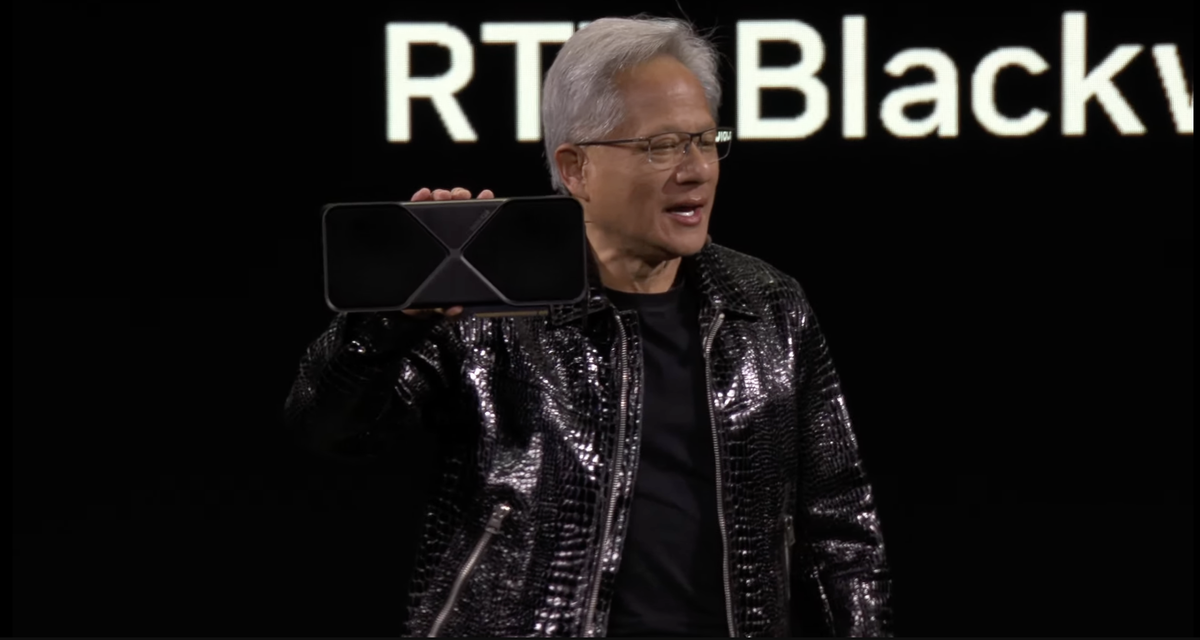
Nvidia CEO Jensen Huang holding the RTX 5090 at CES 2025

(Image credit: Nvidia)

Nvidia RTX Blackwell is official, and that is a very pretty looking graphics card.

2025-01-07T03:01:09.811Z

OK, so Jensen is holding the RTX 5090.

2025-01-07T03:02:45.916Z

OK, RTX 5070 at $549, RTX 4090 performance. Whoa.

2025-01-07T03:04:03.641Z

A slide showing the prices of the Nvidia RTX Blackwell line of GPUs

(Image credit: Nvidia)

OK, RTX 5090 starting at $1,999. RTX 5080 for $999. RTX 5070 Ti for $749. Yes, absolutely. This is what I want to see.

Don’t get me wrong, these are still expensive graphics cards, but given the fears of a $1600 RTX 5080, this is a very pleasant surprise.

2025-01-07T03:05:31.979Z

OK, so very little on specs, but I want to know about this AI management processor.

2025-01-07T03:06:54.298Z

If the shader cores can also carry the weight of AI workloads, as Jensen stated, then we’re getting way better DLSS on these cards.

2025-01-07T03:07:56.329Z

Also, the RTX 5000 series will be available starting in January, though we don’t know which will be coming first.

2025-01-07T03:09:07.844Z

Nvidia GeForce RTX 5000 series mobile GPUs are also coming, with the RTX 5070 mobile featuring RTX 4090 performance, though I’m guessing Jensen means RTX 4090 mobile performance.

2025-01-07T03:13:40.118Z

So we have fully entered into the data center segment of the keynote. While GeForce graphics cards got at least a bit more time and attention than Lovelace got, it’s clear that these cards aren’t as important to Nvidia as the data center business.

And yeah, that shield bit was a bit…well, it was something.

2025-01-07T03:20:30.975Z

I want to say, I find all of this AI discussion interesting from an academic perspective, but I think there’s a lot of expectations for these data centers, and no one is mentioning that the power requirements for these are pretty much going to put a cap on what they can do, since we only have so much electrical power available on a grid at any one time.

2025-01-07T03:23:53.532Z

Oh man, I just had a dark thought. Can you imagine training the AI agent that’s taking your job? That’s grim.

2025-01-07T03:28:11.071Z

Coding assistants are the death knell for the junior software developer. So much for ‘learn to code’.

2025-01-07T03:29:37.059Z

OK, the virtual human thing is still giving major uncanny valley, but it’s less severe than it used to be.

2025-01-07T03:38:02.365Z

OK, sorry about that folks, we were dealing with some technical difficulties, but we’re back to the action, and that action is all about tokens. It’s tokens all the way down.

2025-01-07T03:42:20.776Z

OK, so the end of data for training models is another major bottleneck for AI, and what Jensen is talking about here with Cosmos is generating new data that subsequent models can be trained on (synthetic data), since these models have already consumed all the existing data it could be trained on.

However.

I wonder how Cosmos will avoid model collapse.

2025-01-07T03:46:53.410Z

The worry with synthetic data is that you’ll end up with a Habsburg AI, one that’s effectively inbred on its own data to the point where it becomes a useless abomination. Google the Habsburg monarchs of Europe if you want to see why this is such an apt description of the problem.

2025-01-07T03:49:26.497Z

An Nvidia RTX 5000 series graphics card against a green and black background

(Image credit: Nvidia)

OK, we just got word on the Blackwell GPU availability.

The RTX 5090 and RTX 5080 will go on sale on January 30, 2025, for $1,999 and $999, respectively.

The RTX 5070 Ti and RTX 5070 will be available in February for $749 and $549 respectively. UK and Australia pricing wasn’t given, but we’ve reached out to Nvidia for clarification.

2025-01-07T03:53:36.423Z

Nvidia RTX 5090, RTX 5080, and RTX 5070 Ti laptops will be available starting in March, while the RTX 5070 laptops will be available starting in April.

2025-01-07T03:55:08.915Z

Nvidia’s autonomous vehicle chip would get annihilated in NYC traffic, I can guarantee that, though it might work in a lot of other cities.

2025-01-07T03:58:05.893Z

Hmmm. Sythetic input data has been shown to quickly degrade the quality of the model you’re training (model collapse) which i haven’t heard mentioned once. I wonder how nvidia plans on tackling that problem.

2025-01-07T03:59:31.506Z

I do have to say, if I have to deal with AI model collapse in the product I’m using, I’d really rather not have to deal with that at highway speeds.

2025-01-07T04:16:41.375Z

And that’s a wrap on Nvidia’s CES 2025 keynote. Now, if you’ll excuse me, I have to go bother Nvidia PR to try and track down some spec sheets. Stay tuned for more from CES 2025 thoughout the week, including more details on the Nvidia Blackwell GPUs.

Source

Posted on

Nvidia unveils new GeForce RTX 5090, RTX 5080, RTX 5070 Ti, and RTX 5070 graphics cards at CES 2025

  • Nvidia’s RTX 5000 series cards have been announced
  • RTX 5090 costs $1,999 / £1,999 / AU$4,039
  • 5090 and 5080 go on sale January 30

After months of speculation and anticipation, Nvidia finally lifted the cover off its latest lineup of consumer graphics cards, the Nvidia GeForce RTX 5000 series, starting with the flagship RTX 5090.

Nvidia CEO Jensen Huang made the announcement at a packed arena at Las Vegas’s Mandalay Bay resort and casino, a headline event that topped off a day of major reveals from rivals AMD and Intel at CES 2025.

However, the Nvidia RTX 5000 series graphics cards were always going to steal the show, no matter what anyone else announced, so Huang naturally had the limelight on Monday night as he unveiled our first definitive look at the RTX 5090 – amongst other new GPUs and fancy AI features.

Meet Nvidia’s new flagship GPU, the Nvidia Tita— I mean the Nvidia RTX 5090

It might not be called the Nvidia Titan RTX, but the RTX 5090 might as well be, given the specs on offer and its downright scandalous MSRP of $1,999 (£1,999 / AU$4,039) – not a generational price bump from the RTX 4090, granted, but still a ludicrous amount of money for an ostensibly ‘consumer’ graphics card.

With an astounding 92 billion transistors, next-gen Tensor Cores and Ray Tracing Cores, and more than double the AI processing speed of the 4090, the RTX 5090 will unquestionably be the most powerful consumer graphics card on the planet, and it won’t even be close.

Pair the GPU specs with 32GB of shiny new GDDR7 VRAM on a massive 512-bit memory bus and PCIe 5.0 x16 interface, it has an astonishing 1792 GB/s of memory bandwidth, with a memory speed upwards of 23.8 Gbps.

An Nvidia Blackwell GPU die render.

(Image credit: Nvidia)

Given its specs, not only will this graphics card absolutely blow through native 4K gaming (without upscaling) at the highest settings (including ray tracing), it’s arguably the first real 8K graphics card given the amount of VRAM it has and its memory bandwidth, two key specs that allow a graphics card to process the substantially larger 8K texture files needed for gaming at that resolution.

{ window.reliablePageLoad.then(() => { var componentContainer = document.querySelector(“#slice-container-newsletterForm-articleInbodyContent-TfGrT9wxDQfRSFGMn3gKX9”); if (componentContainer) { var data = {“layout”:”inbodyContent”,”header”:”Get daily insight, inspiration and deals in your inbox”,”tagline”:”Sign up for breaking news, reviews, opinion, top tech deals, and more.”,”formFooterText”:”By submitting your information you agree to the Terms & Conditions and Privacy Policy and are aged 16 or over.”,”successMessage”:{“body”:”Thank you for signing up. You will receive a confirmation email shortly.”},”failureMessage”:”There was a problem. Please refresh the page and try again.”,”method”:”POST”,”inputs”:[{“type”:”hidden”,”name”:”NAME”},{“type”:”email”,”name”:”MAIL”,”placeholder”:”Your Email Address”,”required”:true},{“type”:”hidden”,”name”:”NEWSLETTER_CODE”,”value”:”XTR-D”},{“type”:”hidden”,”name”:”LANG”,”value”:”EN”},{“type”:”hidden”,”name”:”SOURCE”,”value”:”60″},{“type”:”hidden”,”name”:”COUNTRY”},{“type”:”checkbox”,”name”:”CONTACT_OTHER_BRANDS”,”label”:{“text”:”Contact me with news and offers from other Future brands”}},{“type”:”checkbox”,”name”:”CONTACT_PARTNERS”,”label”:{“text”:”Receive email from us on behalf of our trusted partners or sponsors”}},{“type”:”submit”,”value”:”Sign me up”,”required”:true}],”endpoint”:”https://newsletter-subscribe.futureplc.com/v2/submission/submit”,”analytics”:[{“analyticsType”:”widgetViewed”}],”ariaLabels”:{}}; var triggerHydrate = function() { window.sliceComponents.newsletterForm.hydrate(data, componentContainer); } if (window.lazyObserveElement) { window.lazyObserveElement(componentContainer, triggerHydrate); } else { triggerHydrate(); } } }).catch(err => console.error(‘%c FTE ‘,’background: #9306F9; color: #ffffff’,’Hydration Script has failed for newsletterForm-articleInbodyContent-TfGrT9wxDQfRSFGMn3gKX9 Slice’, err)); }).catch(err => console.error(‘%c FTE ‘,’background: #9306F9; color: #ffffff’,’Externals script failed to load’, err)); ]]>

Sign up for breaking news, reviews, opinion, top tech deals, and more.

Of course, few games even support 8K resolution, much less have developers and artists effectively wasting their time on texture files so large that only a rare few will ever see them as intended. But there’s no doubt that if 8K gaming ever becomes a thing, the RTX 5090 will be more than ready to meet the challenge.

Of course, that doesn’t really address the fact that this is no longer a gaming GPU— not anymore, and not at this price. And if (well, when) scalpers get involved, it’s going to be far worse.

After all, we called the $1,199 price tag on the flagship RTX 2080 Ti ‘almost obscene’ in our review three GPU generations ago. With no generational price drop from the already wildly expensive RTX 4090, it’s not hard to argue that the RTX 5090 is purely a professional workstation GPU, meant to process raw 4K video streams or render lengthy 3D generated sequences at Pixar or some other animation studio. As fun as it might be, this is not a graphics card meant to play Wolfenstein 3D.

The Nvidia GeForce RTX 5090 is set to go on sale for $1,999 on January 30.

The Nvidia GeForce RTX 5080 will launch alongside the 5090

In a move that has been telegraphed for a while, the Nvidia GeForce RTX 5080 will also be part of the first wave of Nvidia’s new graphics cards to hit store shelves later this month.

The Nvidia RTX 5080 GPU on a green background.

(Image credit: Nvidia)

The RTX 5080 looks to be almost exactly half of the RTX 5090 in terms of specs. Although Nvidia has yet to release a comprehensive spec sheet for the new GPUs – a strange move, though likely one designed to avoid distracting from all the new AI features – we know that the 5080 has 1,801 AI TOPS (trillion operations per second), a little under half the RTX 5090’s 3,352.

It also has new GDDR7 VRAM as well, with a pool of 16GB on a 256-bit memory bus for 960 GB/s of memory bandwidth – again, basically half the specs of the 5090’s VRAM. Its memory speed is a blazing fast 30 Gbps, which helps make up for the narrower memory bus.

The card will go on January 21st with an MSRP of $999 (expected £999 / AU$2,019), which again matches the launch price of the previous-gen RTX 4080.

Nvidia RTX 5070 and RTX 5070 Ti also unveiled – but you’ll have to wait

The Nvidia RTX 5070 and 5070 Ti also debuted on Monday night, likely an effort from Nvidia to reassure gamers that they haven’t forgotten about the midrange market – especially with its main rival AMD refocusing to target the budget and midrange space exclusively with its new GPUs.

Again, we don’t have the breadth of specs we’d hoped to see at this point, but we do know that the RTX 5070 Ti offers 1,406 AI TOPS while the RTX 5070 has 988 TOPS. As a rough point of comparison, Apple‘s new M4 chip caps out at around 38 TOPS – so a dedicated GPU is arguably still a necessity for serious AI workloads.

Over on the VRAM front, the RTX 5070 Ti’s memory profile is nearly identical to the RTX 5080, with 16GB GDDR7, a memory speed of 28 Gbps on a 256-bit bus, and a memory bandwidth of 896 GB/s, making it more than ready for 4K gaming. Meanwhile, the RTX 5070 has 12GB of GDDR7 at 672 GB/sec – still faster than the RTX 4070, though the same base amount of VRAM.

A selection of third-party RTX 5000 GPUs.

(Image credit: Nvidia)

The Nvidia GeForce RTX 5070 and 5070 Ti will go on sale in February – date to be confirmed – with respective retail prices of $549 (£549 / AU$1,509) and $749 (£749 / AU$1,109). This is actually quite pleasing to see, since the RTX 4070 retailed at $599 – meaning we finally have a generational price drop from Nvidia.

DLSS 4, Reflex 2, and more

In addition to the new hardware, Nvidia also showcased a selection of upgraded AI features debuting with the ‘Blackwell’ RTX 5000 generation of graphics cards.

Chief among these, of course, was DLSS 4 – the latest update to Nvidia’s resolution upscaling software, which allows for better framerates in-game by rendering the game at a lower resolution and upscaling it to a target resolution (say, 1080p to 4K) using AI.

DLSS 4 will also feature ‘Multi Frame Generation’, an improved version of the Frame Generation tech seen in the RTX 4000 generation, which uses AI to extrapolate and produce additional frames and ‘insert’ them between ordinary rendered frames to boost framerate. Unfortunately for users on older GPUs, only the regular DLSS 4 upscaling will be available on older cards; Multi Frame-Gen will be exclusive to RTX 5000 cards.

We’re also getting Nvidia Reflex 2, a new version of the Reflex software for reducing input latency in games. Reflex 2 will feature ‘Frame Warp’, which aims to proactively insert generated frames by reading mouse input before it even reaches the display – this can reportedly reduce input latency by as much as 75%.

RTX 5000 is also bringing AI powers to shader tech with new RTX Neural Shaders. This uses small AI networks in the GPU’s programmable shader units to deliver ‘film-quality’ shading and lighting in-game. ‘RTX Neural Faces’, along with new RTX tech for hair and skin rendering and animation, promises to deliver more realistic humans than ever before.

Lastly, we can expect to see more of Nvidia ACE with this generation of RTX GPUs – the improved AI capabilities of the Blackwell generation mean that projects like Nvidia’s (slightly creepy) AI NPC tech can be implemented on a wider level, with ACE-powered characters planned to appear in a handful of titles including PUBG: Battlegrounds and InZOI.

You might also like…

Source

Posted on

Crazy AI app lets you transform a photo into a 3D model

Krea is one of the latest AI tools that promise to revolutionize 3D modeling. By partnering with the top AI video providers, the company lets you create videos with Hailuo, Mini Max, Luma Labs, Runway, Pika Labs, and Kling.

One of Krea’s most interesting features is its ability to generate real-time images guided by 3D models. This feature lets users take an image, convert it into a 3D model, and use it to guide scene generation. What makes this tool so cool is that you can move, manipulate, and rotate the model to change the scene—all in real-time and in a very intuitive way, as spotted by X user Justine Moore.

However, this isn’t the only tool available with Krea’s AI app. You can create real-time styles, change the environment of your images with one click by having perfect light and color consistency, ultra slow-motion in 120fps, animate and fuse images, and even use its enhanced presets to turn your image into an oil painting or let the AI create something completely unique.

Krea focuses on five major features: High-quality generation, Editing, video generation, Instant AI generation, and an Enhancer tool that lets you upscale photos and videos. It’s also important to note that the service allows you to create images with sound, setting it apart from the competition.

Tech. Entertainment. Science. Your inbox.

Sign up for the most interesting tech & entertainment news out there.

By signing up, I agree to the Terms of Use and have reviewed the Privacy Notice.

What’s nice about Krea is that you can take advantage of free daily image generation and access some of its popular tools as long as you are logged on to the platform. The company offers three other paid tiers, Basic, Pro, and Max, with a good discount when you choose the yearly plan.

With the Basic plan, you can create around 720 Flux Images, 36,000 real-time images, 180 enhanced images, three training jobs, and a commercial license.

Source

Posted on

AMD’s decision to make FSR 4 exclusive to its new GPUs is a disappointing compromise in a bid to beat Nvidia

  • AMD announces FSR 4’s exclusivity to RDNA 4 Radeon RX 9070 series GPUs
  • It’s unclear why the RX 9060 won’t have FSR 4
  • Team Red’s main rival Nvidia has made DLSS 4 backwards compatible

There were hardly any doubts over AMD conceding ground to Nvidia at CES 2025, with the unveiling of new GPUs on both sides overshadowed by AMD’s recent shift to a focus on mid-range options, but Team Red has also confirmed that FSR 4 will be exclusive to the new RDNA 4 GPUs – and I’ll be honest, that sucks.

As noted by VideoCardz, FSR 4 will only be available to Radeon RX 9070 series GPU owners, including games that already have FSR 3.1 support, such as Call of Duty: Black Ops 6. This is in stark contrast to FSR 3, which is available for all AMD users and beyond thanks to its open-source design, serving as a huge benefit for handheld gaming PCs as well.

Now, FSR 4’s technology is said to be ‘developed for RDNA 4’ (the hardware microarchitecture of the new Radeon GPUs) which could be the main reason for this exclusivity. Despite this, it isn’t exactly clear yet why the upscaling method is being omitted from other hardware, especially after Nvidia’s announcement of DLSS 4 being available for all existing RTX GPUs – a step in the right direction for Nvidia on this occasion.

Image of FSR 4 benefits

(Image credit: AMD)

Should we be worried about AMD’s position in the GPU market?

In previous articles, I’ve made my frustrations clear regarding Nvidia’s decision to make DLSS 3 and Frame Generation exclusively available for RTX 4000 series GPU owners. Team Green has now made amends with DLSS 4, which will be available for all RTX GPUs except for the Frame Generation feature, which remains exclusive to the RTX 4000 and the recently revealed RTX 5000 series (with the new-and-improved ‘Multi Frame Generation’ only on RTX 50 series).

This brings me to AMD’s decision to focus on mid-range GPUs this generation, which was a concern, to say the least – but after hearing that FSR 4 will only be available to RX 9070 series GPUs, I honestly believe Team Red could be in big trouble.

Even with a fresh focus on the midrange space, the lack of backward compatibility will hurt AMD’s gamer-friendly image – especially with Nvidia’s claim of the RTX 5070 performance being equal to the RTX 4090’s (most likely while using Multi Frame Generation and DLSS 4), priced at $549 / £539 / AU$1,109. Pricing on AMD’s new cards has yet to be revealed, but if it can’t undercut Nvidia’s new midrange champion, Team Red could be in dire straits.

If AMD’s RX 9060 doesn’t have access to FSR 4 (which at the very least is implied in the FSR 4 slide pictured above), the RTX 5070 will be a much easier choice at an affordable price. While FSR 4 could prove to be a massive leap over the previous rendition, it’s hard to see this beating Nvidia’s offerings unless the new Radeon GPUs are cheaper than the new Blackwell GPUs.

{ window.reliablePageLoad.then(() => { var componentContainer = document.querySelector(“#slice-container-newsletterForm-articleInbodyContent-jYwdAnH5B959jba9Uvma2K”); if (componentContainer) { var data = {“layout”:”inbodyContent”,”header”:”Get daily insight, inspiration and deals in your inbox”,”tagline”:”Sign up for breaking news, reviews, opinion, top tech deals, and more.”,”formFooterText”:”By submitting your information you agree to the Terms & Conditions and Privacy Policy and are aged 16 or over.”,”successMessage”:{“body”:”Thank you for signing up. You will receive a confirmation email shortly.”},”failureMessage”:”There was a problem. Please refresh the page and try again.”,”method”:”POST”,”inputs”:[{“type”:”hidden”,”name”:”NAME”},{“type”:”email”,”name”:”MAIL”,”placeholder”:”Your Email Address”,”required”:true},{“type”:”hidden”,”name”:”NEWSLETTER_CODE”,”value”:”XTR-D”},{“type”:”hidden”,”name”:”LANG”,”value”:”EN”},{“type”:”hidden”,”name”:”SOURCE”,”value”:”60″},{“type”:”hidden”,”name”:”COUNTRY”},{“type”:”checkbox”,”name”:”CONTACT_OTHER_BRANDS”,”label”:{“text”:”Contact me with news and offers from other Future brands”}},{“type”:”checkbox”,”name”:”CONTACT_PARTNERS”,”label”:{“text”:”Receive email from us on behalf of our trusted partners or sponsors”}},{“type”:”submit”,”value”:”Sign me up”,”required”:true}],”endpoint”:”https://newsletter-subscribe.futureplc.com/v2/submission/submit”,”analytics”:[{“analyticsType”:”widgetViewed”}],”ariaLabels”:{}}; var triggerHydrate = function() { window.sliceComponents.newsletterForm.hydrate(data, componentContainer); } if (window.lazyObserveElement) { window.lazyObserveElement(componentContainer, triggerHydrate); } else { triggerHydrate(); } } }).catch(err => console.error(‘%c FTE ‘,’background: #9306F9; color: #ffffff’,’Hydration Script has failed for newsletterForm-articleInbodyContent-jYwdAnH5B959jba9Uvma2K Slice’, err)); }).catch(err => console.error(‘%c FTE ‘,’background: #9306F9; color: #ffffff’,’Externals script failed to load’, err)); ]]>

Sign up for breaking news, reviews, opinion, top tech deals, and more.

You may also like…

Source