Posted on

Where to buy Nvidia RTX 5070 Ti: I’m expecting stock here first

Refresh

2025-02-20T21:48:38.229Z

To absolutely nobody’s surprise, and as was the case for the RTX 5080 and 5090 before it, nearly all stock for the RTX 5070 Ti has been scooped up and accounted for on the first day.

While you probably won’t have much luck getting a standalone GPU until retailers restock (stay tuned!), you do still have some options for prebuilt PCs and gaming laptops from retailers like Newegg and B&H Photo. These options aren’t exactly budget-friendly, but they do offer a chance at the latest hardware in a professional, pre-planned and fully compatible build, oftentimes with a warranty as an added layer of protection.

2025-02-20T20:23:41.184Z

One key question some shoppers may be asking is this: should I get an RTX 5070 Ti, or just wait for the regular 5070?

For some PC gamers, this might be an answer as simple as ‘do I have an extra two hundred bucks’, but for those who could spring for the 5070 To but are uncertain, it’s a much harder decision. Personally, I want to say that the 4070 Ti Super-beating performance makes it a sure bet, but we’re still a few weeks away from the 5070 launch on March 5, so it’s too soon to say – with a fairly significant price difference, I’d say that unless the Ti model outperforms the regular 5070 by a margin of at least 20% before upscaling tech is applied, the cheaper card may in fact be the better option when it comes to value for money.

2025-02-20T18:55:17.804Z

Access to upscaling and frame-gen tools is clearly going to become the Next Big Thing in gaming, with even home consoles starting to implement resolution upscaling (I do still think PSSR is a terrible name, though).

With that in mind, the RTX 5070 Ti – and the upcoming RTX 5070 – make a lot of sense for gamers looking to upgrade from an older GPU. If you’re still rocking a 2000 card or even something from the GTX generations, these midrange Blackwell cards will be a worthy upgrade purely for DLSS 4, let alone the raw performance improvements.

2025-02-20T17:17:08.267Z

Honing in on 4K gaming, the RTX 5070 Ti puts up some impressive numbers at its MSRP of $749. That said, as we discuss in our review, without a Founders Edition 5070 Ti to serve as a baseline, that price is more of a suggestion than a steadfast rule for partner cards.

Still, if you can find a 5070 Ti for a respectable price, you’re looking at “31% better overall average FPS than the RTX 4070 Ti and about 23% better average FPS than the RTX 4070 Ti Super” per our benchmark tests.

The graph below has some customization options – use the top drop down bars to select different test results and single out specific GPUs, like the RTX 5070 Ti vs the RTX 4070 Ti.

2025-02-20T16:14:33.914Z

Our Nvidia GeForce RTX 5070 Ti review just went live!

TechRadar’s Components Editor, John Loeffler, put the Asus Prime GeForce RTX 5070 Ti through its paces in our comprehensive benchmark suite of creative, AI, and gaming testing.

The results speak for themselves – the RTX 5070 Ti looks to be the best graphics card currently on the market for most systems…if you can manage to buy one. Read the full review for an outstanding in-depth breakdown of the RTX 5070 Ti’s performance and value proposition.

2025-02-20T15:11:30.394Z

Image of Nvidia's DLSS 4 Frame Generation

(Image credit: Nvidia)

Don’t get me wrong, mind you: DLSS 4 with Nvidia’s newly boosted frame-gen tech is seriously impressive. I recently saw it in action in Cyberpunk 2077, and having used the first-gen iteration of the software, the difference is truly night and day.

It’s still not perfect, but visual tearing, blurring, and artifacting while upscaled to 4K with frame-gen turned on is significantly reduced even against DLSS 3 on a 4000-series GPU, to the point where it’s almost completely unnoticeable even when I’m actively looking for it. I spotted the occasional tiny bit of blurring on the HUD while driving and shooting at high speeds, but that was literally it – Nvidia’s framerate-boosting features have come a long way since the comparatively iffy original DLSS.

2025-02-20T14:11:50.787Z

Although its pricing and performance (the latter of which places it almost on par with the more expensive RTX 5080) could make the RTX 5070 Ti the de facto best pick of Nvidia’s current crop of GPUs, finding one at retail price could prove difficult – and if it does, I’d feel compelled to say you should sit and wait.

That goes double for anyone who already has an RTX 4000 card; frankly, I’ll be sticking with my RTX 4080 for a while, Multi Frame Generation be damned.

2025-02-20T11:31:02.259Z

Of course, we’re still updating our where to buy the Nvidia RTX 5080 and where to buy the Nvidia RTX 5090 guides as well, though stock remains extremely low, so there’s not too much to report at the moment.

2025-02-20T11:13:17.121Z

And, while this might not be the case with the more affordable 5070 Ti, we have seen in the past inflated GPU prices which meant buying an entire PC with the GPU installed wasn’t much more expensive than buying the GPU by itself! Considering you’re getting other new components with an entire PC, it can end up being better value than you might first imagine.

So, we’ll also highlight any great prebuilt gaming PCs that come with the RTX 5070 Ti as well.

2025-02-20T11:06:49.881Z

An HP Victus 15L, the best budget gaming PC pick overall, against a pink techradar background

(Image credit: Future / HP)

As with previous GPUs that were subject to high demand, one alternative way of getting hold of one is by buying a pre-built gaming PC with the GPU installed.

While this might seem an expensive way of doing things, it can be worth it if you were thinking of upgrading several parts of your Pc at once. You could also sell your old PC if you no longer need it, and that could make the initial outlay more affordable.

2025-02-20T10:40:50.061Z

As well as the main retailers, we’ll also check out less well known stores as well, as they can sell out more slowly as most people will check out the likes of Best Buy and Currys (in the UK) first.

2025-02-20T10:25:31.351Z

Phone scammer

(Image credit: Shutterstock)

Using this page to help you find stock will also keep you from being scammed or overpaying. Unfortunately, unscrupulous people will use the excitement and demand of the 5070 Ti to take advantage of people.

This could be done by selling fake cards, or (in a process known as ‘scalping’) buying real 5070 Tis and then selling them on for hugely inflated prices.

We’ll only recommend trusted retailers that we know won’t rip you off, and we’ll only link to 5070 Ti models that are sensibly priced. With the RTX 5090 launch, I found several retailers selling the GPU for around $4,000 – a huge mark up. No matter how desperate you are to get a new 5070 Ti, you really don’t want to pay obscene amounts just to get one. It’s much better to wait until more stock arrives – trust me.

2025-02-20T10:19:34.213Z

Nvidia GTC 2024

(Image credit: Future / Mike Moore)

So, there’s going to be a big rush when the RTX 5070 Ti goes on sale – but there are some things we’ve learned from the earlier launches that can help improve your chances of getting one.

Firstly, I recommend you keep this page open throughout the day, as we’ll be updating it live – and we’ll be giving stock alerts when we find a retailer that is still selling 5070 Tis, and we’ll link directly to the GPUs so you can quickly buy them.

2025-02-20T10:17:56.553Z

Nvidia RTX 5080 against a yellow TechRadar background

(Image credit: Future)

So, why do we think the RTX 5070 Ti will sell out fast? Well, for a start, as I mentioned earlier, the RTX 5080 and RTX 5090 sold out incredibly quickly when they went on sale a few weeks ago, proving that there’s a huge demand for Nvidia’s latest GPUs.

Those two cards are high-end and very expensive GPUs, which makes the fact they sold out so fast even more impressive.

However, this doesn’t bode well for RTX 5070 Ti stock availability. For a start, everyone who tried and failed to get a 5090 or 5080 will likely try to get a 5070 Ti, as reviews suggest it’s an excellent card.

On top of that, the 5070 Ti has a much more affordable price tag, which should mean it’ll be more popular than the premium GPU, so we could see even more people try to snag one.

2025-02-20T10:16:29.656Z

MSI RTX 5070 Ti Gaming Trio OC Front-on

(Image credit: MSI)

Good morning! Today’s the day that the Nvidia RTX 5070 Ti goes on sale. If Nvidia’s previous RTX 5000 series launches are anything to go buy, expect stock to go live around 9am ET / 2PM GMT.

That’s still a few hours away, so now is a good time to check out the retailers above, and make sure you’re signed in to your accounts ahead of the GPUs going on sale.

This is because, like the RTX 5080 and RTX 5090 GPUs that launched a few weeks ago, I expect the RTX 5070 Ti to sell out fast, so you’ll want to make sure you’re as prepared as usual. You don’t want to have a new GPU in your shopping cart, only to find out when you come to pay that you need to sign in with a long-forgotten password.
Source

Posted on

Nvidia’s new Priority Access program could be your best way to buy an RTX 5090 or 5080

  • Nvidia’s making an effort to stop scalpers buying RTX 5090 and 5080 GPUs
  • The ‘Verified Priority Access’ program is returning, albeit only in the US
  • Buyers must have created an Nvidia account on or before January 30, 2025, to be offered a purchase opportunity

The RTX 5090 and RTX 5080 launch has been a rather sorry episode for Nvidia, due to demand far exceeding supply, on top of issues with scalpers – but fortunately, Team Green is taking action to give genuine buyers a better chance of getting one of these high-end GPUs at their recommended prices.

As spotted by Wccftech, Nvidia has brought back its Verified Priority Access program, a scheme that allows a limited number of gamers (or indeed creators) in the US to purchase the RTX 5090 or RTX 5080 at MSRP by completing a form to indicate their interest.

The only stipulation is that people need to have an Nvidia account (that was created on or before January 30, 2025), and note that this only offers the chance to purchase Nvidia’s own Founders Edition versions of the graphics cards.

You may remember that Nvidia introduced this scheme with the RTX 4090 and eventually the RTX 4080 too, after these GPUs were launched.

Considering the still very limited supply of high-end Blackwell GPUs, this will likely prove highly beneficial for would-be buyers. It’s a struggle to find anything near MSRP at all, and third-party RTX 5090 and 5080 graphics cards (meaning GPUs not from Nvidia) which can be found on sale cost far more than their recommended pricing. Of course, this scheme won’t help you buy such a third-party board, only a Founders Edition GPU.

While this priority access scheme is not going to completely turn the tide of the battle against scalpers, it’ll surely help in that fight. If a scalper doesn’t already have a pre-existing Nvidia account, they’ll be out of luck, as creating a new one to get onto the scheme won’t work (due to the mentioned January 30 deadline).

This is similar to Valve’s move with the Steam Deck, where the initial pre-orders were limited to those with a Steam account that had been created in the previous year (and had made a purchase).

{ window.reliablePageLoad.then(() => { var componentContainer = document.querySelector(“#slice-container-newsletterForm-articleInbodyContent-TXKQ8mTHUNhi2iF7LtbNi5”); if (componentContainer) { var data = {“layout”:”inbodyContent”,”header”:”Get daily insight, inspiration and deals in your inbox”,”tagline”:”Sign up for breaking news, reviews, opinion, top tech deals, and more.”,”formFooterText”:”By submitting your information you agree to the Terms & Conditions and Privacy Policy and are aged 16 or over.”,”successMessage”:{“body”:”Thank you for signing up. You will receive a confirmation email shortly.”},”failureMessage”:”There was a problem. Please refresh the page and try again.”,”method”:”POST”,”inputs”:[{“type”:”hidden”,”name”:”NAME”},{“type”:”email”,”name”:”MAIL”,”placeholder”:”Your Email Address”,”required”:true},{“type”:”hidden”,”name”:”NEWSLETTER_CODE”,”value”:”XTR-D”},{“type”:”hidden”,”name”:”LANG”,”value”:”EN”},{“type”:”hidden”,”name”:”SOURCE”,”value”:”60″},{“type”:”hidden”,”name”:”COUNTRY”},{“type”:”checkbox”,”name”:”CONTACT_OTHER_BRANDS”,”label”:{“text”:”Contact me with news and offers from other Future brands”}},{“type”:”checkbox”,”name”:”CONTACT_PARTNERS”,”label”:{“text”:”Receive email from us on behalf of our trusted partners or sponsors”}},{“type”:”submit”,”value”:”Sign me up”,”required”:true}],”endpoint”:”https://newsletter-subscribe.futureplc.com/v2/submission/submit”,”analytics”:[{“analyticsType”:”widgetViewed”}],”ariaLabels”:{}}; var triggerHydrate = function() { window.sliceComponents.newsletterForm.hydrate(data, componentContainer); } if (window.lazyObserveElement) { window.lazyObserveElement(componentContainer, triggerHydrate); } else { triggerHydrate(); } } }).catch(err => console.error(‘%c FTE ‘,’background: #9306F9; color: #ffffff’,’Hydration Script has failed for newsletterForm-articleInbodyContent-TXKQ8mTHUNhi2iF7LtbNi5 Slice’, err)); }).catch(err => console.error(‘%c FTE ‘,’background: #9306F9; color: #ffffff’,’Externals script failed to load’, err)); ]]>

Sign up for breaking news, reviews, opinion, top tech deals, and more.

While Nvidia’s priority access scheme is only in the US for now, hopefully it’ll be expanded beyond that to other regions in the future.

An Nvidia GeForce RTX 5080 resting on an RTX 5090 on a gray crafting mat.

(Image credit: Future)

Nvidia should keep this priority access scheme going forward

Nvidia’s GPUs are always highly sought after upon launch, seemingly regardless of how well any new GPUs are received by gamers, and we’re seeing that again with Blackwell graphics cards. This inevitably introduces two main problems in terms of scalping and inflated prices – with the end result being that very few gamers are lucky enough to snag a new card, and they end up paying far too much for that privilege.

The Verified Priority Access scheme gives gamers a better chance of buying a powerhouse GPU, and what’s more, they get it at a fair price – the MSRP, in fact. So in my opinion, this must be part of Team Green’s sales strategy going forward (at least while stock woes persist).

Scalpers may still find ways to manipulate the system, especially if accounts were made before the January 30 deadline. However, there is no guarantee that those who fill in a form will get a chance to purchase, and Nvidia is ‘verifying’ any applicants to hopefully weed out any dubious would-be buyers. Plus each account is still limited to one purchase only.

As I’ve stated, this isn’t going to benefit all potential buyers as there are caveats involved (notably that the scheme is restricted to US buyers only), but it’s definitely a step in the right direction.

You may also like…

Source

Posted on

European and African tech skills programme could increase economic ties

Emerging economies in Africa often have relationships with developed nations through dark colonial pasts, but today, digital tech is connecting previously unexpected partners.

Developed nations looking for growth are targeting Africa as an opportunity, but must offer the countries of the continent something in return, and one programme to transfer IT professionals and knowledge between Africa and the Baltic region is an example that goes beyond filling a skills gap.

As Computer Weekly reported recently, IT professionals in Africa are being connected to tech businesses in the Baltic region as part of a European Commission-funded project, known as the Digital Explorers programme.

Fronted by Lithuania-based think tank Osmos, it aims to address skills shortages in the Baltic tech sector, and increase more business and government engagement between the Baltic nations and African countries.

While countries in the Baltic region, Lithuania, Estonia and Latvia lead the world in digital business, they lack people. Estonia, for example, while a leading digital nation, has a population of about 1.3 million.

In contrast, countries like Nigeria are lagging in terms of digital economy, but have large and growing IT talent pools. Nigeria, for example, has a population of about 240 million and growing.

But African countries offer more than a skills pool for Europe to tap, with a huge potential market for its goods and services. It’s hoped connecting people through digital technology initiatives, like Digital Explorers, will initiate cooperation between the two regions.

New skills

It also sees African IT professionals learn new skills that can be used to help the economic development in their home countries.

At the Turing College data science school in Lithuania’s capital Vilnius, the Digital Explorers programme has already remotely trained 90 junior to mid-level data analysts from Africa. These trainees then travel to and work in the Baltic region, particularly in its rich tech startup sector. It’s hoped the project will create a model for the wider European Union (EU) region to follow.

Cindy Waweru, aged 24, from Kenya’s capital, Nairobi, a policy analyst in the city, was invited by the Kenya Private Sector Business Alliance (Kepsa) to take up a role that blended economics with statistical analysis. She had the option of taking up the role in Kenya or Lithuania, and opted for the latter. “Once I saw the Lithuania option, I was pretty intrigued,” she said.

With a degree in economics and statistics from the University of Nairobi, and experience as a policy analyst, Waweru took up a role at research institute Visionary Analytics in Lithuania’s capital, Vilnius.

“Originally I wanted to become a policy analyst and this could give me the opportunity to be a global one,” Waweru told Computer Weekly. “I have an IT background and worked initially as a data specialist in the Kenyan government. This was pretty important for the programme.”

She is currently on a six-month placement at Visionary Analytics in Vilnius. After that, she will either be offered a role in Lithuania or take her learnings back to Kenya.

In Kenya there will be opportunities for Waweru to work either in the tech sector or with tech-enabled organisations.

She said her international experience could open up more opportunities for her in Kenya. There is a growing tech scene in the East African country, she told Computer Weekly. “They call Kenya the Silicon Savannah,” said Waweru.

Kenya needs to emulate some of the strategies adopted in Europe, and Waweru said one of the main differences she has learned is the cooperation between nations. “I have noticed with in Europe generally and in terms of the framework and their policies that they operate within all EU member states,” she said. “We have something like that with the African Union, but a lot of the policies are led to the national governments. Something like intergovernmental working would help a lot in Africa.”

Waweru hopes the programme will build a good reputation for African talent and lead to more European countries taking advantage of their skills to fill gaps in their workforces.

But the programme is about much more than tech skills, with future business ties a major goal for both sets of economies.

Ashley Immanuel, co-founder and chief operating officer at Nigeria-based Semicolon, which trains software engineers and other technology skills, is an ambassador of the Digital Natives programme.

Immanuel said she is increasingly engaging with Baltic tech firms and tech ecosystems, as well as others across Europe.

She said the Nigerian digital tech market has evolved quite quickly over the past 10 to 15 years. “There is activity in terms of technology startups, and then of course the digital transformation of established companies,” said Immanuel. “Historically in Nigeria, obviously oil and gas has been present, but also some of the larger corporates like banks and finance firms.”

She said there is a huge population in Nigeria and that “people are anxious to find good jobs”, but added: “There has historically been a gap because the human capital that’s available here hasn’t been aligned to employer needs, especially for leading technology companies.”

Baltic nations

In contrast, the Baltic nations have small populations and a large tech sector.

Immanuel said both regions have challenges and that Baltic employers and tech companies she has met have listed access to talent as one of their challenges.

She said there is a mutual desire to learn from each other, as well as potential for business partnerships and relationships. On her travels in Europe, there is a lot of interest in working with African companies, she told Computer Weekly.

Immanual agreed that diversity of the IT workforce is also important, with the rapid development of technologies such as AI, and that Africa and the Baltics’ relationship can contribute to increased diversity.

Žilvinas Švedkauskas, managing director at Osmos, said it creates “unexpected country partnerships”.

“We built the project around people, digital explorers and their digital journeys,” he told Computer Weekly. “We create connections that set the path for more business-to-business and government-to-government type of engagement between countries.”

Source

Posted on

ARM and Meta: Plotting a path to dilute GPU capacity

News that ARM is embarking on developing its own datacentre processors for Meta, as reported in the Financial Times, is indicative of the chip designer’s move to capitalise on the tech industry’s appetite for affordable, energy-efficient artificial intelligence (AI).

Hyperscalers and social media giants such as Meta use vast arrays of expensive graphics processing units (GPUs) to run workloads that require AI acceleration. But along with the cost, GPUs tend to use a lot of energy and require investment in liquid cooling infrastructure.

Meta sees AI as a strategic technology initiative that spans its platforms, including Facebook, Instagram and WhatApp. CEO Mark Zuckerberg is positioning Meta AI as the artificial intelligence everyone will use. In the company’s latest earnings call, he said: “In AI, I expect this is going to be the year when a highly intelligent and personalised AI assistant reaches more than one billion people, and I expect Meta AI to be that leading AI assistant.”

To reach this volume of people, the company has been working to scale its AI infrastructure and plans to migrate from GPU-based AI acceleration to custom silicon chips, optimised for its workloads and datacentres.

During the earnings call, Meta chief financial officer Susan Li said the company was “very invested in developing our own custom silicon for unique workloads, where off-the-shelf silicon isn’t necessarily optimal”.

In 2023, the company began a long-term venture called Meta Training and Inference Accelerator (MTIA) to provide the most efficient architecture for its unique workloads.

Li said Meta began adopting MTIA in the first half of 2024 for core ranking and recommendations inference. “We’ll continue ramping adoption for those workloads over the course of 2025 as we use it for both incremental capacity and to replace some GPU-based servers when they reach the end of their useful lives,” she added. “Next year, we’re hoping to expand MTIA to support some of our core AI training workloads, and over time some of our GenAI [generative AI] use cases.”

Driving efficiency and total cost of ownership

Meta has previously said efficiency is one of the most important factors for deploying MTIA in its datacentres. This is measured in performance-per-watt metric (TFLOPS/W), which it said is a key component of the total cost of ownership. The MTIA chip is fitted to an Open Compute Platform (OCP) plug-in module, which consumes about 35W. But the MTIA architecture requires a central processing unit (CPU) together with memory and chips for connectivity.

The reported work it is doing with ARM could help the company move from the highly customised application-specific integrated circuits (ASICs) it developed for its first generation chip, MTIA 1, to a next-generation architecture based on general-purpose ARM processor cores.

Looking at ARM’s latest earnings, the company is positioning itself to offer AI that can scale power efficiently. ARM has previously partnered with Nvidia to deliver power-efficient AI in the Nvidia Blackwell Grace architecture

At the Consumer Electronics Show in January, Nvidia unveiled the ARM-based GB10 Grace Blackwell Superchip, which it claimed offers a petaflop of AI computing performance for prototyping, fine-tuning and running large AI models. The chip uses an ARM processor with Nvidia’s Blackwell accelerator to improve the performance of AI workloads.

The semiconductor industry offers system on a chip (SoC) devices, where various computer building blocks are integrated into a single chip. Grace Blackwell is an example of an SoC. Given the work Meta has been doing to develop its MTIA chip, the company may well be exploring how it can work with ARM to integrate its own technology with the ARM CPU on a single device.

Although an SoC is more complex from a chip fabrication perspective, the economies of scale when production is ramped up, and the fact that the device can integrate several external components into one package, make it considerably more cost-effective for system builders.

Li’s remarks on replacing GPU servers and the goal of MTIA to reduce Meta’s total cost of ownership for AI correlate with the reported deal with ARM, which would potentially enable it to scale up AI cost effectively and reduce its reliance on GPU-based AI acceleration.

Boosting ARM’s AI credentials

ARM, which is a SoftBank company, recently found itself at the core of the Trump administration’s Stargate Project, a SoftBank-backed initiative to deploy sovereign AI capabilities in the US.

During the earnings call for ARM’s latest quarterly results, CEO Rene Haas described Stargate as “an extremely significant infrastructure project”, adding: “We are extremely excited to be the CPU of choice for such a platform combined with the Blackwell CPU with [ARM-based] Grace. Going forward, there’ll be huge potential for technology innovation around that space.”

Haas also spoke about the Cristal intelligence collaboration with OpenAI, which he said enables AI agents to move across every node of the hardware ecosystem. “If you think about the smallest devices, such as earbuds, all the way to the datacentre, this is really about agents increasingly being the interface and/or the driver of everything that drives AI inside the device,” he added.

Source

Posted on

AMD’s powerful Ryzen 9 9950X3D and 9900X3D CPUs rumored to arrive on March 12 – but gamers will still be better off with the 9800X3D

  • Ryzen 9 9950X3D and 9900X3D are purportedly arriving on March 12
  • Reviews are apparently going to be published the day before
  • We’re still waiting for a key detail here, and that’s the asking prices of these high-end X3D chips

AMD’s Ryzen 9 9950X3D and 9900X3D processors are rumored to be hitting the shelves on March 12.

VideoCardz claims that its sources indicate that this is the on-sale date for the next 3D V-Cache processors for this current Zen 5 generation.

On top of that, a regular leaker on Weibo, Golden Pig Upgrade, reckons that the review embargoes on these two Ryzen 9 X3D chips will be lifted on March 11. That fits with the scenario outlined, as typically reviews will be aired the day before the hardware goes on sale (but not always, mind).

There’s been a fair old gap (and a lot of rumor-mongering) between the announcement of the 9950X3D and 9900X3D at CES 2025, and the (purported) release of the chips. Rumors circulating late on last year suggested we might get these CPUs towards the end of January 2025, but that obviously didn’t happen.

These two Ryzen 9 spins on 3D V-Cache follow the existing Ryzen 7 9800X3D which was released last November and is an 8-core powerhouse processor for gaming.

Analysis: Will the Ryzen 9950X3D be worth it?

An AMD Ryzen 7 9800X3D in a masculine hand

(Image credit: Future / John Loeffler)

The Ryzen 9950X3D is the 16-core flagship for AMD’s 3D V-Cache chips, which are configured with a special kind of cache that’s particularly beneficial when it comes to PC gaming. The 9900X3D is its lesser 12-core sibling, and don’t expect these processors to come cheap – they most certainly won’t.

Pricing was bumped up slightly for the 9800X3D, compared to the MSRP of the 7800X3D before it, and rumor has it that the 9950X3D might tip the scales at $699 in the US (around £550 / AU$1100), with the 9900X3D possibly launching at $599.

{ window.reliablePageLoad.then(() => { var componentContainer = document.querySelector(“#slice-container-newsletterForm-articleInbodyContent-5LE6qHckuNR823sTtC7nMW”); if (componentContainer) { var data = {“layout”:”inbodyContent”,”header”:”Get daily insight, inspiration and deals in your inbox”,”tagline”:”Sign up for breaking news, reviews, opinion, top tech deals, and more.”,”formFooterText”:”By submitting your information you agree to the Terms & Conditions and Privacy Policy and are aged 16 or over.”,”successMessage”:{“body”:”Thank you for signing up. You will receive a confirmation email shortly.”},”failureMessage”:”There was a problem. Please refresh the page and try again.”,”method”:”POST”,”inputs”:[{“type”:”hidden”,”name”:”NAME”},{“type”:”email”,”name”:”MAIL”,”placeholder”:”Your Email Address”,”required”:true},{“type”:”hidden”,”name”:”NEWSLETTER_CODE”,”value”:”XTR-D”},{“type”:”hidden”,”name”:”LANG”,”value”:”EN”},{“type”:”hidden”,”name”:”SOURCE”,”value”:”60″},{“type”:”hidden”,”name”:”COUNTRY”},{“type”:”checkbox”,”name”:”CONTACT_OTHER_BRANDS”,”label”:{“text”:”Contact me with news and offers from other Future brands”}},{“type”:”checkbox”,”name”:”CONTACT_PARTNERS”,”label”:{“text”:”Receive email from us on behalf of our trusted partners or sponsors”}},{“type”:”submit”,”value”:”Sign me up”,”required”:true}],”endpoint”:”https://newsletter-subscribe.futureplc.com/v2/submission/submit”,”analytics”:[{“analyticsType”:”widgetViewed”}],”ariaLabels”:{}}; var triggerHydrate = function() { window.sliceComponents.newsletterForm.hydrate(data, componentContainer); } if (window.lazyObserveElement) { window.lazyObserveElement(componentContainer, triggerHydrate); } else { triggerHydrate(); } } }).catch(err => console.error(‘%c FTE ‘,’background: #9306F9; color: #ffffff’,’Hydration Script has failed for newsletterForm-articleInbodyContent-5LE6qHckuNR823sTtC7nMW Slice’, err)); }).catch(err => console.error(‘%c FTE ‘,’background: #9306F9; color: #ffffff’,’Externals script failed to load’, err)); ]]>

Sign up for breaking news, reviews, opinion, top tech deals, and more.

Also, if you’re thinking that the Ryzen 9950X3D will be some kind of total gaming champ, well don’t be led astray by that notion. As AMD has already told us, we can expect this flagship to be roughly equivalent to the Ryzen 9800X3D in gaming, with a bit of give and take – the 9950X3D may be slightly faster for certain games, and the 9800X3D could win out narrowly in others. Expect roughly the same experience with PC gaming, essentially.

Why pay a good deal more for the 9950X3D, then? Because it’s going to be a lot peppier for other tasks away from gaming, so if you use your PC for more serious workloads – and still want a great gaming chip – then this is the CPU to spring for.

If it’s mainly gaming that you’re into, stick with the Ryzen 9800X3D, although this is a popular processor that still remains tricky to buy at its MSRP. Indeed, the price some third-party resellers are currently asking for the 9800X3D is not far off the rumored asking price of the 9900X3D. (And it’s all Intel’s fault, according to AMD).

You might also like

Source

Posted on

Microsoft Copilot now offers unlimited free access to Think Deeper and Voice features

Microsoft announced that its Copilot’s Think Deeper and Voice features are now available for free, with unlimited access for all users. Powered by OpenAI’s o1 model, you can talk with Copilot using Voice and use Think Deeper’s reasoning models to help with more complex tasks.

This announcement comes as OpenAI expands its Operator capabilities to more countries, and Google Gemini is squashing superbugs which would take researchers a decade to fix. In a press release, Microsoft says, “We are seeing a lot of excitement for Voice and Think Deeper, and we know many of you have been hitting limits. This should help.”

Microsoft suggests users take advantage of Copilot’s Voice mode to practice “a few simple phrases in a new language to help you navigate when visiting a new country or meeting new people.” With Think Deeper, users can take advantage of OpenAI’s latest o1 reasoning model when making a big purchase, planning a career move, or more.

“We are working hard to scale unlimited access to advanced features to as many people as possible, as quickly as possible, starting today with Voice and Think Deeper. It’s worth noting you may experience delays or interruptions during periods of high demand or if we detect security concerns, misuse, or other violations,” the Microsoft Copilot team says.

Tech. Entertainment. Science. Your inbox.

Sign up for the most interesting tech & entertainment news out there.

By signing up, I agree to the Terms of Use and have reviewed the Privacy Notice.

Even though these features are being expanded to free users, Copilot Pro users will have priority for access to its latest models during peak usage, access to experimental AI features, and additional use of Copilot in Microsoft 365 apps. The Redmond company reveals more AI features for Pro users will be revealed soon.

Users can try Copilot’s Voice and Think Deeper features for free here.

Source

Posted on

DeepSeek is rushing to get its next-gen R2 model out sooner than expected

After taking the world by storm with the debut of its R1 reasoning model in January, Chinese AI startup DeepSeek is reportedly looking to maintain the momentum by rushing its new R2 model to market as quickly as possible, Reuters reports.

DeepSeek at first planned to launch R2 in early May, but sources familiar with the company tell Reuters that DeepSeek wants to speed up the schedule. However, the sources didn’t provide a new release date for DeepSeek-R2, which has yet to be announced.

We don’t know much about DeepSeek’s next AI model yet, but the Chinese company wants R2 to have improved coding skills and reason in languages other than English.

When DeepSeek-R1 launched, the entire industry was taken aback by the research paper that claimed the highly sophisticated model was trained at a fraction of the cost of OpenAI’s o1. The pushback was immediate, though, as OpenAI posited that DeepSeek distilled ChatGPT to train its model, and Google called DeepSeek’s claims “exaggerated.”

Tech. Entertainment. Science. Your inbox.

Sign up for the most interesting tech & entertainment news out there.

By signing up, I agree to the Terms of Use and have reviewed the Privacy Notice.

Nevertheless, many companies were quick to adopt the new model, including OpenAI investor Microsoft, which added DeepSeek-R1 to Azure AI Foundry and GitHub. You can also find R1 in the Amazon Web Services (AWS) model catalog.

With the arrival of GPT-4.5 still weeks away and GPT-5 potentially months out, DeepSeek has a chance to shake up the market once again if R2 launches soon.

Source

Posted on

Video: Let’s hope this robot dog vs drone battle isn’t a glimpse of our apocalyptic future

A viral video from China has sparked new discussions about the future of robotic combat, showing a dramatic battle with between a drone and a robot dog where both machines fire fireworks at each other. Considering some of the other videos we’ve seen recently out of China’s robotic race, this further highlights the rapid advancements in autonomous warfare technology.

The video, which you can see in the embed below shows a Unitree robot dog armed with a firework launcher targeting a flying drone that maneuvers in midair while firing back with its own fireworks. Whether both of these machines were operated autonomously or via remote control remains unclear, as you can clearly see a person holding a remote setup at one point in the video.

However, based on the movements the robot dog makes during its battle with the drone, it seems that the dog—at least—might have been powered by AI. And it is the dog’s ability to not only track, but to engage and evade that suggests AI-powered combat systems are not far from reality.

AI has already enabled weapons systems capable of identifying and engaging targets without human intervention. In fact, surface-to-air missile defense systems already operate autonomously, detecting and intercepting threats faster than human operators could. Plus, we’ve already seen an AI attack drone that could recognize people’s faces.

Tech. Entertainment. Science. Your inbox.

Sign up for the most interesting tech & entertainment news out there.

By signing up, I agree to the Terms of Use and have reviewed the Privacy Notice.

This latest demonstration may be staged, but militaries worldwide are increasingly investing in autonomous combat systems, and with machines like the flame-throwing robot dog we saw go on sale within the last couple of years, it’s only a matter of time until someone makes a huge breakthrough.

The U.S. military is already looking for ways to develop its own AI-driven battlefield strategies, while other nations like China are clearly exploring robotic surveillance, drone swarms, and unmanned combat vehicles. All of this together could raise critical strategic concerns—not to mention the ethical concerns that come with putting a gun in a robot’s figurative hands.

Concerns over safeguards and regulations, as well as accountability for unintended (collateral) damage are already stirring among various parts of the engineering community. Others are even questioning if robots like those showcased in this robot dog and drone showdown should be allowed to decide when they engage targets or don’t.

While robots fighting with fireworks may seem silly to watch, real-world applications of AI in combat are only going to grow more complex and widespread. The rise of autonomous drone warfare, robotic sentries, and AI-assisted targeting systems is transforming military strategy and this latest video may just be a silly video of what many already expect to come.

Source

Posted on

Privacy at a crossroads in the age of AI and quantum

The digital landscape is entering a critical turning point, shaped by two game-changing technologies: generative AI (GenAI) and the imminent arrival of quantum computing. These technologies hold vast promise for innovation, but they also magnify the risks to privacy, data security, and trust. Organisations that want to thrive sustainably in this new era must adapt quickly, recognising that the traditional methods used to protect personal data will no longer suffice.

The evolving privacy landscape

Privacy has long been a legal obligation for organisations. Today, it’s much more than that. In fact, privacy has become a competitive differentiator – organisations that handle customer data with integrity can build stronger relationships and earn more loyalty.

Currently, around 75% of the global population is covered by modern privacy laws, which signals that privacy is increasingly seen as a universal right. However, despite these widespread legal frameworks, there are still significant gaps in how laws are executed across different regions and industries. Data breaches continue to escalate, misinformation is increasingly rampant, and consumers are becoming more sceptical about how their personal data is handled. The rise of GenAI has only intensified these challenges as machine-generated content blurs the lines between fact and fiction.

Meanwhile, quantum computing looms on the horizon, introducing an entirely new set of challenges. By 2029, the computational power and availability of quantum systems is expected to make current encryption methods obsolete, putting sensitive data at unprecedented risk. For many organisations, the sheer cost of ensuring that this data remains secure could become unmanageable, potentially forcing them to purge vast quantities of personal data to prevent breaches.

A growing threat to data integrity

As the use of AI accelerates across industries, the quality of the data feeding these systems becomes even more crucial. However, too many organisations continue to focus primarily on protecting the confidentiality of data, while overlooking its integrity. This imbalance has led to a slew of problems, from poor decision-making to failed AI initiatives that fail to deliver meaningful outcomes.

Gartner predicts that by 2028, organisations will invest as much in ensuring data integrity as they do in confidentiality. This is a major shift, and rightly so. For AI models to be effective, they need high-quality, trustworthy data to train on. If this data is flawed or unreliable, the resulting AI systems will be just as flawed and unreliable. Beyond AI, maintaining data integrity is critical for everything from regulatory compliance to safeguarding consumer trust in the organisation’s practices.

In addition, data integrity plays a critical role in mitigating the risks posed by misinformation and AI-generated content. As GenAI continues to evolve, ensuring that data is accurate, traceable, and verifiable will become more important than ever. Without these measures, AI models risk becoming susceptible to manipulation, making them less effective – and ultimately less trustworthy – across industries.

Preparing for the quantum age

The rise of quantum computing is not just a future concern; it’s a present reality that organisations must begin preparing for today. The concept of “harvest now, decrypt later” is already a reality, with malicious actors stockpiling encrypted data in anticipation of quantum breakthroughs that would render traditional encryption methods obsolete. This poses a grave risk to organisations, as sensitive information that is currently safe from hackers could one day be compromised by quantum systems.

Governments around the world are already pushing for the development and adoption of post-quantum cryptography (PQC) encryption methods that are resistant to the computational power of quantum machines. But making the shift to PQC is no small feat. It requires a fundamental overhaul of existing cryptographic systems and infrastructure, a process that will take years to complete. For many organisations, the pressure is mounting to begin this transition as soon as possible to protect their sensitive data and remain ahead of the quantum curve.

A strategic response for organisations

To navigate these challenges, organisations need to act decisively:

  1. Reassess Data Strategies: Move away from storing huge amounts of data to adopting data minimisation practices. Retaining only necessary information reduces risk and aligns with modern privacy regulations.
  2. Invest in Data Integrity: Apply robust measures to ensure data accuracy, provenance, and lineage. This is critical for AI applications and for maintaining consumer trust.
  3. Adopt Post-Quantum Cryptography: Begin developing crypto-agility and a migration to quantum-resistant encryption methods now to safeguard sensitive data before quantum computing becomes mainstream.
  4. Enhance Privacy Practices: Integrate privacy-by-design principles into every product and service, offering consumers granular control over their data.

The broader implications

The intersection of GenAI and quantum computing represents a critical turning point for organisations. Failing to adapt to the evolving privacy and security landscape could lead to lost consumer trust, regulatory penalties, and competitive disadvantage. On the other hand, those who take proactive steps to protect data and embrace emerging technologies will not only minimise risks but also position themselves as leaders in the digital economy.

Bart Willemsen is a VP analyst at Gartner, with a focus on privacy, ethics and digital society.

Source

Posted on

RTX 5050 spotted in HP Victus 15, another hint that Nvidia has a mobile GPU to pep up affordable gaming laptops

  • Nvidia’s RTX 5050 GPU has been spotted in gaming laptops alongside the RTX 5060
  • Incoming HP Victus 15 notebooks will feature these Blackwell GPUs
  • The RTX 5050 is likely to be a laptop-only graphics card, as with the previous Lovelace generation

Away from the RTX 5090 and RTX 5080, and the continued stock woes around these GPUs, we’ve had another sighting of the RTX 5050 (and 5060) at the other end of the Blackwell line-up.

In this case, though, these are mobile graphics cards for notebooks, not desktop models.

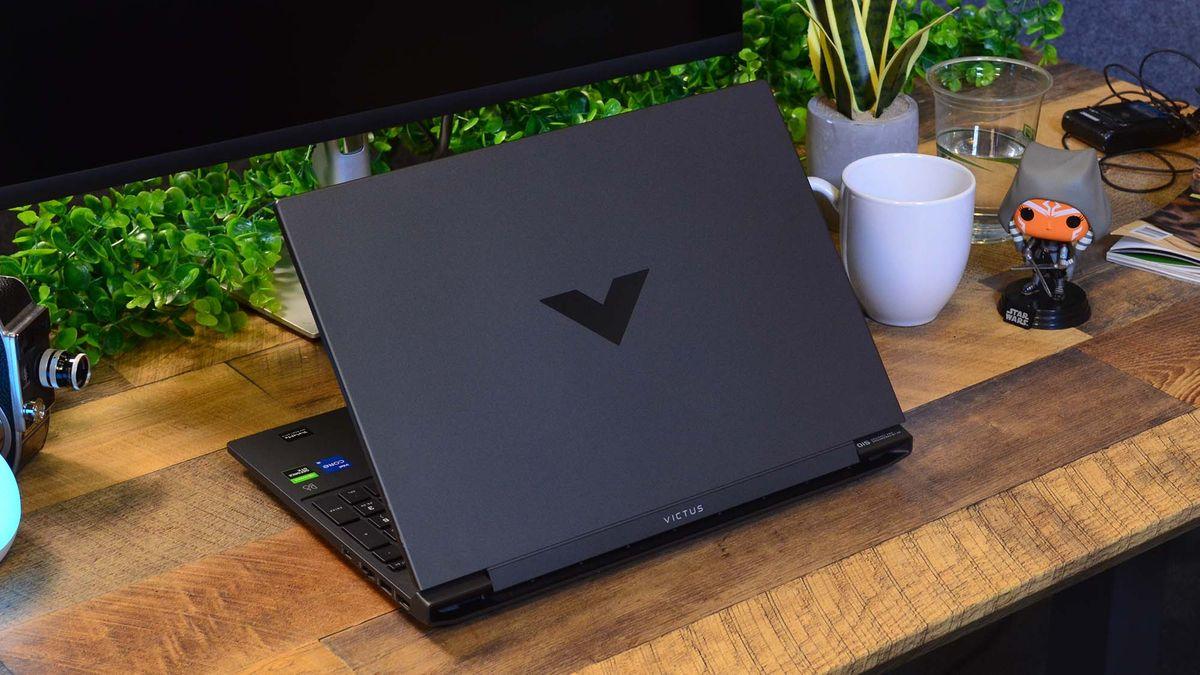
VideoCardz managed to get hold of a specifications sheet for HP‘s Victus 15 (model FA2) gaming laptops which reveals that these devices will feature Nvidia’s GeForce RTX 5060 and RTX 5050.

This appears to confirm the existence of these graphics cards, but as ever, we must be cautious around leaked material which may turn out to be using outdated information (or even be faked).

The new Victus 15 spec also features Intel‘s 13th-generation CPUs, complementing the Blackwell laptop GPUs with enough processing power for good performance. However, this is in contrast to the higher-end RTX 5090 and RTX 5080-powered laptops, which will use some of Intel’s newer Core Ultra processors.

Note that both the RTX 5060 and RTX 5050 GPUs have not been officially confirmed by Nvidia (for desktop PCs, or laptops), and they were missing from the Blackwell announcements made at CES 2025.

It seems likely that they’re coming at some point, of course, but the RTX 5050 will probably be a laptop-only GPU, based on the rumors we’ve heard thus far. (They are all about the mobile part, and there’s nothing really to suggest a desktop graphics card – though that doesn’t rule out the possibility).

{ window.reliablePageLoad.then(() => { var componentContainer = document.querySelector(“#slice-container-newsletterForm-articleInbodyContent-gH45yvdS9CNuBAXA4siPuJ”); if (componentContainer) { var data = {“layout”:”inbodyContent”,”header”:”Get daily insight, inspiration and deals in your inbox”,”tagline”:”Sign up for breaking news, reviews, opinion, top tech deals, and more.”,”formFooterText”:”By submitting your information you agree to the Terms & Conditions and Privacy Policy and are aged 16 or over.”,”successMessage”:{“body”:”Thank you for signing up. You will receive a confirmation email shortly.”},”failureMessage”:”There was a problem. Please refresh the page and try again.”,”method”:”POST”,”inputs”:[{“type”:”hidden”,”name”:”NAME”},{“type”:”email”,”name”:”MAIL”,”placeholder”:”Your Email Address”,”required”:true},{“type”:”hidden”,”name”:”NEWSLETTER_CODE”,”value”:”XTR-D”},{“type”:”hidden”,”name”:”LANG”,”value”:”EN”},{“type”:”hidden”,”name”:”SOURCE”,”value”:”60″},{“type”:”hidden”,”name”:”COUNTRY”},{“type”:”checkbox”,”name”:”CONTACT_OTHER_BRANDS”,”label”:{“text”:”Contact me with news and offers from other Future brands”}},{“type”:”checkbox”,”name”:”CONTACT_PARTNERS”,”label”:{“text”:”Receive email from us on behalf of our trusted partners or sponsors”}},{“type”:”submit”,”value”:”Sign me up”,”required”:true}],”endpoint”:”https://newsletter-subscribe.futureplc.com/v2/submission/submit”,”analytics”:[{“analyticsType”:”widgetViewed”}],”ariaLabels”:{}}; var triggerHydrate = function() { window.sliceComponents.newsletterForm.hydrate(data, componentContainer); } if (window.lazyObserveElement) { window.lazyObserveElement(componentContainer, triggerHydrate); } else { triggerHydrate(); } } }).catch(err => console.error(‘%c FTE ‘,’background: #9306F9; color: #ffffff’,’Hydration Script has failed for newsletterForm-articleInbodyContent-gH45yvdS9CNuBAXA4siPuJ Slice’, err)); }).catch(err => console.error(‘%c FTE ‘,’background: #9306F9; color: #ffffff’,’Externals script failed to load’, err)); ]]>

Sign up for breaking news, reviews, opinion, top tech deals, and more.

An HP Victus 15 on a desk

(Image credit: Future)

The RTX 5050 GPU has a trump card in DLSS 4

Considering the RTX 5050’s (which I reiterate isn’t officially confirmed by Nvidia) position as the lowest tier option for a Blackwell laptop GPU, it’s going to face some stiff competition. Particularly from AMD‘s Strix Halo APUs, which pack some serious grunt with their integrated graphics for gaming laptops (or handhelds).

However, Nvidia does have a secret weapon here – namely DLSS 4, which will certainly come in handy to give the RTX 5050 some more oomph. I’ve already highlighted how much of a game changer the upscaling tech is, improved by leaps and bounds thanks to its new transformer model and Multi Frame Generation (MFG), which enhance image stability and quality, and boost frame rates respectively. (With PC games that support the tech, of course).

That’s not to say that the RTX 5050 won’t perform well enough at a resolution like 1080p, but reports suggest it will only use 8GB of VRAM, which is now looking shaky for AAA games today (and certainly in the future). The old Frame Generation tech introduced with RTX 4000 GPUs had ghosting issues coupled with input latency headaches – these drawbacks have both been improved with MFG.

For those on a budget, the RTX 5060 and RTX 5050-powered HP Victus 15 gaming laptops may end up being a reasonable option.

You may also like…

Source