Posted on

ChatGPT o3 is coming in January, but there’s still no word on GPT-5

OpenAI ended its “12 Days of ChatGPT” announcements on Friday with a bang. The company unveiled the next-gen reasoning model that will power ChatGPT, which is called o3. A ChatGPT o3-mini will also be available to users.

According to OpenAI’s presentation, the o3 models will deliver big performance boosts over their predecessors. OpenAI also revealed that it’s conducting safety training for the new reasoning models and taking registrations for third-party safety testers ahead of the models’ release. OpenAI also revealed that it plans to give o3-mini a late January release date, with o3 to follow.

You wouldn’t be alone if you thought Friday’s ChatGPT surprise might be OpenAI soft-launching GPT-5. However, it turns out that the big upgrade we’re waiting for is reportedly behind schedule and incurring massive costs. Therefore, o3 isn’t the GPT-5 model in disguise, but rather a precursor of that next big ChatGPT upgrade.

Sam Altman & Co. detailed the capabilities of the o3 models during a short live stream on Friday. That’s where he said that OpenAI will launch o3-mini around the end of January, with the full o3 model to follow shortly after that.

Tech. Entertainment. Science. Your inbox.

Sign up for the most interesting tech & entertainment news out there.

By signing up, I agree to the Terms of Use and have reviewed the Privacy Notice.

Then, The Wall Street Journal penned a detailed report about OpenAI’s struggles with GPT-5 development, indicating the o3 models are entirely different projects. It’s unclear when GPT-5 training will be ready, and there’s no release estimate for the next ChatGPT breakthrough model.

The hype around GPT-5 is real, however. The expectation is for the next genAI model to outperform GPT-4o while making fewer errors than its predecessors.

Called Orion internally, GPT-5 has been in development for 18 months. It was initially expected to drop in 2024, but OpenAI encountered unexpected delays while burning through cash. Training GPT-5 might cost up to $500 million per run, and the results aren’t exciting. Training GPT-4 cost the company over $100 million, according to Altman.

One issue with the training process concerns the lack of data. The internet, which OpenAI and others mined for data during the training phases of previous AI models, is finite. OpenAI needs more data of better quality to train the GPT-5.

That data needs to be generated by humans tasked with solving specific problems, whether coding or math. The alternative is the production of synthetic data from a reasoning model like o1.

The GPT-5 training process isn’t just generating high costs for processing all that data. It’s also time-consuming. A training run can take months and can’t guarantee success. If it fails, the teams have to rethink the process and restart it.

The report also details the various staffing problems OpenAI has been dealing with since Sam Altman was ousted and rehired in November 2023. Many high-ranking executives and researchers have left the company.

OpenAI has diverted resources to other products that might have impacted the development of GPT-5. This happened only after OpenAI researchers realized the Orion training runs failed to produce the expected results.

The Journal’s report isn’t the first to say GPT-5 will be delayed. Others said recently that several next-gen AI models deal with the same setbacks, not just GPT-5. With that in mind, it’s unclear when OpenAI will have GPT-5 ready. But, if you had any doubts, o3 isn’t GPT-5 by another name. It’s just a more advanced reasoning AI from OpenAI.

Reasoning could be the key to developing better genAI in the future. The report cites a quote from a recent Ted Talk featuring OpenAI senior research scientist Noam Brown. He said that “having the bot think for just 20 seconds in a hand of poker got the same boost in performance as scaling up the model by 100,000x and training for 100,000 times longer.”

On that note, I’ll speculate that the o3 models may be what OpenAI needs to generate that additional data to train GPT-5. That’s speculation, however, and there’s no indication that’s what’s happening behind the scenes. As for OpenAI, the company is not ready to make any GPT-5 announcements.

Source

Posted on

Interview: Wendy Redshaw, chief digital information officer, NatWest Retail Bank

Wendy Redshaw, chief digital information officer (CDIO) at NatWest Retail Bank, has had a distinguished career leading technology-led change in some of the world’s biggest financial services organisations. Now, she’s using that experience to drive even more innovation.

After four years as CIO for collaborative technology solutions with Deutsche Bank, Redshaw says she was eager to work for a UK finance house. In late 2018, she found the perfect home at NatWest as head of technology and digital distribution for the personal bank.

“The opportunity was interesting because NatWest was ready for digital transformation but wasn’t naturally sitting in a leadership position at that time,” she says. “The role allowed me to land and think about what to do. I found an organisation that was fundamentally focused on its customers and perhaps had less digital experience in-house.”

After working with her team to deliver technological improvements across the personal bank offline and online, Redshaw moved into the CDIO position in February 2020. “It wasn’t just because I wanted a longer acronym than most technologists,” she jokes.

“We created the role so we could sew together business and technology because, as with many organisations, technology had historically been something that happened over there, and the business did their thing, and then they would give the technologists something to work on. We wanted better integration.”

Embracing digital change

Redshaw says the creation of her CDIO role in 2020 was a public statement that NatWest wanted to create a partnership approach to technology and business: “This is a digital bank in the making, and hopefully, with the results that we’ve seen, we’ve achieved our aims.”

The technological transformation in banking services that Redshaw oversees at NatWest today differs greatly from the finance industry she joined as a software engineer in 1987.

“We didn’t call it digital then,” she says. “I remember the focus was on, ‘How do we use technology to make things quicker, simpler and more secure for our customers?’” She points to work on a security module for the London Stock Exchange and the beginning of the settlement systems CHAPS and Euroclear.

“There was a lot of change where technology was being brought in, but it was more for the underpinning services than for the consumer-facing areas,” she says, before fast-forwarding to the present-day bank. “Over that time, we’ve seen that digital is now in the hands of our retail customers.”

Redshaw says the shift in technological focus also helped prompt her switch to the retail side of banking. After a career driving behind-the-scenes IT changes in major firms, such as Lloyds TSB, Barclays Capital and Royal Bank of Scotland, her current role at NatWest is focused on delivering innovative customer services.

“That’s where the exciting stuff is happening. Yes, of course, we use AI across several areas of the organisation – something like 17% of our models are AI-based now, such as for controlling fraud, financial crime and so on,” she says.

“However, in terms of affecting human beings, digital services are at our customers’ fingertips. If you think about my driver for going into the CDIO role, the customer is where I thought I’d have the most impact.”

Delivering pioneering innovations

As CDIO, Readshaw is directly accountable to the group CIO and retail banking CEO. Responsible for digital operations leadership, she manages 4,500 people across four locations globally and leads the delivery of retail banking technology for Royal Bank of Scotland, NatWest and Ulster Bank North.

Redshaw’s team is digitalising services to make life easier for the group’s customers. Their work is supported by a planned investment of £3.5bn from 2023 to 2025, with more than 70% of spending targeted at data and technology.

NatWest has 10.9 million digitally active retail and business banking customers and 3.5 million use online banking platforms. The hard work continues apace. In 2024, Redshaw led the launch of a retail banking app on Apple’s Vision Pro virtual reality headset.

One of her proudest achievements is the introduction of generative AI (GenAI) into the bank’s conversational assistant, Cora. She says the bank made an early move into chatbots. Cora was introduced in 2017. The technology could answer basic questions, but Redshaw wanted it to do more.

“When I joined in 2018, I realised it was quite a good channel to do something with,” she says. “I had some grand ambitions for her – things like digital avatars having a voice, and all these engaging ways of doing things. I said, ‘Look, I see this particular technology being something we could get moving on’.”

Redshaw saw that, while machine learning technology was progressing at pace, it wasn’t quite ready for the giant leap in digital experiences she envisioned. However, the public release of generative AI models in late 2022 helped turn theory into a practical reality. Working with experts from IBM’s client engineering team to develop the initial proof of concept, NatWest launched its next-generation assistant, Cora+, in June 2024.

Cora+ is a multichannel platform that securely accesses data from multiple sources, including products, services and banking information. The virtual assistant technology is powered by IBM’s Watsonx Assistantand built on IBM Cloud. Estimates suggest the technology is creating a 150% improvement in satisfaction for some customer queries.

“It was the perfect example of an interest in technology, an interest in people, and an interest in delivering business value,” she says. “I feel very excited about how we’ve taken something that just answered questions and moved into generative AI at scale for millions of customers. And it’s only the first step. I’ve got big ambitions for what I want to do with that technology.”

Building strong partnerships

Cora+ uses ChatGPT 3.5 alongside an unnamed GPT large language model (LLM). The second model is trained to judge the output of the first model. While the GPT models play an important role in NatWest’s digital strategy, the organisation is eager to keep an open approach to AI and innovation.

Redshaw says the group wants to avoid being locked into a specific LLM. She wants the capability to swap from large to small language models (SLMs). Organisations can use SLMs to derive outputs from constrained amounts of data that require less computing power, which is important for a big business like NatWest that wants to meet sustainability targets.

“As a result, it was a case of, ‘OK IBM, we like working with you, but we want to be able to switch the language models in and out depending on the business requirement’,” she says. “And they were like, ‘Absolutely’. So, that’s great. We have the same mindset around using the best of everything to get value for our customers safely.”

Wendy Redshaw, Natwest

“This is a digital bank in the making, and hopefully, with the results that we’ve seen, we’ve achieved our aims”

Wendy Redshaw, NatWest Retail Bank

In addition to the work on Cora+, Redshaw and her colleagues are analysing how AI can boost customer experiences in other areas. NatWest has worked with IBM to develop a digital legal assistant powered by GenAI. This tool streamlines contract management and enhances accessibility, especially for neurodivergent users. The tool supports colleagues with compliance checks, producing 20% efficiency gains.

More generally, Redshaw is proud her team completes thousands of releases annually. The department’s focus on micro-projects is as important as delivering large-scale initiatives and helps NatWest hit tight transformation deadlines. Across all projects, IBM acts as a key technology partner, with Redshaw suggesting the nature of the long-term working relationship with the tech giant is like interacting with people on the internal team.

John Duigenan, distinguished engineer and general manager of the global financial services industry at IBM, says shifting to constant innovation, experimentation, and learning is typical of the work his company sees in its most pioneering clients. “We got to work with a trusted partner, and we got to learn together,” he said, referring to IBM’s relationship with NatWest.

“It’s great we co-create approaches to using technology and collaborate on innovation. Our teams blend incredibly well, and we deliver together in new ways. We have an approach that says, ‘We know why this work will matter for all of us because we can measure the impact’.”

Providing new experiences

Redshaw reflects on achievements during the past few years. While the benefits of the digital transformation she’s enacted at NatWest are clear, there’s always an opportunity to do more.

She says the rapid pace of transformation makes it difficult to predict with any degree of certainty what will happen next: “What will the success metrics be in three years? We won’t be judged on the same metrics because digital banking is changing quickly.”

However, she expects to see developments in some key areas. “In the AI space, I expect to see more voice,” she says. “At the moment, Cora listens to our telephony and sends a text, a deep link, or something else that’s required. In the future, I think it’ll probably answer the phone and deal with questions.”

Redshaw also expects progress in text-based answering. Her bank’s research suggests people in financial difficulties often prefer having a guilt-free conversation with a bot rather than a human. “I would expect something in that financial health and support space that uses natural language,” she says.

There’s even the potential for advances in unexpected areas. Redshaw says she’s keen to add Cora to ATMs, something that she was previously told was impossible.

“I’ve now spoken to some innovation engineers, and they’ve said they think it might be possible,” she says. “So, I suspect we will see something like a digital point of presence.”

Finally, Redshaw expects the bank to continue honing its approach to mobile. “People now have their bank in their pocket,” she says. “I imagine we will give more richness and engagement through these devices. Even though our mobile strategy is great, I think it will lean towards more engagement and personalisation during the next 24 months.”

Source

Posted on

Mysterious ChatGPT hardware must be smart glasses, given what OpenAI just unveiled

After months of speculation, Jony Ive confirmed in mid-September that he and a team of former Apple designers are working on hardware that will have ChatGPT at the core. While Ive said his LoveFrom design company will be involved in creating the product (or products?), he didn’t reveal what form factor(s) we should expect.

I labeled the product an iPhone competitor because the iPhone is an AI device, just like the Pixel and any other smartphone that can run native or third-party AI apps. The ChatGPT hardware will compete against the iPhone no matter what it looks like. The only thing we know about the gadget is that it “uses AI to create a computing experience that is less socially disruptive than the iPhone.”

Nearly three months later, I believe the ChatGPT device has to feature a key component, a pair of smart glasses that will truly let the user make the most of OpenAI’s AI models. It’s all thanks to what we witnessed on December 12th, a few short hours apart.

First, Samsung and Google unveiled the Android XR experience and teased the first devices with AI at the center. Project Moohan is Samsung’s obvious Vision Pro alternative, and yes, it looks too much like the latter. Project Moohan will be a spatial computer that supports VR, AR, and AI.

Tech. Entertainment. Science. Your inbox.

Sign up for the most interesting tech & entertainment news out there.

By signing up, I agree to the Terms of Use and have reviewed the Privacy Notice.

All the acronyms are there, with AI giving Samsung a theoretical advantage over the Vision Pro. That will be Galaxy AI and Gemini AI, in case you were wondering.

Samsung's Project Moohan Android XR headset.Samsung’s Project Moohan Android XR headset. Image source: Samsung

More interesting than Moohan is Google’s unannounced pair of smart glasses. Samsung is probably working on its own smart glasses, but the company didn’t feel compelled to announce them on Thursday. 

Google demoed the smart glasses during its Gemini 2.0 announcement, showing how Project Astra can work on them. The wearable device is paired with a Pixel phone, which will handle the processing, including Gemini. The glasses give the AI eyes and ears so it can see everything around you and communicate information as you seek help while on the go.

Add the Android XR platform, and you get augmented reality features. Think AI notification summaries, Google Maps navigation, and real-time translation. According to Google’s demo, these are all part of Android XR.

All of that further reinforces my belief that standalone AR glasses are the future of mobile computing. They’ll complement the iPhone first and then replace it.

Google Maps AR navigation on smart glasses.Google Maps AR navigation on smart glasses. Image source: Google

Seeing Samsung and Google’s announcements was enough to make me realize OpenAI will need similar abilities from ChatGPT. And the only way to deliver them is by making smart glasses of its own.

Little did I know that OpenAI’s “12 Days” live stream, which followed Samsung and Google’s surprise announcement, would further drive that point home.

OpenAI on Thursday announced that ChatGPT Advanced Voice Mode is finally getting support for real-time video streaming and screen sharing. We saw these features demoed for GPT-4o back in May, but OpenAI needed time to bring them to all users.

The ChatGPT mobile app will let you use the camera of your iPhone or Android device to see the world and hold a conversation about it with the user.

The demos OpenAI offered showed that the AI can recognize people and remember details about them. Also, the AI can recognize objects and provide tips and tutorials related to them if asked.

When I first tried Advanced Voice Mode, I wanted to use ChatGPT as a museum voice guide. However, the experience lacked a key feature: the live video stream support that OpenAI just made available to ChatGPT users. Instead, I had to upload photos whenever I had questions about something.

Back to Thursday’s OpenAI updates, the ChatGPT demos showed that you can share your phone screen with the AI and ask questions about the content. It’s another way of giving the AI the ability to see what you’re doing.

This settled it for me. Any multimodal AI is a great tool to enhance your productivity, but it can get miles better if the AI gets eyes. Smart glasses are the best way to wear the AI’s eyes. The glasses don’t even have to support augmented reality features. AR would be just the cherry on top. 

It turns out Meta was right all along with the Ray-Ban AI project. As such, I think OpenAI and LoveFrom have to bundle a pair of smart glasses with whatever ChatGPT hardware product they end up making. I don’t think they can make standalone smart glasses. The technology isn’t ready for that.

Solos AirGo Vision ChatGPT smart glasses: Front look.Solos AirGo Vision ChatGPT smart glasses: Front look. Image source: Solos

They could always create only ChatGPT smart glasses that could then connect to the iPhone, Mac, or any smart device. But in such a case, they won’t control the underlying platform. On that note, I did show you a pair of smart glasses earlier this week (above) which put ChatGPT front and center. They might not be a first-party device, but they’re available for preorder.

This is all speculation from this ChatGPT enthusiast. I have no way of knowing what Ive & Co. are actually designing. But smart glasses seem like a key piece of the puzzle. And no, placing a camera on clothing will not work. Humane tried that and failed miserably. Eyewear is a whole different ball game.

Source

Posted on

Google smart glasses with Gemini AI hands-on: Google Glass done right

When it demoed Project Astra at I/O 2024 in May, Google teased smart glasses for the first time. The company did the same thing during Wednesday’s big Gemini 2.0 announcement, where the wearable was part of a longer Project Astra demo. Google also suggested Gemini AI smart glasses might be coming soon.

At the time, I thought Google was simply showing off a prototype of a pair of Samsung XR glasses that would be unveiled next month during the Galaxy S25 Unpacked press event. Little did I know that Samsung and Google had bigger things in mind.

A day later, the two companies unveiled Project Moohan, a Vision Pro spatial computer rival. Google also announced the Android XR platform that will power it. Both Samsung and Google mentioned smart glasses in their announcements. But Google’s was more impressive, as the company showed off AR features for smart glasses powered by Gemini AI.

Google didn’t offer a name for the smart glasses or a release date. But the company did give a select few people a hands-on experience with Project Moohan and the unnamed smart glasses. It turns out the Gemini AI wearable is quite interesting, seemingly delivering the Google Glass experience that Google failed to offer more than a decade ago.

Tech. Entertainment. Science. Your inbox.

Sign up for the most interesting tech & entertainment news out there.

By signing up, I agree to the Terms of Use and have reviewed the Privacy Notice.

We all remember the Google Glass project, which was, in retrospect, ahead of its time. That smart glasses concept sparked privacy worries at a time when Google wasn’t exactly known for great privacy. Also, there was no generative AI at the time to truly make Google Glass useful.

Fast-forward to late 2024, and Google seems confident enough to demo a product that could become a must-have accessory for people who want AI assistance all the time. Wired tested Google’s Gemini AI glasses and Project Moohan, finding the former the more compelling product.

The glasses seem to take inspiration from the North Focals, smart glasses from a company that Google purchased a few years ago. But they’re slimmer and more comfortable than the Focals.

Even so, smart glasses have thick arms and thicker rims around the eyes, which is what you’d expect from glasses that incorporate AR abilities. They feature clear or sunglasses lenses and will support prescription lenses like Moohan.

North Focals glasses.North Focals glasses. Image source: North

When it comes to AR capabilities, the glasses come in three versions. The no-AR model is presumably the cheapest, as it lacks a display. Then there’s a pair that projects images on one of the lenses, the monocular display.

The best experience, and probably the most expensive, comes from the binocular display version that will center AR images, as seen in the photos above and below.

The processing is passed on to a nearby smartphone, presumably a Pixel phone that connects wirelessly to the glasses. That’s where Gemini resides, and the AI is ready to help with a tap on the arm of the glasses. A tap on the side also brings up the display in those models that support AR.

Google Pixel 9 Pro Fold GeminiGoogle Pixel 9 Pro Fold: Gemini support. Image source: Christian de Looper for BGR
The camera is also built into the frame, and an LED turns on when it is active. Built-in microphones pick up your commands for Gemini, and a speaker in the frames lets you hear the AI talk back.

The glasses are meant to last a full day on a charge, though battery life will probably depend on how much you use them. The hands-on experience with the Gemini AI smart glasses doesn’t offer actual battery characteristics, and it’s too early for that.

The report explains the various scenarios where AI smart glasses will be useful. For example, the glasses support Google Maps navigation, a feature Google showed in the Android XR platform announcement (image below).

Google Maps AR navigation on smart glasses.Google Maps AR navigation on smart glasses. Image source: Google

You also get AI summaries of notifications displayed in front of your eyes. The same goes for real-time translation of text. Impressively, the glasses can translate spoken foreign languages in real-time. Gemini will also caption conversations, a great feature for people with hearing issues. And Gemini can answer in multiple languages, a feature ChatGPT’s Advanced Voice Mode also supports.

The AR capabilities do not stop there. The glasses will show you previews of photos you take, and you’ll be able to play video when needed. The display experience isn’t the greatest, which is understandable. But it still sounds like the hands-on demo was a success.

Gemini powers all the smart AI features, like real-time translation and captioning. The AI can also summarize content seen while on the go, like the page of a book. Gemini has a short-term memory, too, so it can recall some of the things you’ve just done and seen a few minutes ago.

Interestingly, Gemini can also identify products and offer instructions on how to use them. In this hands-on, the Wired reporter asked how to use a Nespresso machine.

As impressive as the demo might sound, Google wasn’t ready to provide a release date and pricing information. The Gemini AI smart glasses it unveiled are clearly superior to the Meta Ray-Ban smart glasses, which only offer AI support, with the AR component missing. I’d expect Google’s glasses to be more expensive, assuming Google wants to sell them.

Since Project Astra is still in the early days, I’d expect Google to launch the glasses once the Gemini assistant abilities it’s working on for Project Astra are ready to launch. No point in having smart glasses in store if the Gemini software isn’t ready.

Meanwhile, you should check out Wired’s full hands-on experience for more details.

Source

Posted on

Here’s why I’d cancel Netflix before ChatGPT Plus

As I type these lines, we’re halfway through OpenAI’s big “12 Days” of ChatGPT event, which brought us several exciting features. ChatGPT o1 is out of beta, as is the Canvas mode, with the latter delivering a big UI change for the ChatGPT experience. OpenAI also released the text-to-video Sora service to the public and brought live video streaming and screen sharing to GPT-4o’s Advanced Voice Mode.

As a ChatGPT Plus user, I’d have early access to all of them, but since I’m in the European Union, OpenAI is more cautious with its releases here. As such, Sora and the live video streaming support for Advanced Voice Mode are not available in the region. The latter is especially exciting, as the AI will get eyes in specific conversations.

These developments made me realize, again, that the Plus subscription isn’t as good in Europe as elsewhere. Still, I’m not going to cancel it, as I find that ChatGPT has become too valuable to me, both for work and personal computing. I also thought that, if I were to choose, I’d rather cancel Netflix than ChatGPT Plus at this particular point in my life.

It’s an apples-to-oranges comparison, sure. The two products aren’t actual competitors. If anything, I found that ChatGPT can be a great companion for streaming certain Netflix shows.

Tech. Entertainment. Science. Your inbox.

Sign up for the most interesting tech & entertainment news out there.

By signing up, I agree to the Terms of Use and have reviewed the Privacy Notice.

It just happens that I’m not binging Netflix like I would have done years ago. I skip some of the shows completely.

Meanwhile, Netflix has tightened its password-sharing crackdown to the point where circumventing it is almost impossible.

Separately, YouTube got a massive price hike this week, which, combined with OpenAI’s ongoing event, made me compare streaming subscriptions like Netflix to ChatGPT Plus. It’s not just Google that’s periodically increasing prices; Netflix is doing it, too, as I just got one such price hike notification for my region.

I often argued that the password-sharing ban and price hikes are worth dealing with, considering what you’re getting in return. I said that I’ll keep my Netflix subscription as long as I spend more money on coffee when going out. The latter consideration also applies to ChatGPT Plus.

What I’m getting at is that I’m not in a position where I have to choose between the various software and service subscriptions I might pay each month and cut some of the costs.

But if I were to start cutting something, streaming services would go well before ChatGPT Plus. Netflix could be on the chopping block too.

At $20/month, ChatGPT Plus is actually more expensive than what I pay for Netflix. But combine all the streaming subscriptions I’m subscribed to, and ChatGPT Plus is the cheaper option. Also, those costs add up over a year, according to an Excel doc where I keep track of everything.

Ted Danson in A Man on the Inside on NetflixTed Danson as Charles in “A Man on the Inside.” Image source: Colleen E. Hayes/Netflix
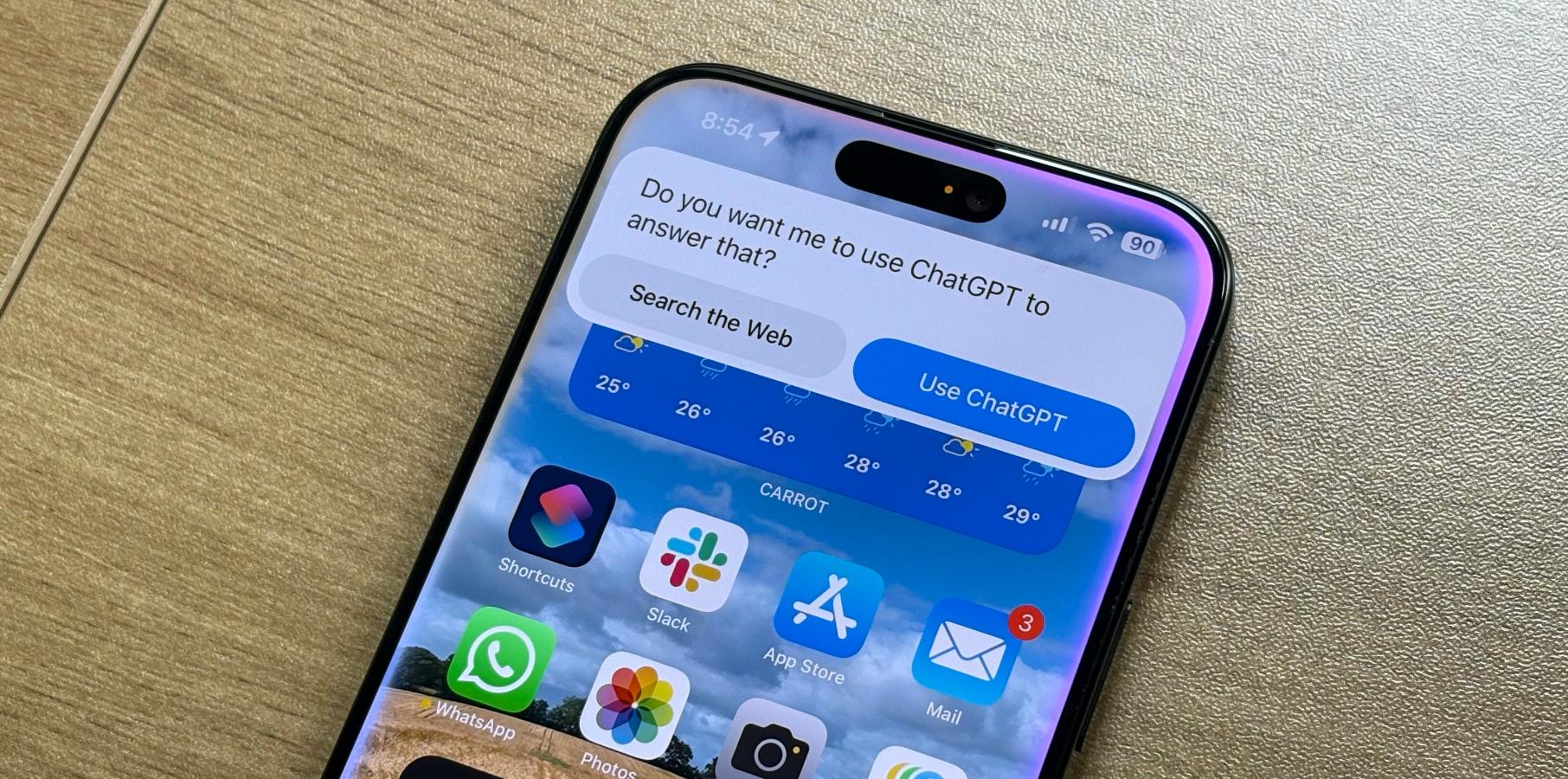
I reduced my streaming time so I could focus on exercising more. I run marathons now, which means I’m spending hours running and walking outside. Watching Netflix isn’t what it used to be, and it has nothing to do with the time I spend on ChatGPT.

As for the AI chatbot, I’ve been using it increasingly more in the past year, especially since I jumped on the Plus subscription. It’s not just for work, though; as you can imagine, keeping tabs on all things AI is a good reason to have an active premium AI subscription. I use ChatGPT for more complex research, which would take a lot longer to use traditional search engines.

I’m still questioning what the AI is telling me, but with the addition of ChatGPT Search, OpenAI has made a big move towards showing the sources of ChatGPT’s claims. By the way, ChatGPT Search continues to be exclusive to premium tiers like ChatGPT Plus.

I use ChatGPT to plan workouts and travel, and I use it to ask any question I can think of, including the sillier kind. That latter part actually comes in handy while traveling to all sorts of places and visiting museums and other landmarks. ChatGPT can be an invaluable source of information, and it’ll be an even better tool once video streaming support rolls out to Advanced Voice Mode.

I wouldn’t have necessarily expected it earlier this year, but a premium AI subscription is a top priority for me. Even if I cancel ChatGPT Plus, I’d consider a premium replacement from the competition. The Netflix subscription, meanwhile, is much lower on that priorities list, and I’m sure I’d cancel it long before I ditch ChatGPT Plus.

Source

Posted on

8 iOS 18 features that Apple has delayed to 2025

With the launch of iOS 18.2 just around the corner, Apple has a few more iOS 18 features that have now been delayed until 2025.

As excited as we are about all of the new features Apple is bringing to iOS 18, the wait for many of them has been longer than we expected. With that in mind, here are all the features iPhone owners are going to receive sometime next year:

  • Personal context understanding: With Apple Intelligence’s on-device semantic index, Siri can understand emails, messages, photos, calendar events, files, and more and can provide answers to personal questions.
  • In-app actions: Siri can take hundreds of new actions on your behalf in both first- and third-party apps, such as editing a photo, adding a note, and more.
  • Onscreen awareness: Siri will be able to understand and take action with things on your screen, so when a friend texts you recommending a new coffee shop in the neighborhood, you can ask Siri how long it will take to get there.
  • Apple Intelligence expansion: Apple promises Apple Intelligence support will expand to new countries and languages in 2025, most likely around iOS 18.4.
  • Sketch style: With Image Playground, Apple offers animation and illustration styles. However, the Sketch style will likely be delayed. It’s currently available as an option in Image Wand but not for the Image Playground app.
  • Integration with other LLMs: Currently, Apple only offers support for ChatGPT integration with Writing Tools. In the future, the mobile platform is expected to work with other LLMs, such as Google’s Gemini and more.
  • New emoji: Apple usually releases new emojis a few months after its main iOS release. If the company follows the trend, iOS 18.4 could bring new emojis. These are the possible new additions.
  • Robot vacuum cleaners will be compatible with the Home app, so they can participate in automation and scenes and can be activated by a user’s voice using Siri.

iOS 18.1 Apple Intelligence on iPhone 15 Pro all-new Siri designiOS 18.1 Apple Intelligence on iPhone 15 Pro: The all-new Siri design Image source: José Adorno for BGR
While the robot vacuum cleaners feature will likely be released early in 2025 with iOS 18.3, all of these new features will likely be part of iOS 18.4 in the spring.

That being said, it’s possible that most of the Apple Intelligence features related to Siri could be delayed to iOS 19 and beyond. In a previous newsletter, Bloomberg‘s Mark Gurman wrote:

Tech. Entertainment. Science. Your inbox.

Sign up for the most interesting tech & entertainment news out there.

By signing up, I agree to the Terms of Use and have reviewed the Privacy Notice.

These upcoming upgrades will make Siri easier to use on a day-to-day basis, but it’s not the brain transplant that the service really needs. Siri is still based on an outdated infrastructure — AI models that have been overtaken by the technology used by ChatGPT and Google’s Gemini. Siri hasn’t yet been rebuilt for the generative AI age, even if Apple is trying to create the impression that it has.

Wrap up

iOS 18 still has several delayed features that might take a long time to become available. Below, you can learn more about what features iOS 18.2 will bring.

Source

Posted on

ChatGPT might get ads

I’ve been a ChatGPT Plus subscriber for a while now, and I don’t plan on switching to the Free tier anytime soon. ChatGPT Plus gives me access to the newest models and features much sooner than the Free tier. Also, the limits with the chatbot are higher on the Plus plan, so you won’t run into interruptions.

Still, the ChatGPT Free option gives you quick access to OpenAI’s chatbot, letting you explore some of its best features to determine whether you’d even want to consider the Plus subscription in the first place.

Also, ChatGPT Free is truly free, as you don’t have to deal with any ads that would help OpenAI pay for your interactions with the AI. You don’t have to agree to have your chats train the AI, either. That’s why it has limits in place.

Unsurprisingly, OpenAI is considering a switch to an ad-based model in ChatGPT at some point in the future. It won’t happen anytime soon, but the company confirmed it’s looking at inserting ads in ChatGPT.

Tech. Entertainment. Science. Your inbox.

Sign up for the most interesting tech & entertainment news out there.

By signing up, I agree to the Terms of Use and have reviewed the Privacy Notice.

OpenAI CFO Sarah Friar told The Financial Times that the company is considering showing ads to non-paying ChatGPT users in the future. Ads could help cover the rising costs of AI servers and even increase profits. OpenAI is no longer a non-profit, after all, so it’ll be chasing revenues like any other tech giant.

We didn’t really need any confirmation from a company that launched a Google Search alternative and is considering a web browser of its own. It goes without saying that ads could be part of the ChatGPT Free experience.

Hopefully, however, OpenAI will not go the same route as Google. The latter made the web discoverable to the world with its Google Search product. But Google also made us hate online ads over the years, and Google Search along with it, because it tracked us everywhere on the web, creating profiles of user preferences for better ad-targeting.

The good news is that OpenAI will not start running ads on ChatGPT Free anytime soon. The company has many concerns about ads, and that’s great to hear. Friar told the Times that OpenAI needs to be “thoughtful about when and where” ads will be implemented.

OpenAI CEO Sam Altman is reportedly warming up to the idea of ads, though he has previously said he’s not a fan of them.

Friar’s remarks aren’t just answers to hypothetical scenarios. OpenAI hired former advertising talents from Meta and Google earlier this year. The only thing they could be working on at OpenAI is ad tech for ChatGPT.

I’ll also remind you of other reports detailing OpenAI’s plans for monetizing ChatGPT in the future that called for much more expensive subscription tiers. Placing ads in the free version of ChatGPT makes even more sense in that context, assuming those reports were accurate.

On the same note, it’ll be interesting to see what comes first: Ads in ChatGPT Free or a Plus subscription increase for premium users.

I will point out that OpenAI might get an influx of extra ChatGPT users in the near future as ChatGPT becomes available through Siri on the iPhone. In turn, iPhone users will be able to buy a Plus subscription from the iPhone’s settings app.

Source

Posted on

I ran a marathon with the Apple Watch Series 10, and the battery blew my mind

Early last year, I got back into long-distance running, aiming to start running half-marathon races. I used ChatGPT to get back into shape, and the experience has been amazing. I now run a half-marathon almost every week. It’s just another day at the park.

I also decided to move on to marathons last year, something I had never done before and never thought I’d be able to do. I employed the services of ChatGPT once again, and I’ve now completed two official races. If all goes well, more will follow.

I ran my first marathon using an Apple Watch SE 2 model that was about 18 months old at the time of the race. The battery health was at 83%, and the Apple Watch SE barely made it through the marathon.

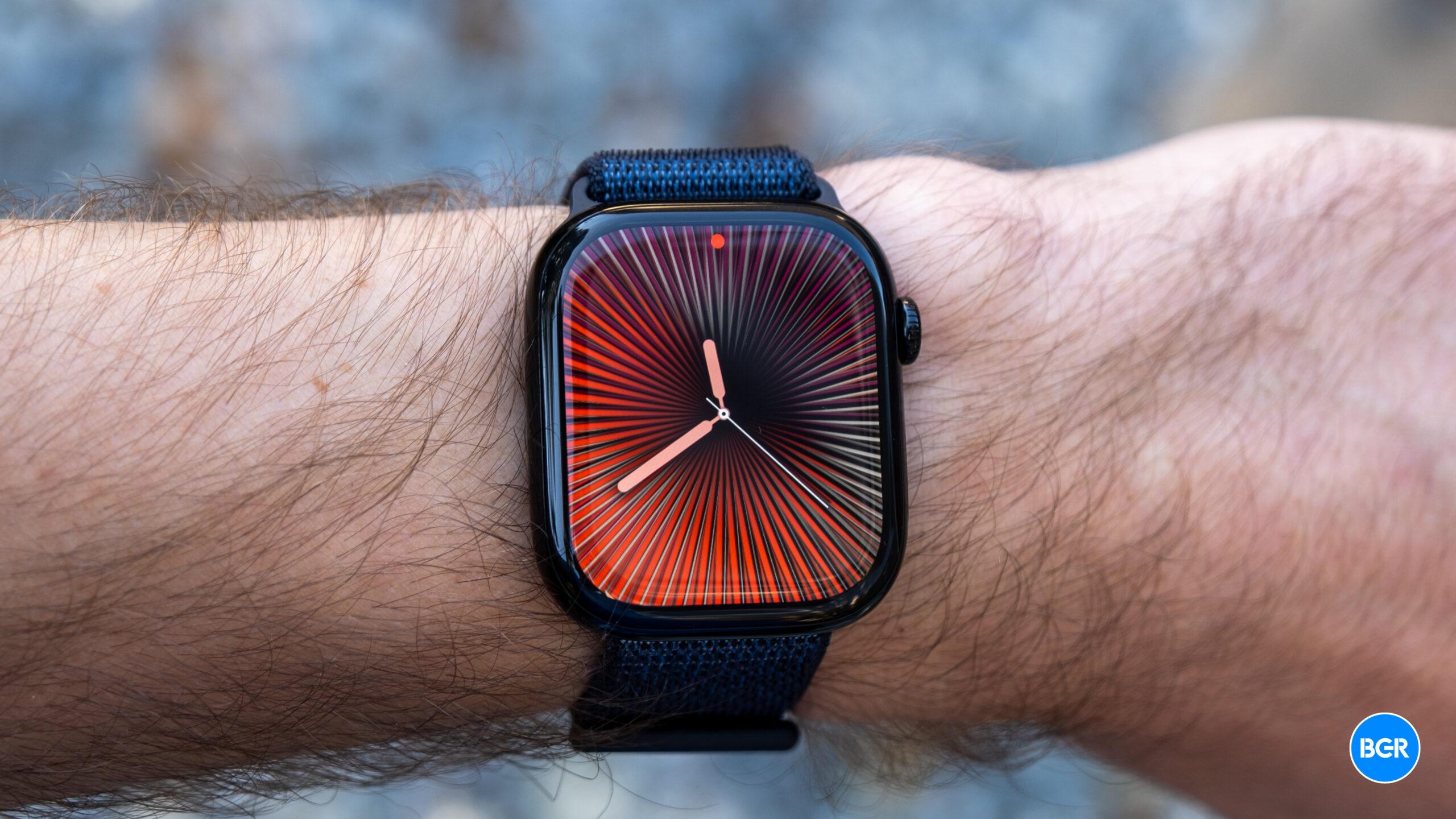
Six months later, I used an Apple Watch Series 10 to run my second marathon. I’ve been wearing it since late September, and the battery health is still at 100% after about two months. The Apple Watch Series 10 would have easily lasted the entire marathon race even if the battery health were slightly lower. Even if I were slower, it would have made it.

Tech. Entertainment. Science. Your inbox.

Sign up for the most interesting tech & entertainment news out there.

By signing up, I agree to the Terms of Use and have reviewed the Privacy Notice.

I knew the Apple Watch Series 10 battery life was amazing before the race. I never had any doubts. As I explained more than once, the Apple Watch Series 10 can last up to 36 hours with mild activity. It routinely lasts for 30 hours, even on harder training days. And I always use the Watch to track my sleep.

But knowing all of that, the Apple Watch Series 10 battery still blew my mind, and it’s not just because of the stellar longevity.

I’ve never run professionally, so I’m not one of those runners who can pull off sub-3-hour marathons. Yet.

I’m also unable to run a marathon under 4 hours, though that was my intention this time. I’m telling you this because the longer a wearable has to track activity, the more battery it will consume.

The 40mm Apple Watch SE 2 depleted almost its entire battery to track my first marathon. I finished the race in around four hours and 30 minutes. The Watch died about an hour after I crossed the finish.

The 42mm Apple Watch 10 had about 27% battery life when I finished the run. That was at around four hours and 16 minutes. I was faster, yes, even though I didn’t achieve my goal. But the point I’m trying to make here is that the Apple Watch Series 10 battery life was simply amazing.

I’m sure it would have lasted a six-hour marathon race, assuming I’d have been much slower. Or if I had to walk a lot following an injury.

It’s not just the battery life that’s amazing, but also the battery charging time. The Apple Watch Series 10 charges much faster than any previous model.

Charging the Apple Watch Series 10 before and after a marathon race.Charging the Apple Watch Series 10 before and after a marathon race. Image source: Chris Smith, BGR
I put the Apple Watch 10 on its charger for about an hour at around 10:00 PM the night before the race (image above). It still had over 50% charge, but I couldn’t risk it.

I removed it with a 98% charge, which dropped to 90% by the morning of the race. Again, I’m always sleeping with the Apple Watch Series 10 on, looking to track my vitals as long as possible. Comparatively, I topped up my Apple Watch SE 2 the morning of my first marathon, knowing I’d need every bit of juice for a race that could have lasted up to six hours.

The Apple Watch used up to 63% of its battery life for the marathon race. I say “up to” as I walked about 2km to the venue and then forgot to check the battery capacity at the start of the race. Obviously, I had to walk the same distance back home, which took what felt like forever. Human feet don’t work similarly after a marathon.

I put the Apple Watch Series 10 on its charger at around 2:00 PM, when it dropped to around 24%. After about an hour, it reached 96%, and I removed it to wear it.

Again, I want to keep the Apple Watch Series 10 on a charger as little as possible, especially on days when I have races scheduled. I want the wearable to collect as much data as possible, which might come in handy at some point in the future.

The Watch battery lasted 16 hours, including the entire night and the full marathon race. Given the intensity of the effort, I couldn’t be happier.

I know some runners prefer to use wearables from Garmin and other companies. I’m happy with the Apple Watch because I use it to track all my health data. I figure it’ll offer similar performance during training and at rest. That’s even if some runners say the Apple Watch isn’t as good for running as other wearables. I’d have no way of knowing.

Also, the Apple Watch Series 10 I wear had issues recording my heart rate correctly during the first weeks of use, which appear to have been mostly resolved by now. I’m also on the latest watchOS 11 beta.

I’m telling you all that so you have the complete picture. The bottom line is that the Apple Watch Series 10 is so efficient that you’ll have no problem using it for longer activities that require tracking. Whether it’s a marathon race or a hike that lasts several hours, the Apple Watch Series 10 will be ready to record your parameters. And it’ll only need about an hour of charging to go from about 25% to over 95%.

Put differently, you don’t need an Apple Watch Ultra to get you through a marathon. If Apple gives a future Watch SE the same chip and battery tech as the Watch 10, you could just get that and be on your way.

How will the Apple Watch Series 10 perform once the battery health drops? That’s a story for a different marathon. Then again, I’m trying to get faster myself, so hopefully, I’ll finish future races well before the wearable dies.

Source

Posted on

It’s easier than ever to use SearchGPT on your iPhone

It’s impressive that in only a few months, OpenAI’s ChatGPT became a fundamental part of Apple’s iPhone devices. Whether you have a phone with Apple Intelligence or not, you can take advantage of ChatGPT through its app or by integrating it with Apple’s AI platform.

With the latter, ChatGPT can currently improve Writing Tools technology. Apple explains:

With ChatGPT from OpenAI integrated into Siri and Writing Tools, you get even more expertise when it might be helpful for you — no need to jump between tools. Siri can tap into ChatGPT for certain requests, including questions about photos or documents. And with Compose in Writing Tools, you can create and illustrate original content from scratch.

You control when ChatGPT is used and will be asked before any of your information is shared. Anyone can access ChatGPT for free, without creating an account. ChatGPT subscribers can connect accounts to access paid features within these experiences.

However, if you prefer using OpenAI’s ChatGPT app, the latest update brought an important upgrade. Now, you can set a Shortcut with SearchGPT. For those unaware, OpenAI’s SearchGPT is designed to give you an answer, as it will “quickly and directly respond to your questions with up-to-date information from the web while giving you clear links to relevant sources.” Users will be able to ask follow-up questions as the GPT understands the context of each query.

By using Apple’s Shortcuts app, you could give Siri a command to open SearchGPT or even add it to the Action Button of your iPhone 15 Pro or iPhone 16 models.

Tech. Entertainment. Science. Your inbox.

Sign up for the most interesting tech & entertainment news out there.

By signing up, I agree to the Terms of Use and have reviewed the Privacy Notice.

So far, SearchGPT is available for OpenAI subscribers with ChatGPT Plus and ChatGPT Teams services. Still, the company plans to roll out support to free users in the coming months. To access this feature, don’t forget to update your ChatGPT app to the latest version from the App Store.

Source

Posted on

We may now know when Apple Intelligence will get Google Gemini integration

iOS 18.2 will finally bring OpenAI’s wildly popular ChatGPT to Siri thanks to integration with Apple Intelligence. This partnership will make Apple’s AI platform even more clever by upgrading Writing Tools and beefing up Siri with ChatGPT’s most recent large language models.

While deeper integration isn’t expected until iOS 18.4, when Siri will be able to control people’s iPhones, there’s a lot of anticipation about this partnership between Apple and OpenAI. Here’s how Apple explains it:

With ChatGPT from OpenAI integrated into Siri and Writing Tools, you get even more expertise when it might be helpful for you — no need to jump between tools. Siri can tap into ChatGPT for certain requests, including questions about photos or documents. And with Compose in Writing Tools, you can create and illustrate original content from scratch.

You control when ChatGPT is used and will be asked before any of your information is shared. Anyone can access ChatGPT for free, without creating an account. ChatGPT subscribers can connect accounts to access paid features within these experiences.

iOS 18.2 ChatGPT integration with Apple IntelligenceiOS 18.2 ChatGPT integration with Apple Intelligence Image source: José Adorno for BGR


However, this isn’t the only LLM that will be available with its AI platform. Back in June, during the WWDC 2024 keynote, Apple announced that Apple Intelligence would work with third-party LLMs. While this partnership starts with ChatGPT, more companies will be able to join the party later.

So far, Bloomberg has reported that Antropic’s Claude and Google’s Gemini were working on this integration. Apple’s Craig Federighi already stated that he would love to have Gemini integration with Apple Intelligence.

Tech. Entertainment. Science. Your inbox.

Sign up for the most interesting tech & entertainment news out there.

By signing up, I agree to the Terms of Use and have reviewed the Privacy Notice.

Now in his latest Power On newsletter, Bloomberg‘s Mark Gurman gave a tidbit on when to expect Google Gemini integration in Apple Intelligence. With an official app recently released for iPhone users, Gurman expects Google Gemini to be available with Apple Intelligence sometime next year. That’s obviously bad news if you’re eagerly awaiting the ability to use Gemini in place of ChatGPT within Apple Intelligence, though we’re not sure how many people out there fall into that category.

The supposed delay is probably due to Apple’s deal with OpenAI. Since Cupertino doesn’t pay OpenAI for this integration, the reporter thinks Apple gave it a “nice window of exclusivity,” which is why “I wouldn’t expect the Gemini chatbot to arrive in iOS until next year.”

Source