Posted on

Maybe AMD’s Radeon RX 9070 series GPUs aren’t midrange after all

  • AMD’s Radeon RX 9070 scores a 99fps average in Black Ops 6 at native 4K
  • Early benchmark was done in rig using the new Ryzen 9950X3D
  • FSR 4 could provide a massive frame rate boost based on this benchmark

While AMD made it clear that it wouldn’t focus on high-end GPUs this generation but instead target the midrange space, a new benchmark using the Radeon RX 9070 GPU in Call of Duty Black Ops 6 suggests otherwise.

Discovered by IGN, Call of Duty Black Ops 6 maintains an average of 99fps (pictured below) at 4K on the Extreme preset without using FSR 3.1 or the new FSR 4 AI-powered upscaling method.

IGN states that Nvidia’s RTX 4080 Super (notably not a midrange GPU) achieves ‘around 129fps’ using the same graphics settings at the 4K resolution, but with DLSS Quality resolution upscaling enabled – I can corroborate this as a 4080 Super user myself, suggesting that AMD’s RDNA 4 GPU may pack a bigger punch than anticipated.

Since these are early benchmark results in a system that uses Team Red’s newly announced Ryzen 9 9950X3D processor with early alpha drivers, much more remains to be unveiled regarding the RX 9070’s performance capabilities. So far, it’s shaping up to be a strong GPU choice in terms of raw power and performance across demanding games.

IGN image of Black Ops 6 Radeon RX 9070 benchmark

Pretty impressive results if you ask me… (Image credit: IGN)

Was AMD lowering our expectations for its new GPUs because of Nvidia’s Blackwell offerings?

It’s safe to say that we all anticipated a complete Nvidia domination over AMD in the GPU department leading up to CES 2025. The new RTX 5000 series lineup is slated to outperform Team Red’s RX 9060 and 9070 GPUs (especially using DLSS 4 and Multi Frame Generation), but this Black Ops 6 benchmark has left me believing that AMD intentionally misled us.

Knowing that Nvidia would most likely take the lead, it wouldn’t surprise me if AMD pushed the ‘midrange’ narrative beforehand to undersell its new GPUs and soften the blow of a visible CES defeat against its main rival. The Radeon RX 9060 and 9070 might not be considered high-end, but these early results tell a different story. It feels a little wild to call a GPU ‘midrange’ and then watch it close in on 100fps at 4K in a recent release with zero upscaling methods at work.

While it’s massively disappointing to hear that FSR 4 will be exclusive to the RX 9070 series (at least for now), Team Red could stand in a better position if the new upscaling tool competes closely with DLSS 4 and the new RDNA 4 GPUs are sensibly priced – as AMD’s own ‘midrange’ label would suggest.

{ window.reliablePageLoad.then(() => { var componentContainer = document.querySelector(“#slice-container-newsletterForm-articleInbodyContent-FDQforzRqrWuSHT87iNPYf”); if (componentContainer) { var data = {“layout”:”inbodyContent”,”header”:”Get daily insight, inspiration and deals in your inbox”,”tagline”:”Sign up for breaking news, reviews, opinion, top tech deals, and more.”,”formFooterText”:”By submitting your information you agree to the Terms & Conditions and Privacy Policy and are aged 16 or over.”,”successMessage”:{“body”:”Thank you for signing up. You will receive a confirmation email shortly.”},”failureMessage”:”There was a problem. Please refresh the page and try again.”,”method”:”POST”,”inputs”:[{“type”:”hidden”,”name”:”NAME”},{“type”:”email”,”name”:”MAIL”,”placeholder”:”Your Email Address”,”required”:true},{“type”:”hidden”,”name”:”NEWSLETTER_CODE”,”value”:”XTR-D”},{“type”:”hidden”,”name”:”LANG”,”value”:”EN”},{“type”:”hidden”,”name”:”SOURCE”,”value”:”60″},{“type”:”hidden”,”name”:”COUNTRY”},{“type”:”checkbox”,”name”:”CONTACT_OTHER_BRANDS”,”label”:{“text”:”Contact me with news and offers from other Future brands”}},{“type”:”checkbox”,”name”:”CONTACT_PARTNERS”,”label”:{“text”:”Receive email from us on behalf of our trusted partners or sponsors”}},{“type”:”submit”,”value”:”Sign me up”,”required”:true}],”endpoint”:”https://newsletter-subscribe.futureplc.com/v2/submission/submit”,”analytics”:[{“analyticsType”:”widgetViewed”}],”ariaLabels”:{}}; var triggerHydrate = function() { window.sliceComponents.newsletterForm.hydrate(data, componentContainer); } if (window.lazyObserveElement) { window.lazyObserveElement(componentContainer, triggerHydrate); } else { triggerHydrate(); } } }).catch(err => console.error(‘%c FTE ‘,’background: #9306F9; color: #ffffff’,’Hydration Script has failed for newsletterForm-articleInbodyContent-FDQforzRqrWuSHT87iNPYf Slice’, err)); }).catch(err => console.error(‘%c FTE ‘,’background: #9306F9; color: #ffffff’,’Externals script failed to load’, err)); ]]>

Sign up for breaking news, reviews, opinion, top tech deals, and more.
You may also like…

Source

Posted on

iPhone 17 Air could be even slimmer than anticipated

With the iPhone 17 Air expected to replace the Plus model, reports have speculated about one of its key qualities: How thick it will actually be. Just days ago, South Korea’s Sisa Journal said this device would be 6.25mm thick, which would make it the thinnest iPhone ever.

This would make the iPhone 17 Air 20% thinner than the base iPhone 16 models and 25% thinner than the iPhone 16 Pro. However, top insider Ming-Chi Kuo believes Apple could make this device incredibly thin, with the thinnest part being around 5.5mm.

If Cupertino achieves that, this device would be remarkably thin. That being said, the analyst could have been speculating over previously reported information. Other reports suggest that the iPhone 17 Air would be 5mm to 6mm thick.

Still, even if Apple can’t deliver a 5.5mm thick iPhone, it will still be thinner than any other model released so far. In addition to that, Kuo doesn’t believe this iPhone will be responsible for improving Apple’s iPhone sales, even though it’s expected to sell better than the iPhone Plus models.

Tech. Entertainment. Science. Your inbox.

Sign up for the most interesting tech & entertainment news out there.

By signing up, I agree to the Terms of Use and have reviewed the Privacy Notice.

“Although the ultra-thin iPhone 17 may ship in higher volumes than the iPhone Plus, it likely won’t significantly boost iPhone sales overall, partly due to downgraded components paired with a high price and a user experience similar to current models,” says the analyst.

Besides that, the eSIM-only option would make it unavailable in China, one of Apple’s key markets. The Asian country doesn’t offer eSIM-only phones, which could be an issue for Cupertino. Possible shipping momentum challenges and other compromises, such as smaller battery life and a weaker 5G modem, could make users focus on a Pro model instead.

Below, you can learn more about the latest details on the iPhone 17 lineup, including the upcoming iPhone 17 Air.

Source

Posted on

AMD and Nvidia could be set for epic GPU showdown with RX 9070 and 9070 XT going on sale at the same time as the RTX 5080

  • B&H Photo accidentally posted early listings of RDNA 4 graphics cards
  • RX 9070 and RX 9070 XT were given a pre-order date of January 23
  • That’d suggest an on sale date at the end of January, when Nvidia’s RTX 5080 (and 5090) hit the shelves

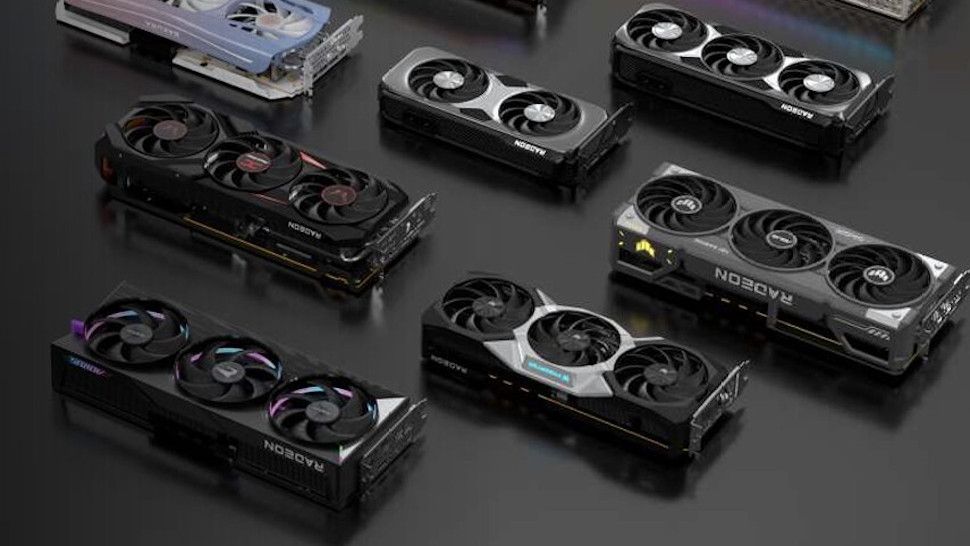
AMD’s next-gen RDNA 4 graphics cards, which were revealed (in a rather fleeting manner) at CES 2025, might be available sooner than you thought – on pre-order at least, if the date accidentally posted by a US retailers turns out to be correct.

B&H Photo apparently put up early listings for some Asus RX 9070 and RX 9070 XT graphics cards (TUF and Prime models), all of which came with a pre-order date of January 23.

Those listings have now been removed, but not before they were screenshotted by one of the regular hardware leakers on X, @momomo_us (hat tip to VideoCardz).

So, it appears that we might be able to reserve these much-awaited RDNA 4 graphics cards in just two weeks, presumably ahead of a release which would come maybe a week or so after.

An AMD Radeon RX 7900 GRE from PowerColor on a desk with its retail packaging

(Image credit: Future / John Loeffler)

Analysis: Battle of the next-gen desktop GPUs

Interestingly, another recent rumor on the RX 9070’s release date came from graphics card maker XFX, which has some kind of either announcement or launch of these GPUs planned for January 24. One way or another, then, it seems that something’s going to happen with RDNA 4 as we get to the final week of January.

It feels like this might be the official revelation of the full spec and price details (which weren’t shared at CES 2025), ahead of the on-shelf availability (which is why B&H has it as pre-orders going live). Obviously take all this with a large helping of salt, and indeed there’s a difference in the dates – January 23 or 24 – which casts further doubt on these rumors. True, the XFX rumors comes from its middle east division, but the time difference between that and the 9am ET pre-order kick-off B&H had down is still on the same day (just).

We’ll just have to wait and see, but it wouldn’t be a surprise if AMD was planning to kick off RDNA 4 and have these graphics cards on the shelves late in January, because Nvidia’s RTX 5090 and 5080 go on sale come January 30. So, the dates fall in place for what might be a big next-gen GPU showdown – of sorts.

{ window.reliablePageLoad.then(() => { var componentContainer = document.querySelector(“#slice-container-newsletterForm-articleInbodyContent-SzwApmHBHoKM9ZtEV9ZRFi”); if (componentContainer) { var data = {“layout”:”inbodyContent”,”header”:”Get daily insight, inspiration and deals in your inbox”,”tagline”:”Sign up for breaking news, reviews, opinion, top tech deals, and more.”,”formFooterText”:”By submitting your information you agree to the Terms & Conditions and Privacy Policy and are aged 16 or over.”,”successMessage”:{“body”:”Thank you for signing up. You will receive a confirmation email shortly.”},”failureMessage”:”There was a problem. Please refresh the page and try again.”,”method”:”POST”,”inputs”:[{“type”:”hidden”,”name”:”NAME”},{“type”:”email”,”name”:”MAIL”,”placeholder”:”Your Email Address”,”required”:true},{“type”:”hidden”,”name”:”NEWSLETTER_CODE”,”value”:”XTR-D”},{“type”:”hidden”,”name”:”LANG”,”value”:”EN”},{“type”:”hidden”,”name”:”SOURCE”,”value”:”60″},{“type”:”hidden”,”name”:”COUNTRY”},{“type”:”checkbox”,”name”:”CONTACT_OTHER_BRANDS”,”label”:{“text”:”Contact me with news and offers from other Future brands”}},{“type”:”checkbox”,”name”:”CONTACT_PARTNERS”,”label”:{“text”:”Receive email from us on behalf of our trusted partners or sponsors”}},{“type”:”submit”,”value”:”Sign me up”,”required”:true}],”endpoint”:”https://newsletter-subscribe.futureplc.com/v2/submission/submit”,”analytics”:[{“analyticsType”:”widgetViewed”}],”ariaLabels”:{}}; var triggerHydrate = function() { window.sliceComponents.newsletterForm.hydrate(data, componentContainer); } if (window.lazyObserveElement) { window.lazyObserveElement(componentContainer, triggerHydrate); } else { triggerHydrate(); } } }).catch(err => console.error(‘%c FTE ‘,’background: #9306F9; color: #ffffff’,’Hydration Script has failed for newsletterForm-articleInbodyContent-SzwApmHBHoKM9ZtEV9ZRFi Slice’, err)); }).catch(err => console.error(‘%c FTE ‘,’background: #9306F9; color: #ffffff’,’Externals script failed to load’, err)); ]]>

Sign up for breaking news, reviews, opinion, top tech deals, and more.
As you might be aware, the RX 9070 models aren’t going to compete with Nvidia’s RTX 5080 (and certainly not the 5090), so how is this a ‘showdown’ exactly? Well, the reality is that the RTX 5080 is going to be way too pricey for most consumers, even though the $999 MSRP was more affordable than expected. (Yes, some folks were thinking it’d easily be $1,199, maybe more – though third-party boards will inevitably land more in this territory, as most of them will be a fair bit pricier than the Founders Edition at Nvidia’s MSRP).

What we’ll have, then, is a situation where in theory AMD can come in with way more affordable next-gen GPUs, grabbing the interest of would-be buyers, scooping up more sales with RDNA 4 as folks realize just how pricey RTX 5080 GPUs will be – when Nvidia’s $999 Founders Edition inevitably sells out in a flash – potentially winning the showdown in this way.

You might also like

Source

Posted on

Post Office scandal-stained Fujitsu orders staff to cut costs amid widening UK losses

Fujitsu has informed staff of cost-cutting measures it has put in place as it faces challenges amid its much-publicised involvement in the Post Office Horizon scandal.

Prior to the festive period, UK staff were sent a memo instructing staff on aggressive cuts to spending on travel, recruitment, social and external organisations.

The impact of the Horizon scandal on Fujitsu has been significant. In January 2024, following ITV’s dramatisation of the scandal, the supplier agreed with the government to cease bidding for new public sector contracts until the public inquiry into the scandal completed its work.

In its latest financial statement for the 12 months to March 2024, the company reported a loss of just over £170m, compared with a loss of £99m in the previous 12 months.

This period covers up to few months after Fujitsu stopped bidding for public sector work, so the situation could get worse. Sales continued to fall during the year, and Fujitsu may also need to contribute to the cost of compensating victims of the scandal it was partly responsible for.

In its statement to Companies House, under the Risks section, Fujitsu said: “The extent of reputational and financial risk will not be known until the inquiry has concluded and published findings. Based on these findings, the company expects to take appropriate and proportionate measures to engage with the UK government with respect to a contribution towards the UK government’s compensation schemes.

“Loss of future new business due to the reputational damage arising from the Horizon inquiry remains a key risk to the company’s business plans.”

The company is preparing for the worst. Just before Christmas, its UK management team sent staff a memo detailing measures to keep costs down.

The company, which said its UK business spends about £10m a year on staff travel, told UK staff that all domestic travel to internal meetings and events should be avoided, with Microsoft Teams to be used for meetings unless “it would have a significant negative impact on the meeting”. It told staff that international travel should not be taken unless “directly related to customer activity”.

The company also outlined its preference for roles to be filled internally before recruiting externally. “We will continue with our principle of seeking to fulfil approved roles with current Fujitsu colleagues,” it told staff. “We will recruit externally to fulfil customer requirements, but only after considering internal moves, including promotions.”

It said all current contractors are being reviewed, including current open requirements: “Where possible, we will be seeking to replace contractors with current Fujitsu colleagues.”

The company is also putting strict controls on spending on companies outside Fujitsu, with preapproval from the UK leadership team needed for spending over a certain amount.

Fujitsu is also tightening the purse strings for staff social events, asking those who have not already scheduled or held a team social to consider delaying until the new financial year after 31 March.

Source

Posted on

Galaxy S25 price leak sparks concern about imminent hikes

Now that CES 2025 has come and gone, the next big event in the tech world is Samsung’s Galaxy Unpacked event on January 22nd. Samsung will unveil the Galaxy S25 lineup at the show, including a Galaxy S25 Slim variant.

The ultra-thin phone might hit stores in just a few months, but that’s hopefully not the only surprise Samsung has prepared for fans. Rumors say Samsung will unveil its Android XR-based AI-infused smart glasses at the show. We certainly expect to see the Vision Pro rival, Project Moohan, unveiled officially. Samsung might also announce a new Galaxy Ring 2 model.

But Unpacked might also bring some unexpectedly bad news: Price hikes for the three (well, four) Galaxy S25 models, the show’s stars.

We saw warnings a few weeks ago that at least one of the three main Galaxy S25 versions could cost more than last year’s model. Now, a new report from Europe suggests price hikes might be in order for all three models, which will be available in stores by February.

Tech. Entertainment. Science. Your inbox.

Sign up for the most interesting tech & entertainment news out there.

By signing up, I agree to the Terms of Use and have reviewed the Privacy Notice.

Reports from Korea detailed in mid-December the two factors that might force Samsung to raise prices for the Galaxy S25 models. First, there was the political turmoil in Korea that impacted the dollar-won exchange. Then there’s the Snapdragon 8 Elite processor, the high-end chip that will power all Galaxy S25 models, that’s significantly more expensive than its predecessor.

The report singled out the Galaxy S25 Ultra as the likely model to get a higher price tag than the Galaxy S24 Ultra.

A month later, Italian blog SmartWorld says that a local store in Italy has already set up placeholder pages for the Galaxy S25 phones that will go on sale after Unpacked.

The store listed prices for all three Galaxy S25 versions and their respective memory options, indicating that price hikes will be in order. According to this information, the Galaxy S25, S25 Plus, and S25 Ultra will cost at least €50 more than their predecessors.

While that might seem troubling, I’ll say there’s nothing official about these prices. That’s a point the Italian blog makes. Maybe it’s just placeholder information waiting to be edited once Unpacked drops. SmartWorld also says that well-known inside Roland Quandt said in December that the Galaxy S25 European prices would match last year’s models.

If the price hikes are real, they might not reflect Samsung’s plans worldwide. It’s unclear in which markets Samsung will raise prices for the Galaxy S25. After all, a €50 hike isn’t as big as expected. If it translates to a $50 price hike in the US, you can offset it by simply registering to preorder a Galaxy S25 flavor. Registration will give you $50 in Samsung credit.

On the other hand, European prices also factor in VAT. The actual price hike might be lower when you remove the tax.

I’ll also remind you that Samsung and its carrier partners will run plenty of promos during the preorder period to make the Galaxy S25 price more palatable. One already leaked: free Gemini Advanced access for up to a year. That’s a subscription that usually costs $20/month. It offers plenty of cloud storage in addition to Google’s best AI model.

Finally, a recent rumor says that Samsung wants to launch a hardware subscription plan soon for devices like the Galaxy S25. While it will be available only in certain markets initially, a hardware subscription plan might make the Galaxy S25 a lot easier on the wallet.

As for the Galaxy S25 Slim, the handset doesn’t have a predecessor, so we can’t predict how much it’ll cost. But I don’t expect it to be more affordable than the base Galaxy S25 model. The ultra-thin phone will still run on the same high-end Snapdragon chip as the rest of them.

Source

Posted on

Black mothers seek ‘total agency’ over perinatal healthcare data

A group of black women in Birmingham have initiated a community-led research project that aims to give black mothers “total agency” over how their perinatal healthcare data is gathered, interpreted and ultimately used.

Drawn from Maternity Engagement Action (MEA) – an organisation that provides safe spaces and leadership for black women throughout pregnancy, birth and early motherhood – the women came together over their shared concern about the significant challenges faced by black women when seeking reproductive healthcare.

Through a process of qualitative data gathering – entailing discussions, surveys, workshops, trainings and meetings – the women developed a participatory, community-focused approach to black perinatal healthcare, culminating in the launch of MEA’s See Me, Hear Me campaign.

“We want policy-makers to see the benefits of community-led research and community driven data and use it in policy development. For there to be real change to the current statistics that black women are 3.7 times more likely to die than white women during perinatal period we need data from the community affected,” they said.

“Our vision is to work collaboratively with research bodies and the black perinatal community to create a model where the intersectional voices of black maternal women are centred, included and amplified in creating and implementing solutions to the issue of black maternal mortality and morbidity.”

Ultimately, the initiative aims to shift from the current top-down approach that defines black perinatal healthcare, to one where community data and input drives systemic change in ways that better meet the needs of local women instead.

Inequitable outcomes

Initially motivated by media reports that black women were five times more likely to die from pregnancy and childbirth than their white counterparts during the pandemic, the women started to speak about their own traumatic experiences of seeking perinatal support within Birmingham’s public health system.

In recounting their stories to one another, a number of common experiences emerged. This included facing a lack of continuity and consistency in their care, undermining black women’s agency and resulting in staff making assumptions about their birth plans; receiving less quality time with caregivers; being regularly denied pain relief when it’s requested; not being believed when they raise an issue; and being coerced into unwanted medical interventions, such as C-sections or inductions.

Speaking with Computer Weekly, Tamanda Walker – a sociologist and founder of community-focused research organisation Roots & Rigour – said it was common for women to feel like they were being passed from one part of the service to the next without any say in their treatment, leaving them feeling powerless in the face of it.

“Many of the women involved were making the very basic point that if they encounter trouble and raise it during the perinatal period, they often don’t feel seen or heard by medical professionals,” she said, adding that in one case, a woman with a prior mental health condition had to bite her tongue because any expression of distress was perceived as an indication of her mental health problem.

“That was exacerbated for her because she came from a poorer background, so her fear was, ‘If I show too much distress, my children will be taken away, because I’m already known to social services’, all the while she’s struggling in this labour situation and isn’t being heard.”

In an attempt to reverse these “unjust and inequitable” healthcare outcomes for pregnant black women, the group collated their experiences into a qualitative data set to use as the basis for further analysis and action. The entire process has been documented in a report published by the MEA.

The research process

Walker initially connected with the campaign at the Black Thrive Birmingham (BTB) Community Assembly in March 2022, an event focused on exploring how black-led research and data initiatives can put power directly in the hands of black communities.

She said the event largely revolved around exploring what it would mean for black communities to own their own data and interpret it for themselves, as well as what it would mean for them to be in a position where they had the power to design solutions in collaboration with the health system to ensure needs were better met.

Walker added this led to two years of work that involved the women from MEA gathering their own data on the experiences of local women who had gone through the health system: “One of the benefits has been, rather than women holding their own single stories in isolation, feeling as if they’re the only ones experiencing these problems, they’ve come together to look at how their stories map onto each other, and to see that they’re not alone and that there are numerous people going through these same experiences.”

She added while the datafication of people’s lives often risks reducing complex experiences to “objective outputs” – ultimately taking power away from people who are represented by that data and “putting it in the hands of who will make those decisions for them and without them” – melding the data already held by the healthcare system with the qualitative data generated by the campaign “gives people the power to tell their own stories”.

As it developed, the See Me, Hear Me campaign partnered with Connected By Data’s Catalysing community campaign initiative, which seeks to act as an startup-style accelerator for organisations or groups looking to leverage data in their social change efforts.

“Over that six-month programme, they incubated us, they did some upskilling for community organisations in understanding what data is, how you might think about a data cycle within community campaigning and organising, how you might design data work that’s about social change or certain kinds of interventions, and use that to add rigour and credibility to the change one’s pushing for,” said Walker.

“What I’ve found in my experience is that when community members that I work with – and I work with quite a lot of them beyond this – hear the words ‘research and data’, they’re like, ‘That’s complicated, that’s not for me’. As soon as you sit down and get them to tell their stories and get them to click that their story is a kind of data, a load of pennies start dropping, and a load of things become possible.

“It’s just about making what can feel like quite complex topics accessible to people, so that they have an understanding of how they can influence and shape their own realities.”

Next steps

Walker noted that because the See Me, Hear Me group were only able to gather a small data sample, the next step is undertaking work to expand the qualitative data set and match it with existing NHS systems data.

“One of the problems we have is that the system isn’t always collecting data, and they’re not always collecting data on ethnicity or more in depth qualitative data about the experiences of women in general, but black women in particular,” she said, adding that the plan is to build relationships with the local health system, and negotiate data sharing agreements so that the campaign can make sense of that data themselves.

“We need to know if ethnicity data is even collected, and then how we marry that with the qualitative data we’ve collected. If there isn’t appropriate collecting of that data…then we need to…work together and think about how we can use that data to drive change together.”

Walker added that this qualitative, community-led approach will only become more important with the further proliferation of artificial intelligence (AI) systems in healthcare settings, given their propensity to reproduce existing social biases.

“We know AI reproduces bias if it’s being used in diagnostics or other things. Some of the problems we identified in the current system was a lack of continuity and a lack of human empathy to it, so what does it mean to exist in a world where those kinds of changes might occur and we might be left behind?”

She added that while AI is great at crunching numbers, “there’s something about interpreting that data which is intimately tied to who you are, your position, and your power in society that needs to be unpacked”. She noted that the technology should be used to free up people’s capacity “to do the actual caring, the human piece of the exercise, rather than become the whole exercise”.

Through her organisation Roots & Rigour, Walker said she is already involved in other projects that are taking a similar community data approach to other issues that affect black communities in the UK, including around disproportionality in the rate of stop and search, and the health risks associated with commercially available black hair products.

“The idea is to think about how can we secure funding to develop these – and we want to build up to a national level the ones that are successful [so] you can begin to get a bigger picture and story of what’s going on.”

Source

Posted on

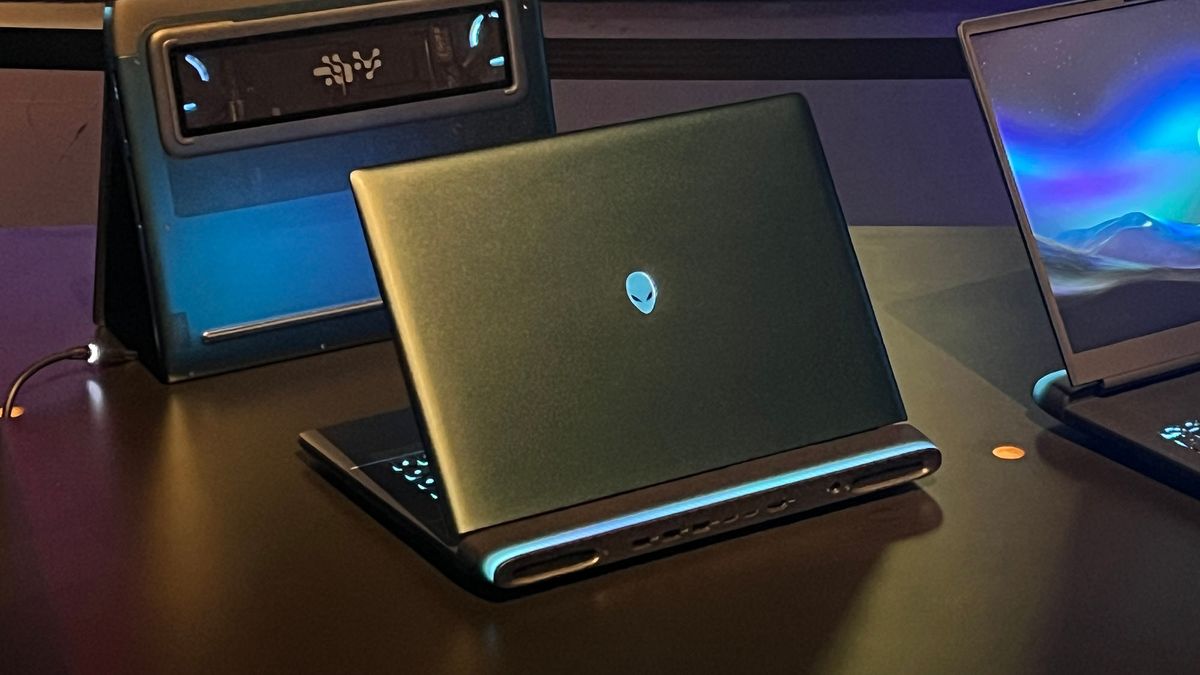
Nvidia RTX 5080 benchmark suggests this will be a mighty laptop GPU, getting PC gamers excited about the RTX 5090 mobile

  • An RTX 5080 mobile benchmark has been shared from Geekbench
  • This was apparently conducted on an Alienware laptop at CES 2025
  • The result shows a nippy GPU, though it’s been greeted with somewhat mixed reactions

A benchmark has surfaced for the RTX 5080 laptop GPU, the first (unofficial) result we’ve seen for Nvidia’s next-gen mobile parts that were revealed at CES 2025 – although you shouldn’t get too excited about the score achieved (which is certainly the temptation here, as we’ll see).

Why not? Well, firstly it’s just a purported result – that could be some kind of fake – and secondly, the benchmark is from Geekbench, which is hardly the most useful metric for judging the gaming prowess of the RTX 5080.

The test was seemingly run by a rogue actor (hey, let’s throw in a bit of drama, why not?) on the CES 2025 show floor, who had access to an Alienware 18 Area 51 gaming laptop, and managed to get Geekbench going on the device (as noticed by VideoCardz).

The resulting Geekbench score of 190,326 in the OpenCL (graphics) test for the RTX 5080 has been greeted with somewhat mixed reactions.

Render of a new RTX 4000 Max-Q gaming laptop.

(Image credit: Nvidia)

Analysis: RTX 5080 looks promising for gaming laptops

That 190,000 score is around 18% faster than the RTX 4080 laptop GPU, so on the one hand, there’s been some chatter that this feels a bit on the lean side for a generational gain. Especially as some folks have chimed in online to say that their RTX 4080 notebook gets closer to 190,000 than the official Geekbench ranking data suggests.

However, if we stick to those official figures, the RTX 5080 is actually 6% faster than the RTX 4090 laptop GPU (and remember, that last-gen flagship has 25% more CUDA cores than the 5080). The RTX 5080 is also about equal to the RTX 4070 Super on the desktop – which is a lot of power packed into a mobile GPU.

Furthermore, this is (presumably) with pre-release drivers (so performance may be a little lacking due to that), and the clock speed is shown at 1.5GHz in this test, which is low – we’d expect it to be running at nearer 2GHz (with boost). The RTX 4080 mobile could boost to 2GHz, or even higher (up towards 2.2GHz).

{ window.reliablePageLoad.then(() => { var componentContainer = document.querySelector(“#slice-container-newsletterForm-articleInbodyContent-AYNYSdZzBG3Axeer8Qd73A”); if (componentContainer) { var data = {“layout”:”inbodyContent”,”header”:”Get daily insight, inspiration and deals in your inbox”,”tagline”:”Sign up for breaking news, reviews, opinion, top tech deals, and more.”,”formFooterText”:”By submitting your information you agree to the Terms & Conditions and Privacy Policy and are aged 16 or over.”,”successMessage”:{“body”:”Thank you for signing up. You will receive a confirmation email shortly.”},”failureMessage”:”There was a problem. Please refresh the page and try again.”,”method”:”POST”,”inputs”:[{“type”:”hidden”,”name”:”NAME”},{“type”:”email”,”name”:”MAIL”,”placeholder”:”Your Email Address”,”required”:true},{“type”:”hidden”,”name”:”NEWSLETTER_CODE”,”value”:”XTR-D”},{“type”:”hidden”,”name”:”LANG”,”value”:”EN”},{“type”:”hidden”,”name”:”SOURCE”,”value”:”60″},{“type”:”hidden”,”name”:”COUNTRY”},{“type”:”checkbox”,”name”:”CONTACT_OTHER_BRANDS”,”label”:{“text”:”Contact me with news and offers from other Future brands”}},{“type”:”checkbox”,”name”:”CONTACT_PARTNERS”,”label”:{“text”:”Receive email from us on behalf of our trusted partners or sponsors”}},{“type”:”submit”,”value”:”Sign me up”,”required”:true}],”endpoint”:”https://newsletter-subscribe.futureplc.com/v2/submission/submit”,”analytics”:[{“analyticsType”:”widgetViewed”}],”ariaLabels”:{}}; var triggerHydrate = function() { window.sliceComponents.newsletterForm.hydrate(data, componentContainer); } if (window.lazyObserveElement) { window.lazyObserveElement(componentContainer, triggerHydrate); } else { triggerHydrate(); } } }).catch(err => console.error(‘%c FTE ‘,’background: #9306F9; color: #ffffff’,’Hydration Script has failed for newsletterForm-articleInbodyContent-AYNYSdZzBG3Axeer8Qd73A Slice’, err)); }).catch(err => console.error(‘%c FTE ‘,’background: #9306F9; color: #ffffff’,’Externals script failed to load’, err)); ]]>

Sign up for breaking news, reviews, opinion, top tech deals, and more.

Of course, all this bodes well for the performance levels of the new Blackwell laptop flagship, the RTX 5090.

Before we get too carried away with the positivity, though, we need to exercise plenty of skepticism around the purported result – we don’t know much about how this Alienware gaming laptop was configured. And again, remember that Geekbench is far from the best way to put a gaming laptop through its paces (and synthetic tests in general aren’t nearly as useful as real in-game benchmarks).

You might also like

Source

Posted on

AMD blames Ryzen 9800X3D stock shortage on Intel’s ‘horrible’ Arrow Lake launch, rubbing salt in Team Blue’s CPU wounds

  • AMD’s Frank Azor has fired shots at Intel’s Arrow Lake desktop CPUs
  • He called the Core Ultra 200S CPUs ‘horrible’ and said this increased demand for the Ryzen 9800X3D
  • That higher demand has led to stock woes, Azor claims, and inventory issues won’t likely ease anytime soon

An AMD executive fired flak at Intel, calling Team Blue’s latest Arrow Lake desktop chips ‘horrible’ no less.

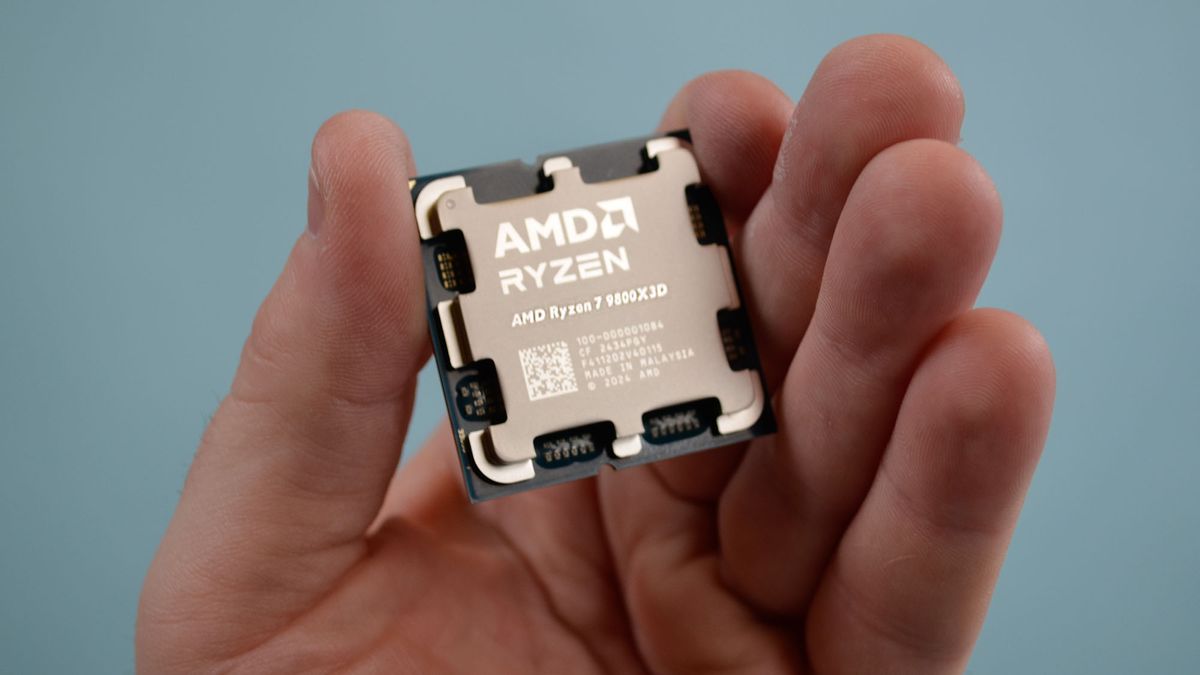
The quote came from a roundtable with AMD execs at CES 2025, where our sibling site, Tom’s Hardware, asked about the ongoing shortage of Ryzen 7 9800X3D stock (regarded as the best CPU for gaming that you can buy since its launch, and a processor that we gave a glowing review).

AMD observed that demand has outstripped supply – clearly enough – and the full quote from Frank Azor, who heads up consumer and gaming marketing at AMD, will surely leave Intel bigwigs suitably unimpressed.

Azor told Tom’s Hardware: “We knew we built a great part [in the 9800X3D]. We didn’t know the competitor [Intel] had built a horrible one [Arrow Lake]. So the demand has been a little higher than we forecasted.”

Ouch. You’ve probably noticed that Intel’s latest Arrow Lake desktop chips, which arrived in October 2024, experienced a rocky launch, with various problems that Team Blue still hasn’t fully put to bed.

We’ll come back to Intel’s misfortunes later, but what about the Ryzen 9800X3D stock situation?

David McAfee, VP and GM of Ryzen channel business at AMD, explained: “It’s crazy how much we have increased [our monthly, quarterly output of X3D parts] over what we were planning. I would say the demand we’ve seen for the 9800X3D and the 7800X3D has been unprecedented. So the demand has been higher than ever.”

{ window.reliablePageLoad.then(() => { var componentContainer = document.querySelector(“#slice-container-newsletterForm-articleInbodyContent-jJTEXM4CLaZ5VMt7iEHKE6”); if (componentContainer) { var data = {“layout”:”inbodyContent”,”header”:”Get daily insight, inspiration and deals in your inbox”,”tagline”:”Sign up for breaking news, reviews, opinion, top tech deals, and more.”,”formFooterText”:”By submitting your information you agree to the Terms & Conditions and Privacy Policy and are aged 16 or over.”,”successMessage”:{“body”:”Thank you for signing up. You will receive a confirmation email shortly.”},”failureMessage”:”There was a problem. Please refresh the page and try again.”,”method”:”POST”,”inputs”:[{“type”:”hidden”,”name”:”NAME”},{“type”:”email”,”name”:”MAIL”,”placeholder”:”Your Email Address”,”required”:true},{“type”:”hidden”,”name”:”NEWSLETTER_CODE”,”value”:”XTR-D”},{“type”:”hidden”,”name”:”LANG”,”value”:”EN”},{“type”:”hidden”,”name”:”SOURCE”,”value”:”60″},{“type”:”hidden”,”name”:”COUNTRY”},{“type”:”checkbox”,”name”:”CONTACT_OTHER_BRANDS”,”label”:{“text”:”Contact me with news and offers from other Future brands”}},{“type”:”checkbox”,”name”:”CONTACT_PARTNERS”,”label”:{“text”:”Receive email from us on behalf of our trusted partners or sponsors”}},{“type”:”submit”,”value”:”Sign me up”,”required”:true}],”endpoint”:”https://newsletter-subscribe.futureplc.com/v2/submission/submit”,”analytics”:[{“analyticsType”:”widgetViewed”}],”ariaLabels”:{}}; var triggerHydrate = function() { window.sliceComponents.newsletterForm.hydrate(data, componentContainer); } if (window.lazyObserveElement) { window.lazyObserveElement(componentContainer, triggerHydrate); } else { triggerHydrate(); } } }).catch(err => console.error(‘%c FTE ‘,’background: #9306F9; color: #ffffff’,’Hydration Script has failed for newsletterForm-articleInbodyContent-jJTEXM4CLaZ5VMt7iEHKE6 Slice’, err)); }).catch(err => console.error(‘%c FTE ‘,’background: #9306F9; color: #ffffff’,’Externals script failed to load’, err)); ]]>

Sign up for breaking news, reviews, opinion, top tech deals, and more.

McAfee notes that making chips takes some time – “it’s basically 12 to 13 weeks from when you start a wafer to when you get a product out the other end of the machine” – and that the 3D V-Cache stacking process adds complexity and is even more time consuming. Meaning it’s harder to catch up with unexpected spikes in demand.

The upshot? McAfee says: “I think as we go through the first half of this year, you’ll see us continue to increase the output of X3D.” And the exec further notes that in the future, AMD is “ramping capacity to ensure we catch up with that demand for as long as customers want those X3D parts.”

It’s the Ryzen 7 X3D processors which represent most of the demand, you’ll be unsurprised to learn – as the benefits of hopping up to a Ryzen 9 X3D chip are marginal for PC gamers (if anything, indeed, gaming performance may even dip). So the 9800X3D and its predecessor represent the sweet spot for gaming and value.

McAfee said the workhorse 8-core X3D parts outsell Ryzen 9 X3D flavors by a massive 10-to-1, all of which means that the introduction of Ryzen 9950X3D and 9900X3D CPUs (ushered in at CES 2025) isn’t going to ease any pressure on the stock levels of the 9800X3D.

Intel Core Ultra processor

(Image credit: Future / John Loeffler)

Analysis: Broken Arrow? Hardly…

In short, don’t expect the Ryzen 9800X3D to become more widely available for some time yet, though as we head into the second quarter of 2025, matters should ease and the CPU may well populate the shelves in greater numbers.

Back to the flak fired by AMD at Intel, and it’s pretty harsh to use a term like ‘horrible’ to describe a rival product. Is desktop Arrow Lake really that awful? Well, the launch wasn’t a disaster, but it was disappointing, particularly as gaming performance did not live up to Intel’s promises due to multiple issues.

That said, Intel’s fixes – which have now been deployed for Arrow Lake, all but one final measure – don’t help much, or at all, at least according to Tom’s Hardware’s (limited) testing. Something we’ll need to verify ourselves, mind you, so take that with plenty of caution at this stage.

At any rate, Arrow Lake desktop has been troubled since it was pushed out, there’s no denying that, and the problem is that this happened against a backdrop of more serious instability issues with Intel’s preceding Core CPU ranges (13th and 14th) on the desktop. Those were really nasty gremlins in the works, and while Intel had them fixed by the end of last year, that whole episode was a very dark cloud over 2024 for Team Blue – with considerable reputational damage done.

So, while that episode has nothing to do with Arrow Lake – which doesn’t suffer those instability woes – it still casts a deep shadow over Intel’s newest desktop range and the separate issues with these chips.

It’s a messy time for Intel in the CPU world, in short, and AMD pulling no punches isn’t really a surprise. Although as we’ve said, ‘horrible’ is going rather too far, and somewhat gleefully playing on Intel’s other mishaps of late.

It should be noted that AMD is not entirely without blemishes with its current-gen processors, as Ryzen 9000 launched to some disappointment with its generational uplift, again particularly for gaming – though the 9800X3D has gone a long way towards addressing that. The only problem is you can’t buy the thing at the moment, a situation which isn’t about to change, clearly.

You might also like

Source

Posted on

Show this AI a single image, and it can imagine an entire world

Imagine transforming a single still image into an entire virtual world. This futuristic capability isn’t just a dream; it’s the reality of GenEx (Generative World Explorer). Designed to eliminate the need for physical exploration, GenEx saves time and cost and reduces risk.

The potential of such a system spans from disaster response to immersive gaming, offering a new lens through which we can view and interact with the world, the researchers behind the new system explain in a pre-published paper. GenEx stands out for its human-like reasoning.

Much like how we infer the presence of a hidden object based on context, GenEx uses cues and prior knowledge to imagine unseen areas of an environment. This probabilistic prediction allows for logical decision-making even without direct observation, mimicking the cognitive leaps we make daily.

For instance, just as a driver deduces why a car suddenly stops, GenEx predicts unseen scenarios to guide decisions. The applications here are far-reaching. In disaster response, it can remotely explore hazardous zones using a single surveillance image, enabling safer and quicker rescue operations.

Tech. Entertainment. Science. Your inbox.

Sign up for the most interesting tech & entertainment news out there.

By signing up, I agree to the Terms of Use and have reviewed the Privacy Notice.

For navigation, GenEx enhances the training of autonomous robots and navigation apps by providing a detailed understanding of their environment. Gaming and virtual reality also stand to benefit from this technology, creating more immersive and lifelike experiences for users.

At the heart of GenEx are several key features. It generates synthetic, navigable environments from static images and employs “spherical consistency learning” to ensure seamless 360-degree panoramic views. With its “imagination-augmented policy,” GenEx empowers AI agents to make logical, adaptive decisions and flexibly navigate virtual spaces based on directional input and distance parameters.

Tests have shown that GenEx’s capabilities aren’t just theoretical. GenEx has outperformed traditional benchmarks in video generation and improved human decision-making in augmented scenarios. Looking ahead, integrating real-world sensor data and dynamic scenes could make virtual worlds even more realistic.

We’ve seen AI do some crazy things—like making accurate images based on street noise—but we’ve yet to see something as promising as GenEx and its virtual environment generation.

Source

Posted on

Meta is about to ruin WhatsApp with AI bots no one wants

Of all the generative AI assistants out there, Meta AI must be the most annoying for the simple fact that Meta is shoving it down our throats. No app is safe, from Facebook to Messenger to WhatsApp to Instagram. Meta AI is there whether you want it or not, and there’s no way to deactivate it.

Meanwhile, ChatGPT is entirely optional, not that OpenAI can really force it on anyone. Apple’s Apple Intelligence is also optional; you don’t have to use it even if you have access to it. Then there’s Google Gemini, which is baked into many Google products but doesn’t feel as intrusive as Meta AI. The same goes for Microsoft’s Copilot.

The worst part about Meta AI is that Meta isn’t done ruining its apps with overdoing the AI presence. We’ve just learned of AI profiles coming to Facebook and Instagram, which is extremely annoying. It gets worse; Meta will now give AI bots prime plans inside WhatsApp, a feature that nobody really asked for from the one Meta app that’s actually useful.

WhatsApp is the world’s largest chat app. It works on iPhone and Android and supports end-to-end encryption across platforms. That’s the only reason I’m still using it. That, and the fact that Meta relented on its annoying WhatsApp policy change a few years ago.

Tech. Entertainment. Science. Your inbox.

Sign up for the most interesting tech & entertainment news out there.

By signing up, I agree to the Terms of Use and have reviewed the Privacy Notice.

Come to think of it, the only reason WhatsApp is so good and still encrypted, is that the app was built this way well before Meta bought it for a small fortune.

The last thing I want in WhatsApp is support for AI chatbots. Yes, it’s great that you can save a ChatGPT number to chat with the chatbot from WhatsApp, but that’s optional.

Say that Meta feels like it has to put AI bots in WhatsApp to expose more people to Meta AI and potentially make some money in the process. I still hate the idea of WhatsApp getting a dedicated AI menu. That’s wasted screen real estate right there. It’s a feature I’ll never use, and I’m sure others will be equally uninterested.

The new AI bots menu in a WhatsApp beta release for Android.The new AI bots menu in a WhatsApp beta release for Android. Image source: WABetaInfo

Meta is testing the new interface in an Android beta version of WhatsApp. Always reliable WABetaInfo surfaced the image above that shows the new AI tab replacing the Communities tab. That menu, which might actually be useful, is merging with the Chats tab.

The new AI tab will include all sorts of AI chatbots to talk to, including third-party models that can talk to you about specific topics.

I don’t doubt that some WhatsApp users will want to use these services. I say that as a longtime ChatGPT user who chats with OpenAI’s chatbot about all sorts of things daily. But I absolutely hate the idea of any AI product being forced on me the way Meta is doing with Meta AI.

WhatsApp is especially important to me as I use it to talk to many people. It’s not just Android users in my family or friends group that like WhatsApp; plenty of iPhone owners prefer the platform over iMessage. AI isn’t needed. Or if it is, it should be hidden somewhere and accessible on demand.

It might get even worse than that. WABetaInfo found evidence in a different WhatsApp beta version that Meta wants to let users create custom AI chatbots right inside the app. The process might be similar to what’s already available on Instagram.

Support for custom AI bot creation in a WhatsApp beta release for Android.Support for custom AI bot creation in a WhatsApp beta release for Android. Image source: WABetaInfo

The feature resembles the custom chatbots available in ChatGPT and Gemini, so it’s not entirely surprising. But, again, it’s not something I want to clutter a key app like WhatsApp.

I don’t see any value in adding AI bots to WhatsApp or supporting the creation of custom ones.

Remember that if left unchecked, some custom AI chatbots might be harmful, especially when certain types of users are exposed to them. And it’s not like Meta is improving its content moderation policies, so we have no idea how it’ll police this universe of AIs it’s bringing to apps like WhatsApp and Instagram.

I can only hope that Meta will not bring these features out of beta, but that’s just wishful thinking. If anything, I take some solace in knowing that it’ll take longer for Meta to deploy the AI changes to WhatsApp in Europe.

Source