Posted on

UK government seeks AI innovators to support clean energy transition and pursuit of net zero by 2050

The government is seeking support from artificial intelligence (AI)-focused academics and entrepreneurs to help build clean energy systems and help the UK hit its net zero by 2050 goal.

Interested parties are invited to apply for funding to develop technologies that could decarbonise the UK energy grid, improve the nation’s energy security and help the government achieve its wider aim of positioning the country as a clean energy superpower.

The funding is being made available through the launch of the second round of the Manchester Prize, an initiative launched in 2023 by the Department for Science, Innovation and Technology (DSIT) to support AI-led innovation in the UK over the coming decade.

The first round of the Manchester Prize is due to conclude in April 2025, and is focused on the role AI can play in the areas of energy, the environment and infrastructure.

The second round of the competition will see the government offer up to £100,000 to 10 applicants, and one winner will be chosen from them who will secure a £1m prize to support the further development of their AI offering. The closing date for applications is 17 January 2025.

“Over the next eight weeks, applicants can come forward to demonstrate how their innovations will boost low-cost energy, reduce energy demand and make energy use more efficient across the country,” said the government in a statement.

“These could include new avenues for boosting the power generated by wind and solar farms, using AI to increase energy efficiency in our homes and businesses, and tapping into the technology to build up a better understanding of future spikes in energy demand.”

Expanding on this theme, Feryal Clark, UK government minister for AI, said the second round of the Manchester Prize looks set to have a transformative impact on the UK.

“AI can transform our public services, make us more productive and tackle some of the biggest shared challenges in society. AI is already having a positive impact on so many aspects of our lives, but there’s much more waiting to be tapped into,” said Clark.

“The second round of the Manchester Prize will bring brilliant British innovation to bear to deliver a clean, secure energy future for the UK. Whether in energy, healthcare, or beyond, we’re backing AI innovations to deliver real and lasting change across the country.”

Paul Monks, chief scientific adviser at the Department for Energy Security and Net Zero, said the climate crisis is “the greatest long-term challenge” society is up against, and initiatives like this will play an important role in helping address it.

“The greatest long-term challenge we face is the climate and nature crisis. That’s why we have our world-leading targets to decarbonise the electricity grid by 2030 and to reach net zero by 2050,” he said.

“We need an ambitious approach to using artificial intelligence across the development, engineering and operation of our energy systems, so I am pleased to see the Manchester Prize recognising that with its dedicated new round on decarbonisation.”

Source

Posted on

Nationwide Building Society backs HPE GreenLake for hybrid cloud push

Nationwide Building Society is drawing on HPE’s private cloud capabilities to help deliver on the next phase of its multi-year hybrid cloud strategy.

The company, which has more than 17 million customers in the UK and employs 18,000 people, is in midst of a hybrid cloud-focused digital transformation project, geared towards improving the online experience for its customers.

As previously reported by Computer Weekly, this work, which began in 2018, has seen the firm use public cloud technologies, such as those offered by Amazon Web Services, and embrace the use of DevOps-style software development methodologies within its teams.

The project has also seen Nationwide adopt different cloud technologies based on what is best for that particular type of data or workload, which is why the company is now adding the HPE Greenlake private cloud setup to its supplier mix too.

“Nationwide’s hybrid cloud strategy is vital to our ability to compete and means we can continue to meet the needs and expectations of our customers – HPE GreenLake cloud is a core component of our hybrid cloud strategy,” said Paul Walsh, director of infrastructure and service delivery at Nationwide.

“With them, we’re building a cloud platform that will further improve our resilience and agility, enabling us to provide even better levels of service and deliver new capabilities to our developers faster than ever before.”

Specifically, Nationwide will use HPE GreenLake management services to automate and orchestrate its infrastructure management workloads and deliver infrastructure-as-code, the company said.

“This [will] enable [Nationwide] to focus on innovation, value-add activities and gain better control over application builds and security,” said the company, in a statement. “Faster release cycles will accelerate the time to market, providing consistent customer experiences across all digital platforms.”

The HPE GreenLake cloud setup will also provide Nationwide with an overview of its energy consumption and emissions, so that it can take proactive steps to reduce its environmental footprint, the company added.

Matt Harris, senior vice-president and managing director for the UK, Ireland, Middle East and Africa at HPE, said the complexities of the deployment highlight why taking a public cloud-only approach would not work for a company like Nationwide.

“Nationwide’s modernisation journey showcases the effectiveness of HPE GreenLake cloud, with the storied institution transitioning from complex, legacy technology to a modern, future-proofed hybrid cloud operating model where a one-size-fits-all public cloud could never be the only answer,” said Harris.

Nationwide is not the only financial services company tapping into HPE GreenLake to deliver on its hybrid cloud strategy, as Barclays Bank also set out plans in September 2024 to ramp up its use of the technology for that purpose.

Source

Posted on

AMD pushes GPU advantage with HPC top spot

The AMD-powered El Capitan supercomputer, housed at the Lawrence Livermore National Laboratory (LLNL), is now ranked as the world’s fastest supercomputer.

Built by HPE, the supercomputer uses AMD Instinct MI300A accelerated processing units (APUs). It achieved a High-Performance Linpack (HPL) score of 1.742 exaflops based on the latest Top500 list. 

The LLNL is using the supercomputer for nuclear security. El Capitan is the first exascale-class machine for the National Nuclear Security Administration (NNSA) and will be used to advance scientific discovery and national security, providing what AMD says is “the computational power necessary to ensure the safety, security and reliability of the nation’s nuclear deterrent without testing”.

It is being used for modelling and simulation capabilities to support NNSA’s Stockpile Stewardship Programme, which certifies the ageing nuclear stockpile and other critical nuclear security missions, such as non-proliferation and counter terrorism. 

“El Capitan is crucial to the National Nuclear Security Administration’s core mission and significantly bolsters our ability to perform large ensembles of high-fidelity 3D simulations that address the intricate scientific challenges facing the mission,” said Rob Neely, director of LLNL’s advanced simulation and computing programme.  

LLNL and the other NNSA at Los Alamos and Sandia National Laboratories are also using El Capitan and its companion system, Tuolumne, to drive artificial intelligence (AI) and machine learning-assisted data analysis. El Capitan will apply AI to high energy density problems such as inertial confinement fusion research, while Tuolumne will be used for unclassified open science applications including climate modelling, biosecurity/drug discovery and earthquake modelling.

Bronis R de Supinski, LLNL’s chief technology officer for Livermore Computing, said: “With AI becoming increasingly prevalent in our field, El Capitan allows us to integrate AI with our traditional simulation and modelling workloads, opening new avenues for discovery across various scientific disciplines.”

AMD said its Instinct MI300X and MI325X accelerators provide AI performance and memory capabilities, while the AMD Instinct MI300A APU puts central processing unit (CPU) and graphics processing unit (GPU) cores and stacked memory together into a single package, enabling “new levels of efficiency and performance” for high-performance computing (HPC) and AI workloads.  

Its EPYC processors and Instinct accelerators are also being used to power many new supercomputing and AI projects and deployments, including Italian energy company Eni, whose HPC 6 supercomputer is powered by AMD EPYC processors and AMD Instinct GPUs. The University of Paderborn is also set to take delivery of a new supercomputer powered by the latest fifth-generation AMD Epyc technology.
   
Separately, IBM and AMD have announced a collaboration to deploy AMD Instinct MI300X accelerators as a service on IBM Cloud. The new service, available in the first half of 2025, will target performance and power efficiency for generative AI models. Through the collaboration, support for AMD Instinct MI300X accelerators is being made available within IBM’s Watsonx AI and data platform, as well as through the Red Hat Enterprise Linux AI inferencing platform. 

Source

Posted on

Interview: Raymond Boyle, vice-president of data and analytics, Hyatt Hotels

Raymond Boyle, vice-president of data and analytics at Hyatt Hotels, is an experienced executive who helps his business make the most of its information. He is responsible for Hyatt’s data strategy, governance, engineering, science and analytics capabilities. His team’s data-led insights boost customer and colleague experiences.

“I took the opportunity because I love the role,” says Boyle, who joined Hyatt at the start of 2020, having previously been vice-president for data and analytics at Walmart Labs.

“I was very excited about Hyatt as a company and its culture. It gives me everything I enjoyed doing within the data role, including leading the strategic insights and the governance areas.”

At Hyatt, Boyle reports to Amy Weinberg, senior vice-president for loyalty, brand marketing and consumer insights. He has spent his five years at the firm laying the foundations for a business strategy that puts data at the heart of organisational and operational processes.

“I love working in the travel industry,” he says. “It’s a complex business. As a data leader, you get all the stuff you would ever want in terms of delivering a customer and colleague experience and creating effective digital engagement.”

Boyle’s current role is the latest stop on a 30-year professional journey during which he has used data and analytics to fuel innovation and growth. He recognises the role of data chief has changed significantly during his time in the profession. The impact of emerging technologies, such as artificial intelligence (AI), brings even greater challenges.

“It has been a fascinating area for many years,” he says. “The field of data and AI is changing extremely quickly, including the types of things that we take on, the way technology is implemented, the way people engage with it and the cultures we build around it.”

Building data products

Boyle says much of his day-to-day leadership role at Hyatt involves ensuring people around the business are fluent in data and can engage with information assets. He says the work revolves around “the productisation of data” and developing self-service environments that make things easier for employees and customers.

“We think of data as a product, including all aspects around managing information, designing strategies and creating solutions,” he says. “That work covers the data engineering worlds that care for different parts of the business, the platform organisations that manage our foundations, and the data science and machine learning functions.”

Boyle says Hyatt’s data strategy centres on advancing care through insight-driven decisions and automation. The focal point of this strategy is cultivating the best people and evolving the organisation’s data culture.

“We’re working through how people lead in the organisation and thinking about data fluency and the stewardship of information within the business,” he says. “We focus a lot on customer personalisation and trust. We want to build the ability for the organisation to be perfect with every guest during every step of their journey and continue to personalise how we engage with our customers in a high-security, high-trust framework.”

Boyle is excited about some of the achievements so far. His team ensures the business has the right data capabilities and performance indicators. At the same time, they make sure people across Hyatt have a common understanding of data-led performance.

“That’s taken a lot of great work to automate and simplify the business from an operational perspective, and then a lot more work to ensure we’re growing with intent – that as we do new mergers and acquisitions as an enterprise, that we can connect data and the products into that system smoothly,” he says.

Innovating at pace

A key underlying technology for this approach is the Snowflake AI Data Cloud for Travel and Hospitality, a unified data platform that helps companies exploit their information. Boyle says Hyatt uses Snowflake technology to consolidate enterprise data into a single location.

The switch to Snowflake took two years to complete and was finished by the second quarter of 2024. Boyle says the move to the AI Data Cloud was an important transition. An ever-increasing number of people at Hyatt wanted to use information. However, the company’s legacy environment had capacity constraints.

“We needed to add a ton of compute to the system, and we had some hard decisions to make as we went through that work,” he says. “We had a massive growth in the amount of data people wanted to consume within the business.”

Raymond Boyle headshot

“We think of data as a product, including all aspects around managing information, designing strategies and creating solutions”

Raymond Boyle, Hyatt Hotels

Boyle’s data team approached the Snowflake implementation carefully and pushed components live incrementally. The switch to Snowflake involved some hard graft. Pipelines were refactored, and the security infrastructure was redesigned. He recognises the migration process was a significant technological and cultural challenge.

“You can’t stop running the business while you execute the migration,” he says. “We had to manage the delivery of many new products and capabilities during the migration. There were times when we had to manage duplicate pipelines. A lot of folks had to be engaged in the migration process.”

The data team decommissioned Hyatt’s legacy environments in August. Snowflake is now the company’s scalable data platform. He says the technology allows people across the business to access data for their projects. The AI Data Cloud also cuts the time his team spends on information management.

“Snowflake allows us to innovate faster and drive those outcomes cleanly over time,” he says. “We’re launching more services, so we have more data applications coming into the system fairly quickly, and we’re also benefiting from Snowflake’s work to ensure that other software organisations are building natively on the platform.”

Supporting business growth

Boyle leads a 100-strong data team at Hyatt, including full-time staff and contractors. He says insight and analytics are at the core of the company’s decision-making processes.

“Data is at the heart of how the company functions,” he says. “Our CEO is engaged in data and has led the strategic work around how we think about AI. Data is now a big part of every domain and a core element of how people plan, build and execute.”

Boyle says one of the company’s data priorities right now is personalisation. “We’re focused on following the customer journey and making sure that AI and data drive the properties that we recommend and the search experience and the content people see,” he says. “We want to ensure our customers have a deeper relationship with Hyatt.”

In addition to its work on personalisation, Boyle says the company is rolling out modern pricing-optimisation capabilities globally. His team is also exploring the potential for generative AI capabilities within analytics. He says there’s no straightforward answer as to whether it’s better to build or buy AI technologies and models.

“It’s likely to be a mix, and the result will depend on what we’re trying to achieve at any given time,” he says. “We’ll look at the outcomes, the initiatives, the strategic investments that the company wants to make, and we’ll make decisions based on the speed and the impact that we want to have, and the architectural standards that we want to see within the organisation.”

Boyle says the data organisation he’d like to lead two years from now will use digital innovation to boost customer experiences and business operations. From self-service behind the scenes to fresh services at the front end, he wants Hyatt to continue transforming with data.

“I want our guests to experience Hyatt in a personalised manner and for us to take full advantage of the relationship we have with our customers. I want to push innovations that ensure our relationship with guests is deeper, more meaningful and more trusted across all the different interaction points we have with them,” he says.

“I’d also want our operations to be more efficient and automated. I want to help our organisation grow with intent. I want to ensure that the types of development we want to do as a business, and the growth the organisation wants to see globally, are better, faster and more efficient due to the data we provide.”

Defining the data chief’s role

Boyle has built his career leading data initiatives at major organisations. He understands successful data chiefs will play a key role in helping businesses to thrive in the digital age. However, they shouldn’t fulfil this role in isolation. Boyle says successful data stewardship is a team game that starts at the top of the enterprise.

“The CEO or the executive team should dictate the direction of travel for AI within the organisation,” he says. “When I think about the operating model, it’s about making sure we have clarity around our purpose and the areas the executives believe are the most important things to invest in. The business leaders for the domains must be aligned to that strategy and work to drive value creation in their functions.”

Boyle says the role of digital leaders, whether CDOs, CTOs or CIOs, is to ensure the hardware and software stack helps business leaders achieve their transformational objectives. Internal and external partners must ensure data is published and consumed effectively and safely.

“The tech stack is critical to your success,” he says. “Enterprise architecture plays a huge role, as does cyber security and the privacy and data governance specialists. If you get those things right, you’ll build out your AI services and the back-end data infrastructure to drive your business outcomes. You’ll be able to scale your initiatives at a faster pace.”

Boyle’s best-practice advice for other data leaders is to think of digital change as a team game. “You need to have fluent, transformational thinkers at all levels. You must have technology partners who are a big part of what you’re trying to do and creating high-quality data tooling,” he says.

“You need to get your product management, engineering, architecture, machine learning and science community functioning together, knowing their roles and delivering joined-up processes quickly and cleanly.”

Source

Posted on

We may now know when Apple Intelligence will get Google Gemini integration

iOS 18.2 will finally bring OpenAI’s wildly popular ChatGPT to Siri thanks to integration with Apple Intelligence. This partnership will make Apple’s AI platform even more clever by upgrading Writing Tools and beefing up Siri with ChatGPT’s most recent large language models.

While deeper integration isn’t expected until iOS 18.4, when Siri will be able to control people’s iPhones, there’s a lot of anticipation about this partnership between Apple and OpenAI. Here’s how Apple explains it:

With ChatGPT from OpenAI integrated into Siri and Writing Tools, you get even more expertise when it might be helpful for you — no need to jump between tools. Siri can tap into ChatGPT for certain requests, including questions about photos or documents. And with Compose in Writing Tools, you can create and illustrate original content from scratch.

You control when ChatGPT is used and will be asked before any of your information is shared. Anyone can access ChatGPT for free, without creating an account. ChatGPT subscribers can connect accounts to access paid features within these experiences.

iOS 18.2 ChatGPT integration with Apple IntelligenceiOS 18.2 ChatGPT integration with Apple Intelligence Image source: José Adorno for BGR

However, this isn’t the only LLM that will be available with its AI platform. Back in June, during the WWDC 2024 keynote, Apple announced that Apple Intelligence would work with third-party LLMs. While this partnership starts with ChatGPT, more companies will be able to join the party later.

So far, Bloomberg has reported that Antropic’s Claude and Google’s Gemini were working on this integration. Apple’s Craig Federighi already stated that he would love to have Gemini integration with Apple Intelligence.

Tech. Entertainment. Science. Your inbox.

Sign up for the most interesting tech & entertainment news out there.

By signing up, I agree to the Terms of Use and have reviewed the Privacy Notice.

Now in his latest Power On newsletter, Bloomberg‘s Mark Gurman gave a tidbit on when to expect Google Gemini integration in Apple Intelligence. With an official app recently released for iPhone users, Gurman expects Google Gemini to be available with Apple Intelligence sometime next year. That’s obviously bad news if you’re eagerly awaiting the ability to use Gemini in place of ChatGPT within Apple Intelligence, though we’re not sure how many people out there fall into that category.

The supposed delay is probably due to Apple’s deal with OpenAI. Since Cupertino doesn’t pay OpenAI for this integration, the reporter thinks Apple gave it a “nice window of exclusivity,” which is why “I wouldn’t expect the Gemini chatbot to arrive in iOS until next year.”

Source

Posted on

tvOS 18.2 beta 3 now available with Snoopy screen savers

Apple just released tvOS 18.2 beta 3. After a tame tvOS 18.1 update, this new version is finally adding some of the delayed features announced at WWDC 2024.

For example, tvOS 18.2 beta 3 now supports the new 21:9 aspect ratio, which is perfect for Apple TVs connected to projectors. The company has also added a few other options, such as 2.37:1, 2.39:1, 2.40:1, DCI 4K, and 32:9. They are available under Apple TV’s Audio and Video settings.

Besides that, Apple finally added the Snoopy screen savers to tvOS. References about this feature coming with tvOS 18.2 were already spotted by MacRumors a few weeks ago. According to the publication, Apple is working on four categories of screen savers, including Snoopy, TV and Movies, Music, and Soundscapes.

tvOS 18 best featureImage source: Apple Inc.

While MacRumors got an early look at some of those screensavers, Apple said we’ll see the Snoopy and TV and Movies screen savers “later this year.” The Music and Soundscapes options are new and will likely be added alongside the previously announced options.

Tech. Entertainment. Science. Your inbox.

Sign up for the most interesting tech & entertainment news out there.

By signing up, I agree to the Terms of Use and have reviewed the Privacy Notice.

Finally, another feature that might soon be available with tvOS 18.2 beta is robot vacuum cleaner integration with the Home app. It’s unclear which robot vacuums will support this feature, even though Apple says this feature is still coming in 2024.

Apple is expected to release tvOS 18.2 by early December; this means the beta testing of the upcoming software update won’t last for very long, and we should have around three new builds before the official version is out.

After many tvOS 18 features have made their debut, I can’t wait for my Apple TV to get support for these other new capabilities. The new screen savers will make a nice addition, while the 21:9 aspect ratio will be perfect for using XGIMI’s new Horizon S Max projector, which was recently reviewed by BGR.

Source

Posted on

visionOS 2.2 beta 3 now available to Apple Vision Pro users

A week after releasing visionOS 2.2 beta 2 to developers, Apple has now seeded its third testing version. Unlike the tame visionOS 2.1 update, this new build brings a long-awaited feature: wider Mac Virtual Display options.

Mac Virtual Display is one of the OG features of Apple Vision Pro. However, with new wide and ultrawide modes, the spatial computer offers a more immersive experience.

Here’s what this feature is all about:

Using Mac Virtual Display is like having an expandable, ultrawide screen that wraps around you. It’s the equivalent of having two 4K displays sitting side by side — everything looks astoundingly sharp and incredibly detailed.

Now, with an ultrawide view, Apple says it feels like you have two physical 4K displays sitting side by side on a desk, except you don’t have something limiting the two displays. This Apple Vision Pro feature is perfect for anyone multitasking on a Mac, and it feels better than having several windows floating around.

Tech. Entertainment. Science. Your inbox.

Sign up for the most interesting tech & entertainment news out there.

By signing up, I agree to the Terms of Use and have reviewed the Privacy Notice.

With this feature, you can open several apps at once and visualize them before you with Vision Pro’s incredible displays. Not only will this boost productivity, but it will also make this spatial computer a more compelling upgrade than two Studio Displays, as you can use it for more than just mirroring your Mac once you finish working.

Apple is expected to expand Mac Visual Display in early December when visionOS 2.2 is expected to be released to all users. While rumors about a new Vision Pro are contradictory, the latest reports expect Apple to update this product next year with a more capable processor, most likely the M5.

However, a revamped interaction is still a few years away. Alongside visionOS 2.2 beta 3, Apple has seeded the third testing versions of watchOS 11.2 and tvOS 18.2.

Below, you can learn more about visionOS and other Vision Pro features.

Source

Posted on

Samsung is developing Gemini AI-powered XR glasses, and we might’ve already seen them

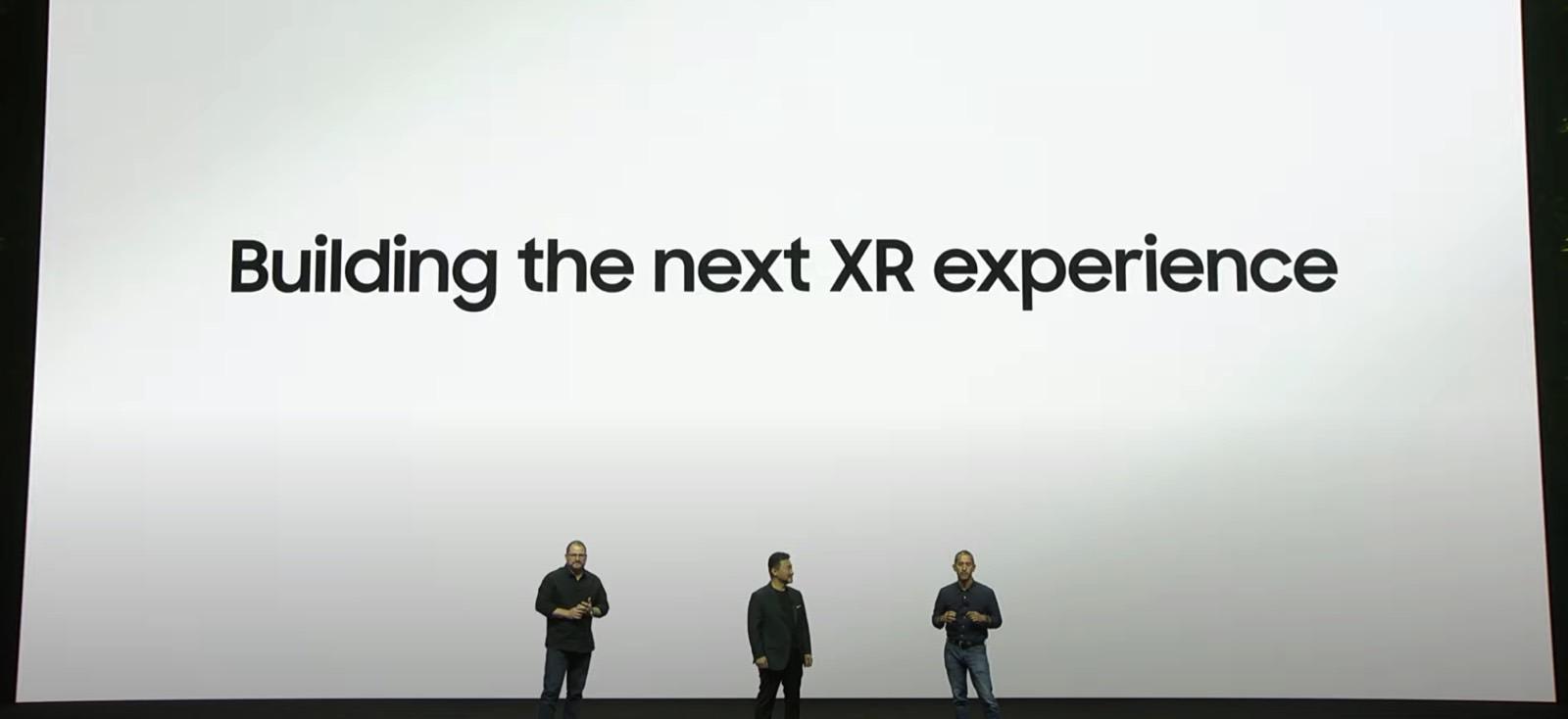
Remember when Samsung invited Google and Qualcomm to announce the “next XR experience“? I know I do because it happened in early February 2023, during the Galaxy S23 event. At the time, the web was filled with rumors about Apple’s mixed reality device, which would launch as the Vision Pro. Apple’s spatial computer dropped a few months after that teaser from Samsung, Google, and Qualcomm. It was immediately clear that the Vision Pro was so sophisticated that Samsung couldn’t possibly launch a rival anytime soon. 

Nearly two years later, that Samsung XR headset still doesn’t exist. But Samsung has been teasing it again recently, saying the device should be unveiled at some point next year.

While Samsung never detailed the specs and features of the XR device, a new leak may give us an idea of what Samsung is working on. Unsurprisingly, Samsung isn’t building a Vision Pro rival. Instead, it’s doing something that might be more useful to most people. The first Samsung XR device will apparently be a pair of glasses with Gemini AI at the core. And it turns out that we might have seen it already during Google’s Project Astra demo at I/O 2024.

Samsung had this to say about the unnamed XR headset a few weeks ago during its most recent quarterly earnings report:

Tech. Entertainment. Science. Your inbox.

Sign up for the most interesting tech & entertainment news out there.

By signing up, I agree to the Terms of Use and have reviewed the Privacy Notice.

We plan to contribute to the expansion of the Samsung Health ecosystem through the Galaxy Ring launched this year and to strengthen the connectivity experience between our products, such as the XR (eXtended Reality) device scheduled to be launched in the future.

I wouldn’t be surprised if Samsung brought the XR headset to the Galaxy S25 Unpacked launch event that’s supposed to happen in mid-January. Samsung could then keep teasing the XR glasses before giving them a summer 2025 launch. That’s what Samsung did with the Galaxy Ring last year.

A report from the Korean site Maeil Business Newspaper said a few days ago that Samsung will release smart glasses with built-in AI in the third quarter of 2025. Google and Qualcomm are named as Samsung’s partners. That means this is the “next XR experience” that Samsung teased nearly two years ago.

Meta Rayban SunglassesRay-Ban Meta smart glasses. Image source: Jonathan S. Geller

Samsung will manufacture some 500,000 units, according to a report from Chinese research company Wellsen XR.

In terms of specs, the Samsung XR headset will rely on Qualcomm’s AR1 chip as the main CPU and an auxiliary NXP chip. The headset will feature a 12-megapixel camera sporting a Sony IMX681 CMOS image sensor. The wearable will feature a 155 mAh battery and weigh 50 grams.

Gemini will be preinstalled, which is hardly a surprise. If Google is involved, that’s what Google can bring to the table. We’ve already seen Meta make great use of smart glasses for Meta AI features. Apple is also looking into creating smart glasses of its own.

The Samsung product will also support mobile payments via a QR code scanning feature. It’ll also recognize hand gestures.

As 9to5Google points out, the Samsung XR glasses feature an almost identical battery to the Ray-Ban Meta glasses, and they are almost similar in weight. This suggests that the Samsung XR device can’t possibly incorporate a screen. The reports from Asia make no mention of one.

All this suggests Samsung’s “next XR experience” device is more of a Ray-Ban Meta clone than a Vision Pro rival. That’s enough to give you an idea of what the glasses would look like. But I’ll also remind you of Google’s impressive Project Astra demo from I/O 2024.

OpenAI hosted an unexpected ChatGPT event in early May to introduce GPT-4o and Advanced Voice Mode. OpenAI’s demos showed the chatbot’s ability to handle multimodal inputs, including a new conversational voice mode that sounded like a real conversation between people.

Google used the smart glasses on the right to demo Project Astra (Gemini Live) at I/O 2024.Google used the smart glasses on the right to demo Project Astra (Gemini Live) at I/O 2024. Image source: Google

OpenAI stole Google’s thunder by a few days. Google’s Project Astra showed the same AI abilities for Gemini that OpenAI had just demoed for ChatGPT. Google used two devices to demo Project Astra: an unnamed Pixel device and an unnamed XR headset. The person talking to Gemini switched between them halfway through the demo.

The glasses are visible above, by the red apple. The clip at the end of this post will give you an even better look.

There’s no way to prove those are Samsung XR smart glasses. But I’d speculate that’s what it is. We’re looking at a prototype unit with Gemini preloaded.

Part of Project Astra became a reality rather quickly. That’s the Gemini Live conversational AI experience available on Pixel phones and other places. That’s all the more reason to indicate the smart glasses by the red apple are happening. Samsung is the likely partner in this endeavor.

Source

Posted on

AMD’s Ryzen chips appear to be wiping the floor with Intel – but the best-selling CPUs right now might surprise you

  • Intel’s top-selling CPU is a lowly number 13 in Amazon rankings
  • Team Blue is doing better in the Newegg CPU chart, but still not well
  • This may reflect fallout from Intel’s recent fumbles with chip instability and the rocky Arrow Lake launch

AMD is totally cleaning up in the world of desktop processors, with Intel lagging way behind its rival now, at least going by Amazon’s rankings of the bestselling CPUs.

As you may be aware, Amazon keeps track of the bestsellers across its entire range of tech (and other) products, and the top processor list is currently dominated by AMD, with Team Red now holding the entire top 10.

In fact, the first Intel CPU you’ll see is the Intel Core i5-13600KF at number 13, so the top 12 processors are from AMD (at the time of writing, anyway). Granted, Intel does have numbers 14, 15, 17, and 18 as well, notably with older CPUs from the 13th-gen and 14th-gen ranges, with no Core Ultra 200S (Arrow Lake) chips to be seen in the top 20 – or indeed in the top 100.

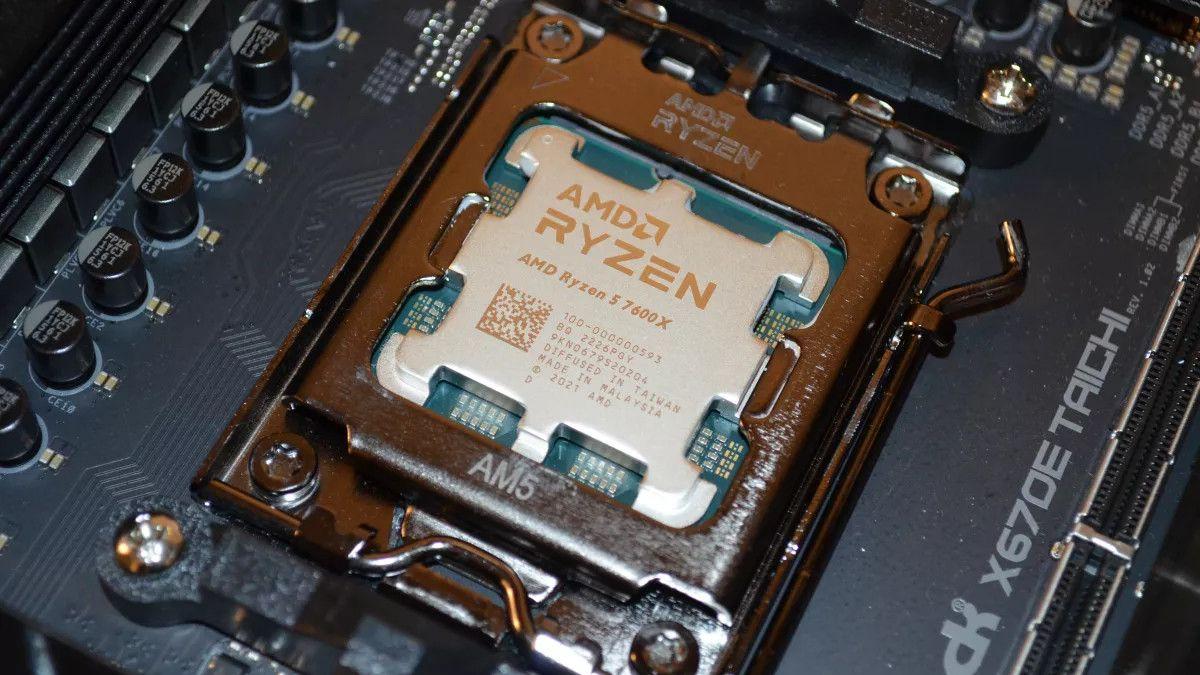
Are those chips simply too fresh to the market, then? Well, AMD’s Ryzen 9800X3D is also very new on the scene and is ranked at the number four spot, in fact, it’s been so popular that at the time of writing it’s sold out of stock.

What are AMD’s top chips by sales, then? At number one we have the AMD Ryzen 5700X, the mainstay from two generations ago which is still selling strongly, followed by its more affordable sibling, the 5600X.

The AMD Ryzen 7800X3D is in third place, followed by the 9800X3D as mentioned, and then the Ryzen 7600X is in fifth. It makes sense to see the 7800X3D in a strong position; it’s now the cheaper alternative to the next-gen 9800X3D, while remaining a strong choice of CPU for serious PC gamers.

An AMD Ryzen 7 7800X3D on top of its retail packaging

(Image credit: Future/John Loeffler)

Analysis: Processing advantage AMD

This represents a very clear picture of how AMD has pulled ahead in the CPU arena, albeit it is just one retailer – though a huge retail player, of course.

{ window.reliablePageLoad.then(() => { var componentContainer = document.querySelector(“#slice-container-newsletterForm-articleInbodyContent-8dK52bhBoHdW4eWepDqKeT”); if (componentContainer) { var data = {“layout”:”inbodyContent”,”header”:”Get the best Black Friday deals direct to your inbox, plus news, reviews, and more.”,”tagline”:”Sign up to be the first to know about unmissable Black Friday deals on top tech, plus get all your favorite TechRadar content.”,”formFooterText”:”By submitting your information you agree to the Terms & Conditions and Privacy Policy and are aged 16 or over.”,”successMessage”:{“body”:”Thank you for signing up. You will receive a confirmation email shortly.”},”failureMessage”:”There was a problem. Please refresh the page and try again.”,”method”:”POST”,”inputs”:[{“type”:”hidden”,”name”:”NAME”},{“type”:”email”,”name”:”MAIL”,”placeholder”:”Your Email Address”,”required”:true},{“type”:”hidden”,”name”:”NEWSLETTER_CODE”,”value”:”XTR-D”},{“type”:”hidden”,”name”:”LANG”,”value”:”EN”},{“type”:”hidden”,”name”:”SOURCE”,”value”:”60″},{“type”:”hidden”,”name”:”COUNTRY”},{“type”:”checkbox”,”name”:”CONTACT_OTHER_BRANDS”,”label”:{“text”:”Contact me with news and offers from other Future brands”}},{“type”:”checkbox”,”name”:”CONTACT_PARTNERS”,”label”:{“text”:”Receive email from us on behalf of our trusted partners or sponsors”}},{“type”:”submit”,”value”:”Sign me up”,”required”:true}],”endpoint”:”https://newsletter-subscribe.futureplc.com/v2/submission/submit”,”analytics”:[{“analyticsType”:”widgetViewed”}],”ariaLabels”:{}}; var triggerHydrate = function() { window.sliceComponents.newsletterForm.hydrate(data, componentContainer); } if (window.lazyObserveElement) { window.lazyObserveElement(componentContainer, triggerHydrate); } else { triggerHydrate(); } } }).catch(err => console.error(‘%c FTE ‘,’background: #9306F9; color: #ffffff’,’Hydration Script has failed for newsletterForm-articleInbodyContent-8dK52bhBoHdW4eWepDqKeT Slice’, err)); }).catch(err => console.error(‘%c FTE ‘,’background: #9306F9; color: #ffffff’,’Externals script failed to load’, err)); ]]>

Sign up to be the first to know about unmissable Black Friday deals on top tech, plus get all your favorite TechRadar content.

If you look at Newegg, which also keeps a regularly updated CPU ranking, this isn’t quite as heavily weighted towards AMD, but Team Red is clearly winning. In this case, Intel does have chips at numbers five through to eight, and 14, plus 20, but the rest of the top 20 is entirely AMD (again, that’s correct at the time of writing, though the processors may have shuffled around a bit by the time you’re reading this).

It’s much the same story as Amazon with the bestselling Ryzen chips, though the top seller is actually the Ryzen 9800X3D in this case (even though it has sold out – stock is still a big issue for would-be buyers), followed by the Ryzen 7600X (with a nice discount as you might guess). For Intel, the 14700K and 14900K are the top offerings – you won’t find an Arrow Lake CPU until number 39, where the flagship 285K currently resides.

Are we particularly surprised at this development? Well, not really, although the grip AMD has on the market at Amazon is pretty eye-opening. But given recent history in the world of CPUs, with Intel having a nightmarish time with its 14th-gen and 13th-gen silicon suffering serious instability problems, and Arrow Lake having a wobbly launch too, it’s pretty much a given that AMD is going to capitalize on these missteps.

Even if Ryzen 9000 also received a rather lukewarm reception, albeit the Ryzen 9800X3D has turned that around as a gaming powerhouse chip – the problem with that new 3D V-Cache CPU is that it’s out of stock everywhere, as noted.

Via Tom’s Hardware

You might also like

Source

Posted on

ChatGPT’s search engine might end your dependence on Google

I’ve been a ChatGPT Plus user for about a year, and I think the $20/month subscription is worth it to access some of OpenAI’s best ChatGPT features. One of them is the newly released ChatGPT Search product that competes directly against Google Search. It’s probably the AI product some people at Google have been dreading all along when ChatGPT went viral in late 2022.

I can’t say that I needed ChatGPT Search that much since ChatGPT Plus already searches the web during prompts. Also, I haven’t turned ChatGPT Search into my default search engine, and I say that as someone who has ditched Google Search long before generative AI chatbots were all the rage.

But I appreciate what OpenAI has done with the ChatGPT interface now that ChatGPT Search is an actual product. Whenever ChatGPT has to search the web to answer my prompts, it now displays sources by default. Not only that, but the UI gets a new tab where I see multiple sources that I can visit to double check the chatbot’s accuracy.

Remember that I’ve been telling you for nearly two years that ChatGPT and its kind are prone to hallucinations. That is inventing things that aren’t factually correct. Google’s big Search fumble with AI Overviews will always come to mind. That genAI product thought putting glue on pizza was safe because it couldn’t discern irony in things it read on Reddit during training.

Tech. Entertainment. Science. Your inbox.

Sign up for the most interesting tech & entertainment news out there.

By signing up, I agree to the Terms of Use and have reviewed the Privacy Notice.

From the early days of Custom Instructions on ChatGPT, I instructed the chatbot to give me sources for all the claims it makes in its answer. That experience has been mostly good. That’s because ChatGPT would routinely serve links that would not work. Those pages were no longer available for me to read.

By moving forward with the ChatGPT Search project, OpenAI also had to improve that aspect of the user experience. The user would have to get links to search results, similar to how Google Search works.

If you use ChatGPT Search to search the web, you’ll always get sources at the end of the answer. Here’s one such example: I searched for “Spider-Man 4 release date.” Notice the Sources button at the end of the prompt and the links after each paragraph:

A ChatGPT Search will always display a Sources button at the end.A ChatGPT Search will always display a Sources button at the end. Image source: Chris Smith, BGR

Click that button, and a vertical Citations menu opens on the right-hand side containing multiple links that tackle the topic:

Press the Sources button, and you get a new menu with links on the right side.Press the Sources button, and you get a new menu with links on the right side. Image source: Chris Smith, BGR

But I just said that I don’t use ChatGPT Search that much. That is, I don’t press that Search button (seen in blue above).

Instead, I use ChatGPT GPT-4o most of the time to find answers to my questions. This is actually what made me realize the ChatGPT Plus experience has improved so much thanks to ChatGPT Search.

I looked at recent rumors about Spider-Man 4 earlier today and wanted to refresh some information. I went to ChatGPT with some questions. The chatbot answered them by performing an online search, though I didn’t go through ChatGPT Search specifically. Notice there’s no blue button active in the prompt bar:

A regular chat with ChatGPT Plus will also show the same Sources button and the menu on the right.A regular chat with ChatGPT Plus will also show the same Sources button and the menu on the right. Image source: Chris Smith, BGR



However, OpenAI gives me the same Sources tab at the end of the response. A click on it opens the same new Search Results menu on the right, giving me access to plenty of search answers.

This will make fact-checking ChatGPT answers even easier than before. ChatGPT Plus users would have access to sources for the claims ChatGPT makes. The chatbot will probably continue to hallucinate. But you’ll be able to verify the information without providing Custom Instructions that make ChatGPT show links to sources. ChatGPT does it all by default.

OpenAI rolled out these UI updates only a few days ago, but I haven’t really paid attention to them. I would click on links from ChatGPT Plus, which would open in other browser tabs before the new menu appeared. In fact, I performed the “Spider-Man 4 release date” ChatGPT Search I first showed you only after noticing the Search Results menu in a regular chat with ChatGPT GPT-4o.

If I were still using Google Search, these new ChatGPT Plus and ChatGPT Search features would be enough to have me consider ditching it. While I still use DuckDuckGo for other searches and Google Maps for specific store and business information, I might actually give ChatGPT Search more screen time than before.

I’ll also note that ChatGPT users on the Free tier will not get access to internet search features inside prompts and will not have ChatGPT Search available separately. All of the above applies to paid ChatGPT tiers for now.

Source