Posted on

RCS on iPhone will finally get end-to-end encryption

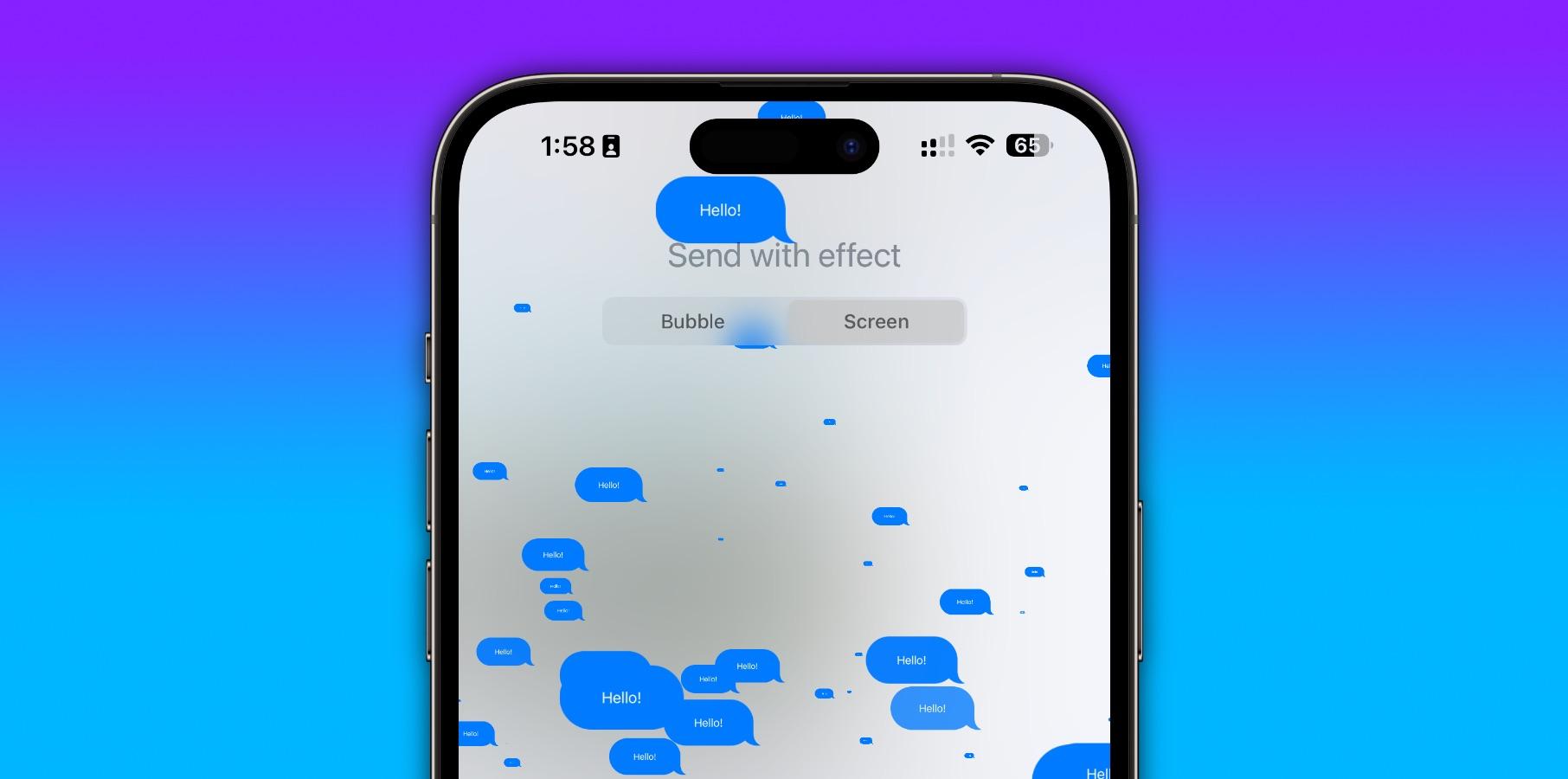
Apple brought RCS support to the iPhone’s Messages app with the iOS 18 update last September, effectively putting an end to the bubble wars. The green bubbles did not disappear from the iPhone all of a sudden, but iPhone and Android users could message each other using a much richer standard than SMS. The green bubble remained in place so that users could tell them apart from iMessage messages (the blue bubbles).

As I said more than once, I wasn’t necessarily a fan of getting RCS support on my iPhone and that it wouldn’t change my texting habits. Half a year later, this still holds true. I don’t really use RCS to talk to any of my friends and family who are Android users. WhatsApp is the chat app that bridges the two operating systems. WhatsApp is also the favorite chat app for some iPhone users in my group.

I want to use chat apps that offer end-to-end encryption, and both iMessage and WhatsApp satisfy that need. Strong encryption is key for strong security and privacy, and RCS didn’t support that on the iPhone. 

Why do we need strong encryption? Because hackers are always working to intercept your data. Just remember last fall’s China hack of major US telecoms, when law enforcement officials advised everyone to rely on encrypted chat and voice apps while they dealt with the threat. RCS on iPhone did not qualify as a secure chat app at the time.

Tech. Entertainment. Science. Your inbox.

Sign up for the most interesting tech & entertainment news out there.

By signing up, I agree to the Terms of Use and have reviewed the Privacy Notice.

Fast-forward to Friday, and Apple announced that end-to-end encryption is coming to RCS on the iPhone. That’s terrific news. We knew encryption was in the works, and I’m not surprised to see it happen.

The GSMA published a blog post to announce the new features coming to RCS. The iPhone is getting end-to-end encryption RCS messages via the Messaging Layer Security (MLS) protocol:

Most notably, the new specifications define how to apply MLS within the context of RCS. These procedures ensure that messages and other content such as files remain confidential and secure as they travel between clients. That means that RCS will be the first large-scale messaging service to support interoperable E2EE between client implementations from different providers. Together with other unique security features, such as SIM-based authentication, E2EE will provide RCS users with the highest level of privacy and security for stronger protection from scams, fraud, and other security and privacy threats.

The GSMA also announced a new RCS Universal Profile 3.0 that brings other new features. Users will be able to talk to businesses over RCS “through a richer deep link format and includes additional smaller enhancements such as improved codecs for audio messaging and easier management of subscriptions with business messaging senders.”

That said, strong encryption isn’t available right away on iPhones. Apple still has to implement the new profile, and that will happen in the future via software updates. Apple confirmed it all to 9to5Mac:

End-to-end encryption is a powerful privacy and security technology that iMessage has supported since the beginning, and now we are pleased to have helped lead a cross industry effort to bring end-to-end encryption to the RCS Universal Profile published by the GSMA. We will add support for end-to-end encrypted RCS messages to iOS, iPadOS, macOS, and watchOS in future software updates.
Source

Posted on

iOS 18.4: New features, release date, AI updates, more

After waiting almost a month, Apple finally started beta testing iOS 18.4. This is one of the most important updates of the iOS 18 cycle so far. Here’s everything you need to know about iOS 18.4, including all of its features, the expected release date, and a major Apple Intelligence upgrade that Apple has planned for this release.

Release Date

Unlike other software updates, Apple already teased that iOS 18.4 will be available in April. With the iPhone 16e announcement, the company said this version would launch early that month.

Apple Intelligence upgrades

iOS 18.1 Apple Intelligence on iPhone 15 Pro all-new Siri designImage source: José Adorno for BGR

With iOS 18.4 beta 1, Apple added several new Apple Intelligence features:

New languages: Apple adds Chinese, French, German, Italian, Brazilian Portuguese, Spanish, Japanese, Korean, and localized English for Singapore and India.

Tech. Entertainment. Science. Your inbox.

Sign up for the most interesting tech & entertainment news out there.

By signing up, I agree to the Terms of Use and have reviewed the Privacy Notice.

Image Playground: The long-awaited Sketch style is now available alongside the Animation and Illustration options.

Genmoji: Apple tweaked the Genmoji icon on the keyboard, as it now reads “Genmoji.”

Mail Categorization: Apple added Mail Categorization to iPad users with iPadOS 18.4 beta 1.

iOS 18.4 beta 1 features

The first iOS 18.4 beta includes several new features. These are the most important:

Apple News+ Food: This update will bring a new Food section to Apple News. Subscribers can access recipes, tips for healthy eating, restaurants, and more.

Vision Pro app: With iOS 18.4, Apple Vision Pro will get its own iPhone app. It will help you download apps, visionOS content, tips, and information and even set up Guest Mode.

Apple Maps change: You can now set a Preferred Language to get directions instead of the one you use on your iPhone.

Ambient music: iOS 18.4 adds new Control Center toggles for Ambient Music, including Chill, Productivity, Sleep, and Wellbeing.

CarPlay update: Cars with bigger screens now get three rows of apps displayed.

iOS 18.4 beta 2 features

New emojis launch with iOS 18.2Image source: José Adorno for BGR

The second iOS 18.4 beta includes several new features. These are the most important:

New emoji: Apple finally added the seven emojis teased by the Unicode Consortium last year. Still, they’re not as fun as you’d expect.

Visual Intelligence: Apple added the Visual Intelligence feature to the Action Button while also adding support for the iPhone 15 Pro and iPhone 16e.

Control Center: The Control Center now displays an Apple Intelligence section with three options: Talk to Siri, Type to Siri, and Visual Intelligence.

Apple Vision Pro app: If you have an Apple Vision Pro, iOS 18.4 beta 2 adds the already-announced Vision Pro app.

App Store: The latest beta lets you pause an app download from the App Store.

iPhone support: iPhone 12 and iPhone 16e users can now join the iOS 18.4 beta testing.

Device compatibility

Image source: José Adorno for BGR

iOS 18.3 is compatible with the following devices:

  • iPhone XR, XS, and XS Max
  • iPhone 11
  • iPhone 11 Pro and 11 Pro Max
  • iPhone SE (2nd gen)
  • iPhone 12 mini and iPhone 12
  • iPhone 12 Pro and iPhone 12 Pro Max
  • iPhone 13 mini and iPhone 13
  • iPhone 13 Pro and iPhone 13 Pro Max
  • iPhone SE (3rd gen)
  • iPhone 14 and iPhone 14 Plus
  • iPhone 14 Pro and iPhone 14 Pro Max
  • iPhone 15 and iPhone 15 Plus
  • iPhone 15 Pro and iPhone 15 Pro Max
  • iPhone 16 and iPhone 16 Plus
  • iPhone 16 Pro and iPhone 16 Pro Max
  • iPhone 16e

Source

Posted on

How Apple plans to fix the biggest design flaw of foldable phones

Apple will supposedly launch its first foldable iPhone in 2026, a phone we’ve been calling the iPhone Fold on account of its presumed design. The phone will fold like a book, which is the design Samsung first used for a foldable of its own, called the Galaxy Z Fold. Since then, many Chinese smartphone vendors released Fold-type phones.

When the iPhone Fold arrives, Apple might do something that Samsung and other Chinese companies haven’t really been able to do. Apple might release a foldable phone with an almost perfect foldable screen. That is, the foldable display might be creaseless, with Apple having reportedly spared no expense to fix this foldable phone design compromise. 

That’s according to a report from Korea that claims Apple will finalize its supply chain for the first-gen iPhone Fold this year, with component manufacturing to start by the end of the year.

Apple’s purported manufacturing plans for the iPhone Fold come from ETNews. The Korean outlet has learned that supplier selection is imminent, as Apple managed to improve the display crease significantly. By April, Apple should have chosen the suppliers that would manufacture key iPhone Fold components.

Tech. Entertainment. Science. Your inbox.

Sign up for the most interesting tech & entertainment news out there.

By signing up, I agree to the Terms of Use and have reviewed the Privacy Notice.

This development suggests that Apple will indeed release a foldable iPhone next year, matching claims from other recent rumors.

Samsung will be the sole manufacturer of that nearly creaseless display. Apple reportedly worked only with Samsung since last year. Apparently, it’s only Samsung Display that managed to deliver a screen that matches Apple’s needs.

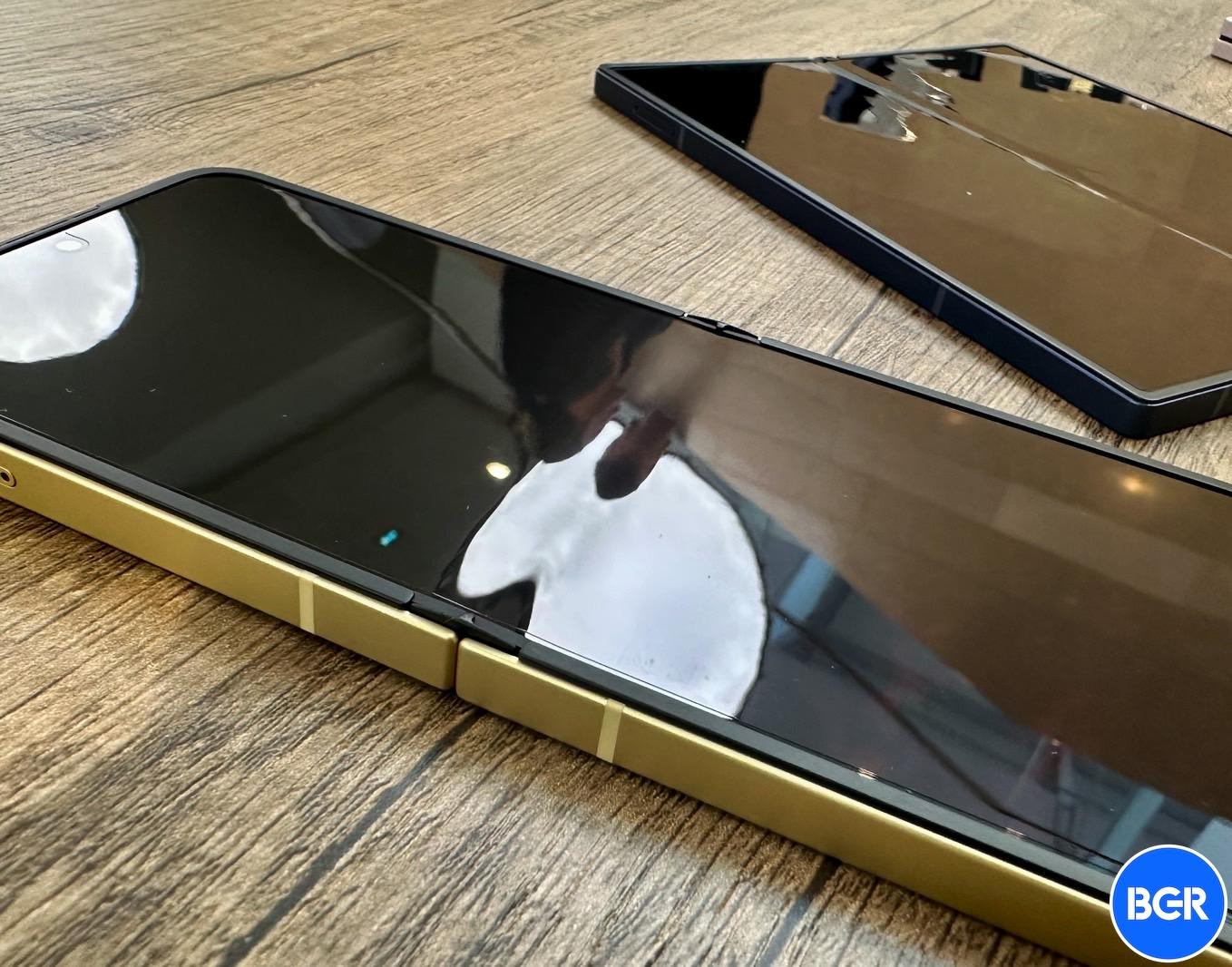
Galaxy Z Fold 6 crease.Galaxy Z Fold 6 has a large crease. Image source: Chris Smith, BGR

That means Samsung might be the first company to significantly improve the foldable display crease. As a reminder, the Galaxy Z Fold SE has a significantly reduced crease. The upcoming Galaxy Z Fold 7 should be based on the same design. It’s unclear, however, if Samsung is using the same innovations on its own phones.

Unsurprisingly, Apple had strict technical requirements from Samsung on how to fix the display crease.

“Apple has made the decision to eliminate creases completely, regardless of cost, in order to differentiate their foldable phone from existing models,” an insider told the outlet. “It is understood that they have successfully achieved this by using new materials that prevent creases from forming on the display.” It’s unclear what these materials are.

The report provides another interesting detail about the iPhone Fold design. Fixing the crease doesn’t mean fixing only the foldable screen. It also means looking at how the screen connects to the hinge below it and the ultra-thin glass at the top. 

Apparently, Apple has found a way to prevent creasing by looking at the problem holistically. The report also says Apple has encouraged cooperation between the various parts suppliers.

Samsung will provide the foldable OLED panel for the iPhone Fold. Amphenol, which manufactures hinges for MacBook Pros, has been tapped to make the iPhone Fold’s hinge.

Apple will reportedly use Corning cover screens, likely for the external display. The foldable screen will get ultra-thin glass covers, similar to Samsung’s Galaxy Z Fold models. Samsung might provide UTG tech, though Apple is reportedly working with other components.

A foldable display with no crease will surely offer Apple an advantage over rivals next year. That’s assuming Samsung and others won’t come up with almost creaseless foldable phone screens themselves. It’s not just the Galaxy Z Fold SE that might feature a smaller crease. The recently launched Oppo Find N5 also supposedly features a smaller crease.

The crease might not be the only thing that sets the iPhone Fold apart. Recent reports from China have revealed the purported screen sizes for the foldable iPhone. They suggest the phone will be much shorter than the Galaxy Z Fold 6. When opened, this phone would look a lot like an iPad mini.

Source

Posted on

iOS 18.4 might not have the big Siri upgrade we expected

Apple was reportedly planning to introduce an AI-powered upgrade for Siri in iOS 18.4, but that might no longer be in the cards for the company. Bloomberg’s Mark Gurman reports that due to numerous engineering problems and software bugs involving the AI-enhanced Siri, Apple might have to delay the launch to a future update.

Sources told Bloomberg that Apple “is still racing to finish the software” internally. They say that employees testing Siri haven’t been able to consistently get the new features to work. While iOS 18.4 isn’t expected to be released to the public until April, the first beta software could roll out as early as next week, adding even more pressure.

Therefore, Apple has some choices to make. One option is to delay the Siri upgrade altogether and wait for iOS 18.5, which could arrive as early as May. Another option is to ship the upgrade but deactivate all the features that don’t work yet. That obviously would not be an ideal solution, but at least Apple could say that it shipped the new Siri on time.

New features in the works include the ability to sort through personal data to answer questions and take actions, understand context based on what’s on the screen, and perform significantly more actions within both first-party and third-party apps.

Tech. Entertainment. Science. Your inbox.

Sign up for the most interesting tech & entertainment news out there.

By signing up, I agree to the Terms of Use and have reviewed the Privacy Notice.

“Users have been waiting for other Apple Intelligence features, beyond the new Siri,” Gurman pointed out in his Friday report. “That includes AI sorting of mail messages on the iPad and Mac, a priority notifications interface for highlighting important alerts, and a sketch style in the Image Playground app for creating images.”

Whether or not Apple can get the new Siri up and running by April, it’s clear that the company is struggling to catch up with rivals in the fast-paced AI world.

Source

Posted on

Apple’s Vision Pro mega software update won’t be enough to help sales

If you forgot about Apple’s long-anticipated Apple Vision Pro release a year ago, you’re not alone. After so much hype for the company’s latest product category in a decade, it has proven so far that a high price point and low app are keeping customers away from Apple’s spatial computer.

In addition, visionOS 2 has been a lackluster update. While it brought a few important missing features, including a new ultra-wide Mac view with visionOS 2.2, these updates have been boring so far… at least until now.

In his Power On newsletter, Bloomberg‘s Mark Gurman says Apple is preparing a major visionOS 2.4 update. It is expected to be available this week in beta, making it the biggest visionOS update so far.

According to the journalist, this will be the upgrade that brings Apple Intelligence to Apple’s spatial computer. Interestingly, Apple could have offered its AI features to Vision Pro from day one, as it has an M2 chip and 16GB of RAM, but it preferred to focus on the iPhone, iPad, and Mac instead.

Tech. Entertainment. Science. Your inbox.

Sign up for the most interesting tech & entertainment news out there.

By signing up, I agree to the Terms of Use and have reviewed the Privacy Notice.

In addition, it seems Apple is preparing a “new spatial content app that collects Vision Pro-optimized media like panoramas” and a new guest user mode that allows setup through an iPhone.

While all these features will make this the biggest software update for visionOS so far, I’m still not convinced it will impact Vision Pro sales or even usage. To me, Apple Intelligence has been an underwhelming experience, and it seems the long-awaited on-screen awareness of Siri will take even longer to land.

That said, the fundamental issues with Vision Pro, including its heaviness, lack of apps, and higher price point, are also still here, and these are all significant deals for most customers.

As always, BGR will keep you informed about Apple’s latest software updates and features.

Source

Posted on

Apple reportedly started M5 mass production ahead of 2025 Mac releases

A few months after Apple ordered TSMC to start the production development of the M5 chip, ET News reports that mass production for this upcoming processor has now begun. According to the publication, mass production for the M5 chip, which is expected to power new Macs, iPads, and Apple Vision Pro, started in January. ET News writes: “Apple M5 chip packaging is handled by Taiwan’s ASE, the U.S.’s Amkor, and China’s JCET. Initial mass production has been started by ASE, and mass production with Amkor and JCET will follow suit.”

These companies also add resources to make the high-end M5 Pro, M5 Max, and M5 Ultra chips. While power efficiency has been improved by 5-10% and performance improved by 5% compared to the M4 chip, this is yet Apple’s new tackle on AI processors to power Apple Intelligence and other complex tasks.

While the M5 mass production has already started, Apple has yet to release its M4 MacBook Air models. They’re expected to be released in the first half of 2025, in addition to the M4 Ultra chip with the Mac Studio, which is scheduled for mid-2025. Finally, a new Mac Pro could also be in the works for late 2025. If that turns out to be accurate, this release could coincide with the first M5 products.

So far, the first Apple products we expect to unveil with the M5 chip are the iPad Pro, the MacBook Pro, and the Apple Vision Pro. Still, none of them should debut before fall 2025.

Tech. Entertainment. Science. Your inbox.

Sign up for the most interesting tech & entertainment news out there.

By signing up, I agree to the Terms of Use and have reviewed the Privacy Notice.

That being said, we still have plenty of time with M4 products. Also, it doesn’t seem Apple plans a major revamp for its products with the M5 chip. According to rumors, Cupertino could start tweaking the design of some of its Macs by 2026 when it plans to ditch the miniLED display for a new OLED technology.

Below, you can learn more about when to expect new M4 Macs.

Source

Posted on

Apple’s hallucinated AI News summaries were just disabled in iOS 18.3 beta 3

Hallucinations are a part of the early genAI experience. Since the early days of ChatGPT, we have warned that AI will make mistakes and that you should always look for sources and check whether its claims are accurate. As hard as they might have tried, the big tech players were not spared.

Google’s AI Overviews in Search delivered advice on how to put glue on pizza and hallucinate other information, forcing Google to deal with the PR mess that followed and fix the AI before releasing it to a wider audience.

Apple wasn’t spared the hallucination humiliation either, with Apple Intelligence conflating News reports to deliver fake information via the summarization feature for the News app. Apple has decided to pull the feature from the latest iOS 18 beta and deploy the needed fixes.

“With the latest beta software releases of iOS 18.3, iPadOS 18.3, and macOS Sequoia 15.3, Notification summaries for the News & Entertainment category will be temporarily unavailable,” an Apple representative told CNBC.

Tech. Entertainment. Science. Your inbox.

Sign up for the most interesting tech & entertainment news out there.

By signing up, I agree to the Terms of Use and have reviewed the Privacy Notice.

Apple is working on improving the News summarization feature, which will return in a future software update. It’s unclear when the feature will be back, but Apple Intelligence continues to be a top priority for Apple’s software development teams.

As a reminder, iOS 18.4 will bring another set of AI features to iPhone, iPad, and Mac, including the smarter Siri that can control some apps and access more user data on the device to provide more helpful assistance.

Apple Intelligence’s hallucination problems went viral in December when the AI summarized several BBC reports into a single notification that started with “Luigi Mangione shoots himself.” Mangione is the alleged Brian Thompson assassin who did not shoot himself.

Other hallucinations date back to November when the AI might have shown some users The New York Times summaries that claimed Israeli Prime Minister Benjamin Netanyahu had been arrested. That wasn’t the case.

Hallucinating news is a big problem for any AI product, whether Apple Intelligence or ChatGPT. After all, we’ve been worried about AI misleading users with fake information and the manipulation risks that might come from AI products controlled by nefarious actors. Companies like Apple must get any news-related AI features right, especially summarization. Either that or not do it at all.

In addition to disabling Notification Summaries for the News and Entertainment category in iOS 18.3 beta 3, Apple has added a label to the feature noting that summaries can contain errors, as the app is in beta.

Apple made another change to how summaries appear in notifications so you can tell them apart from regular notifications. Starting with iOS 18.3 beta 3, they’ll be italicized.

Finally, Apple Intelligence users who install the latest beta can decide whether to enable or disable summaries for an iPhone app directly from the Lock Screen. Swipe to the left on a Notification Summary to get an options menu that will let you disable them for specific apps. The alternative is going into the Settings app, where you’d have customized the AI summarizations before the new beta.

As an iPhone user in the EU, I still can’t get Apple Intelligence. I couldn’t test it or experience any of the hallucination issues that US iOS 18 beta testers have encountered. Hopefully, the hallucination problem will go away by the time I get my hands on Apple Intelligence on the iPhone.

However, it’s great to see Apple admit the errors and pull the AI summarization feature entirely rather than proceeding with it without a proper fix.

Source

Posted on

It sure looks like Apple is getting ready to release a HomePod with a display

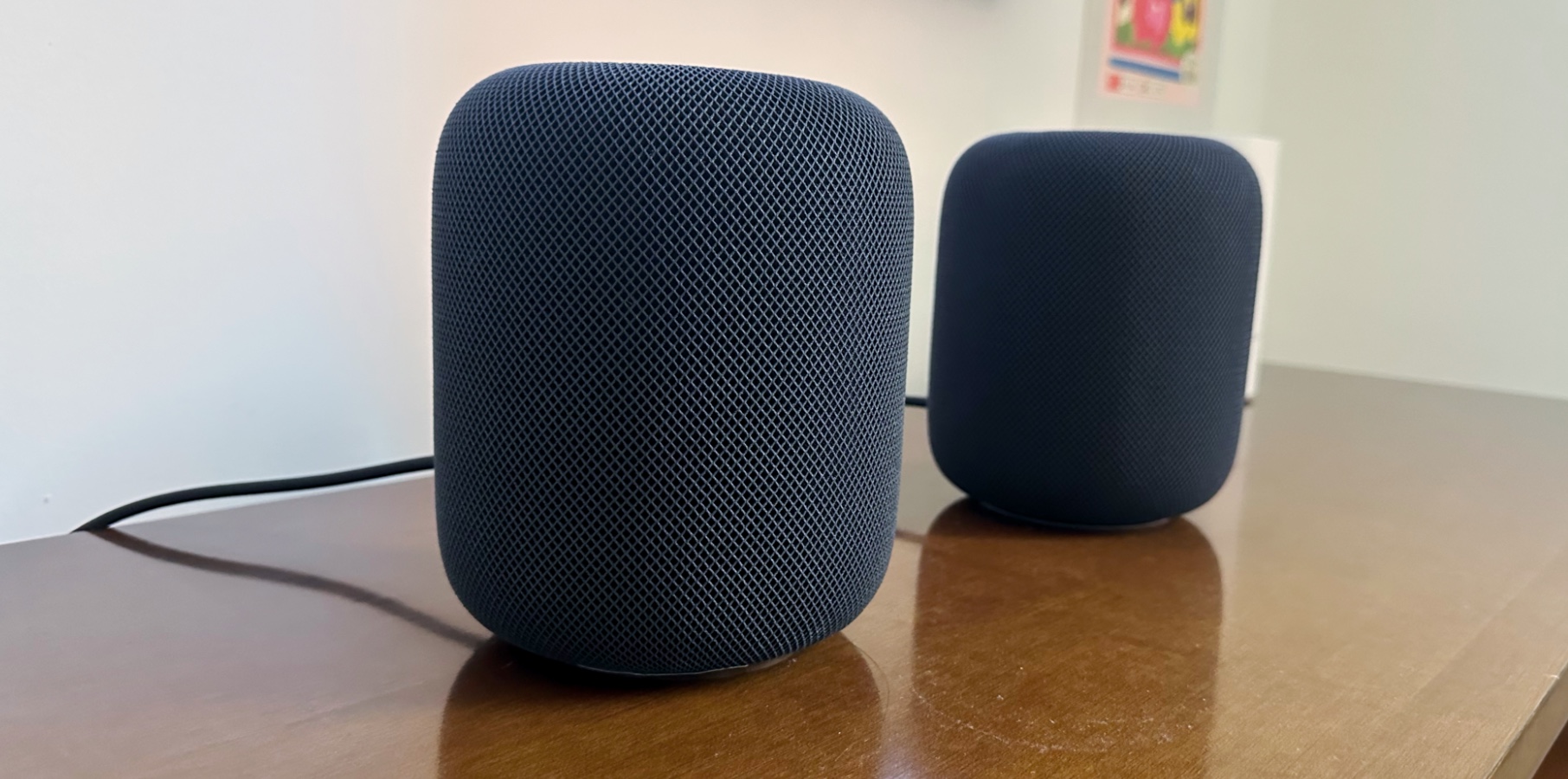
Another rumor suggests Apple’s long-rumored HomePod with a display is launching in 2025. This time, a paywalled report by DigiTimes (via MacRumors) says Tianma Microelectronics will supply the gadget’s 7-inch LCD panel. Taiwan’s Radiant will reportedly handle backlight module production, and BYD will assemble the device.

Rumors about this HomePod with a screen have been floating on the web for years now, especially with conflicting reports about Apple’s upcoming home robot.

Last year, tvOS 17.4 hinted at this device, and Bloomberg’s Mark Gurman said Apple was planning to combine the Apple TV, FaceTime, and HomePod in one system. The journalist said Cupertino also wanted to create a “HomePod with a screen that swivels like a robotic arm.” This HomePod with an iPad-like display could be released as soon as 2026.

In 2023, analyst Ming-Chi Kuo said Apple was readying a HomePod with a screen for the first half of 2024. While he eventually reframed his prediction to 2025, he believed it could feature a 7-inch display with Tianma manufacturing it. “The HomePod, which equips a panel, could enable tighter integration with Apple’s other hardware products, marking a significant shift in the company’s smart home strategy.”

Tech. Entertainment. Science. Your inbox.

Sign up for the most interesting tech & entertainment news out there.

By signing up, I agree to the Terms of Use and have reviewed the Privacy Notice.

Rumors say Apple has been working on several HomePod variants with screens. Two of them are a tabletop device with a robotic arm, and the other is an iPad-like product with a speaker combo and a built-in camera, something like an Amazon Echo Show.

In addition, a HomePod 3 is expected to be released as Apple’s smart home hub. Although reports suggest Apple Intelligence could play a big role in a smart speaker/display device, adding a better A17 Pro or M chip could greatly increase the price of a device most people aren’t willing to buy.

It seems that this product could be revealed in the third quarter of 2025, after the WWDC 2025 keynote. As always, BGR will monitor rumors and reports about this smart speaker and let you know if we learn more.

Source

Posted on

Microsoft 365 price hike: Are you forced to pay more even if you don’t want AI?

If you thought Microsoft’s forcing Windows 10 users to upgrade to Windows 11 to keep using Microsoft 365 Office apps was bad, you haven’t seen anything yet. Microsoft will further annoy many of its customers by embedding Copilot AI into all Office apps and charging an extra $3 per month for it. Microsoft announced the price hike for the Office 365 apps in a blog post explaining the changes.

Yes, AI development is expensive, and I absolutely agree that we, as end users, have to pay for access. That’s why I’m a ChatGPT Plus subscriber and won’t ditch that $20/month subscription anytime soon. If anything, I’m ready to pay for additional AI products that might improve aspects of my life. Take Apple Intelligence; I’ll keep buying expensive iPhones, iPads, and Macs, which will pay for Apple’s AI.

However, as a Microsoft 365 subscriber who has no interest in Copilot AI at this point, I’m not too thrilled about potentially having to shell out an extra $3 per month for my Family subscription. AI should be optional rather than mandatory in all apps. So, is there a way to keep your current subscription price if you’re like me and you don’t want Copilot AI? Well, it’s complicated.

Microsoft is forcing Copilot AI on millions of users

Microsoft 365 Personal and Family subscribers will get Copilot AI and a new Designer AI image generation app in most markets. This will lead to a price hike of $3 per month in the US, Microsoft’s first price hike for the productivity bundle subscription in 12 years. You’ll have to check your local Microsoft 365 portal to see the price increase in your local market.

Tech. Entertainment. Science. Your inbox.

Sign up for the most interesting tech & entertainment news out there.

By signing up, I agree to the Terms of Use and have reviewed the Privacy Notice.

Microsoft says that most of its 84 million consumer subscribers will have access to Copilot in Office apps whether they want it or not.

The new Copilot AI integration is separate from the Microsoft Copilot Pro subscription, which costs $20 per month. Copilot will be available in Word, Excel, PowerPoint, Outlook, OneNote, and the new Designer app.

To use the latter, Microsoft 365 Personal and Family subscribers will use AI credits that come with their subscription. The monthly allotment of AI credits applies to all Office apps and should be “enough for most subscribers.”

Let’s appreciate the good things

Microsoft knows that Copilot shouldn’t always be active in Office apps, so it’s giving users the ability to turn it off. That’s good news for students who rely on Office apps for taking notes during class.

Also important here is Microsoft’s commitment to privacy. I might not like the price hike because I don’t plan to use Copilot AI in Office apps anytime soon, but I appreciate the fact that Microsoft will not use any Office app AI data to train its models:

To protect your privacy, we do not use your prompts, responses, or file content (such as Word documents or Excel spreadsheets) when you use Copilot in the Microsoft 365 apps to train our foundation models.

You can opt out, for now

Microsoft is aware that not all Office app users will want access to Copilot AI, so there are ways to opt out and keep your current subscription price. That’s another thing I can appreciate. But there are big caveats here.

First, you have to be an existing Microsoft 365 subscriber to opt out of the Copilot AI price hike. Second, you must enable recurring billing to avoid the price increase. Those who don’t have it enabled, such as myself, won’t be able to stick with the non-AI versions of the apps.

Users with recurring billing can switch to a Basic plan, or they can keep their current plan as it exists today by switching to the new Personal Classic or Family Classic plans “for a limited time.” Once these plan options disappear, you’ll only have access to Copilot AI plans.

In other words, you’ll still be forced to pay for AI you might not want if you miss the opportunity to grab one of these limited-time plans.

Finally, there’s another big issue with the non-AI plans here. Microsoft says it will maintain the Basic and Classic plans “as they exist today,” but you risk not getting new features. For “certain new innovations and features you’ll need a Microsoft 365 Personal and Family subscription,” Microsoft says. Therefore, you’ll need to pay that extra $3 per month, or whatever it converts to in your local currency.

Should you cancel Microsoft 365?

Don’t get me wrong, I don’t think access to Copilot AI is a bad thing. It’s certainly a great tool and much more useful than, say, AI chatbots ruining WhatsApp. As you can see in the examples above, Copilot can be quite helpful in all sorts of instances using Office apps.

However, it should be up to the customer to choose to use AI. There’s no reason for Microsoft not to continue supporting non-AI Office apps in the future other than greed. That’s what it looks like, at least.

Also, since I’ve defended Netflix price hikes in the past, I’d do the same with Microsoft 365 prices if they were to go up.

My first reaction wasn’t to cancel my subscription or opt for the non-Copilot Office experience. I wanted to ask family members in the group if they wanted any built-in AI access. But I can’t even do that, considering that Copilot AI will only be available to me, the subscription owner.

Source

Posted on

Top insider says foldable iPhone will enter mass production this year

Alongside the imminent release of the iPhone SE 4 and the launch of a new iPhone 17 Air later this year, it seems Apple is busier than usual with its smartphone lineup.

According to top insider Ming-Chi Kuo, the company plans to start mass production of the foldable iPhone in the second half of 2025. Currently, this device is in “the planning stage.” As already pointed out by my colleague Chris Smith, the release of the iPhone 17 Air will be crucial for this upcoming foldable device.

Since Apple is preparing an ultra-thin device, the company will take advantage of that technology (and compromises, such as being eSIM-only) to produce the long-awaited foldable iPhone.

Apple could be readying the iPhone Fold for 2026 or 2027

The Information believes Apple started this project around 2020, and it won’t take long until the company reveals it. The Korean outlet The Elec learned that Apple is considering a 2026 or 2027 release date for a foldable device about the same size as the iPad mini.

Tech. Entertainment. Science. Your inbox.

Sign up for the most interesting tech & entertainment news out there.

By signing up, I agree to the Terms of Use and have reviewed the Privacy Notice.

The report doesn’t call it a phone. Previous rumors said that Apple’s first foldable device might be a tablet rather than an iPhone

While The Information believes a 2026 release makes more senseThe Elec points out that 2027 would mark the 20th anniversary of the iPhone and the 10th anniversary of the first iPhone with an OLED panel. The latter isn’t really a cause for celebration. The 2017 iPhone X had to be different because Apple celebrated the handset’s 10th anniversary. And the OLED screen allowed Apple to make an all-screen display in addition to the TrueDepth system.

Other analysts also claim this device will likely launch between 2026 and 2027. That said, we’ll still have to wait a little longer, as Apple’s focus is now on the future iPhone 17 models, which you can learn more about below.

Source