Posted on

Intel announces new Core Ultra 200 series mobile CPUs at CES 2025, targeting enthusiasts and edge users

Intel announced its latest series of mobile processors at CES 2025, the Intel Core Ultra 200HX series, the Core Ultra 200H series, and the Core Ultra 200U series, targeting enthusiasts, premium, and thin and light laptop users, respectively.

The new chips, hot on the heels of the incredibly well-received Intel Lunar Lake chips (sold as the Intel Core Ultra 200V series), offer even more variety of processing power for users who found the Core Ultra 200V series to be good, but not quite powerful enough for their needs.

The new chip lines, which are built off the same Intel Arrow Lake architecture used in the Intel Core Ultra 200S series desktop processors (including the Intel Corez Ultra 9 285K and Core Ultra 5 265K), have a bit of an expectations problem.

Arrow Lake for desktop was rather underwhelming (for gamers at least) at launch and the arguably more advanced Intel Lunar Lake laptop chips currently on the market are simply some of the best laptop processors anyone has ever made, so following that up with an already maligned architecture will be tough.

That said, Intel Arrow Lake has a lot going for it, especially once you step away from gaming. In everyday and professional workloads. On desktop, The Intel Core Ultra 200S series chips came out pretty much even with the previous-gen Intel Raptor Lake Refresh chips (Intel’s Core 14000 series), while using less power to do so. The hope, it appears, is that Intel is offering at least even or better laptop chip performance compared to the previous generation with meaningfully less power consumption, something that actually matters for laptops.

It remains to be seen if any of this will sway anyone expecting big performance gains, but at least for these mobile chips, improved energy efficiency could be enough to tip the scales in their favor.

New Intel mobile SKUs

A mockup of the Intel Core Ultra 200HX against a blue swoosh background

(Image credit: Intel)

Here are all of the new Intel Core Ultra 200HX, Core Ultra 200H, and Core Ultra 200U SKUs announced during Intel’s CES 2025 keynote.

{ window.reliablePageLoad.then(() => { var componentContainer = document.querySelector(“#slice-container-newsletterForm-articleInbodyContent-KUyyNBD5QHn6aeGMEMgAa8”); if (componentContainer) { var data = {“layout”:”inbodyContent”,”header”:”Get daily insight, inspiration and deals in your inbox”,”tagline”:”Sign up for breaking news, reviews, opinion, top tech deals, and more.”,”formFooterText”:”By submitting your information you agree to the Terms & Conditions and Privacy Policy and are aged 16 or over.”,”successMessage”:{“body”:”Thank you for signing up. You will receive a confirmation email shortly.”},”failureMessage”:”There was a problem. Please refresh the page and try again.”,”method”:”POST”,”inputs”:[{“type”:”hidden”,”name”:”NAME”},{“type”:”email”,”name”:”MAIL”,”placeholder”:”Your Email Address”,”required”:true},{“type”:”hidden”,”name”:”NEWSLETTER_CODE”,”value”:”XTR-D”},{“type”:”hidden”,”name”:”LANG”,”value”:”EN”},{“type”:”hidden”,”name”:”SOURCE”,”value”:”60″},{“type”:”hidden”,”name”:”COUNTRY”},{“type”:”checkbox”,”name”:”CONTACT_OTHER_BRANDS”,”label”:{“text”:”Contact me with news and offers from other Future brands”}},{“type”:”checkbox”,”name”:”CONTACT_PARTNERS”,”label”:{“text”:”Receive email from us on behalf of our trusted partners or sponsors”}},{“type”:”submit”,”value”:”Sign me up”,”required”:true}],”endpoint”:”https://newsletter-subscribe.futureplc.com/v2/submission/submit”,”analytics”:[{“analyticsType”:”widgetViewed”}],”ariaLabels”:{}}; var triggerHydrate = function() { window.sliceComponents.newsletterForm.hydrate(data, componentContainer); } if (window.lazyObserveElement) { window.lazyObserveElement(componentContainer, triggerHydrate); } else { triggerHydrate(); } } }).catch(err => console.error(‘%c FTE ‘,’background: #9306F9; color: #ffffff’,’Hydration Script has failed for newsletterForm-articleInbodyContent-KUyyNBD5QHn6aeGMEMgAa8 Slice’, err)); }).catch(err => console.error(‘%c FTE ‘,’background: #9306F9; color: #ffffff’,’Externals script failed to load’, err)); ]]>

Sign up for breaking news, reviews, opinion, top tech deals, and more.

Swipe to scroll horizontally

Intel Core Ultra 200HX SKUs

Header Cell – Column 0 Core Ultra 9 285HX Core Ultra 9 275HX Core Ultra 7 265HX Core Ultra 7 255HX Core Ultra 5 245HX Core Ultra 5 235HX
P-Cores 8 8 8 8 6 6
E-Cores 16 16 12 12 8 8
Total Threads 24 24 20 20 14 14
L3 Cache (MB) 36 36 30 30 24 24
P-Core Max Clock (GHz) 5.5 5.4 5.3 5.2 5.1 5.1
E-Core Max Clock (GHz) 2.8 2.7 2.6 2.4 3.1 2.9
Graphics Intel Graphics Intel Graphics Intel Graphics Intel Graphics Intel Graphics Intel Graphics
Base TDP (W) 15 15 15 15 15 15
Max TDP (W) 57 57 57 57 57 57

Swipe to scroll horizontally

Intel Core Ultra 200H SKUs

Header Cell – Column 0 Core Ultra 9 258H Core Ultra 7 265H Core Ultra 7 255H Core Ultra 5 235H Core Ultra 5 225H
P-Cores 6 6 6 4 4
E-Cores 8 8 8 8 8
LPE-Cores 2 2 2 2 2
Total Threads 16 16 16 14 14
L3 Cache (MB) 24 24 24 18 18
P-Core Max Clock (GHz) 5.4 5.3 5.1 5.0 4.9
Graphics Intel Arc Graphics Intel Arc Graphics Intel Arc Graphics Intel Arc Graphics Intel Arc Graphics
Base TDP (W) 45 28 28 28 28
Max TDP (W) 115 115 115 115 115

Swipe to scroll horizontally

Intel Core Ultra 200U SKUs

Header Cell – Column 0 Core Ultra 7 265U Core Ultra 7 255U Core Ultra 5 235U Core Ultra 5 225U
P-Cores 2 2 2 2
E-Cores 8 8 8 8
LPE-Cores 2 2 2 2
Total Threads 12 12 12 12
L3 Cache (MB) 12 12 12 12
P-Core Max Clock (GHz) 5.3 5.2 4.9 4.8
Graphics Intel Graphics Intel Graphics Intel Graphics Intel Graphics
Base TDP (W) 15 15 15 15
Max TDP (W) 57 57 57 57

A mockup of the Intel Core Ultra 200H against a blue swoosh background

(Image credit: Intel)

There are some notable things about the specs we’ve gotten on these new SKUs.

For one, only the Core Ultra 200H series has integrated Intel Arc graphics, while the HX and U series chips all opt for the basic, lower-end Intel Graphics GPU. This makes some sense, as the 200HX series will likely be paired with a discrete GPU, so the basic integrated GPU will be more than enough for basic Windows use to save power.

The 200U series, meanwhile, won’t have a discrete GPU, but it also won’t likely be called upon to do any heavy-duty graphics like 3D gaming, so Intel Graphics is fine for the U series.

The 200H series, however, might need to do a little bit more gaming or video processing/encoding than the U series, but not enough to get a discrete GPU, so Intel opted to give it its higher-end integrated Arc GPU.

This is likely the same integrated Arc graphics found in Intel Meteor Lake chips since Arrow Lake is largely built off that architecture rather than the more advanced Lunar Lake Xe2 graphics. It also has a higher max TDP, likely to account for more GPU power than the other two chip series.

We also don’t have the max clock for the E-cores and LPE-cores on the 200H and 200U series SKUs yet, but hopefully, Intel will provide more detail in the days ahead.

The battle of the Core Ultra 200 series chips

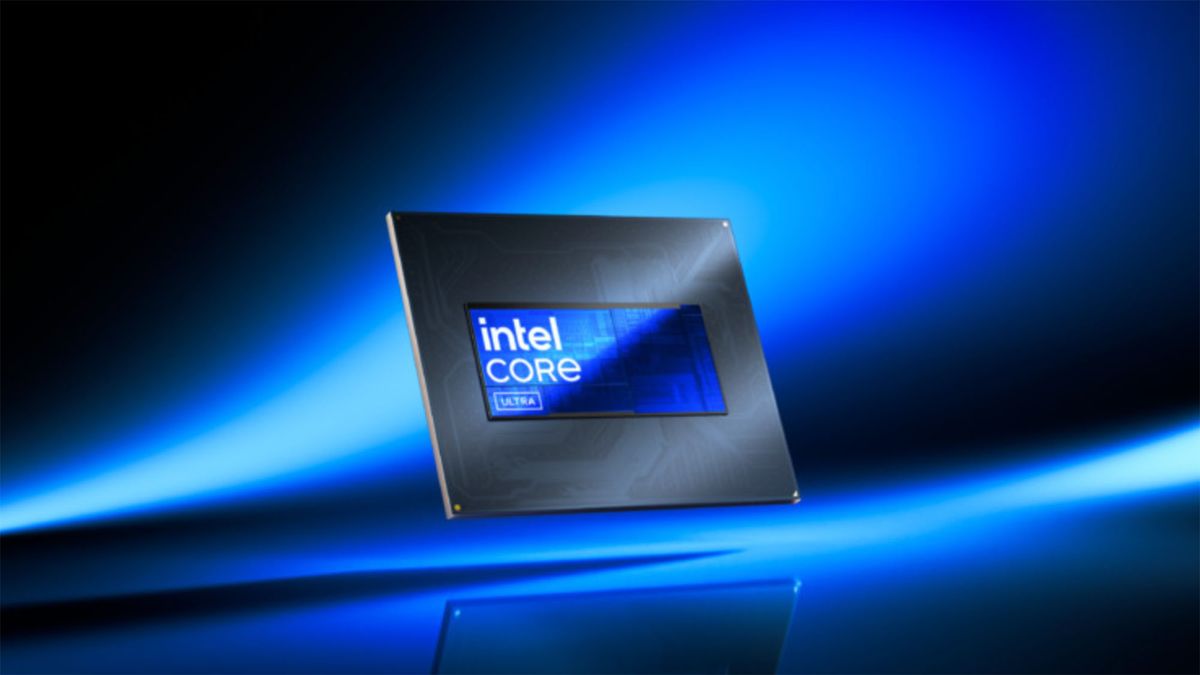
The new Intel Core Ultra logo

(Image credit: Intel)

I’ll be honest, there’s simply no getting around how good Intel’s recent laptop chips are (the Intel Core Ultra 200V series, based on Lunar Lake).

Intel has had an Apple problem ever since Apple moved to its own M-series silicon based on ARM‘s BIG.little processor design, with several generations of its laptop chips simply not being able to keep pace with the best Apple had to offer.

However, all that changed with Intel Lunar Lake, released late last year. While Lunar Lake laptop chips still lag well behind Apple’s latest M4 chips, they are more than capable enough that you’d only be able to tell the difference if you had the two side-by-side.

Meanwhile, Lunar Lake’s greatly improved energy efficiency and powerful integrated GPU based on Intel Arc Battlemage architecture turned out to be an incredibly powerful combo that offered incredible battery life on a Windows PC to rival even the best MacBook Air models and a GPU powerful enough to play the best PC games remarkably well for a thin and light laptop processor.

Intel Lunar Lake isn’t an enthusiast-class processor, however, and those who demand the highest levels of performance from their laptops, whether for work or play, haven’t had much to look forward to for a least a year or more.

Needless to say, there’s a lot of pressure on Intel’s newest laptop chips to avoid the mistakes that undercut their desktop counterpart, and it remains to be seen if Intel can deliver.
You might also like…

Source

Posted on

Nvidia’s CES surprise gets spoiled as RTX 5090 accidentally leaked

  • A new leak may have confirmed Nvidia’s RTX 5090 using 32GB of VRAM
  • It comes from Inno3D’s product box image acquired by VideoCardz
  • An official reveal is now hours away

Nvidia’s long-awaited RTX 5090 official reveal is upon us, and a leak has already kickstarted the process – an Inno3D RTX 5090 product box all but confirms the flagship GPU’s 32GB of VRAM.

This comes from VideoCardz who acquired the product box image (pictured below), which reveals Inno3D’s new iChill design – but most importantly, corroborates previous rumors that suggested Nvidia’s RTX 5090 would have 32GB of GDDR7 memory.

While it’s important to note that this isn’t official as we await Jensen Huang’s CES keynote (now just hours away), this is the biggest indicator. There’s no confirmation on its pricing despite rumors of a $2,500 figure, but we won’t have to wait very long to find out.

Leaked image of RTX 5090 from Inno3D

The RTX 5090, in all its glory. (Image credit: VideoCardz)

Will the performance jump over the previous gen justify a potential huge price increase?

There may not be any official information on the RTX 5090’s specifications just yet, but the leaked image points towards other rumors holding some truth. VideoCardz mentions the flagship GPU potentially taking advantage of 21,760 CUDA cores compared to the RTX 4090’s 16,000 – this could certainly prove to be a huge performance increase.

Considering the RTX 4090’s MSRP ($1,599 / £1,499 / AU$2,959) it won’t be much of a surprise to see the 5090 reignite controversy among PC gamers. The RTX 4090 is still an absolute powerhouse for gamers (especially at 4K), but games like Indiana Jones the Great Circle have showcased its limit (while using full path tracing).

For those chasing the best of the best, you should expect the RTX 5090 to perform exceptionally if the rumors are legitimate – it could be even better if there isn’t a major price jump from the RTX 4000 series’ flagship GPU.

You may also like…

{ window.reliablePageLoad.then(() => { var componentContainer = document.querySelector(“#slice-container-newsletterForm-articleInbodyContent-BG8EZ2Rzs34fAjN8CSHsED”); if (componentContainer) { var data = {“layout”:”inbodyContent”,”header”:”Get daily insight, inspiration and deals in your inbox”,”tagline”:”Sign up for breaking news, reviews, opinion, top tech deals, and more.”,”formFooterText”:”By submitting your information you agree to the Terms & Conditions and Privacy Policy and are aged 16 or over.”,”successMessage”:{“body”:”Thank you for signing up. You will receive a confirmation email shortly.”},”failureMessage”:”There was a problem. Please refresh the page and try again.”,”method”:”POST”,”inputs”:[{“type”:”hidden”,”name”:”NAME”},{“type”:”email”,”name”:”MAIL”,”placeholder”:”Your Email Address”,”required”:true},{“type”:”hidden”,”name”:”NEWSLETTER_CODE”,”value”:”XTR-D”},{“type”:”hidden”,”name”:”LANG”,”value”:”EN”},{“type”:”hidden”,”name”:”SOURCE”,”value”:”60″},{“type”:”hidden”,”name”:”COUNTRY”},{“type”:”checkbox”,”name”:”CONTACT_OTHER_BRANDS”,”label”:{“text”:”Contact me with news and offers from other Future brands”}},{“type”:”checkbox”,”name”:”CONTACT_PARTNERS”,”label”:{“text”:”Receive email from us on behalf of our trusted partners or sponsors”}},{“type”:”submit”,”value”:”Sign me up”,”required”:true}],”endpoint”:”https://newsletter-subscribe.futureplc.com/v2/submission/submit”,”analytics”:[{“analyticsType”:”widgetViewed”}],”ariaLabels”:{}}; var triggerHydrate = function() { window.sliceComponents.newsletterForm.hydrate(data, componentContainer); } if (window.lazyObserveElement) { window.lazyObserveElement(componentContainer, triggerHydrate); } else { triggerHydrate(); } } }).catch(err => console.error(‘%c FTE ‘,’background: #9306F9; color: #ffffff’,’Hydration Script has failed for newsletterForm-articleInbodyContent-BG8EZ2Rzs34fAjN8CSHsED Slice’, err)); }).catch(err => console.error(‘%c FTE ‘,’background: #9306F9; color: #ffffff’,’Externals script failed to load’, err)); ]]>

Sign up for breaking news, reviews, opinion, top tech deals, and more.

Source

Posted on

2025 is the year flying taxis might finally take off

The dream of flying taxis is edging closer to reality, thanks to the emergence of electric vertical take-off and landing (eVTOL) aircraft. Unlike helicopters, these machines use multiple small propellers, akin to drones, to take off and land vertically.

Once airborne, their rotors can tilt forward, allowing them to cruise like fixed-wing planes. This offers a blend of versatility, efficiency, and environmental benefits. Major players like Joby Aviation are leading the charge, with plans to launch commercial air taxi services as early as 2025.

Cities like Dubai, New York, and Los Angeles are on the map for these futuristic transport systems. Meanwhile, China’s EHang is pioneering pilotless eVTOLs, aiming to cater to the tourism sector, New Scientist reports. This rapid development suggests that flying taxis could soon become a fixture in our skies.

flying taxi in mid-airImage source: Joby Aviation

eVTOL aircraft come with several advantages, of course. They are designed to be significantly quieter than helicopters, which would make them more acceptable for urban and suburban use. They’re also powered by batteries and hold the promise of zero carbon emissions when charged with clean energy.

Tech. Entertainment. Science. Your inbox.

Sign up for the most interesting tech & entertainment news out there.

By signing up, I agree to the Terms of Use and have reviewed the Privacy Notice.

Their reliance on advanced computer systems not only enhances their operational efficiency but also reduces the risk of pilot error, potentially achieving safety standards comparable to commercial airlines. However, the road—or rather the sky—to widespread adoption of flying taxis isn’t without challenges.

Current battery technology limits eVTOLs to a flight range of 185 to 370 kilometers, well below the 400 to 800 kilometers conventional helicopters offer. This restricts their use to shorter journeys, making them ideal for city commutes or quick inter-city hops rather than long-haul travel.

We have seen advancements in EV batteries that can recharge in five minutes and allow EVs to run for longer ranges. Additionally, financial support from military programs has been a lifeline for companies like Joby, which hold substantial contracts under the U.S. Air Force’s Agility Prime initiative.

The real test for this technology lies in proving demand beyond initial trial flights. To truly transform urban mobility, flying taxi services will need to be practical, accessible, and not just a luxury for the wealthy. As 2025 approaches, flying taxis may well lift off, marking a groundbreaking shift in how we navigate our cities.

Source

Posted on

Top 10 cyber security stories of 2024

The year 2024 threw up another diverse crop of stories in the world of cyber security, with much to pay attention to, particularly in the realm of artificial intelligence (AI), which continued to dominate the headlines.

This year, we steer away from AI fear, uncertainty and doubt to focus on some of the other big issues, such as data privacy and protection, large scale breaches, and the tricky issues surrounding the security of widely used open source components.

There was also trouble at the mill for cyber security companies themselves, which often found themselves in the headlines, often after the privileged access afforded by their products and services was abused to attack their customers. Ivanti, Microsoft and Okta all make our top 10 this year – and we would be remiss not to mention CrowdStrike.

Here are Computer Weekly’s top 10 cyber security stories of 2024.

1. Leak of 26 billion records may prove to be ‘mother of all breaches’

At the end of January 2024, a data dump comprising 26 billion records and totalling more than 25GB in size was discovered by researchers. Dubbed the largest leak in history, and the “mother of all breaches”, the majority of the data related to Chinese social media platforms, but the likes of Adobe, Dropbox, LinkedIn, MyFitnessPal, Telegram and X were also included.

Much of the data appeared to have been compiled from various smaller leaks, likely a broker who intended to sell it on to others for use in identity theft, phishing attacks and account takeovers.

2. Okta doubles down on cyber in wake of high-profile breaches

In February, identity and access management (IAM) provider Okta announced plans to double its investment in security over the next 12 months and launched a Secure Identity Commitment. This came in the wake of the exploitation of its products and services during a series of cyber attacks during 2023, and earlier.

The company’s leadership said that as a security leader it recognised it needed to work a lot harder to stop ne’er-do-wells from taking advantage of the identity data its customers entrust to it.

3. Widespread Ivanti vulnerabilities make waves

Another cyber company was in the news at the start of 2024, Ivanti, a specialist in asset, identity and supply chain management found a series of vulnerabilities in its Policy Secure network access control (NAC), Ivanti Connect Secure secure socket layer virtual private network (SSL VPN), and Ivanti Neurons for zero-trust access (ZTA) products caused concern at organisations worldwide after being exploited by a threat actor.

The three vulnerabilities in question enabled attackers to access privileged data and obtain elevated access rights on their victims’ systems.

4. Open source alert over intentionally placed backdoor

In April, users of the open source XZ Utils data compression library narrowly avoided falling victim to a major supply chain attack, after evidence of an apparently intentionally placed backdoor in the code was revealed. The malicious code, embedded in versions 5.6.0 and 5.6.1 of the library, enabled unauthorised access to affected Linux distributions.

It later emerged that the dodgy code was placed there by a malicious actor who intentionally worked hard over a long period to gain the trust of the projects’ developers. The security of widely used open source components was to be one of the big themes of the year.

5. Microsoft beefs up cyber initiative after hard-hitting US report

In May, Microsoft doubled down on its Secure Future Initiative (SFI), expanding the programme – which set out to address the software and vulnerability issues frequently exploited by threat actors – in the wake of a damning US government Cyber Safety Review Board (CSRB) report.

Redmond said the rapid evolution of the threat landscape underscored the severity of the threats that face both its own operations and those of its customers, and admitted that given its central role in the world’s IT ecosystem, it had a “critical responsibility” to earn and maintain trust.

6. CrowdStrike update causes worldwide chaos

The biggest IT story of 2024 – arguably – was not strictly speaking a security incident, but appears here since it originated at a security company. On 19 July, IT pros all over the UK and beyond awoke to a fast spreading IT outage downing key systems, originating at cyber firm CrowdStrike after it pushed a flawed rapid response update to key threat detection sensors that caused Windows computers to enter a so-called boot loop.

The extensive disruption caused no major security incidents at the time, but the ramifications continue to this day, with CrowdStrike execs facing legal repercussions and even being called to account for the incident in front of politicians. As with the XZ Utils scare a couple of months previously, the CrowdStrike incident shows again the importance of paying close attention to one’s code.

7. Campaigners call for evidence to reform UK cyber laws

Those who have been following the CyberUp campaign for legal reform over the past few years will know well the difficulties the group has had in convincing Britain’s politicians that the time has come to reform the outdated Computer Misuse Act of 1990, which – thanks to archaic wording in regard to the offence of “unauthorised” access to a computer – puts security professionals in the UK at risk of prosecution simply for doing their jobs.

With Keir Starmer moving into 10 Downing Street, the campaign team seized the opportunity to launch a fresh call for evidence and views during the summer, saying that about a third of UK security firms had experienced monetary losses due to the law, putting at risk £3bn of the sector’s £10.5bn annual contribution to the economy.

8. NCSC celebrates eight years as Horne blows in

In eighth place on the Computer Weekly list, the National Cyber Security Centre celebrated its eighth birthday this year, although its new leader, Richard Horne, who took up the post in October, is only the organisation’s third official CEO.

Eight years may not be a particularly long time – the Brexit referendum was eight years ago – but the cyber security landscape has changed radically in that time, and looking ahead, as the interdependency between security and intelligence would become more critical, and the risks and opportunities of new technologies and more sophisticated threats increase, the NCSC’s work to get better at addressing the security of those technologies and how to use them to the UK’s advantage continues.

 9. Zero-day exploits increasingly sought out by attackers

In November, the NCSC and its US equivalent, CISA, published new annual data revealing that of the 15 most exploited vulnerabilities of 2023, the majority were zero-days compared with less than half in 2022. The trend has continued through 2024, and the NCSC warned that defenders need to dramatically up their game when it comes to vulnerability management and patching.

Among some of the most heavily exploited CVEs were some that are now widely known, including infamous issues in Progress Software’s MOVEit Transfer, Log4Shell and Citrix, many of them dating back years.

10. US TikTok ban imminent after appeal fails

At the end of 2024 came the news that TikTok is likely to be banned in the US in mere weeks after a Washington DC appeal court rejected representations from the China-owned social media platform, which claimed its First Amendment rights were being violated.

Legitimate concerns about the firm’s data protection and privacy practices – and the possibility that the data TikTok holds may be exploited by the Chinese government – lie at the core of the potential ban which would have global ramifications and impact millions of users, influencers and businesses alike.

Somewhat ironically, given he once tried to ban it himself, the platform’s best hope for a reprieve may now lie with president-elect Donald Trump, who will undoubtedly be an impactful force in the cyber security world in 2025.

Source

Posted on

This controller could turn your iPhone into a real gaming console

Over the past few months, I’ve been following an intrepid creator looking to solve a problem I’m familiar with. Finding a solid video game controller for a smartphone has always been a struggle. There are tons of Bluetooth controllers on the market, as well as some that attach directly to the phone. The problem with these controllers is that you have to lug around a separate accessory with you everywhere you go. The MCON solves that problem.

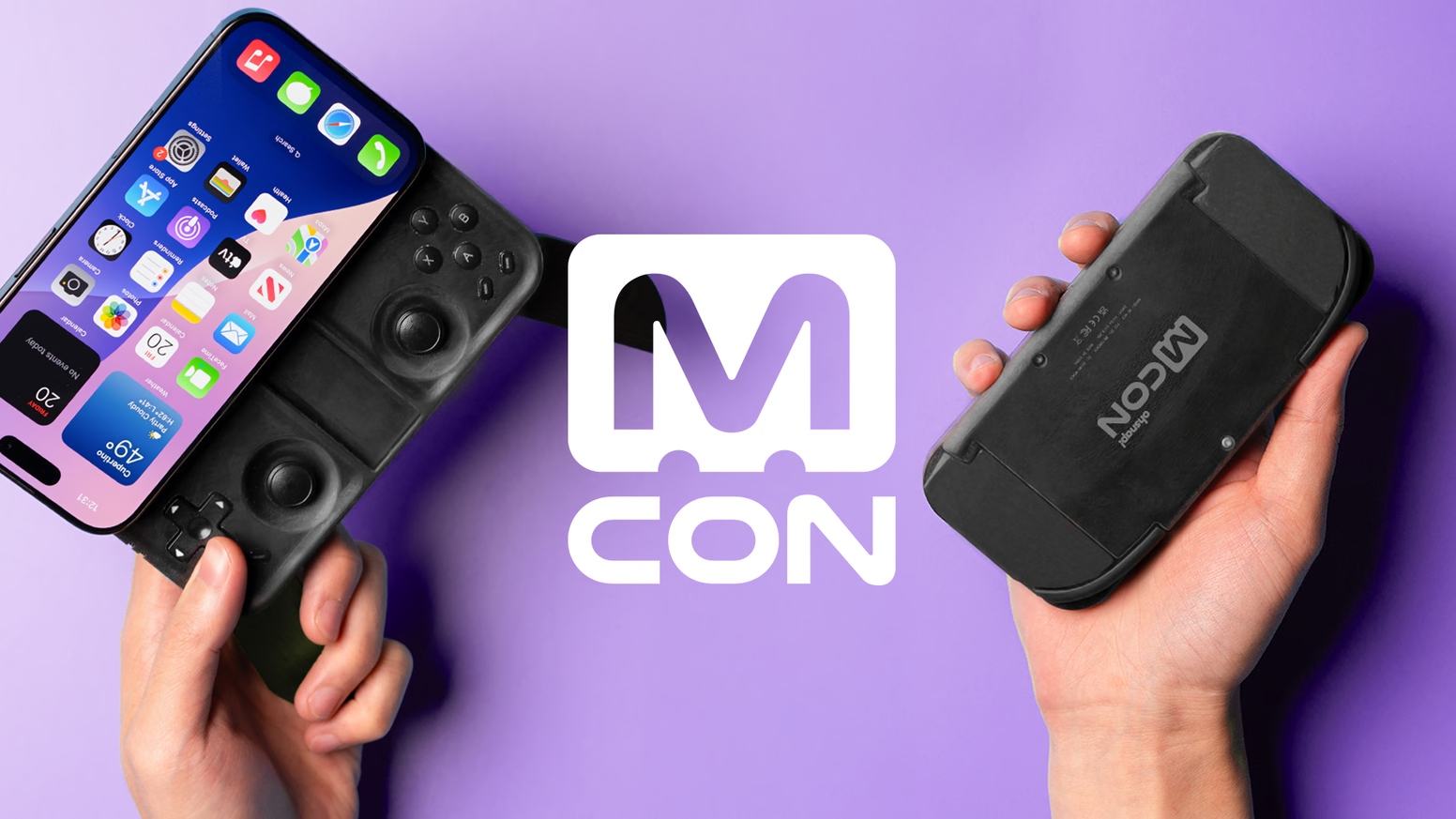
Now available to back on Kickstarter, the MCON is a mobile controller that attaches to the back of any phone magnetically. When not in use, the MCON slides behind your phone, allowing you to leave it attached at all times, even if you use a case.

Once you’ve attached the controller to your phone, you can quite literally “launch” it at any time by pressing down on two buttons that will spring your phone up. The controller itself features A, B, X, and Y buttons as well as a D-pad, two Hall-effect joysticks, function buttons, and right and left triggers. There are also two fold-out grips that improve the ergonomics during your long play sessions and make the device look more like a traditional controller.

In order to support as many phones as possible, the controller ships with two 2.5mm discs that are embedded with MagSafe magnet arrays. If your iPhone has a camera bump, you can stack one or both of the pucks on the MCON to ensure there’s enough clearance. If you have a case, it might create enough clearance on its own.

Tech. Entertainment. Science. Your inbox.

Sign up for the most interesting tech & entertainment news out there.

By signing up, I agree to the Terms of Use and have reviewed the Privacy Notice.

On the other hand, if you have an Android phone or a device without MagSafe, you can use the included adhesive MagSafe adapter to make the controller fit your phone.

The MCON controller will retail for $149, but there are several early bird promotions available to those who back the product on Kickstarter, bringing the price as low as $99. It will come and white and black colors, and should be delivered in August 2025.

If you decide to pick one up, inside the box, you’ll find the MCON controller, a USB-C cable, two magnetic pucks, and an adhesive MagSafe adapter.

Source

Posted on

AMD CES 2025 Keynote live blog: as it happened

Refresh

2025-01-06T18:40:08.666Z

Good morning folks. We’re queueing up outside the South Seas Ballroom at Mandalay Bay, awaiting the start of AMD’s CES 2025 keynote, and it’s sure to be a packed 45 minutes to an hour. I’ll be here bringing you all the latest news as it breaks, as well as my thoughts on what’s being announced.

I’ll keep you updated once I’m in my seat, so stay tuned!

2025-01-06T18:58:45.541Z

The stage at AMD's CES 2025 press conference

(Image credit: Future / John Loeffler)
We’re five minutes away from the start of AMD’s press conference, so it’s time to settle in.

2025-01-06T19:03:53.280Z

AMD Senior VP Jack Huynh is taking the stage now, No Lisa Su this time.

2025-01-06T19:06:21.698Z

The AMD Ryzen 9 9950X3D and 9900X3D are up first.

2025-01-06T19:09:16.673Z

Slides from the AMD CES 2025 keynote

(Image credit: Future / John Loeffler)
Not to brag or anything…

2025-01-06T19:11:58.810Z

An AMD executive presenting at CES 2025

(Image credit: Future / John Loeffler)

Ryzen 9 9950X3D and 9900X3D coming in March 2025.

2025-01-06T19:13:32.508Z

AMD Ryzen 9 9955HX3D coming to laptops, along with a pair of non-X3D HX chips (I missed the model names of the other two, I’ll grab those in a sec).

2025-01-06T19:15:08.368Z

An AMD executive presenting at CES 2025

(Image credit: Future / John Loeffler)

AMD’s SVP of Client Business Rahul Tikoo is on stage now to talk about AI PCs.

New Ryzen AI 300 chips, targeting the midrange user with Ryzen AI 7 350 and Ryzen 5 340.

2025-01-06T19:25:28.725Z

Image 1 of 4

A slide showing the new AMD Ryzen AI Max skus(Image credit: Future / John Loeffler)Slides showing Ryzen AI Max benchmarks at CES 2025(Image credit: Future / John Loeffler)Slides showing Ryzen AI Max benchmarks at CES 2025(Image credit: Future / John Loeffler)Slides showing Ryzen AI Max benchmarks at CES 2025(Image credit: Future / John Loeffler)

Now we’re moving on to the new Ryzen AI Max series, which are workstation CPUs with up to 40 RDNA 3.5 compute units, which is a hell of a lot for an integrated GPU. Up to 50 TOPS XDNA 2 NPU, and up to 256GB/s memory bandwidth.

2025-01-06T19:27:19.802Z

Ok, so we’re on to enterprise products, namely AMD Epyc and AMD Instinct data center CPU and GPUs.

2025-01-06T19:28:02.748Z

We’ve also got some discussion of AMD Ryzen AI 300 Pro.

2025-01-06T19:30:49.763Z

I have no idea what TCO means, but Shell says AMD Ryzen CPUs offer the best, so there’s that.

2025-01-06T19:32:27.820Z

Now PC manufacturer executives are singing AMD’s praises, including HP, Lenovo, and Asus.

2025-01-06T19:38:46.234Z

An AMD and Dell Executive talking about the new Dell Pro portfolio at CES 2025

(Image credit: Future / John Loeffler)

So Dell is now on stage with AMD talking about the first Dell professional PCs and laptops to feature AMD chips. Oh, and Dell is completely rebranding its entire product portfolio, but that’s for another news story.

2025-01-06T19:41:09.567Z

Everyone keeps talking about the ‘AI revolution’, but honestly, I’ve yet to see anything from AI PCs so far that is truly revolutionary. I’m sure its coming at some point in the future, but the future isn’t here just yet.

2025-01-06T19:47:13.070Z

OK, so the press conference has wrapped, and there was no discussion of AMD Radeon graphics cards, as we were expecting, but we know they’re coming so there might be more to come on that over the next few days.

For now, though, the big news is the new Ryzen 9 9950X3D and Ryzen 9 9900X3D chips due out in March, as well as new high-performance mobile ships for both enthusiasts, gamers, and enterprise users.

There’ll be more from me today, but for now, we have to clear out of the ballroom, so stay tuned for more from us here at CES 2025.

Source

Posted on

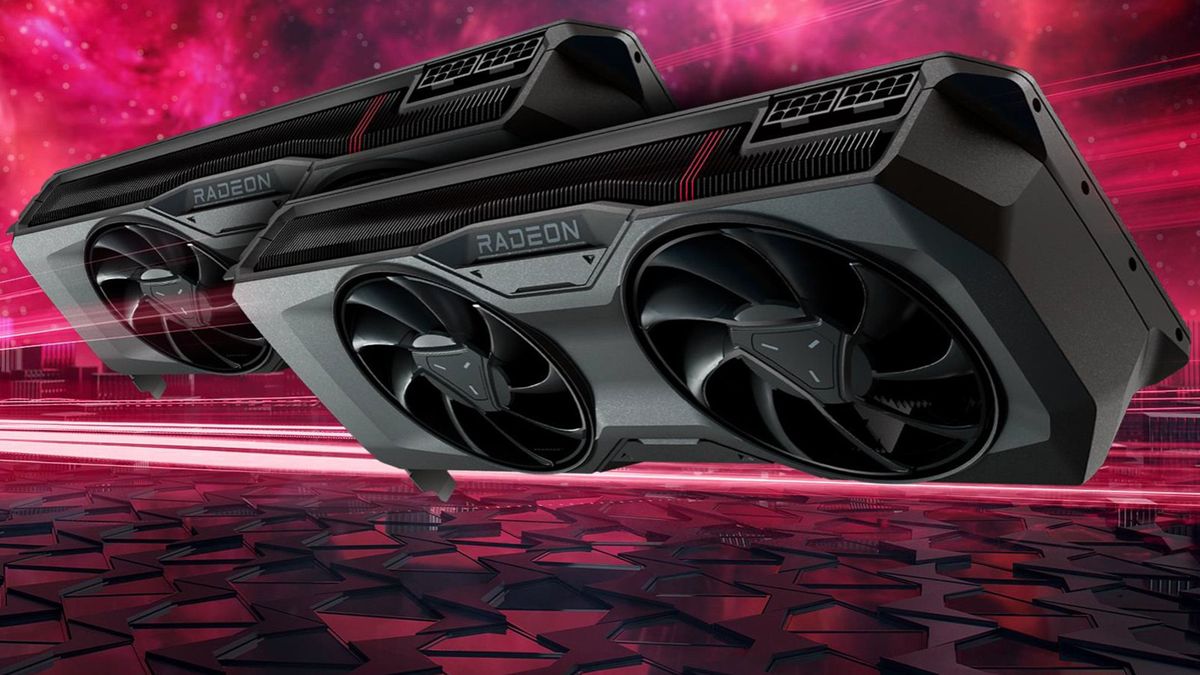
AMD announces new Radeon RX 9070 XT and RX 9070 graphics cards at CES 2025

AMD announced its latest RDNA 4 graphics cards at CES 2025 this week, the AMD Radeon RX 9070 XT and AMD Radeon RX 9070, both targeting the midrange graphics card segment, as was widely expected.

There isn’t much that we know about the two new cards yet, other than the new numbering scheme is intended to make it easier to compare AMD’s Radeon cards against the competition, namely Nvidia.

Under this new numbering scheme, the Radeon RX XX70 cards are now meant to compete against Nvidia’s XX70 cards, with the Radeon RX 9070 XT going up against the Nvidia GeForce RTX 5070 Ti and the RX 9070 going up against the RTX 5070. AMD has also teased a later launch for Radeon RX 9060 cards, which would then go up against the Nvidia RTX 5060 Ti and RTX 5060.

Things get a bit more complicated when comparing these new cards against their predecessors, with AMD indicating that the RX 9070 series is replacing everything from the AMD RX 7900 XT to the RX 7800 XT, while the RX 9060 series is roughly replacing the RX 7700 XT and RX 7600 XT (the RX 7600 would presumably be replaced by a lower tier than these two).

It hasn’t said whether or not there will be any RX 9080 or RX 9090 cards, but given all of the talk about AMD conceding the premium enthusiast segment to Nvidia this generation, the 9070 and 9060 series cards are likely to be the only cards we get this go around.

No price or firm release date has been given, only that we should expect the new Radeon cards in Q1 2025.

Is abandoning the enthusiast segment a smart move for AMD?

AMD’s apparent decision to cede the enthusiast segment to focus on the midrange and upper-budget segments has been telegraphed by AMD for a while now, and it appears that this is in fact what AMD has planned.

{ window.reliablePageLoad.then(() => { var componentContainer = document.querySelector(“#slice-container-newsletterForm-articleInbodyContent-eKtHmQxXsDaUyB3uDFEMp”); if (componentContainer) { var data = {“layout”:”inbodyContent”,”header”:”Get daily insight, inspiration and deals in your inbox”,”tagline”:”Sign up for breaking news, reviews, opinion, top tech deals, and more.”,”formFooterText”:”By submitting your information you agree to the Terms & Conditions and Privacy Policy and are aged 16 or over.”,”successMessage”:{“body”:”Thank you for signing up. You will receive a confirmation email shortly.”},”failureMessage”:”There was a problem. Please refresh the page and try again.”,”method”:”POST”,”inputs”:[{“type”:”hidden”,”name”:”NAME”},{“type”:”email”,”name”:”MAIL”,”placeholder”:”Your Email Address”,”required”:true},{“type”:”hidden”,”name”:”NEWSLETTER_CODE”,”value”:”XTR-D”},{“type”:”hidden”,”name”:”LANG”,”value”:”EN”},{“type”:”hidden”,”name”:”SOURCE”,”value”:”60″},{“type”:”hidden”,”name”:”COUNTRY”},{“type”:”checkbox”,”name”:”CONTACT_OTHER_BRANDS”,”label”:{“text”:”Contact me with news and offers from other Future brands”}},{“type”:”checkbox”,”name”:”CONTACT_PARTNERS”,”label”:{“text”:”Receive email from us on behalf of our trusted partners or sponsors”}},{“type”:”submit”,”value”:”Sign me up”,”required”:true}],”endpoint”:”https://newsletter-subscribe.futureplc.com/v2/submission/submit”,”analytics”:[{“analyticsType”:”widgetViewed”}],”ariaLabels”:{}}; var triggerHydrate = function() { window.sliceComponents.newsletterForm.hydrate(data, componentContainer); } if (window.lazyObserveElement) { window.lazyObserveElement(componentContainer, triggerHydrate); } else { triggerHydrate(); } } }).catch(err => console.error(‘%c FTE ‘,’background: #9306F9; color: #ffffff’,’Hydration Script has failed for newsletterForm-articleInbodyContent-eKtHmQxXsDaUyB3uDFEMp Slice’, err)); }).catch(err => console.error(‘%c FTE ‘,’background: #9306F9; color: #ffffff’,’Externals script failed to load’, err)); ]]>

Sign up for breaking news, reviews, opinion, top tech deals, and more.

Personally, I think it’s a great move on AMD’s part. If you’ve got a grand to spend on a graphics card, you’re all but certain to go for an Nvidia GPU. But the AMD Radeon RX 7900 GRE currently sits atop our best graphics card list for a reason. The RTX 4090 and RTX 4080 are ideal for 4K gaming, but according to Valve’s Steam Hardware Survey, the vast, vast majority of gamers out there are gaming at 1080p, with 1440p gaming being the area with the most growth. 4K gamers, meanwhile, make up less than 5% of gamers out there.

Which makes a lot of sense. Gaming at 4K is extremely expensive for increasingly marginal benefit. As TechRadar’s components editor, believe me, I’ve extensively tested all of the best 4K graphics cards over and over again, and I can hardly tell the difference between 1440p and 4K in terms of visual sharpness, but I can sure tell the difference in terms of framerate, and unless you have a 120Hz or better gaming monitor, you’ll never get to see the much faster 1440p framerate that a 4K graphics card like the RTX 4080 (or AMD RX 7900 XTX, for that matter) can give you.

The only people who can really benefit from a 4K graphics card at this point are people with a hell of a lot of money to spend on building the best gaming PC possible with a high-end gaming monitor. That’s a very narrow market, and if you’re that kind of gamer, you’re just going to splurge on a premium Nvidia card.

AMD’s apparent acknowledgment of this gives it a great opportunity to market its otherwise fantastic graphics cards to the vast majority of gamers, especially those whose goodwill has been burned by Nvidia’s increasingly high prices.

You might also like…

Source

Posted on

Which came first, the iPhone 17 Air or the Galaxy S25 Slim?

Apple and Samsung are both expected to launch ultra-thin smartphones this year. The iPhone 17 Air will be Apple’s thinnest iPhone 17 flavor and the thinnest iPhone ever made. The Galaxy S25 Slim will also be much thinner than the rest of the Galaxy S25 lineup.

The iPhone 17 Air was the first to appear in rumors and reports, while the Galaxy S25 Slim showed up in leaks only recently. However, the release order will be reversed.

Word on the street is that the Galaxy S25 Slim will make an appearance at Unpacked this month but hit stores in the second quarter of the year. The iPhone 17 Air will be unveiled in the first half of September and start selling in stores about 10 days later.

This would make it seem like Samsung was the first to the market with an ultra-thin phone. Regardless of the Slim’s appeal to the public, I still expect Samsung to use it as a marketing tool the second Apple unveils the iPhone 17 Air this September.

Tech. Entertainment. Science. Your inbox.

Sign up for the most interesting tech & entertainment news out there.

By signing up, I agree to the Terms of Use and have reviewed the Privacy Notice.

But who was really the first to come up with the idea of making an ultra-thin handset? A new story from Korea offers the answer you might already be expecting.

Korean-language news outlet SisaJournal detailed both ultra-thin devices in a report, repeating some of the claims that appeared in other rumors.

The iPhone 17 Air will have a profile of around 6.25mm, which is up to 1.6mm thinner than the iPhone 15 (7.8mm). The Galaxy S25 Slim will be slightly thicker than the Air at 6.6mm, but the Samsung phone will still be thinner than the 7.6mm Galaxy S24. The Galaxy S25 Slim could have a big camera advatage over the Air, a multi-lens camera on the back.

The report also notes that the iPhone 17 Air will replace the Plus model. The Air will be unveiled in September and cost about as much as the Plus. This is where things get interesting, as the report quotes an unnamed industry official who said Apple has already completed product planning for the iPhone 17 Air.

Moving on to Samsung, the report says the Korean giant will unveil the Galaxy S25 series soon. But the Galaxy S25 Slim will be released in the second or third quarter of 2025. This release window would still ensure that Samsung’s ultra-thin phone will be available in stores before the iPhone 17 Air launches.

The Galaxy S25 Slim’s price will be lower than the Ultra, which isn’t a surprising claim. The report cites an official from the smartphone industry saying that the Galaxy S25 Slim can’t be expensive. Its main purpose is to respond to the iPhone 17 Air preemptively. Samsung also wants to see how the market reacts to a thinner flagship phone.

The report says that Samsung decided to make a Galaxy S25 Slim phone only when Apple decided to go forward with the iPhone 17 Air model. That could settle the upcoming dispute about which ultra-thin phone came first. Then again, none of this is official.

How would Samsung even know about Apple’s plans? For starters, we’ve had rumors about the iPhone 17 Air long before the Galaxy S25 showed up in leaks. We also know that Samsung phones are never well-kept secrets. Neither is the iPhone, but Apple at least manages to save a few surprises here and there.

More importantly, Samsung Display and LG Display are rumored to supply the LTPO OLED panels Apple needs for the entire iPhone 17 series. All four phones should support ProMotion (120Hz refresh rate).

The iPhone 17 Air screen will be smaller than the iPhone 16 Plus. It might have other particularities that Samsung and LG would have to be aware of during the manufacturing phase. Therefore, Samsung would have some knowledge that the iPhone 17 series might see a specific design change.

Separately, I’ll point out that Samsung made an ultra-thin foldable last year. The Galaxy Z Fold SE is a limited edition device released in Korea and China a few months ago. Samsung only developed it after years of pressure from competitors. The handset seems to be a success, and rumors say the Galaxy Z Fold 7 will inherit that design.

What I’m getting at is that Samsung has the tech to make such devices happen, whether they’re foldables or not. It doesn’t have the courage to be first, even if it’ll say so once the Galaxy S25 Slim beats the iPhone 17 Air to market.

Source

Posted on

The Security Interviews: Martin Lee, Cisco Talos

The first thing worth knowing about the first ever ransomware locker is that its use was apparently motivated by revenge rather than outright criminality. The second thing worth knowing is that there was not a Russian speaker in sight.

In fact, its author, Joseph Popp, grew up in Ohio and was educated at Harvard University. He was an anthropologist and biologist and an expert on HIV/AIDS, who worked closely with the World Health Organisation (WHO) in Africa – and was passed over for a job there, something that may have led to the apparent mental breakdown that resulted in the creation of the concept of ransomware.

The AIDS Trojan that Popp “unleashed” on the world in December 1989 was a simple piece of software by any standard. Technically, it was really a denial of service (DOS) scrambler, which replaced the AUTOEXEC.bat file used to execute commands when the computer system started up.

It then counted the number of boot cycles the system went through until it hit 90, at which point it hid directories and encrypted the names of the C drive files on the system. Victims, or targets, then saw a message informing them that their systems were infected by a virus.

“Remember, there is NO cure for AIDS,” the message chillingly read.

How were they infected? Popp posted 20,000 floppy disks to fellow attendees of a WHO AIDS conference, and created what we would now know as a phishing lure by labelling them “AIDS Information – Introductory Diskettes”.

Victims were told to send $189 (about $480, or £378 adjusted to 2024) to a PO Box number belonging to the PC Cyborg Corporation in Panama. The software also included an end user licence agreement (EULA) informing “users” that they would be liable for the cost of “leasing” it.

Popp, who was arrested in the US and extradited to the UK, never stood trial after a British judge ruled him mentally unfit to do so – he had developed a habit of wearing condoms on his nose, hair curlers in his beard, and cardboard boxes on his head, according to media reports at the time. Whether or not this was a deliberate ploy rather than an expression of insanity remains unclear. Back in the States, Popp went on to open an eponymously named butterfly sanctuary and tropical garden in upstate New York, and died in 2007.

Reflecting on the weird story behind the AIDS Trojan, Martin Lee, technical lead for security research at Cisco’s Talos intelligence and research unit, describes the malware as the creation of “an insane criminal genius”.

“It really was something completely new, a new dimension that hadn’t been mentioned before,” Lee tells Computer Weekly. “If we think back to the year 1989, the internet was still basically a dozen computers in universities and the military. The internet, as we know it, had not taken off, the World Wide Web had not taken off. Most computers were not networked at all, even hard disk drives were very much a luxury optional extra.

“All of these things that we now take for granted – distribution over a network, payment by cryptocurrency – none of this existed. It was a fairly limited attack…It is not known, but it is not believed, that anybody paid the ransom.”

Moreover, the cyber security profession simply did not exist in its current form in 1989. “It was nowhere near what it is today. It was a different world,” says Lee, who characterises the IT of the day as “prehistoric”.

“The term cyber security didn’t exist and the industry didn’t exist. There were individuals we would recognise as practicing information security, but they tended to be in the types of environments that required security clearance, like the military or governments. It would have been a tight community where everyone knew each other.

“Certainly at the time, the first ransomware did not make a big splash in the news,” he adds.

Ahead of his time

That Popp was somewhat ahead of his time is clear in that the idea of ransomware didn’t really rear its head again until the mid-90s, when academics and computer scientists first starting playing around with the idea of combining computer virus – or malware – functionality with cryptography.

But even then, the world spent another decade in blissful ignorance before the first attempt was made at a criminal ransomware attack of the type we would recognise in the 2020s.

Gpcode, as it was termed, first popped up in Russia in December 2004, 20 years ago, when reports started to emerge that individual people’s files were being encrypted by some strange new form of cyber attack.

“Ultimately, it turned out that an individual was, if I remember correctly, harvesting information from Russian job sites and emailing jobseekers saying, ‘Hey, we would like you to apply for this job’,” says Lee.

“The lure document purported to be a job application form, but in fact it was ransomware which encrypted the files, and the ransom was to be paid by money transfer. This is really the first modern criminal ransomware where the objective – to make money – is clear.”

Gpcode was “incredibly rudimentary” as ransomware goes – it used a 600-Bit RSA public key to encrypt its victim’s files, and Lee says that demanding the ransom be paid by money transfer (Bitcoin was still a few years off) was a dangerous gamble for the cyber criminals behind Gpcode, because it left them open to being tracked by law enforcement.

Gpcode was not a runaway success – in that it did not net millions for its creators as ransomwares do today – but it was notable in that it meant ransomware was starting to cut through, both in the still-emerging cyber security community and among laypeople.

Gpcode also helped to establish some of the popular tropes around ransomware phishing lures – today, phantom job offers are frequently used against victim organisations, particularly when executed as part of a targeted attack via a highly placed executive, for example.

Continuous innovation

Over the decade that followed, the story of ransomware became one of almost continuous innovation, as cyber criminals became more motivated to extort money and to avoid capture and prosecution.

Anonymity during the payment process was a particularly thorny problem that the criminal underground needed to overcome, says Lee.

“In 2004, Gpcode had a single software engineer slash operator conducting the attacks, and they had this problem of how are they going to get the ransom paid to them in a way that’s easy for the victim, but provides anonymity for the criminal,” he says.

“Initially, we have the rise of digital currencies, E-Gold and Liberty [Reserve] to name but two, which were mechanisms outside of the traditionally regulated banking industry for transferring value between individuals,” says Lee. “They were – how should we put this – abused.”

The big disadvantage of these digital currencies is that they both had a single point of failure from the cyber criminals’ perspective, in that law enforcement agencies and regulators could act to disrupt the flow of illicit payments traversing them, which of course is exactly what happened.

“This then coincides with the rise of cryptocurrencies, giving an alternative way for criminals to collect their ransom through crypto,” says Lee.

“The other big innovation addressed the weak point of early ransomware – is it was one developer and operator – so we did see in the mid-2000s the development of the first ransomware as a service.

“Malicious software engineers who were very good at writing code but maybe not so good at distributing ransomware or coming up with social engineering lures could focus on the code and then develop a partner portal so that less technically sophisticated cyber criminals could participate in attacks – they could be hired, or enter into a partnership,” says Lee. “If they divide up the tasks, it makes it more efficient.”

Though it may surprise some to learn that the concept of ransomware as a service, or RaaS, is well over 10 years old, it emerged at a very different time, and the ransomware ecosystem had to go through a few more evolutions to reach its present, devastating form.

Up to date

Lee explains: “The next big change comes in 2016 with the gang using SamSam. Prior to that, ransomware was a mass-market attack, distributing as much ransomware as possible to as many end-users as possible, getting it onto PCs, and demanding a few hundred dollars for the victim to get what’s on their endpoints back.

“The big innovation was the gang distributing SamSam chose their victims in a different way. Instead of going for sheer numbers, they would identify businesses, get inside their networks, and combine traditional hacking techniques – infiltrating the network, finding key servers that businesses relied on, and getting the ransomware on those key servers.

“In encrypting the files and stopping the functionality of those key servers,” says Lee, “SamSam brought the entire business to a half, and at that point the gang could ask for a much, much larger ransom.”

This is not to say that mass-market, end-user focused ransomware has gone away, it is very much still a threat, and in many ways, it is more devastating for the average person to be hit with ransomware than it is for a well-insured, regulated corporation.

“I’ve had people reach out to me with an elderly parent whose laptop has been hit with ransomware and it had the last photos of their deceased spouse on it, is there a way of getting it back?” says Lee.

“It’s heartbreaking, and nine times out of 10 the answer is no. So, this has not gone away and it’s not going to. Businesses may have more to lose than an end-user, but that’s not to say that end-users can’t suffer significant pain.

“But the big money for the bad guys is in businesses, getting inside businesses, causing high-value disruption and destroying large amounts of value, because the profits are so much higher.”

This brings us neatly to the developments we have seen since 2020, when the scourge of ransomware really took off, and cyber security broke out of its niche and started to make national headlines. These have all been well-documented, including the rise of double extortion attacks and the emergence of an extensive underground economy of affiliates and brokers. We are even seeing what looks like collaboration between financially motivated cyber criminal gangs and politically motivated cyber espionage operators.

This year, we have seen the beginnings of a new trend in which ransomware gangs actually forego the ransomware locker entirely. Just last month, the Australian and American authorities released new intelligence on the work of the BianLian ransomware gang, which has shifted solely to extortion without encryption.

Could it be that ransomware, in its traditional form, is starting to reach the end of the line?

Looking ahead

Probably not, says Lee, looking ahead, although it will look different: “You know IT brings enormous positives to our lives and enables so much – but anywhere where IT is creating value, criminals are looking for ways to piggyback and steal that value. Ransomware has proved to be a very profitable way for them do it.

“I think that for any new ways in which we use IT in the near- and medium-term future, we can expect there will be criminals looking to make money off that, and one of the ways that they’re going to do it, for certain, is going to be through ransomware.”

From ransomware’s birth pangs as the howl of the frustrated and aggrieved Joseph Popp, we can chart a clear line to the big bucks ransomware hits of the 2020s, and this continuity of criminality and innovation leads Lee to a simple conclusion.

“We need to be much more aware that for anything IT touches, we need to think about cyber security, we need to think about how the bad guys might disrupt it, because for certain, they’re going to be thinking too and someone’s going to try it.

“The history of ransomware has been one of constant innovation, and we can expect that to continue into the future,” he says.

Source

Posted on

Top 10 AI and storage stories of 2024

Artificial intelligence (AI) has hit the headlines and the datacentres, but with it comes a range of performance and operating considerations that impact storage as much as any other IT discipline.

In this review, we look at the key demands of AI processing on data storage, the type of storage AI requires, and the suitability of cloud storage for AI workloads.

We drill down into the data needs of AI and storage, such as the demands of high-dimension vector data and checkpointing during AI training, plus the compliance considerations that use of AI brings with it.

We also look at the responses of storage suppliers to the rapid rise of AI use cases in the datacentre, in terms of link-ups with leading players like Nvidia, as well as in their storage offer aimed at AI workloads. 

In this guide, we examine the data storage needs of artificial intelligence, the demands it places on data storage, the suitability of cloud and object storage for AI, and key AI storage products.

We look at the use of vector data in AI and how vector databases work, plus vector embedding, the challenges for storage of vector data and the key suppliers of vector database products.

We talk to Charlie Boyle of Nvidia about data challenges in artificial intelligence, key practical tips for AI projects, and demands on storage of training, inferencing, RAG and checkpointing.

Storage supplier announcements at Nvdia conference centre on infrastructure integration, tackling the GPU I/O bottleneck and AI hallucinations by running Nvidia NeMo and NIM microservices.

We spoke to Pure Storage CEO Charlie Giancarlo about why write speed is key for artificial intelligence workloads, accessible storage for AI data, and his prediction of the death of spinning disk.

We talk to NetApp’s Grant Caley about AI and data storage, the need for scale, performance and hybrid cloud, and to move, copy and clone data for wrangling for inference runs.

AI checkpointing operations targeted by Vast Data as it touts QLC-based storage for AI workloads.

Start looking at artificial intelligence compliance. That’s the advice of Mathieu Gorge of Vigitrust, who says AI governance is still immature, but firms should recognise the limits and still act.

AI consultancy Crater Labs spent vast amounts of time managing server-attached drives to ensure GPUs were saturated. A shift to all-flash Pure Storage slashed that to almost zero.

Originally driven by Intel’s now-defunct Optane storage class memory, Parallelstore offers massive parallel file storage targeted at artificial intelligence training use cases on Google Cloud.

Source