Posted on

Meta is about to ruin WhatsApp with AI bots no one wants

Of all the generative AI assistants out there, Meta AI must be the most annoying for the simple fact that Meta is shoving it down our throats. No app is safe, from Facebook to Messenger to WhatsApp to Instagram. Meta AI is there whether you want it or not, and there’s no way to deactivate it.

Meanwhile, ChatGPT is entirely optional, not that OpenAI can really force it on anyone. Apple’s Apple Intelligence is also optional; you don’t have to use it even if you have access to it. Then there’s Google Gemini, which is baked into many Google products but doesn’t feel as intrusive as Meta AI. The same goes for Microsoft’s Copilot.

The worst part about Meta AI is that Meta isn’t done ruining its apps with overdoing the AI presence. We’ve just learned of AI profiles coming to Facebook and Instagram, which is extremely annoying. It gets worse; Meta will now give AI bots prime plans inside WhatsApp, a feature that nobody really asked for from the one Meta app that’s actually useful.

WhatsApp is the world’s largest chat app. It works on iPhone and Android and supports end-to-end encryption across platforms. That’s the only reason I’m still using it. That, and the fact that Meta relented on its annoying WhatsApp policy change a few years ago.

Tech. Entertainment. Science. Your inbox.

Sign up for the most interesting tech & entertainment news out there.

By signing up, I agree to the Terms of Use and have reviewed the Privacy Notice.

Come to think of it, the only reason WhatsApp is so good and still encrypted, is that the app was built this way well before Meta bought it for a small fortune.

The last thing I want in WhatsApp is support for AI chatbots. Yes, it’s great that you can save a ChatGPT number to chat with the chatbot from WhatsApp, but that’s optional.

Say that Meta feels like it has to put AI bots in WhatsApp to expose more people to Meta AI and potentially make some money in the process. I still hate the idea of WhatsApp getting a dedicated AI menu. That’s wasted screen real estate right there. It’s a feature I’ll never use, and I’m sure others will be equally uninterested.

The new AI bots menu in a WhatsApp beta release for Android.The new AI bots menu in a WhatsApp beta release for Android. Image source: WABetaInfo

Meta is testing the new interface in an Android beta version of WhatsApp. Always reliable WABetaInfo surfaced the image above that shows the new AI tab replacing the Communities tab. That menu, which might actually be useful, is merging with the Chats tab.

The new AI tab will include all sorts of AI chatbots to talk to, including third-party models that can talk to you about specific topics.

I don’t doubt that some WhatsApp users will want to use these services. I say that as a longtime ChatGPT user who chats with OpenAI’s chatbot about all sorts of things daily. But I absolutely hate the idea of any AI product being forced on me the way Meta is doing with Meta AI.

WhatsApp is especially important to me as I use it to talk to many people. It’s not just Android users in my family or friends group that like WhatsApp; plenty of iPhone owners prefer the platform over iMessage. AI isn’t needed. Or if it is, it should be hidden somewhere and accessible on demand.

It might get even worse than that. WABetaInfo found evidence in a different WhatsApp beta version that Meta wants to let users create custom AI chatbots right inside the app. The process might be similar to what’s already available on Instagram.

Support for custom AI bot creation in a WhatsApp beta release for Android.Support for custom AI bot creation in a WhatsApp beta release for Android. Image source: WABetaInfo

The feature resembles the custom chatbots available in ChatGPT and Gemini, so it’s not entirely surprising. But, again, it’s not something I want to clutter a key app like WhatsApp.

I don’t see any value in adding AI bots to WhatsApp or supporting the creation of custom ones.

Remember that if left unchecked, some custom AI chatbots might be harmful, especially when certain types of users are exposed to them. And it’s not like Meta is improving its content moderation policies, so we have no idea how it’ll police this universe of AIs it’s bringing to apps like WhatsApp and Instagram.

I can only hope that Meta will not bring these features out of beta, but that’s just wishful thinking. If anything, I take some solace in knowing that it’ll take longer for Meta to deploy the AI changes to WhatsApp in Europe.

Source

Posted on

Leaked Nvidia RTX 5090 laptop GPU benchmarks are weird

  • Nvidia’s RTX 5090 laptop GPU shows inconsistent Geekbench 6 performance scores
  • Fails to score higher than the RTX 4080 or 4090 laptop GPUs in Vulkan
  • It hasn’t launched yet, and there aren’t any official drivers available

CES 2025 finally gave us a look at Nvidia’s new RTX 5000 series of graphics cards, and the flagship RTX 5090 GPU’s performance capabilities compared to the last generation’s RTX 4090 – but early benchmarks for its laptop GPU don’t look very promising.

This comes from BenchLeaks on X, which claims to have leaked Geekbench 6 results of Nvidia‘s RTX 5090 laptop GPU using Vulkan (graphics API used in plenty of games), with its highest score of 114,821. Tom’s Hardware highlighted this as the fourth benchmark among five different tests, with the lowest score sitting at 51,831 and the final test scoring 77,989.

Each benchmark score points towards wildly inconsistent performance for Team Green’s flagship laptop GPU, which failed to score higher than the RTX 4080’s 145,067 and the RTX 4090’s 167,655 Geekbench scores in Vulkan (both of which are for the laptop versions of those GPUs). While these results might be cause for concern, it’s far too early to draw any conclusions.

Nvidia geforce 4070

(Image credit: Nvidia)

Should we be worried about these early benchmarks?

While these tests are almost certainly not great to see, it’s absolutely not a reason to panic. Aside from the fact that these benchmarks are not official, but are claimed to be leaked, the RTX 5000 series hasn’t even officially launched yet (the RTX 5090 will be available at the end of the month), which means the necessary drivers and optimizations have not been made yet.

It’s also important to note that in-game benchmarks are what matter most – while Geekbench 6 can be accurate for measuring the performance capabilities of a GPU, scores are never going to be the same as each test will often vary drastically or closely. Despite the inconsistent scores here, we should wait to see how the RTX 5090 laptop GPU fares across multiple games once Nvidia makes the necessary adjustments and official drivers have been released.

We should be getting both the desktop RTX 5090, alongside gaming laptops with the mobile version, in for review, so make sure you check out our full reviews when they are live for reliable and independent verdicts on just how good (or not) these new GPUs from Nvidia really are.

You may also like…

{ window.reliablePageLoad.then(() => { var componentContainer = document.querySelector(“#slice-container-newsletterForm-articleInbodyContent-ck4ufNKYg8pJpSq6jzS44J”); if (componentContainer) { var data = {“layout”:”inbodyContent”,”header”:”Get daily insight, inspiration and deals in your inbox”,”tagline”:”Sign up for breaking news, reviews, opinion, top tech deals, and more.”,”formFooterText”:”By submitting your information you agree to the Terms & Conditions and Privacy Policy and are aged 16 or over.”,”successMessage”:{“body”:”Thank you for signing up. You will receive a confirmation email shortly.”},”failureMessage”:”There was a problem. Please refresh the page and try again.”,”method”:”POST”,”inputs”:[{“type”:”hidden”,”name”:”NAME”},{“type”:”email”,”name”:”MAIL”,”placeholder”:”Your Email Address”,”required”:true},{“type”:”hidden”,”name”:”NEWSLETTER_CODE”,”value”:”XTR-D”},{“type”:”hidden”,”name”:”LANG”,”value”:”EN”},{“type”:”hidden”,”name”:”SOURCE”,”value”:”60″},{“type”:”hidden”,”name”:”COUNTRY”},{“type”:”checkbox”,”name”:”CONTACT_OTHER_BRANDS”,”label”:{“text”:”Contact me with news and offers from other Future brands”}},{“type”:”checkbox”,”name”:”CONTACT_PARTNERS”,”label”:{“text”:”Receive email from us on behalf of our trusted partners or sponsors”}},{“type”:”submit”,”value”:”Sign me up”,”required”:true}],”endpoint”:”https://newsletter-subscribe.futureplc.com/v2/submission/submit”,”analytics”:[{“analyticsType”:”widgetViewed”}],”ariaLabels”:{}}; var triggerHydrate = function() { window.sliceComponents.newsletterForm.hydrate(data, componentContainer); } if (window.lazyObserveElement) { window.lazyObserveElement(componentContainer, triggerHydrate); } else { triggerHydrate(); } } }).catch(err => console.error(‘%c FTE ‘,’background: #9306F9; color: #ffffff’,’Hydration Script has failed for newsletterForm-articleInbodyContent-ck4ufNKYg8pJpSq6jzS44J Slice’, err)); }).catch(err => console.error(‘%c FTE ‘,’background: #9306F9; color: #ffffff’,’Externals script failed to load’, err)); ]]>

Sign up for breaking news, reviews, opinion, top tech deals, and more.

Source

Posted on

AMD exec drops hints on RX 9070 pricing and some PC gamers are panicking – but this sounds like good news to me

  • AMD’s Frank Azor was interviewed by a Spanish YouTuber about RDNA 4
  • The exec told us that the RX 9070 will be a ‘very competitive product’
  • Pricing was also mentioned, in a vague way, and some gamers are taking it as a bad sign – but that’s jumping the GPU gun

AMD has given us some clues as to the price points RDNA 4 graphics cards will land at, albeit some very vague hints, courtesy of one of Team Red’s execs – and a good deal more interesting info on the next-gen GPUs besides.

All this comes from Frank Azor, AMD’s head of consumer and gaming marketing, who has been busy this week, firing some weighty flak at Intel’s Arrow Lake in the CPU world, and then sharing these fresh GPU details in another interview.

This chat was with Michael Quesada, a Spanish YouTuber who has a PC gaming channel. We should note that the conversation is in Spanish, and so the quotes we have here (courtesy of VideoCardz) are a translation (made with help from Spanish tech site El Chapuzas Informatico).

Quesada kicked off by questioning Azor on the flimsy RDNA 4 announcement at CES 2025, which provided very scant details, besides the names and existence of the RX 9070 and 9070 XT – why was this so light on information?

Azor repeated the assertion already made by AMD that there simply wasn’t time in the 45-minute CES 2025 keynote to fit in RDNA 4 and properly do it justice.

The marketing chief told us: “What are we announcing here? With the announcements of RDNA 2 and RDNA 3, we had dedicated events to present the architecture and performance improvements. We can’t cover that in five minutes. If we had, everyone would be angry with us for not giving the new graphics cards the attention they deserve.

“That’s why we decided to reserve the announcement of the new graphics cards for a separate event where we can give them proper focus.”

{ window.reliablePageLoad.then(() => { var componentContainer = document.querySelector(“#slice-container-newsletterForm-articleInbodyContent-gzsHZEiHegqJEbsKXNNaDL”); if (componentContainer) { var data = {“layout”:”inbodyContent”,”header”:”Get daily insight, inspiration and deals in your inbox”,”tagline”:”Sign up for breaking news, reviews, opinion, top tech deals, and more.”,”formFooterText”:”By submitting your information you agree to the Terms & Conditions and Privacy Policy and are aged 16 or over.”,”successMessage”:{“body”:”Thank you for signing up. You will receive a confirmation email shortly.”},”failureMessage”:”There was a problem. Please refresh the page and try again.”,”method”:”POST”,”inputs”:[{“type”:”hidden”,”name”:”NAME”},{“type”:”email”,”name”:”MAIL”,”placeholder”:”Your Email Address”,”required”:true},{“type”:”hidden”,”name”:”NEWSLETTER_CODE”,”value”:”XTR-D”},{“type”:”hidden”,”name”:”LANG”,”value”:”EN”},{“type”:”hidden”,”name”:”SOURCE”,”value”:”60″},{“type”:”hidden”,”name”:”COUNTRY”},{“type”:”checkbox”,”name”:”CONTACT_OTHER_BRANDS”,”label”:{“text”:”Contact me with news and offers from other Future brands”}},{“type”:”checkbox”,”name”:”CONTACT_PARTNERS”,”label”:{“text”:”Receive email from us on behalf of our trusted partners or sponsors”}},{“type”:”submit”,”value”:”Sign me up”,”required”:true}],”endpoint”:”https://newsletter-subscribe.futureplc.com/v2/submission/submit”,”analytics”:[{“analyticsType”:”widgetViewed”}],”ariaLabels”:{}}; var triggerHydrate = function() { window.sliceComponents.newsletterForm.hydrate(data, componentContainer); } if (window.lazyObserveElement) { window.lazyObserveElement(componentContainer, triggerHydrate); } else { triggerHydrate(); } } }).catch(err => console.error(‘%c FTE ‘,’background: #9306F9; color: #ffffff’,’Hydration Script has failed for newsletterForm-articleInbodyContent-gzsHZEiHegqJEbsKXNNaDL Slice’, err)); }).catch(err => console.error(‘%c FTE ‘,’background: #9306F9; color: #ffffff’,’Externals script failed to load’, err)); ]]>

Sign up for breaking news, reviews, opinion, top tech deals, and more.

Azor also poured cold water on any idea that the next-gen Radeon graphics cards might be delayed (as some theorized as to why AMD kept its 9070 revelations very bare).

Everything remains on track, we’re assured, and here’s where Azor made a very interesting statement. The translation in this case is direct from YouTube (and what I could make of it), so take this with a large dollop of caution, but the AMD exec appears to admit that the other reason Team Red didn’t reveal specs and pricing for the RX 9070 is that the firm wanted to look at what Nvidia was announcing and react to that.

In other words, AMD needed to ensure that RDNA 4 is competitive with what Nvidia was doing with RTX 5000, a theory I put forward earlier this week. (Not just me of course – it’s an obvious enough thought, really, but Azor is, translation wobbles aside, saying this was indeed what AMD was up to).

The most interesting part of the interview, though, is the clues about pricing I mentioned at the outset, which cropped up later.

Azor observed: “We’re going to bring a very competitive product [with RDNA 4]. Everyone will benefit from this launch. It will be worth the wait.

“The Radeon RX 7800 XT and RX 7900 GRE offered aggressive pricing for their performance. The market responded well, especially in a landscape where prices are constantly rising.”

“AMD remains focused on delivering value for money. When we announce RDNA 4, we’ll introduce a powerful graphics card – not a $300 card, but also not a $1,000 card.”

Frank Azor of AMD being interviewed at CES 2025

(Image credit: YouTube / Michael Quesada)

Analysis: Careful with that pitchfork, Eugene

There’s some refreshing plain speaking here, then, from Azor, regarding why AMD’s reveal was tissue-thin for details on the RX 9070 models, and the lack of any pricing. It was to better pitch RDNA 4 to be competitive with what Nvidia has cooked up with the RTX 5000 series.

The part of the interview relating to RDNA 4 pricing has predictably got every forum and social media outlet buzzing. Does this mean AMD is thinking about a $650 price tag for the RX 9070 XT, some folks are asking – as that’s the average of the two mentioned low and high prices (a total $1,300, divided by two).

Of course, it’s never going to be as simple as that. But whatever the RX 9070 XT and its vanilla sibling end up costing, AMD is going to make the price to performance ratio stand up and compete with Nvidia’s RTX 5070 in the mid-range.

Simply given AMD’s chosen name change – to the RX 9070, versus the RTX 5070 – the pricing has to make sense in terms of that showdown. The MSRPs will be “very competitive” as Azor puts it, based on the relative performance provided by RDNA 4 – and as we don’t know how peppy the RX 9070 XT will be yet, trying to work out pricing averages doesn’t make any sense. Neither does running down to cellars, looking for pitchforks and torches, while muttering about a $650 Radeon flagship being a rip-off based on past performance rumors for Navi 48.

Let’s not engage with that kind of nonsense. The main point to focus on here is not the dollar amounts Azor chose to mention – and the exec used such a huge spread, of course, to make them kind of meaningless – but what he said about the RX 9070 GPUs being very competitive with Nvidia. And that these next-gen offerings will match the RX 7900 GRE for price/performance, this is the other key point to home in on. That’s an excellent value graphics card and one that remains top of our list of best GPUs, in fact, where it has sat for some time.

AMD could well be waiting to test the RTX 5070 and 5070 Ti itself before finalizing pricing for RDNA 4 here. If I had to call a most likely price point, the recently aired rumor of $479, or around the $500 mark, seems more likely than anything higher than the RTX 5070’s MSRP ($549). But again, whatever it turns out to be, that price needs to be viewed through the lens of the card’s performance.

Roll on that incoming full RX 9070 launch event, then, so we can finally find out where price and performance will shake out. The rumor mill believes that an announcement is likely coming in just a couple of weeks (RDNA 4 pre-orders might kick off on January 23 based on one retailer leak). If true, that means the RX 9070 variants could be on sale at the end of January, ahead of the RTX 5070 models which aren’t out until February.

You might also like…

Source

Posted on

Apple leaker reveals marquee features for several future iPhone models

The iPhone 17 will be the most important product Apple ships in 2025, and we already have a few exciting rumors about the series. First, the iPhone 17 Air will be Apple’s thinnest iPhone in years. The base iPhone 17 variants will get a 120Hz display, and the iPhone 17 Pro Max will get a smaller Face ID Dynamic Island. That is if all the current rumors come true.

But Apple is also working on iPhone innovations for future generations. A leaker from Asia claims that Apple’s current parts suppliers are already developing components that might serve future iPhone generations. The insider mentioned a foldable display and Face ID components that might help Apple reduce the 3D face recognition system’s footprint.

Weibo user Digital Chat Station, who is known for various accurate leaks in the past, posted an update that mentions multiple components for iPhone models that Apple might be working on.

A machine translation of the post tells us Apple’s supply chain is developing a multi-fold periscope lens, a variable aperture main camera, a foldable screen, and a miniaturized ToF (Time of Flight) technology for Face ID.

Tech. Entertainment. Science. Your inbox.

Sign up for the most interesting tech & entertainment news out there.

By signing up, I agree to the Terms of Use and have reviewed the Privacy Notice.

While the leaker doesn’t mention the specific iPhone models these innovations might debut on, this isn’t the first time we’ve seen such claims.

The foldable screen might concern the foldable iPhone Apple is expected to launch in 2026. A main camera with a variable aperture is reportedly in the works for next year’s iPhone 18. Recent reports also said that the main camera would get a lens from Samsung instead of Sony.

The smaller ToF component for the Face ID system might be related to previous rumors that Apple wants to shrink the Dynamic Island and transform it into a circular hole in the coming years. The Face ID components would move under the display, while the selfie camera would still peek through the OLED panel.

The transition to a smaller Dynamic Island might start this year with the iPhone 17 Pro Max. The premium phone should feature metalens optics for the Face ID system inside the Dynmic Island. The pill-shaped cutout will be smaller than the version Apple has used since the iPhone 14 Pros.

The only purported iPhone component in the leaker’s list that is more puzzling is the multi-fold periscope lens. Apple uses a tetraprism zoom lens in the iPhone 15 Pro Max and the 16 Pro models. Apple will likely want to improve the digital zoom experience in future models by using a more complex prism to bend light.

It’s unclear which iPhone model will introduce the next-gen zoom camera. But if parts suppliers are already sending Apple samples for prototype testing, it should happen in the not-too-distant future.

That’s assuming Apple is happy with the components and goes forward with these features. The iPhone maker tests all sorts of ideas for the headset, but not all of them get promoted to commercial products. As for some of the ones that do leak, they can get postponed.

Source

Posted on

Software AG shrinks with sale of Alfabet and Cumulocity

The Software AG group started the new year with a slew of changes, announcing the close of the sale of its Alfabet enterprise architecture and strategic portfolio management product and of its IoT platform Cumulocity, the departure of CEO Sanjay Brahmawar, and the relaunch of its Adabas & Natural [A&N] and Aris product sets as standalone businesses.

The identity of the buyers of Alfabet and Cumulocity have yet to be disclosed, according to a Software AG spokesperson.

A&N provides non-relational transactional database software, which includes its own programming language, and processes billions of transactions for business processes across platforms including mainframe, Linux and the cloud.

Aris is business process mining and management software, focused on SaaS systems for enterprises. Its process modelling and process mining software is said to be geared towards enabling its customers to manage the entire process lifecycle.

These moves follow the announcement of the sale of Software AG’s “Super iPaaS” business to IBM in December 2023 for €2.1bn, only six months after US private equity group Silver Lake had acquired Software AG for €2.6bn.

The firm has been owned by SilverLake since May 2023. Software AG has long been known as second only to SAP as a German IT supplier, and it was founded in 1969.

As the holding entity of the Software AG group, Software GmbH [limited liability company], it recently announced that it has closed the sales of Alfabet and Cumulocity, following the divestments of the webMethods, StreamSets and [industrial analytics software] TrendMiner businesses in July 2024. TrendMiner was sold to a German industrial analytics specialist provider Proemion in April 2024.

Sanjay Brahmawar has also departed as group CEO. The changes are being presented as part of a strategy to operate Adabas & Natural (A&N) and ARIS as standalone businesses, each led by their own management teams.

In a statement, the holding company described Brahmawar as “instrumental in evolving Software AG from a legacy software company to a modern, subscription and SaaS business, focused on ARR [Annual Recurring Revenue] growth. He drove the acquisition of StreamSets which, combined with webMethods, was later recognised in the market as Super-iPaaS, culminating in the business being acquired by IBM in July 2024. Brahmawar was also integral to the carve-out and divestments of the TrendMiner, Cumulocity and Alfabet businesses.”

Brahmawar said: “It has been a privilege to lead such a well-respected company through many significant moments in its recent history, and to have worked with such a talented and committed team of professionals”.

Silver Lake has appointed Martin Biegel, Martin Clemm, Robin Colman and Toktam Khatibzadeh to lead Software GmbH, which will operate Software AG’s central functions, as well as being the holding company for ARIS, and Adabas & Natural (A&N).

Software AG has an active user groups community worldwide, with European country groups in the UK, the Nordics and the Netherlands, as well as in the German-speaking countries. It has user communities for Alfabet, Cumulocity and webMethods, as well as for Aris, and Adabas & Natural.

Source

Posted on

Samsung just hallucinated that it will become the global AI leader in 2025

Samsung was the first big smartphone vendor to launch a flagship phone with AI at the core of its marketing efforts. Last year’s Galaxy S24 series introduced the Galaxy AI suite of features. Samsung followed with the Galaxy Z Fold 6 and Flip 6, which got additional AI capabilities. Samsung then extended Galaxy AI support to older flagship devices. And in a few weeks, Samsung will launch the Galaxy S25 series, which should introduce even more Galaxy AI novelties.

But Samsung leadership is hallucinating worse than an AI program ever could about Samsung’s global role in genAI. In a New Year’s address, Samsung Electronics CEO and Vice Chairman Han Jong-hee and DS Division Vice Chairman Jeon Young-hyun addressed Galaxy AI, saying that Samsung should become the undisputed leader of device AI this year.

“Now is the time for bold innovation that goes beyond the existing success methods as we face an inflection point in AI technology,” the execs said, according to a machine-translated Samsung release. “Let’s establish ourselves as a clear device AI leader this year through advanced intelligence.”

The goal of becoming the undisputed AI leader is noble. It’s what you’d expect key execs to say ahead of a busy year when AI will continue to dominate the tech world. It’s also something officials at other leading tech companies could say, considering AI is the main priority right now.

Tech. Entertainment. Science. Your inbox.

Sign up for the most interesting tech & entertainment news out there.

By signing up, I agree to the Terms of Use and have reviewed the Privacy Notice.

But Samsung is nowhere close to being a leader in AI, and I don’t see it happening in 2025 either. The main problem with Samsung’s Galaxy AI approach is that it doesn’t have a meaningful model of its own to power the genAI tech on phones like the Galaxy S24 and S25.

Using Google's Circle to Search AI feature on the Galaxy S24 Ultra.Using Google’s Circle to Search AI feature on the Galaxy S24 Ultra. Image source: Samsung

Galaxy AI is a mix of AI technologies. Google’s Circle to Search is a good example. Also, Galaxy S25 phones are rumored to come with free Google Gemini Advanced, Google’s best version of Gemini AI.

I’ll also point out that Samsung’s upcoming XR devices, Project Moohan and unnamed AR smart glasses, will work on Google’s Android XR platform, with Gemini playing a key role. I expect Galaxy AI to be part of the picture for both types of products because Samsung can’t AI on its own.

Samsung doesn’t have an alternative to ChatGPT or Gemini. If it is working on Bixby upgrades and Gauss upgrades, matching these AI models will take a long time.

Also, Samsung doesn’t have a desktop presence. ChatGPT is my primary AI tool right now, and I use it across devices. Most of the time, I access it on my Mac rather than a mobile phone.

OpenAI and Google have better models. Meta, Claude, and Microsoft also have AI tools that are more advanced than Samsung’s. Apple is working on a Siri LLM that will behave like ChatGPT and has incorporated ChatGPT into Apple Intelligence on the iPhone.

As for on-device AI, Samsung might have been the first to push AI on mobile devices with Galaxy AI, but it’s not the only one. Google is doing it with Pixel phones and Android in general. Apple laid out an even better vision of on-device AI with Apple Intelligence this year, which Samsung doesn’t appear to be able to match.

Samsung's Project Moohan Android XR headset.Samsung’s Project Moohan Android XR headset. Image source: Samsung

Apple Intelligence might be behind Galaxy AI and other rivals, but Apple has something rivals can’t match: a massive base of devices that can use Apple Intelligence, and the list is growing rapidly. Once Apple Intelligence matures, Apple could very well become the undisputed device AI leader.

Speaking of Apple’s AI vision, Samsung has yet to match what Apple wants to do with iPhones. It’s not just about text and notification summaries, text generation, wallpaper generation, photo editing, and translation. It’s about Siri becoming a more useful assistant by accessing on-device contextual information about the user.

Apple has a plan, at least; one that Samsung might follow. Samsung’s Galaxy AI teasers during the Fold 6 and Flip 6 launch event revealed the company is working on a similar vision. But Samsung waited for Apple’s Apple Intelligence reveal before it unveiled its own plans.

I’ll also point out that Apple Intelligence is designed to offer more on-device AI features and better privacy for cloud-based AI than Galaxy AI can. Turn off Galaxy AI on your phone right now, and you’ll lose many of its useful features. Samsung has yet to match Apple’s Private Cloud Compute, a private cloud-based AI system.

What I’m getting at is that it’ll take years for any company to become the undisputed leader in device AI. If that ever happens. And it’s way too early for Samsung to call for that title, especially considering its massive reliance on partners like Google.

Also, suppose the Samsung execs only want the company to sell as many products that can run third-party AI programs within Galaxy AI. In that case, that still doesn’t qualify as being the undisputed leader of device AI.

Source

Posted on

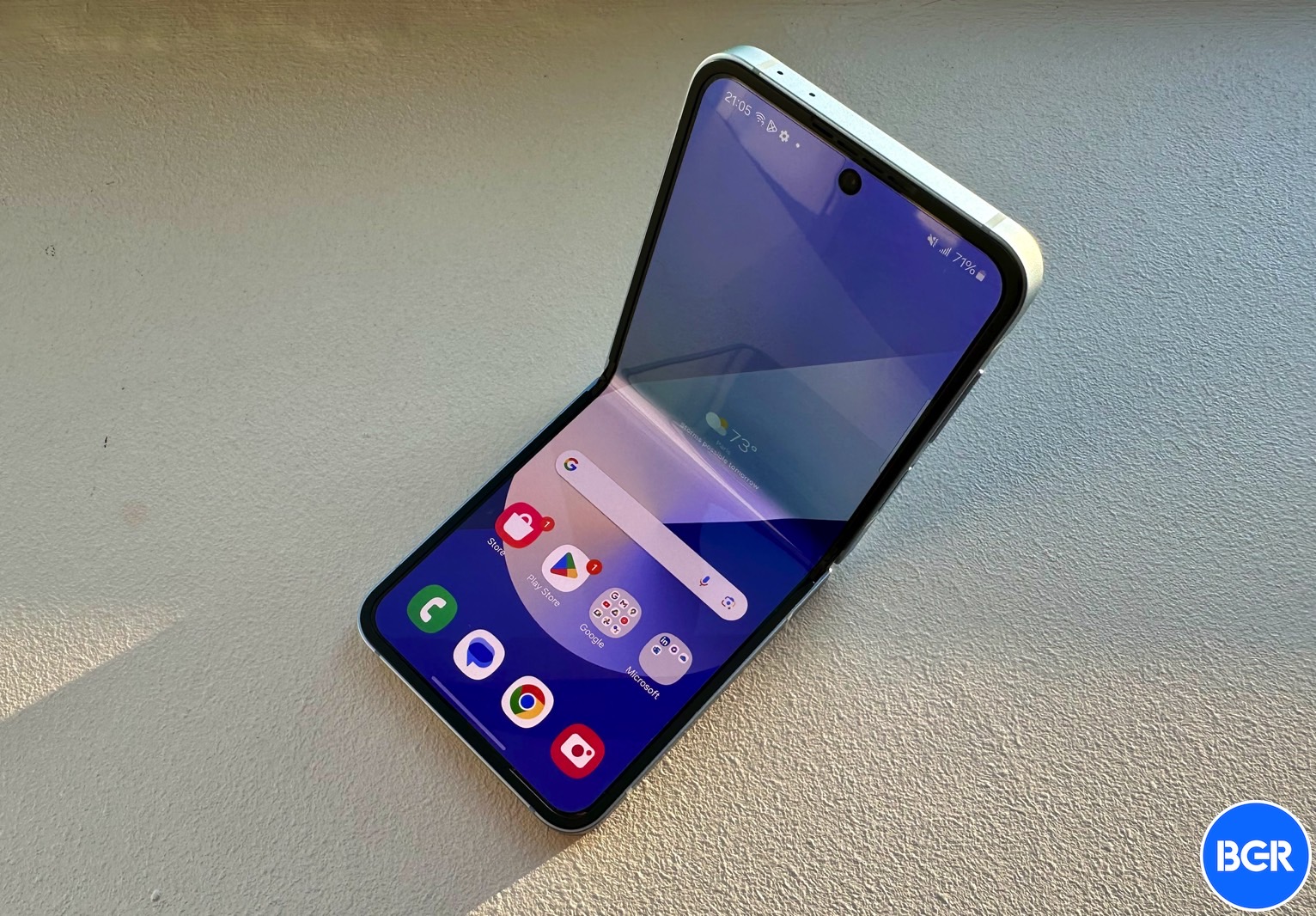
A more affordable Galaxy Z Flip FE is set to launch this year

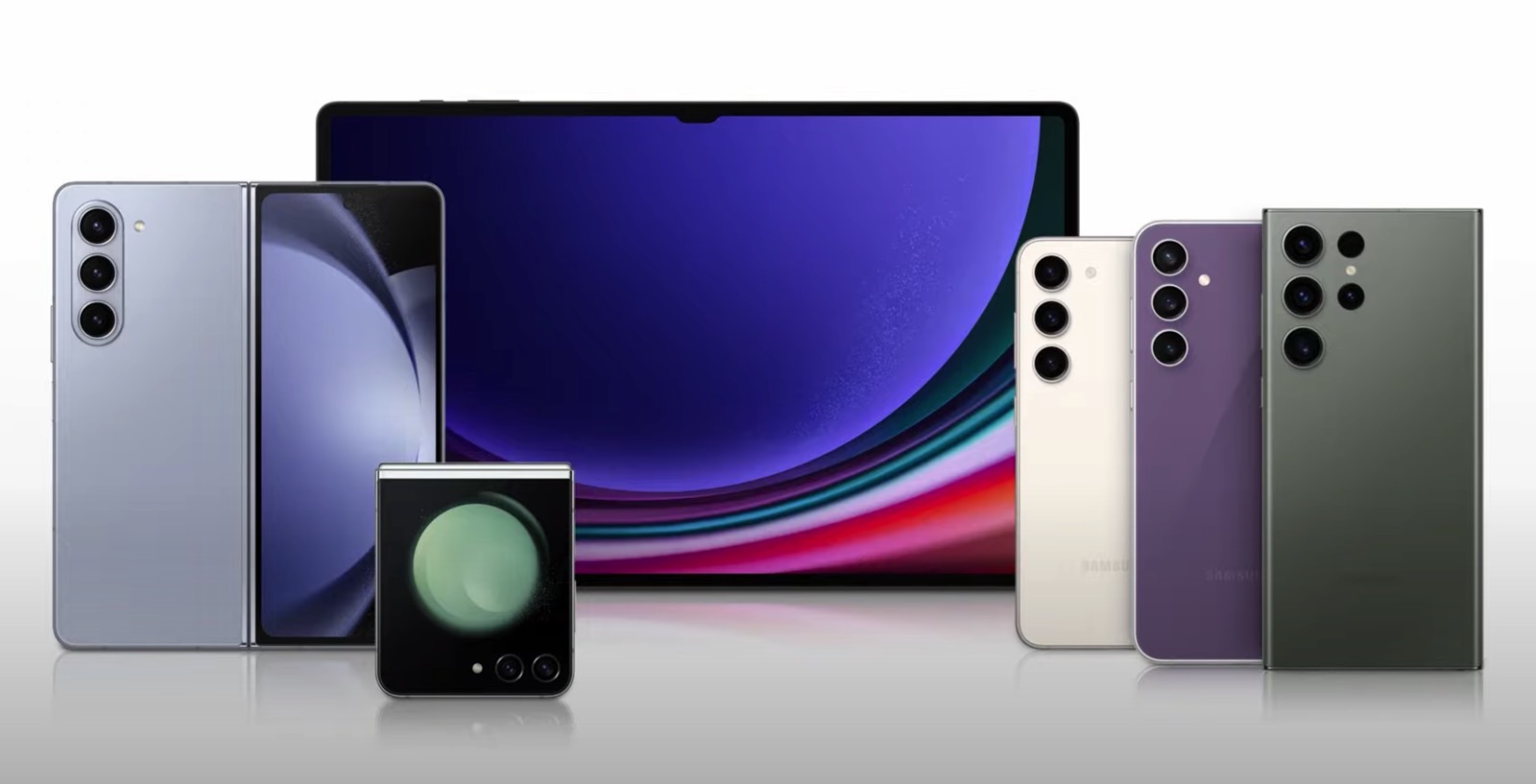
Samsung’s next-gen foldable phones are at least seven months away, but it looks like 2025 will be the year when the Korean giant introduces cheaper models instead of giving us another round of price hikes.

Rumors in November and December mentioned the affordable Galaxy Z Flip FE model that Samsung is supposedly developing for a summer 2025 launch. We now have more evidence that indicates the “Fan Edition” version of the Galaxy Z Flip 7 is real and likely launching this year.

According to SmartPrix, the Galaxy Z Flip FE appeared in the GSMA database already. The device has been added to the database after Christmas, listed as a “Galaxy Z Flip XE” device with model number SM-F761B.

The “XE” designator in the name is either a spelling mistake or an attempt to avoid detection. Another possibility is that Samsung is not sure which moniker to use.

Tech. Entertainment. Science. Your inbox.

Sign up for the most interesting tech & entertainment news out there.

By signing up, I agree to the Terms of Use and have reviewed the Privacy Notice.

Fan Edition (FE) is a name Samsung routinely uses for the cheaper Galaxy S models that launch in the second half of the year. Then there’s the Special Edition (SE) name that Samsung used in late 2024 for a limited version of a thin Galaxy Z Fold 6.

Considering the previous leaks that claimed Samsung is developing a cheaper Flip-type foldable, the Fan Edition name seems more likely. That’s why the Galaxy Z Flip FE designator makes more sense.

Also, the Galaxy Z Flip line sells much better than the Fold, as it’s more affordable. Also, the Fold 6 got slightly more expensive last year. Making a cheaper version of the foldable that gets more attention from buyers might be the better play here.

The GSMA listing doesn’t provide details about the Galaxy Z Flip FE. It’s unclear what compromises we should expect from a cheaper Flip variant launching this year. Samsung will also have a regular Galaxy Z Flip 7 in stores and a Fold 7 phone that will look much like the Galaxy Z Fold SE.

I expect the Galaxy Z Flip SE to use the Flip 6 design and some of its main specs. Samsung can also save money by replacing the Qualcomm flagship chip with an Exynos variant, but that’s all just a guess.

Last year’s Galaxy Z Flip 6 is easily Samsung’s best Flip phone to date, a better flagship than any of its predecessors. The phone starts at $1,099 before any deals, which is more expensive than candybar flagships. It’ll be interesting to see what Samsung prices the Flip FE variant.

The base 2024 Motorola Razr costs $699.99, which is a great price for a foldable handset. I’d expect Samsung to target this price point with the Galaxy Z Flip FE.

Source

Posted on

Custom software and silicon set to define next-gen chips

Confidence in the semiconductor industry’s ability to meet demand is being hindered by geopolitical tensions, international trade restrictions and the push for sovereignty, according to a report from Capgemini. 

Authors of The semiconductor industry in the AI era report warn that as nations compete for control over vital technologies and resources, geopolitical tensions continue to impact the global semiconductor supply chain.

For instance, the flow of components, materials and completed semiconductor products has been hindered by international trade disputes, export restrictions and tariffs. As an example, Capgemini estimated that 14 consumer supply networks that rely on TSMC could be seriously disrupted by any military escalation involving China and Taiwan. Deteriorating US-China ties have also given rise to setbacks in the form of prohibitions on certain products and more stringent controls.

The report, based on a survey of 250 semiconductor firms and 800 “downstream” organisations that use semiconductors in their own products, found that 58% of semiconductor organisations expect higher demand for neural processing units to accompany growth in generative AI (GenAI) adoption. The study also shows that 57% of the chip manufacturers surveyed anticipate an increased need for high-performance chips, and 56% expect to see greater demand for memory-intensive chips, which, according to Capgemini, signals a shift towards advanced processing.

The report shows there is increased demand for custom chips and custom software optimised to run on them.

Jiani Zhang, executive vice-president and chief software officer at Capgemini Engineering, said advanced platforms and software are critical differentiators in the semiconductor industry, driving efficiency and scalability in design, manufacturing and deployment.

“With the growing complexity of AI, IoT [internet of things] and edge computing applications, the ability to integrate domain-specific software with hardware accelerators will define leadership,” she said. “To stay competitive, semiconductor players must embrace co-optimisation across the stack, from chip architecture to application interfaces, ensuring they can meet the escalating demands of data-intensive, low-latency markets.” 

Capgemini said that while the demand for AI chips, custom silicon chips and memory-intensive chips is expected to increase over the next 12 months, the semiconductor industry needs to capitalise on emerging opportunities. These include design and cutting-edge, sustainable fabrication methods, as well as investment in domestic sourcing and nearshoring to enhance stability.

“GenAI is driving accelerated demand for chips, and semiconductor companies face increasing demands from customers who want more personalised and software-centric experiences,” said Brett Bonthron, global high-tech industry leader at Capgemini.

“The industry should see this as an opportunity to ramp-up production and adopt a ‘chip-to-industry’ approach that supports a full-stack, ‘software-first’ set of capabilities,” he added.

“Investment in cutting-edge fabrication methods and design processes powered by AI and GenAI will be key to meet the specialised needs of emerging applications. Equally, it’s crucial that the industry further enhances sustainable manufacturing processes and uses advanced security to safeguard intellectual property.”

Source

Posted on

German court finds hacked EncroChat phone evidence inadmissible

A Berlin court has raised questions over whether data from 120 million messages obtained by police hacking an encrypted phone service can continue to be lawfully used as evidence in prosecutions in Germany and other European countries.

The Landgericht Berlin Regional Court has ruled that text messages intercepted by French police from the EncroChat encrypted phone network cannot be used to prosecute a suspect for alleged drugs trafficking offences in Germany

The decision, by Germany’s largest criminal court, calls into question previous assumptions that under Europe’s mutual recognition principle, intercept evidence obtained by one member state can automatically be used as evidence in other European states.

The court ruling is likely to have implications for the use of evidence obtained from future law enforcement hacking operations into encrypted communications systems, defence lawyer Christian Lödden told Computer Weekly.

Law enforcement operations

EncroChat is one of a series of encrypted phone and messaging services to be infiltrated by collaborating law enforcement agencies across Europe since 2020, sparking prosecutions of organised crime groups for drug trafficking and money laundering in multiple countries.

French and Dutch police harvested messages from 4,600 EncroChat phone users in Germany and tens of thousands of phone users in other countries after infiltrating EncroChat servers hosted at the OVH datacentre in Roubaix, France, in a novel hacking operation in 2020.

A three-year investigation by police into organised crime and drug groups using EncroChat phones led to 6,500 arrests worldwide and the seizure of nearly €900m in cash and assets.

The lawfulness of the use of hacked data from EncroChat and other encrypted phone networks has now been called into question following a ruling by the Berlin Regional Court.

Berlin Regional Court decision raises questions

The months-long trial heard evidence from German investigators and prosecutors, and reviewed translations of evidence disclosed by the UK’s National Crime Agency during criminal trials involving EncroChat in the UK.

A grand chamber of the Berlin Regional Court, made up of five judges found in an oral decision in December that contrary to arguments by European prosecutors, French investigators had not intercepted EncroChat data from a central server in France, but had harvested it from the handsets of EncroChat users in German territory.

Under German law, that meant prosecutors were obliged to seek approval from the German courts to use the French-supplied data in Germany.

However, the presiding judge found that prosecutors had failed to seek judicial approval and that German courts would not have authorised the hacking operation against EncroChat under German law.

Questions to European Court of Justice

The decision came after the Berlin Regional Court submitted questions to the Court of Justice of the European Union (CJEU) asking whether France’s sharing of hacked EncroChat messages with Germany was permitted under European law.

The European court found that, under the European Invesitigation Order (EIO) Directive, France should have formally notified Germany of the interception of EncroChat phones on German soil, and given German authorities the opportunity to object to the operation within 96 hours, if they wished.

The court of justice found, contrary to previous German court decisions, that the protections offered by Article 31 of the EIO Directive were designed to protect the rights not only of the country receiving evidence from another EU state but also the individual users of telecoms services intercepted by law enforcement.

That contradicted earlier findings of the German supreme court that found Article 31 exists only to support the sovereignty of member states, and cannot be claimed by German citizens as a measure to protect their rights.

German courts would not have approved EncroChat hacking

Following the CJEU’s decision, the Berlin Regional Court found in its latest ruling that the principle of mutual confidence in actions of other member states during judicial cooperation only meant Germany should recognise that France’s actions were legal under French law.

The presiding judge, Kristin Klimke, found that the German court still had a duty to examine whether the French operation against EncroChat would be legal under German law. And in this case, a German court would not have approved the operation under German law because the evidence of suspicion did not meet the threshold to justify an equivalent hacking operation in Germany.

The judge also found that prosecutors had not established that evidence of serious crimes could not have been obtained in a less obtrusive way than by intercepting the data of all EncroChat phone users in Germany.

The principle of European cooperation is not intended to require each national law authority to adopt the same criteria for conducting state hacking operations, but is intended to enable cooperation between countries with different laws to protect the privacy and other rights of their citizens, the judge found.

Although the Court of Justice of the European Union allowed German prosecutors to request EncroChat data from France, the CJEU did not go on to say that prosecutors could use the data without approval from a German court.

In another legally significant decision, the judge found that the hacking operation against EncroChat was not simply a French police operation but was a joint European operation involving a number of other EU member states.

France went beyond surveilling the 300 French users of EncroChat, gathering data from all EncroChat users in Europe, the judge found. France had notified its partner countries in advance of the hacking operation.

However French prosecutors failed to comply with European law by failing to follow the correct procedures under EU law to inform Germany of its plans to obtain the phone data of German citizens.

France’s notification should have contained details of the targets identified by phone number, IP address or email, the identity of individuals targeted, including their address, date of birth and social security numbers, as well as a description of the offence committed.

The Berlin Regional Court also found that the French authorities had not disclosed their communications with German police and that no information had been supplied to the court on how the data had been intercepted – raising questions over whether defendants had adequate information to challenge the validity of the data.

German defence lawyer Christian Lödden, who is a member of an international group of lawyers collaborating on EncroChat and similar cases, said the court was the first to try to understand what happened before and during the EncroChat operation. The judge found that Germany, rather than simply taking data France had already obtained from EncroChat, had been informed about the hacking operation in advance and had therefore participated in the operation.

“At the end of the day, she said that under German and European law, the evidence is not allowed to be used in court,” he added.

Lödden said the decision would set a precedent for other cases heard in Germany, though courts elsewhere would make their own decisions on the admissibility of EncroChat evidence. The case is also likely to impact the use of intercept evidence in other cases in Europe, he said.

Dutch defence lawyer Justus Reisinger said the Berlin court’s decision could have “massive” implications for cases in Holland.

“This decision basically confirms our defence arguments in the Netherlands from the recent year. Previously, the Supreme Court rejected my arguments on this point, but along with the Berlin court, even academics are saying that an interpretation like that from the Dutch Supreme Court can’t stand. So a legal landslide is quite possible and justified,” he said.

Bojana Franović, a lawyer in Montengro dealing with evidence from police hacking of Sky ECC and the FBI-run Anom encrypted phone network, said the decision was likely to influence judicial decisions in her country.

Italian lawyer, Daniel Fiorino, said that the Berlin court decision as an “excellent result” but described the legal situation in Italy as “very complex”. 

“We have numerous trials still underway,” he said.

“Everyone in the judiciary, at least in Montenegro, is very keen on what the other countries are doing and how they are dealing with those cases,” she said.

A final written version of the decision has yet to be published.

Prosecutors are expected to appeal the decision to the Supreme Court in Germany.

Main points of decision by Berlin Regional Court

  • The Berlin Regional Court ruled that EncroChat data cannot be used in evidence in a criminal trial.
  • Although data from EncroChat phones was obtained lawfully under French law, a German court is still required to decide whether the interception measures taken by France were permissible under German law.
  • Under German law, the suspicion that users of EncroChat were committing crimes did not reach the threshold to justify intercepting all EncroChat communications.
  • The principle of mutual cooperation between European member states must recognise national measures to protect citizens’ fundamental rights in cooperating countries.
  • Although the European Court of Justice concluded that German prosecutors were permitted to request EncroChat data from France, that does not in itself mean prosecutors could also use the data in prosecutions.
  • It was not established that evidence against suspects could not have been gathered by less draconian means other than by than intercepting their communications.

Source: EKSK legal, Joint Defence Team

Source

Posted on

Look to the future: How the threat landscape may evolve next

It’s been quite the half-decade. In fact, it’s hard to know where to start when reflecting on it. The Covid-19 pandemic saw a (forced) mass shift towards hybrid working models, leaving security teams with a new and complex attack surface to secure quickly. Charges made against the CISOs of SolarWinds and Uber set a precedent of legal responsibilities for CISOs when it comes to cyberattacks and reporting. Elsewhere, new regulations are being written into law across the world to protect organisations and consumers everywhere, from NIS2 to the Cyber Resilience Act. Similarly, artificial intelligence (AI) has revolutionised cyber security, for good and bad. In some ways, AI has become a helpful ally for security teams when it comes to fighting threats, especially as teams are facing a barrage of new and novel threats daily. On the other hand, the uptick in attacks is likely due to the increased use of AI by cyber criminals to speed up and automate attacks. These notable events are just scratching the (attack) surface!

The cyber industry has always been fast paced and security teams are no stranger to change. However, the last five years have challenged the industry significantly, with the unprecedented volume and sophistication of new threats, talent retention issues and burnout rise. As always, these challenges have exemplified the resilience of the industry. We learn from one another and, as a community, we have become more open to speaking of our collective challenges and helping one another. As we head into the unknown once again, it’s critical that we continue to foster a continued sense of openness and community.

I find ‘predictions’ difficult. This feels like using sticks to find hidden wells of water. I have no crystal ball that will reveal the spring of vulnerabilities going to be released upon us in the next five years. But, I have seen some trends over the past few years that have proven hardy and are representative of significant problems that aren’t going away any time soon. These are the best spots I can look to for what lies ahead.

We might see the quantum computing event horizon in the next five years, in which case, all bets are off. I don’t think that that day will be like the vaunted Y2K that was foretold, but will be more problematic over a longer period of time. It will still be a good amount of time before quantum computing is easily accessible by criminal groups in such a way that will make it an everyday threat…governments protecting secrets though, are in a different boat.

I will also make the very spicy take that the AI, at least in the current form using LLMs or things of a similar stripe, is going to sputter and fall flat. We haven’t seen massive increases in uptake by significant parts of the economy for any of the leading companies, despite them shovelling money into the AI furnace by the billions. There are also reports that the current flavour of AI LLMs have reached their limit, with diminishing returns as there are no longer any major corpuses of human-created data and content to consume and use for training. There, I said it. We are nearing ‘peak AI’. Cue sad trombone.

And now for something completely different…

On a much more serious note, I think the major events relating to cyber security over the next five years will be driven largely by geopolitical crises, starting with China.

Between now and 2030 we will see increased aggression by China with some form of conflict both hot and cold, brought on by the possible ‘annexation’ of Taiwan. China has, for some time, been using police actions (and civilian fishing vessels) to encroach on the territorial sovereignty of regional nations including the Philippines and Taiwan. I worry that what happened in Hong Kong will be tried in a similar way, and these methods for attacking territorial water boundaries will continue, using this playbook in Taiwan, with a diminished role for some traditional western powers. If this comes to pass, and unfortunately it seems that’s the direction things are heading, this will be a cataclysmic global event with truly massive implications. Western-based manufacturers of silicon will become parts of the national security apparatus as critical national infrastructure, in a way that they have escaped thus far but are increasingly moving towards.

More critical national infrastructure will fail in larger ways, due to espionage, conflict or both, like we have seen with the actions of Volt Typhoon and Salt Typhoon, Chinese state-sponsored actors digging into infrastructure like ISPs and telcos and energy companies for use in a future potential conflict and to monitor communications of strategic importance. My fear is that disruption of telcos and other “everyday” critical infrastructure sectors that have not gone as far in their cyber security maturity journey will force governments to assert more explicit control through regulation and direct assistance. And some of this will be long overdue, for in the year 2024, is it really defensible to not require MFA for privileged (or all) users? Or not move away from memory unsafe languages? Or not keep logs on critical system events? These things shouldn’t be acceptable now but I’m afraid it will take an even bigger catastrophe than the cyber crises we’ve endured in the past few years for these requirements to get stated in a sufficiently forceful way that gets some orgs to take note.

Russia will continue its role as global bully, but we will see more cracks emerge when they struggle running out of updates to Windows devices and other western technologies that are no longer available due to sanctions. Russian-based ransomware groups will move in more close alignment with the government and become proxy actors of the Kremlin, even more explicitly than they are now.

Supply chains will get hit, again, and again, and some more. Unfortunately this is a growing trend over the past few years and as we saw with CrowdStrike this year (which wasn’t a supply chain attack…but the disruption of their software caused a global technology event that impacted millions of people, disrupted businesses, cancelled flights, and more) these technologies have become almost irreversibly intertwined with corporate enterprise IT to such an extent that they can cause cascade failures.

Whether the attackers are aggravated aggressor nation-states like Russian and China or neo-organised crime in the form of ransomware gangs, the next years will see disruptions with increasing frequency and magnitude. Eventually there will be a counterforce, deployed by governments, in the form of policy, law and cyber action. My hope for my friends still working in the halls of power in Washington and Whitehall, is that we can mount an effective response to acts of aggression in a way that is proportionate and lasting, not overcorrecting but likewise not wasting an opportunity to help set and enforce some norms around responsible stewardship of user data, technology and public services, as well as norms for conflict in cyberspace that are rooted in our principles and values as a society.

Elliott Wilkes is chief technology officer at Advanced Cyber Defence Systems (ACDS). A seasoned digital transformation leader and product manager, Wilkes has over a decade of experience working with both the American and British governments, most recently as a cyber security consultant to the Civil Service.

Source