Posted on

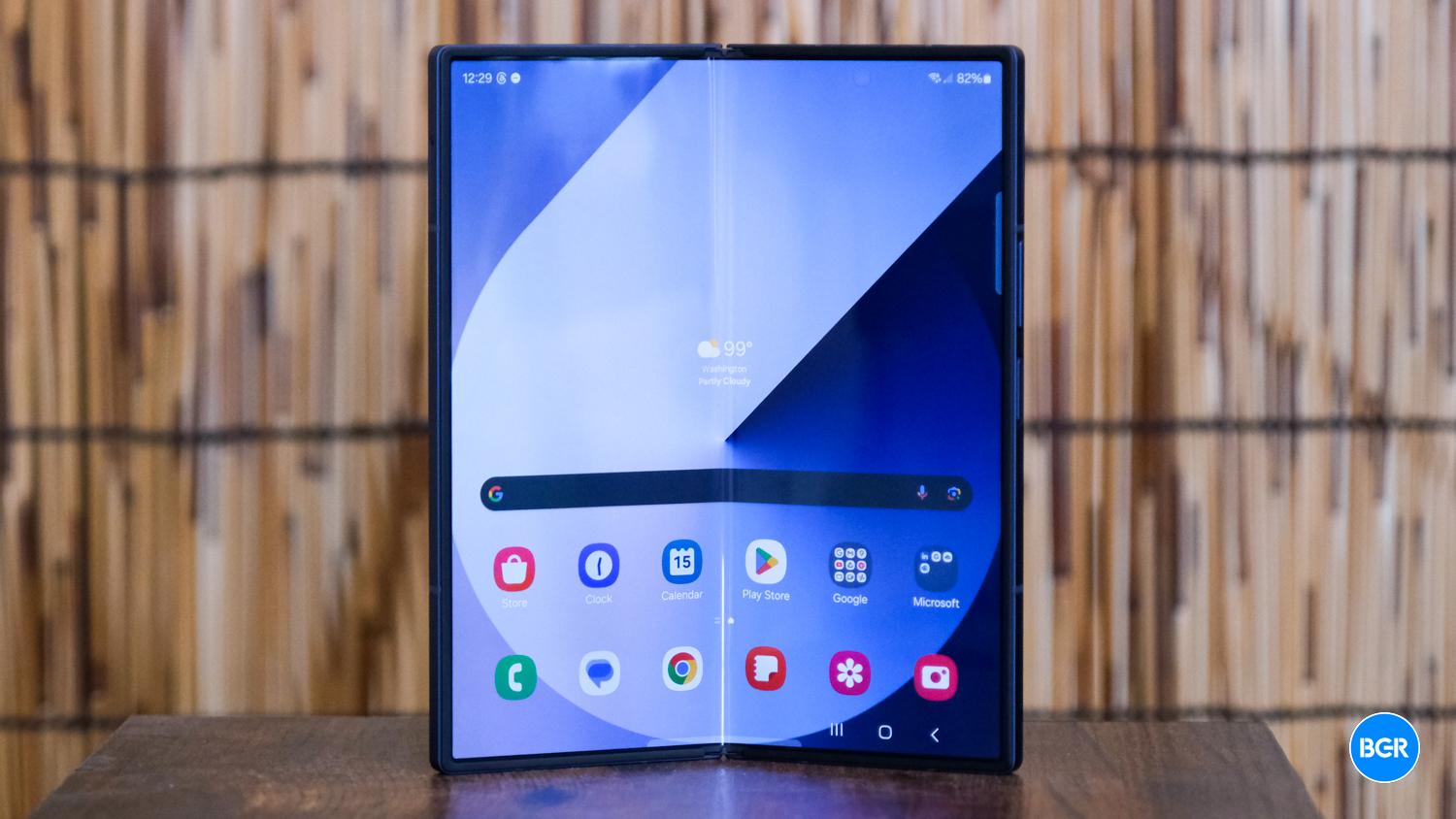
Galaxy Z Fold 7 will be just as thin as the Fold SE, insider claims

As soon as the Galaxy Z Fold Special Edition (SE) foldable came out a few weeks ago, I said that Samsung has no choice but to use the same ultra-thin design for the Galaxy Z Fold 7 next year. Any other option would be admitting that it can’t manufacture thin, foldable phones in large numbers or that it can’t keep up with Chinese foldable smartphone vendors.

The Galaxy Z Fold SE isn’t just thinner than any of its predecessors; it also features larger displays. The best part about the Galaxy Z Fold SE design is that Samsung managed to almost eliminate the crease. The phone is routinely sold out in Korea but is not widely available elsewhere. China is the only market that has a model of the Galaxy Z Fold SE.

Ross Young, a well-connected display analyst, said a few days ago that Samsung’s Galaxy Z Fold 7 will not look like the Galaxy Z Fold SE. But there will be a Galaxy Z Fold 7 SE from Samsung next year. A few days later, the same analyst corrected his previous stance. The Galaxy Z Fold 7 will inherit the Galaxy Z Fold SE design, and that’s amazing news.

Young is the CEO of Display Supply Chain Consultants (DSCC), which just released a report saying that Apple’s first foldable iPhone could hit stores in the second half of 2026. The handset will revitalize foldable phone sales, which are currently experiencing a slump.

Tech. Entertainment. Science. Your inbox.

Sign up for the most interesting tech & entertainment news out there.

By signing up, I agree to the Terms of Use and have reviewed the Privacy Notice.

The DSCC hinted that Samsung will use the Galaxy Z Fold SE design for next year’s Galaxy Z Fold 7, without naming the latter:

Samsung is expected to introduce a second clamshell model in 2025, more aggressively priced as well as a larger infolding model that resembles its recently introduced Z Fold 6 Special Edition.

However, Young clarified those comments on X after the report was released. He said the Galaxy Z Fold 7 will have the same display sizes as the “Fold 6 SE.” The Special Edition phone “will basically become the Fold 7.”

That’s what I was suspecting all along. Samsung has the design of a thinner Fold-type phone ready. All it needs is to update the Galaxy Z Fold 7 specs. I’d expect the 2025 Samsung foldables to feature the same Snapdragon 8 Elite chip as the Galaxy S25 series.

Young also addressed the Flip 7, saying the next-gen clamshell will feature larger displays. We’re looking at a 6.85-inch foldable panel and a 4-inch cover screen.

Also, as seen in the quote from the DSCC report, Samsung should launch a cheaper Galaxy Z Flip 7 next year, a phone Young mentioned a few days ago.
Source

Posted on

Apple’s first smart display might launch much later than expected

Reports last month said that Apple would introduce a wall-mountable smart display for the home as soon as March 2025. The device would look like an iPad, though it would be smaller than the iPad mini. It would run a new homeOS operating system that would feature elements from watchOS and iOS.

Those reports already gave us an idea of how Apple’s smart display will work, but the software experience might not be ready for a March launch. That’s what Ming-Chi Kuo said in a new note, indicating that the smart display’s release date was postponed to the second half of 2025.

Kuo wrote on Medium that the “display-equiped HomePod” mass production had been delayed multiple times.

Apple supposedly wanted to release it in 2024 but postponed it to the first quarter of 2025. More recently, Apple moved the smart display’s release to after WWDC 2025 or to the third quarter of 2025.

Tech. Entertainment. Science. Your inbox.

Sign up for the most interesting tech & entertainment news out there.

By signing up, I agree to the Terms of Use and have reviewed the Privacy Notice.

“The delay in production is mainly due to software development,” Kuo said without offering specifics.

Kuo did mention some of the smart display’s specs, which are in line with previous reports. The display-equipped Homepod should feature an A18 processor and a 6-inch to 7-inch screen. That A18 chip means the smart display will support Apple Intelligence. Previous reports also said that Apple Intelligence will be available on the device.

Kuo also says the smart display will “emphasize smart home functionalities more.” That’s what other reports have also claimed. The smart display will act as the central hub of the smart home, allowing users to control various features and devices from a single place.

The analyst also reiterated that Apple will make a smart home surveillance camera in 2026. The camera will eventually connect to the smart display wirelessly.

Kuo estimates that Apple will sell about 500,000 units in the second half of 2025. If the smart display becomes popular, annual shipments could reach million-unit levels. In a separate report, Kuo identified BYD Electronic and Tianma Microelectronics as the main beneficiaries of Apple’s orders for the smart display.

The only thing missing from these reports is the price of Apple’s home display. It’ll be interesting to see how much Apple will charge for a device that will essentially be a smaller iPad for the home.

Source

Posted on

New iPad Pro won’t be Apple’s first product with an M5 chip

Apple won’t follow the trend of introducing a brand new chip with its best new iPad models, as it did with the M4 iPad Pro. According to the latest reports, the M5 iPad Pro won’t arrive before late 2025 or even early 2026.

Top insider Ming-Chi Kuo wrote a blog post on Medium saying the M5 iPad Pro is expected to enter mass production in the second half of 2025. “The iPad Pro equipped with the M5 processor is expected to enter mass production in 2H25,” he wrote. “The company’s business momentum in 2H25 is anticipated to benefit significantly from Apple’s new product launches.”

While this might not mean much, Kuo is likely talking about the significant refreshes expected by this time of the year, such as the iPhone, Apple Watch, and possibly a new version of the Apple Vision Pro. That said, users shouldn’t be that worried about their M4 iPad Pro becoming an obsolete product in the near future.

If rumors are accurate, the iPad Pro with the M4 processor could be almost two years old before Apple introduces a new variant. Even when that happens, we don’t expect significant changes. Based on what we’ve heard so far, it seems that the iPad Pro will only get a specs bump with the M5 processor, and the next-generation chip won’t even be such a big deal.

Tech. Entertainment. Science. Your inbox.

Sign up for the most interesting tech & entertainment news out there.

By signing up, I agree to the Terms of Use and have reviewed the Privacy Notice.

Image source: Apple Inc.

While the M4 greatly improves over the M3, Apple has apparently canceled the M5 with the newer 2nm process developed by TSMC due to cost concerns. According to The Elec, the M5 chip will adopt a new System On Integrated Chip technology, which enhances thermal management and reduces electrical leakage.

With that, we could see enhancements in performance and efficiency and a broader focus on Neural Engine tasks for AI and Apple Intelligence. While knowing that Apple has moved on to producing its newer processors, we still have several months with M4 products, including some new ones that need to be unveiled.

When will Apple start introducing new M5 products?

If the company follows the schedule analysts predict, the M5 family won’t be available before the end of next year. Here’s what we expect:

  • Late 2025: Apple should unveil at least new M5 MacBook Pro models with the M5 Pro and M5 Max options; the company could also update the Mac mini and iMac, although it’s unclear at this moment;
  • Late 2025/Early 2026: Apple introduces the M5 iPad Pro;
  • Early 2026/Mid 2026: Cupertino unveils new MacBook Air models with the M5 processor;
  • Mid 2026/Late 2026: Apple expands the M5 chips for the Mac Studio and potentially to Mac Pro, depending on the upgrades expected for this processor.

It’s important to note that bigger changes are expected to start appearing by 2026 or 2027, when Apple will unveil a new OLED display technology for the MacBook Pro, followed by an improved display on the iPad Pro. In the next couple of years, we could also see Apple unveiling its first foldable products as well.

Source

Posted on

US TikTok ban imminent after appeal fails

An appeals court in the United States has upheld a law passed by Congress earlier in 2024 to ban China-owned video-sharing social media platform TikTok in the US on national security and data protection grounds

The law sailed through the US legislature back in April, after being included in a wider package of aid for Israel, Taiwan and Ukraine. It gives TikTok’s parent, ByteDance, notice to either sell TikTok to a US-based entity or be removed from online app stores for good – with both Apple and Google facing financial penalties if they do not comply.

The law’s passage came amid a growing freeze in relations between the US and China, and a spate of accusations from Western cyber security agencies claiming widespread Chinese cyber espionage.

TikTok appealed against this, but the US Court of Appeals for the District of Columba Circuit today [6 December] unanimously denied this petition.

In the court’s opinion on the case of TikTok and ByteDance Ltd versus Merrick Garland [US attorney general], judge Douglas Ginsberg said the decision had significant implications for both TikTok and its users, because unless ByteDance divests the business by 19 January 2025, or the president grants a 90-day extension, the TikTok platform will “effectively be unavailable in the United States…. Consequently, TikTok’s millions of users will need to find alternative media of communication.”

Ginsberg wrote this burden was attributable to China’s hybrid commercial threat to US security and not the US government, which he wrote has been engaged with TikTok for some time in efforts to find alternative solutions.

Ginsberg also dismissed TikTok’s arguments that a ban infringed its First Amendment rights – the First Amendment, dating back to December 1791, guarantees freedom of speech and the press in the US.

“The First Amendment exists to protect free speech in the United States. Here the government acted solely to protect that freedom from a foreign adversary nation and to limit that adversary’s ability to gather data on people in the United States,” he wrote.

“The Supreme Court has an established historical record of protecting Americans’ right to free speech, and we expect they will do just that on this important constitutional issue,” a TikTok spokesperson said, via social media site X.

“Unfortunately, the TikTok ban was conceived and pushed through based upon inaccurate, flawed and hypothetical information, resulting in outright censorship of the American people. The TikTok ban, unless stopped, will silence the voices of over 170 million Americans here in the US and around the world on 19 January 2025.”

According to US news network CNBC, TikTok plans to seek an injunction to have the case heard before the US Supreme Court in Washington DC.

Trump’s change of heart?

The one saving grace for TikTok may yet be the incoming Republican administration led by president elect Donald Trump, who returns to the White House in January for an historic second term.

Prior to the 2020 election Trump had led calls for a ban on TikTok, and came close to achieving this goal. However, after the Biden administration’s legal intervention, he now appears to have had a change of heart. Indeed, back in September, he briefly positioned it as a campaign issue, encouraging TikTok users to cast their vote for him. At the time of going to press, however, Trump had not stated whether he will actually enforce a ban.

Time’s up

Craig Singleton, senior fellow and China program director at the Foundation for Defense of Democracies, who contributed extensively to an amicus brief on which the court heavily relied, said the ruling underscored a growing consensus that time was up for TikTok, at least in its current form.

“The unanimous decision is a clear warning shot to foreign companies operating in sensitive sectors – they must play by the rules or face the consequences,” said Singleton.

“Expect TikTok to pull every lever – lobbying, lawsuits, and public pressure – to stall divestiture. But. the bipartisan appetite for action means the company’s runway is rapidly shrinking.”

The ruling also serves as a bellwether for how the US, and by extension its core allies including the UK, confront tech threats from authoritarian regimes, and for policymakers, the saga so far serves as a test of whether the law can keep up with emerging threats, he said.

“For Beijing, this is more than just about TikTok – it’s a symbolic and strategic loss in the broader tech competition with Washington,” added Singleton. “There can be no doubt that this ruling undercuts Beijing’s ability to use TikTok as a powerful tool for influence, data collection, and narrative control within the US, marking a significant strategic loss.

“China has few meaningful options apart from retaliatory rhetoric or tit-for-tat measures targeting U.S. companies operating in China,” Singleton told Computer Weekly in emailed comments.

“While Beijing is likely to issue strong condemnations, we shouldn’t expect any dramatic responses – China may complain loudly, but with its economy under strain, this is more a diplomatic headache than an immediate crisis.”

Source

Posted on

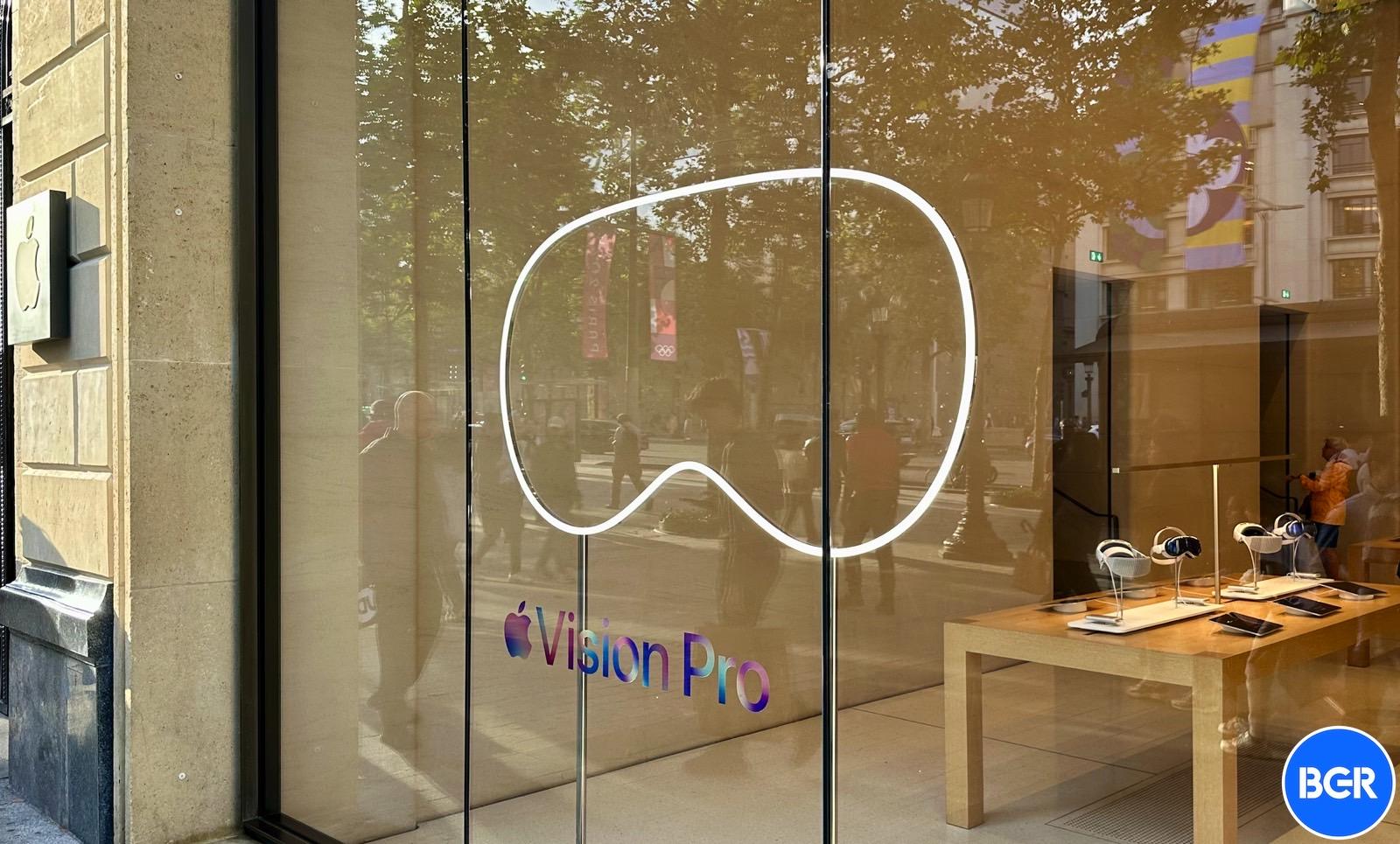
This is the closest we’ve come to Tim Cook confirming Apple Glasses

While I haven’t bought the Apple Vision Pro, I’m still a fan of what Apple is doing here because I think the spatial computer debuted key technologies that will lead to the actual head-worn wearable I want: A pair of AR Apple Glasses that might eventually replace the iPhone.

Rumors say that we have a long wait ahead of us before true Apple Glasses become a reality. Apple needs tons of progress with the tech involved before it can create the product it wants. Meta recently showcased the bulky Orion concept of AR glasses that cost $10,000 to make. That’s another clear hint that Apple Glasses will take a while to get here. We need a pair of AR glasses that look much more like regular glasses before consumers will actually adopt them.

Other rumors say that Apple is studying the possibility of developing smart glasses that look like Meta’s Ray-Ban. Those aren’t AR glasses, however. Intead, they just have a camera and Meta AI support. Samsung is expected to unveil a similar gadget in the coming months.

Apple will never confirm work on future products, though it might tease that’s where we’re heading. That’s what Tim Cook did in a recent interview when asked whether Apple Glasses are coming after the Vision Pro.

Tech. Entertainment. Science. Your inbox.

Sign up for the most interesting tech & entertainment news out there.

By signing up, I agree to the Terms of Use and have reviewed the Privacy Notice.

Here’s the actual exchange between Tim Cook and Wired’s Steven Levy:

Wired: Meta and Snap are leading us to mixed-reality glasses that we’d wear continually. Is the bigger, heavier Vision Pro ultimately headed that way?

Tim Cook: Yes, it’s a progression over time in terms of what happens with form factors. AR is a huge deal. With Vision Pro, we’ve progressed to what is clearly the most advanced technology we’ve ever done, and I think, the most advanced technology in the world in terms of electronics problems. We’ll see where it goes.

Tim Cook did not confirm that the tech inside its Vision Pro will eventually shrink down to fit inside Apple Glasses. He offered the obvious answer any CEO would have given, considering the question. Yes, the Vision Pro is a stepping stone towards something better. His “we’ll see where it goes” is the hedge you’d expect from an exec dealing with this question.

Meta Rayban SunglassesRay-Ban Meta smart glasses. Image source: Jonathan S. Geller
I’ve included the question in full because of how it’s framed. Levy asks Cook whether smart glasses like the ones Meta and Snap sell are leading us to mixed-reality glasses that we’d wear continuously. But neither Meta nor Snap have such products. Instead, the two social networks sell smart glasses that are significantly less sophisticated than the Vision Pro. They’re not mixed-reality devices.

Put differently, Apple has developed the tech it needs for Apple Glasses with the Vision Pro. Apple now has to shrink it down to fit inside a pair of normal glasses.

Apple developing a smart glasses product that would support genAI, like Meta’s glasses, would allow Apple to work on the glasses chassis that might one day feature more advanced capabilities that would trickle down from the Vision Pro. There’s no telling how long it’ll take for Apple to come out with Apple Intelligence-ready Apple Glasses.

Cook also addressed questions about lower-than-expected Vision Pro sales in the same interview saying the device is a success.

“It’s an early adopter product, for people who want tomorrow’s technology today,” Cook said. “Those people are buying it, and the ecosystem is flourishing. The ultimate test for us is the ecosystem. I don’t know if you’re using it very much, but I’m on there all the time. I see new apps all the time.”

Source

Posted on

Tim Cook says Apple Intelligence was always going to be free

If you own an iPhone 15 Pro, iPhone 15 Pro Max, or any of the four iPhone 16 models, you can use Apple Intelligence for free. The same goes for iPads and Macs that feature Apple M-series chips. Apple Intelligence is available for free as part of the respective iOS, iPadOS, and macOS updates.

At the same time, Apple Intelligence, in its current state, is incomplete compared to what Apple showed at WWDC 2024. It’ll take several more months to get that full Apple Intelligence functionality on the iPhone. And even then, work on Apple Intelligence will not stop as the company should add new capabilities year after year.

In its current state, Apple Intelligence can only be free. Will Apple ever charge for it? Tim Cook addressed the question in an interview, saying that the tech is as similar and pivotal as the iPhone’s multitouch feature, which you also get for free with your iPhone purchase.

Apple Intelligence was one of the main topics in Wired’s wide-ranging interview with Tim Cook. That’s when the question about Apple Intelligence’s potential price came up:

Tech. Entertainment. Science. Your inbox.

Sign up for the most interesting tech & entertainment news out there.

By signing up, I agree to the Terms of Use and have reviewed the Privacy Notice.

Wired: Some companies charge for AI-enhanced services. Did you consider that?

Tim Cook: We never talked about charging for it. We view it sort of like multitouch, which enabled the smartphone revolution and the modern tablet.

That’s a great way to frame the answer. Cook is practically saying that Apple Intelligence will be a key tech for Apple products, including the iPhone, just like multitouch is. The latter is a key innovation that made touchscreen devices like the iPhone and iPad possible.

We hardly talk about multitouch support in iPhone or Android products because that’s a feature we take for granted. They’re all touch-first devices. That’s how we interact with them.

Cook’s answer is somewhat misleading because the comparison is valid up to a point. While I’m sure multitouch gets innovations that go under the radar, Apple Intelligence and genAI, in general, will see tremendous progress in the coming years that will not go under the radar.

Apple’s Apple Intelligence innovations will take the spotlight year after year. Some of those features might require extra costs, which might be passed on to the buyer.

As a user, I’ll want to pay for a secure, private, ad-free AI experience, whether Apple’s or someone else’s.

That said, Cook’s take on Apple Intelligence being free is in line with what I’m expecting for Apple’s AI in the near future. I explained earlier this year why Apple Intelligence should always be free. Well, make that “free,” because iPhone users will always be paying for it by paying a premium price for the iPhone.

I still think that’s going to be true for several years, even after Apple catches up with its rivals. Cook’s remark above further reinforces my line of thinking.

Then again, even if Apple is developing premium Apple Intelligence plans, don’t expect Cook to confirm anything years in advance. Some rumors say paid Apple Intelligence features will come in 2027 at the earliest.

As for the more distant future, if Apple can ship a multi-device Apple-Intelligence-first operating system similar to the movie Her, that operating system might be worth paying a subscription.

Speaking of a more distant future of AI, Cook also addressed AGI questions. That’s the advanced general intelligence holy grail that OpenAI and others are trying to achieve. AGI will be able to reason and approach any problem as a human would, though it’ll have a far vaster knowledge database.

The CEO suggested AGI isn’t necessarily a priority for Apple, but the company is certainly looking at where the future might lead. For now, AI is “good enough where we can deliver it to people and change their lives, and that’s what we’re focused on.”

Source

Posted on

iPhone 17 Air may ditch these 5 Pro features to achieve its ultra-thin design

Following the report of a redesigned iPhone 17 Pro, The Information‘s Wayne Ma details Apple’s efforts to release the ultra-thin iPhone 17 Air next year. According to the journalist, Cupertino will remove several features to make this innovative iPhone that thin.

Ma reports that iPhone 17 Air prototypes are between 5 and 6 millimeters thick, which could possibly make it thinner than the iPhone 6, released a decade ago. While the iPhone 16 is 7.8mm thick, this could make the iPhone 17 Air as thin as the new M4 iPad Pro.

Unfortunately, not everything is good news. Apple will have to sacrifice several crucial features to achieve this ultra-thin design. For example, The Information says Apple engineers are “finding it hard to fit the battery and thermal materials into the device,” which means Cupertino will likely have to add a smaller battery to this iPhone.

Besides, a major compromise on the iPhone 17 Air might be a single earpiece speaker. According to Ma, “the iPhone will only have a single speaker in its earpiece because there’s no room for a second speaker at the bottom, which is standard in other models.”

Tech. Entertainment. Science. Your inbox.

Sign up for the most interesting tech & entertainment news out there.

By signing up, I agree to the Terms of Use and have reviewed the Privacy Notice.

The journalist also confirms another rumored change: the iPhone 17 Air will have a “large, centered camera bump.” That said, forget about one of the iPhone’s most widely-used camera features, the optical zoom.

While Apple’s in-house 5G modem is expected to be available with this iPhone, the chip doesn’t perform as well as Qualcomm’s. The report says it’s more efficient, but it won’t be as fast, and it will lack a feature some US users benefit a lot, the mmWave 5G technology, which Apple’s future processor won’t have.

Finally, Apple engineers couldn’t figure out how to add a physical SIM tray to the iPhone 17 Air. While iPhone users in the US are used to that, Apple will have issues, at least in China, which requires phones to be sold with a SIM card. Without this market, sales of this upcoming iPhone might not be as enticing as they could.

Wrap up

Considering all that, I wonder if these trade-offs are worth it for an all-new iPhone design. I still think Pro users will keep buying Pro phones, while regular iPhone users won’t be enticed to pay extra for this new design. So, who might be this new iPhone for?

Source

Posted on

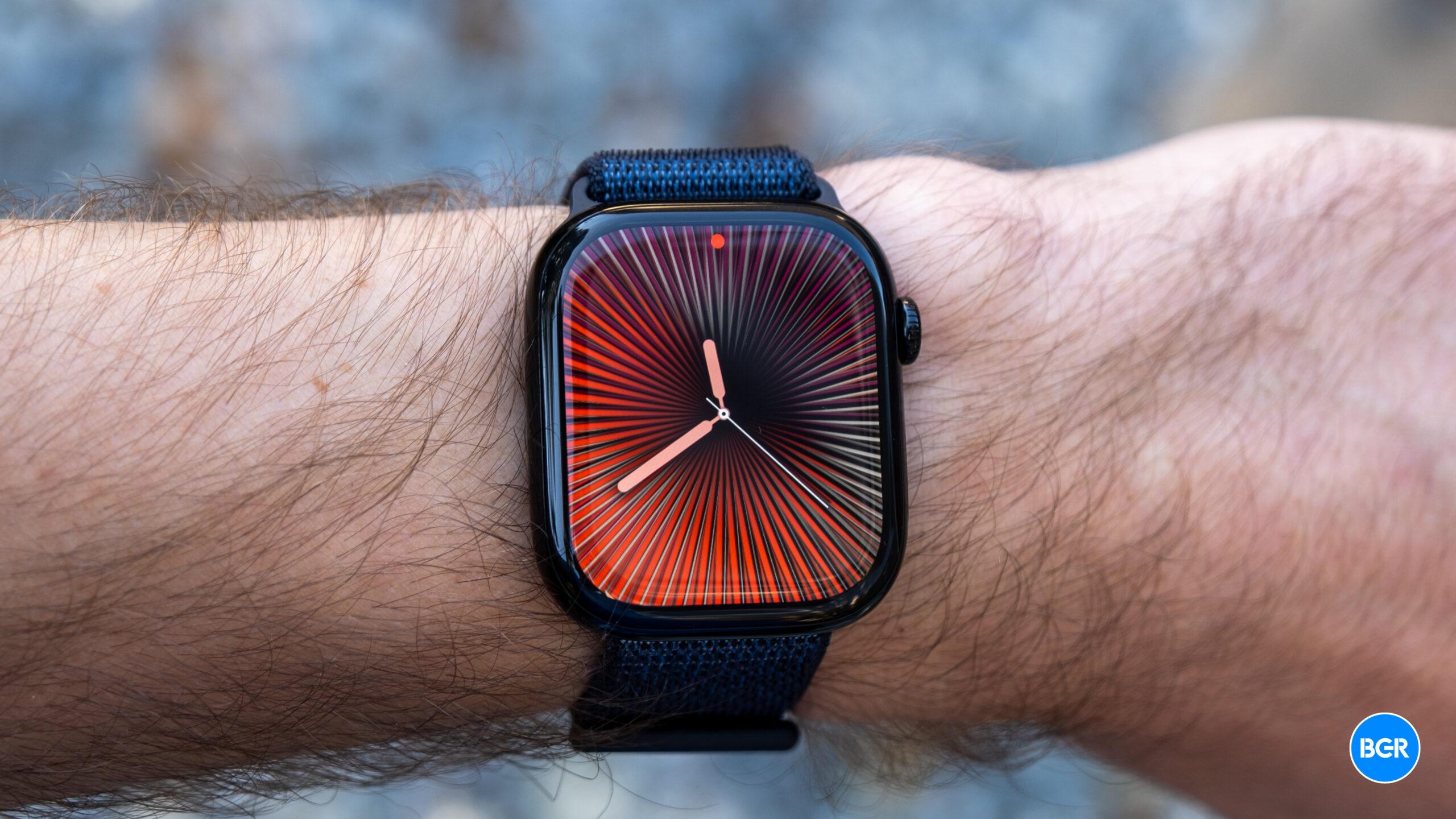
I ran a marathon with the Apple Watch Series 10, and the battery blew my mind

Early last year, I got back into long-distance running, aiming to start running half-marathon races. I used ChatGPT to get back into shape, and the experience has been amazing. I now run a half-marathon almost every week. It’s just another day at the park.

I also decided to move on to marathons last year, something I had never done before and never thought I’d be able to do. I employed the services of ChatGPT once again, and I’ve now completed two official races. If all goes well, more will follow.

I ran my first marathon using an Apple Watch SE 2 model that was about 18 months old at the time of the race. The battery health was at 83%, and the Apple Watch SE barely made it through the marathon.

Six months later, I used an Apple Watch Series 10 to run my second marathon. I’ve been wearing it since late September, and the battery health is still at 100% after about two months. The Apple Watch Series 10 would have easily lasted the entire marathon race even if the battery health were slightly lower. Even if I were slower, it would have made it.

Tech. Entertainment. Science. Your inbox.

Sign up for the most interesting tech & entertainment news out there.

By signing up, I agree to the Terms of Use and have reviewed the Privacy Notice.

I knew the Apple Watch Series 10 battery life was amazing before the race. I never had any doubts. As I explained more than once, the Apple Watch Series 10 can last up to 36 hours with mild activity. It routinely lasts for 30 hours, even on harder training days. And I always use the Watch to track my sleep.

But knowing all of that, the Apple Watch Series 10 battery still blew my mind, and it’s not just because of the stellar longevity.

I’ve never run professionally, so I’m not one of those runners who can pull off sub-3-hour marathons. Yet.

I’m also unable to run a marathon under 4 hours, though that was my intention this time. I’m telling you this because the longer a wearable has to track activity, the more battery it will consume.

The 40mm Apple Watch SE 2 depleted almost its entire battery to track my first marathon. I finished the race in around four hours and 30 minutes. The Watch died about an hour after I crossed the finish.

The 42mm Apple Watch 10 had about 27% battery life when I finished the run. That was at around four hours and 16 minutes. I was faster, yes, even though I didn’t achieve my goal. But the point I’m trying to make here is that the Apple Watch Series 10 battery life was simply amazing.

I’m sure it would have lasted a six-hour marathon race, assuming I’d have been much slower. Or if I had to walk a lot following an injury.

It’s not just the battery life that’s amazing, but also the battery charging time. The Apple Watch Series 10 charges much faster than any previous model.

Charging the Apple Watch Series 10 before and after a marathon race.Charging the Apple Watch Series 10 before and after a marathon race. Image source: Chris Smith, BGR

I put the Apple Watch 10 on its charger for about an hour at around 10:00 PM the night before the race (image above). It still had over 50% charge, but I couldn’t risk it.

I removed it with a 98% charge, which dropped to 90% by the morning of the race. Again, I’m always sleeping with the Apple Watch Series 10 on, looking to track my vitals as long as possible. Comparatively, I topped up my Apple Watch SE 2 the morning of my first marathon, knowing I’d need every bit of juice for a race that could have lasted up to six hours.

The Apple Watch used up to 63% of its battery life for the marathon race. I say “up to” as I walked about 2km to the venue and then forgot to check the battery capacity at the start of the race. Obviously, I had to walk the same distance back home, which took what felt like forever. Human feet don’t work similarly after a marathon.

I put the Apple Watch Series 10 on its charger at around 2:00 PM, when it dropped to around 24%. After about an hour, it reached 96%, and I removed it to wear it.

Again, I want to keep the Apple Watch Series 10 on a charger as little as possible, especially on days when I have races scheduled. I want the wearable to collect as much data as possible, which might come in handy at some point in the future.

The Watch battery lasted 16 hours, including the entire night and the full marathon race. Given the intensity of the effort, I couldn’t be happier.

I know some runners prefer to use wearables from Garmin and other companies. I’m happy with the Apple Watch because I use it to track all my health data. I figure it’ll offer similar performance during training and at rest. That’s even if some runners say the Apple Watch isn’t as good for running as other wearables. I’d have no way of knowing.

Also, the Apple Watch Series 10 I wear had issues recording my heart rate correctly during the first weeks of use, which appear to have been mostly resolved by now. I’m also on the latest watchOS 11 beta.

I’m telling you all that so you have the complete picture. The bottom line is that the Apple Watch Series 10 is so efficient that you’ll have no problem using it for longer activities that require tracking. Whether it’s a marathon race or a hike that lasts several hours, the Apple Watch Series 10 will be ready to record your parameters. And it’ll only need about an hour of charging to go from about 25% to over 95%.

Put differently, you don’t need an Apple Watch Ultra to get you through a marathon. If Apple gives a future Watch SE the same chip and battery tech as the Watch 10, you could just get that and be on your way.

How will the Apple Watch Series 10 perform once the battery health drops? That’s a story for a different marathon. Then again, I’m trying to get faster myself, so hopefully, I’ll finish future races well before the wearable dies.

Source

Posted on

It’s easier than ever to use SearchGPT on your iPhone

It’s impressive that in only a few months, OpenAI’s ChatGPT became a fundamental part of Apple’s iPhone devices. Whether you have a phone with Apple Intelligence or not, you can take advantage of ChatGPT through its app or by integrating it with Apple’s AI platform.

With the latter, ChatGPT can currently improve Writing Tools technology. Apple explains:

With ChatGPT from OpenAI integrated into Siri and Writing Tools, you get even more expertise when it might be helpful for you — no need to jump between tools. Siri can tap into ChatGPT for certain requests, including questions about photos or documents. And with Compose in Writing Tools, you can create and illustrate original content from scratch.

You control when ChatGPT is used and will be asked before any of your information is shared. Anyone can access ChatGPT for free, without creating an account. ChatGPT subscribers can connect accounts to access paid features within these experiences.

However, if you prefer using OpenAI’s ChatGPT app, the latest update brought an important upgrade. Now, you can set a Shortcut with SearchGPT. For those unaware, OpenAI’s SearchGPT is designed to give you an answer, as it will “quickly and directly respond to your questions with up-to-date information from the web while giving you clear links to relevant sources.” Users will be able to ask follow-up questions as the GPT understands the context of each query.

By using Apple’s Shortcuts app, you could give Siri a command to open SearchGPT or even add it to the Action Button of your iPhone 15 Pro or iPhone 16 models.

Tech. Entertainment. Science. Your inbox.

Sign up for the most interesting tech & entertainment news out there.

By signing up, I agree to the Terms of Use and have reviewed the Privacy Notice.

So far, SearchGPT is available for OpenAI subscribers with ChatGPT Plus and ChatGPT Teams services. Still, the company plans to roll out support to free users in the coming months. To access this feature, don’t forget to update your ChatGPT app to the latest version from the App Store.

Source

Posted on

I want Apple’s iPhone 17 Air, but I have one major concern

I’ve been a fan of the iPhone 17 Air rumor for months now, hoping that Apple will indeed release its thinnest iPhone in years, or perhaps ever. After using the iPhone 16 Plus for nearly two months, I’m convinced I need an iPhone with a large display, but I definitely want it to be a lot thinner.

I’ll probably buy the iPhone 17 Air as soon as it comes out next year, even though I’ll have to accept certain compromises. Considering what Apple did with the ultra-thin M4 iPad Pro, I knew the camera would be the phone’s main compromise. The battery size is another obvious area where Apple will have to make compromises.

But a new report gives us a few additional issues iPhone 17 Air buyers might have to deal with. Among them, there’s a change that could prove to be my biggest concern about buying an ultra-thin iPhone. It’s also something I didn’t see coming: The potential lack of a physical SIM card slot.

Apple stopped selling new iPhones with SIM cards in the US in 2022 when the iPhone 14 series was released. However, international versions of the phones came with the same physical SIM cards as their predecessors. The iPhone 16 models also feature SIM cards in markets like the European Union (EU), where I happen to shop for new iPhones.

Tech. Entertainment. Science. Your inbox.

Sign up for the most interesting tech & entertainment news out there.

By signing up, I agree to the Terms of Use and have reviewed the Privacy Notice.

I never switched to eSIM cards because I never had to. I hoped Apple would take longer to drop physical SIM cards in Europe. Then again, I also understand why removing SIM cards makes sense. eSIM cards might be safer and easier to use. Best of all, they free up space inside the iPhone, which can then be repurposed for the battery. This is exactly what Apple might want to do with an iPhone 17 Air that’s between 5mm and 6mm thick.

But the EU isn’t like the US. It’s a lot easier to manage multiple physical SIMs in Europe, where the mobile market is far more competitive. Roaming charges are almost gone, but some limitations exist. Prepaid plans are quite affordable and a great solution for avoiding potential roaming charges when traveling. Buying prepaid SIM cards is incredibly easy, as is swapping between them.

That’s my biggest issue about a SIM-less iPhone 17 Air in Europe. It’s not that it would be difficult to manage multiple eSIMs on the same phone. The iPhone 16 can store more than eight eSIMs, two of which can be active simultaneously. It’s that carriers might have to make changes to the way they sell prepaid cards in Europe.

It’s also about my convenience, which, yes, is based on habit. I routinely travel with at least one backup phone. That second phone might be something as old as the 2015 iPhone 6s, which doesn’t have eSIM card support. If I were to convert physical SIMs into eSIMs for the iPhone 17 Air, I’d be unable to switch cards between the main phone and the one on mobile hotspot duty.

This is a very specific problem that I have, one I will eventually have to deal with. Whether it’s happening with the iPhone 17 Air or future models, SIM cards are probably going to disappear from EU iPhones sooner rather than later. All 2024 cellular iPads sold in the region only support eSIMs. I just hoped it would be later and that I would have more time to adjust to the iPhone abdandoning physical SIMs.

I don’t care as much about the iPhone 17 Air rocking a single lens on the back, featuring worse battery life than the base model, lacking a speaker on the bottom, or packing Apple’s 5G modem instead of Qualcomm.

Then again, I’m certain I want a thin iPhone. If that means losing the ability to quickly and easily switch SIM cards, so be it.

Source