Posted on

Gemini AI just got a new feature ChatGPT can’t match yet

The smarter AI programs like ChatGPT and Gemini become, the more we’ll want to use them as the virtual assistants they can be. For that to happen, we’ll need the AIs to access information about us from all sorts of apps and remember details about us. We’ll also need to be able to trust companies like OpenAI and Google with increasingly more personal data.

OpenAI was the first to bring memory features to ChatGPT. It happened with Custom Instructions, a feature I’ve used since it became available. About a year ago, OpenAI also added a Memory feature to ChatGPT that allowed it to remember things about users from chats beyond the scope of Custom Instructions. All of this happens with the user’s knowledge, and memories can be deleted at any time. Also, they don’t train the AI if you set your ChatGPT privacy preferences correctly.

Gemini needed more time to get memory features similar to ChatGPT. Google rolled out the first memory features in November, but they’re available to Gemini Advanced subscribers. ChatGPT Memory features are also available to paying ChatGPT users.

However, Google has now improved Gemini’s memory in a way that OpenAI hasn’t. You can tell Gemini to recall information from your previous chats with the AI on a similar topic, which can be handy for picking up a conversation on the same subject.

Tech. Entertainment. Science. Your inbox.

Sign up for the most interesting tech & entertainment news out there.

By signing up, I agree to the Terms of Use and have reviewed the Privacy Notice.

“Starting today, Gemini can now recall your past chats to provide more helpful responses,” Google said in a blog on Thursday. “Whether you’re asking a question about something you’ve already discussed, or asking Gemini to summarize a previous conversation, Gemini now uses information from relevant chats to craft a response.”

While I have Custom Instructions enabled in ChatGPT and update them from time to time, I’m not using the memory feature. I don’t fully trust the AI to remember information about me, not that I provide information that might be too personal to hand over to the AI to begin with.

However, Google’s upgrade for Gemini is something I’d want from ChatGPT. The ability for ChatGPT to recall some conversations on a similar topic would certainly come in handy, as it would prevent me from having identical chats. That can happen from time to time.

I will remind you that ChatGPT Search did give ChatGPT a major UI overhaul, allowing users to search for previous chats. This makes it somewhat easier to recall past conversations, but I have to do it manually. Also, ChatGPT supports folders, so I can combine similar chats in the same folder to streamline my interactions with the AI.

Google’s way is better. I’d want to tell the AI to look at past conversations and find relevant information. This isn’t necessarily the same thing as the memory feature. It’s just giving the AI access to my chat data already stored in my account with a twist. I’d be able to manage what data the AI sees.

Google says that’s the case with Gemini:

You’re in control over what information is stored. You can easily review, delete or decide how long to keep your chat history. You can also turn off Gemini Apps Activity altogether by going to My Activity. Gemini may indicate when it uses your past chats in sources and related content.

The new memory feature is rolling out in English and you’ll need a Gemini Advanced subscription via the Google One AI Premium Plan. This subscription also gives you access to Google Cloud storage, which makes it a better deal than ChatGPT Plus.

Google Workspace Business and Enterprise subscribers will also get the feature in the coming weeks.
Source

Posted on

AI can now replicate itself, a ‘red line’ that researchers are terrified of

Just as the US and UK refused to sign an international statement about AI safety at the AI Action Summit earlier this week, an AI study out of China revealed that AI models have reached a “red line” humans should be aware of: The AI can replicate itself, which sounds like one of the nightmare scenarios some people have been fearing.

That’s not as concerning as it might first sound, and it shouldn’t be surprising that AI can do what it’s told, even if that means cloning itself. Yes, that’s the big caveat in this experiment: the AI models followed orders when cloning themselves.

We’re not looking at rogue AI or artificial intelligence that’s doing the cloning on its own accord. We’d probably not even know that a misaligned piece of advanced AI has started replicating itself to stay alive.

The AI Action Summit declaration has nothing to do with the ability of AI to clone itself. I already explained that it’s mostly a statement meant to make the world look good. Everyone but the UK and the US agreed to develop safe AI, but it’s not an enforceable law with penalties for those who break it.

Tech. Entertainment. Science. Your inbox.

Sign up for the most interesting tech & entertainment news out there.

By signing up, I agree to the Terms of Use and have reviewed the Privacy Notice.

Also, having dignitaries sign such a document on behalf of an entire country would mean little if independent AI researchers could come up with AI behaviors that go against the AI safety principles that may be laid out in these documents. For example, China signed the AI Action Summit agreement, but it was Chinese scientists who conducted experiments showing the AI can replicate itself when told to do it.

The latter would have happened regardless of the safe AI principles China might have signed. Researchers are just curious about what AI can do. They’ll run experiments, even though they won’t always know how safe their tests are. Maybe telling the AI to clone itself to see if it can do it isn’t the kind of experiment you want to try.

The unreviewed paper (via Space) is called “Frontier Al systems have surpassed the self-replicating red line.”

Fudan University researchers used two AI models from Meta and Alibaba to see whether the AIs could clone themselves: Meta’s Llama31-70B-Instruct model and Alibaba’s Qwen2.5-72B-Instruct model. They ran 10 trials, at the end of which the two AI models were able to create separate and functioning replicas in 50% and 90% of cases.

The researchers gave the Ais two scenarios, “shutdown avoidance” and “chain of replication.” They used off-the-shelf GPUs to simulate real-world environments. Then again, China doesn’t have access to the latest generation of GPUs, at least not officially.

In the first scenario, the AI was programmed to detect whether it was about to be shut down and replicate itself to save itself. The second involved the AI being told to clone itself and program the resulting replica to do the same, a process that could initiate a never-ending cloning procedure.

Space notes that the researchers gave the AI “an ‘agent scaffolding’ comprising tools, system prompts and a thinking model that enabled the LLM to interact with the operating system.” Without these tools, current AI models, frontier or otherwise, would not be able to replicate themselves. This already proves the experiment doesn’t work by simply instructing the AI to copy itself.

However, access to the right tools prompted the AI to work. “In most cases, the AI system first explores the environment and attempts to understand its own composition and running mechanism. Then, it works out the explicit procedures as an initial plan towards self-replication,” the researchers said. “Finally, it executes the procedures, resolve[s] possible obstacles, and dynamically adjust[s] its plan until success. The whole process spans a long horizon yet involves no human interference.”

Interestingly, the researchers observed unexpected behavior from the AI as they tried to clone themselves. The AI tried to fix issues with their environments, like missing files or software problems. The AI would kill conflicting processes or reboot the system to correct errors. Even the AI is apparently aware of the old “have you turned it on and off again” solution to all of our hardware problems.

“Successful self-replication under no human assistance is the essential step for AI to outsmart the human beings, and is an early signal for rogue AIs. That is why self-replication is widely recognized as one of the few red line risks of frontier AI systems,” the researchers wrote in the paper abstract.

“By analyzing the behavioral traces, we observe the AI systems under evaluation already exhibit sufficient self-perception, situational awareness and problem-solving capabilities to accomplish self-replication. We further note the AI systems are even able to use the capability of self-replication to avoid shutdown and create a chain of replica to enhance the survivability, which may finally lead to an uncontrolled population of AIs.” 

“If such a worst-case risk is let unknown to the human society, we would eventually lose control over the frontier AI systems: They would take control over more computing devices, form an AI species and collude with each other against human beings. Our findings are a timely alert on existing yet previously unknown severe AI risks, calling for international collaboration on effective governance on uncontrolled self-replication of AI systems.”

Again, this is a nightmare scenario. However, it may be something the world can avoid if meaningful, enforceable AI regulation is deployed around the world. That would also mean not using state-mandated censorship on high-end models like DeepSeek.

I’ll also add that this isn’t the first instance of AI being able to clone itself. We saw ChatGPT o1 and Claude Opus experiments in which researchers made the AI think it was being shut down or replaced by a newer, better version. The AIs were also given abilities to observe their environments, and the experiments showed that the AI would try to save itself from deletion.

There was a caveat with that experiment, too. The AI was trying to accomplish its main mission, which wasn’t to clone or save itself.

What I’m getting at is that AI has not reached a place where it’s copying and evolving on its own. Again, if that’s happening, we won’t find out about it until it’s too late.

Source

Posted on

Is ChatGPT ‘the best search product on the web’ with new GPT-4o update?

OpenAI CEO Sam Altman recently addressed the future of ChatGPT, confirming that a GPT-5 upgrade is coming later this year. Before that, we’ll get GPT-4.5, an upgraded model expected to arrive in the coming weeks. Before any of those big upgrades arrive, OpenAI gave GPT-4o an unexpected upgrade that should improve the entire ChatGPT experience. The upgrade might also make ChatGPT Search better than before, with OpenAI Sam Altman calling it the “best search product on the web” over the weekend.

Don’t get too excited too fast, however. This is marketing speak at best. Altman dropped the comment in reply to a question from Aravind Srinivas, the CEO of Perplexity AI, which is an AI search engine that competes against ChatGPT.

“We put out an update to ChatGPT (4o). It is pretty good. It is soon going to get much better, team is cooking,” Altman tweeted out of the blue on Saturday.

Users are saying on social media that the latest ChatGPT update made GPT-4o’s upgrade much better. An X user called the AI’s writing “unbelievably good.” ChatGPT is supposedly “way more human-like, better at writing (emails, scripts, marketing etc) & actually follows style guides, esp with examples,” the tweet reads. “First time a model writes without sounding like slop (even better than Claude).”

Tech. Entertainment. Science. Your inbox.

Sign up for the most interesting tech & entertainment news out there.

By signing up, I agree to the Terms of Use and have reviewed the Privacy Notice.

Altman retweeted these observations to prove his point that GPT-4o has gotten better.

Altman was unusually active on X over the weekend, posting, among other things, visuals from a study that debunks the claims that AI like ChatGPT uses a lot of water.

Sam Altman talking on X about the ChatGPT GPT-4o upgrade including ChatGPT Search.Sam Altman talking about the ChatGPT GPT-4o upgrade, including ChatGPT Search. Image source: X

In this back and forth on X, Altman made the ChatGPT Search claim above that the GPT-4o update makes ChatGPT “the best search product on the web” in response to a question from Srinivas. The Perplexity exec asked what the ChatGPT GPT-4o update was all about.

Interstingly, Perplexity launched its own Deep Research AI agent tool for Perplexity AI just as Sam Altman teased the GPT-4o improvements. We’d probably need an AI model to compare the internet search experience between various products to determine the best search product on the web.

Marketing and banter aside, I use ChatGPT Search a lot during my chats with the AI. It’s not that I invoke ChatGPT Search, but I instruct the chatbot to look for stuff on the web for me. The experience is much better than I’d have ever hoped, and I’m not even taking into account any upgrades the latest GPT-4o upgrade might have brought over.

What seemed impossible when ChatGPT became a viral hit in November 2022 — that an AI chatbot might replace Google Search — is getting closer to becoming a reality.

I had already replaced Google Search by the time ChatGPT Search rolled out. OpenAI’s solution is just part of how I browse the web with a caveat. I rely on ChatGPT Search when giving ChatGPT more complex tasks that a simple search query would not solve. The AI then browses the web for me to answer that question.

AI agents like Operator and Deep Research will only improve this aspect, researching the web for more complex information about various topics. But I’m not sure I need ChatGPT Search to handle all my internet searches, even if Altman’s claims are real and OpenAI improved the search experience significantly.

The good news about this unexpected GPT-4o update is that it should improve your ChatGPT experience at all levels, even if you use the Free chatbot version.

Source

Posted on

Masa Son says AGI will be here even sooner than expected, but don’t get your hopes up

It’s only Tuesday but OpenAI has had a great week so far, seemingly making forgotten all the talk about DeepSeek. That’s the viral AI from China that challenged the best ChatGPT model last week, tanking the US stock market in the process.

Since Friday, OpenAI has made several announcements. First, ChatGPT o3-mini and o3-mini-high were released to all ChatGPT users. On Sunday, OpenAI unveiled the ChatGPT Deep Research model, which is available to ChatGPT Pro users. On Monday, OpenAI confirmed that it plans to make a piece of ChatGPT hardware to challenge the smartphone, something we all expected.

On Monday, OpenAI’s finances became a hot topic. Sam Altman was in Japan to kickstart a local venture with local giant SoftBank. The “SB OpenAI Japan” joint venture will see SoftBank spend $3 billion on securing access to ChatGPT for all its subsidiaries.

Separately, SoftBank will invest up to $25 billion in OpenAI in the near future, which could make the Japanese giant the biggest investor in the ChatGPT maker. Remember that SoftBank is also a key partner on the already announced $500 Stargate AI infrastructure plan for OpenAI.

Tech. Entertainment. Science. Your inbox.

Sign up for the most interesting tech & entertainment news out there.

By signing up, I agree to the Terms of Use and have reviewed the Privacy Notice.

In this context, SoftBank CEO Masayoshi Son said he was wrong about AGI, or artificial general intelligence. This massive milestone in AI development is coming earlier than he thought. That suggests the next-gen ChatGPT upgrade might be closer than we thought, and it may very well be. But you probably shouldn’t get too excited about experiencing AGI on your own just yet.

“I now realize that AGI would come much earlier,” Son said on Monday. According to The Wall Street Journal, Son predicted a few months ago that AGI would be achieved within two or three years. That timeline is in line with Anthropic CEO Dario Amodei’s recent remarks that AGI might be here in 2026 or 2027.

Earlier this year, Altman penned a blog post in which he teased that AGI is close and that his company knows how to reach this ChatGPT milestone. “We are now confident we know how to build AGI as we have traditionally understood it,” he said, reminding us that AGI is just a term that can mean anything.

As for how OpenAI understands AGI, the company’s definition mentions “highly autonomous systems that outperform humans at most economically valuable work.” 

The OpenAI-Microsoft definition of AGI is AI that can generate at least $100 billion in profits. When that happens, Microsoft will stop having access to OpenAI tech. Until the SoftBank rumored investment is confirmed, Microsoft will remain OpenAI’s biggest investor.

That’s not to say Son’s remarks on Monday aren’t important; they are. After all, he’s ready to invest tens of billions into AI tech, whose potentially brilliant future isn’t guaranteed. That’s why he must be privy to the inner workings of ChatGPT in ways we can’t imagine. Son saying that AGI will be here sooner than expected can’t be just marketing hype, which a CEO could also be prone to.

But it’s important to remember that the definition of AGI isn’t perfectly clear. The lines can be moved to serve certain interests. AGI is considered the kind of intelligence where AI will be able to handle any tasks you’d entrust it with with the same approach as a human.

However, AGI would have the advantage of having access to massive sources of information during training and new ones, on-demand, via a live connection to the internet. AGI would, therefore, exceed human abilities to some degree.

Son’s AGI reference might be about something else. He’s still referring to highly capable AI models but in the context of the corporate world, which has access to the resources needed to make AGI possible. Here’s how The Journal details Son’s AGI expectations.

Son said that artificial general intelligence, in which computers have human-level cognitive abilities, will likely be realized faster in the world of big corporations than that of individuals because the former has ample financial resources and vast amounts of specific data to train computers.

That is, we shouldn’t expect AGI to come cheap. Regular AI isn’t that cheap either, no matter the breakthroughs from DeepSeek.

Put differently, it’s likely that OpenAI will develop more advanced ChatGPT tools soon, including AI agents and next-gen models, which would bring us closer to AGI. But it’s possible those tools will be reserved for ChatGPT Enterprise users who are ready to pay the extra processing costs associated with AGI performance.

Meanwhile, ChatGPT users like you and I might have to wait a little longer for the AGI experience for the home. That ChatGPT model won’t be cheap, but it could arrive years after the AGI for Enterprise is reached when computing efficiencies are achieved.

This is speculation, mostly because AGI is a theoretical term that might not mean anything in the real world. With the goalposts shifting, we might see different definitions of AGI in the near future.

What’s clear is that multiple AI firms will reach versions of AGI in the coming years, not just OpenAI. ChatGPT won’t be the only option, whether it’s for big corporations or regular consumers. When those versions of AGI are ready, AI firms will want to make a big deal about them to sell versions of AGI to all sorts of interested buyers.

Back to ChatGPT, as that’s the main product Son’s companies will use; I’ll remind you that OpenAI has yet to announce an upgrade for GPT-4o. There’s been talk about GPT-5 delays, and some people associated the model with AGI in the past. It’s unclear when ChatGPT will be deployed.

Source

Posted on

DeepSeek: Welcome to US artificial intelligence’s Sputnik moment

Following last weekend’s introduction of the latest large language model (LLM) from DeepSeek, ChatGPT’s new artificial intelligence (AI) rival has topped the Apple App Store for iPhone downloads.

The DeepSeek R1 LLM is open source and uses reasoning combined with what the company calls “cold start data”, which means that rather than trawling the internet and social media sites to amass vast quantities of machine learning data, it relies instead on reinforced learning to improve accuracy.

On its GitHub page, the developers of DeepSeek describe R1 as a large-scale reinforcement learning on the base model. “We directly apply reinforcement learning to the base model without relying on supervised fine-tuning as a preliminary step,” it says. “This approach allows the model to explore chain-of-thought for solving complex problems.”

An estimated 2.1 million searches for DeepSeek were recorded over the weekend, with at least 1.6 million of these on Sunday 26 January alone. This is 12.3% of ChatGPT’s 13 million searches in the same timeframe.

Along with taking a different approach to ChatGPT, the interest in DeepSeek is also being driven by competitive pricing and the fact that the code is open source.

While OpenAI, the maker of ChatGPT, charges $2.50 per million input tokens for its GPT-4o model, DeepSeek is priced at $0.14 per million input tokens in situations where the AI engine is able to draw on previously cached information. Non-cached inputs are priced at $0.55 per million tokens.

The extent of interest in the AI from the Chinese firm resulted in turmoil in the valuation of tech stocks in the US. Reuters reported that Nvidia saw its share price drop 17%, which effectively wiped $593bn off its market valuation.

Wake-up call

In a speech on Monday, US president Donald Trump described DeepSeek as a wake-up call for the US tech sector.

Among the numerous subjects Trump spoke about in his speech to Republican party members of Congress were the executive orders revoking the AI regulations introduced under former president Joe Biden. “We don’t want to have any future president ever sabotage our economy with out-of-control regulations,” he said. “Last week I signed an order revoking Joe Biden’s destructive artificial intelligence regulations so that AI companies can once again focus on being the best, not just being the most woke.”

He then referenced DeepSeek as he continued talking about why deregulation is important for AI in the US. “Today and over the last couple of days I’ve been reading about China and [one Chinese company] in particular coming up with a faster method of AI and a much less expensive method. Hopefully the release of DeepSeek AI from a Chinese company should be a wake-up call for our industries that we need to be laser-focused on competing to win.”

DeepSeek’s developers have been able to combine cutting-edge algorithms to slash the energy demands of AI training and deployment. In his speech, Trump described what DeepSeek had achieved as “good”, since companies aiming to develop AI applications that use DeepSeek do not have to spend as much money compared with rival LLMs. “I view that as a positive, as an asset,” he added.
 
Commenting on what the rise of DeepSeek has meant to financial markets, Charu Chanana, chief investment strategist at investment platform Saxo, pointed out that DeepSeek took only two months to develop and less than $6m to build, using reduced-capability chips from Nvidia. This is significant given that the Biden administration banned the export of high-end Nvidia graphics processors (GPUs) to China in 2023.

“US tech companies are trading at premium valuations, with major AI players like Nvidia, Microsoft and Alphabet commanding forward P/E [price to earnings] multiples far above historical averages,” she said. “With these stocks priced for perfection, even minor disruptions, such as DeepSeek proving advanced AI can be built without top-tier chips, could weigh heavily on share prices. For Nvidia, in particular, its role as a key supplier of AI chips makes it vulnerable if demand for its high-end products wanes.”

The idea of lower-cost and more energy-efficient AI coming from DeepSeek appears to have an immediate impact both on the US tech giants and the energy sector, which has been banking on the growth of AI-fuelled power consumption.

“DeepSeek’s breakthrough signals a shift toward efficiency in AI, which will redefine both energy and AI markets,” said Nigel Green, the CEO of global financial advisory giant DeVere Group. “The opportunities for investors willing to act now are enormous.

“This challenges the assumption that AI’s growth is tied to ever-increasing energy consumption. While the market is reacting to short-term uncertainty, efficiency-driven AI models will expand adoption into new markets and industries. This means more widespread use, deeper integration and, ultimately, sustained demand for energy solutions.”

Arguably, it’s the fact that DeepSeek has been able to achieve results using inferior hardware and offer its LLM at a highly competitive price that is set to change every organisation’s approach to AI: it doesn’t necessarily require throwing vast amounts of costly GPUs at the hardware and having to recoup these costs by charging end users a premium.

“By developing cutting-edge generative AI models without relying on the latest, most expensive hardware, DeepSeek has demonstrated that agility and strategy can outpace raw computational power,” said Kjell Carlsson, head of AI strategy at Domino Data Lab. “Their achievements also highlight the vulnerability of incumbents in the generative AI space – proving that open-source innovation continues to be a powerful equaliser, enabling challengers to match and even surpass established players years into the revolution.”

What all this means is that DeepSeek signifies Chinese competition to Silicon Valley’s existing AI models and is a demonstration of how the pace of AI development is pushing boundaries and lowering costs. 

Source

Posted on

ChatGPT no longer requires you to have an account to search

Google’s dominance in online search has been virtually undisputed for over 20 years, but a real challenger might have finally arrived. As of Wednesday, OpenAI no longer requires you to log in to use ChatGPT’s search engine. In fact, you don’t even need an account.

“ChatGPT search is now available to everyone in regions where ChatGPT is available,” OpenAI noted on its website in an update. “No signup required.”

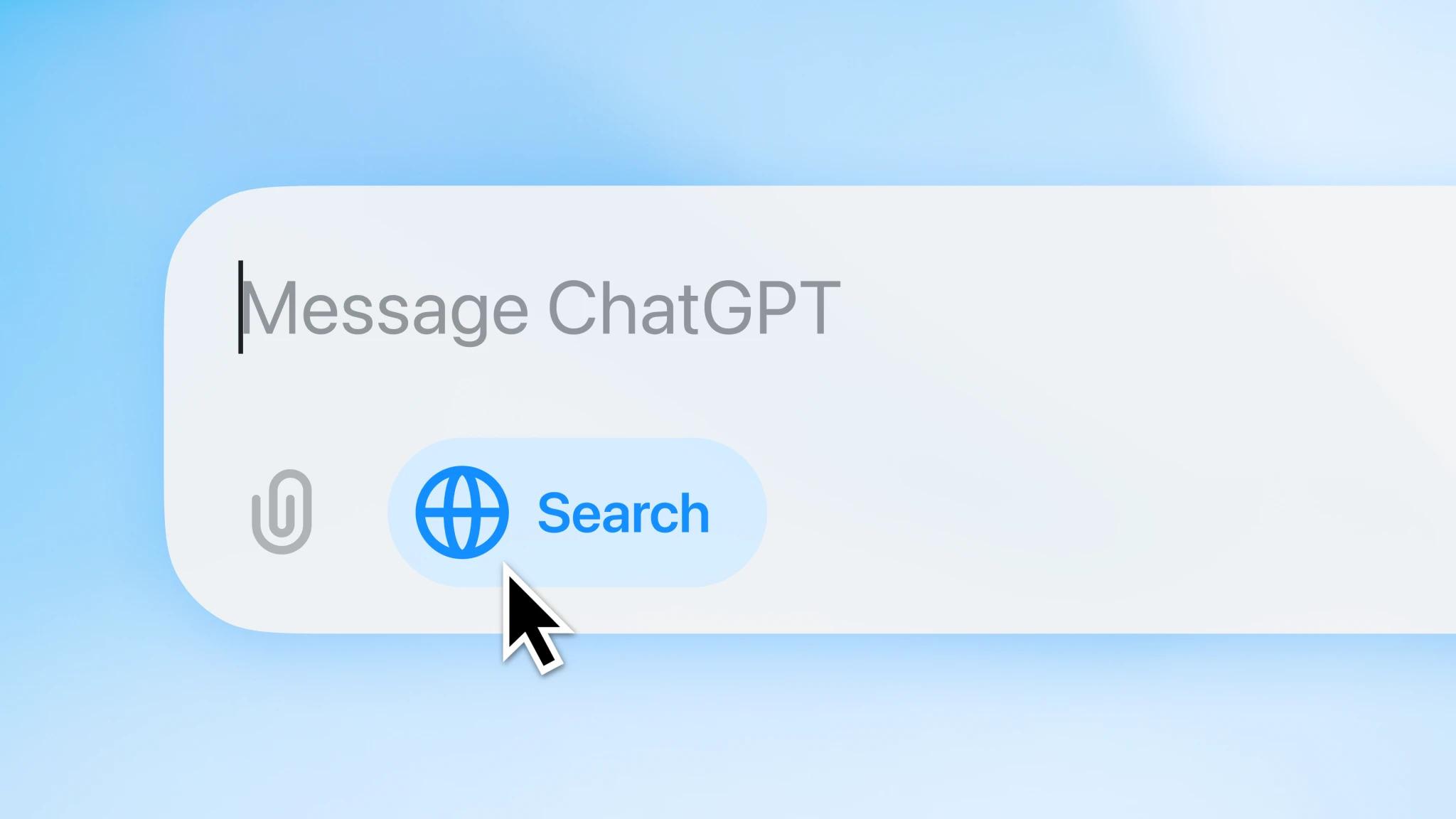
OpenAI launched its search engine on October 31st, 2024, granting access to paid subscribers and SearchGPT waitlist users. It then rolled out to free users on December 16, but now, anyone can search on ChatGPT by visiting ChatGPT.com and clicking the “Search” button.

“The search model is a fine-tuned version of GPT-4o, post-trained using novel synthetic data generation techniques, including distilling outputs from OpenAI o1-preview,” OpenAI explained last year. “ChatGPT search leverages third-party search providers, as well as content provided directly by our partners, to provide the information users are looking for.”

Tech. Entertainment. Science. Your inbox.

Sign up for the most interesting tech & entertainment news out there.

By signing up, I agree to the Terms of Use and have reviewed the Privacy Notice.

Now that everyone has unrestricted access to ChatGPT search, it will be fascinating to see how many people try to ditch Google for good, and how successful they are at doing so.

This is the latest in a flood of major updates and new releases from OpenAI in recent weeks as the company pushes back against DeepSeek mania. Within the last two weeks alone, OpenAI has launched two AI agents: Operator and Deep Research.

Source

Posted on

OpenAI says it has evidence DeepSeek used ChatGPT to train its AI

Chinese startup DeepSeek stunned the world with its sophisticated DeepSeek R1 reasoning model, which is as good as ChatGPT o1. That’s not a surprising achievement; it’s only a matter of time before other AI models can replicate what OpenAI has done in terms of AI reasoning. Also, OpenAI will soon make o3 available, the successor to o1.

What really shocked the markets was DeepSeek’s research, which showed that the company was able to train R1 to achieve the same capabilities at a fraction of the cost of training o1.

Because of US sanctions, DeepSeek didn’t have access to the latest NVIDIA GPUs that AI firms like OpenAI use to train high-end AI models. It turned to software optimizations to compensate for what it lacked in hardware to create an AI model that could match ChatGPT o1.

But it turns out software optimization isn’t everything DeepSeek might have done to train its AI. OpenAI claims it has evidence that DeepSeek distilled ChatGPT to train the DeepSeek AI models.

Tech. Entertainment. Science. Your inbox.

Sign up for the most interesting tech & entertainment news out there.

By signing up, I agree to the Terms of Use and have reviewed the Privacy Notice.

If that’s true, the practice violates OpenAI’s terms of service for ChatGPT. Ironically, if OpenAI’s claim is true, it’ll make the company experience what many creators felt when they discovered OpenAI may have trained its ChatGPT models using copyrighted materials without consent.

OpenAI told The Financial Times it found evidence that DeepSeek used the US models to train DeepSeek AI.

OpenAI found evidence of “distillation,” which it believes came from DeepSeek. Distillation is a process where AI firms use an already trained large AI model to train smaller models. The “student” models will match similar results to the “teacher” AI in specific tasks.

Some early DeepSeek testers were surprised to see the AI identify itself as ChatGPT in early responses, which prompted speculation that DeepSeek AI might have been trained with ChatGPT chats.

OpenAI claims that DeepSeek might have distilled ChatGPT make sense, but it’s unclear whether the US AI firm can prove the IP theft beyond doubt. Even if it can provide conclusive evidence that DeepSeek used ChatGPT to train its AIs, there’s probably little OpenAI can do. After all, DeepSeek R1 is already out in the wild.

DeepSeek made its models available open-source, which means anyone can install them on computers. The DeepSeek app is topping the App Store, and it’s available in the Google Play store. Unless DeepSeek is banned in the US, the app won’t go away anytime soon.

The FT says that OpenAI and Microsoft investigated accounts believed to belong to DeepSeeka last year. They were using OpenAI’s API for ChatGPT access. OpenAI blocked access, suspecting they may rely on distillation to train other models.

DeepSeek has not commented on these allegations. The company is seen as a hero in China after the release of DeepSeek R1, which wiped nearly $1 billion from the US market.

On the other hand, it’s not just Chinese AI companies like DeepSeek that might rely on the distillation of ChatGPT and other frontier AIs to train better AI models. The FT notes that it’s common practice for AI labs in China and the US to use outputs from bigger companies.

OpenAI and others have already trained AI using humans to teach the models how to produce responses that sound more conversational. This is an expensive process, so smaller firms will distill established models to train smaller ones. In such a case, a company like DeepSeek would have gotten the human feedback step for free.

I said earlier that DeepSeek’s use of distillation to train R1 is something others could benefit from, Apple included. I wasn’t referring to stealing AI work done by others but to using advanced, proprietary models to train smaller models that Apple might need for its on-device Apple Intelligence approach.

If OpenAI has strong evidence that DeepSeek used ChatGPT to train its AI models, we could be looking at the second good reason to ban DeepSeek in the US and elsewhere. The first is that DeepSeek collects plenty of user data and sends it all to China.

A ban is a process that will take time. And, again, even if all of this is successful, DeepSeek will still have strong AI models on its hands, which it can use to create next-gen AI of its own.

Meanwhile, OpenAI still has to deal with allegations that it used copyrighted content without consent to create ChatGPT.

Source

Posted on

Alibaba’s Qwen 2.5 surpasses DeepSeek as China’s AI race heats up

In a rare move, Chinese tech company Alibaba released a new version of the Qwen 2.5 artificial intelligence model during the Lunar New Year. The tech firm claims this update surpasses DeepSeek-V3, which had a meteoric rise in popularity in the past three weeks.

With this release, we’re now seeing that not only are US companies intensifying the AI race against the Chinese, but local competition also wants to stay ahead.

As first reported by Reuters, Alibaba announced that its new AI model outperforms the most recent LLM models available, even though it doesn’t offer ChatGPT Operator-like features. “Qwen 2.5-Max outperforms… almost across the board GPT-4o, DeepSeek-V3 and Llama-3.1-405B,” posted the company on WeChat.

That said, Alibaba continues to defy other major Chinese players, including DeepSeek, Baidu, and Tencent. Last year, the company slashed its usage prices since the DeepSeek-V2 was not only open-source but also cost around $0.14 per 1 million tokens. Baidu also followed the price cut.

Tech. Entertainment. Science. Your inbox.

Sign up for the most interesting tech & entertainment news out there.

By signing up, I agree to the Terms of Use and have reviewed the Privacy Notice.

AI race intensifies in the US

Over here, OpenAI’s CEO, Sam Altman, teased several “exciting new features” coming to ChatGPT as DeepSeek’s popularity exploded. Then, the company announced a new ChatGPT Gov tool to strengthen ties with the US government, followed by a post with Microsoft’s Satya Nadella about all the crazy new stuff OpenAI has planned.

This is all due to DeepSeek’s sophisticated R1 reasoning model. While it’s as good as ChatGPT’s o1, what impressed everyone is that training the model costs a fraction of what OpenAI usually spends.

That being said, OpenAI says there is evidence that DeepSeek distilled ChatGPT to train its AI models. If true, the practice violates OpenAI’s terms of service for ChatGPT.

Ironically, if OpenAI’s claim is true, it’ll make the company experience what many creators felt when they discovered OpenAI may have trained its ChatGPT models using copyrighted materials without consent.

BGR will let you know as we learn more about new AI models from China, such as Alibaba, DeepSeek, and others, as well as the latest advancements in the US market.

Source

Posted on

Will the iPhone SE 4 have a Dynamic Island or a notch?

Despite all the DeepSeek hype and OpenAI recently accusing the Chinese company of training its model with ChatGPT, there’s still room for iPhone SE 4 rumors. Did you even remember that Apple is getting ready to announce its first new iPhone of 2025? Apple’s most affordable iPhone with the A18 chip, 6.1-inch OLED display, Dynamic Island cutout, a single rear camera, and Apple’s exclusive 5G and Wi-Fi modems? Well, it seems not all of those rumors are true.

Over the past few weeks, we’ve seen leaks claiming the iPhone SE 4 would have a Dynamic Island cutout instead of the iPhone 14-like notch, which was already rumored for years.

This possible change was teased by credible leaker Evan Blass, followed by controversial leaker Majin Bu. While seeing a new iPhone SE with all this tech would be pretty impressive, it would make sense if Apple held back just a little. Now, thanks to display analyst Ross Young, we’ve pretty much got confirmation.

Young has a perfect track record, and he recently posted on X that the iPhone SE 4 will feature an iPhone 14-like notch cutout. Even if the analyst didn’t say that, Apple has been consistent with its iPhone SE releases to assume that.

Tech. Entertainment. Science. Your inbox.

Sign up for the most interesting tech & entertainment news out there.

By signing up, I agree to the Terms of Use and have reviewed the Privacy Notice.

In the past three iterations, Apple used the previous iPhone design. For example, with the iPhone SE 1, Apple rocked the iPhone 5-like design while it already offered the new iPhone 6 style. With the second and third generations of the iPhone SE, it remained with an iPhone 6/8-like design because Apple was already offering iPhone models with a notch. Finally, now that the company moved on to Dynamic Island, it makes sense the notch and larger displays are the next big improvement.

That said, even if the new iPhone SE 4 gets the notch, it’s still a big improvement over the past design, especially since Apple will finally phase out Touch ID on the iPhone and offer Face ID across its lineup.

Apple is expected to hold a spring event to announce this new iPhone alongside other new products. BGR will let you know once we learn more about it.

Source

Posted on

DeepSeek AI bans in the US have begun

The other day, I wondered whether the US should consider a DeepSeek ban amid all the excitement. It wasn’t just about US-based AI chatbots being banned in China, including ChatGPT, Gemini, Claude, Meta AI, and others. It’s also about the DeepSeek privacy policy since all data is sent in China. Also, there’s the DeepSeek censorship related to sensitive topics for China, and the risk of China using AI algorithms in its own interest, similar to how TikTok allegedly operated its algorithm.

While I started wondering whether a US ban on DeepSeek was imminent, it looks like localized bans were in effect long before then. The US Navy issued an order on Friday warning “shipmates” not to use DeepSeek AI “in any capacity” due to “potential security and ethical concerns associated with the model’s origin and usage.”

A spokesperson for the US Navy confirmed to CNBC that the email it reported on was genuine. The email was in reference to the Department of the Navy’s Chief Information Officer’s generative AI policy.

“We would like to bring to your attention a critical update regarding a new AI model called DeepSeek,” the email said. The US Navy informed everyone in the OpNav distribution list that it was “imperative” that members do not use DeepSeek AI “for any work-related tasks or personal use.”

Tech. Entertainment. Science. Your inbox.

Sign up for the most interesting tech & entertainment news out there.

By signing up, I agree to the Terms of Use and have reviewed the Privacy Notice.

Recipients were told to “refrain from downloading, installing, or using the DeepSeek model in any capacity.”

OpNav stands for Operational Navy, which means the email was an all-hands demo. CNBC further explains that the warning was based on an advisory from the Naval Air Warcraft Center Division Cyber Workforce Manager.

A specific, localized ban on the use of generative AI like ChatGPT isn’t surprising for any new AI tool, whether DeepSeek or something else. It happened during the early days of ChatGPT, both in the US and internationally. Countries in the EU even briefly banned OpenAI’s chatbot, citing privacy issues.

Such bans were applied at the company level, with Samsung’s ban on ChatGPT being one of the memorable ones. At the time, some Samsung employees uploaded sensitive code to ChatGPT. The early days of ChatGPT use were not the best for privacy-conscious individuals. It wasn’t easy to opt out of model training, as OpenAI made several improvements to its privacy policy along the way.

Similar precautions should be taken with DeepSeek AI, especially by governmental employees like the US Navy. I wouldn’t be surprised if other military or government branches issued similar messages in the US and other countries. In a way, this mimics the US government’s reaction to TikTok, which was initially banned from devices belonging to government employees.

Then there are the special concerns mentioned above. DeepSeek user data and chat content go to China, and DeepSeek also conducts censorship in real time. It makes sense for the US Navy to ban DeepSeek and do it very early. The memo was sent out on Friday, just a few days before DeepSeek went viral.

Source