Posted on

Google smart glasses with Gemini AI hands-on: Google Glass done right

When it demoed Project Astra at I/O 2024 in May, Google teased smart glasses for the first time. The company did the same thing during Wednesday’s big Gemini 2.0 announcement, where the wearable was part of a longer Project Astra demo. Google also suggested Gemini AI smart glasses might be coming soon.

At the time, I thought Google was simply showing off a prototype of a pair of Samsung XR glasses that would be unveiled next month during the Galaxy S25 Unpacked press event. Little did I know that Samsung and Google had bigger things in mind.

A day later, the two companies unveiled Project Moohan, a Vision Pro spatial computer rival. Google also announced the Android XR platform that will power it. Both Samsung and Google mentioned smart glasses in their announcements. But Google’s was more impressive, as the company showed off AR features for smart glasses powered by Gemini AI.

Google didn’t offer a name for the smart glasses or a release date. But the company did give a select few people a hands-on experience with Project Moohan and the unnamed smart glasses. It turns out the Gemini AI wearable is quite interesting, seemingly delivering the Google Glass experience that Google failed to offer more than a decade ago.

Tech. Entertainment. Science. Your inbox.

Sign up for the most interesting tech & entertainment news out there.

By signing up, I agree to the Terms of Use and have reviewed the Privacy Notice.

We all remember the Google Glass project, which was, in retrospect, ahead of its time. That smart glasses concept sparked privacy worries at a time when Google wasn’t exactly known for great privacy. Also, there was no generative AI at the time to truly make Google Glass useful.

Fast-forward to late 2024, and Google seems confident enough to demo a product that could become a must-have accessory for people who want AI assistance all the time. Wired tested Google’s Gemini AI glasses and Project Moohan, finding the former the more compelling product.

The glasses seem to take inspiration from the North Focals, smart glasses from a company that Google purchased a few years ago. But they’re slimmer and more comfortable than the Focals.

Even so, smart glasses have thick arms and thicker rims around the eyes, which is what you’d expect from glasses that incorporate AR abilities. They feature clear or sunglasses lenses and will support prescription lenses like Moohan.

North Focals glasses.North Focals glasses. Image source: North

When it comes to AR capabilities, the glasses come in three versions. The no-AR model is presumably the cheapest, as it lacks a display. Then there’s a pair that projects images on one of the lenses, the monocular display.

The best experience, and probably the most expensive, comes from the binocular display version that will center AR images, as seen in the photos above and below.

The processing is passed on to a nearby smartphone, presumably a Pixel phone that connects wirelessly to the glasses. That’s where Gemini resides, and the AI is ready to help with a tap on the arm of the glasses. A tap on the side also brings up the display in those models that support AR.

Google Pixel 9 Pro Fold GeminiGoogle Pixel 9 Pro Fold: Gemini support. Image source: Christian de Looper for BGR

The camera is also built into the frame, and an LED turns on when it is active. Built-in microphones pick up your commands for Gemini, and a speaker in the frames lets you hear the AI talk back.

The glasses are meant to last a full day on a charge, though battery life will probably depend on how much you use them. The hands-on experience with the Gemini AI smart glasses doesn’t offer actual battery characteristics, and it’s too early for that.

The report explains the various scenarios where AI smart glasses will be useful. For example, the glasses support Google Maps navigation, a feature Google showed in the Android XR platform announcement (image below).

Google Maps AR navigation on smart glasses.Google Maps AR navigation on smart glasses. Image source: Google

You also get AI summaries of notifications displayed in front of your eyes. The same goes for real-time translation of text. Impressively, the glasses can translate spoken foreign languages in real-time. Gemini will also caption conversations, a great feature for people with hearing issues. And Gemini can answer in multiple languages, a feature ChatGPT’s Advanced Voice Mode also supports.

The AR capabilities do not stop there. The glasses will show you previews of photos you take, and you’ll be able to play video when needed. The display experience isn’t the greatest, which is understandable. But it still sounds like the hands-on demo was a success.

Gemini powers all the smart AI features, like real-time translation and captioning. The AI can also summarize content seen while on the go, like the page of a book. Gemini has a short-term memory, too, so it can recall some of the things you’ve just done and seen a few minutes ago.

Interestingly, Gemini can also identify products and offer instructions on how to use them. In this hands-on, the Wired reporter asked how to use a Nespresso machine.

As impressive as the demo might sound, Google wasn’t ready to provide a release date and pricing information. The Gemini AI smart glasses it unveiled are clearly superior to the Meta Ray-Ban smart glasses, which only offer AI support, with the AR component missing. I’d expect Google’s glasses to be more expensive, assuming Google wants to sell them.

Since Project Astra is still in the early days, I’d expect Google to launch the glasses once the Gemini assistant abilities it’s working on for Project Astra are ready to launch. No point in having smart glasses in store if the Gemini software isn’t ready.

Meanwhile, you should check out Wired’s full hands-on experience for more details.

Source

Posted on

From front to back: tech vice-president Dan Lake on Notonthehighstreet.com’s tech strategy

The big news from online marketplace Notonthehighstreet.com (NOTHS) in the build-up to peak trading is its new partnership with delivery platform Deliveroo, announced in September.

NOTHS is one of the early wave of non-food-specific retail businesses partnering with Deliveroo to add speedy fulfilment options to their offering. Screwfix led the charge in 2023, and others such as B&Q, Ann Summers, Wilko, and The Perfume Shop have followed suit in 2024, opening up rapid delivery via the Deliveroo app to London consumers who need their items pronto.

Launching with 15 brands under the umbrella of NOTHS, the partnership enables Deliveroo customers to order personalised gifts on-demand for the first time – via the presence of luxury jewellery and accessories retailer and NOTHS partner Hurley Burley on the app – as well as access to goods from a variety of small non-food businesses.

Paul Wilkinson, Deliveroo product director, paid compliment to his company’s integrations team on a LinkedIn post in October, saying their work means consumers have up-to-date product and availability information “at their fingertips” from launch.

“These use a new dedicated API [application programming interface] that we have designed from the ground up for grocery and retail partners, and it has taken a whole village of amazing people to build and ship this,” he wrote.

Contrastingly, the direct tech integration with NOTHS is non-existent at present, according to Dan Lake, vice-president for technology at the online marketplace. The hardware and software integrations are through the NOTHS brand partners, with a NOTHS logo accompanying brand pages on the Deliveroo app to signify the connection.

“It’s an obvious brand partnership that is beneficial to the business,” Lake says of the Deliveroo tie-up, which he says generates “unprompted NOTHS brand awareness”.

“We’ve not invested anything from a tech point of view, but if it goes very well and we want to scale across the UK, there will be some tech investment needed. This approach buys us time to make our platform easier for integrating into third parties.”

And therein lies the crux of the technology challenge NOTHS faces right now. So much of the focus for the business in its 18 years of operating, since being founded by Holly Tucker in 2006, has been on the consumer experience and its front-end capabilities.

But in the past two years, since Lake’s arrival from high-flying fitness brand and retailer Gymshark, simplifying behind the scenes and exploring where a “buy, not build” approach to technology might be more appropriate has been the name of the game.

Front to back

“We’ve underinvested in the back end,” Lake says. “In the two years I’ve been here, we’ve gone through a lot of change and been purposeful. It’s about going back to what the company was about in the first place –shouting about and supporting small businesses in the UK.”

From a tech perspective, he says, it has been important to articulate NOTHS’s definition of customer is a “dual definition” – encompassing the end consumer, but also the small brands selling through the platform.

“It sounds obvious – and it is obvious internally – but it can get missed on how we decide what we’re going to focus on and invest into,” he says.

Lake’s senior leadership position reports directly to CEO Leanne Rothwell, and he has the responsibility of looking after tech products across the organisation. He acknowledges he joined NOTHS “primarily for the tech challenge”, identifying it as a reverse job to what he faced at Gymshark, where he was engineering director.

When Gymshark went through its exponential growth period, which resulted in its 2020 unicorn status as a £1bn-valued privately-owned business, it needed to internally build out tech to support its core Shopify foundations. At NOTHS, there’s a need to more comprehensively work with tech partners and stop relying on building everything in house.

“At NOTHS, we’re trying to end up in the same space but from the opposite end,” Lake says, adding that the business is looking to buy more tech rather than build it in house. “My view is we should only invest in or own things that are strategically important to us or we would have operational challenges without – we have too much stuff that falls into the commoditised bracket.”

In what might be welcome news for the retail technology ecosystem, NOTHS is now looking for products on the market – where there is commoditisation. Albeit, there is not a bottomless pit for investment.

Lake talks of the need for products within a retail organisation’s tech stack to contribute to strategic and operational performance. With so much built in house, NOTHS finds itself with components that are no longer contributing to either and are “holding us back” – it’s a typical retail legacy system tale of entanglement.

“Everything is owned and maintained, so my focus is on identifying what’s now been commoditised and what have other people done a better job of building – and we can then think about what we can chop away at. After all, we’re not a tier one tech company.”

Fundamental shift

NOTHS has already started its journey of modernisation under Lake’s stewardship. The marketplace has migrated promotional capabilities to a third-party engine platform – Talon One.

“Although pretty simplistic in approach compared to most businesses, it represents the first time we’ve gone out and bought a capability and integrated it in a composable MACH tech way,” Lake says.

“It’s a fundamental shift in thinking internally for the engineering and product teams. We deprecated and removed the old promo engine which – surprise, surprise – we had built. It did one thing and we had the age-old problem that you never come back to it – you go on to the next priority and it becomes a problem for people.”

This change will support in the running of campaigns, but is also set to be a capability utilised as NOTHS explores its options around building a loyalty proposition. “This takes a number of things the tech team shouldn’t need to be involved in off their plate, so we can focus in the investments we want to make,” Lake adds.

With e-commerce stack technology, “the most commoditised” area of retail tech, according to Lake, there’s lots of focus on what to bring in to the NOTHS business in this area: “We’re headless already, but some better decisions probably could have been made – you should own the user experience as it can contribute to strategic differentiation.

“What we hadn’t done in the move to headless was consider the service or integration layers just under that, so we built a load of microservices, some with thin veneers into the monolithic platform. We hadn’t thought about how to take off parts we shouldn’t really own which can be a distraction and they take time with maintenance on bugs.”

NOTHS is using Contentstack from a headless content management system point of view, but a stream of work currently well under way with Kin + Carta and Valtech is focused on better optimising the digital experience.

Lake says the NOTHS search and discovery process starts with its brand partners putting product data in – and this is an area where improvements are sought.

“For trade reasons, we focused on very outer edge of search and discovery and how results had ranked and reranked – and we’re using Google Vertex AI,” he adds. “Search went live last year and there have been marked improvements there. We’re doing tests on browse currently.

“We have circa 450,000 products on the platform, and surfacing the most relevant of those is a big challenge and we have built a load of tech that doesn’t really lean into surfacing the most relevant thing.”

That is being addressed using Google Vertex, and the work with Kin + Carta involves improving data quality and product information management processes so NOTHS can “augment the effects of the AI”.

In terms of AI strategy, a lot will depend on finding the most suitable partners. “A lot of the third-party companies we might buy into will be bringing AI to us because they are integrating it into their products – and that’s great,” Lake says.

“That’s the benefit you find yourself in as a D2C or online business. You can see the pressure on fellow CTOs working for SaaS businesses because there is a race to market – and there will be a number of misses, but we can benefit from that.”

Lake admits NOTHS was looking at how to use AI for search and discovery, “but then Google Vertex came along”. He predicts this type of situation will continue to happen for a while as the AI hype and focus continues.

“Once we have solved some problems and operational issues – and removed friction for partners and internally – we can think about how to utilise AI for something that is really interesting,” he says.

Lake describes his team as a “lean” 40-45 people covering tech and product, and says his leadership style follows a “teach-a-man-to-fish mentality”.

“It’s no good me steaming in and saying, ‘Cut that out, remove this, and go and buy this’, as it won’t build the sustainability in the approach we need,” he says, adding that the team is realising this new working method is aimed at making their lives easier as much as it is part of a method for driving the business forward.

The team covers IT infrastructure, cyber security, and support, with delivery managers, and an engineering team overseeing online, back and front-end, and mobile work across iOS and Android. There are members of the team focused on data analytics and data science, and those looking after platform infrastructure and product management.

“Good people get bought into the culture,” Lake adds.

It is their job to ensure the tech serves the five to six million customers NOTHS has in the UK, but under Lake’s leadership, they are also increasingly focused on making the lives of circa 5,000 marketplace sellers – some of which have started their journeys with Deliveroo this autumn – easier and more fruitful.

Source

Posted on

Here’s why I’d cancel Netflix before ChatGPT Plus

As I type these lines, we’re halfway through OpenAI’s big “12 Days” of ChatGPT event, which brought us several exciting features. ChatGPT o1 is out of beta, as is the Canvas mode, with the latter delivering a big UI change for the ChatGPT experience. OpenAI also released the text-to-video Sora service to the public and brought live video streaming and screen sharing to GPT-4o’s Advanced Voice Mode.

As a ChatGPT Plus user, I’d have early access to all of them, but since I’m in the European Union, OpenAI is more cautious with its releases here. As such, Sora and the live video streaming support for Advanced Voice Mode are not available in the region. The latter is especially exciting, as the AI will get eyes in specific conversations.

These developments made me realize, again, that the Plus subscription isn’t as good in Europe as elsewhere. Still, I’m not going to cancel it, as I find that ChatGPT has become too valuable to me, both for work and personal computing. I also thought that, if I were to choose, I’d rather cancel Netflix than ChatGPT Plus at this particular point in my life.

It’s an apples-to-oranges comparison, sure. The two products aren’t actual competitors. If anything, I found that ChatGPT can be a great companion for streaming certain Netflix shows.

Tech. Entertainment. Science. Your inbox.

Sign up for the most interesting tech & entertainment news out there.

By signing up, I agree to the Terms of Use and have reviewed the Privacy Notice.

It just happens that I’m not binging Netflix like I would have done years ago. I skip some of the shows completely.

Meanwhile, Netflix has tightened its password-sharing crackdown to the point where circumventing it is almost impossible.

Separately, YouTube got a massive price hike this week, which, combined with OpenAI’s ongoing event, made me compare streaming subscriptions like Netflix to ChatGPT Plus. It’s not just Google that’s periodically increasing prices; Netflix is doing it, too, as I just got one such price hike notification for my region.

I often argued that the password-sharing ban and price hikes are worth dealing with, considering what you’re getting in return. I said that I’ll keep my Netflix subscription as long as I spend more money on coffee when going out. The latter consideration also applies to ChatGPT Plus.

What I’m getting at is that I’m not in a position where I have to choose between the various software and service subscriptions I might pay each month and cut some of the costs.

But if I were to start cutting something, streaming services would go well before ChatGPT Plus. Netflix could be on the chopping block too.

At $20/month, ChatGPT Plus is actually more expensive than what I pay for Netflix. But combine all the streaming subscriptions I’m subscribed to, and ChatGPT Plus is the cheaper option. Also, those costs add up over a year, according to an Excel doc where I keep track of everything.

Ted Danson in A Man on the Inside on NetflixTed Danson as Charles in “A Man on the Inside.” Image source: Colleen E. Hayes/Netflix
I reduced my streaming time so I could focus on exercising more. I run marathons now, which means I’m spending hours running and walking outside. Watching Netflix isn’t what it used to be, and it has nothing to do with the time I spend on ChatGPT.

As for the AI chatbot, I’ve been using it increasingly more in the past year, especially since I jumped on the Plus subscription. It’s not just for work, though; as you can imagine, keeping tabs on all things AI is a good reason to have an active premium AI subscription. I use ChatGPT for more complex research, which would take a lot longer to use traditional search engines.

I’m still questioning what the AI is telling me, but with the addition of ChatGPT Search, OpenAI has made a big move towards showing the sources of ChatGPT’s claims. By the way, ChatGPT Search continues to be exclusive to premium tiers like ChatGPT Plus.

I use ChatGPT to plan workouts and travel, and I use it to ask any question I can think of, including the sillier kind. That latter part actually comes in handy while traveling to all sorts of places and visiting museums and other landmarks. ChatGPT can be an invaluable source of information, and it’ll be an even better tool once video streaming support rolls out to Advanced Voice Mode.

I wouldn’t have necessarily expected it earlier this year, but a premium AI subscription is a top priority for me. Even if I cancel ChatGPT Plus, I’d consider a premium replacement from the competition. The Netflix subscription, meanwhile, is much lower on that priorities list, and I’m sure I’d cancel it long before I ditch ChatGPT Plus.

Source

Posted on

8 iOS 18 features that Apple has delayed to 2025

With the launch of iOS 18.2 just around the corner, Apple has a few more iOS 18 features that have now been delayed until 2025.

As excited as we are about all of the new features Apple is bringing to iOS 18, the wait for many of them has been longer than we expected. With that in mind, here are all the features iPhone owners are going to receive sometime next year:

  • Personal context understanding: With Apple Intelligence’s on-device semantic index, Siri can understand emails, messages, photos, calendar events, files, and more and can provide answers to personal questions.
  • In-app actions: Siri can take hundreds of new actions on your behalf in both first- and third-party apps, such as editing a photo, adding a note, and more.
  • Onscreen awareness: Siri will be able to understand and take action with things on your screen, so when a friend texts you recommending a new coffee shop in the neighborhood, you can ask Siri how long it will take to get there.
  • Apple Intelligence expansion: Apple promises Apple Intelligence support will expand to new countries and languages in 2025, most likely around iOS 18.4.
  • Sketch style: With Image Playground, Apple offers animation and illustration styles. However, the Sketch style will likely be delayed. It’s currently available as an option in Image Wand but not for the Image Playground app.
  • Integration with other LLMs: Currently, Apple only offers support for ChatGPT integration with Writing Tools. In the future, the mobile platform is expected to work with other LLMs, such as Google’s Gemini and more.
  • New emoji: Apple usually releases new emojis a few months after its main iOS release. If the company follows the trend, iOS 18.4 could bring new emojis. These are the possible new additions.
  • Robot vacuum cleaners will be compatible with the Home app, so they can participate in automation and scenes and can be activated by a user’s voice using Siri.

iOS 18.1 Apple Intelligence on iPhone 15 Pro all-new Siri designiOS 18.1 Apple Intelligence on iPhone 15 Pro: The all-new Siri design Image source: José Adorno for BGR


While the robot vacuum cleaners feature will likely be released early in 2025 with iOS 18.3, all of these new features will likely be part of iOS 18.4 in the spring.

That being said, it’s possible that most of the Apple Intelligence features related to Siri could be delayed to iOS 19 and beyond. In a previous newsletter, Bloomberg‘s Mark Gurman wrote:

Tech. Entertainment. Science. Your inbox.

Sign up for the most interesting tech & entertainment news out there.

By signing up, I agree to the Terms of Use and have reviewed the Privacy Notice.

These upcoming upgrades will make Siri easier to use on a day-to-day basis, but it’s not the brain transplant that the service really needs. Siri is still based on an outdated infrastructure — AI models that have been overtaken by the technology used by ChatGPT and Google’s Gemini. Siri hasn’t yet been rebuilt for the generative AI age, even if Apple is trying to create the impression that it has.

Wrap up

iOS 18 still has several delayed features that might take a long time to become available. Below, you can learn more about what features iOS 18.2 will bring.

Source

Posted on

Are you on the naughty or nice list for responsible AI adoption?

Over the past year, artificial intelligence (AI) has proved its worth as a long-term investment for businesses. It brings a range of perfectly wrapped presents to the table, making a significant impact on productivity, efficiency, and automation across business functions. With almost 40% of companies worldwide already using AI in some form, it’s undeniable that it has the capability to revolutionise business operations.

For example, Santa’s workshop would benefit from AI adoption in automation of its supply chain orders, faster and more accurate analysis of wish list data, and tracking of items that have made it into his sleigh.

To ensure he makes the most of AI’s benefits, Santa will have brought it on board with ethical guidelines and responsible practices in mind. But have you? Whether you’ve already adopted and want to make sure you’re using AI responsibly, or you’re yet to adopt and are looking to integrate ethical standards into your plan – time’s running out to get onto Santa’s nice list before Christmas.

Getting into the good books with responsible adoption

Adopting AI responsibly isn’t just about avoiding risks, it’s also a way of setting the stage for sustainable growth, efficiency, and innovation. If you jump on the AI bandwagon without building a solid foundation and outlining a clear strategy, a myriad of risks can await your business. Data breaches, ethical challenges, and financial losses are all risks businesses face if they ignore the importance of responsible adoption.

The most effective way of adopting AI to mitigate these risks is a responsible one, and it’s not as easy as plugging in your Christmas lights. Smart and strategic choices are the key to protecting business data and aligning AI initiatives with business goals.

Santa’s top tips for adopting responsibly

Like writing a Christmas shopping list, AI adoption can be too daunting to start for lots of businesses. With so much information out there, where are you meant to start?

The key is pushing fear to the side and making any type of start, even if it’s small. Those who start now and invest in AI will stay ahead of the curve. But like Rudolph and his crew, the AI gap is real, and businesses who don’t get on board now will be left behind. So, what do you need to consider to adopt AI responsibly?

  • Make sure your data shines like a bauble

Squeaky clean data is crucial to getting reliable insights from AI. Getting AI ready means prepping business operations for AI systems to easily slot in, so business data needs to be accurate, void of bias, and ready for action.

The same way you wouldn’t send Santa a disorganised wish list, you wouldn’t give AI messy data. Making sure data is up to date, without errors or duplicates, is critical to ensuring your AI delivers real value. This comes hand-in-hand with assessing your internal resources, and making sure your infrastructure can handle the scale and power of AI demands. More flexible Cloud platforms like AWS, Google Cloud, and Azure can help business scale AI cost-effectively.

  • Embrace elf-level organisation

Training is a key part of onboarding AI. Do you think Santa’s elves are expected to wrap presents without being trained first? Preparation for AI use is essential to allowing your employees to understand its benefits and using it effectively.

As it affects every team in the business, not just the IT department, the entire workforce needs to be prepped for AI adoption. Whilst this can seem like a costly task, investing in your people is how AI will create valuable results. Change management is a key component to preparing workforces for the changes you need to adopt AI. Fostering a culture of readiness and continuous compliance is key to ensuring it becomes an asset.

Knowing your business objectives and making sure your AI strategy aligns with and contributes to them is key to maximising its capabilities. Whether improving customer experiences, automating repetitive tasks, or personalising services is your business goal, use AI to drive that strategy.

Prioritising AI applications that solve real problems as well as boosting productivity is key to boosting business growth. Do you need help with recommending products to your customers to increase sales? This is a tangible problem AI can solve for you. Like following a gingerbread recipe, baking a strategic AI plan will produce the best goods.

Santa’s secret weapon – Responsible AI

Long-term success is the outcome of adopting AI through responsible practices and with ethical guidelines in mind. High-quality data aligned business goals, and a prepped workforce are the key to thriving rather than falling behind.

If Santa’s already on board, why aren’t you? After all, it’s how he gets his presents from the North Pole to under your tree.

Get onto the nice list this Christmas – start small, think big, and stay responsible.

Kyle Hill is chief technology officer at ANS, a digital transformation provider and Microsoft’s UK Services Partner of the Year 2024. Headquartered in Manchester, it offers public and private cloud, security, business applications, low code, and data services to thousands of customers, from enterprise to SMB and public sector organisations.

Source

Posted on

US TikTok ban imminent after appeal fails

An appeals court in the United States has upheld a law passed by Congress earlier in 2024 to ban China-owned video-sharing social media platform TikTok in the US on national security and data protection grounds

The law sailed through the US legislature back in April, after being included in a wider package of aid for Israel, Taiwan and Ukraine. It gives TikTok’s parent, ByteDance, notice to either sell TikTok to a US-based entity or be removed from online app stores for good – with both Apple and Google facing financial penalties if they do not comply.

The law’s passage came amid a growing freeze in relations between the US and China, and a spate of accusations from Western cyber security agencies claiming widespread Chinese cyber espionage.

TikTok appealed against this, but the US Court of Appeals for the District of Columba Circuit today [6 December] unanimously denied this petition.

In the court’s opinion on the case of TikTok and ByteDance Ltd versus Merrick Garland [US attorney general], judge Douglas Ginsberg said the decision had significant implications for both TikTok and its users, because unless ByteDance divests the business by 19 January 2025, or the president grants a 90-day extension, the TikTok platform will “effectively be unavailable in the United States…. Consequently, TikTok’s millions of users will need to find alternative media of communication.”

Ginsberg wrote this burden was attributable to China’s hybrid commercial threat to US security and not the US government, which he wrote has been engaged with TikTok for some time in efforts to find alternative solutions.

Ginsberg also dismissed TikTok’s arguments that a ban infringed its First Amendment rights – the First Amendment, dating back to December 1791, guarantees freedom of speech and the press in the US.

“The First Amendment exists to protect free speech in the United States. Here the government acted solely to protect that freedom from a foreign adversary nation and to limit that adversary’s ability to gather data on people in the United States,” he wrote.

“The Supreme Court has an established historical record of protecting Americans’ right to free speech, and we expect they will do just that on this important constitutional issue,” a TikTok spokesperson said, via social media site X.

“Unfortunately, the TikTok ban was conceived and pushed through based upon inaccurate, flawed and hypothetical information, resulting in outright censorship of the American people. The TikTok ban, unless stopped, will silence the voices of over 170 million Americans here in the US and around the world on 19 January 2025.”

According to US news network CNBC, TikTok plans to seek an injunction to have the case heard before the US Supreme Court in Washington DC.

Trump’s change of heart?

The one saving grace for TikTok may yet be the incoming Republican administration led by president elect Donald Trump, who returns to the White House in January for an historic second term.

Prior to the 2020 election Trump had led calls for a ban on TikTok, and came close to achieving this goal. However, after the Biden administration’s legal intervention, he now appears to have had a change of heart. Indeed, back in September, he briefly positioned it as a campaign issue, encouraging TikTok users to cast their vote for him. At the time of going to press, however, Trump had not stated whether he will actually enforce a ban.

Time’s up

Craig Singleton, senior fellow and China program director at the Foundation for Defense of Democracies, who contributed extensively to an amicus brief on which the court heavily relied, said the ruling underscored a growing consensus that time was up for TikTok, at least in its current form.

“The unanimous decision is a clear warning shot to foreign companies operating in sensitive sectors – they must play by the rules or face the consequences,” said Singleton.

“Expect TikTok to pull every lever – lobbying, lawsuits, and public pressure – to stall divestiture. But. the bipartisan appetite for action means the company’s runway is rapidly shrinking.”

The ruling also serves as a bellwether for how the US, and by extension its core allies including the UK, confront tech threats from authoritarian regimes, and for policymakers, the saga so far serves as a test of whether the law can keep up with emerging threats, he said.

“For Beijing, this is more than just about TikTok – it’s a symbolic and strategic loss in the broader tech competition with Washington,” added Singleton. “There can be no doubt that this ruling undercuts Beijing’s ability to use TikTok as a powerful tool for influence, data collection, and narrative control within the US, marking a significant strategic loss.

“China has few meaningful options apart from retaliatory rhetoric or tit-for-tat measures targeting U.S. companies operating in China,” Singleton told Computer Weekly in emailed comments.

“While Beijing is likely to issue strong condemnations, we shouldn’t expect any dramatic responses – China may complain loudly, but with its economy under strain, this is more a diplomatic headache than an immediate crisis.”

Source

Posted on

Schwarz Group partners with Google on EU sovereign cloud

Google has partnered with retail giant Schwarz Group to deliver what the pair claim is truly secure and sovereign cloud-based collaboration for German and European regulated industries.

Through the partnership, Schwarz Group’s StackIT, the cloud provider for the retailer, which operates as an independent company offering sovereign cloud capabilities, will provide client-side encryption of customers’ Google Workspace data.

StackIT said customers’ data will remain resident within the European Union (EU), with full redundancy offered by backups hosted solely in its European datacentres to meet customer demands around data protection, data residency and data resiliency.

“Germany and the EU have until now lacked enterprise-grade cloud collaboration solutions that fully address the sovereignty requirements of regulated industries, including ensuring all data is secured and backed up on local soil with absolutely no opportunity for access by foreign nations or platform providers,” said Rolf Schumann, co-CEO of Schwarz Digits, the IT and digital division of the Schwarz Group.

“Our partnership and new offering with Google Cloud will fill this gap with an entirely new business model.”

Client-side encryption means Google has no access to customers’ data. According to Schwarz and Google, this safeguards the sovereignty of not only Schwarz Group, but also all customers who value the independence of their operations, giving them full confidence that their data is always in their control.

“This new partnership will enable the companies of Schwarz Group to combine its leadership in digital transformation with Google Cloud’s strengths in productivity, collaboration and security, enabled by our cutting-edge AI,” said Sundar Pichai, CEO of Google and Alphabet. “Together, we are opening up a world of new, sovereign opportunities for European organisations to innovate and build on our joint solutions, accelerating a new era of innovation.”

Through the partnership, Google Cloud’s security will be integrated with those of XM Cyber, Schwarz Digits’ hybrid cloud security company. This integrated offering will then be distributed to customers via the Google Cloud Marketplace.

According to Google and Schwarz, this integrated security will help German and European organisations, particularly those in highly regulated industries, raise the bar on their enterprise and multi-cloud security. In addition, XM Cyber’s Continuous Exposure Management will be embedded into the sovereign Google Workspace office productivity suite offered to European enterprises.

“This partnership changes the game for regulated industry players in Europe by removing the sovereignty and security concerns that often hold back more ambitious adoption of the cloud for productivity and collaboration,” said Thomas Kurian, CEO of Google Cloud. “Our alliance with companies of Schwarz Group will enable entire industries in Europe to deliver digital innovation with security and compliance at its core.”

Schwarz Group is Europe’s largest retailer, and the fourth-largest in the world. The company plans to transition its global office workforce to Google Workspace. The partnership with Google, according to Schwarz Group, enables critical workplace data to be protected against third-party access including foreign government institutions, and also transferred to alternate service providers if needed.

“Switching to Google Workspace is an important step for us out of legacy and into innovative, efficient and future-proof cloud-based collaboration,” said Christian Müller, Co-CEO of Schwarz Digits. “Google Workspace is the most secure and reliable productivity platform in the industry today, and we expect our organisation-wide migration to have significant flow-on benefits to all areas of operations from simplifying IT management to rendering our point-of-sale workflows significantly more efficient.”

Source

Posted on

ChatGPT might get ads

I’ve been a ChatGPT Plus subscriber for a while now, and I don’t plan on switching to the Free tier anytime soon. ChatGPT Plus gives me access to the newest models and features much sooner than the Free tier. Also, the limits with the chatbot are higher on the Plus plan, so you won’t run into interruptions.

Still, the ChatGPT Free option gives you quick access to OpenAI’s chatbot, letting you explore some of its best features to determine whether you’d even want to consider the Plus subscription in the first place.

Also, ChatGPT Free is truly free, as you don’t have to deal with any ads that would help OpenAI pay for your interactions with the AI. You don’t have to agree to have your chats train the AI, either. That’s why it has limits in place.

Unsurprisingly, OpenAI is considering a switch to an ad-based model in ChatGPT at some point in the future. It won’t happen anytime soon, but the company confirmed it’s looking at inserting ads in ChatGPT.

Tech. Entertainment. Science. Your inbox.

Sign up for the most interesting tech & entertainment news out there.

By signing up, I agree to the Terms of Use and have reviewed the Privacy Notice.

OpenAI CFO Sarah Friar told The Financial Times that the company is considering showing ads to non-paying ChatGPT users in the future. Ads could help cover the rising costs of AI servers and even increase profits. OpenAI is no longer a non-profit, after all, so it’ll be chasing revenues like any other tech giant.

We didn’t really need any confirmation from a company that launched a Google Search alternative and is considering a web browser of its own. It goes without saying that ads could be part of the ChatGPT Free experience.

Hopefully, however, OpenAI will not go the same route as Google. The latter made the web discoverable to the world with its Google Search product. But Google also made us hate online ads over the years, and Google Search along with it, because it tracked us everywhere on the web, creating profiles of user preferences for better ad-targeting.

The good news is that OpenAI will not start running ads on ChatGPT Free anytime soon. The company has many concerns about ads, and that’s great to hear. Friar told the Times that OpenAI needs to be “thoughtful about when and where” ads will be implemented.

OpenAI CEO Sam Altman is reportedly warming up to the idea of ads, though he has previously said he’s not a fan of them.

Friar’s remarks aren’t just answers to hypothetical scenarios. OpenAI hired former advertising talents from Meta and Google earlier this year. The only thing they could be working on at OpenAI is ad tech for ChatGPT.

I’ll also remind you of other reports detailing OpenAI’s plans for monetizing ChatGPT in the future that called for much more expensive subscription tiers. Placing ads in the free version of ChatGPT makes even more sense in that context, assuming those reports were accurate.

On the same note, it’ll be interesting to see what comes first: Ads in ChatGPT Free or a Plus subscription increase for premium users.

I will point out that OpenAI might get an influx of extra ChatGPT users in the near future as ChatGPT becomes available through Siri on the iPhone. In turn, iPhone users will be able to buy a Plus subscription from the iPhone’s settings app.

Source

Posted on

Storage technology explained: Flash vs HDD

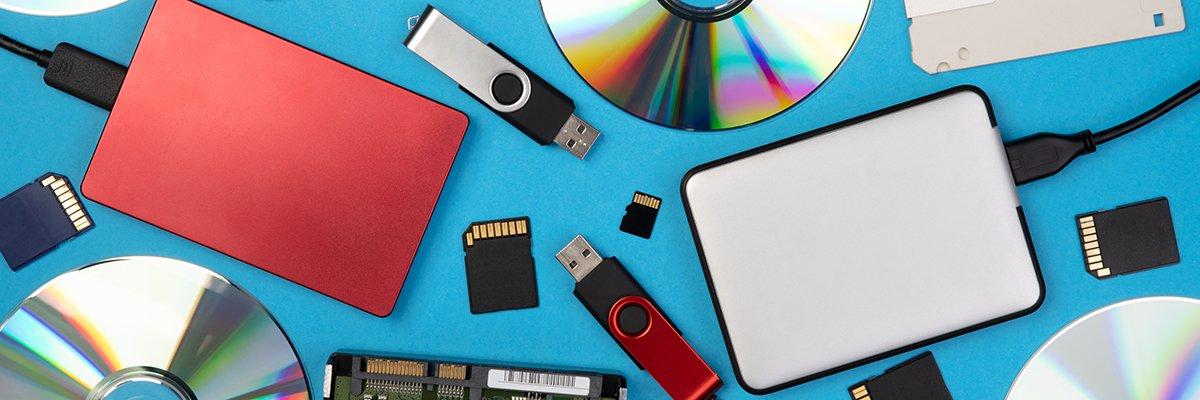
The past 12 months saw flash storage nudge into areas from which it had hitherto been absent. In particular, this was because of the availability of denser – and therefore cheaper per-gigabyte (GB) – quad-level cell (QLC) flash storage into array markets and use cases that were once considered nearline.

Alongside this, we saw the price-per-GB of flash drop towards the level of spinning disk hard disk drives (HDDs) then rebound rapidly as memory manufacturers chased profitability. Meanwhile, the keenest of flash storage advocates predicted the demise of the hard drive and the imminent victory of the all-flash datacentre.

In this article, we define enterprise flash storage, look into its QLC and triple-level cell (TLC) variants, the benefits of non-volatile memory express (NVMe) flash, and examine the pros and cons of flash versus HDD in terms of cost, performance, flash in the cloud, and the likelihood (or otherwise) of the all-flash datacentre.

What is enterprise flash storage?

Enterprise flash storage refers to systems that comprise multiple flash drives housed in datacentre rack-mounted array form factor products.

In enterprise flash storage arrays, the capacity of many drives is aggregated, with access to storage media governed by controller hardware.

The controller is compute that powers the intelligence needed to handle input/output (I/O) from hosts to the storage, decision-making over allocation of data to media, but also in flash arrays to carry out maintenance tasks such as wear levelling, garbage collection, and so on.

Enterprise flash storage array capacities run from tens of terabytes (TB) to many petabytes (PB). As with HDD-based arrays, access to storage can be block (for performance-hungry database use cases, for example), file (for general use and unstructured data) or object (for unstructured data also).

What is QLC flash storage?

QLC is the latest generation of flash storage media. QLC stands for quad-level cell. That means that every cell in the flash chip can store four bits of data using 16 states.

That means it can store more data in the same space than TLC flash, which is also widely available. Previously widely available were single-level cell (SLC) flash and multi-level cell (MLC, meaning two states), but these have been largely superseded now.

At the start of 2024, most enterprise storage arrays are built with TLC drives for general-purpose and mission-critical use cases. But QLC has edged into the mainstream and gained traction for unstructured data workloads, in particular with key enterprise storage array makers adding QLC-based products in the past year or so.

As manufacturers increase the number of possible states per cell, storage density increases and the cost of storage per GB decreases. But, as storage density increases in terms of cell capacity, issues can arise that can limit the endurance of flash media.

What is NVMe flash?

Non-volatile memory express (NVMe) is a protocol developed especially for use with flash storage. Prior to NVMe, flash drives used transport protocols that originated during the HDD era, namely Serial Advanced Technology Attachment (SATA) and Serial-Attached SCSI (SAS). In fact, these are still in use and arrays that use drives with such connectivity (2.5in and 3.5in form factor) are sold by the big storage suppliers.

But NVMe is at the forefront now for flash drive performance. NVMe’s key innovation was to optimise queues and buffers for use with flash, which improved performance many times over.

As a follow-on, suppliers then developed ways of allowing NVMe connectivity across physically more distant connections across the datacentre. Such NVMe-over-fabrics technologies include the ability to carry NVMe via Ethernet, Infiniband, TCP, RDMA (ie, memory-to-memory connectivity) and more.

What is HDD?

Hard disk drives (HDDs) that rely on magnetic read/write heads and mechanically spinning disks have been around for decades, with flash a competitor that has emerged in the past 10 years or so.

As with flash, HDDs can be aggregated into datacentre rack-mounted array products and the capacity of multiple drives pooled for enterprise users. In fact, HDD-based arrays long preceded enterprise flash arrays and are still widely used.  

What’s the difference in performance between flash and HDD?

When we look at flash versus disk, the key thing that stands out is that flash is fast – many times faster than spinning disk HDD.

Flash drives offer lower latency, with access times down to low milliseconds, or even microseconds, compared with the multiple milliseconds of spinning disk, particularly for reads. That means enterprise flash can also offer vastly more input/output operations per second (IOPS) when aggregated into a storage array.

In throughput terms, flash offers gigabit-per-second (Gbps) rates four or five times quicker than HDD.

Such rapidity has been the key draw for enterprise flash storage and is a result of the lack of moving parts. With spinning platters, HDD is limited by physics in ways that solid-state storage is not.

In terms of capacities, HDD is available in up to around 22TB units. And while some flash drives have been marketed that run to 60-plus terabytes, they generally come in smaller sizes, but part of that is because of cost. 

What’s the cost difference between flash and HDD?

In terms of per-GB cost at drive level, flash costs more than spinning disk.

Flash prices spiked significantly in late 2023 and the early months of 2024 as manufacturers throttled back production in an effort to raise prices and achieve profitability.

Solid-state drive (SSD) prices per gigabyte reached an average of $0.095/GB by April 2024, which was a rise of 26.67% since autumn 2023.

But, flash drive prices then fell steadily over the first three quarters of 2024 to an average of $0.085 per gigabyte (GB) in September 2024.

In October 2023, flash had averaged $0.075/GB while HDD averaged $0.05/GB for SAS and $0.035/GB for SATA drives.

Average spinning disk (SAS and SATA) hard drive prices held steady during the six months to September 2024 at $0.039 per gigabyte. That figure was $0.041/GB in early April.

For a customer that planned to deploy 20TB of flash, based on those prices, it would have cost $1,500 in October 2023, $1,900 in April 2024, and $1,700 in September 2024. That compares to the equivalent for spinning disk of $850 in October 2023 and $780 in September 2024.

Will flash kill HDD? How much longer for HDD?

In particular, Pure Storage has declared HDDs will be dead by 2028, with its flash products the chief agent in the cull, and all owing to its ability to aggregate much more flash capacity on its proprietary modules than occurs on commodity flash drives.

With flash module sizes of up to 300TB by 2026 promised by Pure, it contends that spinning disk will be commercially unviable.

Meanwhile, companies such as Panasas, which specialises in storage for unstructured data, point to hyperscaler datacentres’ overwhelming use of spinning disk in ratios up to 90/10 against flash. Panasas argues that there’s still a five-times differential between the lowest-cost flash and HDD, and that for most, something like the hyperscaler solution is optimal.  

When can you use flash and HDD in the cloud?

Enterprise users can also specify flash storage and spinning disk in the cloud. It is more likely in most cases that cloud storage will be specified by performance and cost criteria, in which case the customer may never know what media underlies it.

But it is possible also to specify flash storage in the cloud and the three largest hyperscalers – Amazon Web Services (AWS), Microsoft Azure and Google Cloud Platform (GCP) – have solid-state storage options that mix cost, capacity and performance. 

The hyperscalers all offer flash storage to support compute with service levels based on capacity and IOPS per volume that range from general-purpose to premium levels aimed at specific workloads (eg, SQL, Oracle, SAP Hana) and environments (eg, Windows, Lustre, MacOS).

There are also options aimed at flash for file storage and flash storage from named suppliers, such as Azure’s NetApp Files.

What is the all-flash datacentre?

For about a decade, the idea of the all-flash datacentre has been discussed. The all-flash datacentre replaces HDD and other media such as tape with flash storage.

Driving it is the continued decrease in the cost of flash storage – as with QLC flash – but also the advantages of flash in terms of rapid access. The latter becomes more relevant as customers want to run analytics on bigger subsets of their data.

So, for example, where backups may previously have been held on nearline media such as slower HDDs, advocates of flash for such use cases point to the ability to run artificial intelligence (AI) on large customer datasets and to gain value therefrom.

Also, with backups as an example, the idea of being able to recover quickly from flash media in case of a ransomware attack is another use case touted by all-flash datacentre boosters. 

When will the all-flash datacentre arrive?

While enthusiastic suppliers of flash storage such as Pure talk down the obstacles to the all-flash datacentre, analysts point to the spread of (especially QLC) flash into secondary workloads but not necessarily all use cases, with spinning disk likely to retain its usefulness for some time for some datasets.

Meanwhile, HDD suppliers such as Toshiba say around 85% of all data is still on spinning disk. That fact, it says, is not likely to change rapidly, not least because the flash capacity to replace it doesn’t exist.

Source

Posted on

We may now know when Apple Intelligence will get Google Gemini integration

iOS 18.2 will finally bring OpenAI’s wildly popular ChatGPT to Siri thanks to integration with Apple Intelligence. This partnership will make Apple’s AI platform even more clever by upgrading Writing Tools and beefing up Siri with ChatGPT’s most recent large language models.

While deeper integration isn’t expected until iOS 18.4, when Siri will be able to control people’s iPhones, there’s a lot of anticipation about this partnership between Apple and OpenAI. Here’s how Apple explains it:

With ChatGPT from OpenAI integrated into Siri and Writing Tools, you get even more expertise when it might be helpful for you — no need to jump between tools. Siri can tap into ChatGPT for certain requests, including questions about photos or documents. And with Compose in Writing Tools, you can create and illustrate original content from scratch.

You control when ChatGPT is used and will be asked before any of your information is shared. Anyone can access ChatGPT for free, without creating an account. ChatGPT subscribers can connect accounts to access paid features within these experiences.

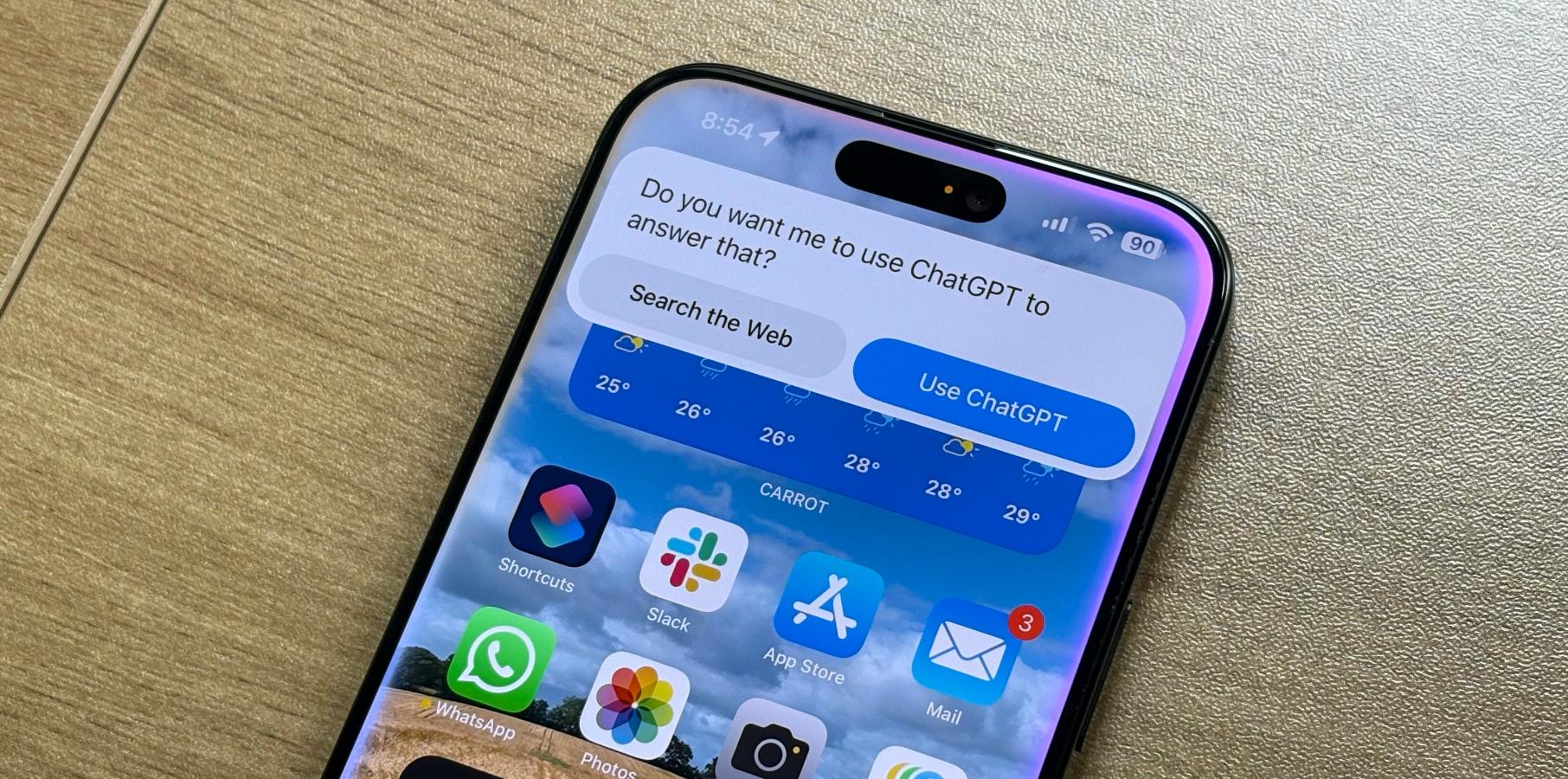
iOS 18.2 ChatGPT integration with Apple IntelligenceiOS 18.2 ChatGPT integration with Apple Intelligence Image source: José Adorno for BGR

However, this isn’t the only LLM that will be available with its AI platform. Back in June, during the WWDC 2024 keynote, Apple announced that Apple Intelligence would work with third-party LLMs. While this partnership starts with ChatGPT, more companies will be able to join the party later.

So far, Bloomberg has reported that Antropic’s Claude and Google’s Gemini were working on this integration. Apple’s Craig Federighi already stated that he would love to have Gemini integration with Apple Intelligence.

Tech. Entertainment. Science. Your inbox.

Sign up for the most interesting tech & entertainment news out there.

By signing up, I agree to the Terms of Use and have reviewed the Privacy Notice.

Now in his latest Power On newsletter, Bloomberg‘s Mark Gurman gave a tidbit on when to expect Google Gemini integration in Apple Intelligence. With an official app recently released for iPhone users, Gurman expects Google Gemini to be available with Apple Intelligence sometime next year. That’s obviously bad news if you’re eagerly awaiting the ability to use Gemini in place of ChatGPT within Apple Intelligence, though we’re not sure how many people out there fall into that category.

The supposed delay is probably due to Apple’s deal with OpenAI. Since Cupertino doesn’t pay OpenAI for this integration, the reporter thinks Apple gave it a “nice window of exclusivity,” which is why “I wouldn’t expect the Gemini chatbot to arrive in iOS until next year.”

Source