Posted on

Nvidia unveils new GeForce RTX 5090, RTX 5080, RTX 5070 Ti, and RTX 5070 graphics cards at CES 2025

  • Nvidia’s RTX 5000 series cards have been announced
  • RTX 5090 costs $1,999 / £1,999 / AU$4,039
  • 5090 and 5080 go on sale January 30

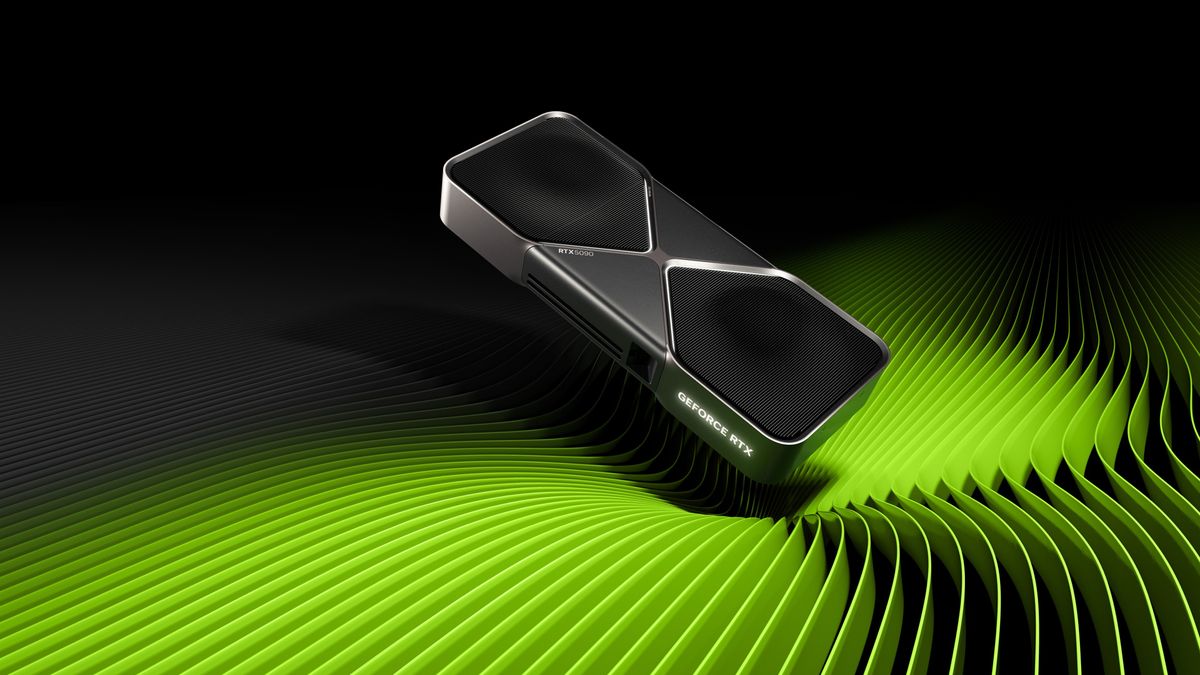
After months of speculation and anticipation, Nvidia finally lifted the cover off its latest lineup of consumer graphics cards, the Nvidia GeForce RTX 5000 series, starting with the flagship RTX 5090.

Nvidia CEO Jensen Huang made the announcement at a packed arena at Las Vegas’s Mandalay Bay resort and casino, a headline event that topped off a day of major reveals from rivals AMD and Intel at CES 2025.

However, the Nvidia RTX 5000 series graphics cards were always going to steal the show, no matter what anyone else announced, so Huang naturally had the limelight on Monday night as he unveiled our first definitive look at the RTX 5090 – amongst other new GPUs and fancy AI features.

Meet Nvidia’s new flagship GPU, the Nvidia Tita— I mean the Nvidia RTX 5090

It might not be called the Nvidia Titan RTX, but the RTX 5090 might as well be, given the specs on offer and its downright scandalous MSRP of $1,999 (£1,999 / AU$4,039) – not a generational price bump from the RTX 4090, granted, but still a ludicrous amount of money for an ostensibly ‘consumer’ graphics card.

With an astounding 92 billion transistors, next-gen Tensor Cores and Ray Tracing Cores, and more than double the AI processing speed of the 4090, the RTX 5090 will unquestionably be the most powerful consumer graphics card on the planet, and it won’t even be close.

Pair the GPU specs with 32GB of shiny new GDDR7 VRAM on a massive 512-bit memory bus and PCIe 5.0 x16 interface, it has an astonishing 1792 GB/s of memory bandwidth, with a memory speed upwards of 23.8 Gbps.

An Nvidia Blackwell GPU die render.

(Image credit: Nvidia)

Given its specs, not only will this graphics card absolutely blow through native 4K gaming (without upscaling) at the highest settings (including ray tracing), it’s arguably the first real 8K graphics card given the amount of VRAM it has and its memory bandwidth, two key specs that allow a graphics card to process the substantially larger 8K texture files needed for gaming at that resolution.

{ window.reliablePageLoad.then(() => { var componentContainer = document.querySelector(“#slice-container-newsletterForm-articleInbodyContent-TfGrT9wxDQfRSFGMn3gKX9”); if (componentContainer) { var data = {“layout”:”inbodyContent”,”header”:”Get daily insight, inspiration and deals in your inbox”,”tagline”:”Sign up for breaking news, reviews, opinion, top tech deals, and more.”,”formFooterText”:”By submitting your information you agree to the Terms & Conditions and Privacy Policy and are aged 16 or over.”,”successMessage”:{“body”:”Thank you for signing up. You will receive a confirmation email shortly.”},”failureMessage”:”There was a problem. Please refresh the page and try again.”,”method”:”POST”,”inputs”:[{“type”:”hidden”,”name”:”NAME”},{“type”:”email”,”name”:”MAIL”,”placeholder”:”Your Email Address”,”required”:true},{“type”:”hidden”,”name”:”NEWSLETTER_CODE”,”value”:”XTR-D”},{“type”:”hidden”,”name”:”LANG”,”value”:”EN”},{“type”:”hidden”,”name”:”SOURCE”,”value”:”60″},{“type”:”hidden”,”name”:”COUNTRY”},{“type”:”checkbox”,”name”:”CONTACT_OTHER_BRANDS”,”label”:{“text”:”Contact me with news and offers from other Future brands”}},{“type”:”checkbox”,”name”:”CONTACT_PARTNERS”,”label”:{“text”:”Receive email from us on behalf of our trusted partners or sponsors”}},{“type”:”submit”,”value”:”Sign me up”,”required”:true}],”endpoint”:”https://newsletter-subscribe.futureplc.com/v2/submission/submit”,”analytics”:[{“analyticsType”:”widgetViewed”}],”ariaLabels”:{}}; var triggerHydrate = function() { window.sliceComponents.newsletterForm.hydrate(data, componentContainer); } if (window.lazyObserveElement) { window.lazyObserveElement(componentContainer, triggerHydrate); } else { triggerHydrate(); } } }).catch(err => console.error(‘%c FTE ‘,’background: #9306F9; color: #ffffff’,’Hydration Script has failed for newsletterForm-articleInbodyContent-TfGrT9wxDQfRSFGMn3gKX9 Slice’, err)); }).catch(err => console.error(‘%c FTE ‘,’background: #9306F9; color: #ffffff’,’Externals script failed to load’, err)); ]]>

Sign up for breaking news, reviews, opinion, top tech deals, and more.

Of course, few games even support 8K resolution, much less have developers and artists effectively wasting their time on texture files so large that only a rare few will ever see them as intended. But there’s no doubt that if 8K gaming ever becomes a thing, the RTX 5090 will be more than ready to meet the challenge.

Of course, that doesn’t really address the fact that this is no longer a gaming GPU— not anymore, and not at this price. And if (well, when) scalpers get involved, it’s going to be far worse.

After all, we called the $1,199 price tag on the flagship RTX 2080 Ti ‘almost obscene’ in our review three GPU generations ago. With no generational price drop from the already wildly expensive RTX 4090, it’s not hard to argue that the RTX 5090 is purely a professional workstation GPU, meant to process raw 4K video streams or render lengthy 3D generated sequences at Pixar or some other animation studio. As fun as it might be, this is not a graphics card meant to play Wolfenstein 3D.

The Nvidia GeForce RTX 5090 is set to go on sale for $1,999 on January 30.

The Nvidia GeForce RTX 5080 will launch alongside the 5090

In a move that has been telegraphed for a while, the Nvidia GeForce RTX 5080 will also be part of the first wave of Nvidia’s new graphics cards to hit store shelves later this month.

The Nvidia RTX 5080 GPU on a green background.

(Image credit: Nvidia)

The RTX 5080 looks to be almost exactly half of the RTX 5090 in terms of specs. Although Nvidia has yet to release a comprehensive spec sheet for the new GPUs – a strange move, though likely one designed to avoid distracting from all the new AI features – we know that the 5080 has 1,801 AI TOPS (trillion operations per second), a little under half the RTX 5090’s 3,352.

It also has new GDDR7 VRAM as well, with a pool of 16GB on a 256-bit memory bus for 960 GB/s of memory bandwidth – again, basically half the specs of the 5090’s VRAM. Its memory speed is a blazing fast 30 Gbps, which helps make up for the narrower memory bus.

The card will go on January 21st with an MSRP of $999 (expected £999 / AU$2,019), which again matches the launch price of the previous-gen RTX 4080.

Nvidia RTX 5070 and RTX 5070 Ti also unveiled – but you’ll have to wait

The Nvidia RTX 5070 and 5070 Ti also debuted on Monday night, likely an effort from Nvidia to reassure gamers that they haven’t forgotten about the midrange market – especially with its main rival AMD refocusing to target the budget and midrange space exclusively with its new GPUs.

Again, we don’t have the breadth of specs we’d hoped to see at this point, but we do know that the RTX 5070 Ti offers 1,406 AI TOPS while the RTX 5070 has 988 TOPS. As a rough point of comparison, Apple‘s new M4 chip caps out at around 38 TOPS – so a dedicated GPU is arguably still a necessity for serious AI workloads.

Over on the VRAM front, the RTX 5070 Ti’s memory profile is nearly identical to the RTX 5080, with 16GB GDDR7, a memory speed of 28 Gbps on a 256-bit bus, and a memory bandwidth of 896 GB/s, making it more than ready for 4K gaming. Meanwhile, the RTX 5070 has 12GB of GDDR7 at 672 GB/sec – still faster than the RTX 4070, though the same base amount of VRAM.

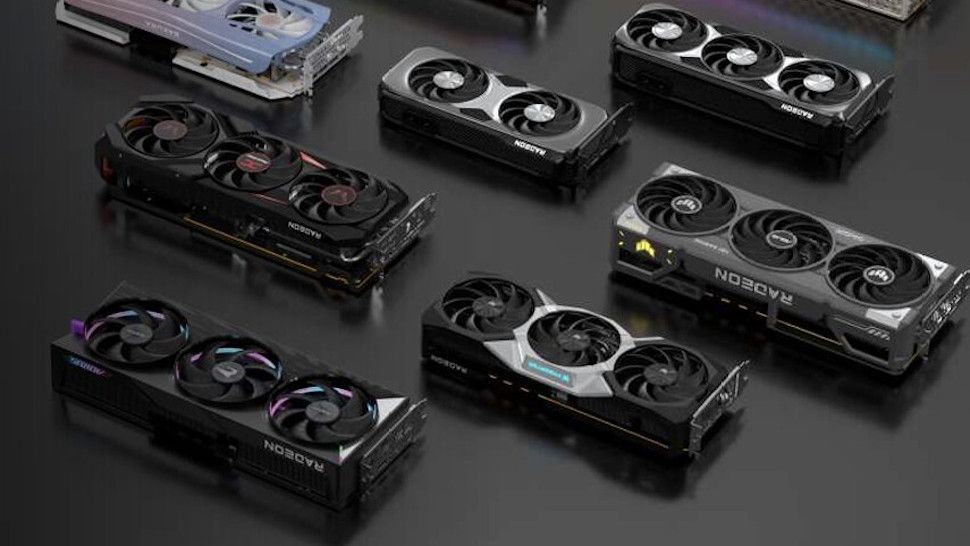
A selection of third-party RTX 5000 GPUs.

(Image credit: Nvidia)

The Nvidia GeForce RTX 5070 and 5070 Ti will go on sale in February – date to be confirmed – with respective retail prices of $549 (£549 / AU$1,509) and $749 (£749 / AU$1,109). This is actually quite pleasing to see, since the RTX 4070 retailed at $599 – meaning we finally have a generational price drop from Nvidia.

DLSS 4, Reflex 2, and more

In addition to the new hardware, Nvidia also showcased a selection of upgraded AI features debuting with the ‘Blackwell’ RTX 5000 generation of graphics cards.

Chief among these, of course, was DLSS 4 – the latest update to Nvidia’s resolution upscaling software, which allows for better framerates in-game by rendering the game at a lower resolution and upscaling it to a target resolution (say, 1080p to 4K) using AI.

DLSS 4 will also feature ‘Multi Frame Generation’, an improved version of the Frame Generation tech seen in the RTX 4000 generation, which uses AI to extrapolate and produce additional frames and ‘insert’ them between ordinary rendered frames to boost framerate. Unfortunately for users on older GPUs, only the regular DLSS 4 upscaling will be available on older cards; Multi Frame-Gen will be exclusive to RTX 5000 cards.

We’re also getting Nvidia Reflex 2, a new version of the Reflex software for reducing input latency in games. Reflex 2 will feature ‘Frame Warp’, which aims to proactively insert generated frames by reading mouse input before it even reaches the display – this can reportedly reduce input latency by as much as 75%.

RTX 5000 is also bringing AI powers to shader tech with new RTX Neural Shaders. This uses small AI networks in the GPU’s programmable shader units to deliver ‘film-quality’ shading and lighting in-game. ‘RTX Neural Faces’, along with new RTX tech for hair and skin rendering and animation, promises to deliver more realistic humans than ever before.

Lastly, we can expect to see more of Nvidia ACE with this generation of RTX GPUs – the improved AI capabilities of the Blackwell generation mean that projects like Nvidia’s (slightly creepy) AI NPC tech can be implemented on a wider level, with ACE-powered characters planned to appear in a handful of titles including PUBG: Battlegrounds and InZOI.

You might also like…

Source

Posted on

iOS 19 will reportedly feature a completely redesigned Camera app

We’re still waiting to see the final form of iOS 18 as Apple Intelligence continues its slow rollout, but that has not stopped leakers from moving on to Apple’s next big software update. On Friday, Front Page Tech host Jon Prosser shared new details about iOS 19 in his latest video, including a look at the redesigned Camera app reportedly in the works.

Prosser says that he got an advance look at the refreshed Camera app in action, but in order to protect his source at Apple, he wasn’t able to share that video directly. Instead, he and his team recreated the video from scratch, which you can watch below:

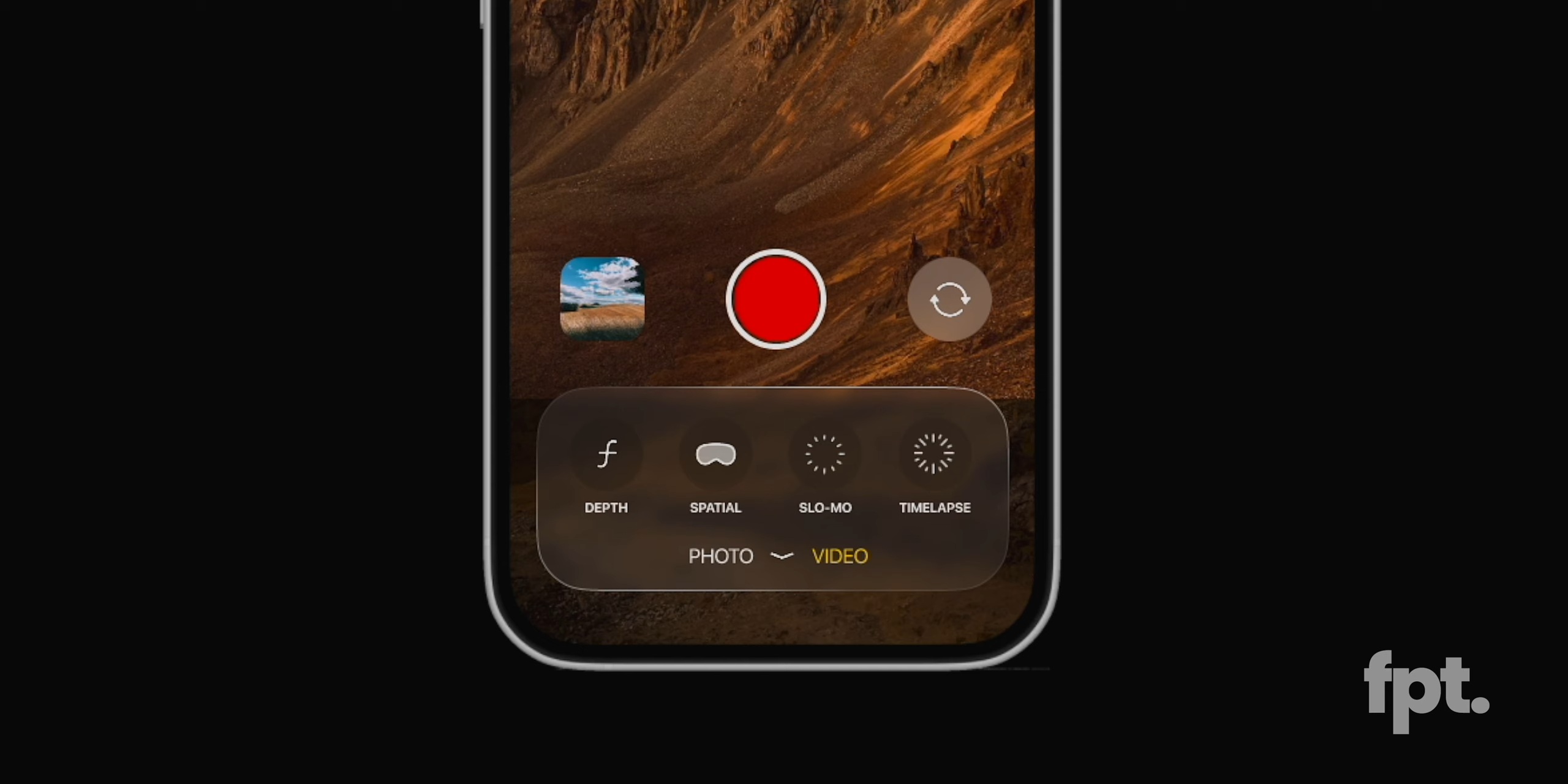
As the video shows, the iOS 19 version of the app is far less busy than the current Camera app. Rather than showing you all your options from the jump, the new app condenses the modes into two menus: Photo and Video. Here’s what each menu has to offer:

  • Photo: Depth, Spatial, Pano, Style, Aspect, Exposure, Timer
  • Video: Depth, Spatial, Slo-mo, Timelapse, Action, Exposure

While the video menu is open at the bottom of the screen, a second menu will appear at the top, giving users the ability to change the resolution and frame rate.

Tech. Entertainment. Science. Your inbox.

Sign up for the most interesting tech & entertainment news out there.

By signing up, I agree to the Terms of Use and have reviewed the Privacy Notice.

Prosser suspects that the Camera app might just be the tip of the iceberg for iOS 19. The visual language seems to mirror that of Apple Vision Pro’s visionOS. He speculates that we’re going to see a full-scale redesign in iOS 19, taking cues from visionOS.

He also admits that there’s a chance these will simply be flourishes in the update as opposed to the foundation of a completely new look for iOS. Major software leaks are hard to come by with Apple, so we might have to wait until September to find out.

Source

Posted on

Nato membership boosts Finnish civil and military tech startups

Finland’s fast-expanding defence sector is witnessing a surge in tech startups chasing new business opportunities on the back of the country’s accession to the North Atlantic Treaty Organisation (Nato) in April 2023.  

The so-called Nato dividend is causing the country’s defence sector to experience accelerated growth as more companies capitalise on membership to innovate, grow sales and pursue new avenues of opportunity.  

Buttressed by Nato membership, Finnish tech startups that offer civil and military services are generating comparatively higher growth rates and stronger investor appeal than more traditional defence companies, said Keith Bonnici, investment director at Suomen Teollisuussijoitus (Tesi), a state-owned agency that takes equity-linked financial positions in tech startups and growth companies.  

“The rise in demand for growth capital among startups is tied to the boom in sales in this sector, as well as the sharp increase in export licences,” he said. “As a result, production needs to keep pace with higher demand. Finland remains competitive in the defence industry domain. Our indigenous players have some of the world’s largest defence contractors as customers, as well as Nato members’ defence forces.”  

A Tesi survey released in September 2024 described 144 of the 368 companies currently operating in Finland’s defence sector as “rapidly growing startups and growth companies”.

“We estimate that the annual revenue growth rate of technology companies that offer civilian and military products is as high as 30% to 40%,” said Bonnici. “This clearly exceeds growth rates being achieved by traditional defence companies. The level of growth we are seeing explains why private equity and venture capital investors favour these dual-use companies. Over one-third of the dual-use firms surveyed are owned by private equity and venture capital investors.” 

The Tesi survey found that venture capital financing was the largest individual source of capital investment for companies offering dual-use defence products during the first three quarters of 2024. Moreover, the survey identified the Finnish state as a significant player in the sector, with state-affiliated companies having invested in over 40 defence industry firms since 2014.

Record sales forecast

Buoyed by the “Nato dividend” and bolstered confidence among dual-product tech startups, Finland’s defence sector is on course to deliver a record surge in export sales by 2030, said Bonnici.    

“Finland’s total defence related exports amounted to €2.6b in 2023,” he added. “Based on the latest data and trends, there is every confidence to believe that total annual exports may well reach the €10bn milestone by 2030.”

Helsinki-based Varjo Technologies has expanded development of dual products to reflect a heightened demand for its virtual reality (VR) pilot flight training wares.

Finland’s new status in Nato has substantially improved its ability to achieve stronger international growth, said chief executive Timo Toikkanen. “Nato membership has created new opportunities to grow sales of our VR flight training products,” he said. “It makes it easier to build a presence in the civilian and defence aerospace sectors.”

The Nato factor came into play for Varjo in August 2024, when the US Federal Aviation Administration (FAA) approved the use of its VR headsets to support helicopter pilot training. VR technology is being more broadly tested by Nato-aligned air forces that view it as a cost-efficient option to supplement or replace traditional pilot training in aircraft and large simulator room environments.  

In advance of certification by the FAA, Varjo’s VR-headset hardware had been previously authorised for dual defence and civilian use by the European Aviation Safety Authority, in connection with Swiss group Loft Dynamics’ helicopter pilot flight simulation training device.

Historically, dual-product startups faced serial hurdles trying to generate significant levels of investor interest from defence-shy private equity funds and venture capital firms, said Toikkanen. “Being a dual-product tech company and supplier to the defence industry is nowadays seen not only as acceptable, but even a good thing from the perspective of investors,” he added.

VR investments

Toikkanen attributed the €34m operating loss reported by Varjo in 2023 to the company’s need to make large upfront investments to develop its fourth-generation VR headset. Varjo is hoping to raise next-stage funding of €8m in 2024–2025.   

The dual-product business opportunities flowing from Nato membership are also boosting sales confidence at Saab, the Nordic region’s largest defence technology group. 

Saab reorganised a number of core units under new leadership after Sweden’s membership of Nato was ratified in March 2024. Sweden’s accession to Nato has enhanced the company’s belief in sustainable growth through technology-led projects and capital investments, said Micael Johansson, Saab’s CEO. “We are moving towards establishing a production presence in Ukraine in collaboration with defence and technology companies there. It may be a year or more before this plan takes shape,” he said.  

Saab is hoping to find technology partners in Ukraine to develop and produce a wide range of defence and security wares, including next-generation sensors to leverage Ukraine’s existing drone capabilities. 

Ukraine is exploring the possibility of partnering Saab to produce a range of high-grade military equipment, including Command, Control, Communications, Computers and Intelligence (C4I) and AI/GPS battle management systems in addition to advanced data fusion technologies.

Saab’s new generation of AI and machine learning (ML) product offerings have attracted interest across the Nato member countries. In September last year, it secured a contract to deliver Near Real Time (NRT) AI/ML models to US cyber security and cloud group ECS Federal.

ECS is deploying Saab’s NRT AI/ML technology as part of its input to the US Department of Defense’s (DoD) Maven Program, which is designed to process imagery and full-motion video from drones and automatically detect potential targets.

Joint defence

The growth path to Nato contracts for dual-product firms in Finland and Sweden was greatly enhanced in September 2024, when Nordic governments launched a Regional Joint Defence Concept.  

The agreement, which is managed by the Nordic Defence Cooperation (Nordefco), will synchronise key areas of military cooperation including capacity building, linked military operations, defence technology development and joint products procurement schemes, on a regional level.

Established in 2009, Nordefco serves as a coordinating agency for cross-border defence cooperation between the five Nordic states.

Regionally, the future growth potential of dual-product and defence tech startups across the Nordics is further boosted by Finland and Sweden’s Limited Partner status in the Nato Innovation Fund (NIF). The NIF is financed by 24 of Nato’s 32 member states.  

Capitalised at €1bn, the NIF primarily invests in deep tech defence and security companies across alliance states, while taking a special investment interest in firms developing AI, ML and space technologies.  

“The Nato Innovation Fund is a hugely influential tool to drive technological innovation and development throughout Sweden’s defence and security industries,” said Pål Jonson, Sweden’s defence minister. “For Sweden, it’s an additional benefit of being part of Nato.”

Source

Posted on

Leaker corroborates details of Apple’s major iPhone 17 Pro camera upgrade

Ahead of the iPhone 17 release later this year, another leak corroborates a well-known rumor that all iPhone 17 Pro models will have the same camera resolution. This time, according to the Weibo account Digital Chat Station (via MacRumors), the upcoming iPhone Pro models will feature a 1/1.3″ 48MP Fusion lens, a 48MP Ultra Wide lens, and an upgraded 48MP Tetraprism telephoto lens.

The leaker says that the main and telephoto cameras of the iPhone 17 Pro models will also feature hybrid glass-plastic lenses. That said, Apple will finally finish its long transition to all lenses supporting 48MP resolution. Besides that, all iPhone 17 Pro models will have a 24MP front camera, a long-overdue upgrade.

These features have all been rumored in the past few months. In June, analyst Ming-Chi Kuo said that the iPhone 17 Pro Max would feature an upgraded 48MP Tetraprism camera, while analyst Jeff Pu wrote in August that all iPhone 17 models would have a 24MP front-facing camera.

With 48MP cameras, Apple could finally unveil upgraded recording modes, such as the long-awaited 8K recording. In addition, it would bring a more seamless experience when switching between the three cameras.

Tech. Entertainment. Science. Your inbox.

Sign up for the most interesting tech & entertainment news out there.

By signing up, I agree to the Terms of Use and have reviewed the Privacy Notice.

iPhone 17 latest rumors

While the iPhone 16 models were an “S” upgrade, Apple is expected to revamp its smartphone lineup with the upcoming iPhone 17. The latest leaks reveal the company wants to ditch the iPhone Plus for a new Air model. While it was expected to be underpowered and overpriced, it seems Apple will experiment with this device with an ultrathin design to introduce it later on the Pro lineup.

With the iPhone 17 Pro, the company is expected to optimize the processors for more challenging Apple Intelligence tasks, and the software will be more mature for those applications. Apple is expected to add more RAM to the Pro models, and the new design should make more people upgrade to these upcoming models.

Source

Posted on

Think Ryzen 9000 CPUs are still a bit pricey? AMD just revealed a cheaper Zen 5 chip that could be perfect for your budget PC build

  • AMD has announced a new Ryzen 5 9600 processor at CES 2025
  • This is a slightly slower version of the already existing Ryzen 5 9600X
  • It has a boost speed that’s 200MHz slower, but it’ll be cheaper – though we don’t have a launch price yet

AMD will doubtless be launching a few fresh Zen 5 processors this year – there are only four models in the Ryzen 9000 range thus far, after all – and CES 2025 has seen the company quietly introduce a new CPU to take the title of the most affordable chip.

This is the Ryzen 5 9600, a slightly tamed version of the existing Ryzen 5 9600X, dropping the ‘X’ from the name.

What does that mean in practice? The Ryzen 9600 is exactly the same as the 9600X in terms of its cores and cache (it’s a 6-core, 12-thread chip), the only difference is slightly reduced clock speeds.

The Ryzen 9600 processor drops the base clock from 3.9GHz to 3.8GHz, and the boost speed is reduced from 5.4GHz to 5.2GHz.

This processor can still be overclocked, it’s worth noting – unlike Intel’s non-K silicon, Ryzen CPUs of the non-X variety can be juiced up with some BIOS tinkering – but obviously don’t expect as much room to push clocks with the vanilla flavor of the 9600.

Sadly, we don’t yet have a release date, and oddly, not even an official price, and it appears AMD is keeping this launch on the down-low for now. That’s possibly a hint that the processor may not arrive in the very near future, but it shouldn’t be too far out now that it’s been officially announced.

AMD Ryzen 5 9000 Series CPU Box

(Image credit: AMD)

Analysis: Coolly cheap (with any luck)

It’s good to see a new value champ for the Ryzen 9000 range, and we hope that AMD doesn’t hang around too long with getting the Ryzen 9600 onto shelves, especially since super-budget Ryzen 3 chips seem to be completely AWOL nowadays. It’ll be a useful option for those looking to build (or buy) a more budget-conscious PC, for sure, particularly as there’ll be some extra value proposition because AMD has put in a further twist here.

{ window.reliablePageLoad.then(() => { var componentContainer = document.querySelector(“#slice-container-newsletterForm-articleInbodyContent-xMmnHSVdtHBCo9eKGtEU77”); if (componentContainer) { var data = {“layout”:”inbodyContent”,”header”:”Get daily insight, inspiration and deals in your inbox”,”tagline”:”Sign up for breaking news, reviews, opinion, top tech deals, and more.”,”formFooterText”:”By submitting your information you agree to the Terms & Conditions and Privacy Policy and are aged 16 or over.”,”successMessage”:{“body”:”Thank you for signing up. You will receive a confirmation email shortly.”},”failureMessage”:”There was a problem. Please refresh the page and try again.”,”method”:”POST”,”inputs”:[{“type”:”hidden”,”name”:”NAME”},{“type”:”email”,”name”:”MAIL”,”placeholder”:”Your Email Address”,”required”:true},{“type”:”hidden”,”name”:”NEWSLETTER_CODE”,”value”:”XTR-D”},{“type”:”hidden”,”name”:”LANG”,”value”:”EN”},{“type”:”hidden”,”name”:”SOURCE”,”value”:”60″},{“type”:”hidden”,”name”:”COUNTRY”},{“type”:”checkbox”,”name”:”CONTACT_OTHER_BRANDS”,”label”:{“text”:”Contact me with news and offers from other Future brands”}},{“type”:”checkbox”,”name”:”CONTACT_PARTNERS”,”label”:{“text”:”Receive email from us on behalf of our trusted partners or sponsors”}},{“type”:”submit”,”value”:”Sign me up”,”required”:true}],”endpoint”:”https://newsletter-subscribe.futureplc.com/v2/submission/submit”,”analytics”:[{“analyticsType”:”widgetViewed”}],”ariaLabels”:{}}; var triggerHydrate = function() { window.sliceComponents.newsletterForm.hydrate(data, componentContainer); } if (window.lazyObserveElement) { window.lazyObserveElement(componentContainer, triggerHydrate); } else { triggerHydrate(); } } }).catch(err => console.error(‘%c FTE ‘,’background: #9306F9; color: #ffffff’,’Hydration Script has failed for newsletterForm-articleInbodyContent-xMmnHSVdtHBCo9eKGtEU77 Slice’, err)); }).catch(err => console.error(‘%c FTE ‘,’background: #9306F9; color: #ffffff’,’Externals script failed to load’, err)); ]]>

Sign up for breaking news, reviews, opinion, top tech deals, and more.

The Ryzen 9600 will come with a Wraith Stealth cooler, saving PC builders a bit of money because they won’t need to buy a separate CPU cooling solution. No other Ryzen 9000 processors come with AMD’s own cooler bundled – gone are the days when every Ryzen chip came packaged with a Wraith air cooler.

As for the pricing and where that could end up, we have to bear in mind that the Ryzen 9600X arrived with an MSRP of $279 / £269.99 / AU$479, so you might think that the vanilla Ryzen 9600 could come in at $229 / £219 / AU$399, maybe? After all, that’s the price at which AMD launched the Ryzen 7600.

However, AMD dropped the price of the 9600X compared to its predecessor, and also given that the 9600X is now at around $220 to $240 at big retailers in the US, the hope is you might be able to pick up the 9600 for closer to $200 or even less – fingers crossed.

This could help generate more goodwill around the Ryzen 9000 series with consumers – as the Zen 5 range got off to a shaky start – and ensure this is a great option for a budget PC build (alongside the new more affordable B840 and B850 AM5 motherboards which also launched at CES 2025).

Via Tom’s Hardware

TechRadar will be extensively covering this year’s CES, and will bring you all of the big announcements as they happen. Head over to our CES 2025 news page for the latest stories and our hands-on verdicts on everything from 8K TVs and foldable displays to new phones, laptops, smart home gadgets, and the latest in AI.

And don’t forget to follow us on TikTok and WhatsApp for the latest from the CES show floor!

You might also like

Source

Posted on

AMD blames Ryzen 9800X3D stock shortage on Intel’s ‘horrible’ Arrow Lake launch, rubbing salt in Team Blue’s CPU wounds

  • AMD’s Frank Azor has fired shots at Intel’s Arrow Lake desktop CPUs
  • He called the Core Ultra 200S CPUs ‘horrible’ and said this increased demand for the Ryzen 9800X3D
  • That higher demand has led to stock woes, Azor claims, and inventory issues won’t likely ease anytime soon

An AMD executive fired flak at Intel, calling Team Blue’s latest Arrow Lake desktop chips ‘horrible’ no less.

The quote came from a roundtable with AMD execs at CES 2025, where our sibling site, Tom’s Hardware, asked about the ongoing shortage of Ryzen 7 9800X3D stock (regarded as the best CPU for gaming that you can buy since its launch, and a processor that we gave a glowing review).

AMD observed that demand has outstripped supply – clearly enough – and the full quote from Frank Azor, who heads up consumer and gaming marketing at AMD, will surely leave Intel bigwigs suitably unimpressed.

Azor told Tom’s Hardware: “We knew we built a great part [in the 9800X3D]. We didn’t know the competitor [Intel] had built a horrible one [Arrow Lake]. So the demand has been a little higher than we forecasted.”

Ouch. You’ve probably noticed that Intel’s latest Arrow Lake desktop chips, which arrived in October 2024, experienced a rocky launch, with various problems that Team Blue still hasn’t fully put to bed.

We’ll come back to Intel’s misfortunes later, but what about the Ryzen 9800X3D stock situation?

David McAfee, VP and GM of Ryzen channel business at AMD, explained: “It’s crazy how much we have increased [our monthly, quarterly output of X3D parts] over what we were planning. I would say the demand we’ve seen for the 9800X3D and the 7800X3D has been unprecedented. So the demand has been higher than ever.”

{ window.reliablePageLoad.then(() => { var componentContainer = document.querySelector(“#slice-container-newsletterForm-articleInbodyContent-jJTEXM4CLaZ5VMt7iEHKE6”); if (componentContainer) { var data = {“layout”:”inbodyContent”,”header”:”Get daily insight, inspiration and deals in your inbox”,”tagline”:”Sign up for breaking news, reviews, opinion, top tech deals, and more.”,”formFooterText”:”By submitting your information you agree to the Terms & Conditions and Privacy Policy and are aged 16 or over.”,”successMessage”:{“body”:”Thank you for signing up. You will receive a confirmation email shortly.”},”failureMessage”:”There was a problem. Please refresh the page and try again.”,”method”:”POST”,”inputs”:[{“type”:”hidden”,”name”:”NAME”},{“type”:”email”,”name”:”MAIL”,”placeholder”:”Your Email Address”,”required”:true},{“type”:”hidden”,”name”:”NEWSLETTER_CODE”,”value”:”XTR-D”},{“type”:”hidden”,”name”:”LANG”,”value”:”EN”},{“type”:”hidden”,”name”:”SOURCE”,”value”:”60″},{“type”:”hidden”,”name”:”COUNTRY”},{“type”:”checkbox”,”name”:”CONTACT_OTHER_BRANDS”,”label”:{“text”:”Contact me with news and offers from other Future brands”}},{“type”:”checkbox”,”name”:”CONTACT_PARTNERS”,”label”:{“text”:”Receive email from us on behalf of our trusted partners or sponsors”}},{“type”:”submit”,”value”:”Sign me up”,”required”:true}],”endpoint”:”https://newsletter-subscribe.futureplc.com/v2/submission/submit”,”analytics”:[{“analyticsType”:”widgetViewed”}],”ariaLabels”:{}}; var triggerHydrate = function() { window.sliceComponents.newsletterForm.hydrate(data, componentContainer); } if (window.lazyObserveElement) { window.lazyObserveElement(componentContainer, triggerHydrate); } else { triggerHydrate(); } } }).catch(err => console.error(‘%c FTE ‘,’background: #9306F9; color: #ffffff’,’Hydration Script has failed for newsletterForm-articleInbodyContent-jJTEXM4CLaZ5VMt7iEHKE6 Slice’, err)); }).catch(err => console.error(‘%c FTE ‘,’background: #9306F9; color: #ffffff’,’Externals script failed to load’, err)); ]]>

Sign up for breaking news, reviews, opinion, top tech deals, and more.

McAfee notes that making chips takes some time – “it’s basically 12 to 13 weeks from when you start a wafer to when you get a product out the other end of the machine” – and that the 3D V-Cache stacking process adds complexity and is even more time consuming. Meaning it’s harder to catch up with unexpected spikes in demand.

The upshot? McAfee says: “I think as we go through the first half of this year, you’ll see us continue to increase the output of X3D.” And the exec further notes that in the future, AMD is “ramping capacity to ensure we catch up with that demand for as long as customers want those X3D parts.”

It’s the Ryzen 7 X3D processors which represent most of the demand, you’ll be unsurprised to learn – as the benefits of hopping up to a Ryzen 9 X3D chip are marginal for PC gamers (if anything, indeed, gaming performance may even dip). So the 9800X3D and its predecessor represent the sweet spot for gaming and value.

McAfee said the workhorse 8-core X3D parts outsell Ryzen 9 X3D flavors by a massive 10-to-1, all of which means that the introduction of Ryzen 9950X3D and 9900X3D CPUs (ushered in at CES 2025) isn’t going to ease any pressure on the stock levels of the 9800X3D.

Intel Core Ultra processor

(Image credit: Future / John Loeffler)

Analysis: Broken Arrow? Hardly…

In short, don’t expect the Ryzen 9800X3D to become more widely available for some time yet, though as we head into the second quarter of 2025, matters should ease and the CPU may well populate the shelves in greater numbers.

Back to the flak fired by AMD at Intel, and it’s pretty harsh to use a term like ‘horrible’ to describe a rival product. Is desktop Arrow Lake really that awful? Well, the launch wasn’t a disaster, but it was disappointing, particularly as gaming performance did not live up to Intel’s promises due to multiple issues.

That said, Intel’s fixes – which have now been deployed for Arrow Lake, all but one final measure – don’t help much, or at all, at least according to Tom’s Hardware’s (limited) testing. Something we’ll need to verify ourselves, mind you, so take that with plenty of caution at this stage.

At any rate, Arrow Lake desktop has been troubled since it was pushed out, there’s no denying that, and the problem is that this happened against a backdrop of more serious instability issues with Intel’s preceding Core CPU ranges (13th and 14th) on the desktop. Those were really nasty gremlins in the works, and while Intel had them fixed by the end of last year, that whole episode was a very dark cloud over 2024 for Team Blue – with considerable reputational damage done.

So, while that episode has nothing to do with Arrow Lake – which doesn’t suffer those instability woes – it still casts a deep shadow over Intel’s newest desktop range and the separate issues with these chips.

It’s a messy time for Intel in the CPU world, in short, and AMD pulling no punches isn’t really a surprise. Although as we’ve said, ‘horrible’ is going rather too far, and somewhat gleefully playing on Intel’s other mishaps of late.

It should be noted that AMD is not entirely without blemishes with its current-gen processors, as Ryzen 9000 launched to some disappointment with its generational uplift, again particularly for gaming – though the 9800X3D has gone a long way towards addressing that. The only problem is you can’t buy the thing at the moment, a situation which isn’t about to change, clearly.

You might also like

Source

Posted on

Meta is about to ruin WhatsApp with AI bots no one wants

Of all the generative AI assistants out there, Meta AI must be the most annoying for the simple fact that Meta is shoving it down our throats. No app is safe, from Facebook to Messenger to WhatsApp to Instagram. Meta AI is there whether you want it or not, and there’s no way to deactivate it.

Meanwhile, ChatGPT is entirely optional, not that OpenAI can really force it on anyone. Apple’s Apple Intelligence is also optional; you don’t have to use it even if you have access to it. Then there’s Google Gemini, which is baked into many Google products but doesn’t feel as intrusive as Meta AI. The same goes for Microsoft’s Copilot.

The worst part about Meta AI is that Meta isn’t done ruining its apps with overdoing the AI presence. We’ve just learned of AI profiles coming to Facebook and Instagram, which is extremely annoying. It gets worse; Meta will now give AI bots prime plans inside WhatsApp, a feature that nobody really asked for from the one Meta app that’s actually useful.

WhatsApp is the world’s largest chat app. It works on iPhone and Android and supports end-to-end encryption across platforms. That’s the only reason I’m still using it. That, and the fact that Meta relented on its annoying WhatsApp policy change a few years ago.

Tech. Entertainment. Science. Your inbox.

Sign up for the most interesting tech & entertainment news out there.

By signing up, I agree to the Terms of Use and have reviewed the Privacy Notice.

Come to think of it, the only reason WhatsApp is so good and still encrypted, is that the app was built this way well before Meta bought it for a small fortune.

The last thing I want in WhatsApp is support for AI chatbots. Yes, it’s great that you can save a ChatGPT number to chat with the chatbot from WhatsApp, but that’s optional.

Say that Meta feels like it has to put AI bots in WhatsApp to expose more people to Meta AI and potentially make some money in the process. I still hate the idea of WhatsApp getting a dedicated AI menu. That’s wasted screen real estate right there. It’s a feature I’ll never use, and I’m sure others will be equally uninterested.

The new AI bots menu in a WhatsApp beta release for Android.The new AI bots menu in a WhatsApp beta release for Android. Image source: WABetaInfo

Meta is testing the new interface in an Android beta version of WhatsApp. Always reliable WABetaInfo surfaced the image above that shows the new AI tab replacing the Communities tab. That menu, which might actually be useful, is merging with the Chats tab.

The new AI tab will include all sorts of AI chatbots to talk to, including third-party models that can talk to you about specific topics.

I don’t doubt that some WhatsApp users will want to use these services. I say that as a longtime ChatGPT user who chats with OpenAI’s chatbot about all sorts of things daily. But I absolutely hate the idea of any AI product being forced on me the way Meta is doing with Meta AI.

WhatsApp is especially important to me as I use it to talk to many people. It’s not just Android users in my family or friends group that like WhatsApp; plenty of iPhone owners prefer the platform over iMessage. AI isn’t needed. Or if it is, it should be hidden somewhere and accessible on demand.

It might get even worse than that. WABetaInfo found evidence in a different WhatsApp beta version that Meta wants to let users create custom AI chatbots right inside the app. The process might be similar to what’s already available on Instagram.

Support for custom AI bot creation in a WhatsApp beta release for Android.Support for custom AI bot creation in a WhatsApp beta release for Android. Image source: WABetaInfo
The feature resembles the custom chatbots available in ChatGPT and Gemini, so it’s not entirely surprising. But, again, it’s not something I want to clutter a key app like WhatsApp.

I don’t see any value in adding AI bots to WhatsApp or supporting the creation of custom ones.

Remember that if left unchecked, some custom AI chatbots might be harmful, especially when certain types of users are exposed to them. And it’s not like Meta is improving its content moderation policies, so we have no idea how it’ll police this universe of AIs it’s bringing to apps like WhatsApp and Instagram.

I can only hope that Meta will not bring these features out of beta, but that’s just wishful thinking. If anything, I take some solace in knowing that it’ll take longer for Meta to deploy the AI changes to WhatsApp in Europe.

Source

Posted on

AMD exec drops hints on RX 9070 pricing and some PC gamers are panicking – but this sounds like good news to me

  • AMD’s Frank Azor was interviewed by a Spanish YouTuber about RDNA 4
  • The exec told us that the RX 9070 will be a ‘very competitive product’
  • Pricing was also mentioned, in a vague way, and some gamers are taking it as a bad sign – but that’s jumping the GPU gun

AMD has given us some clues as to the price points RDNA 4 graphics cards will land at, albeit some very vague hints, courtesy of one of Team Red’s execs – and a good deal more interesting info on the next-gen GPUs besides.

All this comes from Frank Azor, AMD’s head of consumer and gaming marketing, who has been busy this week, firing some weighty flak at Intel’s Arrow Lake in the CPU world, and then sharing these fresh GPU details in another interview.

This chat was with Michael Quesada, a Spanish YouTuber who has a PC gaming channel. We should note that the conversation is in Spanish, and so the quotes we have here (courtesy of VideoCardz) are a translation (made with help from Spanish tech site El Chapuzas Informatico).

Quesada kicked off by questioning Azor on the flimsy RDNA 4 announcement at CES 2025, which provided very scant details, besides the names and existence of the RX 9070 and 9070 XT – why was this so light on information?

Azor repeated the assertion already made by AMD that there simply wasn’t time in the 45-minute CES 2025 keynote to fit in RDNA 4 and properly do it justice.

The marketing chief told us: “What are we announcing here? With the announcements of RDNA 2 and RDNA 3, we had dedicated events to present the architecture and performance improvements. We can’t cover that in five minutes. If we had, everyone would be angry with us for not giving the new graphics cards the attention they deserve.

“That’s why we decided to reserve the announcement of the new graphics cards for a separate event where we can give them proper focus.”

{ window.reliablePageLoad.then(() => { var componentContainer = document.querySelector(“#slice-container-newsletterForm-articleInbodyContent-gzsHZEiHegqJEbsKXNNaDL”); if (componentContainer) { var data = {“layout”:”inbodyContent”,”header”:”Get daily insight, inspiration and deals in your inbox”,”tagline”:”Sign up for breaking news, reviews, opinion, top tech deals, and more.”,”formFooterText”:”By submitting your information you agree to the Terms & Conditions and Privacy Policy and are aged 16 or over.”,”successMessage”:{“body”:”Thank you for signing up. You will receive a confirmation email shortly.”},”failureMessage”:”There was a problem. Please refresh the page and try again.”,”method”:”POST”,”inputs”:[{“type”:”hidden”,”name”:”NAME”},{“type”:”email”,”name”:”MAIL”,”placeholder”:”Your Email Address”,”required”:true},{“type”:”hidden”,”name”:”NEWSLETTER_CODE”,”value”:”XTR-D”},{“type”:”hidden”,”name”:”LANG”,”value”:”EN”},{“type”:”hidden”,”name”:”SOURCE”,”value”:”60″},{“type”:”hidden”,”name”:”COUNTRY”},{“type”:”checkbox”,”name”:”CONTACT_OTHER_BRANDS”,”label”:{“text”:”Contact me with news and offers from other Future brands”}},{“type”:”checkbox”,”name”:”CONTACT_PARTNERS”,”label”:{“text”:”Receive email from us on behalf of our trusted partners or sponsors”}},{“type”:”submit”,”value”:”Sign me up”,”required”:true}],”endpoint”:”https://newsletter-subscribe.futureplc.com/v2/submission/submit”,”analytics”:[{“analyticsType”:”widgetViewed”}],”ariaLabels”:{}}; var triggerHydrate = function() { window.sliceComponents.newsletterForm.hydrate(data, componentContainer); } if (window.lazyObserveElement) { window.lazyObserveElement(componentContainer, triggerHydrate); } else { triggerHydrate(); } } }).catch(err => console.error(‘%c FTE ‘,’background: #9306F9; color: #ffffff’,’Hydration Script has failed for newsletterForm-articleInbodyContent-gzsHZEiHegqJEbsKXNNaDL Slice’, err)); }).catch(err => console.error(‘%c FTE ‘,’background: #9306F9; color: #ffffff’,’Externals script failed to load’, err)); ]]>

Sign up for breaking news, reviews, opinion, top tech deals, and more.

Azor also poured cold water on any idea that the next-gen Radeon graphics cards might be delayed (as some theorized as to why AMD kept its 9070 revelations very bare).

Everything remains on track, we’re assured, and here’s where Azor made a very interesting statement. The translation in this case is direct from YouTube (and what I could make of it), so take this with a large dollop of caution, but the AMD exec appears to admit that the other reason Team Red didn’t reveal specs and pricing for the RX 9070 is that the firm wanted to look at what Nvidia was announcing and react to that.

In other words, AMD needed to ensure that RDNA 4 is competitive with what Nvidia was doing with RTX 5000, a theory I put forward earlier this week. (Not just me of course – it’s an obvious enough thought, really, but Azor is, translation wobbles aside, saying this was indeed what AMD was up to).

The most interesting part of the interview, though, is the clues about pricing I mentioned at the outset, which cropped up later.

Azor observed: “We’re going to bring a very competitive product [with RDNA 4]. Everyone will benefit from this launch. It will be worth the wait.

“The Radeon RX 7800 XT and RX 7900 GRE offered aggressive pricing for their performance. The market responded well, especially in a landscape where prices are constantly rising.”

“AMD remains focused on delivering value for money. When we announce RDNA 4, we’ll introduce a powerful graphics card – not a $300 card, but also not a $1,000 card.”

Frank Azor of AMD being interviewed at CES 2025

(Image credit: YouTube / Michael Quesada)

Analysis: Careful with that pitchfork, Eugene

There’s some refreshing plain speaking here, then, from Azor, regarding why AMD’s reveal was tissue-thin for details on the RX 9070 models, and the lack of any pricing. It was to better pitch RDNA 4 to be competitive with what Nvidia has cooked up with the RTX 5000 series.

The part of the interview relating to RDNA 4 pricing has predictably got every forum and social media outlet buzzing. Does this mean AMD is thinking about a $650 price tag for the RX 9070 XT, some folks are asking – as that’s the average of the two mentioned low and high prices (a total $1,300, divided by two).

Of course, it’s never going to be as simple as that. But whatever the RX 9070 XT and its vanilla sibling end up costing, AMD is going to make the price to performance ratio stand up and compete with Nvidia’s RTX 5070 in the mid-range.

Simply given AMD’s chosen name change – to the RX 9070, versus the RTX 5070 – the pricing has to make sense in terms of that showdown. The MSRPs will be “very competitive” as Azor puts it, based on the relative performance provided by RDNA 4 – and as we don’t know how peppy the RX 9070 XT will be yet, trying to work out pricing averages doesn’t make any sense. Neither does running down to cellars, looking for pitchforks and torches, while muttering about a $650 Radeon flagship being a rip-off based on past performance rumors for Navi 48.

Let’s not engage with that kind of nonsense. The main point to focus on here is not the dollar amounts Azor chose to mention – and the exec used such a huge spread, of course, to make them kind of meaningless – but what he said about the RX 9070 GPUs being very competitive with Nvidia. And that these next-gen offerings will match the RX 7900 GRE for price/performance, this is the other key point to home in on. That’s an excellent value graphics card and one that remains top of our list of best GPUs, in fact, where it has sat for some time.

AMD could well be waiting to test the RTX 5070 and 5070 Ti itself before finalizing pricing for RDNA 4 here. If I had to call a most likely price point, the recently aired rumor of $479, or around the $500 mark, seems more likely than anything higher than the RTX 5070’s MSRP ($549). But again, whatever it turns out to be, that price needs to be viewed through the lens of the card’s performance.

Roll on that incoming full RX 9070 launch event, then, so we can finally find out where price and performance will shake out. The rumor mill believes that an announcement is likely coming in just a couple of weeks (RDNA 4 pre-orders might kick off on January 23 based on one retailer leak). If true, that means the RX 9070 variants could be on sale at the end of January, ahead of the RTX 5070 models which aren’t out until February.

You might also like…

Source

Posted on

Samsung just hallucinated that it will become the global AI leader in 2025

Samsung was the first big smartphone vendor to launch a flagship phone with AI at the core of its marketing efforts. Last year’s Galaxy S24 series introduced the Galaxy AI suite of features. Samsung followed with the Galaxy Z Fold 6 and Flip 6, which got additional AI capabilities. Samsung then extended Galaxy AI support to older flagship devices. And in a few weeks, Samsung will launch the Galaxy S25 series, which should introduce even more Galaxy AI novelties.

But Samsung leadership is hallucinating worse than an AI program ever could about Samsung’s global role in genAI. In a New Year’s address, Samsung Electronics CEO and Vice Chairman Han Jong-hee and DS Division Vice Chairman Jeon Young-hyun addressed Galaxy AI, saying that Samsung should become the undisputed leader of device AI this year.

“Now is the time for bold innovation that goes beyond the existing success methods as we face an inflection point in AI technology,” the execs said, according to a machine-translated Samsung release. “Let’s establish ourselves as a clear device AI leader this year through advanced intelligence.”

The goal of becoming the undisputed AI leader is noble. It’s what you’d expect key execs to say ahead of a busy year when AI will continue to dominate the tech world. It’s also something officials at other leading tech companies could say, considering AI is the main priority right now.

Tech. Entertainment. Science. Your inbox.

Sign up for the most interesting tech & entertainment news out there.

By signing up, I agree to the Terms of Use and have reviewed the Privacy Notice.

But Samsung is nowhere close to being a leader in AI, and I don’t see it happening in 2025 either. The main problem with Samsung’s Galaxy AI approach is that it doesn’t have a meaningful model of its own to power the genAI tech on phones like the Galaxy S24 and S25.

Using Google's Circle to Search AI feature on the Galaxy S24 Ultra.Using Google’s Circle to Search AI feature on the Galaxy S24 Ultra. Image source: Samsung

Galaxy AI is a mix of AI technologies. Google’s Circle to Search is a good example. Also, Galaxy S25 phones are rumored to come with free Google Gemini Advanced, Google’s best version of Gemini AI.

I’ll also point out that Samsung’s upcoming XR devices, Project Moohan and unnamed AR smart glasses, will work on Google’s Android XR platform, with Gemini playing a key role. I expect Galaxy AI to be part of the picture for both types of products because Samsung can’t AI on its own.

Samsung doesn’t have an alternative to ChatGPT or Gemini. If it is working on Bixby upgrades and Gauss upgrades, matching these AI models will take a long time.

Also, Samsung doesn’t have a desktop presence. ChatGPT is my primary AI tool right now, and I use it across devices. Most of the time, I access it on my Mac rather than a mobile phone.

OpenAI and Google have better models. Meta, Claude, and Microsoft also have AI tools that are more advanced than Samsung’s. Apple is working on a Siri LLM that will behave like ChatGPT and has incorporated ChatGPT into Apple Intelligence on the iPhone.

As for on-device AI, Samsung might have been the first to push AI on mobile devices with Galaxy AI, but it’s not the only one. Google is doing it with Pixel phones and Android in general. Apple laid out an even better vision of on-device AI with Apple Intelligence this year, which Samsung doesn’t appear to be able to match.

Samsung's Project Moohan Android XR headset.Samsung’s Project Moohan Android XR headset. Image source: Samsung
Apple Intelligence might be behind Galaxy AI and other rivals, but Apple has something rivals can’t match: a massive base of devices that can use Apple Intelligence, and the list is growing rapidly. Once Apple Intelligence matures, Apple could very well become the undisputed device AI leader.

Speaking of Apple’s AI vision, Samsung has yet to match what Apple wants to do with iPhones. It’s not just about text and notification summaries, text generation, wallpaper generation, photo editing, and translation. It’s about Siri becoming a more useful assistant by accessing on-device contextual information about the user.

Apple has a plan, at least; one that Samsung might follow. Samsung’s Galaxy AI teasers during the Fold 6 and Flip 6 launch event revealed the company is working on a similar vision. But Samsung waited for Apple’s Apple Intelligence reveal before it unveiled its own plans.

I’ll also point out that Apple Intelligence is designed to offer more on-device AI features and better privacy for cloud-based AI than Galaxy AI can. Turn off Galaxy AI on your phone right now, and you’ll lose many of its useful features. Samsung has yet to match Apple’s Private Cloud Compute, a private cloud-based AI system.

What I’m getting at is that it’ll take years for any company to become the undisputed leader in device AI. If that ever happens. And it’s way too early for Samsung to call for that title, especially considering its massive reliance on partners like Google.

Also, suppose the Samsung execs only want the company to sell as many products that can run third-party AI programs within Galaxy AI. In that case, that still doesn’t qualify as being the undisputed leader of device AI.

Source

Posted on

Intel announces new Core Ultra 200 series mobile CPUs at CES 2025, targeting enthusiasts and edge users

Intel announced its latest series of mobile processors at CES 2025, the Intel Core Ultra 200HX series, the Core Ultra 200H series, and the Core Ultra 200U series, targeting enthusiasts, premium, and thin and light laptop users, respectively.

The new chips, hot on the heels of the incredibly well-received Intel Lunar Lake chips (sold as the Intel Core Ultra 200V series), offer even more variety of processing power for users who found the Core Ultra 200V series to be good, but not quite powerful enough for their needs.

The new chip lines, which are built off the same Intel Arrow Lake architecture used in the Intel Core Ultra 200S series desktop processors (including the Intel Corez Ultra 9 285K and Core Ultra 5 265K), have a bit of an expectations problem.

Arrow Lake for desktop was rather underwhelming (for gamers at least) at launch and the arguably more advanced Intel Lunar Lake laptop chips currently on the market are simply some of the best laptop processors anyone has ever made, so following that up with an already maligned architecture will be tough.

That said, Intel Arrow Lake has a lot going for it, especially once you step away from gaming. In everyday and professional workloads. On desktop, The Intel Core Ultra 200S series chips came out pretty much even with the previous-gen Intel Raptor Lake Refresh chips (Intel’s Core 14000 series), while using less power to do so. The hope, it appears, is that Intel is offering at least even or better laptop chip performance compared to the previous generation with meaningfully less power consumption, something that actually matters for laptops.

It remains to be seen if any of this will sway anyone expecting big performance gains, but at least for these mobile chips, improved energy efficiency could be enough to tip the scales in their favor.

New Intel mobile SKUs

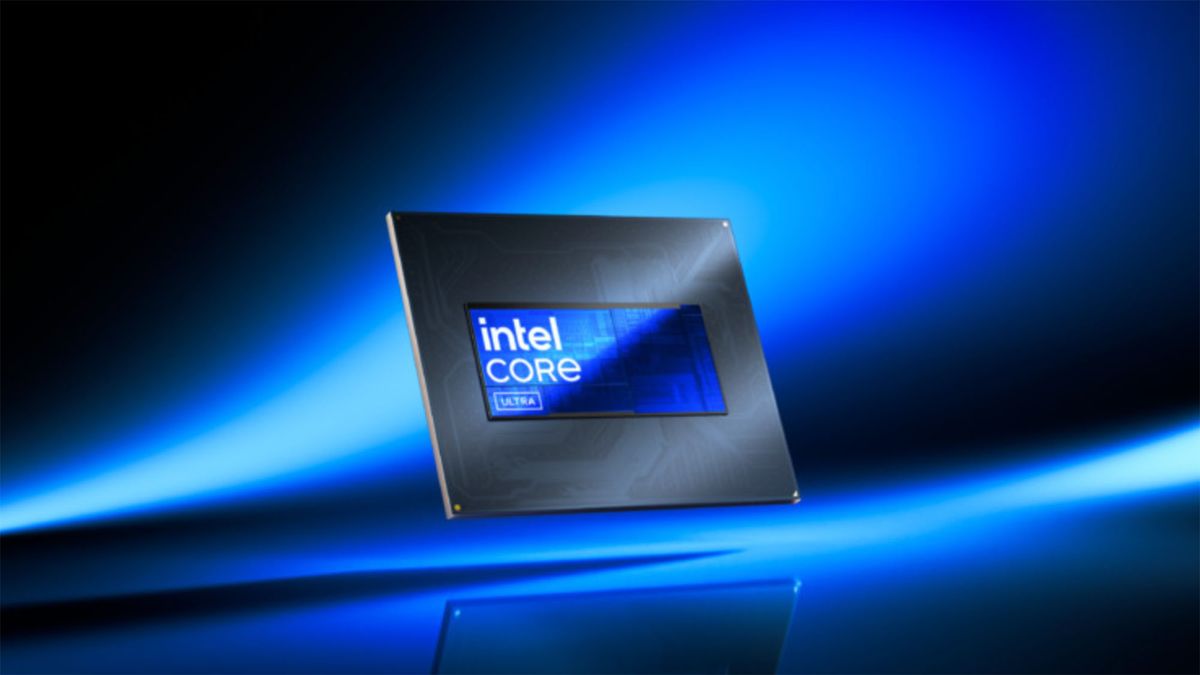
A mockup of the Intel Core Ultra 200HX against a blue swoosh background

(Image credit: Intel)

Here are all of the new Intel Core Ultra 200HX, Core Ultra 200H, and Core Ultra 200U SKUs announced during Intel’s CES 2025 keynote.

{ window.reliablePageLoad.then(() => { var componentContainer = document.querySelector(“#slice-container-newsletterForm-articleInbodyContent-KUyyNBD5QHn6aeGMEMgAa8”); if (componentContainer) { var data = {“layout”:”inbodyContent”,”header”:”Get daily insight, inspiration and deals in your inbox”,”tagline”:”Sign up for breaking news, reviews, opinion, top tech deals, and more.”,”formFooterText”:”By submitting your information you agree to the Terms & Conditions and Privacy Policy and are aged 16 or over.”,”successMessage”:{“body”:”Thank you for signing up. You will receive a confirmation email shortly.”},”failureMessage”:”There was a problem. Please refresh the page and try again.”,”method”:”POST”,”inputs”:[{“type”:”hidden”,”name”:”NAME”},{“type”:”email”,”name”:”MAIL”,”placeholder”:”Your Email Address”,”required”:true},{“type”:”hidden”,”name”:”NEWSLETTER_CODE”,”value”:”XTR-D”},{“type”:”hidden”,”name”:”LANG”,”value”:”EN”},{“type”:”hidden”,”name”:”SOURCE”,”value”:”60″},{“type”:”hidden”,”name”:”COUNTRY”},{“type”:”checkbox”,”name”:”CONTACT_OTHER_BRANDS”,”label”:{“text”:”Contact me with news and offers from other Future brands”}},{“type”:”checkbox”,”name”:”CONTACT_PARTNERS”,”label”:{“text”:”Receive email from us on behalf of our trusted partners or sponsors”}},{“type”:”submit”,”value”:”Sign me up”,”required”:true}],”endpoint”:”https://newsletter-subscribe.futureplc.com/v2/submission/submit”,”analytics”:[{“analyticsType”:”widgetViewed”}],”ariaLabels”:{}}; var triggerHydrate = function() { window.sliceComponents.newsletterForm.hydrate(data, componentContainer); } if (window.lazyObserveElement) { window.lazyObserveElement(componentContainer, triggerHydrate); } else { triggerHydrate(); } } }).catch(err => console.error(‘%c FTE ‘,’background: #9306F9; color: #ffffff’,’Hydration Script has failed for newsletterForm-articleInbodyContent-KUyyNBD5QHn6aeGMEMgAa8 Slice’, err)); }).catch(err => console.error(‘%c FTE ‘,’background: #9306F9; color: #ffffff’,’Externals script failed to load’, err)); ]]>

Sign up for breaking news, reviews, opinion, top tech deals, and more.

Swipe to scroll horizontally

Intel Core Ultra 200HX SKUs

Header Cell – Column 0 Core Ultra 9 285HX Core Ultra 9 275HX Core Ultra 7 265HX Core Ultra 7 255HX Core Ultra 5 245HX Core Ultra 5 235HX
P-Cores 8 8 8 8 6 6
E-Cores 16 16 12 12 8 8
Total Threads 24 24 20 20 14 14
L3 Cache (MB) 36 36 30 30 24 24
P-Core Max Clock (GHz) 5.5 5.4 5.3 5.2 5.1 5.1
E-Core Max Clock (GHz) 2.8 2.7 2.6 2.4 3.1 2.9
Graphics Intel Graphics Intel Graphics Intel Graphics Intel Graphics Intel Graphics Intel Graphics
Base TDP (W) 15 15 15 15 15 15
Max TDP (W) 57 57 57 57 57 57

Swipe to scroll horizontally

Intel Core Ultra 200H SKUs

Header Cell – Column 0 Core Ultra 9 258H Core Ultra 7 265H Core Ultra 7 255H Core Ultra 5 235H Core Ultra 5 225H
P-Cores 6 6 6 4 4
E-Cores 8 8 8 8 8
LPE-Cores 2 2 2 2 2
Total Threads 16 16 16 14 14
L3 Cache (MB) 24 24 24 18 18
P-Core Max Clock (GHz) 5.4 5.3 5.1 5.0 4.9
Graphics Intel Arc Graphics Intel Arc Graphics Intel Arc Graphics Intel Arc Graphics Intel Arc Graphics
Base TDP (W) 45 28 28 28 28
Max TDP (W) 115 115 115 115 115

Swipe to scroll horizontally

Intel Core Ultra 200U SKUs

Header Cell – Column 0 Core Ultra 7 265U Core Ultra 7 255U Core Ultra 5 235U Core Ultra 5 225U
P-Cores 2 2 2 2
E-Cores 8 8 8 8
LPE-Cores 2 2 2 2
Total Threads 12 12 12 12
L3 Cache (MB) 12 12 12 12
P-Core Max Clock (GHz) 5.3 5.2 4.9 4.8
Graphics Intel Graphics Intel Graphics Intel Graphics Intel Graphics
Base TDP (W) 15 15 15 15
Max TDP (W) 57 57 57 57

A mockup of the Intel Core Ultra 200H against a blue swoosh background

(Image credit: Intel)

There are some notable things about the specs we’ve gotten on these new SKUs.

For one, only the Core Ultra 200H series has integrated Intel Arc graphics, while the HX and U series chips all opt for the basic, lower-end Intel Graphics GPU. This makes some sense, as the 200HX series will likely be paired with a discrete GPU, so the basic integrated GPU will be more than enough for basic Windows use to save power.

The 200U series, meanwhile, won’t have a discrete GPU, but it also won’t likely be called upon to do any heavy-duty graphics like 3D gaming, so Intel Graphics is fine for the U series.

The 200H series, however, might need to do a little bit more gaming or video processing/encoding than the U series, but not enough to get a discrete GPU, so Intel opted to give it its higher-end integrated Arc GPU.

This is likely the same integrated Arc graphics found in Intel Meteor Lake chips since Arrow Lake is largely built off that architecture rather than the more advanced Lunar Lake Xe2 graphics. It also has a higher max TDP, likely to account for more GPU power than the other two chip series.

We also don’t have the max clock for the E-cores and LPE-cores on the 200H and 200U series SKUs yet, but hopefully, Intel will provide more detail in the days ahead.

The battle of the Core Ultra 200 series chips

The new Intel Core Ultra logo

(Image credit: Intel)

I’ll be honest, there’s simply no getting around how good Intel’s recent laptop chips are (the Intel Core Ultra 200V series, based on Lunar Lake).

Intel has had an Apple problem ever since Apple moved to its own M-series silicon based on ARM‘s BIG.little processor design, with several generations of its laptop chips simply not being able to keep pace with the best Apple had to offer.

However, all that changed with Intel Lunar Lake, released late last year. While Lunar Lake laptop chips still lag well behind Apple’s latest M4 chips, they are more than capable enough that you’d only be able to tell the difference if you had the two side-by-side.

Meanwhile, Lunar Lake’s greatly improved energy efficiency and powerful integrated GPU based on Intel Arc Battlemage architecture turned out to be an incredibly powerful combo that offered incredible battery life on a Windows PC to rival even the best MacBook Air models and a GPU powerful enough to play the best PC games remarkably well for a thin and light laptop processor.

Intel Lunar Lake isn’t an enthusiast-class processor, however, and those who demand the highest levels of performance from their laptops, whether for work or play, haven’t had much to look forward to for a least a year or more.

Needless to say, there’s a lot of pressure on Intel’s newest laptop chips to avoid the mistakes that undercut their desktop counterpart, and it remains to be seen if Intel can deliver.

You might also like…

Source