Posted on

How AI can help you attract, engage and retain the best talent in 2025

As we move into 2025, the landscape of human resources (HR) is heading for a significant transformation. Artificial intelligence (AI) is set to revolutionise workforce collaboration, efficiency, and talent management.

For HR leaders, harnessing the power of AI will be essential to attract, engage, and retain top talent in an increasingly competitive market.

Enhancing HR performance

AI is reshaping and revamping HR by automating routine and mundane tasks such as interview scheduling, data entry, and CV screenings. This automation allows HR teams to focus on strategic initiatives that add real value to employees, such as developing diverse cultures, offering tailored development programmes, and increasing engagement.

AI-powered analytics can identify workforce trends, predict employee turnover, and suggest to retain top talent. These insights enable HR leaders to make data-driven decisions to support a high-performance culture, ultimately improving employee engagement and organisational performance.

Just look at Unilever, which uses AI to streamline its recruitment process. By using AI-driven assessments and video interview analytics, Unilever has significantly reduced time-to-hire while enhancing the candidate experience. Additionally, AI can streamline performance management by providing continuous feedback and personalised development plans. This shift towards real-time performance management fosters a culture of continuous improvement, where the team receives timely feedback and support to achieve their goals, leading to higher engagement levels and better retention rates.

Talent attraction and retention

As the demand on sourcing talent with scarce skills continues in 2025, attracting top talent needs innovative strategies. AI can play a pivotal role in enhancing the candidate experience. Imagine AI-driven chatbots engaging with candidates in real-time, answering their questions and providing personalised information about the company and the role. This immediate engagement can significantly improve the candidate experience, making the organisation more attractive.

AI can also help create a more inclusive hiring processes by eliminating unconscious biases from recruitment. AI algorithms can analyse job descriptions to ensure they are free from biased language and assess candidates based on objective criteria. This is an incredibly important step to support organisations in attracting and growing a more diverse and inclusive workforce, which is crucial for driving innovation and business success.

Retaining your team is equally important as attracting it. AI can help HR leaders identify early signs of people’s disengagement or dissatisfaction. For instance, AI-powered sentiment analysis can monitor employee communications and flag any negative sentiments, allowing HR and managers to intervene proactively. By addressing issues before they escalate, organisations can improve the satisfaction, happiness and ultimately retention of the team.  

AI can also facilitate personalised employee development. By analysing skills, performance data, and career aspirations, AI can recommend tailored development programmes and career paths for each individual. This personalised approach to development can help people feel valued and supported.

Upskilling your team in the New Year

24% of all workers are worried that AI will soon make their job obsolete. HR leaders have a crucial role in addressing these concerns and ensuring their teams are ready for AI integration. Providing training and the right tools to integrate AI smoothly is essential. By fostering a culture of continuous improvement and responsible AI use, HR can drive greater efficiency and empower the entire workforce.

AI is more likely to enhance roles rather than replace them, and HR leaders should embrace AI ethically and transparently. This involves being clear about how AI is used, ensuring data privacy, and maintaining a human touch in all interactions. By doing so, HR can build trust and create a positive environment where AI is seen as a tool for empowerment rather than a threat.

2025 – the future of AI in HR

As we approach 2025 and beyond, the integration of AI in HR will continue to evolve. Future trends may include more sophisticated AI-driven talent management systems, enhanced predictive analytics for workforce planning, and even more personalised employee experiences powered by AI. HR leaders who stay ahead of these trends and continually innovate will be well-positioned to lead their organisations into the future.

Looking to the New Year, AI will play a pivotal role in enhancing HR functions, making them more efficient, strategic, and employee centric. By leveraging AI to attract, engage, and retain top talent, organisations can stay competitive in a rapidly evolving job market. HR leaders who embrace AI responsibly and proactively will be well-positioned to drive their organisations forward, creating workplaces that are both productive and fulfilling for their team.

Toria Walters is chief people officer at ANS, a digital transformation provider and Microsoft’s UK Services Partner of the Year 2024. Headquartered in Manchester, it offers public and private cloud, security, business applications, low code, and data services to thousands of customers, from enterprise to SMB and public sector organisations.

Source

Posted on

Intel unleashes XeSS 2 for Arc GPUs with huge changes to speed up PC games, borrowing a few pages from Nvidia’s DLSS playbook

  • Intel has revealed XeSS 2 which follows in the footsteps of DLSS
  • It’s split into XeSS Frame Generation and XeSS Super Resolution
  • There’s also Xe Low Latency to combat input lag, much like Nvidia Reflex

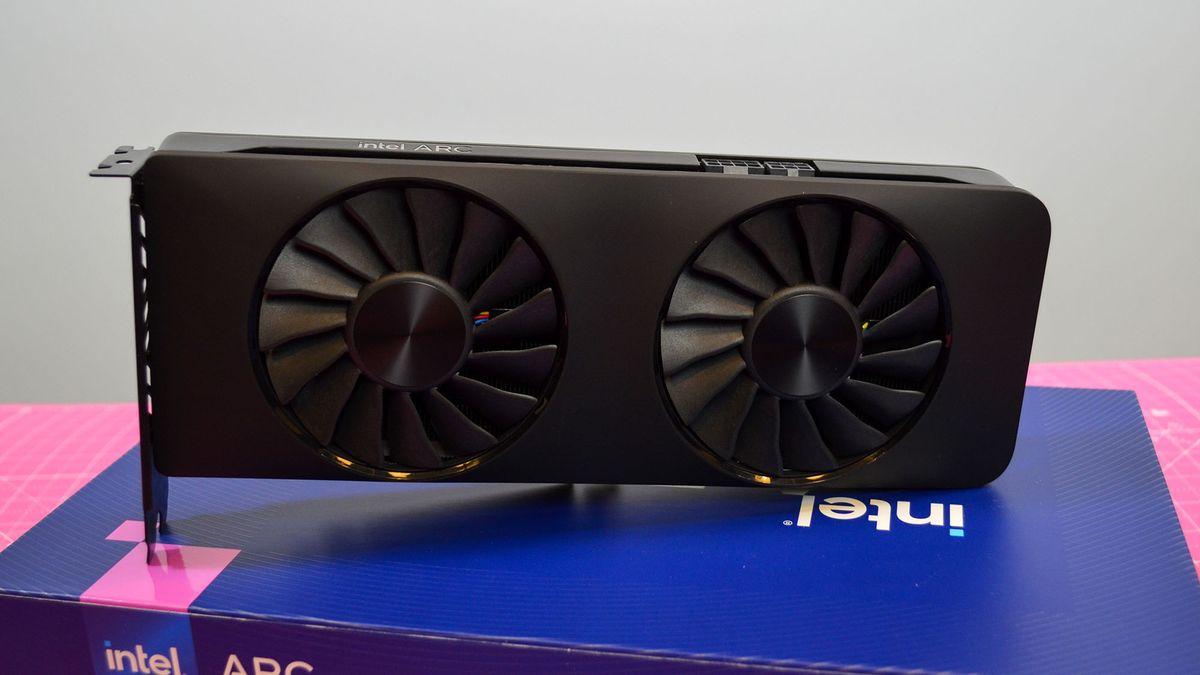
Intel has just unveiled new Battlemage desktop GPUs, and alongside those graphics cards comes a fresh version of XeSS, its upscaling tech to rival Nvidia DLSS and AMD FSR.

Yes, XeSS 2 is here, and Intel is making some big changes with the technology in this sequel. In fact, XeSS 2 is being split into two core components: XeSS Frame Generation and XeSS Super Resolution.

In other words, this is going the same route as Nvidia, when with DLSS 3, Team Green brought in frame generation – which means artificially inserting extra frames into the game, to make it smoother. It’s a separate technology to the actual upscaling component of DLSS 3, and so this is what Intel has done – split XeSS into Super Resolution (upscaling) and Frame Generation (extra frames generated to bolster the frame rate).

On top of that, Intel is introducing Xe Low Latency, which is essentially equivalent to Nvidia Reflex – a complementary tech to reduce input lag which helps to smooth over the lag wrinkles that are a side effect of frame generation.

In terms of support, only Intel’s Alchemist and Battlemage GPUs will get XeSS 2 – not any third-party GPUs – and on the games side, developers will need to code in support for all these new technologies (including frame generation, and low latency). However, we’ve also seen mentions of manually enabling low latency (at the driver level), so we’ll have to see how that shakes out.

On top of this, Intel has deployed a new control panel for its Arc GPUs which will simply be called ‘Intel Graphics Software’ (in much the same vein as Team Green’s new and renamed Nvidia App).

This is billed as an ‘all-in-one hub’ for all your Arc GPU needs, from updating drivers to game optimization, enabling Intel’s tech such as low latency mode, changing display options, monitoring performance (frame rates and GPU status), along with controls for overclocking.

{ window.reliablePageLoad.then(() => { var componentContainer = document.querySelector(“#slice-container-newsletterForm-articleInbodyContent-7x9uwq6VN9mK5TQ4icjQAX”); if (componentContainer) { var data = {“layout”:”inbodyContent”,”header”:”Get the best Black Friday deals direct to your inbox, plus news, reviews, and more.”,”tagline”:”Sign up to be the first to know about unmissable Black Friday deals on top tech, plus get all your favorite TechRadar content.”,”formFooterText”:”By submitting your information you agree to the Terms & Conditions and Privacy Policy and are aged 16 or over.”,”successMessage”:{“body”:”Thank you for signing up. You will receive a confirmation email shortly.”},”failureMessage”:”There was a problem. Please refresh the page and try again.”,”method”:”POST”,”inputs”:[{“type”:”hidden”,”name”:”NAME”},{“type”:”email”,”name”:”MAIL”,”placeholder”:”Your Email Address”,”required”:true},{“type”:”hidden”,”name”:”NEWSLETTER_CODE”,”value”:”XTR-D”},{“type”:”hidden”,”name”:”LANG”,”value”:”EN”},{“type”:”hidden”,”name”:”SOURCE”,”value”:”60″},{“type”:”hidden”,”name”:”COUNTRY”},{“type”:”checkbox”,”name”:”CONTACT_OTHER_BRANDS”,”label”:{“text”:”Contact me with news and offers from other Future brands”}},{“type”:”checkbox”,”name”:”CONTACT_PARTNERS”,”label”:{“text”:”Receive email from us on behalf of our trusted partners or sponsors”}},{“type”:”submit”,”value”:”Sign me up”,”required”:true}],”endpoint”:”https://newsletter-subscribe.futureplc.com/v2/submission/submit”,”analytics”:[{“analyticsType”:”widgetViewed”}],”ariaLabels”:{}}; var triggerHydrate = function() { window.sliceComponents.newsletterForm.hydrate(data, componentContainer); } if (window.lazyObserveElement) { window.lazyObserveElement(componentContainer, triggerHydrate); } else { triggerHydrate(); } } }).catch(err => console.error(‘%c FTE ‘,’background: #9306F9; color: #ffffff’,’Hydration Script has failed for newsletterForm-articleInbodyContent-7x9uwq6VN9mK5TQ4icjQAX Slice’, err)); }).catch(err => console.error(‘%c FTE ‘,’background: #9306F9; color: #ffffff’,’Externals script failed to load’, err)); ]]>

Sign up to be the first to know about unmissable Black Friday deals on top tech, plus get all your favorite TechRadar content.

Hat tip to VideoCardz for picking up on both of these developments.

An Intel Arc B580 Limited Edition graphics card against a purple background

(Image credit: Intel)

Analysis: Keeping pace with upscaling – the future of gaming

There are some major changes here, as we noted at the outset, and aside from all the new tech – implemented very much along the lines of DLSS – there’s also that switch in support for GPUs. Previously XeSS allowed AMD and Nvidia GPUs (or some of them) to use and benefit from the tech, but that’s no longer the case due to frame generation requiring Intel’s own hardware (XMX AI Engines).

Team Blue might work around that in the future, but for now, XeSS 2 will be for Intel Arc graphics cards only.

It’s not really surprising to see Intel moving in the same direction as Nvidia – after all, DLSS is very much regarded as the killer solution for boosting frame rates. What’s good to see with Team Blue is that XeSS 2 also allows for frame generation with older Alchemist graphics cards, whereas with DLSS 3, only RTX 4000 – the very newest Nvidia GPUs – get the frame generation component. (RTX 3000 graphics cards support everything else in DLSS 3, to be fair, including ray reconstruction – but not frame generation).

If Intel is to stay competitive in the GPU space, it’s certainly important that it keeps XeSS up to speed, as upscaling is regarded as a core piece of the future of gaming. More and more games are relying on such technology to achieve smooth frame rates, particularly at the likes of 4K resolution (or its upscaled equivalent, we should say).

We’re seeing upscaling become a key part of consoles – witness the PlayStation Pro 5 with PSSR – and on PCs, what’ll make it even more prevalent is Microsoft’s move with DirectSR, an effort to make it much easier for game developers to use XeSS, DLSS and FSR in their games.

You might also like

Source

Posted on

Storage technology explained: Flash vs HDD

The past 12 months saw flash storage nudge into areas from which it had hitherto been absent. In particular, this was because of the availability of denser – and therefore cheaper per-gigabyte (GB) – quad-level cell (QLC) flash storage into array markets and use cases that were once considered nearline.

Alongside this, we saw the price-per-GB of flash drop towards the level of spinning disk hard disk drives (HDDs) then rebound rapidly as memory manufacturers chased profitability. Meanwhile, the keenest of flash storage advocates predicted the demise of the hard drive and the imminent victory of the all-flash datacentre.

In this article, we define enterprise flash storage, look into its QLC and triple-level cell (TLC) variants, the benefits of non-volatile memory express (NVMe) flash, and examine the pros and cons of flash versus HDD in terms of cost, performance, flash in the cloud, and the likelihood (or otherwise) of the all-flash datacentre.

What is enterprise flash storage?

Enterprise flash storage refers to systems that comprise multiple flash drives housed in datacentre rack-mounted array form factor products.

In enterprise flash storage arrays, the capacity of many drives is aggregated, with access to storage media governed by controller hardware.

The controller is compute that powers the intelligence needed to handle input/output (I/O) from hosts to the storage, decision-making over allocation of data to media, but also in flash arrays to carry out maintenance tasks such as wear levelling, garbage collection, and so on.

Enterprise flash storage array capacities run from tens of terabytes (TB) to many petabytes (PB). As with HDD-based arrays, access to storage can be block (for performance-hungry database use cases, for example), file (for general use and unstructured data) or object (for unstructured data also).

What is QLC flash storage?

QLC is the latest generation of flash storage media. QLC stands for quad-level cell. That means that every cell in the flash chip can store four bits of data using 16 states.

That means it can store more data in the same space than TLC flash, which is also widely available. Previously widely available were single-level cell (SLC) flash and multi-level cell (MLC, meaning two states), but these have been largely superseded now.

At the start of 2024, most enterprise storage arrays are built with TLC drives for general-purpose and mission-critical use cases. But QLC has edged into the mainstream and gained traction for unstructured data workloads, in particular with key enterprise storage array makers adding QLC-based products in the past year or so.

As manufacturers increase the number of possible states per cell, storage density increases and the cost of storage per GB decreases. But, as storage density increases in terms of cell capacity, issues can arise that can limit the endurance of flash media.

What is NVMe flash?

Non-volatile memory express (NVMe) is a protocol developed especially for use with flash storage. Prior to NVMe, flash drives used transport protocols that originated during the HDD era, namely Serial Advanced Technology Attachment (SATA) and Serial-Attached SCSI (SAS). In fact, these are still in use and arrays that use drives with such connectivity (2.5in and 3.5in form factor) are sold by the big storage suppliers.

But NVMe is at the forefront now for flash drive performance. NVMe’s key innovation was to optimise queues and buffers for use with flash, which improved performance many times over.

As a follow-on, suppliers then developed ways of allowing NVMe connectivity across physically more distant connections across the datacentre. Such NVMe-over-fabrics technologies include the ability to carry NVMe via Ethernet, Infiniband, TCP, RDMA (ie, memory-to-memory connectivity) and more.

What is HDD?

Hard disk drives (HDDs) that rely on magnetic read/write heads and mechanically spinning disks have been around for decades, with flash a competitor that has emerged in the past 10 years or so.

As with flash, HDDs can be aggregated into datacentre rack-mounted array products and the capacity of multiple drives pooled for enterprise users. In fact, HDD-based arrays long preceded enterprise flash arrays and are still widely used.  

What’s the difference in performance between flash and HDD?

When we look at flash versus disk, the key thing that stands out is that flash is fast – many times faster than spinning disk HDD.

Flash drives offer lower latency, with access times down to low milliseconds, or even microseconds, compared with the multiple milliseconds of spinning disk, particularly for reads. That means enterprise flash can also offer vastly more input/output operations per second (IOPS) when aggregated into a storage array.

In throughput terms, flash offers gigabit-per-second (Gbps) rates four or five times quicker than HDD.

Such rapidity has been the key draw for enterprise flash storage and is a result of the lack of moving parts. With spinning platters, HDD is limited by physics in ways that solid-state storage is not.

In terms of capacities, HDD is available in up to around 22TB units. And while some flash drives have been marketed that run to 60-plus terabytes, they generally come in smaller sizes, but part of that is because of cost. 

What’s the cost difference between flash and HDD?

In terms of per-GB cost at drive level, flash costs more than spinning disk.

Flash prices spiked significantly in late 2023 and the early months of 2024 as manufacturers throttled back production in an effort to raise prices and achieve profitability.

Solid-state drive (SSD) prices per gigabyte reached an average of $0.095/GB by April 2024, which was a rise of 26.67% since autumn 2023.

But, flash drive prices then fell steadily over the first three quarters of 2024 to an average of $0.085 per gigabyte (GB) in September 2024.

In October 2023, flash had averaged $0.075/GB while HDD averaged $0.05/GB for SAS and $0.035/GB for SATA drives.

Average spinning disk (SAS and SATA) hard drive prices held steady during the six months to September 2024 at $0.039 per gigabyte. That figure was $0.041/GB in early April.

For a customer that planned to deploy 20TB of flash, based on those prices, it would have cost $1,500 in October 2023, $1,900 in April 2024, and $1,700 in September 2024. That compares to the equivalent for spinning disk of $850 in October 2023 and $780 in September 2024.

Will flash kill HDD? How much longer for HDD?

In particular, Pure Storage has declared HDDs will be dead by 2028, with its flash products the chief agent in the cull, and all owing to its ability to aggregate much more flash capacity on its proprietary modules than occurs on commodity flash drives.

With flash module sizes of up to 300TB by 2026 promised by Pure, it contends that spinning disk will be commercially unviable.

Meanwhile, companies such as Panasas, which specialises in storage for unstructured data, point to hyperscaler datacentres’ overwhelming use of spinning disk in ratios up to 90/10 against flash. Panasas argues that there’s still a five-times differential between the lowest-cost flash and HDD, and that for most, something like the hyperscaler solution is optimal.  

When can you use flash and HDD in the cloud?

Enterprise users can also specify flash storage and spinning disk in the cloud. It is more likely in most cases that cloud storage will be specified by performance and cost criteria, in which case the customer may never know what media underlies it.

But it is possible also to specify flash storage in the cloud and the three largest hyperscalers – Amazon Web Services (AWS), Microsoft Azure and Google Cloud Platform (GCP) – have solid-state storage options that mix cost, capacity and performance. 

The hyperscalers all offer flash storage to support compute with service levels based on capacity and IOPS per volume that range from general-purpose to premium levels aimed at specific workloads (eg, SQL, Oracle, SAP Hana) and environments (eg, Windows, Lustre, MacOS).

There are also options aimed at flash for file storage and flash storage from named suppliers, such as Azure’s NetApp Files.

What is the all-flash datacentre?

For about a decade, the idea of the all-flash datacentre has been discussed. The all-flash datacentre replaces HDD and other media such as tape with flash storage.

Driving it is the continued decrease in the cost of flash storage – as with QLC flash – but also the advantages of flash in terms of rapid access. The latter becomes more relevant as customers want to run analytics on bigger subsets of their data.

So, for example, where backups may previously have been held on nearline media such as slower HDDs, advocates of flash for such use cases point to the ability to run artificial intelligence (AI) on large customer datasets and to gain value therefrom.

Also, with backups as an example, the idea of being able to recover quickly from flash media in case of a ransomware attack is another use case touted by all-flash datacentre boosters. 

When will the all-flash datacentre arrive?

While enthusiastic suppliers of flash storage such as Pure talk down the obstacles to the all-flash datacentre, analysts point to the spread of (especially QLC) flash into secondary workloads but not necessarily all use cases, with spinning disk likely to retain its usefulness for some time for some datasets.

Meanwhile, HDD suppliers such as Toshiba say around 85% of all data is still on spinning disk. That fact, it says, is not likely to change rapidly, not least because the flash capacity to replace it doesn’t exist.

Source

Posted on

CMA clears Google over Anthropic partnership

The Competition and Markets Authority (CMA) has said Alphabet’s partnership with Anthropic does not qualify for investigation under the merger provisions of the Enterprise Act 2002.

In October 2023, Alphabet invested $2bn in OpenAI rival Anthropic. The artificial intelligence (AI) startup has also received $4bn funding from Amazon.

The CMA is concerned that the foundational model sector is developing in ways that risk negative market outcomes. In particular, the likes of Google, Amazon, Meta, Microsoft and Apple have the market dominance to buy up or shut down competition. It is also worried that partnerships between these major technology providers and developers of AI foundation models may limit choice and be anti-competitive.

In September, the CMA concluded its investigation of Microsoft’s hiring of key staff from Inflection, finding that Inflection AI was not a strong competitor to the consumer chatbots Microsoft has developed directly in partnership with OpenAI.

Discussing the outcome of the latest investigation, Joel Bamford, executive director of the CMA, wrote on LinkedIn: “Our investigation has shown that Google has not acquired the ability to materially influence Anthropic’s commercial policy and therefore the partnership does not meet the jurisdictional threshold for UK merger control to apply.”

He described the conclusion of this latest investigation as “another decision by the CMA which provides greater clarity for businesses and their investors”.

In a summary of its findings from the phase one investigation into the deal, the CMA said it did not believe Google had acquired material influence over Anthropic as a result of the partnership. The CMA said it looked at the risk of Google exercising influence over Anthropic at shareholder and/or board level, along with an assessment of Google’s own Vertex AI product.

“The available evidence did not indicate that Google has the ability to exercise material influence over Anthropic through the partnership,” the CMA concluded.

The CMA said it had considered the fact that Anthropic and Google offer two of the leading foundational AI models globally. However, given Anthropic’s turnover is below the £70m threshold, which is one of the criteria it takes into account when assessing whether to look further into a deal, pursuing this thread of investigation was not necessary.

The CMA is also looking at whether it should investigate Amazon’s partnership with Anthropic, due to the $4bn funding the AI startup received from Amazon. 

Some industry experts believe the CMA should continue looking at the foundation model market. Josh Mesout, chief innovation officer at Civo, said: “While the CMA has decided not to pursue an investigation into the Anthropic/Alphabet partnership, the broader concerns raised in the investigation about potential market concentration in AI remain valid.

“Over-dependence on a handful of major firms could still stifle innovation, limit consumer choice and potentially lead to a monopoly that favours Big Tech. Even without a formal investigation, it is the responsibility of everyone in the industry to ensure the AI market remains fair, competitive and conducive to ongoing technological advancement.”

Source

Posted on

Computer Weekly announces the Most Influential Women in UK Tech 2024

Sheridan Ash, founder and co-CEO of Tech She Can, has become the 13th person to be named Computer Weekly’s Most Influential Woman in UK Tech.

Launched in 2012, the Computer Weekly list of the 50 Most Influential Women in UK Tech started as a list of 25, expanding to 50 in 2015, and now seeing hundreds of nominations each year.

The list was originally created to showcase the amazing women in the technology industry, shining a light on the sector’s role models who may inspire the next generation of women in tech.

As well as the 2024 longlist of more than 700 nominated women, and our list of Rising Stars, there are also new entrants to our Hall of Fame, launched to acknowledge those who have made a lifetime contribution to the UK’s technology sector.

This year’s winner, Sheridan Ash, launched Tech She Can to teach girls and young women about technology careers and subjects to inspire them to choose this path in the future.

Until 2023, Ash led technology innovation at PwC UK, and is currently co-CEO and founder of the charity Tech She Can. She was a board member of the Institute of Coding for four years and, in 2020, received an MBE for services to young girls and women through technology.

Tech She Can is an award-winning charity with more than 240 member organisations, which together work with industry, government and schools to improve the ratio of women in technology roles. It provides initiatives and pathways into tech careers across all the different stages of girls’ and women’s lives.

At PwC, Ash led change in the technology workforce, pioneering initiatives that saw the percentage of women in tech more than double to reach 32%.

Timperley is a freelance consultant and co-founder of Tech North Advocates, a private sector-led collection of tech experts who champion the technology sector in the north of England.

In 2021, she co-founded advisory firm Growth Strategy Innovation, which helps to grow startup and scaleup organisations. She is now innovation director for Oxford Innovation, which helps organisations develop ecosystems for entrepreneurs and innovators, in turn boosting local areas.

Timperley was named a Computer Weekly Women in Tech Rising Star in 2017 when, until 2021, she was a board member of FutureEverything. She previously co-founded Enterprise Lab.

Turner founded Angel Academe, a pro-women and pro-diversity angel investment group focused on technology, and is currently CEO of the group.

Until 2023, Turner was also an advisory board member of tech recruiter Spinks, and in 2007 co-founded consultancy Turner Hopkins, which helps businesses create digital strategies.

Previously, Turner was an external board member and chair of the investment committee for venture capital fund the Low Carbon Innovation Fund and a board member of the UK Business Angels Association, the trade association for early-stage investment.

Hunter founded Coding Black Females in 2017 to help black female software developers meet each other and network. Alongside her work at Coding Black Females, Hunter is a software developer.

She is an advisory board industry representative in the University of Essex Online’s computing department, technical director at SAM Software Solutions, and technical director at full-stack and front-end training organisation Black CodHer Bootcamp.

Previously, Hunter was lead software engineer at Made Tech, and held roles such as senior software developer, lead Java developer, app developer and technical consultant at various firms. She was named a Computer Weekly Women in UK Tech Rising Star in 2020.

Before her time as an MP, Niblett had a long career in technology, having roles such as industry sales leader at DXC Technology and head of alliances, channel and ecosystem in EMEA at 1E.

Now, alongside her role as an MP, she’s founder of the Labour: Women in Tech group, which campaigns to reach equal gender opportunities in the technology industry. She’s also the co-chair of the All-Party Parliamentary Group on FinTech and the Parliamentary Internet, Communications and Technology Forum (PICTFOR), as well as the chair for the Interparliamentary Forum on Emerging Technologies and a member of the Women and Equalities Select Committee.

An entrepreneur and co-founder, Brailsford joined Code First Girls as CEO in 2019, where she works to encourage more women into the tech sector by providing software development skills and education.

Prior to her work at Code First Girls, she co-founded and was CEO of performance management firm Frisbee, which was part of venture capital fund Founders Factory. Until summer 2024, she was was a board member for the Institute of Coding, where she focused specifically on diversity and inclusion. She is also a self-employed commercial and strategy consultant.

As part of her role as partner and head of digital for Europe at Oliver Wyman, O’Neill leads digital transformation and new proposition launches at companies all over the world.

Alongside this, she is also a strategic partner at FutureDotNow, a board trustee for Girlguiding and special adviser to the founder at The Youth Group.

Sillem worked for the Royal Academy of Engineering for 12 years before being appointed its CEO in 2018. Previous roles at the academy include deputy CEO and director of strategy, director of programmes and fellowship, and head of international activities.

As well as her work for the academy, Sillem is a trustee of EngineeringUK and the Foundation for Science and Technology, and CEO of the Queen Elizabeth Prize for Engineering.

Lakhani founded Century Tech as a teaching and learning platform focused on subjects such as artificial intelligence (AI), cognitive neuroscience, big data analytics and blockchain, where she is also CEO.

A frequent public speaker, she has previously been a member of the UK’s AI Council, a board member for the Foundation for Education Development, a board member for Unboxed 2022, and a non-executive director for the Department for Digital, Culture, Media and Sport (DCMS).

She is a digital patron for Cottesmore School, and has appeared on the BBC’s AI Decoded news segment. She was awarded an OBE in 2014.

Mary McKenna is a huge supporter of entrepreneurship and startups, holding several roles as an adviser and investor. Her social enterprise, AwakenHub, where she is co-founder, is focused on building a community of female founders in Ireland.

As well as being an expert adviser for the European Commission, she is an entrepreneurship expert with the Entrepreneurship Centre at the University of Oxford’s Said Business School, and a trustee for CAST, among many other board memberships and non-executive directorships.

Thorne is co-CEO of Tech She Can, a charity aimed at increasing the number of women in the technology sector, as well as a venture partner at Deep Science Ventures and a diversity and inclusion advisory board member for the Institute of Coding.

She has a background in the education sector, previously holding roles as director of innovation strategy for the University of Surrey and executive officer to the vice-president (innovation) at Imperial College London.

Williams is CEO of inclusion campaign FutureDotNow, which aims to ensure people are not left behind by the growing skills gap caused by digital adoption. She is a member of the UK government’s Digital Skills Council, and chair of the Good Things Foundation.

Prior to her current work, Williams spent more than 20 years at BT in a number of different roles, including programme director for sustainable business, director of tech literacy and education programmes, and director of digital society. Until 2024, she was a member of the board of trustees for Transport for London.

With a background in law surrounding telecoms, the internet and media, Wright now uses her expertise as director of not-for-profit The Institute of AI, as well as partner at Harbottle & Lewis, heading up the tech, data and digital group.

She has worked in the tech sector for over 20 years. Her team at Harbottle & Lewis is comprised of 66% female and 66% ethnic minority members.

During 2023, she worked with the OECD, WEF and the ITU to build a reputation in relation to the regulation of AI. She is also working with the Ditchley Foundation, considering whether the collaborative approach in relation to telecoms can work for AI regulation.

In her 30 years at KPMG, Mehta has had many responsibilities, including building the firm’s focus on trade and investment, and helping scaleup clients to access financial support.

She is now chair of the organisation, and in 2022 was awarded an MBE for services to UK trade and investment and supporting female entrepreneurs.

An expert in diversity, inclusion and community building, Farooq co-founded Muslamic Makers in 2016 as a networking group for Muslims in tech, design and development.

As well as a freelance diversity and inclusion consultant, Farooq is a scout for Ada Ventures with special interest in edtech, healthtech and fintech, and until March 2024 was a community manager for Big Society Capital.

She has an extensive background in digital and AI in both the private and public sectors.

Taylor co-founded TechReturners, where she is currently CEO, to give skilled individuals who have had a career break the opportunity to connect with firms and help them back into mid-level to senior-level tech roles.

She is also co-founder of The Confidence Community, which aims to provide resources, training information and events to give people more career confidence. Taylor is co-founder of community WIT North and co-founder of ReframeWIT.

She recently founded community platform Voices in Tech to help connect speakers with event opportunities.

Dawes has headed up Ofcom since 2020 following her previous role as permanent secretary at the Ministry of Housing, Communities and Local Government, as well as many other roles across the Civil Service.

She has previously been a trustee at Patchwork Foundation, which aims to encourage under-represented young people to participate in democracy, and a non-executive director of consumer group Which?.

Award-winning entrepreneur Avril Chester is currently the CTO of the Royal Pharmaceutical Society, her most recent in a series of roles heading up technology in organisations. In 2018, she founded technology charity platform Cancer Central to help support people with cancer.

Martin has a history of working as a test consultant at firms such as Barclays, Sony, the UK Home Office, Shazam and Sky, and is currently a startup adviser and founder of her own coaching and consultancy firm.

Prior to this, she was head of quality at Adarga and is currently chair for the BCS Special Interest Group in Software Testing, and until January 2023 was the vice-chair of the BCS LGBTQIA+ tech specialist group.

Amanda Brock’s role at OpenUK sees her leading the sustainable and ethical development of open technologies in the UK, including technology such as open source software, hardware and data.

She also sits on the boards of both the Cabinet Office Open Standards Board and US cyber security firm Mimoto, is an advisory board member of several firms, as well as acting as a judge for the CIO 100 Awards.

Moore has been at Apps for Good since 2019, originally as director of education, products and events, then as chief operating officer (COO), before becoming CEO in 2021.

Her career background has been heavily weighted towards education, having been international education programme coordinator for London 2012, and volunteering as governor at the Harris Academy Ockendon and Sixth Form.

Tanaka is currently part of the programme team for All4Health&Care, a community launched during the pandemic to connect digital healthcare providers with the public sector. She is also the head of the CMO Office for NHS Black Country ICB, and is on the community support committee for BCS.

Previously, she has been a fellow, independent audit for AI systems for ForHumanity, and BCS Women membership secretary.

Calista has a history in both technology and the public sector.

Alongside her role at Labour Digital, she is head of policy and public affairs at UK scaleup Vorboss, and she co-founded network Women in Tech Policy.

She volunteers as an adviser for digital citizenship charity Glitch, and is a policy board member for OpenUK.

With experience in cloud at companies such as Salesforce and IBM, Kelisky started her role at Google in 2022 well-equipped with the skills needed to run its cloud division.

Alongside this, Kelisky is on the board of directors for Calnex Solutions, and is a member of the board of directors for the Women in Telecoms and Technology networking group.

Lila Ibrahim became Google DeepMind’s first COO in 2018, looking after teams in disciplines such as engineering, virtual environments, programme management and operations.

Prior to this role, she was COO of online skills platform Coursera, and has also acted at general manager for emerging markets platforms in China at Intel.

Philpot has a background in both sales, and learning and development, which she uses in her role as the vice-president of global sales enablement at Getty Images. She has held various roles both in and outside of sales at many notable firms, such as Shell, Mars and GSK.

As well as being a board member for the TLA Black Women in Tech group, she is a member and speaker for the Sales Enablement Directive.

Hodson has an extensive background in the technology sector, and has had roles such as managing consultant at EY and general manager at Siemens Business Services responsible for public sector, healthcare, financial services and manufacturing.

More recently, she was vice-president for global sales, marketing and operations – field transformation at Microsoft, before becoming chief executive of IBM in UK and Ireland at the beginning of 2023.

She’s also a board member and deputy president of TechUK, and holds several non-executive directorships.

As managing director of Jomas Associates (Engineering & Environmental), Savage specialises in geotechnical and environmental engineering.

She is also passionate about topics such as women in engineering and social mobility, and is on the UK government’s SME Business Council.

With a long history of CEO positions, Kirkby has experience in running companies with a background in telecoms, and in February this year took over as CEO of BT Group. Her past CEO roles have included TDC group, Tele2 and Telia, and she is also a non-executive director of Brookfield asset management.

Barclay has been with Microsoft for more than 10 years, holding several roles including director of SMB, general manager of small and mid-market solutions and partners, COO, and CEO in the UK.

In November 2024, she became president of enterprise and industry for Microsoft in the UK. She is chair of the industrial strategy advisory council for the Department for Business and Trade, volunteers as a board member for the British Heart Foundation and, until recently, was a non-executive director at CBI.

Oniwinde Agoro founded BYP Network in 2016 to help black professionals network and have easier access to jobs, after a trip abroad confirmed the challenges young black people face in getting jobs both in and outside the UK.

Until 2024, she was board trustee for volunteer organisation Getting On Board, and has received several awards and accolades, including Forbes 30 Under 30 and Financial Times Top 100 BAME Leaders in Technology.

Wallace heads up diversity and inclusion, partnerships and people change at Sky, and one of her focuses in this role is designing and delivering the people strategy for technology within the firm.

Outside of this, Wallace was a member of the advisory board for recently disbanded Tech Talent Charter, and volunteers as a cub and scout assistant.

Scullion is a serial founder, having founded dressCode, a not-for-profit that encourages young women in Scotland to consider a career in computer science, and co-founded the Ada Scotland Festival, which aims to use collaboration to close the gender gap in computer science education in Scotland.

These endeavours stem from her being a computer science teacher passionate about encouraging more children to take the subject. Alongside this work, she is a volunteer for the Scottish Tech Army, a not-for-profit aimed at using tech for good.

Earlier this year, Tulip took on the role of chief growth officer at software engineering consultancy Conquer Technology. In 2018, she co-founded community-led initiative Women In Leeds Digital, which encourages and helps minority groups to consider a career in technology.

Tulip is also chair of the regional productivity forum in Yorkshire, Humberside and the North East for the Productivity Institute, ambassador for Leeds as a digital city at Leeds City Council, and managing director at &Then Consulting.

Moore co-founded data analytics and AI firm Panintelligence in 2010 with the aim of helping firms properly organise their data to more easily adopt AI. She became CEO in 2018.

Alongside this, Moore also founded low-code tech community No Code Lab and gender equality community Lean In Leeds. As well as a position as chair for Lifted Ventures, Moore is an Ada Angel for inclusive venture firm Ada Ventures.

As global director of identity at Sky, Moore is responsible for leading the firm’s identity management projects. Prior to this, she held several roles as a project manager, and was previously the head of infotainment group technology for Vodafone.

As well as being a member of the board for Tech Talent Charter, she is the co-founder of female tech leaders community Lift as we Climb.

Maria Axente is the head of AI public policy and ethics at PwC in the UK, where she combines her skills in analytics and ethical AI policy development to ensure AI is developed with humans in mind.

Previously, she was the artificial intelligence and AI-for-good lead at the firm, responsible for advising clients on responsible use of AI, and ensuring ethical development of PwC AI operations, products and services.

She’s a vice-chair for the data, analytics and AI leadership committee at TechUK, and in the past she has been an advisory board member for the APPG for AI, and adviser for the PHI for Augmented Intelligence.

As CEO of Nash Squared, White heads up the global firm which provides IT recruitment, technology solutions and leadership services out of 36 offices across the world.

White has a long background in the tech sector, having previously held roles as CIO and director of IT, as well as completing a degree in computer science.

Bentinck was named a Computer Weekly Rising Star in 2014, and has co-founded several organisations, including Entrepreneur First, a firm that supports European technology startups, and not-for-profit coding training programme Code First Girls.

She is on the Computer Science Department Industrial Liaison Board for Imperial College London, is a board trustee for Generation and is the author of startup business book How to be a founder.

Hirt joined Innovate Finance in 2015 as the industry body’s head of community, before eventually becoming its CEO six years later. She now heads up the organisation, aiming to drive innovation and transformation in the fintech sector to make it more inclusive.

She has worked around the world in a variety of roles, including acting head of corporate relations for Chatham House in the UK, head of membership for the Brazilian-American Chamber of Commerce in New York, and head new hire trainer for an English language training programme in Japan.

Davis is the co-founder of diversity career platform Diversifying, and founder and CEO of recruitment organisation BAME Recruitment and Consulting.

She is chair of the board of directors for Pop Up Projects and a board trustee for charity Over the Wall, both aimed at changing young people’s lives for the better.

Davis has previously held roles in talent acquisition in the STEM sector, at telecoms firm BT, and as part of a short-term project at an aerospace, aviation, F1 and motorsport organisation.

The first female to head up GCHQ, Keast-Butler moved into the director role last year after serving as deputy director general of MI5. With a long career in security and defence, her previous roles have included overseeing the upkeep of functions that support MI5’s operational activities and the launch of the UK’s National Cyber Security Programme.

As well as her work as senior EUC engineer, infrastructure and cloud engineering at the London Stock Exchange Group, Opong is a freelancer and STEM adviser and a board trustee for The Blair Project Foundation.

Until recently, she was part of the City of London Corporation volunteer advisory group for equality, diversity and inclusion, and was previously an advisory board member for Neurodiversity in Business, and a mentor at the TechUp mentor programme for Durham University.

Opong was a contributor for Voices in the shadows, the book of black female role models created by the 2022 Computer Weekly Most Influential Woman in UK Tech, Flavilla Fongang.

Munby has a long history of working in government, and became permanent secretary leading the Department for Science, Innovation and Technology in February 2023.

She has also been partner, leader of strategy and corporate finance practice in UK and Ireland at McKinsey & Company, where she led the firm’s work on productivity across the UK economy.

Crosswell is managing director of consulting firm Exadin, as well as chair for the Centre for Finance, Innovation and Technology. She holds several other non-executive directorships in firms such as Freemarket and the Centre for Policy Studies. In 2021, she received an OBE for services to the financial services sector.

Graham has been the CEO of not-for-profit the ScaleUp Institute since 2015, and has an OBE for services to UK business and economy.

As well as being a visiting professor of entrepreneurship at Strathclyde University, Graham holds various non-executive and advisory roles.

As CEO of Salesforce in the UK and Ireland, Bahrololoumi is responsible for the workforce in these regions across all industries and functions, and is particularly focused on ensuring its customers are ready for digital transformation.

She sits on several boards, including for Seeing Is Believing Coventry Place, Movement to Work and Cancer Research UK Corporate Partnerships, and is an independent non-executive director on the TSB board.

In 2023, she was awarded a CBE for services to the information technology sector.

Naming the technology sector her “familiar territory”, Gardner has an extensive background in the technology sector, having held roles such as first line support at Fujitsu, senior supply chain administrator at Technicolor and project manager at the BBC as a member of the BBC’s Design and Technology Business Management Unit HQ Team.

Now, she’s a business operations analyst as part of the technology arm of News UK, and is a board trustee of food and hygiene bank Necessities UK.

Cardell has been at the Competition and Markets Authority since 2013, first as general counsel, then as interim CEO, and now as CEO.

Prior to her time at the Competition and Markets Authority, she was a legal partner for the markets division of energy markets authority Ofgem, and in her early career spent 11 years at law firm Slaughter and May, working her way from trainee solicitor to partner.

Sinel founded Teens in AI and Acorn Aspirations to help young people who want to solve real-world problems using technology such as AI, virtual, augmented and mixed reality.

She has won awards for her work, including CogX 2017 Award in Using AI for Social Good Projects, and is currently an education taskforce committee member for the All Parliamentary Group on Artificial Intelligence, and a business mentor at Microsoft for Startups.

Before working on Acorn Associates and Teens in AI, Sinel was a consultant for several firms, including the British Council, NGOs, Chittagong Hill Tracts and the Ethiopian Cultural Heritage Project. 

Source

Posted on

Nakivo aims at VMware refugees tempted by Proxmox

Backup software vendor Nakivo has added Microsoft 365 cloud-to-cloud backup, support for backups of Proxmox virtualisation environments, and cloud as a target for NAS backups in the latest version – v11 – of its Backup & Replication product.

Support for data protection of Microsoft 365 environments brings Nakivo into line with numerous backup suppliers that protect data in the main cloud services. Here, they are capitalising on the fact that the hyperscaler cloud providers do no more than rudimentary protection of customer data.

Sergei Serdyuk, product management vice-president at Nakivo, said: “Microsoft’s business model is that you are responsible for your data and they are responsible for their infrastructure. So, if you accidentally delete something, you are responsible. What we have launched allows customers to put their data somewhere it can be recovered from and they can set up a repository where they want.”

This extends Nakivo’s cloud backup capabilities from its existing EC2 support. Serdyuk said other cloud platforms would be added, but would not say when.

Meanwhile, Nakivo added support for agentless backups in the open source Proxmox virtualisation environment. According to Serdyuk, around one third (33%) of its customers – mostly small to medium-sized enterprises (SMEs) – who responded to an internal survey said that they planned to migrate to Proxmox and away from VMware.

The background to this is the Broadcom purchase of VMware and subsequent licensing changes and reported cost rises, said Serdyuk.

“Broadcom acquired VMware and changed the licensing model from perpetual to subscription,” said Serdyuk. “Customers have reported increased costs as a result and so many are looking elsewhere. Proxmox is free, or comes with inexpensive support, and is suited to SMEs. As a virtualisation platform, it can displace VMware. We also see a smaller percentage migrate to Nutanix and Hyper-V.”

Prominent backup product maker Veeam – which made its name providing backup for VMware – started to offer Proxmox during the summer, in a move seen as a key moment for those considering moving away from VMware. That move is seen as potentially unlocking migration to Proxmox because it removes the barrier to protecting those environments.

Nakivo has also added backup of NAS devices to cloud targets. According to Serdyuk, this necessitated the company developing a way to make file data suitable for S3 storage.

“Most cloud vendors claim S3 compatibility [for file data], but there have needed to be some tweaks to work with the API,” he said. “So, there has been some fine-tuning to work with file data – block data is easier – because when we copy file data to S3, the whole file needs to be transformed to work in the cloud.”

Version 11 also saw the addition of backup from NetApp Storage Snapshots for FAS and AFF arrays to allow customers to backup VMware VMs on these devices from storage snapshots. Federated repository capability allows customers to create a scalable storage pool from multiple locations, with failover to useable capacity elsewhere should first choice storage in the pool fail.

Nakivo now offers a tenant overview dashboard for service provider customers that allows them to manage tenant activity, performance and resource metrics from a single screen.

Nakivo was founded in 2012 and started out by specialising in VM backup. Its version 1.0 offered VMware support and installation on Windows.

It now supports workloads in VMware, Microsoft Hyper-V, Nutanix, Windows and Linux, and in the cloud in Amazon EC2 and Microsoft 365.

It supports use cases that range from SMEs, to large enterprises and managed service providers (MSPs), with deployment possible on NAS, Windows and Linux, as well as in a virtual appliance or from an Amazon instance in the cloud. It can restore with granularity that ranges from single files to entire sites.

Version 10.9 of Backup & Replication software added ransomware malware scanning, as well as bare metal recovery and recovery from tape directly to virtual machine (VM).

Source

Posted on

Nvidia’s rumored CPU could pack integrated GPU to rival RTX 4070 mobile – should AMD and Intel start to worry now?

  • Nvidia APU rumored to equal RTX 4070 laptop GPU in performance
  • Laptops are already being made with the APU, including from Alienware
  • The Arm-based APU could outgun AMD’s Strix Halo by miles for efficiency

Nvidia’s apparent plan to make an Arm-based CPU for PCs – in conjunction with MediaTek – raised some eyebrows, certainly, and now we’re hearing a bit more about how powerful said APU from Team Green might be in terms of its integrated graphics.

For the uninitiated, an APU is an all-in-one chip (packing a processor, alongside an integrated GPU and NPU) and with a powerful enough graphics solution, these can make for a great engine for thin-and-light gaming laptops, dispensing with the need to have a separate graphics card in the chassis. (They’re also ideal for PC gaming handhelds, too).

Moore’s Law is Dead (MLID) has some fresh info on Nvidia’s rumored Arm-based SoC, namely that said integrated graphics will match the RTX 4070 laptop GPU (with the chip running at around 65W).

MLID further notes that laptop makers are already working with Nvidia to realize this APU, and there’s a rumored deal with Alienware on the boil.

We could see new entrants bursting onto our best gaming laptop list powered by the Nvidia APU as soon as the end of 2025, or the leaker still believes that’s a possibility – though we may realistically be waiting until 2026.

It is, after all, a big move for Nvidia, and one that Team Green and its partners will want to get right.

PS5 Pro Review, Nvidia APU Performance Leak, AMD RDNA 4, XBOX Future | NX Gamer | Broken Silicon 283 – YouTube PS5 Pro Review, Nvidia APU Performance Leak, AMD RDNA 4, XBOX Future | NX Gamer | Broken Silicon 283 - YouTube Watch On

Analysis: The battle against a Halo product

If you recall, AMD also has powerful APUs on the cards, and is closer to launch than Nvidia – in fact, Team Red is expected to reveal new Strix Halo chips at CES 2025 (alongside a whole heap of other goodies).

{ window.reliablePageLoad.then(() => { var componentContainer = document.querySelector(“#slice-container-newsletterForm-articleInbodyContent-ZpcEZKJdQ5A7Pqu5VzCBub”); if (componentContainer) { var data = {“layout”:”inbodyContent”,”header”:”Get the best Black Friday deals direct to your inbox, plus news, reviews, and more.”,”tagline”:”Sign up to be the first to know about unmissable Black Friday deals on top tech, plus get all your favorite TechRadar content.”,”formFooterText”:”By submitting your information you agree to the Terms & Conditions and Privacy Policy and are aged 16 or over.”,”successMessage”:{“body”:”Thank you for signing up. You will receive a confirmation email shortly.”},”failureMessage”:”There was a problem. Please refresh the page and try again.”,”method”:”POST”,”inputs”:[{“type”:”hidden”,”name”:”NAME”},{“type”:”email”,”name”:”MAIL”,”placeholder”:”Your Email Address”,”required”:true},{“type”:”hidden”,”name”:”NEWSLETTER_CODE”,”value”:”XTR-D”},{“type”:”hidden”,”name”:”LANG”,”value”:”EN”},{“type”:”hidden”,”name”:”SOURCE”,”value”:”60″},{“type”:”hidden”,”name”:”COUNTRY”},{“type”:”checkbox”,”name”:”CONTACT_OTHER_BRANDS”,”label”:{“text”:”Contact me with news and offers from other Future brands”}},{“type”:”checkbox”,”name”:”CONTACT_PARTNERS”,”label”:{“text”:”Receive email from us on behalf of our trusted partners or sponsors”}},{“type”:”submit”,”value”:”Sign me up”,”required”:true}],”endpoint”:”https://newsletter-subscribe.futureplc.com/v2/submission/submit”,”analytics”:[{“analyticsType”:”widgetViewed”}],”ariaLabels”:{}}; var triggerHydrate = function() { window.sliceComponents.newsletterForm.hydrate(data, componentContainer); } if (window.lazyObserveElement) { window.lazyObserveElement(componentContainer, triggerHydrate); } else { triggerHydrate(); } } }).catch(err => console.error(‘%c FTE ‘,’background: #9306F9; color: #ffffff’,’Hydration Script has failed for newsletterForm-articleInbodyContent-ZpcEZKJdQ5A7Pqu5VzCBub Slice’, err)); }).catch(err => console.error(‘%c FTE ‘,’background: #9306F9; color: #ffffff’,’Externals script failed to load’, err)); ]]>

Sign up to be the first to know about unmissable Black Friday deals on top tech, plus get all your favorite TechRadar content.

Interestingly, the Strix Halo flagship APU has also been strongly rumored to have seriously peppy integrated graphics, and comparisons have been drawn to the discrete RTX 4070 laptop GPU here, as well – or that Team Red’s top chip might even be slightly more powerful.

Still, in Nvidia’s favor, it’s not clear if that flagship APU will serve gaming laptops, or just workstations, as we’ve discussed in the past. And even if the Nvidia APU is a bit behind in terms of the performance of its integrated GPU, it’s targeting much better efficiency. (Strix Halo rumors point to 120W for the flagship, and as we see here, 65W is mentioned for Nvidia’s effort – that kind of power difference is huge in the world of portables).

We can also expect a seriously powerful NPU from Nvidia, and AMD Strix Halo for that matter.

What’s going to be the problematic area for Nvidia is that its APU is Arm-based, so will run Windows on Arm with its inherent drawbacks, as seen with current Snapdragon SoCs. Whereas AMD’s Strix Halo is a traditional x86 chip and won’t have any compatibility (or performance overhead) worries – though come 2026, the picture for Arm chips in that respect may have changed a great deal. Microsoft is certainly betting on that, and Nvidia too, no doubt – if this rumor is right.

More competition in the mobile CPU arena will be a prospect that Intel isn’t keen on. Team Blue has a big business in producing laptop CPUs, an area it continues to be strong in despite all the woes around its desktop processors. Is that going to change with Nvidia’s entry into the laptop CPU market? It’s not what Intel needs right now, that’s for sure.

Via TweakTown

You might also like…

Source