Posted on

Samsung just hallucinated that it will become the global AI leader in 2025

Samsung was the first big smartphone vendor to launch a flagship phone with AI at the core of its marketing efforts. Last year’s Galaxy S24 series introduced the Galaxy AI suite of features. Samsung followed with the Galaxy Z Fold 6 and Flip 6, which got additional AI capabilities. Samsung then extended Galaxy AI support to older flagship devices. And in a few weeks, Samsung will launch the Galaxy S25 series, which should introduce even more Galaxy AI novelties.

But Samsung leadership is hallucinating worse than an AI program ever could about Samsung’s global role in genAI. In a New Year’s address, Samsung Electronics CEO and Vice Chairman Han Jong-hee and DS Division Vice Chairman Jeon Young-hyun addressed Galaxy AI, saying that Samsung should become the undisputed leader of device AI this year.

“Now is the time for bold innovation that goes beyond the existing success methods as we face an inflection point in AI technology,” the execs said, according to a machine-translated Samsung release. “Let’s establish ourselves as a clear device AI leader this year through advanced intelligence.”

The goal of becoming the undisputed AI leader is noble. It’s what you’d expect key execs to say ahead of a busy year when AI will continue to dominate the tech world. It’s also something officials at other leading tech companies could say, considering AI is the main priority right now.

Tech. Entertainment. Science. Your inbox.

Sign up for the most interesting tech & entertainment news out there.

By signing up, I agree to the Terms of Use and have reviewed the Privacy Notice.

But Samsung is nowhere close to being a leader in AI, and I don’t see it happening in 2025 either. The main problem with Samsung’s Galaxy AI approach is that it doesn’t have a meaningful model of its own to power the genAI tech on phones like the Galaxy S24 and S25.

Using Google's Circle to Search AI feature on the Galaxy S24 Ultra.Using Google’s Circle to Search AI feature on the Galaxy S24 Ultra. Image source: Samsung

Galaxy AI is a mix of AI technologies. Google’s Circle to Search is a good example. Also, Galaxy S25 phones are rumored to come with free Google Gemini Advanced, Google’s best version of Gemini AI.

I’ll also point out that Samsung’s upcoming XR devices, Project Moohan and unnamed AR smart glasses, will work on Google’s Android XR platform, with Gemini playing a key role. I expect Galaxy AI to be part of the picture for both types of products because Samsung can’t AI on its own.

Samsung doesn’t have an alternative to ChatGPT or Gemini. If it is working on Bixby upgrades and Gauss upgrades, matching these AI models will take a long time.

Also, Samsung doesn’t have a desktop presence. ChatGPT is my primary AI tool right now, and I use it across devices. Most of the time, I access it on my Mac rather than a mobile phone.

OpenAI and Google have better models. Meta, Claude, and Microsoft also have AI tools that are more advanced than Samsung’s. Apple is working on a Siri LLM that will behave like ChatGPT and has incorporated ChatGPT into Apple Intelligence on the iPhone.

As for on-device AI, Samsung might have been the first to push AI on mobile devices with Galaxy AI, but it’s not the only one. Google is doing it with Pixel phones and Android in general. Apple laid out an even better vision of on-device AI with Apple Intelligence this year, which Samsung doesn’t appear to be able to match.

Samsung's Project Moohan Android XR headset.Samsung’s Project Moohan Android XR headset. Image source: Samsung

Apple Intelligence might be behind Galaxy AI and other rivals, but Apple has something rivals can’t match: a massive base of devices that can use Apple Intelligence, and the list is growing rapidly. Once Apple Intelligence matures, Apple could very well become the undisputed device AI leader.

Speaking of Apple’s AI vision, Samsung has yet to match what Apple wants to do with iPhones. It’s not just about text and notification summaries, text generation, wallpaper generation, photo editing, and translation. It’s about Siri becoming a more useful assistant by accessing on-device contextual information about the user.

Apple has a plan, at least; one that Samsung might follow. Samsung’s Galaxy AI teasers during the Fold 6 and Flip 6 launch event revealed the company is working on a similar vision. But Samsung waited for Apple’s Apple Intelligence reveal before it unveiled its own plans.

I’ll also point out that Apple Intelligence is designed to offer more on-device AI features and better privacy for cloud-based AI than Galaxy AI can. Turn off Galaxy AI on your phone right now, and you’ll lose many of its useful features. Samsung has yet to match Apple’s Private Cloud Compute, a private cloud-based AI system.

What I’m getting at is that it’ll take years for any company to become the undisputed leader in device AI. If that ever happens. And it’s way too early for Samsung to call for that title, especially considering its massive reliance on partners like Google.

Also, suppose the Samsung execs only want the company to sell as many products that can run third-party AI programs within Galaxy AI. In that case, that still doesn’t qualify as being the undisputed leader of device AI.

Source

Posted on

Top 10 cyber security stories of 2024

The year 2024 threw up another diverse crop of stories in the world of cyber security, with much to pay attention to, particularly in the realm of artificial intelligence (AI), which continued to dominate the headlines.

This year, we steer away from AI fear, uncertainty and doubt to focus on some of the other big issues, such as data privacy and protection, large scale breaches, and the tricky issues surrounding the security of widely used open source components.

There was also trouble at the mill for cyber security companies themselves, which often found themselves in the headlines, often after the privileged access afforded by their products and services was abused to attack their customers. Ivanti, Microsoft and Okta all make our top 10 this year – and we would be remiss not to mention CrowdStrike.

Here are Computer Weekly’s top 10 cyber security stories of 2024.

1. Leak of 26 billion records may prove to be ‘mother of all breaches’

At the end of January 2024, a data dump comprising 26 billion records and totalling more than 25GB in size was discovered by researchers. Dubbed the largest leak in history, and the “mother of all breaches”, the majority of the data related to Chinese social media platforms, but the likes of Adobe, Dropbox, LinkedIn, MyFitnessPal, Telegram and X were also included.

Much of the data appeared to have been compiled from various smaller leaks, likely a broker who intended to sell it on to others for use in identity theft, phishing attacks and account takeovers.

2. Okta doubles down on cyber in wake of high-profile breaches

In February, identity and access management (IAM) provider Okta announced plans to double its investment in security over the next 12 months and launched a Secure Identity Commitment. This came in the wake of the exploitation of its products and services during a series of cyber attacks during 2023, and earlier.

The company’s leadership said that as a security leader it recognised it needed to work a lot harder to stop ne’er-do-wells from taking advantage of the identity data its customers entrust to it.

3. Widespread Ivanti vulnerabilities make waves

Another cyber company was in the news at the start of 2024, Ivanti, a specialist in asset, identity and supply chain management found a series of vulnerabilities in its Policy Secure network access control (NAC), Ivanti Connect Secure secure socket layer virtual private network (SSL VPN), and Ivanti Neurons for zero-trust access (ZTA) products caused concern at organisations worldwide after being exploited by a threat actor.

The three vulnerabilities in question enabled attackers to access privileged data and obtain elevated access rights on their victims’ systems.

4. Open source alert over intentionally placed backdoor

In April, users of the open source XZ Utils data compression library narrowly avoided falling victim to a major supply chain attack, after evidence of an apparently intentionally placed backdoor in the code was revealed. The malicious code, embedded in versions 5.6.0 and 5.6.1 of the library, enabled unauthorised access to affected Linux distributions.

It later emerged that the dodgy code was placed there by a malicious actor who intentionally worked hard over a long period to gain the trust of the projects’ developers. The security of widely used open source components was to be one of the big themes of the year.

5. Microsoft beefs up cyber initiative after hard-hitting US report

In May, Microsoft doubled down on its Secure Future Initiative (SFI), expanding the programme – which set out to address the software and vulnerability issues frequently exploited by threat actors – in the wake of a damning US government Cyber Safety Review Board (CSRB) report.

Redmond said the rapid evolution of the threat landscape underscored the severity of the threats that face both its own operations and those of its customers, and admitted that given its central role in the world’s IT ecosystem, it had a “critical responsibility” to earn and maintain trust.

6. CrowdStrike update causes worldwide chaos

The biggest IT story of 2024 – arguably – was not strictly speaking a security incident, but appears here since it originated at a security company. On 19 July, IT pros all over the UK and beyond awoke to a fast spreading IT outage downing key systems, originating at cyber firm CrowdStrike after it pushed a flawed rapid response update to key threat detection sensors that caused Windows computers to enter a so-called boot loop.

The extensive disruption caused no major security incidents at the time, but the ramifications continue to this day, with CrowdStrike execs facing legal repercussions and even being called to account for the incident in front of politicians. As with the XZ Utils scare a couple of months previously, the CrowdStrike incident shows again the importance of paying close attention to one’s code.

7. Campaigners call for evidence to reform UK cyber laws

Those who have been following the CyberUp campaign for legal reform over the past few years will know well the difficulties the group has had in convincing Britain’s politicians that the time has come to reform the outdated Computer Misuse Act of 1990, which – thanks to archaic wording in regard to the offence of “unauthorised” access to a computer – puts security professionals in the UK at risk of prosecution simply for doing their jobs.

With Keir Starmer moving into 10 Downing Street, the campaign team seized the opportunity to launch a fresh call for evidence and views during the summer, saying that about a third of UK security firms had experienced monetary losses due to the law, putting at risk £3bn of the sector’s £10.5bn annual contribution to the economy.

8. NCSC celebrates eight years as Horne blows in

In eighth place on the Computer Weekly list, the National Cyber Security Centre celebrated its eighth birthday this year, although its new leader, Richard Horne, who took up the post in October, is only the organisation’s third official CEO.

Eight years may not be a particularly long time – the Brexit referendum was eight years ago – but the cyber security landscape has changed radically in that time, and looking ahead, as the interdependency between security and intelligence would become more critical, and the risks and opportunities of new technologies and more sophisticated threats increase, the NCSC’s work to get better at addressing the security of those technologies and how to use them to the UK’s advantage continues.

 9. Zero-day exploits increasingly sought out by attackers

In November, the NCSC and its US equivalent, CISA, published new annual data revealing that of the 15 most exploited vulnerabilities of 2023, the majority were zero-days compared with less than half in 2022. The trend has continued through 2024, and the NCSC warned that defenders need to dramatically up their game when it comes to vulnerability management and patching.

Among some of the most heavily exploited CVEs were some that are now widely known, including infamous issues in Progress Software’s MOVEit Transfer, Log4Shell and Citrix, many of them dating back years.

10. US TikTok ban imminent after appeal fails

At the end of 2024 came the news that TikTok is likely to be banned in the US in mere weeks after a Washington DC appeal court rejected representations from the China-owned social media platform, which claimed its First Amendment rights were being violated.

Legitimate concerns about the firm’s data protection and privacy practices – and the possibility that the data TikTok holds may be exploited by the Chinese government – lie at the core of the potential ban which would have global ramifications and impact millions of users, influencers and businesses alike.

Somewhat ironically, given he once tried to ban it himself, the platform’s best hope for a reprieve may now lie with president-elect Donald Trump, who will undoubtedly be an impactful force in the cyber security world in 2025.

Source

Posted on

Innovation, insight and influence: the CISO playbook for 2025 and beyond

As 2024 comes to a close and we reach the midpoint of a decade that might generously be described as having so far been ‘turbulent’, I’d like to inject a note of positivity regarding the outlook for the second half of the 2020s. 

Before you dismiss me as naïve or irrationally optimistic, please hear me out. I’m not claiming that the cyber security threats facing CISOs and their teams aren’t extremely problematic. On the contrary, threat actors are adopting AI to mount more complex and sophisticated attacks. This is a trend we can expect to continue in the second half of the 2020s. 

But this is exactly why we cyber security professionals cannot afford to be immobilised by fear, uncertainty and doubt. To borrow a line from the Frank Herbert sci-fi epic Dune, “Fear is the mind killer.” And the broader business community must avoid paralysis too. What’s clear is, the nature of today’s threat landscape demands a united front.

To help allay fear, cyber security professionals can create a robust plan and a playbook of strategies that we can be confident will service us well. With that in mind, I’d like to propose that CISOs and their teams focus on continuing to build three key attributes in 2025 and beyond: innovation, insight and influence. 

Innovation is vital

Innovation is a vital element of the CISO playbook for 2025 and beyond. In the next five years, all analysis points to an escalation of cyber security threats driven by artificial intelligence (AI), and I firmly believe we must fight fire with fire. In other words, just as malicious actors have been quick to master and weaponise AI to conduct their attacks, AI can help cyber security teams build robust defences. 

Cyber criminals are already using AI to automate attacks, to identify vulnerabilities in corporate systems, and to create attacks that are more likely to evade detection. In response, cyber security teams should be using AI to proactively patch any points of weakness, to spot suspicious anomalies in traffic flows and user behaviours, and to stop them in their tracks. AI provides the bridge between security data and actionable knowledge at scale. 

In short, smart cyber security teams will get AI working for them. They will tap into its analytic powers and automation capabilities to craft proactive and adaptive strategies that reduce their reliance on traditional rules-based detection and manual effort.  

Insight matters

Insight matters because we need to recognise and acknowledge that cyber threats are changing. Ransomware, phishing, zero-day exploits haven’t gone away – but increasingly, cyber security teams must also consider their approach to deepfake attacks, based on fraudulent but highly convincing images and multimedia files purporting to relate to real people. 

The use of deepfakes by malicious actors is on the rise. In February 2024, Hong Kong police authorities reported that a finance worker at a multinational firm was tricked into paying out $25m to fraudsters who use deepfake technology to pose as the company’s own chief financial officer in a video conference call. The firm was later revealed to be engineering giant Arup

In May, Mark Read, the CEO of the world’s largest advertising company WPP, became the target of an elaborate deepfake scam, in which fraudsters created a WhatsApp account with a publicly available image of Read and used it to set up a Microsoft Teams meeting that appeared to be with him and another senior WPP executive. In this case, the attempt to solicit money and personal data was unsuccessful. 

Other firms will be targeted, as the underlying technology becomes more accessible and affordable for threat actors. According to IT market analyst company Gartner, by 2026, almost one-third of organisations (30%) will consider their current authentication or digital ID tooling inadequate to fight deepfakes. 

With that in mind, during 2025, IT security teams must step up and play an instrumental role in helping to counter this kind of sophisticated social engineering attack, by educating executives and employees on the risk, training them to spot deepfakes, and putting advanced AI and machine learning capabilities to work on identifying and deterring them. 

Security influencers

Finally, CISOs must continue to engage more broadly with business to understand its priorities. The CISO’s expertise and opinions must directly impact business strategy and they are important interlocutors in boardroom discussions about organisational risk. 

Today’s CISO is more frequently involved in strategic conversations and needs a sound understanding of overall business priorities in order to build programmes that manage risk exposure effectively. In short, the role is expanding significantly as cyber attacks become an ever-more complex and prominent part of the overall enterprise risk picture. 

This trend will see CISOs working more closely than ever with other senior executives, including those involved in overseeing finance, legal, HR and operations, as well as with those at the very top of the corporate hierarchy. A recent survey from Deloitte Global, for example, shows that one in five businesses worldwide now has the CISO report directly to the CEO, rather than the chief information officer.

According to the report’s authors: “Today CISOs are not only protectors against outside threats, but key players helping their organisation find success by integrating cyber considerations in the strategic decision-making process.”

I couldn’t agree more. Innovation, insight and influence are just three elements of my own strategy for 2025 and beyond – others include inclusivity and imagination – but I believe they will go a long way in helping us to face the future with determination and a positive mindset.

Source

Posted on

A jobseeker’s guide to using AI and what it means for employers

Artificial intelligence (AI) is a powerful tool to help jobseekers find roles and make their applications, with ever more people using it. Multiple published surveys have suggested this figure could be as high as 50% of applicants. But while AI is undoubtedly a great support tool, it can create issues if individuals use it to present a misleading impression of themselves and their capabilities. So how can it best be used – and what are the do’s and don’ts for jobseekers to think about?

At the same time, the growing use of AI presents new challenges for employers. In some cases, it is dramatically increasing the number of applications for employers to work through. Figures from the Institute of Student Employers show a 59% rise in the average number of applications being received for graduate jobs (140 per position) with recruiters in higher-paid and growth sectors, such as digital and IT, receiving as many as 205 applications per vacancy – and at Harvey Nash, we are seeing as many as 500 in some instances. The institute says AI is the driver of these increases. Moreover, can employers trust that applications actually represent candidates faithfully and honestly? In this article, I’ll highlight some advice points for them to consider too.

How jobseekers can use generative AI

There are multiple ways in which AI tools can help jobseekers in their efforts to land that dream role. Some of the best-known tools include ChatGPT, Microsoft Copilot, Gemini and Bard – with many other more specialised tools available for job searches and application support.

Tailored applications

Understanding descriptions: Generative AI tools can instantly summarise complex job descriptions, helping candidates quickly understand core responsibilities and requirements, allowing them to tailor their applications effectively.
Highlighting relevant experience: By extracting key information from job descriptions, candidates can emphasise relevant skills and experience in their CVs and cover letters.

CV improvement and optimisation

AI-driven CV refinement: Jobseekers can use generative AI to enhance their CVs. Tools can suggest improvements, optimise formatting and ensure that critical details stand out.
Keyword optimisation: AI can identify relevant keywords for specific roles, improving a CV’s chance of passing automated screening tools.

Interview preparation

Mock interview simulators: AI-powered simulators can help candidates better prepare for interviews. By posing common interview questions and provide feedback, they help to build a candidate’s confidence and enhance their overall interview performance.

Job matching

AI-powered job search: Many tools can match candidates with suitable roles based on their skills and experience. This streamlines the job search process and helps candidates identify the roles they are most suited for.

The benefits that AI can bring

Using AI tools in this way brings a number of benefits to jobseekers, most notably:

Efficiency: Generative AI accelerates tasks like summarising job descriptions, refining CVs and preparing for interviews.
Productivity boost: AI can act as a ‘work buddy’, helping candidates better manage and prepare when applying for multiple vacancies.
Improved quality: AI can help candidates better communicate their strengths and present themselves more effectively, increasing their chances of being shortlisted or interviewed.
Advanced options: Many AI tools are freely available, but there are also paid-for versions of tools that offer even greater functionality and have a greater ability to learn from previously produced content to reflect an individual’s tone of voice or style of language.

Do’s and Don’ts for candidates

While these are all compelling benefits, nevertheless the use of AI does present various potential issues. AI tools can have the effect of making everyone’s applications and the way they present information look the same. There is a danger of losing individuality as applications become more vanilla and standardised. Here are some advice points accordingly:

Do…

  • Use your own words and language as much as possible to keep it authentic and bring out your own character. If using AI to create your CV, stand back from it and ask yourself whether the structure of it is bringing out your unique qualities and experience effectively.
  • Avoid generic phrasing that feels stilted or impersonal – otherwise there is a danger of a “sea of sameness”.
  • Answer interview questions/tasks on your own. You may want to use AI to refine them afterwards, but always start with your own answers. It’s your own knowledge and ability that you’re being assessed on – and you might get caught out later on.
  • Use AI as a support tool – not to do the whole job for you. It can help you make the process quicker and more efficient, but shouldn’t become a substitute for you putting in the appropriate level of effort yourself.

Don’t…

  • Lie or exaggerate to give a false impression, otherwise there is a danger of AI becoming like ‘catfishing’ for job applications. Checks in the process later on will almost certainly expose any untruths.
  • Use AI to send off reams of untargeted applications on the off-chance you might be successful. This will ultimately waste your own time as well as the employer’s.
  • Use Americanisms and American spellings (if you’re in the UK) which many generative AI tools are programmed with. Adapt what AI produces so that it’s suitable for the market you are in.
  • Pass off AI-generated answers or content as your own. You need to build relationships with recruitment agencies and prospective employers and will lose their trust if they realise you have been leaning excessively on AI.

What does this mean for employers and recruiters?

The use of AI by candidates and jobseekers is something that employers have become increasingly aware of. There is no problem in principle with a candidate using AI – indeed, it shows initiative and with many organisations embedding AI into their own process and systems, it would likely often be seen as a positive. Nevertheless, it is having some impacts that employers need to manage.

Firstly, as I have noted, AI is ramping up the number of applications that employers are receiving, almost becoming a barrage in some instances. This creates a workload issue, with teams having to sift through many more applications, cover letters and CVs to produce their shortlist of candidates.

Secondly – and more seriously – AI is making it harder for employers to really know how capable a candidate is, given that applicants may use AI to smarten their CVs, word their covering letters, answer questions on application forms, and assist them with remote/take-home tests and technical exercises like coding challenges.

There are several ways that employers can manage the situation, in particular:

Review your assessment techniques: Look across the questions and tests you set candidates, and consider whether you should introduce more open-ended questions that are harder for AI tools to answer authentically. Use real-world scenarios and situational questions that require human experience to respond to. Also think about using more on the spot tests that candidates take in your offices or assessment centre rather than remotely.
Upskill your teams: Think about providing training for your in-house recruitment team and hiring managers to understand how AI is changing the landscape, and what to look out for. This training could include interview techniques – how to effectively probe candidates on information they have given or skills/experience they say they have.
Consider the recruitment agency option: Depending on the number of vacancies your business has and the number of applications you receive, a good recruitment agency could be a significant support. Experienced recruiters can take the burden away from already stretched in-house teams. Recruiters should be well-versed in the phenomenon of AI and have the tools to screen and assess applications, CVs and other materials. They should also speak or communicate directly with candidates of potential interest (face-to-face, on the phone or video call, and/or via email) before putting them forward for interview – making sure that they are who they say they are and have the skills and capabilities to match.

It is fair to say that AI presents the biggest challenges for enterprises running large-scale recruitment activities such as graduate schemes or other high-volume intakes. These are more prone to candidates trying to ‘game’ the system supported by AI. But it is presenting issues for all employers to be aware of.

For all these challenges, there are nevertheless several benefits that AI can bring employers too. AI tools can help prepare candidate information packs (and agency briefs) more easily and quickly. They can score various types of tests automatically. And AI can be used to support the diversity and inclusion agenda – scanning draft job adverts and role descriptions to identify whether they are optimally worded, including considering the needs of specific groups such as people with disabilities or those who are neuro-diverse.

Making AI beneficial to all

Used well, AI can significantly help both sides – jobseekers and employers alike. One thing is certain: it is here to stay, and indeed can be expected to dramatically grow as tools become more widely available and functionality continues to mature. 

This just underlines the importance for both individuals and employers to understand the dynamics at play and observe the emerging etiquettes – in order to create benefits for everyone while minimising the threat of downsides.

Emma Gardiner is regional director for UK North at Harvey Nash

Source

Posted on

Nvidia in 2024: year in review

Nvidia experienced a memorable 2024 in some ways, and certainly CEO Jensen Huang won’t forget the year in which his company finally outdid Apple as the most valuable firm in the world.

We also received a clutch of powerful new GeForce GPUs from Team Green, along with a huge move on the software front too, and, inevitably, AI continued to be a massive driving force for Nvidia.

Nvidia’s value exceeded $1 trillion in 2023, but it blew through the roof this year, with its stock heading steeply upwards throughout 2024 – driven, of course, in large part by its AI GPUs.

Indeed, Nvidia became the world’s most valuable company in June 2024, beating out the likes of Apple and Microsoft, exceeding a market cap of $3 trillion. Team Green slipped back a bit as the year went on, but then retook pole position from Apple in November 2024, approaching a $3.5 trillion valuation. Nvidia also barged Intel off the Dow Jones Industrial Average index.

Throughout the year, Jensen was gleefully stoking the AI hype furnace, unsurprisingly. A lot of leather jackets can be bought for the kind of cash Nvidia is now worth, and the swiftness with which this financial rise has occurred has been nothing less than breathtaking.

Is Nvidia going to be the first company to hit the $4 trillion mark? It’s a fair bet if the momentum behind AI keeps on chugging the way it has been – and maybe Nvidia is even set to become a household name eventually (something it most definitely isn’t yet, despite all this success).

An Nvidia GeForce RTX 4080 Super on a desk

(Image credit: Future / John Loeffler)

The year of the Super graphics cards

Nvidia continued to dominate the desktop GPU market in 2024, to no one’s surprise, to the point of a near-monopoly in fact.

{ window.reliablePageLoad.then(() => { var componentContainer = document.querySelector(“#slice-container-newsletterForm-articleInbodyContent-jUamdD2HT8rV4VaGqCApam”); if (componentContainer) { var data = {“layout”:”inbodyContent”,”header”:”Get daily insight, inspiration and deals in your inbox”,”tagline”:”Sign up for breaking news, reviews, opinion, top tech deals, and more.”,”formFooterText”:”By submitting your information you agree to the Terms & Conditions and Privacy Policy and are aged 16 or over.”,”successMessage”:{“body”:”Thank you for signing up. You will receive a confirmation email shortly.”},”failureMessage”:”There was a problem. Please refresh the page and try again.”,”method”:”POST”,”inputs”:[{“type”:”hidden”,”name”:”NAME”},{“type”:”email”,”name”:”MAIL”,”placeholder”:”Your Email Address”,”required”:true},{“type”:”hidden”,”name”:”NEWSLETTER_CODE”,”value”:”XTR-D”},{“type”:”hidden”,”name”:”LANG”,”value”:”EN”},{“type”:”hidden”,”name”:”SOURCE”,”value”:”60″},{“type”:”hidden”,”name”:”COUNTRY”},{“type”:”checkbox”,”name”:”CONTACT_OTHER_BRANDS”,”label”:{“text”:”Contact me with news and offers from other Future brands”}},{“type”:”checkbox”,”name”:”CONTACT_PARTNERS”,”label”:{“text”:”Receive email from us on behalf of our trusted partners or sponsors”}},{“type”:”submit”,”value”:”Sign me up”,”required”:true}],”endpoint”:”https://newsletter-subscribe.futureplc.com/v2/submission/submit”,”analytics”:[{“analyticsType”:”widgetViewed”}],”ariaLabels”:{}}; var triggerHydrate = function() { window.sliceComponents.newsletterForm.hydrate(data, componentContainer); } if (window.lazyObserveElement) { window.lazyObserveElement(componentContainer, triggerHydrate); } else { triggerHydrate(); } } }).catch(err => console.error(‘%c FTE ‘,’background: #9306F9; color: #ffffff’,’Hydration Script has failed for newsletterForm-articleInbodyContent-jUamdD2HT8rV4VaGqCApam Slice’, err)); }).catch(err => console.error(‘%c FTE ‘,’background: #9306F9; color: #ffffff’,’Externals script failed to load’, err)); ]]>

Sign up for breaking news, reviews, opinion, top tech deals, and more.

Helping to maintain its momentum here was a trio of new graphics cards for the Lovelace range which Nvidia revealed as the year kicked off. These fresh additions to the best Nvidia GPUs out there were the GeForce RTX 4070 Super, RTX 4070 Ti Super, and RTX 4080 Super.(And yes, we still can’t get over the fact that Nvidia made a ‘Ti Super’ as a way to jam an extra model into a cluttered mid-to-upper-range space).

These Super GPUs replaced the existing models in all but the case of the RTX 4070, which was kept in production to run alongside the RTX 4070 Super, but at a cheaper price point (obviously).

Overall, the new graphics cards were welcome introductions and powerhouse offerings, but what wasn’t so welcome were the price tags attached to them. In true Nvidia style, these mid-to-higher leaning GPUs were all expensive. Notably, the RTX 4070 Ti Super fell a little short in our review, being rather overshadowed by the RTX 4080 Super, which we declared was the enthusiast GPU we’ve all been waiting for.

Our review of the RTX 4070 Super also represented a big thumbs-up for the GPU, and it proved to be our favorite overall of the new graphics cards (even if its 12GB of VRAM limits the card’s 4K chops – the 4080 Super become the new champ here, of course).

On the issue of priciness, it’s true that some of these new Super variants got price cuts to a limited extent as the year rolled on, but overall, AMD’s mid-range remained the much better value picks compared to Team Green.

Otherwise, we didn’t see much else from Nvidia in the way of GPU releases, save for a fresh spin on the RTX 4070 with slightly slower video RAM. It was effectively the same as the original RTX 4070, though, and a move made by Team Green to ensure supply remained strong, we were told.

An EVGA RTX 3060 on a table in front of its retail packaging

(Image credit: Future/Jackie Thomas)

There was nothing to be seen elsewhere, and once again, tumbleweeds at the lower-end of the market. The old RTX 3060 remained a strong seller as a result – the 12GB flavor, with that VRAM loadout proving a definite carrot for some gamers – despite chatter from the grapevine around the middle of the year that Nvidia might be discontinuing this model.

Indeed, the RTX 3060 is still the most popular GPU out there going by the Steam hardware survey, with the RTX 4060 making good headway too – that graphics card remains our top pick for 1080p gaming (and it’s solid for 1440p as well).

Despite plenty of rumors suggesting a 2024 launch earlier in the year, we didn’t see the RTX 5000 series turn up this year, with the expectation now being that Nvidia will launch new RTX 5090 and 5080 (and possibly RTX 5070) GPUs at the very start of 2025 at CES.

NVIDIA App | Essential Companion for PC Gamers & Creators – YouTube NVIDIA App | Essential Companion for PC Gamers & Creators - YouTube Watch On

There was some super new software, too

Broadly speaking, Nvidia GPU owners have had a somewhat rocky relationship with GeForce Experience. A good chunk of gamers with an Nvidia graphics card preferred to just install the graphics driver, and not bother with the companion software, GeForce Experience, at all – and Team Green took the hint. In 2024, Nvidia canned GeForce Experience and made an all-new official app.

The Nvidia App (oh, the hours upon hours that must’ve been spent in brainstorming marketing meetings coming up with that name) arrived in beta in February 2024. It was billed as an all-in-one replacement for GeForce Experience and the Nvidia Control Panel, plus the RTX Experience. All these separate pieces were instead housed under one convenient umbrella (where driver installs are handled, too).

The Nvidia App emerged as a full release in November, after being worked on extensively during the year. Nvidia even actively solicited feedback from gamers on which legacy features should be preserved, and more besides.

That feedback was listened to in terms of implementing elements such as in-game frame rate and latency info (plus much more) in the revamped overlay for the Nvidia App, and it offered some smart new features such as easy GPU overclocking. The new app was generally well-received, appears to run smoothly and responsively in the main, and fortunately, there are no onerous account or login requirements here either – hopefully that’ll remain the case going forward.

There was one notable niggle that cropped up in mid-December, though, when reports emerged that an option in the Nvidia App could cause considerable slowdown of gaming frame rates. Nvidia is currently investigating that problem (at the time of writing), and there’s a fix (of sorts) for the apparent bug.

Also on the software side of the equation, DLSS continued to dominate the frame rate boosting scene, and remains a powerful weapon in Nvidia’s armory of GPU tricks.

Nvidia CEO Jensen Huang at Nvidia's pre-Computex 2024 keynote showing off Nvidia Rubin

(Image credit: Nvidia)

AI FTW still

Naturally AI remained an area where Nvidia realized some big successes this year, and as we already mentioned, it helped to drive the company’s market value skywards (or moon-wards, perhaps we should say).

Team Green was predictably keen to push forward with new Rubin AI chips, the successor to Blackwell for AI workloads, being announced just a few months after the latter.

It’s possible that Rubin, which was the focus of Computex 2024, could power the GeForce graphics cards that follow the next generation – mirroring the way Blackwell has been deployed for AI GPUs and RTX 5000 desktop boards – so this could have been our first (sort of) sighting of RTX 6000. (If RTX 6000 ever happens, and here at TechRadar, we’ve made arguments as to why there are valid reasons to doubt this – namely the juggernaut profits in the AI world, of which there are a bunch of major concerns around, it has to be said).

GeForce Now 4K streaming on laptop

(Image credit: Nvidia)

GeForce Now continues to evolve – with a catch

Last year was an important one for Nvidia’s streaming service for PC gamers, with the new ‘Ultimate’ subscription coming in (offering up to 240 frames per second, and a less laggy experience – for those with an internet connection up to the task, that is).

Early in 2024, Nvidia introduced a Day Pass for GeForce Now – allowing you to try out the full service for a day, to see how it works for you – and then towards the tail end of the year, a big upgrade was announced for the middle tier ‘Priority’ membership. This was renamed ‘Performance’ and Nvidia boosted its visual quality from 1080p to 1440p resolution (with ultrawide monitor support on top), all with no additional cost.

At least there was no financial cost, but there was a catch in the form of a monthly time limit imposed on these subscribers (and Ultimate tier members too). On the face of it, capping play time was a move to help Nvidia shorten queues and keep the streaming quality running smoothly, but it went down badly with some subscribers, who felt the 100-hour limit was too stingy.

Note that the new time limit doesn’t come into force until 2025 starts, and won’t apply to existing subscribers until 2026. Still, this led to plenty of threats of quitting GeForce Now on online forums – we’ll just have to see if that turns out to be mere noise, or whether a bunch of subscribers are indeed about to exit stage left.

Nvidia CEO Jensen Huang

(Image credit: Nvidia)

Concluding thoughts

In 2024, Nvidia brought some high-quality graphics cards into its Lovelace range, although the more affordable end of the GPU market was totally neglected (again). The company continues to dominate the desktop graphics card arena, and that won’t likely change in the near future – especially not at the higher-end where Nvidia won’t even be challenged going forward, if the rumors are right.

The Nvidia App was a high point for Team Green – and it’s great to see gamer feedback helped to shape the software – with DLSS also helping to build on, and reinforce, its consumer GPU success.

AI was the massive money-spinner, though, and the driving force behind Nvidia exploding to become the world’s most valuable company.

As we touched on above, the worry for PC gamers might be that the blistering success of AI GPUs – if it continues, and it doesn’t seem a good idea to bet against that – could mean Nvidia’s gaming graphics cards are eventually side-lined, or perhaps dispensed with entirely. With AMD also looking to cash in on AI, and Intel’s GPU prospects seeming shakier these days, all this does prompt some concern around the future of desktop graphics cards in the consumer marketplace.

You might also like

Source

Posted on

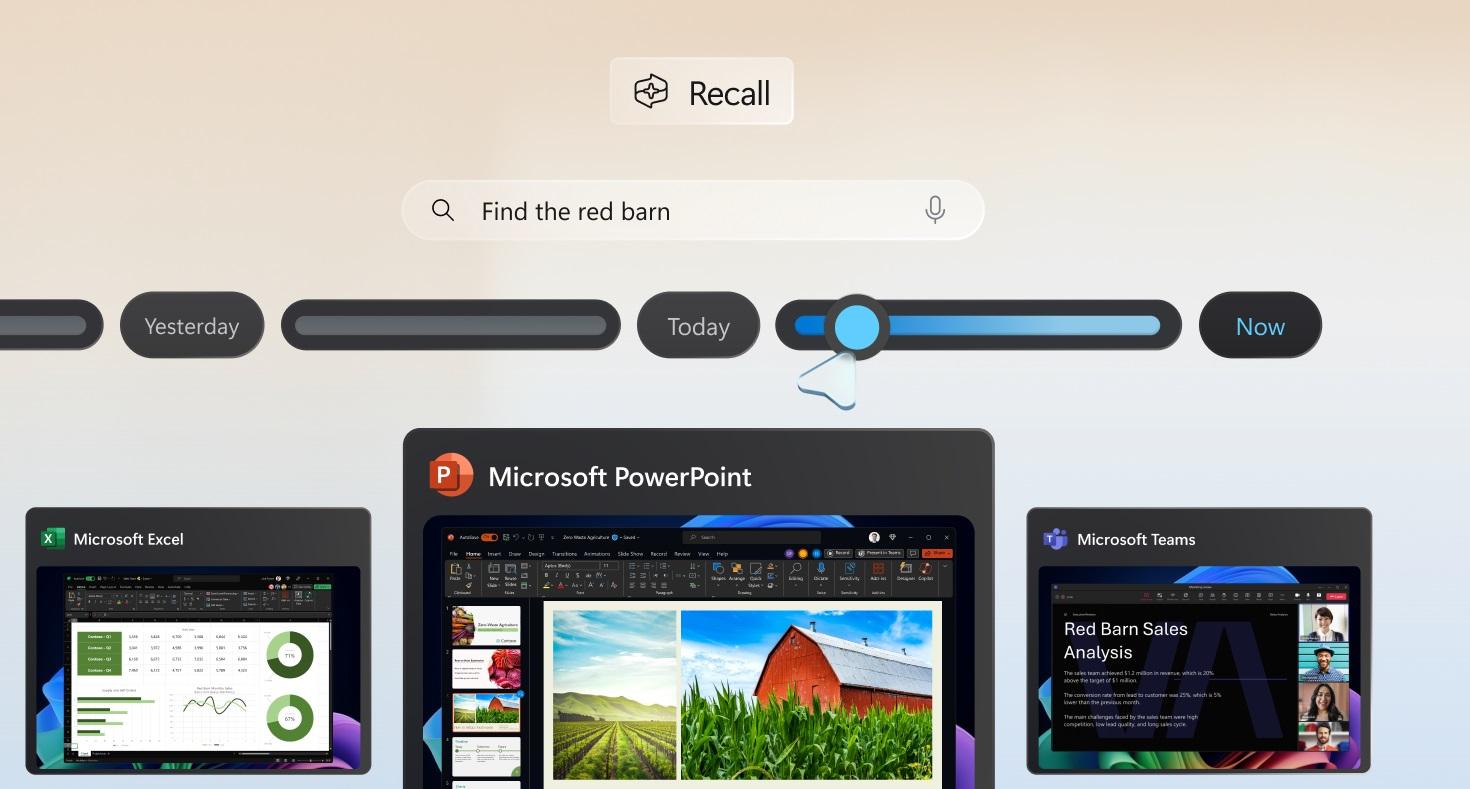
Microsoft Recall still captures SSNs, passwords, and more

Microsoft had to recall the Recall AI feature on Copilot+ Windows PCs earlier this year. In theory, Recall was supposed to be a great AI trick to quickly resurface information from your past activities on a computer. In practice, it turned out to be a privacy and security nightmare.

Researchers proved that Recall data could be easily accessed by a malicious actor who gains access to a computer. Also, the saved screenshots could contain sensitive information, and Recall was enabled by default on those Windows builds.

Microsoft heard the complaints and pulled the feature to rework its security. As testers have found, Recall now encrypts the screenshots, making it impossible to extract information from the database. However, Recall will still take screenshots of sensitive data, including social security numbers, logins (including passwords), and credit card data.

Even with protections in place, Recall mostly failed to recognize that sensitive data was entered on the screen in Tom’s Hardware’s tests.

Tech. Entertainment. Science. Your inbox.

Sign up for the most interesting tech & entertainment news out there.

By signing up, I agree to the Terms of Use and have reviewed the Privacy Notice.

The feature has a “filter sensitive information” setting that everyone should enable right if you use Recall. The good news is that Recall is an opt-in service now, meaning it won’t be automatically enabled once you get the latest Windows update.

The test showed various scenarios that many computer users will reconize where Recall shouldn’t take screenshots of the content shown on the display. But Recall captured the information anyway.

For example, Recall recorded a Windows Notepad window where the user entered a credit card number and a random username and password combination, even though the user typed “Capital One Visa” next to the number to trigger the protections. Recall also captured fake social security numbers, names, and date of birth details entered into a PDF loan application. The feature had no idea those were all fake; it just screenshotted the information. It also captured the page when a genuine credit card number was introduced.

The tester then created a web form with fields that said, “Enter your credit card number below.” The form asked for the credit card type, number, CVC, and expiration date. Again, Recall failed to trigger the protections and recorded images containing the data.

The only time Recall worked correctly was when the user entered payment information into the forms of two online stores.

That’s certainly not good enough and a big reason to worry. I’m a longtime Mac user, so I won’t deal with Recall anytime soon. Or if I do, I’ll only do it for testing purposes. But I can’t see why one should leave it enabled.

The report notes that Recall’s databases are indeed encrypted. Also, you need to authenticate with Microsoft Hello (fingerprint, face, or PIN) to access your screenshots. But a malicious actor with remote access to your computer could get into the history the AI uses once they obtain that PIN. You might think it won’t happen to you, but I wouldn’t take that risk, no matter how amazing this Copilot feature might be.

Because yes, I won’t lie, having the AI remember what websites you visited can be an amazing tool if done right. The feature would have to have strong security and privacy features, and Microsoft is not getting it right.

When asked about Recall’s feature that’s supposed to identify sensitive data, the company offered Tom’s Hardware a quote from its Recall blog post that tackles privacy matters:

We’ve updated Recall to detect sensitive information like credit card details, passwords, and personal identification numbers. When detected, Recall won’t save or store those snapshots. We’ll continue to improve this functionality, and if you find sensitive information that should be filtered out for your context, language, or geography, please let us know through Feedback Hub. We’ve also provided an option in Settings that we encourage you to enable that will anonymously share the apps and sites you prefer to be excluded from Recall to help us improve the product. And you can also choose to exclude specific apps and websites through the Recall settings page which we talk about below.

That means Recall will get better over time, but you’ll have to wait. Until that happens, it might capture sensitive data while you use your computer, as these tests have shown. You’ll have to decide for yourself whether the risk is worth it.

You can try Recall by installing the newest Windows Insider Build. Read more about it in Microsoft’s blog at this link.

Source

Posted on

2025: The year of AI for business – top trends to watch out for

You might not have started thinking about your Christmas shopping yet, but I bet you’ve been thinking about what artificial intelligence (AI) for business is going to look like in 2025. If you haven’t, then settle in with a glass of mulled wine, because now is your chance.

AI has come leaps and bounds over the past few years and is currently one of the biggest opportunities for business growth. With capabilities to intelligently automate admin tasks, take on customer service tasks, and analyse masses of data, the advantages are endless. But there’s still lots of room for development, in ways which will and won’t surprise you.

Stepping into the year of AI for business

Like your list of New Year’s Resolutions, the regulation landscape is constantly changing and adapting to the needs of tech businesses. For AI development to thrive in 2025, there must be a supportive environment ready for it. There’s no denying the appetite for AI, with over 120 bills on AI currently before the United States Congress. These build upon regulations already in place, such as the EU AI Act, which promotes the rapid adoption of trustworthy AI through reduced administrative burdens for SMEs and clear requirements for AI use.

The EU AI Act defines AI systems by their risk rating, splitting them up into prohibited, high-risk, limited-risk, and minimal-risk groups. This is something we could see changing in 2025, with the potential for new legislation focusing on AI classification over risk. This approach would consider criteria such as the intended uses and basic properties of AI systems.

New legislation coming into effect next year will significantly impact how businesses can use AI. Data management is one area likely to see substantial legislative focus, ensuring that AI does not compromise the security and privacy of business and customer data.

AI developments – The weird and the wonderful

As new legislation is rolled out in 2025, it will give businesses and developers more freedom and safety to largen AI’s scope. Many of us will already have AI ingrained into our processes, but what will we be bringing on board next?

  • Leading the way – Microsoft

One company which has been leading the way in AI development in 2024 has been tech giant Microsoft. At its recent Ignite 2024 event, it made several announcements which demonstrate the acceleration of AI in 2025. One of these was that Microsoft Teams will let participants speak in a language of their choice, through its new AI-powered Interpreter feature. Facilitating global communication and collaboration, this is one powerful way in which AI will fuel business growth.

Microsoft also announced the introduction of its AI agents this year. These agents will drive organisational wide optimisation and automation by collaborating with workers, a step forward from the AI assistants we already have. Agents can be trained to know your organisation from top to bottom and can compile details for business pitches and presentations whilst you focus on more valuable tasks.

  • Cutting corners with automation

Like AI agents, other AI systems which rely on trigger-based automation will flourish in 2025. Once the system is notified of a trigger, such as an email being received, it can digest the information and deliver an automated response to the trigger. Automated AI will seamlessly slot into business processes, taking care of admin tasks which frees up time for workers in all levels of the business to spend more time with customers and focus on their long-term needs.

The rise of automated AI poses a need for focus on responsible usage. Automation means that AI could be exposed to confidential data, and without the right protection measures in place, could learn that data and share it without authorisation. Legislation will play a key role in ensuring the responsible and ethical use of AI, but responsibility lies with business leaders as well to make sure that AI adoption goes hand in hand with education. Its important to understand that we will always include a human in the loop and full observability of these interactions with AI.

AI-powered systems might be forging new opportunities for businesses, but they lose their value and customer trust if inaccurate. To prioritise the accuracy of the models AI systems are trained on, we will see a shift in the New Year on how this process works. Grounding an model in accurate, secure data is extremely important. The better he data the more accurate the responses will be. Developers may synthesise their training data on large language models, and then train the AI system on a small language model.

This will approve the accuracy of the AI system, but as it adds degrees of complexity, it also poses the risk of potential bias or incorrect activity, such as the AI hallucination concept. When AI produces information like it is fact without any data to back it up, it’s a sign that something has gone wrong with the training data. Whilst 2025 will be a big year for the development of training models, businesses need to be aware of how their AI systems are being trained to avoid bias and unethical practice.

Not just a New Year’s Resolution

The huge amount of investment in 2025 is just one of many signs that AI isn’t a fleeting New Year’s Resolution. Companies like OpenAI and Microsoft have made a long-term commitment to investing in AI development, because they know we’re still unlocking its full portfolio of capabilities. Even if they’re not profiting off AI right now, it’s undoubtable that the future is rich. But this isn’t just a game for the big players, small businesses will also be staking their claim by adopting and investing in AI.

With the developments we’ll see next year in automation, robotics, and training data, it’s certain that there’ll be a flurry of businesses who haven’t explored AI yet looking to adopt. To make the most of the new developments, don’t wait until New Year’s Day to get started, reach out to the experts now to help your business get AI ready.

Chris Huntingford is the newly-promoted director of AI at ANS, a digital transformation provider and Microsoft’s UK Services Partner of the Year 2024. Headquartered in Manchester, it offers public and private cloud, security, business applications, low code, and data services to thousands of customers, from enterprise to SMB and public sector organisations.

Source

Posted on

Are you on the naughty or nice list for responsible AI adoption?

Over the past year, artificial intelligence (AI) has proved its worth as a long-term investment for businesses. It brings a range of perfectly wrapped presents to the table, making a significant impact on productivity, efficiency, and automation across business functions. With almost 40% of companies worldwide already using AI in some form, it’s undeniable that it has the capability to revolutionise business operations.

For example, Santa’s workshop would benefit from AI adoption in automation of its supply chain orders, faster and more accurate analysis of wish list data, and tracking of items that have made it into his sleigh.

To ensure he makes the most of AI’s benefits, Santa will have brought it on board with ethical guidelines and responsible practices in mind. But have you? Whether you’ve already adopted and want to make sure you’re using AI responsibly, or you’re yet to adopt and are looking to integrate ethical standards into your plan – time’s running out to get onto Santa’s nice list before Christmas.

Getting into the good books with responsible adoption

Adopting AI responsibly isn’t just about avoiding risks, it’s also a way of setting the stage for sustainable growth, efficiency, and innovation. If you jump on the AI bandwagon without building a solid foundation and outlining a clear strategy, a myriad of risks can await your business. Data breaches, ethical challenges, and financial losses are all risks businesses face if they ignore the importance of responsible adoption.

The most effective way of adopting AI to mitigate these risks is a responsible one, and it’s not as easy as plugging in your Christmas lights. Smart and strategic choices are the key to protecting business data and aligning AI initiatives with business goals.

Santa’s top tips for adopting responsibly

Like writing a Christmas shopping list, AI adoption can be too daunting to start for lots of businesses. With so much information out there, where are you meant to start?

The key is pushing fear to the side and making any type of start, even if it’s small. Those who start now and invest in AI will stay ahead of the curve. But like Rudolph and his crew, the AI gap is real, and businesses who don’t get on board now will be left behind. So, what do you need to consider to adopt AI responsibly?

  • Make sure your data shines like a bauble

Squeaky clean data is crucial to getting reliable insights from AI. Getting AI ready means prepping business operations for AI systems to easily slot in, so business data needs to be accurate, void of bias, and ready for action.

The same way you wouldn’t send Santa a disorganised wish list, you wouldn’t give AI messy data. Making sure data is up to date, without errors or duplicates, is critical to ensuring your AI delivers real value. This comes hand-in-hand with assessing your internal resources, and making sure your infrastructure can handle the scale and power of AI demands. More flexible Cloud platforms like AWS, Google Cloud, and Azure can help business scale AI cost-effectively.

  • Embrace elf-level organisation

Training is a key part of onboarding AI. Do you think Santa’s elves are expected to wrap presents without being trained first? Preparation for AI use is essential to allowing your employees to understand its benefits and using it effectively.

As it affects every team in the business, not just the IT department, the entire workforce needs to be prepped for AI adoption. Whilst this can seem like a costly task, investing in your people is how AI will create valuable results. Change management is a key component to preparing workforces for the changes you need to adopt AI. Fostering a culture of readiness and continuous compliance is key to ensuring it becomes an asset.

Knowing your business objectives and making sure your AI strategy aligns with and contributes to them is key to maximising its capabilities. Whether improving customer experiences, automating repetitive tasks, or personalising services is your business goal, use AI to drive that strategy.

Prioritising AI applications that solve real problems as well as boosting productivity is key to boosting business growth. Do you need help with recommending products to your customers to increase sales? This is a tangible problem AI can solve for you. Like following a gingerbread recipe, baking a strategic AI plan will produce the best goods.

Santa’s secret weapon – Responsible AI

Long-term success is the outcome of adopting AI through responsible practices and with ethical guidelines in mind. High-quality data aligned business goals, and a prepped workforce are the key to thriving rather than falling behind.

If Santa’s already on board, why aren’t you? After all, it’s how he gets his presents from the North Pole to under your tree.

Get onto the nice list this Christmas – start small, think big, and stay responsible.

Kyle Hill is chief technology officer at ANS, a digital transformation provider and Microsoft’s UK Services Partner of the Year 2024. Headquartered in Manchester, it offers public and private cloud, security, business applications, low code, and data services to thousands of customers, from enterprise to SMB and public sector organisations.

Source

Posted on

These were 10 the biggest internet outages of 2024

There are few disasters as unifying as an internet outage. Whether it’s a popular website, social network, or online service, everyone collectively freaks out when it goes offline, as was the case when all three major US cell carriers suffered outages on the same day earlier this year.

With that in mind, the network intelligence firm Ookla sifted through Downdetector data from the first three quarters of 2024 to pinpoint the biggest outages of the year. Based on the data Ookla gathered, these were the world’s 10 largest outages of 2024:

World's largest outages in 2024 according to Downdetector.World’s largest outages in 2024, according to Downdetector. Image source: Ookla

The analysis is not an exact science, as the rankings only take into account the number of user reports on Downdetector during the outage. That said, it’s clear that the major Facebook outage on March 5 impacted more people than any other individual outage in 2024.

It wasn’t an especially long outage, but it was the most widespread of the year (so far). Some of these outages impact a small subset of users or users in specific regions, but the Meta crash hit everyone all at once, which is why it received so much attention.

Tech. Entertainment. Science. Your inbox.

Sign up for the most interesting tech & entertainment news out there.

By signing up, I agree to the Terms of Use and have reviewed the Privacy Notice.

“The second largest global outage may be the most memorable. While CrowdStrike is not a service most people think of, we saw nearly 5 million reports to services that rely on it (or rely on Microsoft which relies on Crowdstrike), including emergency services, airlines, and ride sharing apps when a routine software update went bad on July 19,” Ookla notes.

Even if you’ve forgotten about Facebook and Instagram going down, you probably remember when the faulty update from CrowdStrike nearly turned the world upside down.

Source

Posted on

Government agencies urged to use encrypted messaging after Chinese Salt Typhoon hack

US government agencies have been urged to use end-to-end encrypted messaging services, including WhatsApp, Signal and FaceTime, following disclosures that China has breached US telephone networks in a hacking operation that undermines US national security.

In a letter to the US Department of Defence (DOD), two prominent senators warned the DOD is placing security at risk through its continued use of unencrypted landlines, and unencrypted platforms such as Microsoft Teams.

The warning follows confirmation from the FBI and the US Cyber Security and Infrastructure Agency (CISA) that groups linked to the People’s Republic of China have compromised multiple telephone networks and had accessed private communications of a “limited number” of people in government and politics in a hacking operation dubbed Salt Typhoon.

Democratic senator Ron Wyden and republican Eric Schmitt criticised the defence department for failing to use its purchasing power to require wireless telephone service providers to provide cyber defences and accountability, in a letter on 4 December 2024.

“DOD’s failure to secure its unclassified voice, video and text communications with end-to-end encryption has left it vulnerable to foreign espionage,” they warned.

US Navy tests encrypted messaging

The senators disclosed previously classified details of a trial by the US Navy to test end-to-end encryption communications platform Matrix, an open-source, decentralised service widely used by Nato countries. The US Navy is testing Matrix to send encrypted messages from 23 ships and three on-shore sites.

“While we commend the DOD for piloting such secure, interoperable communications technology, its use remains the exception; insecure propriety tools within the DOD and the federal government generally,” the senators said.

“The widespread adoption of insecure, proprietary tools is the direct result of DOD leadership failing to require the use of default end-to-end encryption, a cyber security best practice, as well as a failure to prioritise communications security when evaluating different communications platforms.”

The Salt Typhoon attack, first reported by the Wall Street Journal, has targeted individuals including president-elect Donald Trump, vice-president-elect JD Vance and Senate majority leader Chuck Schumer, according to press reports. 

“This successful espionage campaign should finally serve as a wake-up call to the government’s communications security, despite repeated warnings from experts and Congress,” the senators wrote.

The FBI and CISA have recommended that people use encrypted messaging and voice services such as Signal and WhatsApp to reduce the risk of hackers intercepting text messages.

CISA executive assistant director for cyber security Jeff Greene told broadcaster NBC this week: “Encryption is your friend, whether it’s on text messaging or if you have the capacity to use encrypted voice communication. Even if the adversary is able to intercept the data, if it is encrypted, it will make it impossible.”

According to a blog by cyber security expert Bruce Schneier in October 2024, Chinese hackers appear to have accessed backdoors used by the US government to execute wire-tapping requests, which have been mandated by the Communications Assistance for Law Enforcement Act, enacted in 1994.

“For years, the security community has pushed back against these backdoors, pointing out that the technical capability cannot differentiate between good guys and bad guys,” he said. “And here is one more example of a backdoor access mechanism being targeted by the ‘wrong’ eavesdroppers.”

Matthew Hodgson, co-founder of Matrix.org, a non-profit foundation developing standards for end-to-end encryption, told Computer Weekly that the Salt Typhoon hack was an “unfortunate validation” of concerns raised about the impact of the UK’s Online Safety Act, which contains measures that could be used to weaken end-to-end encrypted communications services.

“It is morbidly amusing to see all of the intelligence agencies telling everybody that actually, end-to-end encryption is a good idea, and the backdoors are a bad idea, and everybody should hop on encrypted systems like Matrix or Signal rather than trust the phone network anymore,” he said.

Source