Posted on

EU law could usher in transformative change to digital ecosystems

In October 2024, the European Commission (EC) published its Digital fairness fitness check report as part of a continued effort to evaluate the effectiveness of European Union (EU) legislation with consumer protection laws.

Specifically, it evaluated the efficacy of the Unfair Commercial Practices Directive, the Consumer Rights Directive, and the Unfair Contract Terms Directive.

The report revealed these existing laws “have only partially achieved the objectives of providing a high level of consumer protection”, with harmful commercial practices online costing EU consumers at least €7.9bn per year, and further drew attention to the power and information imbalances between businesses and consumers online. Now, its findings are being used to shape the latest development in tech policy in Europe, the Digital Fairness Act (DFA).

Following the report, president of the European Commission Ursula von der Leyen wrote to Michael McGrath, the EU’s commissioner for consumer protection, to urge his successor to develop a Digital Fairness Act.

The mission letter outlined five core problematic practices in consumer-facing apps and online platforms today; including “dark patterns”, addictive design, personalised targeting features, problematic commercial practices of social media influencers, and features that make it excessively difficult to cancel digital subscriptions. 

Recent legislation such as the UK’s Online Safety Act and the EU’s Digital Services Act (DSA) have aimed to address some of the illegal and harmful online practices that persist online, but a Digital Fairness Act could potentially tackle some of the more pervasive technological tools that have been adopted by tech companies and digital platforms to persuade and engage consumers.

For example, a study conducted by the EC in 2022 found that 97% of the most popular websites and apps used by EU consumers use at least one dark pattern, which are manipulative interface designs and functionalities which undermine informed consent and mislead users.

Similarly, the European Consumer Organisation’s (BEUC) consumer survey in September 2023 revealed that the majority of consumers feel personal data analysis and monetisation is unfair (60%), and less than half (43%) do not feel fully in control of the decisions they make or the content they are shown online.

With the DFA currently in its proposal phase, civil society organisations and campaigners are putting forward their suggestions to the European Commission. Many civil society organisations across Europe are hopeful that the act will tackle some of the most exploitative techniques that have been fundamental to the tech industry’s growth, and which they believe are responsible for many of the harms that digital users face today. 

Fairness by design

European Digital Rights (EDRi) is the largest European network of organisations defending rights and freedoms online, and are working on a position paper with their members on the DFA. They hope that the act will address exploitative practices often employed by Big Tech and ad tech intermediaries, which they say “exploit users’ vulnerabilities, undermine their autonomy, and disproportionately impact marginalised communities”.

One area of focus they have for the DFA is to ensure it adopts a rights-centred approach that recognises digital users not just as consumers, but as people with broader individual and collective rights.

“A core assumption underpinning this approach is that vulnerability is inherent to the digital realm as we know it today, driven by an imbalance of power and significant information asymmetries,” says Itxaso Dominguez, a policy adviser at EDRi.

To address these challenges, EDRi are advocating for embedding principles of “fairness by design” and “fairness by default” into the act. They hope this will ensure that fairness and respect for fundamental rights are integral to the development and operation of digital platforms and services, rather than optional considerations. 

Superrr Lab, an organisation advocating for just digital futures, recently published a position paper titled Digital fairness – shaping consumer protection in a just and future-proof way.

They too echo the desire for fairness by design and by default to be enshrined in the act: “The DFA will be most effective in truly enhancing digital rights if it addresses the root-causes of power imbalances in the digital realm. Consumers are humans with rights beyond markets and consumer protection law, and an effective DFA, should be shaped accordingly to ensure true digital fairness – in the sense of no discriminatory practices and opportunities for participation.”

The addictive nature of social media platforms is another digital design feature that the act could address, and an area where there is increasing public scrutiny, particularly in relation to its effects on children and young people’s mental wellbeing. Challenging this feature through policy could potentially address one of the main tenets of the industry’s extractive business model. 

“Commissioner for justice Michael McGrath has said it plainly: ‘They want to keep people online constantly, including our children, and this is how to get money from advertising’,” Rosie Morgan-Stuart, campaign and policy consultant for People Vs Big Tech, said. “Meanwhile, the evidence of harm is mounting. Binding rules are clearly needed, given the severity of the risks and Big Tech’s repeated refusal to prioritise safety over profit.”

Enforcement and real accountability

Better enforcement is another core ambition for the DFA. The Digital fairness fitness check report drew attention to the pervasive non-compliance popular among tech companies and social media platforms, and the need for real accountability. Earlier in 2024, the European Commission opened proceedings against Meta, Alphabet and Apple over their failure to effectively comply with their obligations under the existing Digital Markets Act (DMA).

“To make a real difference, the Digital Fairness Act needs to set out clear rules that are easy to understand, to apply and – if necessary – to enforce. Unfortunately, current EU law does not provide sufficient legal certainty in relation to unfair commercial practices online and therefore does not adequately protect consumers,” says Urs Buscke, senior legal officer at BEUC.

EDRi echo the need for more robust enforcement mechanisms and the prohibition of manipulative practices outright, rather than relying on voluntary compliance mechanisms, which have historically failed.

Aside from voluntary compliance mechanisms, gaps in enforcement have also persisted due to the fact that the existing directives covered by the fitness check do not contain any reporting obligations.

An ambitious digital future: breaking up Big Tech

Some believe the DFA could potentially break up the monopolies within the tech industry seen across some of the Very Large Online Platforms (VLOPs), which the DSA defines as platforms or search engines that have more than 45 million users per month in the EU. Instead, they advocate for a digital ecosystem that allows independent, third-party content curation and moderation services. 

“Unbundling the social networks could address many of the harms connected to addictive design and predatory data surveillance by providing consumers with a marketplace of options for recommender systems and other content curation tools,” says Katarzyna Szymielewicz, co-founder of freedom and privacy NGO Panoptykon Foundation. “This would also address the problematic nature of relying on VLOPs themselves as the arbiters of quality and credibility in ranking algorithms.”

On 16 January 2025, 18 former European presidents and prime ministers wrote to Von der Leyen urging the EC to pursue a structural breaking up of Google’s services to restore competition and end Google’s monopoly. 

“Forced breakups are do-able and have a long and distinguished record through modern history – from John D. Rockefeller’s Standard Oil in 1911, to Germany’s gigantic IG Farben conglomerate after the Second World War, to AT&T in 1982,” says Claire Godfrey, executive director of Balanced Economy Project.

“They’ve just fallen out of favour. The US has proposed a break up of Google to fix the search monopoly, and the EU is in a position to support the US and break the tech giant’s monopoly over digital advertising. It needs the political will and courage more than anything.”

Despite the challenges, many of those Computer Weekly spoke with said the DFA could potentially result in transformative changes to the modern digital ecosystem. “The Digital Fairness Act offers a rare opportunity to set a global precedent, ensuring that fairness, transparency and accountability are embedded into the foundations of the digital ecosystem,” says Dominguez.

But this will only happen if policymakers strive to be bold. As Kim Van Spaarentak, GroenLinks MEP, urges: “We don’t have to accept the status quo. We can still fix our online environments if we dare to be ambitious enough. Alternatives are perfectly possible.

“If ethical design becomes the standard, the online space can be a fantastic place for knowledge-sharing, community forming and creativity. But whether the EU dares to go far enough is the big question for the next few years.”
Source

Posted on

Nvidia RTX 5090 FE rumor claims high-end GPU gets loud

  • A new rumor suggests the RTX 5090 will use 600W of power
  • Comments in a Chinese forum point toward the new GPU being much louder
  • Other reports contradict this, however

Update: We’ve updated this story to give more context about the source of this latest rumor, while also highlighting other reports and evidence that suggest the RTX 5090 FE is in fact “very, very quiet”.

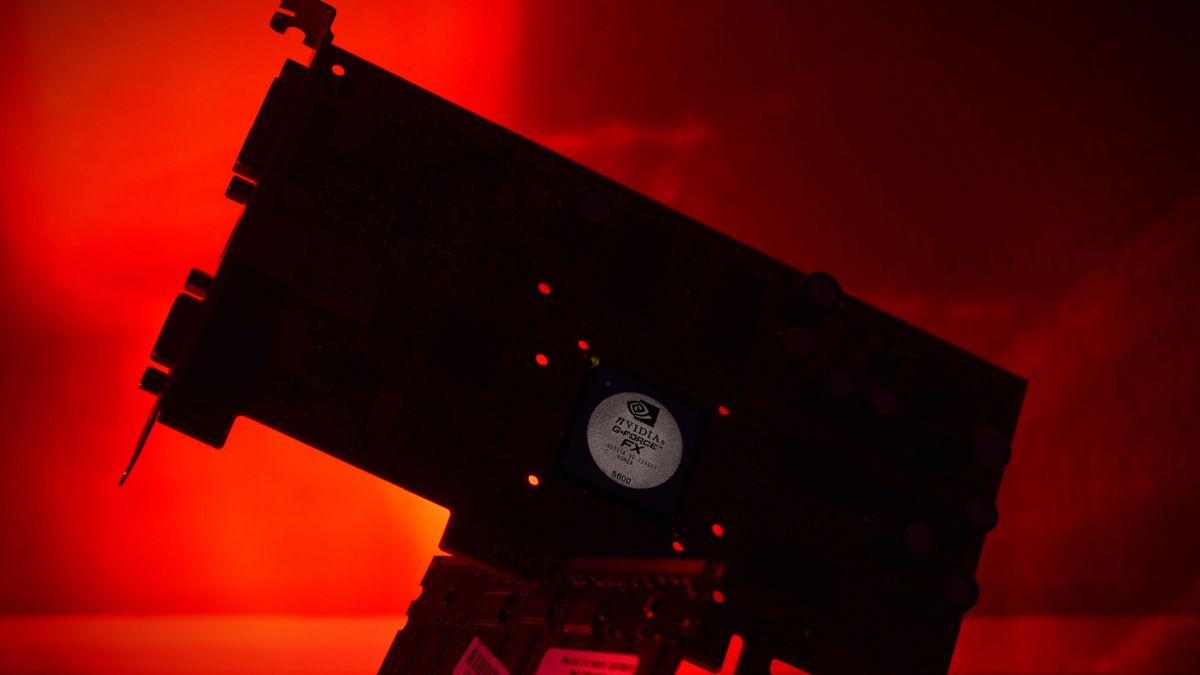
Nvidia‘s RTX 5090 promises to provide a step up from the previous generation’s RTX 4090, but that could come at a significant cost according to new rumors – and you might want to invest in a beefy power supply. However, this rumor is contradicted in some other early leaks and previews – so it looks like we won’t get the full picture until reviews for the new flagship GPU land.

As reported by Tomasz Gawronski on X, discussions within Chiphell (a Chinese forum page about the latest PC hardware) suggest that Nvidia’s RTX 5090 Founders Edition GPU will use 600W of power while being much louder compared to the 4090. This is based on what appears to be an upcoming review with the embargo set for January 24, with a post translated from Chinese that says “The editor cursed while testing… After all, the power consumption increased, the current increased, and the screaming also increased~”.

Considering the pricing of the RTX 5090 ($1,999 / £1,939 / AU$4,039) and the reported 30% performance increase (according to Blender benchmarks highlighted by VideoCardz), this rumor likely won’t bode well with anyone intent on upgrading to Team Green’s latest flagship GPU. The RTX 4090’s power consumption is 450W, and while this is still plenty, the rumored jump to 600W isn’t very appealing either.

The Chiphell rumor makes a big deal of the RTX 5090 being a noisy GPU and while there are plenty of legitimate reasons why people are worried about the noise produced by the RTX 5090, due to the built-in fans working hard to keep the powerful components cool, this should also be taken with a huge pinch of salt.

For a start, this is a comment on a Chinese-language website, so translating it, and the context, is difficult. There’s also no evidence provided (that we can see) about this claim.

Meanwhile, while we’re still waiting for in-depth looks at the RTX 5090’s performance – including how noisy it gets – there have been hints that the ‘loud RTX 5090’ rumors are wrong.

{ window.reliablePageLoad.then(() => { var componentContainer = document.querySelector(“#slice-container-newsletterForm-articleInbodyContent-NGVG5TdNPDSoiww56DXyJW”); if (componentContainer) { var data = {“layout”:”inbodyContent”,”header”:”Get daily insight, inspiration and deals in your inbox”,”tagline”:”Sign up for breaking news, reviews, opinion, top tech deals, and more.”,”formFooterText”:”By submitting your information you agree to the Terms & Conditions and Privacy Policy and are aged 16 or over.”,”successMessage”:{“body”:”Thank you for signing up. You will receive a confirmation email shortly.”},”failureMessage”:”There was a problem. Please refresh the page and try again.”,”method”:”POST”,”inputs”:[{“type”:”hidden”,”name”:”NAME”},{“type”:”email”,”name”:”MAIL”,”placeholder”:”Your Email Address”,”required”:true},{“type”:”hidden”,”name”:”NEWSLETTER_CODE”,”value”:”XTR-D”},{“type”:”hidden”,”name”:”LANG”,”value”:”EN”},{“type”:”hidden”,”name”:”SOURCE”,”value”:”60″},{“type”:”hidden”,”name”:”COUNTRY”},{“type”:”checkbox”,”name”:”CONTACT_OTHER_BRANDS”,”label”:{“text”:”Contact me with news and offers from other Future brands”}},{“type”:”checkbox”,”name”:”CONTACT_PARTNERS”,”label”:{“text”:”Receive email from us on behalf of our trusted partners or sponsors”}},{“type”:”submit”,”value”:”Sign me up”,”required”:true}],”endpoint”:”https://newsletter-subscribe.futureplc.com/v2/submission/submit”,”analytics”:[{“analyticsType”:”widgetViewed”}],”ariaLabels”:{}}; var triggerHydrate = function() { window.sliceComponents.newsletterForm.hydrate(data, componentContainer); } if (window.lazyObserveElement) { window.lazyObserveElement(componentContainer, triggerHydrate); } else { triggerHydrate(); } } }).catch(err => console.error(‘%c FTE ‘,’background: #9306F9; color: #ffffff’,’Hydration Script has failed for newsletterForm-articleInbodyContent-NGVG5TdNPDSoiww56DXyJW Slice’, err)); }).catch(err => console.error(‘%c FTE ‘,’background: #9306F9; color: #ffffff’,’Externals script failed to load’, err)); ]]>

Sign up for breaking news, reviews, opinion, top tech deals, and more.

For example, there’s a video from CES from the PC Centric channel (that you can view below), which includes an admittedly basic sound test (the presenter literally puts his ear next to the GPU), where the RTX 5090 is running “very, very quiet”, which is especially impressive as this is after a decent amount of time running the demanding Cyberpunk 2077 at maximum settings. PC Centric’s claim that “for the amount of power and the fact this is a two-slot card, that’s ridiculous,” flies in the face of the latest rumor, and from the video itself, it does indeed seem like the RTX 5090 FE will be impressively quiet – though of course we’ll again have to wait for full reviews, including our own, to really find out just how loud (or not) this monster GPU is.

Gaming On The RTX 5090 With DLSS 4! – YouTube Gaming On The RTX 5090 With DLSS 4! - YouTube Watch On

The mere fact that the RTX 5090 FE has been slimmed down to a dual-slot size, rather than the huge size of the 4090, which was a 3.5 slot behemoth, suggests that Nvidia is in fact pretty bullish about the power requirements and noise of the Founders Edition card.

As mentioned earlier, components, especially powerful GPUs, can run very hot when in use, and this often means the fans kick in to help cool it down – which can end up being distractingly noisy. To combat this, companies will often make their products larger so airflow is better. By making the RTX 5090 FE smaller than the 4090, it feels like Nvidia is confident in the efficiency and quality of the new ‘cooling innovations’ that it’s showcased ahead of launch.

According to Nvidia, the RTX 5090 Founders Edition has been designed with cooling capacity in mind, including improved Liquid Metal thermal interface material (TIM), and a unique three-piece PCB that is designed to maximise cooling without resorting to turning the fans up to max.

So, while some parts of the internet are getting concerned about the rumor from Chiphell, it seems there’s plenty of counter evidence out there that should allay some of those fears.

What does this mean in terms of PSU requirements?

When it comes to the power consumption of the new GPU, it’s again important to note that this is just a rumor, but if it’s legitimate, then RTX 5090 users will certainly have to shell out more than $1,999 / £1,939 / AU$4,039. If you don’t already own a 1000W PSU, then you’ll more than likely need to invest in one – the recommended PSU requirement for the RTX 5090 is 1000W according to Corsair.

This is especially the case if you’ve got a high-end CPU equipped, as you’ll want to avoid any system malfunctions due to your PSU not wielding enough power. Once reviews arrive, we’ll have to measure just how much of a jump the RTX 5000 series flagship GPU is from the previous generation.

If I’m honest, even the RTX 4090 is still overkill for gamers, which will also be true of the RTX 5090 – so if you invest in a new GPU and new PSU, you might have to wait a while to really get the most out of your rig.

You may also like…

Source

Posted on

Meta is about to ruin WhatsApp with AI bots no one wants

Of all the generative AI assistants out there, Meta AI must be the most annoying for the simple fact that Meta is shoving it down our throats. No app is safe, from Facebook to Messenger to WhatsApp to Instagram. Meta AI is there whether you want it or not, and there’s no way to deactivate it.

Meanwhile, ChatGPT is entirely optional, not that OpenAI can really force it on anyone. Apple’s Apple Intelligence is also optional; you don’t have to use it even if you have access to it. Then there’s Google Gemini, which is baked into many Google products but doesn’t feel as intrusive as Meta AI. The same goes for Microsoft’s Copilot.

The worst part about Meta AI is that Meta isn’t done ruining its apps with overdoing the AI presence. We’ve just learned of AI profiles coming to Facebook and Instagram, which is extremely annoying. It gets worse; Meta will now give AI bots prime plans inside WhatsApp, a feature that nobody really asked for from the one Meta app that’s actually useful.

WhatsApp is the world’s largest chat app. It works on iPhone and Android and supports end-to-end encryption across platforms. That’s the only reason I’m still using it. That, and the fact that Meta relented on its annoying WhatsApp policy change a few years ago.

Tech. Entertainment. Science. Your inbox.

Sign up for the most interesting tech & entertainment news out there.

By signing up, I agree to the Terms of Use and have reviewed the Privacy Notice.

Come to think of it, the only reason WhatsApp is so good and still encrypted, is that the app was built this way well before Meta bought it for a small fortune.

The last thing I want in WhatsApp is support for AI chatbots. Yes, it’s great that you can save a ChatGPT number to chat with the chatbot from WhatsApp, but that’s optional.

Say that Meta feels like it has to put AI bots in WhatsApp to expose more people to Meta AI and potentially make some money in the process. I still hate the idea of WhatsApp getting a dedicated AI menu. That’s wasted screen real estate right there. It’s a feature I’ll never use, and I’m sure others will be equally uninterested.

The new AI bots menu in a WhatsApp beta release for Android.The new AI bots menu in a WhatsApp beta release for Android. Image source: WABetaInfo

Meta is testing the new interface in an Android beta version of WhatsApp. Always reliable WABetaInfo surfaced the image above that shows the new AI tab replacing the Communities tab. That menu, which might actually be useful, is merging with the Chats tab.

The new AI tab will include all sorts of AI chatbots to talk to, including third-party models that can talk to you about specific topics.

I don’t doubt that some WhatsApp users will want to use these services. I say that as a longtime ChatGPT user who chats with OpenAI’s chatbot about all sorts of things daily. But I absolutely hate the idea of any AI product being forced on me the way Meta is doing with Meta AI.

WhatsApp is especially important to me as I use it to talk to many people. It’s not just Android users in my family or friends group that like WhatsApp; plenty of iPhone owners prefer the platform over iMessage. AI isn’t needed. Or if it is, it should be hidden somewhere and accessible on demand.

It might get even worse than that. WABetaInfo found evidence in a different WhatsApp beta version that Meta wants to let users create custom AI chatbots right inside the app. The process might be similar to what’s already available on Instagram.

Support for custom AI bot creation in a WhatsApp beta release for Android.Support for custom AI bot creation in a WhatsApp beta release for Android. Image source: WABetaInfo
The feature resembles the custom chatbots available in ChatGPT and Gemini, so it’s not entirely surprising. But, again, it’s not something I want to clutter a key app like WhatsApp.

I don’t see any value in adding AI bots to WhatsApp or supporting the creation of custom ones.

Remember that if left unchecked, some custom AI chatbots might be harmful, especially when certain types of users are exposed to them. And it’s not like Meta is improving its content moderation policies, so we have no idea how it’ll police this universe of AIs it’s bringing to apps like WhatsApp and Instagram.

I can only hope that Meta will not bring these features out of beta, but that’s just wishful thinking. If anything, I take some solace in knowing that it’ll take longer for Meta to deploy the AI changes to WhatsApp in Europe.

Source

Posted on

Samsung just hallucinated that it will become the global AI leader in 2025

Samsung was the first big smartphone vendor to launch a flagship phone with AI at the core of its marketing efforts. Last year’s Galaxy S24 series introduced the Galaxy AI suite of features. Samsung followed with the Galaxy Z Fold 6 and Flip 6, which got additional AI capabilities. Samsung then extended Galaxy AI support to older flagship devices. And in a few weeks, Samsung will launch the Galaxy S25 series, which should introduce even more Galaxy AI novelties.

But Samsung leadership is hallucinating worse than an AI program ever could about Samsung’s global role in genAI. In a New Year’s address, Samsung Electronics CEO and Vice Chairman Han Jong-hee and DS Division Vice Chairman Jeon Young-hyun addressed Galaxy AI, saying that Samsung should become the undisputed leader of device AI this year.

“Now is the time for bold innovation that goes beyond the existing success methods as we face an inflection point in AI technology,” the execs said, according to a machine-translated Samsung release. “Let’s establish ourselves as a clear device AI leader this year through advanced intelligence.”

The goal of becoming the undisputed AI leader is noble. It’s what you’d expect key execs to say ahead of a busy year when AI will continue to dominate the tech world. It’s also something officials at other leading tech companies could say, considering AI is the main priority right now.

Tech. Entertainment. Science. Your inbox.

Sign up for the most interesting tech & entertainment news out there.

By signing up, I agree to the Terms of Use and have reviewed the Privacy Notice.

But Samsung is nowhere close to being a leader in AI, and I don’t see it happening in 2025 either. The main problem with Samsung’s Galaxy AI approach is that it doesn’t have a meaningful model of its own to power the genAI tech on phones like the Galaxy S24 and S25.

Using Google's Circle to Search AI feature on the Galaxy S24 Ultra.Using Google’s Circle to Search AI feature on the Galaxy S24 Ultra. Image source: Samsung

Galaxy AI is a mix of AI technologies. Google’s Circle to Search is a good example. Also, Galaxy S25 phones are rumored to come with free Google Gemini Advanced, Google’s best version of Gemini AI.

I’ll also point out that Samsung’s upcoming XR devices, Project Moohan and unnamed AR smart glasses, will work on Google’s Android XR platform, with Gemini playing a key role. I expect Galaxy AI to be part of the picture for both types of products because Samsung can’t AI on its own.

Samsung doesn’t have an alternative to ChatGPT or Gemini. If it is working on Bixby upgrades and Gauss upgrades, matching these AI models will take a long time.

Also, Samsung doesn’t have a desktop presence. ChatGPT is my primary AI tool right now, and I use it across devices. Most of the time, I access it on my Mac rather than a mobile phone.

OpenAI and Google have better models. Meta, Claude, and Microsoft also have AI tools that are more advanced than Samsung’s. Apple is working on a Siri LLM that will behave like ChatGPT and has incorporated ChatGPT into Apple Intelligence on the iPhone.

As for on-device AI, Samsung might have been the first to push AI on mobile devices with Galaxy AI, but it’s not the only one. Google is doing it with Pixel phones and Android in general. Apple laid out an even better vision of on-device AI with Apple Intelligence this year, which Samsung doesn’t appear to be able to match.

Samsung's Project Moohan Android XR headset.Samsung’s Project Moohan Android XR headset. Image source: Samsung


Apple Intelligence might be behind Galaxy AI and other rivals, but Apple has something rivals can’t match: a massive base of devices that can use Apple Intelligence, and the list is growing rapidly. Once Apple Intelligence matures, Apple could very well become the undisputed device AI leader.

Speaking of Apple’s AI vision, Samsung has yet to match what Apple wants to do with iPhones. It’s not just about text and notification summaries, text generation, wallpaper generation, photo editing, and translation. It’s about Siri becoming a more useful assistant by accessing on-device contextual information about the user.

Apple has a plan, at least; one that Samsung might follow. Samsung’s Galaxy AI teasers during the Fold 6 and Flip 6 launch event revealed the company is working on a similar vision. But Samsung waited for Apple’s Apple Intelligence reveal before it unveiled its own plans.

I’ll also point out that Apple Intelligence is designed to offer more on-device AI features and better privacy for cloud-based AI than Galaxy AI can. Turn off Galaxy AI on your phone right now, and you’ll lose many of its useful features. Samsung has yet to match Apple’s Private Cloud Compute, a private cloud-based AI system.

What I’m getting at is that it’ll take years for any company to become the undisputed leader in device AI. If that ever happens. And it’s way too early for Samsung to call for that title, especially considering its massive reliance on partners like Google.

Also, suppose the Samsung execs only want the company to sell as many products that can run third-party AI programs within Galaxy AI. In that case, that still doesn’t qualify as being the undisputed leader of device AI.

Source

Posted on

Top 10 data and ethics stories of 2024

In 2024, Computer Weekly’s data and ethics coverage continued to focus on the various ethical issues associated with the development and deployment of data-driven systems, particularly artificial intelligence (AI).

This included reports on the copyright issues associated with generative AI (GenAI) tools, the environmental impacts of AI, the invasive tracking tools in place across the internet, and the ways in which autonomous weapons undermine human moral agency.

Other stories focused on the wider social implications of data-driven technologies, including the ways they are used to inflict violence on migrants, and how our use of technology prefigures certain political or social outcomes.

In an analysis published 14 January 2024, the IMF examined the potential impact of AI on the global labour market, noting that while it has the potential to “jumpstart productivity, boost global growth and raise incomes around the world”, it could just as easily “replace jobs and deepen inequality”; and will “likely worsen overall inequality” if policymakers do not proactively work to prevent the technology from stoking social tensions.

The IMF said that, unlike labour income inequality, which can decrease in certain scenarios where AI’s displacing effect lowers everyone’s incomes, capital income and wealth inequality “always increase” with greater AI adoption, both nationally and globally.

“The main reason for the increase in capital income and wealth inequality is that AI leads to labour displacement and an increase in the demand for AI capital, increasing capital returns and asset holdings’ value,” it said.

“Since in the model, as in the data, high income workers hold a large share of assets, they benefit more from the rise in capital returns. As a result, in all scenarios, independent of the impact on labour income, the total income of top earners increases because of capital income gains.”

In January, GenAI company Anthropic claimed to a US court that using copyrighted content in large language model (LLM) training data counts as “fair use”, and that “today’s general-purpose AI tools simply could not exist” if AI companies had to pay licences for the material.

Anthropic made the claim after, a host of music publishers including Concord, Universal Music Group and ABKCO initiated legal action against the Amazon- and Google-backed firm in October 2023, demanding potentially millions in damages for the allegedly “systematic and widespread infringement of their copyrighted song lyrics”.

However, in a submission to the US Copyright Office on 30 October (which was completely separate from the case), Anthropic said that the training of its AI model Claude “qualifies as a quintessentially lawful use of materials”, arguing that, “to the extent copyrighted works are used in training  data, it is for analysis (of statistical relationships between words and concepts) that is unrelated  to any expressive purpose of the work”.

On the potential of a licensing regime for LLM’s ingestion of copyrighted content, Anthropic argued that always requiring licences would be inappropriate, as it would lock up access to the vast majority of works and benefit “only the most highly resourced entities” that are able to pay their way into compliance.

In a 40-page document submitted to the court on 16 January 2024 (responding specifically to a “preliminary injunction request” filed by the music publishers), Anthropic took the same argument further, claiming “it would not be possible to amass sufficient content to train an LLM like Claude in arm’s-length licensing transactions, at any price”.

It added that Anthropic is not alone in using data “broadly assembled from the publicly available internet”, and that “in practice, there is no other way to amass a training corpus with the scale and diversity necessary to train a complex LLM with a broad understanding of human language and the world in general”. 

Anthropic further claimed that the scale of the datasets required to train LLMs is simply too large to for an effective licensing regime to operate: “One could not enter licensing transactions with enough rights owners to cover the billions of texts necessary to yield the trillions of tokens that general-purpose LLMs require for proper training. If licences were required to train LLMs on copyrighted content, today’s general-purpose AI tools simply could not exist.”

Computer Weekly spoke to members of the Migrants Rights Network (MRN) and Anti-Raids Network (ARN) about how the data sharing between public and private bodies for the purposes of carrying out immigration raids helps to prop up the UK’s hostile environment by instilling an atmosphere of fear and deterring migrants from accessing public services.

Published in the wake of the new Labour government announcing a “major surge in immigration enforcement and returns activity”, including increased detentions and deportations, a report by the MRN details how UK Immigration Enforcement uses data from the public, police, government departments, local authorities and others to facilitate raids.

Julia Tinsley-Kent, head of policy and communications at the MRN and one of the report’s authors, said the data sharing in place – coupled with government rhetoric about strong enforcement – essentially leads to people “self-policing because they’re so scared of all the ways that you can get tripped up” within the hostile environment.

She added this is particularly “insidious” in the context of data sharing from institutions that are supposedly there to help people, such as education or healthcare bodies.

As part of the hostile environment policies, the MRN, the ARN and others have long argued that the function of raids goes much deeper than mere social exclusion, and also works to disrupt the lives of migrants, their families, businesses and communities, as well as to impose a form of terror that produces heightened fear, insecurity and isolation.

At the very end of April, military technology experts gathered in Vienna for a conference on the development and use of autonomous weapons systems (AWS), where they warned about the detrimental psychological effects of AI-powered weapons.

Specific concerns raised by experts throughout the conference included the potential for dehumanisation when people on the receiving end of lethal force are reduced to data points and numbers on a screen; the risk of discrimination during target selection due to biases in the programming or criteria used; as well as the emotional and psychological detachment of operators from the human consequences of their actions.

Speakers also touched on whether there can ever be meaningful human control over AWS, due to the combination of automation bias and how such weapons increase the velocity of warfare beyond human cognition.

The second global AI summit in Seoul, South Korea saw dozens of governments and companies double down on their commitments to safely and inclusively develop the technology, but questions remained about who exactly is being included and which risks are given priority. 

The attendees and experts Computer Weekly spoke with said while the summit ended with some concrete outcomes that can be taken forward before the AI Action Summit due to take place in France in early 2025, there are still a number of areas where further movement is urgently needed.

In particular, they stressed the need for mandatory AI safety commitments from companies; socio-technical evaluations of systems that take into account how they interact with people and institutions in real-world situations; and wider participation from the public, workers and others affected by AI-powered systems.

However, they also said it is “early days yet” and highlighted the importance of the AI Safety Summit events in creating open dialogue between countries and setting the foundation for catalysing future action.

Over the course of the two-day AI Seoul Summit, a number of agreements and pledges were signed by the governments and companies in attendance.

For governments, this includes the European Union (EU) and a group of 10 countries signing the Seoul Declaration, which builds on the Bletchley Deceleration signed six months ago by 28 governments and the EU at the UK’s inaugural AI Safety Summit. It also includes the Seoul Statement of Intent Toward International Cooperation on AI Safety Science, which will see publicly backed research institutes come together to ensure “complementarity and interoperability” between their technical work and general approaches to AI safety.

The Seoul Declaration in particular affirmed “the importance of active multi-stakeholder collaboration” in this area and committed the governments involved to “actively” include a wide range of stakeholders in AI-related discussions.

A larger group of more than two dozen governments also committed to developing shared risk thresholds for frontier AI models to limit their harmful impacts in the Seoul Ministerial Statement, which highlighted the need for effective safeguards and interoperable AI safety testing regimes between countries.

The agreements and pledges made by companies include 16 AI global firms signing the Frontier AI Safety Commitments, which is a specific voluntary set of measures for how they will safely develop the technology, and 14 firms signing the Seoul AI Business Pledge, which is a similar set of commitments made by a mixture of South Korean and international tech firms to approach AI development responsibly.

One of the key voluntary commitments made by the AI companies was not to develop or deploy AI systems if the risks cannot be sufficiently mitigated. However, in the wake of the summit, a group of current and former workers from OpenAI, Anthropic and DeepMind – the first two of which signed the safety commitments in Seoul – said these firms cannot be trusted to voluntarily share information about their systems capabilities and risks with governments or civil society.

 Dozens of university, charity and policing websites designed to help people get support for serious issues such as sexual abuse, addiction or mental health are inadvertently collecting and sharing site visitors’ sensitive data with advertisers.  

A variety of tracking tools embedded on these sites – including Meta Pixel and Google Analytics – mean that when a person visits them seeking help, their sensitive data is collected and shared with companies like Google and Meta, which may become aware that a person is looking to use support services before those services can even offer help.

According to privacy experts attempting to raise awareness of the issue, the use of such tracking tools means people’s information is being shared inadvertently with these advertisers, as soon as they enter the sites in many cases because analytics tags begin collecting personal data before users have interacted with the cookie banner.

Depending on the configuration of the analytics in place, the data collected could include information about the site visitor’s age, location, browser, device, operating system and behaviours online.

While even more data is shared with advertisers if users consent to cookies, experts told Computer Weekly the sites do not provide an adequate explanation of how their information will be stored and used by programmatic advertisers.

They further warned the issue is “endemic” due a widespread lack of awareness about how tracking technologies like cookies work, as well as the potential harms associated with allowing advertisers inadvertent access to such sensitive information.

Computer Weekly spoke to author and documentary director Thomas Dekeyser about Clodo, a clandestine group of French IT workers who spent the early 1980s sabotaging technological infrastructure, which was used as the jumping off point for a wider conversation about the politics of techno-refusal.

Dekeyser says a major motivation for writing his upcoming book on the subject is that people refusing technology – whether that be the Luddites, Clodo or any other radical formation – are “all too often reduced to the figure of the primitivist, the romantic, or the person who wants to go back in time, and it’s seen as a kind of anti-modernist position to take”.

Noting that ‘technophobe’ or ‘Luddite’ have long been used as pejorative insults for those who oppose the use and control of technology by narrow capitalist interests, Dekeyser outlined the diverse range of historical subjects and their heterogenous motivations for refusal: “I want to push against these terms and what they imply.”

For Dekeyser, the history of technology is necessarily the history of its refusal. From the Ancient Greek inventor Archimedes – who Dekeyser says can be described as the first “machine breaker” due to his tendency to destroy his own inventions – to the early mercantilist states of Europe backing their guild members’ acts of sabotage against new labour devices, the social-technical nature of technology means it has always been a terrain of political struggle.

Hundreds of workers on Amazon’s Mechanical Turk (MTurk) platform were left unable to work after mass account suspensions caused by a suspected glitch in the e-commerce giant’s payments system.

Beginning on 16 May 2024, a number of US-based Mechanical Turk workers began receiving account suspension forms from Amazon, locking them out of their accounts and preventing them from completing more work on the crowdsourcing platform.

Owned and operated by Amazon, Mechanical Turk allows businesses, or “requesters”, to outsource various processes to a “distributed workforce”, who then complete tasks virtually from wherever they are based in the world, including data annotation, surveys, content moderation and AI training.

According to those Computer Weekly spoke with, the suspensions were purportedly tied to issues with the workers’ Amazon Payment accounts, an online payments processing service that allows them to both receive wages and make purchases from Amazon. The issue affected hundreds of workers.

MTurk workers from advocacy organisation Turkopticon outlined how such situations are an on-going issue that workers have to deal with, and detailed Amazon’s poor track record on the issue.

Refugee lawyer and author Petra Molnar spoke to Computer Weekly about the extreme violence people on the move face at borders across the world, and how increasingly hostile anti-immigrant politics is being enabled and reinforced by a ‘lucrative panopticon’ of surveillance technologies.

She noted how – because of the vast array of surveillance technologies now deployed against people on the move – entire border-crossing regions have been transformed into literal graveyards, while people are resorting to burning off their fingertips to avoid invasive biometric surveillance; hiding in dangerous terrain to evade pushbacks or being placed in refugee camps with dire living conditions; and living homeless because algorithms shielded from public scrutiny are refusing them immigration status in the countries they’ve sought safety in.

Molnar described how lethal border situations are enabled by a mixture of increasingly hostile anti-immigrant politics and sophisticated surveillance technologies, which combine to create a deadly feedback loop for those simply seeking a better life.

She also discussed the “inherently racist and discriminatory” nature of borders, and how the technologies deployed in border spaces are extremely difficult, if not impossible, to divorce from the underlying logic of exclusion that defines them.

The potential of AI to help companies measure and optimise their sustainability efforts could be outweighed by the huge environmental impacts of the technology itself.

On the positive side, speakers at the AI Summit London outlined, for example, how the data analysis capabilities of AI can assist companies with decarbonisation and other environmental initiatives by capturing, connecting and mapping currently disparate data sets; automatically pin point harmful emissions to specific sites in supply chains; as well as predict and manage the demand and supply of energy in specific areas.

They also said it could help companies better manage their Scope 3 emissions (which refers to indirect greenhouse gas emissions that occur outside of a company’s operations, but that are still a result of their activities) by linking up data sources and making them more legible.

However, despite the potential sustainability benefits of AI, speakers were clear that the technology itself is having huge environmental impacts around the world, and that AI itself will come to be a major part of many organisations Scope 3 emissions.

One speaker noted that if the rate of AI usage continues on its current trajectory without any form of intervention, then half of the world’s total energy supply will be used on AI by 2040; while another pointed out that, at a time when billions of people are struggling with access to water, AI-providing companies are using huge amounts of water to cool their datacentres.

They added AI in this context could help build in circularity to the operation, and that it was also key for people in the tech sector to “internalise” thinking about the socio-economic and environmental impacts of AI, so that it is thought about from a much earlier stage in a system’s lifecycle.

Source

Posted on

Mysterious ChatGPT hardware must be smart glasses, given what OpenAI just unveiled

After months of speculation, Jony Ive confirmed in mid-September that he and a team of former Apple designers are working on hardware that will have ChatGPT at the core. While Ive said his LoveFrom design company will be involved in creating the product (or products?), he didn’t reveal what form factor(s) we should expect.

I labeled the product an iPhone competitor because the iPhone is an AI device, just like the Pixel and any other smartphone that can run native or third-party AI apps. The ChatGPT hardware will compete against the iPhone no matter what it looks like. The only thing we know about the gadget is that it “uses AI to create a computing experience that is less socially disruptive than the iPhone.”

Nearly three months later, I believe the ChatGPT device has to feature a key component, a pair of smart glasses that will truly let the user make the most of OpenAI’s AI models. It’s all thanks to what we witnessed on December 12th, a few short hours apart.

First, Samsung and Google unveiled the Android XR experience and teased the first devices with AI at the center. Project Moohan is Samsung’s obvious Vision Pro alternative, and yes, it looks too much like the latter. Project Moohan will be a spatial computer that supports VR, AR, and AI.

Tech. Entertainment. Science. Your inbox.

Sign up for the most interesting tech & entertainment news out there.

By signing up, I agree to the Terms of Use and have reviewed the Privacy Notice.

All the acronyms are there, with AI giving Samsung a theoretical advantage over the Vision Pro. That will be Galaxy AI and Gemini AI, in case you were wondering.

Samsung's Project Moohan Android XR headset.Samsung’s Project Moohan Android XR headset. Image source: Samsung

More interesting than Moohan is Google’s unannounced pair of smart glasses. Samsung is probably working on its own smart glasses, but the company didn’t feel compelled to announce them on Thursday. 

Google demoed the smart glasses during its Gemini 2.0 announcement, showing how Project Astra can work on them. The wearable device is paired with a Pixel phone, which will handle the processing, including Gemini. The glasses give the AI eyes and ears so it can see everything around you and communicate information as you seek help while on the go.

Add the Android XR platform, and you get augmented reality features. Think AI notification summaries, Google Maps navigation, and real-time translation. According to Google’s demo, these are all part of Android XR.

All of that further reinforces my belief that standalone AR glasses are the future of mobile computing. They’ll complement the iPhone first and then replace it.

Google Maps AR navigation on smart glasses.Google Maps AR navigation on smart glasses. Image source: Google

Seeing Samsung and Google’s announcements was enough to make me realize OpenAI will need similar abilities from ChatGPT. And the only way to deliver them is by making smart glasses of its own.

Little did I know that OpenAI’s “12 Days” live stream, which followed Samsung and Google’s surprise announcement, would further drive that point home.

OpenAI on Thursday announced that ChatGPT Advanced Voice Mode is finally getting support for real-time video streaming and screen sharing. We saw these features demoed for GPT-4o back in May, but OpenAI needed time to bring them to all users.

The ChatGPT mobile app will let you use the camera of your iPhone or Android device to see the world and hold a conversation about it with the user.

The demos OpenAI offered showed that the AI can recognize people and remember details about them. Also, the AI can recognize objects and provide tips and tutorials related to them if asked.

When I first tried Advanced Voice Mode, I wanted to use ChatGPT as a museum voice guide. However, the experience lacked a key feature: the live video stream support that OpenAI just made available to ChatGPT users. Instead, I had to upload photos whenever I had questions about something.

Back to Thursday’s OpenAI updates, the ChatGPT demos showed that you can share your phone screen with the AI and ask questions about the content. It’s another way of giving the AI the ability to see what you’re doing.

This settled it for me. Any multimodal AI is a great tool to enhance your productivity, but it can get miles better if the AI gets eyes. Smart glasses are the best way to wear the AI’s eyes. The glasses don’t even have to support augmented reality features. AR would be just the cherry on top. 

It turns out Meta was right all along with the Ray-Ban AI project. As such, I think OpenAI and LoveFrom have to bundle a pair of smart glasses with whatever ChatGPT hardware product they end up making. I don’t think they can make standalone smart glasses. The technology isn’t ready for that.

Solos AirGo Vision ChatGPT smart glasses: Front look.Solos AirGo Vision ChatGPT smart glasses: Front look. Image source: Solos

They could always create only ChatGPT smart glasses that could then connect to the iPhone, Mac, or any smart device. But in such a case, they won’t control the underlying platform. On that note, I did show you a pair of smart glasses earlier this week (above) which put ChatGPT front and center. They might not be a first-party device, but they’re available for preorder.

This is all speculation from this ChatGPT enthusiast. I have no way of knowing what Ive & Co. are actually designing. But smart glasses seem like a key piece of the puzzle. And no, placing a camera on clothing will not work. Humane tried that and failed miserably. Eyewear is a whole different ball game.

Source

Posted on

Google smart glasses with Gemini AI hands-on: Google Glass done right

When it demoed Project Astra at I/O 2024 in May, Google teased smart glasses for the first time. The company did the same thing during Wednesday’s big Gemini 2.0 announcement, where the wearable was part of a longer Project Astra demo. Google also suggested Gemini AI smart glasses might be coming soon.

At the time, I thought Google was simply showing off a prototype of a pair of Samsung XR glasses that would be unveiled next month during the Galaxy S25 Unpacked press event. Little did I know that Samsung and Google had bigger things in mind.

A day later, the two companies unveiled Project Moohan, a Vision Pro spatial computer rival. Google also announced the Android XR platform that will power it. Both Samsung and Google mentioned smart glasses in their announcements. But Google’s was more impressive, as the company showed off AR features for smart glasses powered by Gemini AI.

Google didn’t offer a name for the smart glasses or a release date. But the company did give a select few people a hands-on experience with Project Moohan and the unnamed smart glasses. It turns out the Gemini AI wearable is quite interesting, seemingly delivering the Google Glass experience that Google failed to offer more than a decade ago.

Tech. Entertainment. Science. Your inbox.

Sign up for the most interesting tech & entertainment news out there.

By signing up, I agree to the Terms of Use and have reviewed the Privacy Notice.

We all remember the Google Glass project, which was, in retrospect, ahead of its time. That smart glasses concept sparked privacy worries at a time when Google wasn’t exactly known for great privacy. Also, there was no generative AI at the time to truly make Google Glass useful.

Fast-forward to late 2024, and Google seems confident enough to demo a product that could become a must-have accessory for people who want AI assistance all the time. Wired tested Google’s Gemini AI glasses and Project Moohan, finding the former the more compelling product.

The glasses seem to take inspiration from the North Focals, smart glasses from a company that Google purchased a few years ago. But they’re slimmer and more comfortable than the Focals.

Even so, smart glasses have thick arms and thicker rims around the eyes, which is what you’d expect from glasses that incorporate AR abilities. They feature clear or sunglasses lenses and will support prescription lenses like Moohan.

North Focals glasses.North Focals glasses. Image source: North

When it comes to AR capabilities, the glasses come in three versions. The no-AR model is presumably the cheapest, as it lacks a display. Then there’s a pair that projects images on one of the lenses, the monocular display.

The best experience, and probably the most expensive, comes from the binocular display version that will center AR images, as seen in the photos above and below.

The processing is passed on to a nearby smartphone, presumably a Pixel phone that connects wirelessly to the glasses. That’s where Gemini resides, and the AI is ready to help with a tap on the arm of the glasses. A tap on the side also brings up the display in those models that support AR.

Google Pixel 9 Pro Fold GeminiGoogle Pixel 9 Pro Fold: Gemini support. Image source: Christian de Looper for BGR

The camera is also built into the frame, and an LED turns on when it is active. Built-in microphones pick up your commands for Gemini, and a speaker in the frames lets you hear the AI talk back.

The glasses are meant to last a full day on a charge, though battery life will probably depend on how much you use them. The hands-on experience with the Gemini AI smart glasses doesn’t offer actual battery characteristics, and it’s too early for that.

The report explains the various scenarios where AI smart glasses will be useful. For example, the glasses support Google Maps navigation, a feature Google showed in the Android XR platform announcement (image below).

Google Maps AR navigation on smart glasses.Google Maps AR navigation on smart glasses. Image source: Google

You also get AI summaries of notifications displayed in front of your eyes. The same goes for real-time translation of text. Impressively, the glasses can translate spoken foreign languages in real-time. Gemini will also caption conversations, a great feature for people with hearing issues. And Gemini can answer in multiple languages, a feature ChatGPT’s Advanced Voice Mode also supports.

The AR capabilities do not stop there. The glasses will show you previews of photos you take, and you’ll be able to play video when needed. The display experience isn’t the greatest, which is understandable. But it still sounds like the hands-on demo was a success.

Gemini powers all the smart AI features, like real-time translation and captioning. The AI can also summarize content seen while on the go, like the page of a book. Gemini has a short-term memory, too, so it can recall some of the things you’ve just done and seen a few minutes ago.

Interestingly, Gemini can also identify products and offer instructions on how to use them. In this hands-on, the Wired reporter asked how to use a Nespresso machine.

As impressive as the demo might sound, Google wasn’t ready to provide a release date and pricing information. The Gemini AI smart glasses it unveiled are clearly superior to the Meta Ray-Ban smart glasses, which only offer AI support, with the AR component missing. I’d expect Google’s glasses to be more expensive, assuming Google wants to sell them.

Since Project Astra is still in the early days, I’d expect Google to launch the glasses once the Gemini assistant abilities it’s working on for Project Astra are ready to launch. No point in having smart glasses in store if the Gemini software isn’t ready.

Meanwhile, you should check out Wired’s full hands-on experience for more details.

Source

Posted on

These were 10 the biggest internet outages of 2024

There are few disasters as unifying as an internet outage. Whether it’s a popular website, social network, or online service, everyone collectively freaks out when it goes offline, as was the case when all three major US cell carriers suffered outages on the same day earlier this year.

With that in mind, the network intelligence firm Ookla sifted through Downdetector data from the first three quarters of 2024 to pinpoint the biggest outages of the year. Based on the data Ookla gathered, these were the world’s 10 largest outages of 2024:

World's largest outages in 2024 according to Downdetector.World’s largest outages in 2024, according to Downdetector. Image source: Ookla

The analysis is not an exact science, as the rankings only take into account the number of user reports on Downdetector during the outage. That said, it’s clear that the major Facebook outage on March 5 impacted more people than any other individual outage in 2024.

It wasn’t an especially long outage, but it was the most widespread of the year (so far). Some of these outages impact a small subset of users or users in specific regions, but the Meta crash hit everyone all at once, which is why it received so much attention.

Tech. Entertainment. Science. Your inbox.

Sign up for the most interesting tech & entertainment news out there.

By signing up, I agree to the Terms of Use and have reviewed the Privacy Notice.

“The second largest global outage may be the most memorable. While CrowdStrike is not a service most people think of, we saw nearly 5 million reports to services that rely on it (or rely on Microsoft which relies on Crowdstrike), including emergency services, airlines, and ride sharing apps when a routine software update went bad on July 19,” Ookla notes.

Even if you’ve forgotten about Facebook and Instagram going down, you probably remember when the faulty update from CrowdStrike nearly turned the world upside down.

Source

Posted on

ChatGPT might get ads

I’ve been a ChatGPT Plus subscriber for a while now, and I don’t plan on switching to the Free tier anytime soon. ChatGPT Plus gives me access to the newest models and features much sooner than the Free tier. Also, the limits with the chatbot are higher on the Plus plan, so you won’t run into interruptions.

Still, the ChatGPT Free option gives you quick access to OpenAI’s chatbot, letting you explore some of its best features to determine whether you’d even want to consider the Plus subscription in the first place.

Also, ChatGPT Free is truly free, as you don’t have to deal with any ads that would help OpenAI pay for your interactions with the AI. You don’t have to agree to have your chats train the AI, either. That’s why it has limits in place.

Unsurprisingly, OpenAI is considering a switch to an ad-based model in ChatGPT at some point in the future. It won’t happen anytime soon, but the company confirmed it’s looking at inserting ads in ChatGPT.

Tech. Entertainment. Science. Your inbox.

Sign up for the most interesting tech & entertainment news out there.

By signing up, I agree to the Terms of Use and have reviewed the Privacy Notice.

OpenAI CFO Sarah Friar told The Financial Times that the company is considering showing ads to non-paying ChatGPT users in the future. Ads could help cover the rising costs of AI servers and even increase profits. OpenAI is no longer a non-profit, after all, so it’ll be chasing revenues like any other tech giant.

We didn’t really need any confirmation from a company that launched a Google Search alternative and is considering a web browser of its own. It goes without saying that ads could be part of the ChatGPT Free experience.

Hopefully, however, OpenAI will not go the same route as Google. The latter made the web discoverable to the world with its Google Search product. But Google also made us hate online ads over the years, and Google Search along with it, because it tracked us everywhere on the web, creating profiles of user preferences for better ad-targeting.

The good news is that OpenAI will not start running ads on ChatGPT Free anytime soon. The company has many concerns about ads, and that’s great to hear. Friar told the Times that OpenAI needs to be “thoughtful about when and where” ads will be implemented.

OpenAI CEO Sam Altman is reportedly warming up to the idea of ads, though he has previously said he’s not a fan of them.

Friar’s remarks aren’t just answers to hypothetical scenarios. OpenAI hired former advertising talents from Meta and Google earlier this year. The only thing they could be working on at OpenAI is ad tech for ChatGPT.

I’ll also remind you of other reports detailing OpenAI’s plans for monetizing ChatGPT in the future that called for much more expensive subscription tiers. Placing ads in the free version of ChatGPT makes even more sense in that context, assuming those reports were accurate.

On the same note, it’ll be interesting to see what comes first: Ads in ChatGPT Free or a Plus subscription increase for premium users.

I will point out that OpenAI might get an influx of extra ChatGPT users in the near future as ChatGPT becomes available through Siri on the iPhone. In turn, iPhone users will be able to buy a Plus subscription from the iPhone’s settings app.

Source

Posted on

This is the closest we’ve come to Tim Cook confirming Apple Glasses

While I haven’t bought the Apple Vision Pro, I’m still a fan of what Apple is doing here because I think the spatial computer debuted key technologies that will lead to the actual head-worn wearable I want: A pair of AR Apple Glasses that might eventually replace the iPhone.

Rumors say that we have a long wait ahead of us before true Apple Glasses become a reality. Apple needs tons of progress with the tech involved before it can create the product it wants. Meta recently showcased the bulky Orion concept of AR glasses that cost $10,000 to make. That’s another clear hint that Apple Glasses will take a while to get here. We need a pair of AR glasses that look much more like regular glasses before consumers will actually adopt them.

Other rumors say that Apple is studying the possibility of developing smart glasses that look like Meta’s Ray-Ban. Those aren’t AR glasses, however. Intead, they just have a camera and Meta AI support. Samsung is expected to unveil a similar gadget in the coming months.

Apple will never confirm work on future products, though it might tease that’s where we’re heading. That’s what Tim Cook did in a recent interview when asked whether Apple Glasses are coming after the Vision Pro.

Tech. Entertainment. Science. Your inbox.

Sign up for the most interesting tech & entertainment news out there.

By signing up, I agree to the Terms of Use and have reviewed the Privacy Notice.

Here’s the actual exchange between Tim Cook and Wired’s Steven Levy:

Wired: Meta and Snap are leading us to mixed-reality glasses that we’d wear continually. Is the bigger, heavier Vision Pro ultimately headed that way?

Tim Cook: Yes, it’s a progression over time in terms of what happens with form factors. AR is a huge deal. With Vision Pro, we’ve progressed to what is clearly the most advanced technology we’ve ever done, and I think, the most advanced technology in the world in terms of electronics problems. We’ll see where it goes.

Tim Cook did not confirm that the tech inside its Vision Pro will eventually shrink down to fit inside Apple Glasses. He offered the obvious answer any CEO would have given, considering the question. Yes, the Vision Pro is a stepping stone towards something better. His “we’ll see where it goes” is the hedge you’d expect from an exec dealing with this question.

Meta Rayban SunglassesRay-Ban Meta smart glasses. Image source: Jonathan S. Geller


I’ve included the question in full because of how it’s framed. Levy asks Cook whether smart glasses like the ones Meta and Snap sell are leading us to mixed-reality glasses that we’d wear continuously. But neither Meta nor Snap have such products. Instead, the two social networks sell smart glasses that are significantly less sophisticated than the Vision Pro. They’re not mixed-reality devices.

Put differently, Apple has developed the tech it needs for Apple Glasses with the Vision Pro. Apple now has to shrink it down to fit inside a pair of normal glasses.

Apple developing a smart glasses product that would support genAI, like Meta’s glasses, would allow Apple to work on the glasses chassis that might one day feature more advanced capabilities that would trickle down from the Vision Pro. There’s no telling how long it’ll take for Apple to come out with Apple Intelligence-ready Apple Glasses.

Cook also addressed questions about lower-than-expected Vision Pro sales in the same interview saying the device is a success.

“It’s an early adopter product, for people who want tomorrow’s technology today,” Cook said. “Those people are buying it, and the ecosystem is flourishing. The ultimate test for us is the ecosystem. I don’t know if you’re using it very much, but I’m on there all the time. I see new apps all the time.”

Source