Posted on

Apple’s big AI-powered Siri upgrade was just delayed to 2026

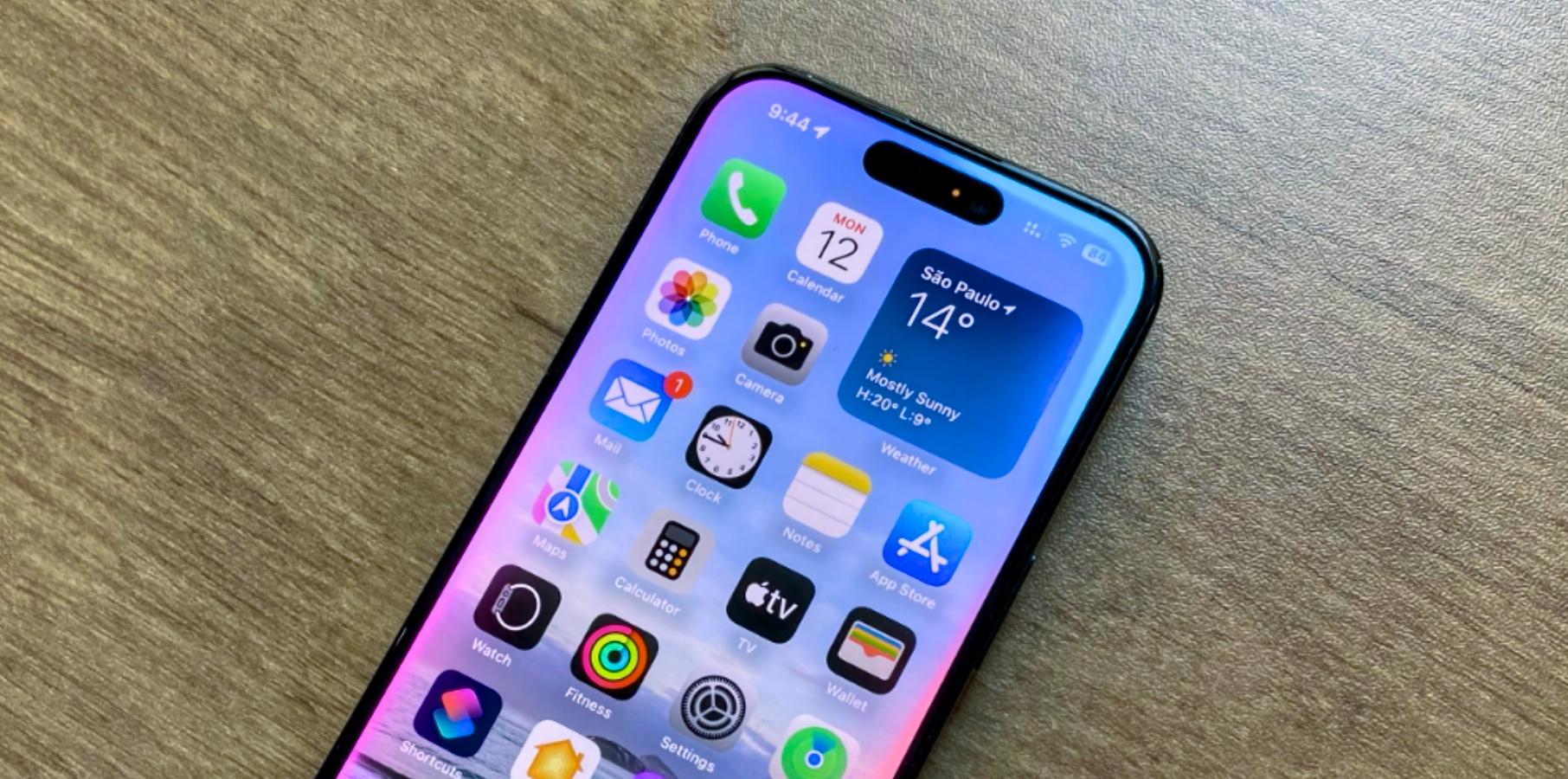
The long-anticipated personalized Siri allegedly coming with iOS 18.4 has now been delayed to 2026. To Daring Fireball, Apple’s spokeswoman Jacqueline Roy said the more personalized Siri experience powered by Apple Intelligence will take longer to be released.

Here’s what she said: “Siri helps our users find what they need and get things done quickly, and in just the past six months, we’ve made Siri more conversational, introduced new features like type to Siri and product knowledge, and added an integration with ChatGPT. We’ve also been working on a more personalized Siri, giving it more awareness of your personal context, as well as the ability to take action for you within and across your apps. It’s going to take us longer than we thought to deliver on these features, and we anticipate rolling them out in the coming year.”

Bloomberg‘s Mark Gurman had already teased that some of the more personalized Siri features for Apple Intelligence could have been delayed. At the time, the journalist said that the most impressive functions could launch as soon as 2027.

In his Power On newsletter, he revealed that it’s going to take at least two extra years before Apple Intelligence gets somewhat similar to the capabilities OpenAI’s ChatGPT, Google’s Gemini, and Microsoft’s Copilot can deliver today—and, honestly, for at least a year now.

Tech. Entertainment. Science. Your inbox.

Sign up for the most interesting tech & entertainment news out there.

By signing up, I agree to the Terms of Use and have reviewed the Privacy Notice.

According to the journalist, Apple has a long schedule to finally revamp Siri and make it an essential part of the Apple Intelligence platform. This is what you can expect:

  • iOS 18.4: Expected for early April, Apple is expanding the languages available with Apple Intelligence;
  • iOS 18.5: Expected for May, Gurman expected Apple to make Siri tap user data to make it more personalized, but this might have now been scrapped to 2026;
  • iOS 19.4: Expected around April-May of 2026, Siri is getting a new architecture that can operate legacy Siri commands while handling more advanced queries in the same flow;
  • iOS 20: Believe it or not, Gurman’s forecast goes up until 2027, when Apple might be finally able to fix Siri and deliver the LLM Siri, which was technically supposed to be revealed this June.

That said, Apple Intelligence will take much longer to become useful. With that in mind, we now wonder what Apple will do to improve its AI platform.

Source

Posted on

Microsoft Office might get a free tier with ads

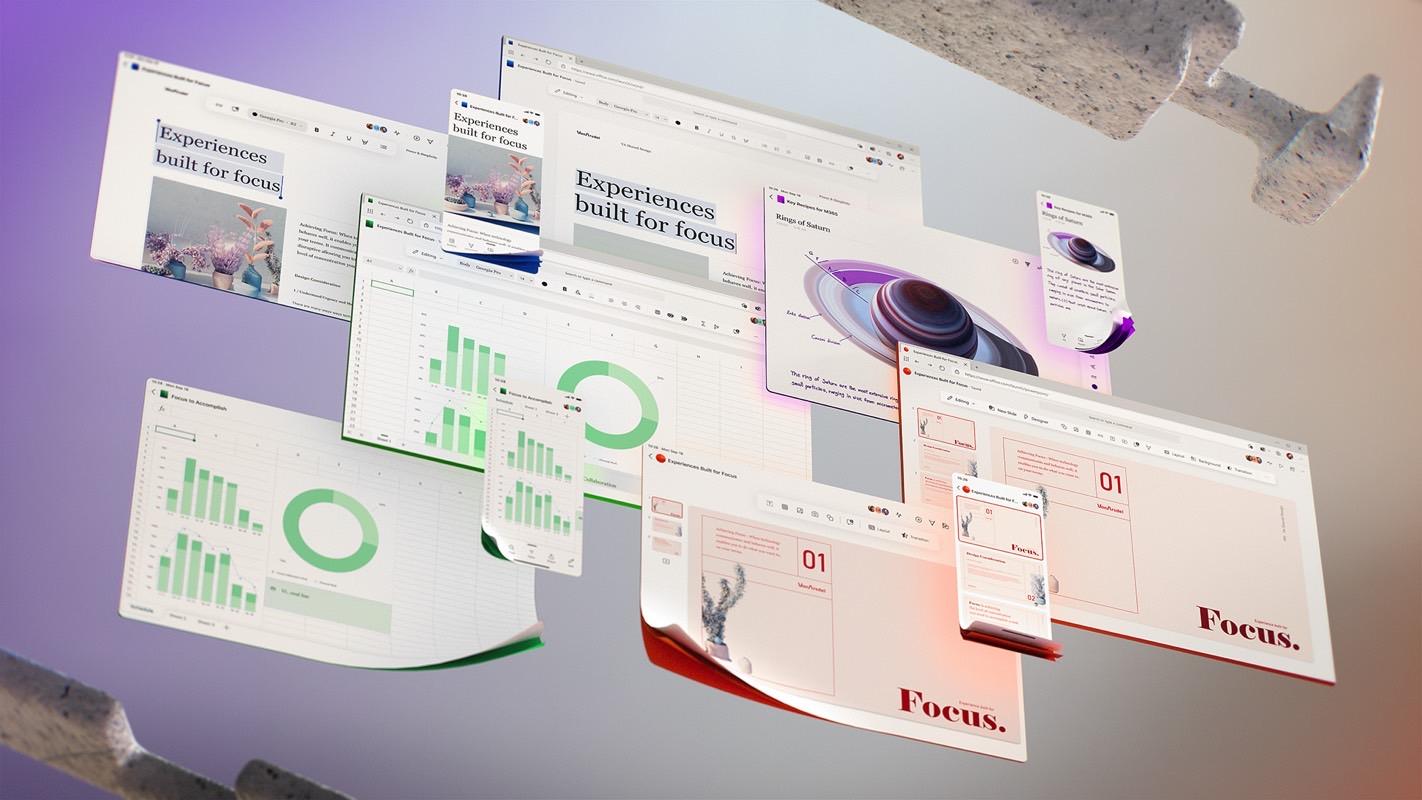
Microsoft might release a free tier Office version with ads in the future. According to Beebom (via The Verge), the company started testing this possibility for Windows PCs. At this moment, the Redmond firm isn’t publicly promoting this bundle, even though it acknowledged the test after the media started talking about the possibility of an ad-supported Microsoft Office plan.

“Microsoft has been conducting some limited testing. Currently, there are no plans to launch a free, ad-supported version of Microsoft Office desktop apps,” said a Microsoft spokesperson in a statement to PCWorld

As spotted by Beebom, once Windows users download the official Microsoft Office bundle from the company’s website and then try to open one of the apps, they can now click “Skip Now” when offered a chance to subscribe.

With that, they can start using Microsoft Office apps with ads. In addition, the free version does not offer some important features. For example, documents can only be saved on OneDrive, not directly to your PC. The publication also listed some missing Microsoft Office features on the ad-supported version.

Tech. Entertainment. Science. Your inbox.

Sign up for the most interesting tech & entertainment news out there.

By signing up, I agree to the Terms of Use and have reviewed the Privacy Notice.

Microsoft Word doesn’t offer Dictate, Add-ins, bookmarks, columns, draw and design tools, and so on. For Excel, users can’t use Conditional Formatting, Pivot Tables, Themes, Macros, custom view, or Workbook Statistics. Microsoft PowerPoint doesn’t let you Format the Background, Show media controls, use drawings and animations, record tools, or take screenshots.

Microsoft may change what’s included and what’s not, depending on whether it decides to release Microsoft Office with ads to users. It’s also unclear if the company might release the same offering for Mac devices. At this moment, you can only access this free tier with a Windows PC or using a virtual machine.

BGR will let you know if Microsoft launches this new Office offering. Currently, users can subscribe to Microsoft 365 Personal for as cheap as $6.99 monthly or $69.99 a year. Prices and plans might change depending on your needs.

Source

Posted on

Microsoft Copilot now offers unlimited free access to Think Deeper and Voice features

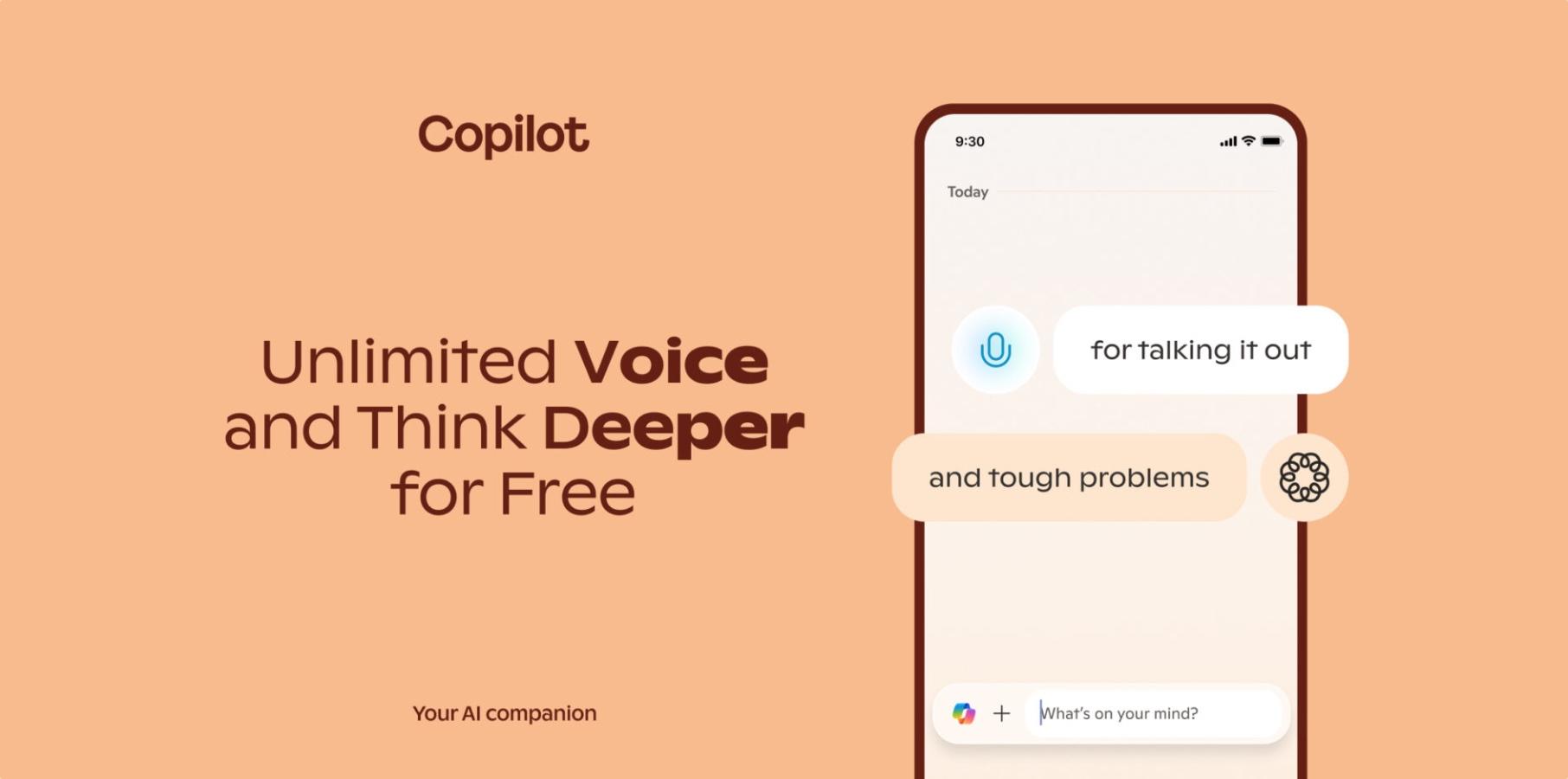
Microsoft announced that its Copilot’s Think Deeper and Voice features are now available for free, with unlimited access for all users. Powered by OpenAI’s o1 model, you can talk with Copilot using Voice and use Think Deeper’s reasoning models to help with more complex tasks.

This announcement comes as OpenAI expands its Operator capabilities to more countries, and Google Gemini is squashing superbugs which would take researchers a decade to fix. In a press release, Microsoft says, “We are seeing a lot of excitement for Voice and Think Deeper, and we know many of you have been hitting limits. This should help.”

Microsoft suggests users take advantage of Copilot’s Voice mode to practice “a few simple phrases in a new language to help you navigate when visiting a new country or meeting new people.” With Think Deeper, users can take advantage of OpenAI’s latest o1 reasoning model when making a big purchase, planning a career move, or more.

“We are working hard to scale unlimited access to advanced features to as many people as possible, as quickly as possible, starting today with Voice and Think Deeper. It’s worth noting you may experience delays or interruptions during periods of high demand or if we detect security concerns, misuse, or other violations,” the Microsoft Copilot team says.

Tech. Entertainment. Science. Your inbox.

Sign up for the most interesting tech & entertainment news out there.

By signing up, I agree to the Terms of Use and have reviewed the Privacy Notice.

Even though these features are being expanded to free users, Copilot Pro users will have priority for access to its latest models during peak usage, access to experimental AI features, and additional use of Copilot in Microsoft 365 apps. The Redmond company reveals more AI features for Pro users will be revealed soon.

Users can try Copilot’s Voice and Think Deeper features for free here.

Source

Posted on

DeepSeek is rushing to get its next-gen R2 model out sooner than expected

After taking the world by storm with the debut of its R1 reasoning model in January, Chinese AI startup DeepSeek is reportedly looking to maintain the momentum by rushing its new R2 model to market as quickly as possible, Reuters reports.

DeepSeek at first planned to launch R2 in early May, but sources familiar with the company tell Reuters that DeepSeek wants to speed up the schedule. However, the sources didn’t provide a new release date for DeepSeek-R2, which has yet to be announced.

We don’t know much about DeepSeek’s next AI model yet, but the Chinese company wants R2 to have improved coding skills and reason in languages other than English.

When DeepSeek-R1 launched, the entire industry was taken aback by the research paper that claimed the highly sophisticated model was trained at a fraction of the cost of OpenAI’s o1. The pushback was immediate, though, as OpenAI posited that DeepSeek distilled ChatGPT to train its model, and Google called DeepSeek’s claims “exaggerated.”

Tech. Entertainment. Science. Your inbox.

Sign up for the most interesting tech & entertainment news out there.

By signing up, I agree to the Terms of Use and have reviewed the Privacy Notice.

Nevertheless, many companies were quick to adopt the new model, including OpenAI investor Microsoft, which added DeepSeek-R1 to Azure AI Foundry and GitHub. You can also find R1 in the Amazon Web Services (AWS) model catalog.

With the arrival of GPT-4.5 still weeks away and GPT-5 potentially months out, DeepSeek has a chance to shake up the market once again if R2 launches soon.

Source

Posted on

Microsoft overcomes quantum barrier with new particle

Microsoft has published the culmination of 20 years of research into subatomic particles, known as Majorana fermions, which it aims to use to build a million-qubit quantum computer.

The research has involved developing topological qubits, which Microsoft research anticipated would offer more stable qubits, requiring less error correction. A research paper on the property of these particles notes that Majorana fermions have a mathematical quirk which suggests that if fermions and anti-fermions are indistinguishable, they may be able to coexist without annihilating one another. 

In a YouTube video discussing the research, Microsoft technical fellow Matthias Troyer said: “Majorana’s theory showed that mathematically it’s possible to have a particle that is its own antiparticle. That means you can take two of these particles and you bring them together, and they could annihilate and there’s nothing left. Or you could take two particles and you bring them together and you have two particles.”

This offers a way to correlate the nothing state when the fermion and anti-fermion annihilate each other as a binary “0”, and when they both exist as a binary “1”. 

Microsoft technical fellow Krysta Svore said Microsoft has succeeded in designing a chip called Majorana 1 that is able to measure the presence of the Majorana fermion particles. “Majorana allows us to create a topological qubit,” she said, where the qubit is reliable, small and controllable.

The nature of the Majorana particles means they hide quantum information, making it more robust, but also harder to measure. Microsoft developed a new measurement approach that it claims is so precise that it can detect the difference between one billion and one billion and one electrons in a superconducting wire, which is used to determine the state of the qubit for quantum computation.

According to Svore, the approach Microsoft has taken gets around the noise problem that leads to errors in qubits, which results in error-prone quantum computers.

“Now that we have these topological qubits, we’re able to build an entirely new quantum architecture, the topological core, which can scale to a million topological qubits on a tiny chip,” she said.

Svore said that each atom in this chip is placed purposefully. “It is constructed from the ground up,” she added. “It is entirely a new state of matter. Think of us as building the picture by painting it atom by atom.”

The processors used to power computers traditionally use electrons. “We don’t use electrons for compute,” said Svore. “We use Majoranas.”

Majorana 1 is Microsoft’s new quantum chip that combines both qubits as well as surrounding control electronics. Along with the control logic, the Microsoft approach to quantum computing requires a dilution refrigerator that keeps qubits at temperatures much colder than outer space. Microsoft has also developed a software stack, which is needed to enable applications to take advantage of Microsoft’s quantum computing.

The Majorana 1 device can be held in the palm of a hand, and fits neatly into a quantum computer that can be easily deployed inside Azure datacentres. “The way the system that we are constructing works is you have the quantum accelerator,” said Microsoft vice-president Zulfi Alam. “You have a classical machine that works with it and controls it. And then you have the application that essentially goes between classical and quantum depending on which problem it’s trying to solve.”

Once the computations are completed, the results are re-synthesised on the classical computational machine, where it’s surfaced as an answer to the problem.

The researchers at Microsoft are confident the approach they have taken with Majorana 1 will be able to scale, which is something that has so-far hindered the progress of quantum computing, due to the error-prone nature of scaling logical qubits. Microsoft’s topological qubit architecture uses aluminum nanowires joined together in an “H” shape. Each H has four controllable Majoranas that are combined onto one qubit. The Hs can also be connected across the chip.

“It’s complex in that we had to show a new state of matter to get there, but after that, it’s fairly simple,” said Svore. “It tiles out. You have this much simpler architecture that promises a much faster path to scale.”

Source

Posted on

Public cloud: Data sovereignty and data security in the UK

The UK government’s decision to designate datacentres as critical national infrastructure (CNI) in September 2024 signalled its ambition to build a digital economy that is secure and globally competitive.

But behind the headlines about protecting against cyber crime and IT blackouts lies a more complicated reality – a sector grappling with policy uncertainty, reliance on foreign cloud giants and a data sovereignty agenda that looks increasingly compromised.

In a blog post, Forrester principal analyst Tracy Woo wrote: “New sovereignty requirements such as SecNumCloud, Cloud de Confiance from France, and the Cloud Computing Compliance Controls Catalog (C5) from Germany, along with the push to keep data in-country, have created a broader push for private and sovereign clouds.”

But the promise of “protected infrastructure” rings hollow when hyperscalers openly admit they cannot guarantee that UK government data stored in cloud services such as Microsoft 365 and Azure will remain within national borders.

Woo points out that countries in the European Union (EU) and Asia-Pacific (APAC) have been attempting to more heavily leverage non-US-based cloud providers, create sovereign clouds, or leave workloads on-premise.

In the UK, regulatory scrutiny is exposing the fragile state of the UK’s digital independence. Looking at the UK’s approach to data sovereignty, law firm Kennedys Law describes the Data Use and Access (DUA) Bill, which was published in October 2024, as “a more flexible risk-based approach for international data transfers”.

Kennedys notes that the new test requires that the data protection standards in the destination jurisdiction must not be materially lower than those in the UK. According to Kennedys, this standard is less rigid than the EU’s “essential equivalence” requirement but raises questions about how “materially lower” will be interpreted in practice.

Understandably, with the government’s reliance on cloud-based productivity tools, concerns about compliance with UK data protection laws have intensified.

The Competition and Markets Authority (CMA) is now investigating cloud market practices that could lock customers into foreign providers. A provisional report is expected in early 2025, setting the stage for potential regulatory reforms aimed at boosting data sovereignty and curbing monopolistic practices.

Reshaping data sovereignty

This is not before time for Mark Boost, CEO of Civo, a UK-based cloud hosting specialist. “The inability to ensure data remains within UK borders underscores the risks of depending on hyperscalers,” warns Boost. “If we keep outsourcing critical data infrastructure, we risk losing more than just technical control, we lose national independence.”

The CMA’s review could reshape the country’s digital future, potentially mandating greater transparency and requiring UK data storage guarantees from global cloud providers. This is something Boost has been talking about for some time.

“Transparency isn’t just about where data is stored, it’s about how datacentres are powered, maintained and secured,” he says. His argument highlights the essential connection between data sovereignty and operational clarity, urging providers to adopt clearer accountability measures.

The inability to ensure data remains within UK borders underscores the risks of depending on hyperscalers. If we keep outsourcing critical data infrastructure, we risk losing more than just technical control, we lose national independence Mark Boost, Civo

Despite these challenges around transparency, the UK datacentre industry has seen promising signs, particularly in regional investment. The government’s recent announcement of a £250m datacentre project in Salford showcases how local government cooperation and targeted investment can drive growth. But such projects remain exceptions rather than the rule.

Luisa Cardani, head of datacentres at TechUK and author of the report Foundations for the future: How datacentres can supercharge UK economic growth, warns that without a national policy statement (NPS), the datacentre sector risks becoming fragmented. Local planning authorities lack the expertise and resources to approve projects efficiently, creating bottlenecks that could delay critical infrastructure developments for years.

“The industry wants to work with local people and authorities, but clear national planning guidance is missing,” says Cardani. “Without a coherent strategy, we’re stuck in a cycle of fragmented decisions and regulatory inertia.”

The proposed inclusion of datacentres under the nationally significant infrastructure projects (NSIP) regime could streamline the approval process, ensuring faster decision-making. However, this remains, for the moment at least, more of an aspiration. In reality, investment will remain stalled until the UK develops a coherent, national approach that balances public and private interests while streamlining the project approval process.

Data sovereignty and security requirements are fundamental to this, and to a large extent it will be market forces that determine the shape and size of the UK’s datacentre industry. On this front, Alvin Nguyen, senior analyst at Forrester, says businesses must recognise the different risk profiles posed by local and hyperscaler-operated datacentres.

“It should be expected that hyperscalers will have more bandwidth, more scalability and more redundancy than their more localised counterparts, but having datacentres classified as critical to the UK’s infrastructure may help with mitigating some, but not all, security risks,” he says.

Complexity of keeping data within national borders

Nguyen also questions whether data sovereignty debates might be over-simplified in some cases.

“With data security, it comes down to what the organisation’s requirements are to determine whether or not to go to a hyperscaler or a local datacentre,” he says. “With sovereignty, that is a bit different. If there are components to the sovereignty laws to restrict access or use of data outside of the local datacentres, hyperscalers will need to ensure that guardrails are in place.”

Nguyen’s comments underscore the complexity of managing sensitive data across hybrid environments. Rather than focusing solely on whether to choose a local or global provider, businesses should consider managing workloads across hybrid cloud environments more strategically.

“Many organisations will find a mix of cloud and datacentres makes the most sense … the risk profile of each is different and that blend of risk when combining cloud and datacentres can be made to be optimised for them,” he says.

The security risks associated with data sovereignty are multifaceted, extending far beyond simple data storage concerns. For businesses in regulated sectors, particularly financial services, the stakes are immense.

When on-premise is the only option

Jon Cosson, head of IT and chief information security officer at wealth management firm JM Finn, underscores the potential dangers when businesses assume that using a large cloud provider automatically guarantees security.

“It’s absolutely imperative you know where your data is and how to secure it,” he warns. “You would not believe how many businesses still just rely on somebody else.”

The issue is compounded by the jurisdictional complexity of global cloud services. When sensitive data crosses borders, it may fall under multiple regulatory regimes, raising questions about legal access and government overreach. This concern has been amplified by legislation such as the US Cloud Act.

In 2019, the then home secretary, Priti Patel, signed a US Cloud Act Agreement covering the UK and Northern Ireland, in which the US and UK governments agreed to provide timely access to electronic data for authorised law enforcement purposes. The Cloud Act could compel US-based hyperscalers to provide foreign-stored data to US authorities, bypassing local laws.

“I want to know exactly where my data goes, how it’s encrypted and how quickly I can get out if needed,” says Cosson, reflecting a broader industry concern that opaque data paths and limited contractual assurances can expose businesses to significant compliance risks.

“We use the cloud when we have to, but still run key systems on-premise for control,” adds Cosson. This approach is typical of companies handling sensitive financial data. There is a lack of trust with organisations not prepared to take promises of “secure cloud storage” at face value.

While Cosson acknowledges that cloud adoption is inevitable for some services, such as Microsoft 365, he underscores the enduring role of on-premise infrastructure for businesses that require absolute control over sensitive data. This, of course, raises an additional problem of how to manage hybrid data environments securely and efficiently.

According to Cosson, companies like Nutanix play a critical role here, enabling organisations to manage workloads across cloud and on-premise environments while maintaining data control. Nutanix’s infrastructure services are designed to address sovereignty concerns, he says, by ensuring businesses have clear data management policies and remain compliant with local regulations.

We need coordinated efforts between government, industry and local authorities to build a resilient datacentre ecosystem. This means shared responsibility, clearer policy frameworks, and incentives for both hyperscalers and UK-based providers Luisa Cardani, TechUK

“The next five years will be decisive,” says Civo’s Boost. “If transparency becomes a legal requirement, we’ll see businesses demanding more from providers, not just about where data resides, but also how infrastructure is managed and powered.”

TechUK’s Cardani believes public-private partnerships will play a crucial role here. “We need coordinated efforts between government, industry and local authorities to build a resilient datacentre ecosystem,” she says. “This means shared responsibility, clearer policy frameworks, and incentives for both hyperscalers and UK-based providers.”

Boost and Cardani each agree that the balance of power between hyperscalers and local operators may shift, particularly if future policies mandate data localisation or prohibit cross-border data transfers without explicit guarantees. Sovereignty-by-design, where infrastructure is built to meet local compliance from the start, could become the new standard.

Adhering to current standards

Until that point, organisations need to work out how they can meet existing standards. Cardani argues that adherence to standards must be supported by national policies that enable transparent reporting and clear accountability structures.

In practice, this means enforcing mandatory audits, data residency certifications and security benchmarks tailored to UK-specific legal frameworks. Without these measures, businesses risk falling into compliance gaps that could expose them to data breaches, fines and legal disputes.

Frameworks such as ISO 27001 for information security management, General Data Protection Regulation (GDPR) for data privacy and Payment Card Industry Data Security Standard (PCI DSS) for payment security set clear operational expectations. Yet these standards are only part of the equation, as evolving regulations increasingly emphasise data sovereignty and security-by-design.

Ensuring that datacentres comply with such frameworks while offering sovereignty guarantees has become a pressing challenge. Hyperscalers operating across multiple jurisdictions complicate audits and compliance checks due to varying legal obligations and data transfer rules.

The introduction of the CMA’s investigation is urgently needed, if only to provide some clarity around what, for most buyers, has become a confusing subject.

For IT leaders, the critical takeaway is that responsibility cannot be outsourced. Security, compliance and sovereignty must be actively managed through risk assessments, compliance audits and multi-supplier strategies.

And as the UK’s digital infrastructure evolves, only businesses that stay ahead of regulation and demand transparency from their providers will be able to navigate the uncertainties.

On that score, the UK’s datacentre industry stands at a crossroads – but with policy clarity, local investment and industry transparency, it has the potential to become a global digital leader in this space.

It’s about trust and everyone playing by the same, fair rules, but from a UK perspective it is also about protecting that most valuable national asset – data.

At JM Finn’s Cosson puts it: “Data sovereignty is not a buzzword, it’s survival.”

Source

Posted on

VMware backup: Key decision points if you migrate away from VMware

Broadcom’s 2023 acquisition of VMware for US$69bn led to disruptive changes in the virtualisation provider’s pricing.

Key here is a move from perpetual licences to a subscription model. This has left some enterprises facing higher costs, with some considering a move to alternative virtualisation environments.

For those considering that, the challenge is to ensure any migration provides adequate backup and recovery measures for new hypervisors. This is as well as protecting remaining VMware workloads.

VMware: Twist or stick?

The main reason CIOs cite for moving away from VMware is cost, with worries over increasing overheads from the new subscription model prominent. VMware also discontinued its free edition of VMware vSphere ESXi, which was popular with smaller firms.

For enterprises looking to move, VMware alternatives include competing virtualisation technologies, such as Nutanix, Microsoft Hyper-V and Oracle Linux Virtualization. There are also open source options that include Red Hat OpenShift Virtualization, Linux Kernel-level Virtual Machines (KVM) and Proxmox Virtual Environment.

As yet, there are few signs of a mass exodus, however. One survey, carried out by backup provider Nakivo, suggested a third of its customers planned to move away from VMware to Proxmox. The supplier points to a smaller number of customers moving to Nutanix and Hyper-V.

This suggests a larger percentage of VMware users have either decided to stay with the technology and the new commercial terms, some of which – including simpler storage licensing – can favour some workloads.

“Naturally, the first reaction is to say, ‘Right, I’m going to go somewhere else, I’m going to use somebody else’s technology’,” says Patrick Smith, field chief technology officer for EMEA at Pure Storage.

“And some organisations have fairly rapidly moved off VMware onto other platforms, but they are either small or very agile to be able to do that.”

Other enterprises might be biding their time, not least because moving between hypervisor platforms is complex and carries risk. Nor do the alternatives offer all VMware’s features and functionality – or not in one place, at least.

Backup, recovery and VMware alternatives

If moving workloads from one hypervisor to another is difficult, then ensuring those workloads and data are backed up adds another layer of complexity.

Much will depend on how an enterprise currently protects its systems, including VMware, alternative hypervisors it is considering, and the backup and recovery tools it uses.

For the majority of organisations, it is probable the data protection systems they use will work if they choose to stay with VMware as a major platform or migrate to alternatives Tony Lock, Freeform Dynamics

The good news is the larger backup and disaster recovery suppliers already have support for competing virtualisation platforms. Hyper-V, in particular, is well supported for businesses that also run on Microsoft infrastructure.

At the same time, providers such as Veeam, Rubrik and Nakivo have strengthened support for open source platforms, especially Proxmox.

This raises the prospect of firms being able to continue with their current backup and recovery provider, even if they move to a mixed approach to virtualisation. Alternatively, if their current disaster recovery supplier falls short, there is the chance to move to a toolset that does support a multi-supplier approach.

“For the majority of organisations, it is probable the data protection systems they use will work if they choose to stay with VMware as a major platform or migrate to alternatives,” suggests Tony Lock, principal analyst at Freeform Dynamics. “This is especially likely to be the case if they have a data protection solution that protects a mixed environment.”

Out of the box?

However, even if a data protection or backup and recovery tool supports alternatives to VMware, IT teams should anticipate carrying out configuration and testing before their alternatives go live.

If they do not, there is a risk that by attempting to save money on licensing, they expose the business to risk and additional costs down the line.

Backup is turning out to be a quite a polarising aspect of moving away from VMware Bruce Kornfeld, StorMagic

VMware’s maturity and market share means products such as ESXi and vSAN are well-understood and well-supported by independent software suppliers, integrators and in-house teams. Not all hypervisors enjoy that industry support.

One area where this is apparent is where backup and recovery providers offer “agentless” integration directly with hypervisors. This is not – yet – on offer for all the alternatives, and CIOs might need to consider agent-based backup.

“Backup is turning out to be a quite a polarising aspect of moving away from VMware,” says Bruce Kornfeld, chief product officer at StorMagic, a supplier of hyper-converged storage.

“The leaders in virtualisation have had the attention of the backup software industry over the last 20-plus years, and tight agentless integration directly with their hypervisors is something that many users have come to expect. However, the backup software industry hasn’t had the research and development capacity to work with every hypervisor on the market – there just hasn’t been the return on investment in the past.”

“VMware customers that have made the decision to move away from VMware need to re-address their backup strategy,” he says. “They need to look at using an agent-based approach. This is the way backup has been done for decades and will work with any hypervisor.” This should not, Kornfeld says, come with extra costs.

Firms also need to consider the time and resources they need to set aside for backup and disaster recovery testing, once they have decided to move workloads away from VMware. This includes testing file and virtual machine-based backup routines.

In fact, changing hypervisors can present a good opportunity to review the strength of disaster recovery and backup arrangements across the business. These might not be as robust as CIOs expect.

“It is fair to say that some organisations are not totally happy with their data protection solutions and processes,” says Tony Lock.

“In such circumstances, it is certainly something they will need to look at, but the issue is do they have the resources and budgets to potentially modify two important systems at once? And even if they do, would they be happy that they can manage the risk of change, since any major platform change carries some element of risk?”

It is here where careful supplier evaluation and selection, and potentially bringing in additional supplier or third-party engineering support, should pay for itself.

Source

Posted on

Masa Son says AGI will be here even sooner than expected, but don’t get your hopes up

It’s only Tuesday but OpenAI has had a great week so far, seemingly making forgotten all the talk about DeepSeek. That’s the viral AI from China that challenged the best ChatGPT model last week, tanking the US stock market in the process.

Since Friday, OpenAI has made several announcements. First, ChatGPT o3-mini and o3-mini-high were released to all ChatGPT users. On Sunday, OpenAI unveiled the ChatGPT Deep Research model, which is available to ChatGPT Pro users. On Monday, OpenAI confirmed that it plans to make a piece of ChatGPT hardware to challenge the smartphone, something we all expected.

On Monday, OpenAI’s finances became a hot topic. Sam Altman was in Japan to kickstart a local venture with local giant SoftBank. The “SB OpenAI Japan” joint venture will see SoftBank spend $3 billion on securing access to ChatGPT for all its subsidiaries.

Separately, SoftBank will invest up to $25 billion in OpenAI in the near future, which could make the Japanese giant the biggest investor in the ChatGPT maker. Remember that SoftBank is also a key partner on the already announced $500 Stargate AI infrastructure plan for OpenAI.

Tech. Entertainment. Science. Your inbox.

Sign up for the most interesting tech & entertainment news out there.

By signing up, I agree to the Terms of Use and have reviewed the Privacy Notice.

In this context, SoftBank CEO Masayoshi Son said he was wrong about AGI, or artificial general intelligence. This massive milestone in AI development is coming earlier than he thought. That suggests the next-gen ChatGPT upgrade might be closer than we thought, and it may very well be. But you probably shouldn’t get too excited about experiencing AGI on your own just yet.

“I now realize that AGI would come much earlier,” Son said on Monday. According to The Wall Street Journal, Son predicted a few months ago that AGI would be achieved within two or three years. That timeline is in line with Anthropic CEO Dario Amodei’s recent remarks that AGI might be here in 2026 or 2027.

Earlier this year, Altman penned a blog post in which he teased that AGI is close and that his company knows how to reach this ChatGPT milestone. “We are now confident we know how to build AGI as we have traditionally understood it,” he said, reminding us that AGI is just a term that can mean anything.

As for how OpenAI understands AGI, the company’s definition mentions “highly autonomous systems that outperform humans at most economically valuable work.” 

The OpenAI-Microsoft definition of AGI is AI that can generate at least $100 billion in profits. When that happens, Microsoft will stop having access to OpenAI tech. Until the SoftBank rumored investment is confirmed, Microsoft will remain OpenAI’s biggest investor.

That’s not to say Son’s remarks on Monday aren’t important; they are. After all, he’s ready to invest tens of billions into AI tech, whose potentially brilliant future isn’t guaranteed. That’s why he must be privy to the inner workings of ChatGPT in ways we can’t imagine. Son saying that AGI will be here sooner than expected can’t be just marketing hype, which a CEO could also be prone to.

But it’s important to remember that the definition of AGI isn’t perfectly clear. The lines can be moved to serve certain interests. AGI is considered the kind of intelligence where AI will be able to handle any tasks you’d entrust it with with the same approach as a human.

However, AGI would have the advantage of having access to massive sources of information during training and new ones, on-demand, via a live connection to the internet. AGI would, therefore, exceed human abilities to some degree.

Son’s AGI reference might be about something else. He’s still referring to highly capable AI models but in the context of the corporate world, which has access to the resources needed to make AGI possible. Here’s how The Journal details Son’s AGI expectations.

Son said that artificial general intelligence, in which computers have human-level cognitive abilities, will likely be realized faster in the world of big corporations than that of individuals because the former has ample financial resources and vast amounts of specific data to train computers.

That is, we shouldn’t expect AGI to come cheap. Regular AI isn’t that cheap either, no matter the breakthroughs from DeepSeek.

Put differently, it’s likely that OpenAI will develop more advanced ChatGPT tools soon, including AI agents and next-gen models, which would bring us closer to AGI. But it’s possible those tools will be reserved for ChatGPT Enterprise users who are ready to pay the extra processing costs associated with AGI performance.

Meanwhile, ChatGPT users like you and I might have to wait a little longer for the AGI experience for the home. That ChatGPT model won’t be cheap, but it could arrive years after the AGI for Enterprise is reached when computing efficiencies are achieved.

This is speculation, mostly because AGI is a theoretical term that might not mean anything in the real world. With the goalposts shifting, we might see different definitions of AGI in the near future.

What’s clear is that multiple AI firms will reach versions of AGI in the coming years, not just OpenAI. ChatGPT won’t be the only option, whether it’s for big corporations or regular consumers. When those versions of AGI are ready, AI firms will want to make a big deal about them to sell versions of AGI to all sorts of interested buyers.

Back to ChatGPT, as that’s the main product Son’s companies will use; I’ll remind you that OpenAI has yet to announce an upgrade for GPT-4o. There’s been talk about GPT-5 delays, and some people associated the model with AGI in the past. It’s unclear when ChatGPT will be deployed.

Source

Posted on

DeepSeek: Welcome to US artificial intelligence’s Sputnik moment

Following last weekend’s introduction of the latest large language model (LLM) from DeepSeek, ChatGPT’s new artificial intelligence (AI) rival has topped the Apple App Store for iPhone downloads.

The DeepSeek R1 LLM is open source and uses reasoning combined with what the company calls “cold start data”, which means that rather than trawling the internet and social media sites to amass vast quantities of machine learning data, it relies instead on reinforced learning to improve accuracy.

On its GitHub page, the developers of DeepSeek describe R1 as a large-scale reinforcement learning on the base model. “We directly apply reinforcement learning to the base model without relying on supervised fine-tuning as a preliminary step,” it says. “This approach allows the model to explore chain-of-thought for solving complex problems.”

An estimated 2.1 million searches for DeepSeek were recorded over the weekend, with at least 1.6 million of these on Sunday 26 January alone. This is 12.3% of ChatGPT’s 13 million searches in the same timeframe.

Along with taking a different approach to ChatGPT, the interest in DeepSeek is also being driven by competitive pricing and the fact that the code is open source.

While OpenAI, the maker of ChatGPT, charges $2.50 per million input tokens for its GPT-4o model, DeepSeek is priced at $0.14 per million input tokens in situations where the AI engine is able to draw on previously cached information. Non-cached inputs are priced at $0.55 per million tokens.

The extent of interest in the AI from the Chinese firm resulted in turmoil in the valuation of tech stocks in the US. Reuters reported that Nvidia saw its share price drop 17%, which effectively wiped $593bn off its market valuation.

Wake-up call

In a speech on Monday, US president Donald Trump described DeepSeek as a wake-up call for the US tech sector.

Among the numerous subjects Trump spoke about in his speech to Republican party members of Congress were the executive orders revoking the AI regulations introduced under former president Joe Biden. “We don’t want to have any future president ever sabotage our economy with out-of-control regulations,” he said. “Last week I signed an order revoking Joe Biden’s destructive artificial intelligence regulations so that AI companies can once again focus on being the best, not just being the most woke.”

He then referenced DeepSeek as he continued talking about why deregulation is important for AI in the US. “Today and over the last couple of days I’ve been reading about China and [one Chinese company] in particular coming up with a faster method of AI and a much less expensive method. Hopefully the release of DeepSeek AI from a Chinese company should be a wake-up call for our industries that we need to be laser-focused on competing to win.”

DeepSeek’s developers have been able to combine cutting-edge algorithms to slash the energy demands of AI training and deployment. In his speech, Trump described what DeepSeek had achieved as “good”, since companies aiming to develop AI applications that use DeepSeek do not have to spend as much money compared with rival LLMs. “I view that as a positive, as an asset,” he added.
 
Commenting on what the rise of DeepSeek has meant to financial markets, Charu Chanana, chief investment strategist at investment platform Saxo, pointed out that DeepSeek took only two months to develop and less than $6m to build, using reduced-capability chips from Nvidia. This is significant given that the Biden administration banned the export of high-end Nvidia graphics processors (GPUs) to China in 2023.

“US tech companies are trading at premium valuations, with major AI players like Nvidia, Microsoft and Alphabet commanding forward P/E [price to earnings] multiples far above historical averages,” she said. “With these stocks priced for perfection, even minor disruptions, such as DeepSeek proving advanced AI can be built without top-tier chips, could weigh heavily on share prices. For Nvidia, in particular, its role as a key supplier of AI chips makes it vulnerable if demand for its high-end products wanes.”

The idea of lower-cost and more energy-efficient AI coming from DeepSeek appears to have an immediate impact both on the US tech giants and the energy sector, which has been banking on the growth of AI-fuelled power consumption.

“DeepSeek’s breakthrough signals a shift toward efficiency in AI, which will redefine both energy and AI markets,” said Nigel Green, the CEO of global financial advisory giant DeVere Group. “The opportunities for investors willing to act now are enormous.

“This challenges the assumption that AI’s growth is tied to ever-increasing energy consumption. While the market is reacting to short-term uncertainty, efficiency-driven AI models will expand adoption into new markets and industries. This means more widespread use, deeper integration and, ultimately, sustained demand for energy solutions.”

Arguably, it’s the fact that DeepSeek has been able to achieve results using inferior hardware and offer its LLM at a highly competitive price that is set to change every organisation’s approach to AI: it doesn’t necessarily require throwing vast amounts of costly GPUs at the hardware and having to recoup these costs by charging end users a premium.

“By developing cutting-edge generative AI models without relying on the latest, most expensive hardware, DeepSeek has demonstrated that agility and strategy can outpace raw computational power,” said Kjell Carlsson, head of AI strategy at Domino Data Lab. “Their achievements also highlight the vulnerability of incumbents in the generative AI space – proving that open-source innovation continues to be a powerful equaliser, enabling challengers to match and even surpass established players years into the revolution.”

What all this means is that DeepSeek signifies Chinese competition to Silicon Valley’s existing AI models and is a demonstration of how the pace of AI development is pushing boundaries and lowering costs. 

Source

Posted on

Taylor Swift singing in Japanese: Mind-blowing new AI tech from China

Less than a year ago, Microsoft’s VASA-1 blew my mind. The company showed how it could animate any photo and turn it into a video featuring the person in the image. This wasn’t the only impressive part, as the subject of the image would also be able to speak in the video.

VASA-1 surpassed anything we’d seen back then. This was April 2024, when we had already seen Sora, OpenAI’s text-to-video generation tool that would not be released until December. Sora did not feature similarly advanced face animation and audio synchronization technologies.

Unlike OpenAI, Microsoft never intended to make VASA-1 available to the project. I said then that a public tool like VASA-1 could harm, as anyone could create misleading videos of people saying whatever the creator conceives. Microsoft’s research project also indicated that it would be only a matter of time before others could develop similar technology.

Now, TikTok parent company ByteDance has developed an AI tool called OmniHuman-1 that can replicate what VASA-1 did while taking things to a whole new level.

Tech. Entertainment. Science. Your inbox.

Sign up for the most interesting tech & entertainment news out there.

By signing up, I agree to the Terms of Use and have reviewed the Privacy Notice.

The Chinese company can take a single photo and turn it into a fully animated video. The subject in the image can speak in sync with the provided audio, similar to what the VASA-1 examples showed. But it gets crazier than that. OmniHuman-1 can also animate body part movements and gestures, as seen in the following examples.

The similarities to VASA-1 shouldn’t be surprising. The Chinese researchers mention on the OmniHuman-1’s research page that they used VASA-1 as a template, and even took audio samples from Microsoft and other companies.

According to Business Standard, OmniHuman-1 uses multiple input sources simultaneously, including images, audio, text, and body poses. The result is a more precise and fluid motion synthesis.

ByteDance used 19,000 hours of video footage to create OmniHuman-1. That’s how they were able to teach the AI to create video sequences that are almost indiscernible from real video footage. Some of the samples above are practically perfect. In others, it’s clear that we’re looking at AI generating movement, especially the subject’s mouth.

The Albert Einstein speech in the clip above is certainly a highlight for OmniHuman-1. Taylor Swift singing the theme song from the anime Naruto in Japanese in the video below is another example of OmniHuman-1 in action:

OmniHuman-1 can be used to create AI-generated videos showing human subjects (real or fabricated) speaking or singing in all sorts of instances. This opens the service for abuse, as I’m sure some people, including malicious actors, would use the service to impersonate celebrities for scams or misleading purposes.

OmniHuman-1 also works well for animating cartoon and video game characters. This could be a great use for the technology, as it could help creators more accurately animate facial expressions and speech for such characters.

Also interesting is the claim that OmniHuman-1 can generate videos of unlimited length. The examples available range between five and 25 seconds. The memory is apparently a bottleneck, not the AI’s ability to create longer clips.

Business Standard points out that ByteDance’s OmniHuman-1 is an expected development from the Chinese company. ByteDance also unveiled INFP recently, an AI project aimed to animate facial expressions in conversations. ByteDance is also well-known for its CapCut editing app, that was removed from app stores alongside TikTok a few weeks ago.

It’s only natural to see ByteDance expand its AI video generation capabilities and introduce services like OmniHuman-1.

It’s unclear when OmniHuman-1 will be availabel to users, if ever. ByteDance has a website at this link where you can read more details about the AI research project and see more samples.

ByteDance researchers also mention “ethics concerns” in the document, which is great to see. This signals that ByteDance might take a more cautious approach to deploying the product, though I’m just speculating here.

But if OmniHuman-1 is released in the wild too soon, it’ll only be a matter of time before someone creates lifelike videos of real-life celebrities or made-up humans who say (or sing) anything the creator wants them to, in any language. And it won’t always be just for entertainment purposes.

Source