Posted on

OpenAI says it has evidence DeepSeek used ChatGPT to train its AI

Chinese startup DeepSeek stunned the world with its sophisticated DeepSeek R1 reasoning model, which is as good as ChatGPT o1. That’s not a surprising achievement; it’s only a matter of time before other AI models can replicate what OpenAI has done in terms of AI reasoning. Also, OpenAI will soon make o3 available, the successor to o1.

What really shocked the markets was DeepSeek’s research, which showed that the company was able to train R1 to achieve the same capabilities at a fraction of the cost of training o1.

Because of US sanctions, DeepSeek didn’t have access to the latest NVIDIA GPUs that AI firms like OpenAI use to train high-end AI models. It turned to software optimizations to compensate for what it lacked in hardware to create an AI model that could match ChatGPT o1.

But it turns out software optimization isn’t everything DeepSeek might have done to train its AI. OpenAI claims it has evidence that DeepSeek distilled ChatGPT to train the DeepSeek AI models.

Tech. Entertainment. Science. Your inbox.

Sign up for the most interesting tech & entertainment news out there.

By signing up, I agree to the Terms of Use and have reviewed the Privacy Notice.

If that’s true, the practice violates OpenAI’s terms of service for ChatGPT. Ironically, if OpenAI’s claim is true, it’ll make the company experience what many creators felt when they discovered OpenAI may have trained its ChatGPT models using copyrighted materials without consent.

OpenAI told The Financial Times it found evidence that DeepSeek used the US models to train DeepSeek AI.

OpenAI found evidence of “distillation,” which it believes came from DeepSeek. Distillation is a process where AI firms use an already trained large AI model to train smaller models. The “student” models will match similar results to the “teacher” AI in specific tasks.

Some early DeepSeek testers were surprised to see the AI identify itself as ChatGPT in early responses, which prompted speculation that DeepSeek AI might have been trained with ChatGPT chats.

OpenAI claims that DeepSeek might have distilled ChatGPT make sense, but it’s unclear whether the US AI firm can prove the IP theft beyond doubt. Even if it can provide conclusive evidence that DeepSeek used ChatGPT to train its AIs, there’s probably little OpenAI can do. After all, DeepSeek R1 is already out in the wild.

DeepSeek made its models available open-source, which means anyone can install them on computers. The DeepSeek app is topping the App Store, and it’s available in the Google Play store. Unless DeepSeek is banned in the US, the app won’t go away anytime soon.

The FT says that OpenAI and Microsoft investigated accounts believed to belong to DeepSeeka last year. They were using OpenAI’s API for ChatGPT access. OpenAI blocked access, suspecting they may rely on distillation to train other models.

DeepSeek has not commented on these allegations. The company is seen as a hero in China after the release of DeepSeek R1, which wiped nearly $1 billion from the US market.

On the other hand, it’s not just Chinese AI companies like DeepSeek that might rely on the distillation of ChatGPT and other frontier AIs to train better AI models. The FT notes that it’s common practice for AI labs in China and the US to use outputs from bigger companies.

OpenAI and others have already trained AI using humans to teach the models how to produce responses that sound more conversational. This is an expensive process, so smaller firms will distill established models to train smaller ones. In such a case, a company like DeepSeek would have gotten the human feedback step for free.

I said earlier that DeepSeek’s use of distillation to train R1 is something others could benefit from, Apple included. I wasn’t referring to stealing AI work done by others but to using advanced, proprietary models to train smaller models that Apple might need for its on-device Apple Intelligence approach.

If OpenAI has strong evidence that DeepSeek used ChatGPT to train its AI models, we could be looking at the second good reason to ban DeepSeek in the US and elsewhere. The first is that DeepSeek collects plenty of user data and sends it all to China.

A ban is a process that will take time. And, again, even if all of this is successful, DeepSeek will still have strong AI models on its hands, which it can use to create next-gen AI of its own.

Meanwhile, OpenAI still has to deal with allegations that it used copyrighted content without consent to create ChatGPT.
Source

Posted on

Alibaba’s Qwen 2.5 surpasses DeepSeek as China’s AI race heats up

In a rare move, Chinese tech company Alibaba released a new version of the Qwen 2.5 artificial intelligence model during the Lunar New Year. The tech firm claims this update surpasses DeepSeek-V3, which had a meteoric rise in popularity in the past three weeks.

With this release, we’re now seeing that not only are US companies intensifying the AI race against the Chinese, but local competition also wants to stay ahead.

As first reported by Reuters, Alibaba announced that its new AI model outperforms the most recent LLM models available, even though it doesn’t offer ChatGPT Operator-like features. “Qwen 2.5-Max outperforms… almost across the board GPT-4o, DeepSeek-V3 and Llama-3.1-405B,” posted the company on WeChat.

That said, Alibaba continues to defy other major Chinese players, including DeepSeek, Baidu, and Tencent. Last year, the company slashed its usage prices since the DeepSeek-V2 was not only open-source but also cost around $0.14 per 1 million tokens. Baidu also followed the price cut.

Tech. Entertainment. Science. Your inbox.

Sign up for the most interesting tech & entertainment news out there.

By signing up, I agree to the Terms of Use and have reviewed the Privacy Notice.

AI race intensifies in the US

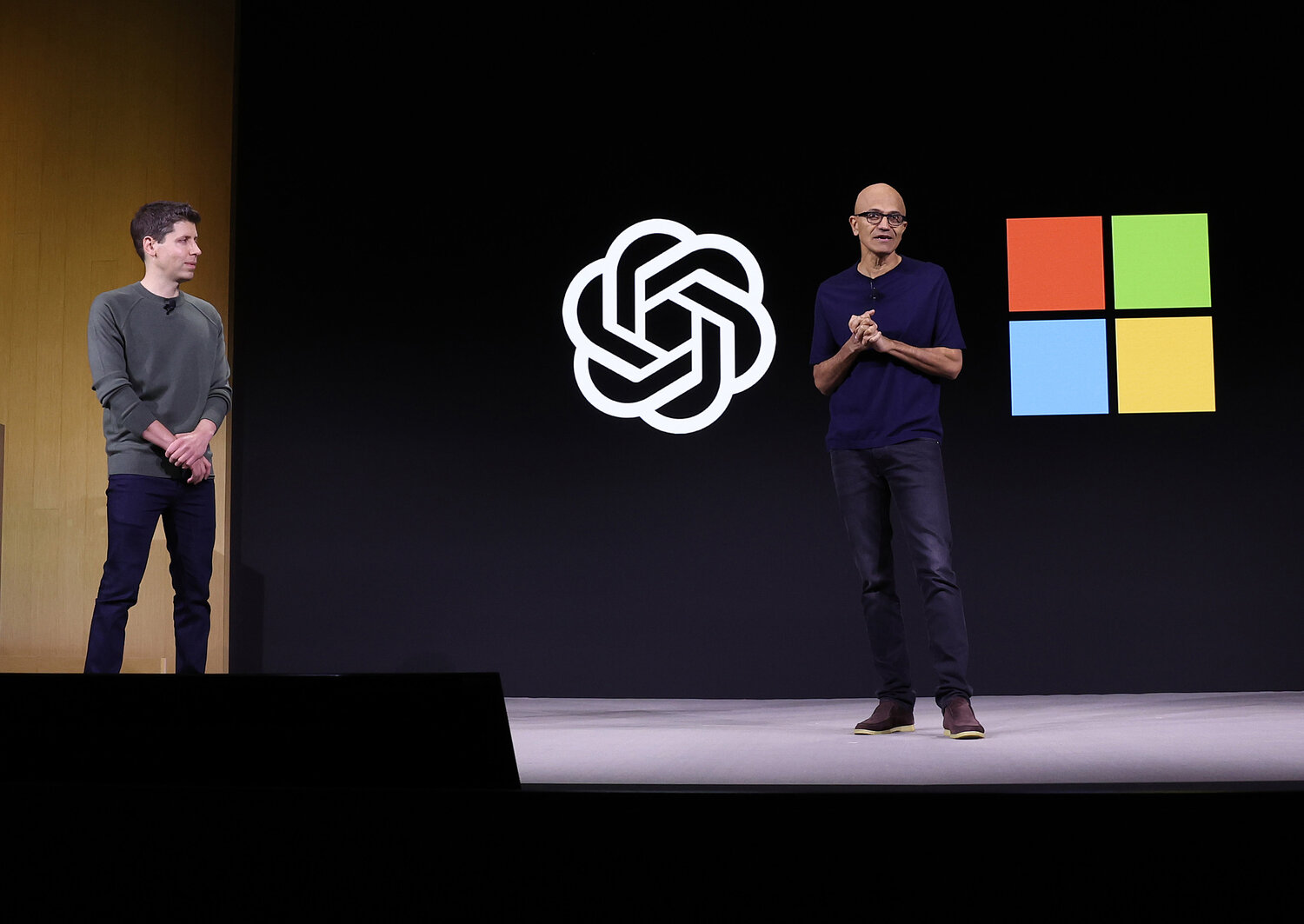
Over here, OpenAI’s CEO, Sam Altman, teased several “exciting new features” coming to ChatGPT as DeepSeek’s popularity exploded. Then, the company announced a new ChatGPT Gov tool to strengthen ties with the US government, followed by a post with Microsoft’s Satya Nadella about all the crazy new stuff OpenAI has planned.

This is all due to DeepSeek’s sophisticated R1 reasoning model. While it’s as good as ChatGPT’s o1, what impressed everyone is that training the model costs a fraction of what OpenAI usually spends.

That being said, OpenAI says there is evidence that DeepSeek distilled ChatGPT to train its AI models. If true, the practice violates OpenAI’s terms of service for ChatGPT.

Ironically, if OpenAI’s claim is true, it’ll make the company experience what many creators felt when they discovered OpenAI may have trained its ChatGPT models using copyrighted materials without consent.

BGR will let you know as we learn more about new AI models from China, such as Alibaba, DeepSeek, and others, as well as the latest advancements in the US market.

Source

Posted on

Microsoft Windows 11 is getting a feature like iPhone Mirroring

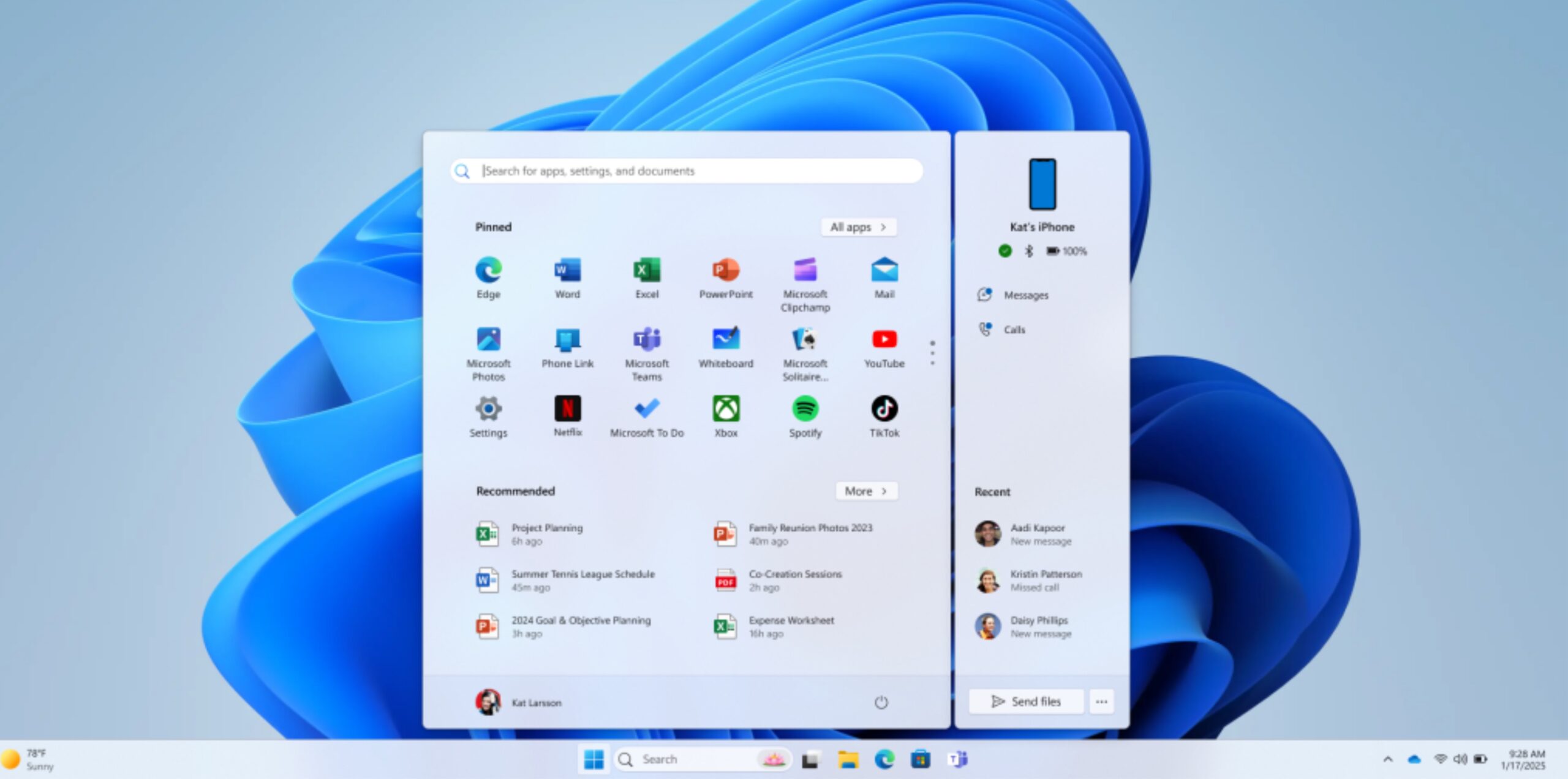
After introducing a side panel to the Start menu on Windows 11 last year that allowed Android users to check some of their phone’s features and status, Microsoft is now testing the same level of integration with iPhone devices and Windows 11 PCs. This feature, which is similar to iPhone Mirroring, will make the Windows 11-iPhone experience a little better, even though it’s nowhere near the level of integration available with the iPhone and Mac using Apple’s new iPhone Mirroring functionality.

According to the Microsoft blog, this seamless phone integration from the Start menu is rolling out to Windows Insider iPhone users, and it will be available to all customers in the coming months. Here’s how it works:

To get started, users need to open the Start menu and select the device type (Android or iPhone) from the right-side panel. Following the on-screen instructions, they need to connect their devices to the PC and start accessing their phones from the Start Menu.

With that, connected iPhone users can access their phone features directly from the Start menu. Microsoft says this seamless integration allows iPhone users to enjoy the same benefits as Android users, including viewing the phone’s battery status and connectivity, accessing messages and calls, and keeping track of the latest activities, all integrated into the Start menu.

Tech. Entertainment. Science. Your inbox.

Sign up for the most interesting tech & entertainment news out there.

By signing up, I agree to the Terms of Use and have reviewed the Privacy Notice.

iPhone users will also be able to share files between their devices and Windows 11 PCs. To begin transferring files, they just have to select the “Send Files” option from the Start menu.

These are the requirements to start testing this new feature:

  • Windows 11 Insider Preview Build 4805 and higher in Beta Channel and 26120.3000 and higher in Dev channel.
  • Phone Link version 1.24121.30.0 or higher.
  • Your PC must be signed in with a Microsoft account and must have Bluetooth LE capability.
  • Not supported for PCs running Pro Education or Education SKUs.

BGR will let you know once this feature rolls out to all users.

Source

Posted on

AWS and Microsoft could face ‘targeted intervention’ from CMA over UK cloud competition concerns

The competition watchdog has published the provisioning findings from its long-running investigation into the inner workings of the UK cloud infrastructure services market, which shows that competition in the sector is not working as well as it could be. For this reason, Kip Meek, chair of the CMA’s independent inquiry group, said it is advising the regulator to “consider investigating the largest cloud service providers using its new digital markets powers”.

This is because its findings suggest end-user organisations could be paying more than they need for cloud services, and are possibly at risk of being locked into using platforms that do not meet their “evolving” needs.

In a seven-page report, detailing the provisional findings of its investigation, the CMA said the lack of competition in the cloud market could mean UK customers are collectively paying hundreds of millions more per year than they need to for services.

It went on to state that UK cloud users can be locked into their “initial choice of provider” due to technical and commercial barriers that prevent customers from seeking out the services of other cloud suppliers who might have better-priced or a more innovative portfolio of services.

“We have provisionally found that AWS and Microsoft have been generating sustained returns from their cloud services substantially above their cost of capital in cloud services for a number of years,” the report said. “Customers say that cloud services offer both quality and innovation to them. However, we consider that a more competitive market would have sustained better market outcomes, including more consistently competitive prices, as well as further improvements in quality and innovation.”

Controversial licensing practices

The report also called out Microsoft’s controversial licensing practices, which typically see it charging customers more for running its software in its competitors’ cloud, as impacting on the competitive position of AWS and also Google by “partially foreclosing” them from the market.

As well as being in-scope of the CMA probe, Microsoft’s behaviour on this front is also the subject of a European Commission complaint, filed by Google in September 2024.

“[The licensing piece] exacerbates the harm we have provisionally found arising from high market concentration and barriers to entry and expansion in relation to Microsoft’s significant unilateral market power,” the report added.

To remedy the situation, the report suggests the CMA board should use powers conferred on it through the roll-out of the Digital Markets, Competition and Consumers Act 2024 (DMCCA) on 1 January 2025 to mark AWS and Microsoft out as suppliers with “strategic market status”.

This would mean the CMA could impose legally binding conduct requirements or pro-competition interventions on both firms to limit and remedy the toll their activities have allegedly had on the market.

As detailed in the report, such powers are “specifically designed to be effected in digital markets … that share a combination of characteristics that can cause them to ‘tip’ in favour of one or a few firms” by allowing the CMA to take a “targeted and iterative” approach to tackling the behaviour of such providers.

“We consider that measures aimed at AWS and Microsoft would address market-wide concerns by directly benefiting the majority of UK customers and producing wider, indirect effects by altering the competitive conditions or other providers,” the report stated.

Before any action can be taken by the CMA, a consultation on the provisional findings of its investigation needs to take place, with cloud market stakeholders now invited to share their feedback on the conclusions raised so far. The final report from the CMA’s investigation is due to drop by 4 August 2025.

In the meantime, AWS has responded to the CMA’s provisional findings by describing its proposed intervention under the terms of the DMCCA as “not warranted”, and urged it to think about the long-term impact of such a move.

“We urge the CMA to carefully consider how regulatory intervention in other areas will stifle innovation and ultimately harm customers in the UK,” a spokesperson for AWS said. “We will continue to work constructively with the CMA as they work on their final report.”

Rima Alaily, corporate vice-president and deputy general counsel in the competition law group at Microsoft, seemed to suggest in a statement to Computer Weekly that the contents of the CMA report are mistargeted. 

“The draft report should be focused on paving the way for the UK’s AI-powered future, not fixating on legacy products launched in the last century,” she said. “The cloud computing market has never been so dynamic and competitive, attracting billions in investments, new entrants and rapid innovation. What could be better for UK businesses and government?”

Meanwhile, Chris Lindsay, vice-president of customer engineering for Europe, the Middle East and Africa at Google Cloud, said the company was pleased to see the impact that restrictive licensing practices have on cloud customers feature in the CMA’s provisional findings.  

“Restrictive licensing harms UK cloud customers, threatens economic growth and stifles innovation, and we are encouraged that the CMA has recognised the harm of these practices,” he said.

Source

Posted on

Microsoft just added DeepSeek R1 to Azure AI Foundry and GitHub

When it comes to artificial intelligence, Microsoft refuses to be left behind. On Wednesday, the Redmond company announced that the R1 model from DeepSeek is now available on Azure AI Foundry and GitHub. This surprisingly sudden move comes despite the fact that OpenAI claims DeepSeek built AI models using its data without permission.

“As part of Azure AI Foundry, DeepSeek R1 is accessible on a trusted, scalable, and enterprise-ready platform, enabling businesses to seamlessly integrate advanced AI while meeting SLAs, security, and responsible AI commitments—all backed by Microsoft’s reliability and innovation,” Microsoft CVP Asha Sharma said in a blog post.

Sharma also repeated DeepSeek’s pitch for R1, explaining that its power and low cost will give more users access to state-of-the-art AI without heavy investment.

Of course, Microsoft understands the concerns raised about DeepSeek during its rapid rise to prominence in recent weeks, including the sheer amount of data the Chinese company collects. According to Microsoft, the model “has undergone rigorous red teaming and safety evaluations, including automated assessments of model behavior and extensive security reviews to mitigate potential risks.” Plus, Azure AI has tools like content filtering and the ability to test applications before deployment to protect developers and end users.

Tech. Entertainment. Science. Your inbox.

Sign up for the most interesting tech & entertainment news out there.

By signing up, I agree to the Terms of Use and have reviewed the Privacy Notice.

If you want to test out DeepSeek R1 through Azure AI Foundry, you will need an Azure account. Once you’re signed in, search for “DeepSeek R1” in the model catalog. After opening the model card, click “Deploy” to obtain the inference API, the key, and access to the playground. You can try out your prompts in the playground to try out R1.

You can also “explore additional resources and step-by-step guides to integrate DeepSeek R1 seamlessly into your applications” on GitHub. Microsoft says Copilot+ PC owners will soon be able to run distilled versions of DeepSeek R1 locally as well.

Source

Posted on

Microsoft 365 price hike: Are you forced to pay more even if you don’t want AI?

If you thought Microsoft’s forcing Windows 10 users to upgrade to Windows 11 to keep using Microsoft 365 Office apps was bad, you haven’t seen anything yet. Microsoft will further annoy many of its customers by embedding Copilot AI into all Office apps and charging an extra $3 per month for it. Microsoft announced the price hike for the Office 365 apps in a blog post explaining the changes.

Yes, AI development is expensive, and I absolutely agree that we, as end users, have to pay for access. That’s why I’m a ChatGPT Plus subscriber and won’t ditch that $20/month subscription anytime soon. If anything, I’m ready to pay for additional AI products that might improve aspects of my life. Take Apple Intelligence; I’ll keep buying expensive iPhones, iPads, and Macs, which will pay for Apple’s AI.

However, as a Microsoft 365 subscriber who has no interest in Copilot AI at this point, I’m not too thrilled about potentially having to shell out an extra $3 per month for my Family subscription. AI should be optional rather than mandatory in all apps. So, is there a way to keep your current subscription price if you’re like me and you don’t want Copilot AI? Well, it’s complicated.

Microsoft is forcing Copilot AI on millions of users

Microsoft 365 Personal and Family subscribers will get Copilot AI and a new Designer AI image generation app in most markets. This will lead to a price hike of $3 per month in the US, Microsoft’s first price hike for the productivity bundle subscription in 12 years. You’ll have to check your local Microsoft 365 portal to see the price increase in your local market.

Tech. Entertainment. Science. Your inbox.

Sign up for the most interesting tech & entertainment news out there.

By signing up, I agree to the Terms of Use and have reviewed the Privacy Notice.

Microsoft says that most of its 84 million consumer subscribers will have access to Copilot in Office apps whether they want it or not.

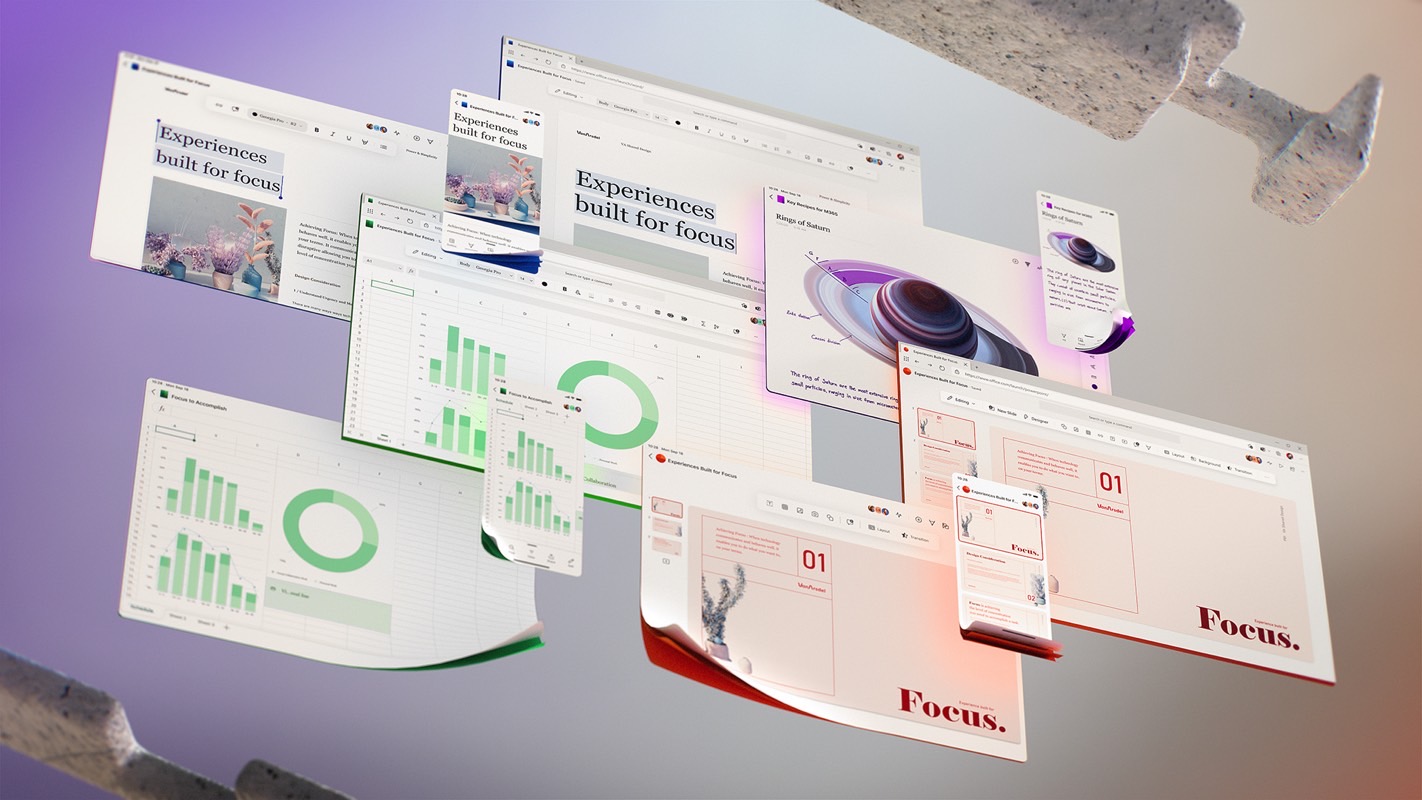
The new Copilot AI integration is separate from the Microsoft Copilot Pro subscription, which costs $20 per month. Copilot will be available in Word, Excel, PowerPoint, Outlook, OneNote, and the new Designer app.

To use the latter, Microsoft 365 Personal and Family subscribers will use AI credits that come with their subscription. The monthly allotment of AI credits applies to all Office apps and should be “enough for most subscribers.”

Let’s appreciate the good things

Microsoft knows that Copilot shouldn’t always be active in Office apps, so it’s giving users the ability to turn it off. That’s good news for students who rely on Office apps for taking notes during class.

Also important here is Microsoft’s commitment to privacy. I might not like the price hike because I don’t plan to use Copilot AI in Office apps anytime soon, but I appreciate the fact that Microsoft will not use any Office app AI data to train its models:

To protect your privacy, we do not use your prompts, responses, or file content (such as Word documents or Excel spreadsheets) when you use Copilot in the Microsoft 365 apps to train our foundation models.

You can opt out, for now

Microsoft is aware that not all Office app users will want access to Copilot AI, so there are ways to opt out and keep your current subscription price. That’s another thing I can appreciate. But there are big caveats here.

First, you have to be an existing Microsoft 365 subscriber to opt out of the Copilot AI price hike. Second, you must enable recurring billing to avoid the price increase. Those who don’t have it enabled, such as myself, won’t be able to stick with the non-AI versions of the apps.

Users with recurring billing can switch to a Basic plan, or they can keep their current plan as it exists today by switching to the new Personal Classic or Family Classic plans “for a limited time.” Once these plan options disappear, you’ll only have access to Copilot AI plans.

In other words, you’ll still be forced to pay for AI you might not want if you miss the opportunity to grab one of these limited-time plans.

Finally, there’s another big issue with the non-AI plans here. Microsoft says it will maintain the Basic and Classic plans “as they exist today,” but you risk not getting new features. For “certain new innovations and features you’ll need a Microsoft 365 Personal and Family subscription,” Microsoft says. Therefore, you’ll need to pay that extra $3 per month, or whatever it converts to in your local currency.

Should you cancel Microsoft 365?

Don’t get me wrong, I don’t think access to Copilot AI is a bad thing. It’s certainly a great tool and much more useful than, say, AI chatbots ruining WhatsApp. As you can see in the examples above, Copilot can be quite helpful in all sorts of instances using Office apps.

However, it should be up to the customer to choose to use AI. There’s no reason for Microsoft not to continue supporting non-AI Office apps in the future other than greed. That’s what it looks like, at least.

Also, since I’ve defended Netflix price hikes in the past, I’d do the same with Microsoft 365 prices if they were to go up.

My first reaction wasn’t to cancel my subscription or opt for the non-Copilot Office experience. I wanted to ask family members in the group if they wanted any built-in AI access. But I can’t even do that, considering that Copilot AI will only be available to me, the subscription owner.

Source

Posted on

Will Europe be the first region to enact regulation for green software?

So far, there is no regulation anywhere in the world specific to the environmental impact of software – a fact that runs alongside the reality that neither consumers nor investors are towards or away from companies based on the green credentials of their software.  

Many experts expect Europe to be the first region to enact regulation that enforces green software practices. One of them is Santiago Fontanarrosa, vice-president of technology at Globant, a digital services company and author of the book Green software engineering: exploring green technology for sustainable IT solutions.

According to Fontanarrosa, Europe is well-positioned to lead in green software regulation thanks in part to its strong sustainability initiatives and advancements in software engineering. Europe is commitment to sustainability, as demonstrated by ambitious initiatives like the European Green Deal. Moreover, France leads in green software research, and Germany’s Blue Angels offers the first global eco-friendly software certification.  

Fontanarrosa said green software is not only about applying certain development practices, it’s also about how to deploy and use the resulting applications. As for what developers can do, many of the green software techniques can be taken from the practices used by people who wrote programs in the 1970s, when CPUs were much less powerful, and memory and storage were much more limited. As processors became faster and memory and storage grew, software engineers have become more complacent. 

“Today, my iPhone has more computing power than the machine I used when I started working in the 1990s,” says Fontanarrosa. “I have seen a big change since I began my career. Developers have become less concerned about how they use resources, like CPU and memory. And they no longer apply optimisation techniques. For example, when you have an algorithm that does a loop to go through a very long list, they don’t look for ways of making that part of their code more efficient.”  

When it comes to green software, efficiency pertains to how much energy a program consumes to perform its functions. This involves optimising not only the use of CPU time, memory access and I/O, but also the transfer of data over networks. If coders simply thought more about the physical operations going on underneath their code, they would develop greener software. 

For example, as compared to a program that periodically checks for updates, an event-based architecture that reacts only when new data becomes available is more efficient because it reduces the number of network requests. Bigger design decisions are also important – an architect can take into account the fact that energy is cleaner at certain times of the day, and decide to have certain intensive tasks performed during those optimal periods.  

As for deploying software, one of the underlying principles is to minimise the amount of data traveling around networks, while another is to be selective of datacentres. 

“The cloud nowadays is a commodity everyone uses,” says Fontanarrosa. “But the cloud is actually a big datacentre somewhere that consumes a lot of energy. If I can choose a data provider cloud that uses more green energy, that will have a big impact on my carbon footprint.” 

Fontanarrosa also advises developers and operators to reduce the number of instances they’re using on the cloud. “Nowadays, you have a credit card, you do two clicks, and you have a whole new infrastructure up there,” he says. “You don’t even worry about it. That’s the kind of mentality that we need to start changing.” 

One example that illustrates how much of an impact software can have is given by Dutch software guru Danny van Kooten in a 2020 blog post that influenced many other developers to make similar changes.

Van Kooten estimates that he reduced emissions by 59,000 kg of CO₂ per month by making a very small change to his WordPress plugins that run on more than two million websites. That savings is the amount of CO₂ used to fly from Amsterdam to New York five times. He says that assuming the average website receives about 10,000 visitors a month and uses cache to serve returning users, a monthly savings of 10,000 kWh can be achieved for every 1 kilobyte a programmer shaves off of their JavaScript.

Another example is described in Fontanarrosa’s book, where he compares two implementations of the Fibonacci sequence, using the CodeCarbon tool to measure energy consumption. The first implementation used a recursive implementation and the second used an iterative approach with a for-loop. The iterative implementation used 99.34% less energy and reduced CO₂ emissions by 99.35%. 

“This striking difference demonstrates how thoughtful implementation choices in algorithm design can drastically reduce energy consumption and emissions, showcasing the potential for greener and more efficient software development,” says Fontanarrosa. 

Fontanarrosa says that even if governments are not pushing for green software, businesses and consumers can make it a reality. One encouraging sign is that a lot of companies have joined the Green Software Foundation since its inception in May 2021, including Fontanarrosa’s organisation, Globant. 

The mission of the Green Software Foundation – which was founded by Accenture, GitHub, Microsoft and ThoughtWorks – is to “build a trusted ecosystem of people, standards, tooling and best practices for green software”.

According to Green Software Foundation, the ICT sector will account for 14% of the world’s carbon footprint by 2040, most of which will be from smartphones and datacentres. The website says that software developers contribute to global emissions in many ways. One is by producing new versions of their products, which often requires better hardware to run, rendering the existing computers obsolete.  

One encouraging sign of progress is that the Green Software Foundation’s Software Carbon Intensity (SCI) specification recently achieved ISO standard status. However, this is nothing like government-backed regulation as SCI is still a voluntary, industry-driven standard. 

“I encourage everyone to learn about green software,” says Fontanarrosa. “Go to the Green Software Foundation webpage, or any other related resource, to start thinking about it and trying to introduce minor changes in your digital products. Minor changes sum up to a big impact.” 

Source

Posted on

GenAI demand fuels record sales of datacentre hardware and software in 2024

Demand for generative artificial intelligence (AI) services is being cited as the reason why spending on datacentre hardware and software hit a record high in 2024.

According to figures from IT analyst Synergy Research Group, total spending in the datacentre hardware and software market was up 34% year-on-year during 2024, as a result of hyperscale providers and private enterprises looking to kit out AI-ready server farms.

John Dinsdale, chief analyst at Synergy Research Group, said this trend had led to more investment in graphics processing units (GPUs), which had in turn “lit a fire under a market” that was already “chugging along nicely”.

As a result, the datacentre hardware and software market enjoyed record growth rates in 2024, with total sales in excess of $280bn, which he described as unprecedented.

“While the ongoing success of public cloud has been the main driving force behind datacentre investments for well over a decade now, no one imagined a 2024 market for datacentre gear reaching over $280bn,” said Dinsdale.

These figures are based on actual sales data from the first three quarters of 2024, combined with Synergy’s own fourth quarter forecast data for the datacentre hardware and software market.

The Synergy data shows that sales of datacentre kit to public cloud providers were up 50% in 2024, while the amount of spend attributed to enterprises was also up 21% year-on-year. “In recent years, growth in the enterprise sector has been rather anaemic, [and] for over 10 years now, cloud providers have increasingly driven the market for datacentre gear – and Synergy’s five-year forecast shows there will be no letup in this trend,” said Dinsdale.

Public cloud providers now account for more than half of the spend (55%) in the datacentre hardware and software market, Dinsdale continued, up from 20% 10 years ago. “Our forecast shows it reaching almost 65% five years from now,” he added.

Around 85% of the spend in this market is generated by the sale of servers, storage and networking kit, confirmed Synergy, while the remaining 15% comes from sales of cloud management, security and virtualisation software.

One notable trend, called out by Synergy, is how prominently Nvidia now features among the roll-call of datacentre hardware providers, thanks in no small part to the fact its GPU technology is being sold directly to both hyperscalers and enterprises.

“Excluding original design manufacturers, Dell is the overall leader in the server and storage segment, with Inspur being a clear leader in server sales to public cloud providers,” said Synergy, in its research note.

“Cisco is the leader in the networking segment, while Microsoft features prominently in the rankings due to its position in server operating systems and virtualisation applications. Nvidia now features heavily as a supplier both to other system vendors and directly to service providers.”

Source

Posted on

Post Office scandal-stained Fujitsu orders staff to cut costs amid widening UK losses

Fujitsu has informed staff of cost-cutting measures it has put in place as it faces challenges amid its much-publicised involvement in the Post Office Horizon scandal.

Prior to the festive period, UK staff were sent a memo instructing staff on aggressive cuts to spending on travel, recruitment, social and external organisations.

The impact of the Horizon scandal on Fujitsu has been significant. In January 2024, following ITV’s dramatisation of the scandal, the supplier agreed with the government to cease bidding for new public sector contracts until the public inquiry into the scandal completed its work.

In its latest financial statement for the 12 months to March 2024, the company reported a loss of just over £170m, compared with a loss of £99m in the previous 12 months.

This period covers up to few months after Fujitsu stopped bidding for public sector work, so the situation could get worse. Sales continued to fall during the year, and Fujitsu may also need to contribute to the cost of compensating victims of the scandal it was partly responsible for.

In its statement to Companies House, under the Risks section, Fujitsu said: “The extent of reputational and financial risk will not be known until the inquiry has concluded and published findings. Based on these findings, the company expects to take appropriate and proportionate measures to engage with the UK government with respect to a contribution towards the UK government’s compensation schemes.

“Loss of future new business due to the reputational damage arising from the Horizon inquiry remains a key risk to the company’s business plans.”

The company is preparing for the worst. Just before Christmas, its UK management team sent staff a memo detailing measures to keep costs down.

The company, which said its UK business spends about £10m a year on staff travel, told UK staff that all domestic travel to internal meetings and events should be avoided, with Microsoft Teams to be used for meetings unless “it would have a significant negative impact on the meeting”. It told staff that international travel should not be taken unless “directly related to customer activity”.

The company also outlined its preference for roles to be filled internally before recruiting externally. “We will continue with our principle of seeking to fulfil approved roles with current Fujitsu colleagues,” it told staff. “We will recruit externally to fulfil customer requirements, but only after considering internal moves, including promotions.”

It said all current contractors are being reviewed, including current open requirements: “Where possible, we will be seeking to replace contractors with current Fujitsu colleagues.”

The company is also putting strict controls on spending on companies outside Fujitsu, with preapproval from the UK leadership team needed for spending over a certain amount.

Fujitsu is also tightening the purse strings for staff social events, asking those who have not already scheduled or held a team social to consider delaying until the new financial year after 31 March.

Source

Posted on

Meta is about to ruin WhatsApp with AI bots no one wants

Of all the generative AI assistants out there, Meta AI must be the most annoying for the simple fact that Meta is shoving it down our throats. No app is safe, from Facebook to Messenger to WhatsApp to Instagram. Meta AI is there whether you want it or not, and there’s no way to deactivate it.

Meanwhile, ChatGPT is entirely optional, not that OpenAI can really force it on anyone. Apple’s Apple Intelligence is also optional; you don’t have to use it even if you have access to it. Then there’s Google Gemini, which is baked into many Google products but doesn’t feel as intrusive as Meta AI. The same goes for Microsoft’s Copilot.

The worst part about Meta AI is that Meta isn’t done ruining its apps with overdoing the AI presence. We’ve just learned of AI profiles coming to Facebook and Instagram, which is extremely annoying. It gets worse; Meta will now give AI bots prime plans inside WhatsApp, a feature that nobody really asked for from the one Meta app that’s actually useful.

WhatsApp is the world’s largest chat app. It works on iPhone and Android and supports end-to-end encryption across platforms. That’s the only reason I’m still using it. That, and the fact that Meta relented on its annoying WhatsApp policy change a few years ago.

Tech. Entertainment. Science. Your inbox.

Sign up for the most interesting tech & entertainment news out there.

By signing up, I agree to the Terms of Use and have reviewed the Privacy Notice.

Come to think of it, the only reason WhatsApp is so good and still encrypted, is that the app was built this way well before Meta bought it for a small fortune.

The last thing I want in WhatsApp is support for AI chatbots. Yes, it’s great that you can save a ChatGPT number to chat with the chatbot from WhatsApp, but that’s optional.

Say that Meta feels like it has to put AI bots in WhatsApp to expose more people to Meta AI and potentially make some money in the process. I still hate the idea of WhatsApp getting a dedicated AI menu. That’s wasted screen real estate right there. It’s a feature I’ll never use, and I’m sure others will be equally uninterested.

The new AI bots menu in a WhatsApp beta release for Android.The new AI bots menu in a WhatsApp beta release for Android. Image source: WABetaInfo

Meta is testing the new interface in an Android beta version of WhatsApp. Always reliable WABetaInfo surfaced the image above that shows the new AI tab replacing the Communities tab. That menu, which might actually be useful, is merging with the Chats tab.

The new AI tab will include all sorts of AI chatbots to talk to, including third-party models that can talk to you about specific topics.

I don’t doubt that some WhatsApp users will want to use these services. I say that as a longtime ChatGPT user who chats with OpenAI’s chatbot about all sorts of things daily. But I absolutely hate the idea of any AI product being forced on me the way Meta is doing with Meta AI.

WhatsApp is especially important to me as I use it to talk to many people. It’s not just Android users in my family or friends group that like WhatsApp; plenty of iPhone owners prefer the platform over iMessage. AI isn’t needed. Or if it is, it should be hidden somewhere and accessible on demand.

It might get even worse than that. WABetaInfo found evidence in a different WhatsApp beta version that Meta wants to let users create custom AI chatbots right inside the app. The process might be similar to what’s already available on Instagram.

Support for custom AI bot creation in a WhatsApp beta release for Android.Support for custom AI bot creation in a WhatsApp beta release for Android. Image source: WABetaInfo

The feature resembles the custom chatbots available in ChatGPT and Gemini, so it’s not entirely surprising. But, again, it’s not something I want to clutter a key app like WhatsApp.

I don’t see any value in adding AI bots to WhatsApp or supporting the creation of custom ones.

Remember that if left unchecked, some custom AI chatbots might be harmful, especially when certain types of users are exposed to them. And it’s not like Meta is improving its content moderation policies, so we have no idea how it’ll police this universe of AIs it’s bringing to apps like WhatsApp and Instagram.

I can only hope that Meta will not bring these features out of beta, but that’s just wishful thinking. If anything, I take some solace in knowing that it’ll take longer for Meta to deploy the AI changes to WhatsApp in Europe.

Source