The iPhone 17 Air is another step toward becoming a reality. This time, DigiTimes (via MacRumors) says Foxconn entered the new product introduction phase. Supply chain sources tell the publication that the NPI phase is responsible for bringing this iPhone’s concept to life with design validation and prototype testing.
With that, this device is on schedule to be released in late 2025 alongside the other iPhone 17 lineup, as Foxconn doesn’t seem to be having issues making this product.
A few months ago, the same publication said the Taiwanese company Novatek planned to begin mass production of a new OLED display technology for the iPhone 17 Air. At the time, the claim seemed a bit speculative as Novatek wanted to create a thinner screen tech. However, it seems everything is aligning for this device’s release in the second half of 2025.
Latest iPhone 17 Air rumors
The iPhone 17 Air is expected to be released after years of Apple failing to conquer a more significant market with a variation of the regular iPhone. The company has seen low sales of the iPhone 12 mini, iPhone 13 mini, iPhone 14 Plus, and iPhone 15 Plus. While we need to know how the iPhone 16 Plus will perform, Cupertino seems to be planning a different approach for the iPhone 17.
Tech. Entertainment. Science. Your inbox.
Sign up for the most interesting tech & entertainment news out there.
Besides that, rumors so far have hinted at a premium version of the non-Pro iPhone 17. While all models are expected to maintain the same price point, this iPhone 17 Air would cost around $1,299—the most expensive iPhone to date. Despite its ultra-thin form factor, it would have the A19 chip, 8 GB of RAM, and two main cameras.
It is still unknown how Apple will maintain a good battery life with an ultra-thin form factor. However, the company might learn from Huawei’s latest triple-fold phone. It’s important to say that Samsung will likely make competition hard for this rumored Apple phone.
Interestingly, the iPhone 17 Pro models could have 12GB of RAM, the A19 Pro chip with TSMC’s new N3P manufacturing process, and three 48MP primary cameras.
Below, you can learn more about the future iPhone 17.
After months of speculation, Jony Ive confirmed in mid-September that he and a team of former Apple designers are working on hardware that will have ChatGPT at the core. While Ive said his LoveFrom design company will be involved in creating the product (or products?), he didn’t reveal what form factor(s) we should expect.
I labeled the product an iPhone competitor because the iPhone is an AI device, just like the Pixel and any other smartphone that can run native or third-party AI apps. The ChatGPT hardware will compete against the iPhone no matter what it looks like. The only thing we know about the gadget is that it “uses AI to create a computing experience that is less socially disruptive than the iPhone.”
Nearly three months later, I believe the ChatGPT device has to feature a key component, a pair of smart glasses that will truly let the user make the most of OpenAI’s AI models. It’s all thanks to what we witnessed on December 12th, a few short hours apart.
First, Samsung and Google unveiled the Android XR experience and teased the first devices with AI at the center. Project Moohan is Samsung’s obvious Vision Pro alternative, and yes, it looks too much like the latter. Project Moohan will be a spatial computer that supports VR, AR, and AI.
Tech. Entertainment. Science. Your inbox.
Sign up for the most interesting tech & entertainment news out there.
All the acronyms are there, with AI giving Samsung a theoretical advantage over the Vision Pro. That will be Galaxy AI and Gemini AI, in case you were wondering.
More interesting than Moohan is Google’s unannounced pair of smart glasses. Samsung is probably working on its own smart glasses, but the company didn’t feel compelled to announce them on Thursday.
Google demoed the smart glasses during its Gemini 2.0 announcement, showing how Project Astra can work on them. The wearable device is paired with a Pixel phone, which will handle the processing, including Gemini. The glasses give the AI eyes and ears so it can see everything around you and communicate information as you seek help while on the go.
Add the Android XR platform, and you get augmented reality features. Think AI notification summaries, Google Maps navigation, and real-time translation. According to Google’s demo, these are all part of Android XR.
All of that further reinforces my belief that standalone AR glasses are the future of mobile computing. They’ll complement the iPhone first and then replace it.
Google Maps AR navigation on smart glasses. Image source: Google
Seeing Samsung and Google’s announcements was enough to make me realize OpenAI will need similar abilities from ChatGPT. And the only way to deliver them is by making smart glasses of its own.
Little did I know that OpenAI’s “12 Days” live stream, which followed Samsung and Google’s surprise announcement, would further drive that point home.
OpenAI on Thursday announced that ChatGPT Advanced Voice Mode is finally getting support for real-time video streaming and screen sharing. We saw these features demoed for GPT-4o back in May, but OpenAI needed time to bring them to all users.
All Team and most Plus & Pro users should have access within the next week in the latest version of the ChatGPT mobile app.
We’ll get the feature to Plus & Pro users in the EU, Switzerland, Iceland, Norway, & Liechtenstein as soon as we can.
The ChatGPT mobile app will let you use the camera of your iPhone or Android device to see the world and hold a conversation about it with the user.
The demos OpenAI offered showed that the AI can recognize people and remember details about them. Also, the AI can recognize objects and provide tips and tutorials related to them if asked.
When I first tried Advanced Voice Mode, I wanted to use ChatGPT as a museum voice guide. However, the experience lacked a key feature: the live video stream support that OpenAI just made available to ChatGPT users. Instead, I had to upload photos whenever I had questions about something.
Back to Thursday’s OpenAI updates, the ChatGPT demos showed that you can share your phone screen with the AI and ask questions about the content. It’s another way of giving the AI the ability to see what you’re doing.
This settled it for me. Any multimodal AI is a great tool to enhance your productivity, but it can get miles better if the AI gets eyes. Smart glasses are the best way to wear the AI’s eyes. The glasses don’t even have to support augmented reality features. AR would be just the cherry on top.
It turns out Meta was right all along with the Ray-Ban AI project. As such, I think OpenAI and LoveFrom have to bundle a pair of smart glasses with whatever ChatGPT hardware product they end up making. I don’t think they can make standalone smart glasses. The technology isn’t ready for that.
They could always create only ChatGPT smart glasses that could then connect to the iPhone, Mac, or any smart device. But in such a case, they won’t control the underlying platform. On that note, I did show you a pair of smart glasses earlier this week (above) which put ChatGPT front and center. They might not be a first-party device, but they’re available for preorder.
This is all speculation from this ChatGPT enthusiast. I have no way of knowing what Ive & Co. are actually designing. But smart glasses seem like a key piece of the puzzle. And no, placing a camera on clothing will not work. Humane tried that and failed miserably. Eyewear is a whole different ball game.
When it demoed Project Astra at I/O 2024 in May, Google teased smart glasses for the first time. The company did the same thing during Wednesday’s big Gemini 2.0 announcement, where the wearable was part of a longer Project Astra demo. Google also suggested Gemini AI smart glasses might be coming soon.
At the time, I thought Google was simply showing off a prototype of a pair of Samsung XR glasses that would be unveiled next month during the Galaxy S25 Unpacked press event. Little did I know that Samsung and Google had bigger things in mind.
A day later, the two companies unveiled Project Moohan, a Vision Pro spatial computer rival. Google also announced the Android XR platform that will power it. Both Samsung and Google mentioned smart glasses in their announcements. But Google’s was more impressive, as the company showed off AR features for smart glasses powered by Gemini AI.
Google didn’t offer a name for the smart glasses or a release date. But the company did give a select few people a hands-on experience with Project Moohan and the unnamed smart glasses. It turns out the Gemini AI wearable is quite interesting, seemingly delivering the Google Glass experience that Google failed to offer more than a decade ago.
Tech. Entertainment. Science. Your inbox.
Sign up for the most interesting tech & entertainment news out there.
We all remember the Google Glass project, which was, in retrospect, ahead of its time. That smart glasses concept sparked privacy worries at a time when Google wasn’t exactly known for great privacy. Also, there was no generative AI at the time to truly make Google Glass useful.
Fast-forward to late 2024, and Google seems confident enough to demo a product that could become a must-have accessory for people who want AI assistance all the time. Wired tested Google’s Gemini AI glasses and Project Moohan, finding the former the more compelling product.
The glasses seem to take inspiration from the North Focals, smart glasses from a company that Google purchased a few years ago. But they’re slimmer and more comfortable than the Focals.
Even so, smart glasses have thick arms and thicker rims around the eyes, which is what you’d expect from glasses that incorporate AR abilities. They feature clear or sunglasses lenses and will support prescription lenses like Moohan.
North Focals glasses. Image source: North
When it comes to AR capabilities, the glasses come in three versions. The no-AR model is presumably the cheapest, as it lacks a display. Then there’s a pair that projects images on one of the lenses, the monocular display.
The best experience, and probably the most expensive, comes from the binocular display version that will center AR images, as seen in the photos above and below.
The processing is passed on to a nearby smartphone, presumably a Pixel phone that connects wirelessly to the glasses. That’s where Gemini resides, and the AI is ready to help with a tap on the arm of the glasses. A tap on the side also brings up the display in those models that support AR.
Google Pixel 9 Pro Fold: Gemini support. Image source: Christian de Looper for BGR
The camera is also built into the frame, and an LED turns on when it is active. Built-in microphones pick up your commands for Gemini, and a speaker in the frames lets you hear the AI talk back.
The glasses are meant to last a full day on a charge, though battery life will probably depend on how much you use them. The hands-on experience with the Gemini AI smart glasses doesn’t offer actual battery characteristics, and it’s too early for that.
The report explains the various scenarios where AI smart glasses will be useful. For example, the glasses support Google Maps navigation, a feature Google showed in the Android XR platform announcement (image below).
Google Maps AR navigation on smart glasses. Image source: Google
You also get AI summaries of notifications displayed in front of your eyes. The same goes for real-time translation of text. Impressively, the glasses can translate spoken foreign languages in real-time. Gemini will also caption conversations, a great feature for people with hearing issues. And Gemini can answer in multiple languages, a feature ChatGPT’s Advanced Voice Mode also supports.
The AR capabilities do not stop there. The glasses will show you previews of photos you take, and you’ll be able to play video when needed. The display experience isn’t the greatest, which is understandable. But it still sounds like the hands-on demo was a success.
Gemini powers all the smart AI features, like real-time translation and captioning. The AI can also summarize content seen while on the go, like the page of a book. Gemini has a short-term memory, too, so it can recall some of the things you’ve just done and seen a few minutes ago.
Interestingly, Gemini can also identify products and offer instructions on how to use them. In this hands-on, the Wired reporter asked how to use a Nespresso machine.
As impressive as the demo might sound, Google wasn’t ready to provide a release date and pricing information. The Gemini AI smart glasses it unveiled are clearly superior to the Meta Ray-Ban smart glasses, which only offer AI support, with the AR component missing. I’d expect Google’s glasses to be more expensive, assuming Google wants to sell them.
Since Project Astra is still in the early days, I’d expect Google to launch the glasses once the Gemini assistant abilities it’s working on for Project Astra are ready to launch. No point in having smart glasses in store if the Gemini software isn’t ready.
Meanwhile, you should check out Wired’s full hands-on experience for more details.
I’m ready to buy the iPhone 17 Air, even if that means dealing with several compromises Apple will have to make to create a thinner iPhone than ever before. By that, I mean I’m ready for a single-lens camera, potentially worse battery life than what you’d expect from a typical 6.6-inch iPhone, and a single speaker on the bottom.
However, it looks like the iPhone 16 will be the last generation in which the non-Pro iPhones lack 120Hz refresh rate support. We have already seen a series of reports saying that Apple will bring LTPO tech to all iPhone 17 models, including the iPhone 17 Air, and there’s another story out that seemingly confirms this development.
LTPO is a key display tech that allows Apple to offer dynamic refresh rates on ProMotion devices with OLED panels. The refresh rate adapts to what’s showing on the screen, dropping as low as 1Hz in some instances rather than staying at 120Hz, regardless of what you might be doing. The benefit of dynamic refresh rate screens is that they conserve battery life.
Tech. Entertainment. Science. Your inbox.
Sign up for the most interesting tech & entertainment news out there.
On that note, that’s probably one way I improved battery life on the iPhone 14 Pro, as my refresh rate moves between 1Hz and 60Hz rather than the full 120Hz.
My display preferences aside, plenty of iPhone users have rightly called out Apple for restricting the ProMotion displays to the Pro models. Meanwhile, many Android vendors ship mid-range phones that support 120Hz refresh rates.
Thankfully, all iPhone models will get ProMotion screens, starting with the iPhone 17 series. Korean website DT penned the latest report that says Apple suppliers are preparing to meet Apple’s OLED panel needs for the iPhone 17.
The report says that all four iPhone 17 models will use LTPO OLED panels, which implies that the iPhone 17 Air will support 120Hz refresh rates. The story doesn’t single out the ultra-thin iPhone or the other three models, instead focusing on the suppliers.
If the information is accurate, LG Display will be the big winner of Apple’s iPhone 17 screen orders. The Korean company had a 10% share of orders last year, which grew to 30% this year. LG’s share will continue to rise next year when it will account for 40% of Apple’s OLED panel needs.
Chinese company BOE is apparently the big loser, as it is unable to manufacture the LTPO panels Apple wants for the iPhone 17.
Samsung will continue to get the lion’s share of OLED panels for the iPhone, likely accounting for 60% of orders.
M4 iPad Pro OLED display. Image source: José Adorno for BGR
The inability of OLED panel vendors to meet Apple’s production needs might explain why Apple has kept using LTPS 60Hz OLED panels in non-Pro handsets so far, but that’s just speculation from this iPhone user. Apple sells over 200 million iPhones every year, so its display needs dwarf those of rivals.
The DT story implies that supply is an issue, as it explains that LG will not build new manufacturing lines to accommodate a larger influx of orders from Apple. Instead, LG will retool its iPad Pro OLED screen production line to manufacture iPhone displays.
Apple’s M4 iPad Pro hasn’t been selling as well as expected, so LG’s move makes sense. While the Korean company won’t confirm such changes, it did say during the Q3 earnings report that it plans to adapt its production infrastructure to market conditions.
LG adapting to Apple’s needs will have an unwanted side effect. The report says LG’s investments in a next-gen supply facility of OLED panels for tablets and laptops will be slightly delayed. Interestingly, Apple is expected to use OLED panels in more products, including the iPad mini, MacBook Air, and a foldable Mac/iPad set to launch sometime in the next four years.
Back to the iPhone 17, the report doesn’t mention screen sizes for the four phones. I’d expect Apple to stick with the 6.1-inch, 6.3-inch, and 6.9-inch screen sizes for the iPhone 17, 17 Pro, and 17 Pro Max, respectively. Rumors say the iPhone 17 Air should feature a 6.6-inch display.
As soon as the Galaxy Z Fold Special Edition (SE) foldable came out a few weeks ago, I said that Samsung has no choice but to use the same ultra-thin design for the Galaxy Z Fold 7 next year. Any other option would be admitting that it can’t manufacture thin, foldable phones in large numbers or that it can’t keep up with Chinese foldable smartphone vendors.
The Galaxy Z Fold SE isn’t just thinner than any of its predecessors; it also features larger displays. The best part about the Galaxy Z Fold SE design is that Samsung managed to almost eliminate the crease. The phone is routinely sold out in Korea but is not widely available elsewhere. China is the only market that has a model of the Galaxy Z Fold SE.
Ross Young, a well-connected display analyst, said a few days ago that Samsung’s Galaxy Z Fold 7 will not look like the Galaxy Z Fold SE. But there will be a Galaxy Z Fold 7 SE from Samsung next year. A few days later, the same analyst corrected his previous stance. The Galaxy Z Fold 7 will inherit the Galaxy Z Fold SE design, and that’s amazing news.
Young is the CEO of Display Supply Chain Consultants (DSCC), which just released a report saying that Apple’s first foldable iPhone could hit stores in the second half of 2026. The handset will revitalize foldable phone sales, which are currently experiencing a slump.
Tech. Entertainment. Science. Your inbox.
Sign up for the most interesting tech & entertainment news out there.
The DSCC hinted that Samsung will use the Galaxy Z Fold SE design for next year’s Galaxy Z Fold 7, without naming the latter:
Samsung is expected to introduce a second clamshell model in 2025, more aggressively priced as well as a larger infolding model that resembles its recently introduced Z Fold 6 Special Edition.
However, Young clarified those comments on X after the report was released. He said the Galaxy Z Fold 7 will have the same display sizes as the “Fold 6 SE.” The Special Edition phone “will basically become the Fold 7.”
Fold 7 should have same display sizes as Fold 6 SE. So, Fold 6 SE will basically become the Fold 7. Flip 7 should grow from 6.7″ to 6.85″ and cover display should be around 4″.
That’s what I was suspecting all along. Samsung has the design of a thinner Fold-type phone ready. All it needs is to update the Galaxy Z Fold 7 specs. I’d expect the 2025 Samsung foldables to feature the same Snapdragon 8 Elite chip as the Galaxy S25 series.
Young also addressed the Flip 7, saying the next-gen clamshell will feature larger displays. We’re looking at a 6.85-inch foldable panel and a 4-inch cover screen.
Also, as seen in the quote from the DSCC report, Samsung should launch a cheaper Galaxy Z Flip 7 next year, a phone Young mentioned a few days ago.
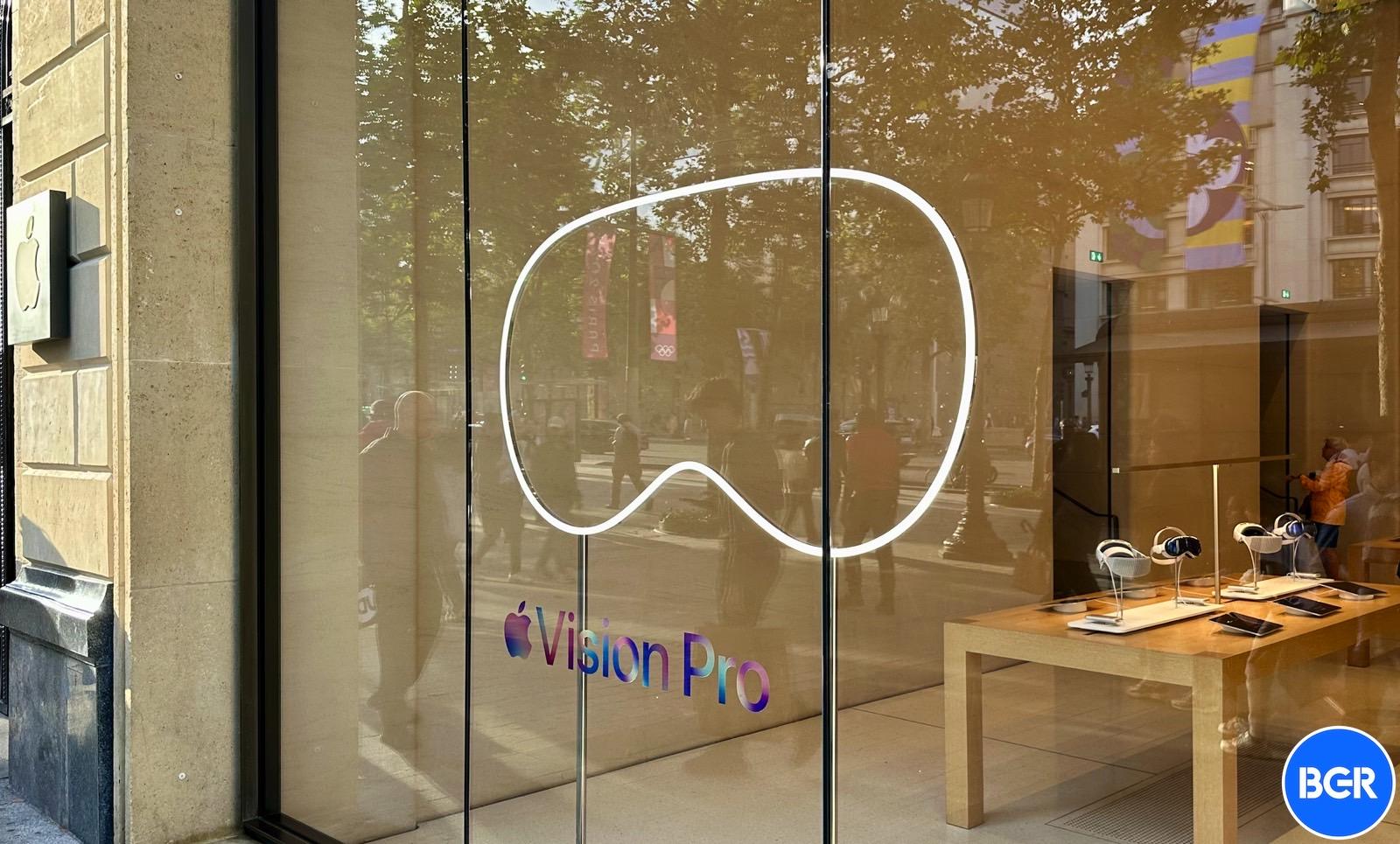
While I haven’t bought the Apple Vision Pro, I’m still a fan of what Apple is doing here because I think the spatial computer debuted key technologies that will lead to the actual head-worn wearable I want: A pair of AR Apple Glasses that might eventually replace the iPhone.
Rumors say that we have a long wait ahead of us before true Apple Glasses become a reality. Apple needs tons of progress with the tech involved before it can create the product it wants. Meta recently showcased the bulky Orion concept of AR glasses that cost $10,000 to make. That’s another clear hint that Apple Glasses will take a while to get here. We need a pair of AR glasses that look much more like regular glasses before consumers will actually adopt them.
Apple will never confirm work on future products, though it might tease that’s where we’re heading. That’s what Tim Cook did in a recent interview when asked whether Apple Glasses are coming after the Vision Pro.
Tech. Entertainment. Science. Your inbox.
Sign up for the most interesting tech & entertainment news out there.
Wired: Meta and Snap are leading us to mixed-reality glasses that we’d wear continually. Is the bigger, heavier Vision Pro ultimately headed that way?
Tim Cook: Yes, it’s a progression over time in terms of what happens with form factors. AR is a huge deal. With Vision Pro, we’ve progressed to what is clearly the most advanced technology we’ve ever done, and I think, the most advanced technology in the world in terms of electronics problems. We’ll see where it goes.
Tim Cook did not confirm that the tech inside its Vision Pro will eventually shrink down to fit inside Apple Glasses. He offered the obvious answer any CEO would have given, considering the question. Yes, the Vision Pro is a stepping stone towards something better. His “we’ll see where it goes” is the hedge you’d expect from an exec dealing with this question.
Ray-Ban Meta smart glasses. Image source: Jonathan S. Geller
I’ve included the question in full because of how it’s framed. Levy asks Cook whether smart glasses like the ones Meta and Snap sell are leading us to mixed-reality glasses that we’d wear continuously. But neither Meta nor Snap have such products. Instead, the two social networks sell smart glasses that are significantly less sophisticated than the Vision Pro. They’re not mixed-reality devices.
Put differently, Apple has developed the tech it needs for Apple Glasses with the Vision Pro. Apple now has to shrink it down to fit inside a pair of normal glasses.
Apple developing a smart glasses product that would support genAI, like Meta’s glasses, would allow Apple to work on the glasses chassis that might one day feature more advanced capabilities that would trickle down from the Vision Pro. There’s no telling how long it’ll take for Apple to come out with Apple Intelligence-ready Apple Glasses.
Cook also addressed questions about lower-than-expected Vision Pro sales in the same interview saying the device is a success.
“It’s an early adopter product, for people who want tomorrow’s technology today,” Cook said. “Those people are buying it, and the ecosystem is flourishing. The ultimate test for us is the ecosystem. I don’t know if you’re using it very much, but I’m on there all the time. I see new apps all the time.”
A few days ago, after showing you a series of Galaxy S25 Ultra photos, I told you I wouldn’t be surprised to see more Galaxy S25 images leaked ahead of Samsung’s mid-January Unpacked event. Those images featured purported Galaxy S25 Ultra prototypes with a new design compared to the current Galaxy S24 Ultra.
It turns out we didn’t even have to wait that long. There’s a leaked video floating around that gives us a closer look at the Galaxy S25 Ultra. This time, we have what appears to be a functional unit. Unsurprisingly, the phone in the clip features the same design as the prototypes from last week’s photos.
A Redditor posted a 10-second Galaxy S25 Ultra video that doesn’t show the entire unit. But those 10 seconds are enough to confirm the Galaxy S25 Ultra that so many fans must have wanted.
The phone in the clip at the end of the post has slightly rounded corners at the top, which means it also has rounded corners at the bottom. This was my biggest gripe with the boxy Galaxy S24 Ultra earlier this year. The phone’s rectangular corners made it uncomfortable to hold for long periods.
Tech. Entertainment. Science. Your inbox.
Sign up for the most interesting tech & entertainment news out there.
The rounded corners are a welcome design change, but they’re not the only thing Samsung has modified to improve usability. The Galaxy S25 Ultra will have flat sides, with the frame bending towards the back. Comparatively, the Galaxy S24 Ultra has curved edges.
The new design should shrink the phone’s width by a few millimeters, which might be enough to make it easier to hold. Slightly curving the edges towards the back should further improve usability.
The video also shows us the rear camera module, which features standalone cameras protruding through the back rather than a single camera module. The cameras seem to take inspiration from the Galaxy Z Fold 6.
The clip doesn’t show the bottom of this purported Galaxy S25 Ultra. We don’t get to see the S Pen stylus placement. It’ll be interesting to see whether Samsung tweaked the design of the stylus to account for the curved corners. That is, the top side of the S Pen might be slightly curved, matching the phone’s corner curvature.
As for the screen, it might be turned on, but we don’t get to see how thin the bezels are on account of the black background of what appears to be Reddit running on the phone.
We are probably looking at a leaked Galaxy S25 Ultra device in this clip. It must be the phone’s final design, as Samsung must be getting ready to manufacture it. The leaks are only going to get better at this point, and we’ll probably learn everything about the Galaxy S25 phones well ahead of Unpacked.
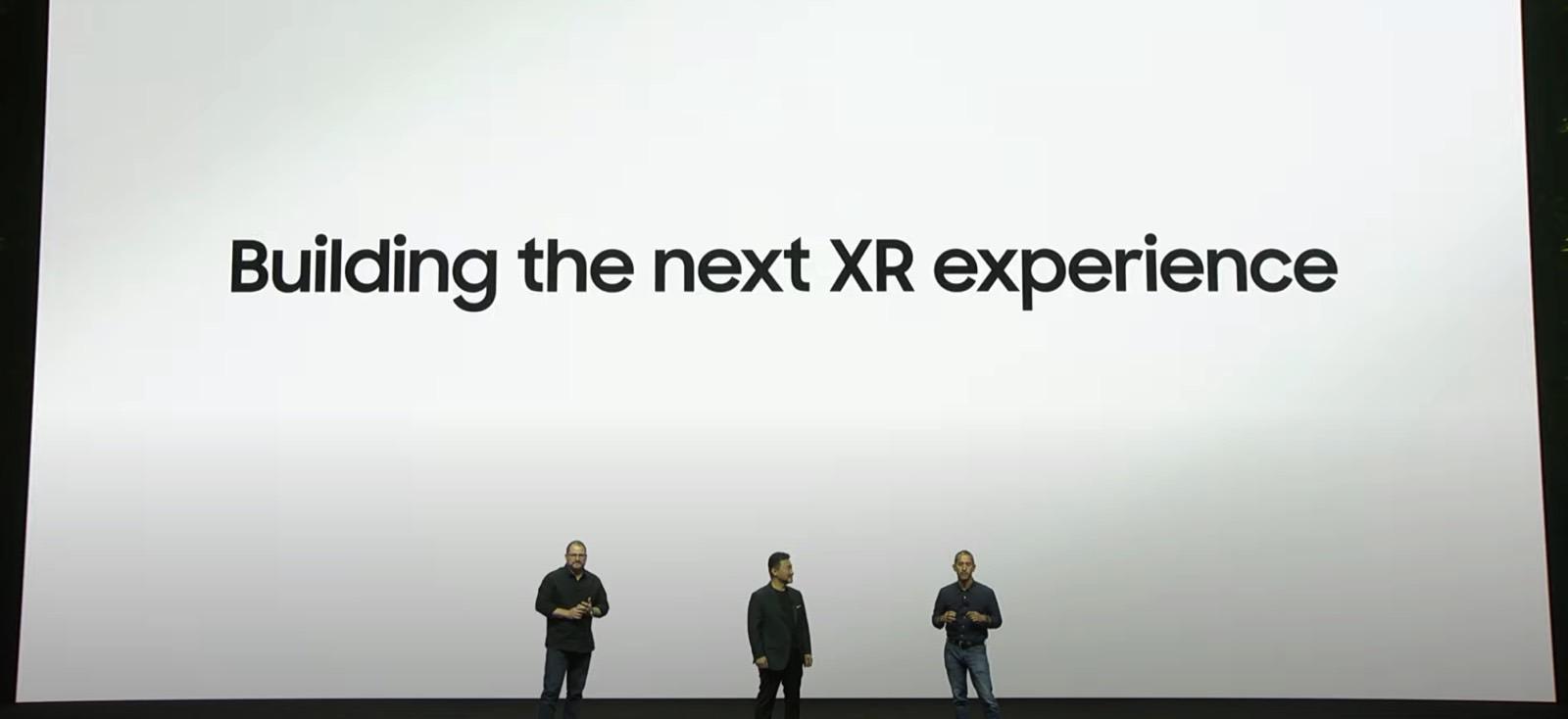
Remember when Samsung invited Google and Qualcomm to announce the “next XR experience“? I know I do because it happened in early February 2023, during the Galaxy S23 event. At the time, the web was filled with rumors about Apple’s mixed reality device, which would launch as the Vision Pro. Apple’s spatial computer dropped a few months after that teaser from Samsung, Google, and Qualcomm. It was immediately clear that the Vision Pro was so sophisticated that Samsung couldn’t possibly launch a rival anytime soon.
Nearly two years later, that Samsung XR headset still doesn’t exist. But Samsung has been teasing it again recently, saying the device should be unveiled at some point next year.
While Samsung never detailed the specs and features of the XR device, a new leak may give us an idea of what Samsung is working on. Unsurprisingly, Samsung isn’t building a Vision Pro rival. Instead, it’s doing something that might be more useful to most people. The first Samsung XR device will apparently be a pair of glasses with Gemini AI at the core. And it turns out that we might have seen it already during Google’s Project Astra demo at I/O 2024.
Samsung had this to say about the unnamed XR headset a few weeks ago during its most recent quarterly earnings report:
Tech. Entertainment. Science. Your inbox.
Sign up for the most interesting tech & entertainment news out there.
We plan to contribute to the expansion of the Samsung Health ecosystem through the Galaxy Ring launched this year and to strengthen the connectivity experience between our products, such as the XR (eXtended Reality) device scheduled to be launched in the future.
I wouldn’t be surprised if Samsung brought the XR headset to the Galaxy S25 Unpacked launch event that’s supposed to happen in mid-January. Samsung could then keep teasing the XR glasses before giving them a summer 2025 launch. That’s what Samsung did with the Galaxy Ring last year.
A report from the Korean site Maeil Business Newspaper said a few days ago that Samsung will release smart glasses with built-in AI in the third quarter of 2025. Google and Qualcomm are named as Samsung’s partners. That means this is the “next XR experience” that Samsung teased nearly two years ago.
Ray-Ban Meta smart glasses. Image source: Jonathan S. Geller
Samsung will manufacture some 500,000 units, according to a report from Chinese research company Wellsen XR.
In terms of specs, the Samsung XR headset will rely on Qualcomm’s AR1 chip as the main CPU and an auxiliary NXP chip. The headset will feature a 12-megapixel camera sporting a Sony IMX681 CMOS image sensor. The wearable will feature a 155 mAh battery and weigh 50 grams.
Gemini will be preinstalled, which is hardly a surprise. If Google is involved, that’s what Google can bring to the table. We’ve already seen Meta make great use of smart glasses for Meta AI features. Apple is also looking into creating smart glasses of its own.
The Samsung product will also support mobile payments via a QR code scanning feature. It’ll also recognize hand gestures.
As 9to5Google points out, the Samsung XR glasses feature an almost identical battery to the Ray-Ban Meta glasses, and they are almost similar in weight. This suggests that the Samsung XR device can’t possibly incorporate a screen. The reports from Asia make no mention of one.
All this suggests Samsung’s “next XR experience” device is more of a Ray-Ban Meta clone than a Vision Pro rival. That’s enough to give you an idea of what the glasses would look like. But I’ll also remind you of Google’s impressive Project Astra demo from I/O 2024.
OpenAI hosted an unexpected ChatGPT event in early May to introduce GPT-4o and Advanced Voice Mode. OpenAI’s demos showed the chatbot’s ability to handle multimodal inputs, including a new conversational voice mode that sounded like a real conversation between people.
Google used the smart glasses on the right to demo Project Astra (Gemini Live) at I/O 2024. Image source: Google
OpenAI stole Google’s thunder by a few days. Google’s Project Astra showed the same AI abilities for Gemini that OpenAI had just demoed for ChatGPT. Google used two devices to demo Project Astra: an unnamed Pixel device and an unnamed XR headset. The person talking to Gemini switched between them halfway through the demo.
The glasses are visible above, by the red apple. The clip at the end of this post will give you an even better look.
There’s no way to prove those are Samsung XR smart glasses. But I’d speculate that’s what it is. We’re looking at a prototype unit with Gemini preloaded.
Part of Project Astra became a reality rather quickly. That’s the Gemini Live conversational AI experience available on Pixel phones and other places. That’s all the more reason to indicate the smart glasses by the red apple are happening. Samsung is the likely partner in this endeavor.


 Samsung’s Project Moohan Android XR headset. Image source: Samsung
 Google Maps AR navigation on smart glasses. Image source: Google
 Solos AirGo Vision ChatGPT smart glasses: Front look. Image source: Solos
 North Focals glasses. Image source: North
 Google Pixel 9 Pro Fold: Gemini support. Image source: Christian de Looper for BGR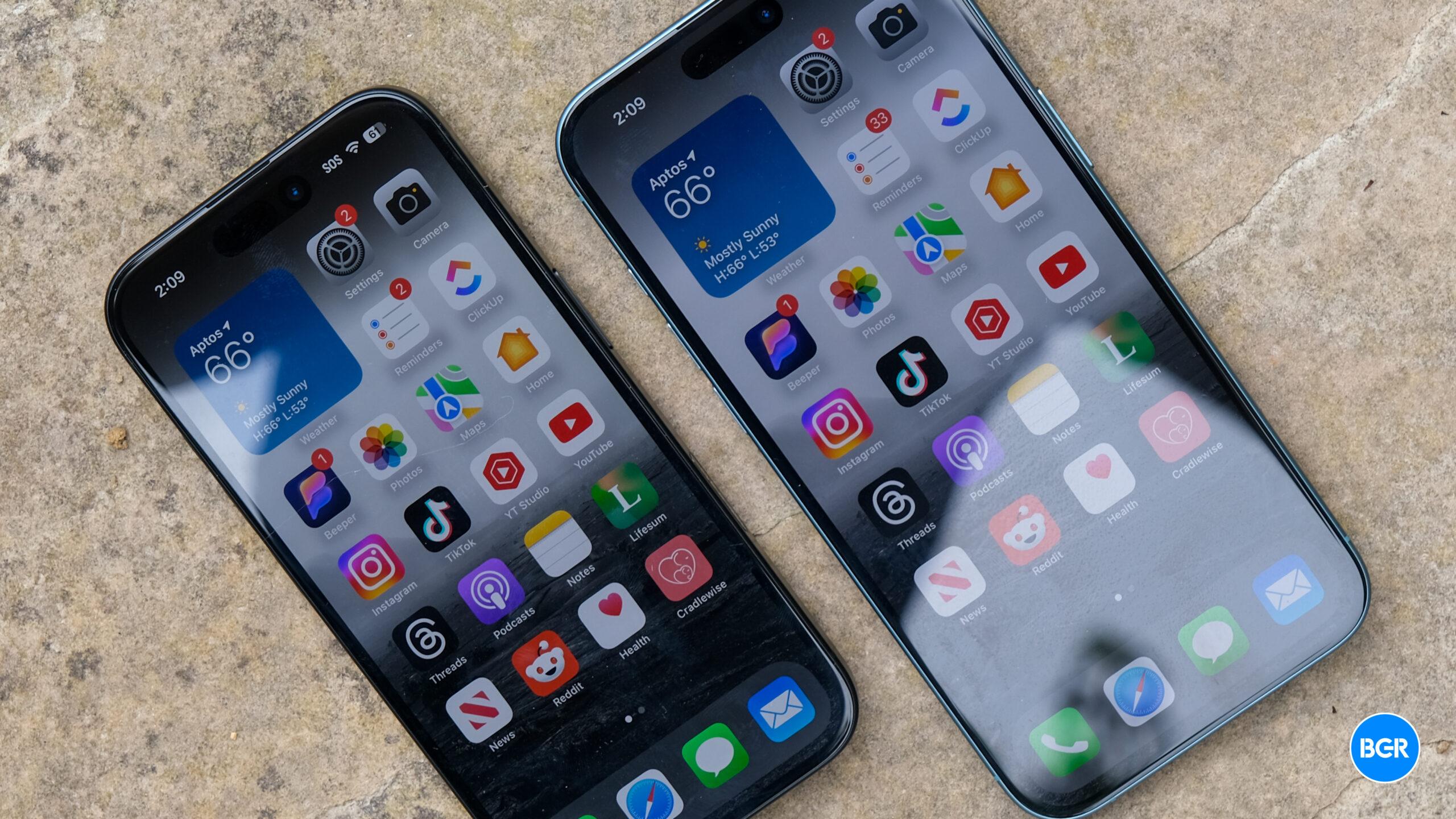
 M4 iPad Pro OLED display. Image source: José Adorno for BGR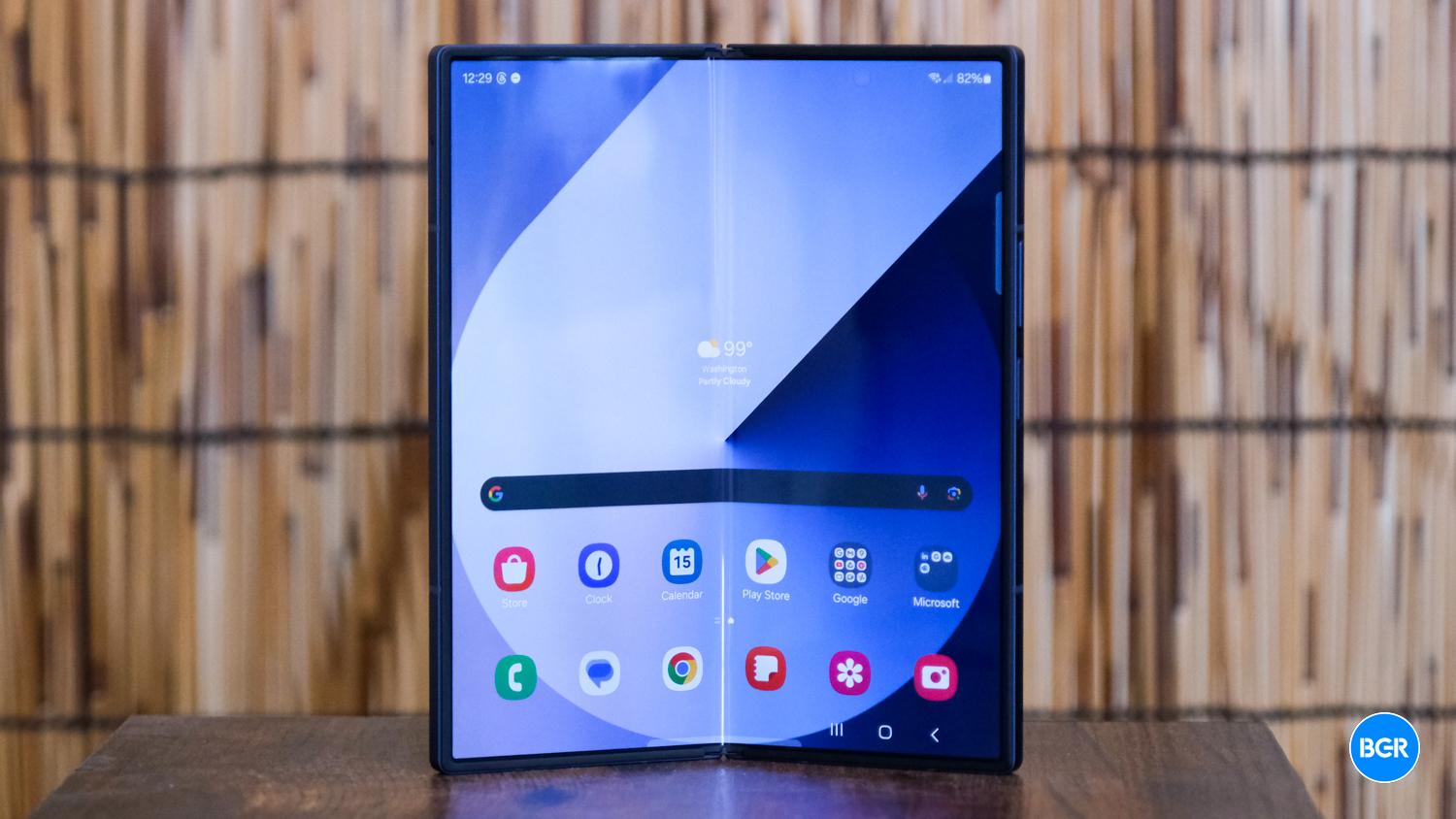
 Ray-Ban Meta smart glasses. Image source: Jonathan S. Geller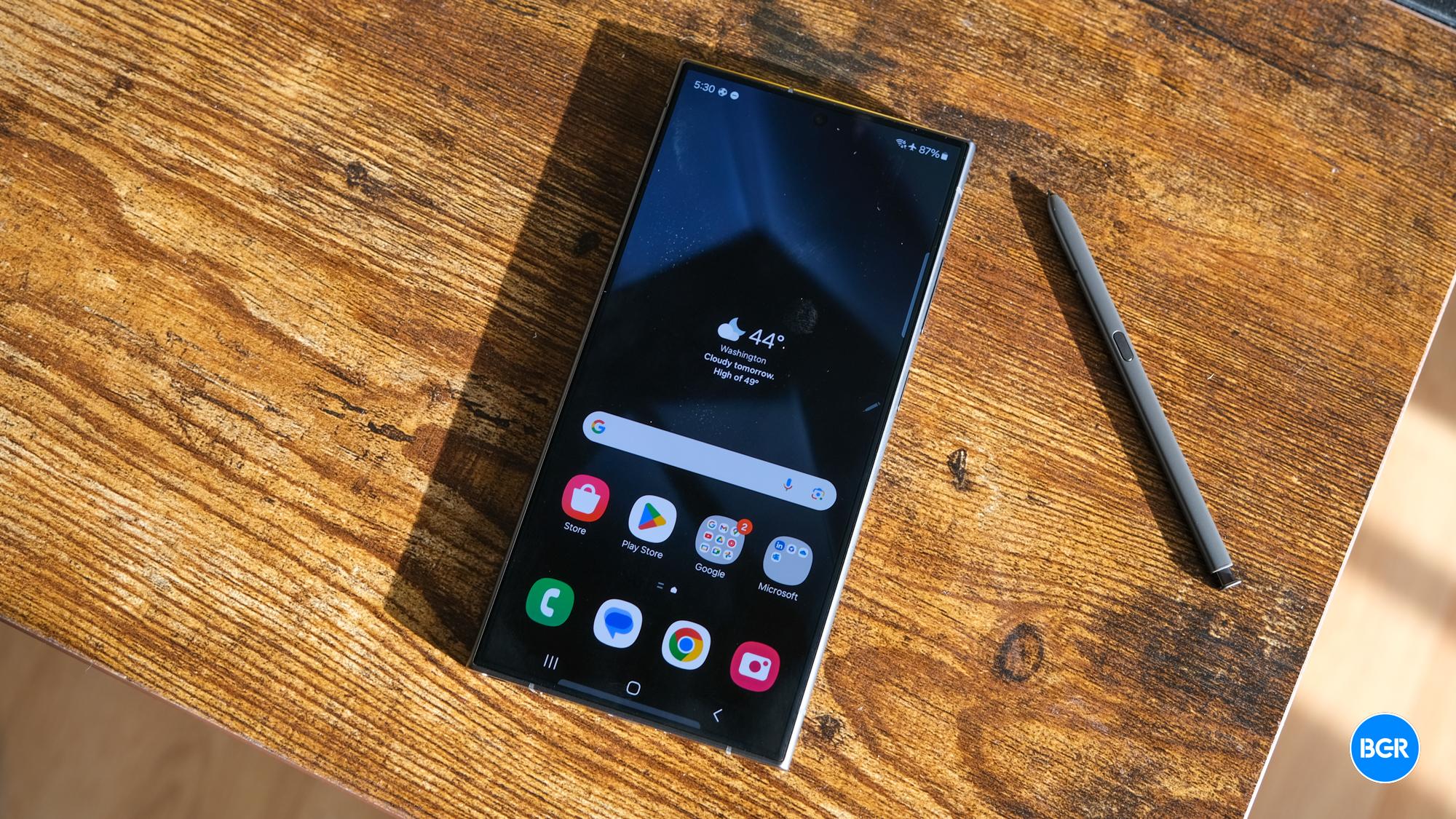
 Google used the smart glasses on the right to demo Project Astra (Gemini Live) at I/O 2024. Image source: Google





