Posted on

How Toyota is transforming its digital employee experience

Toyota, one of the world’s largest car manufacturers, has embarked on a project to transform its digital employee experience (DEX).

In the US, Toyota has ambitions to eliminate its traditional IT service desk this year, and if it’s unable to hit that target, it aims to at least reduce IT helpdesk calls by 80%. Part of the strategy to get there is the use of automation, predictive analytics and virtual assistants. “The traditional service desk is always reactive,” says Zakir Mohammed, manager of artificial intelligence and automation at Toyota. 

Looking at the experience employees can go through on a traditional IT helpdesk, he says it can take days, or even weeks, for support personnel to respond and fix an IT problem. For instance, if someone needed a new piece of software, they would need to raise a helpdesk ticket. In Mohammed’s experience, IT support would contact the individual who raised the ticket two to three days later, then block out a slot of 30 minutes or an hour to install the application.

“There was a lot of reactiveness happening,” he says. “At some point, our employees gave up opening tickets and started suffering in silence. We decided the traditional way of running a helpdesk was not sustainable. We needed to have a proactive approach.”

The company is a Gartner client, and Gartner’s digital employee experience market research recommends tools that conform to industry standards. Gartner defines DEX management tools as software that measures and continuously improves the performance of employee sentiment towards company-provided technology.

The tools tend to offer near-real-time processing of aggregated data from endpoints, applications, employee sentiment and actionable insights, which, according to Gartner, can power self-healing automation and enhance employee interactions with self-service portals and chatbots. Gartner says DEX tools also help IT support, asset management, procurement and other teams whose work depends on reliable information.

“Some of the tools and technology we evaluated looked very promising,” says Mohammed. “But the tool we currently use is Nexthink, which aligns with our requirements.”

Instead of waiting for IT issues to be manually triaged, Toyota’s 100,000 staff members now benefit from the IT department using Nexthink’s DEX technology to proactively detect, diagnose and remedy IT issues across endpoints.

Getting started with DEX

Toyota initially began a small-scale pilot of Nexthink with 100 users. Metrics were collected, enabling the IT team to understand the issues the pilot users were experiencing.

One of the challenges Toyota faced was that while it had deployed advanced observability tools to monitor business applications and IT infrastructure such as storage, the company lacked the tools required to monitor users, the performance of their devices, their experience of the IT they used and their overall sentiment.

Given people are considered a business’s most important asset, Mohammed believes it’s important to measure their experience of the IT they require to do their jobs.

Having evaluated a sample of 100 employees, he says: “What we saw was eye-opening. There were so many issues.”

Toyota then scaled up the proof of concept to 30,000 users. This step involved using automation. “We deployed to 30,000 users,” says Mohammed. “We were not only collecting the information, but we also started automating.”

Discussing the benefits of the roll-out, he says Toyota now has visibility of user devices, which helps the company offer a seamless digital experience and automates certain helpdesk tasks. 

Nexthink is also being used for predictive maintenance, such as replacing laptop batteries before they die. “If the performance of a certain type of battery is going from 80% to 60% in the next six months, these batteries may require replacement,” says Mohammed. “This is great information for the IT delivery team. It means they not only buy the batteries in advance, but can also proactively replace them before the old battery dies.”

Another way Nexthink is being used is in software reclamation. “There are tonnes of software sitting on laptops and we’re paying software licences for them,” he says. “Nexthink is able to check if the software has been used in the past 90 days. This information can then be used to send an automated message to ask if the application is still required. One click and it’s automatically reclaimed by the IT software library.”

The final piece of the DEX story at Toyota is the use of a virtual assistant. “We want to make it like a ChatGPT for Toyota, so that employees can submit a request and it does the work behind the scenes,” says Mohammed.

In effect, the virtual assistant is used to parse free text entered by users and translate these requests into actions that can be sent to Nexthink.

Another use of the virtual assistant is to enable users to request software directly. “If you need PowerBI, it connects behind the scenes with Nexthink, picks up the software and installs it,” he says. “You don’t have to do anything. Once the install is done, you get a notification saying that your software is ready.”

If Toyota’s goal is to reduce IT helpdesk calls, the ability for a user to have IT problems proactively resolved via a virtual assistant, or perhaps use it to request new software, shows where the digital employee experience is heading. 
Source

Posted on

Microsoft 365 price hike: Are you forced to pay more even if you don’t want AI?

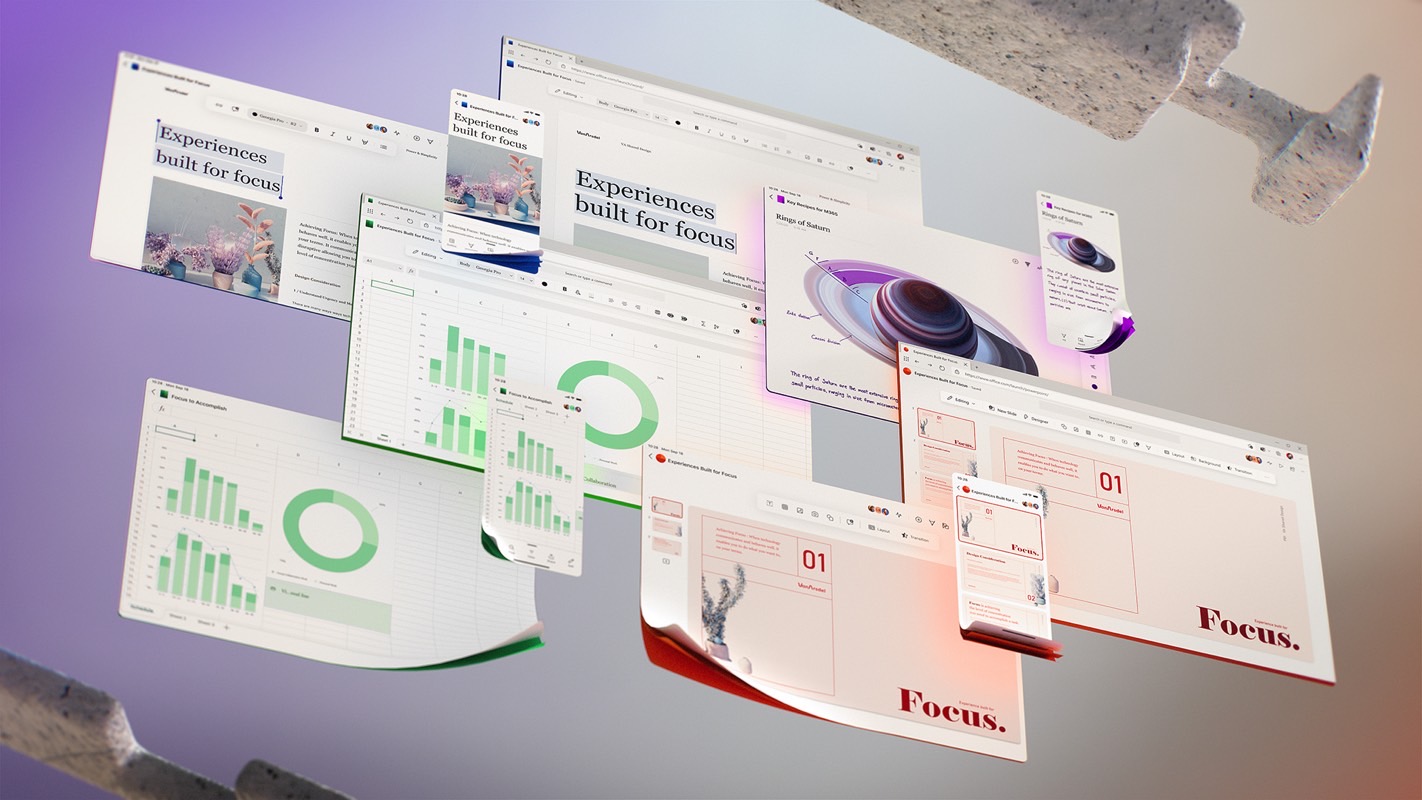
If you thought Microsoft’s forcing Windows 10 users to upgrade to Windows 11 to keep using Microsoft 365 Office apps was bad, you haven’t seen anything yet. Microsoft will further annoy many of its customers by embedding Copilot AI into all Office apps and charging an extra $3 per month for it. Microsoft announced the price hike for the Office 365 apps in a blog post explaining the changes.

Yes, AI development is expensive, and I absolutely agree that we, as end users, have to pay for access. That’s why I’m a ChatGPT Plus subscriber and won’t ditch that $20/month subscription anytime soon. If anything, I’m ready to pay for additional AI products that might improve aspects of my life. Take Apple Intelligence; I’ll keep buying expensive iPhones, iPads, and Macs, which will pay for Apple’s AI.

However, as a Microsoft 365 subscriber who has no interest in Copilot AI at this point, I’m not too thrilled about potentially having to shell out an extra $3 per month for my Family subscription. AI should be optional rather than mandatory in all apps. So, is there a way to keep your current subscription price if you’re like me and you don’t want Copilot AI? Well, it’s complicated.

Microsoft is forcing Copilot AI on millions of users

Microsoft 365 Personal and Family subscribers will get Copilot AI and a new Designer AI image generation app in most markets. This will lead to a price hike of $3 per month in the US, Microsoft’s first price hike for the productivity bundle subscription in 12 years. You’ll have to check your local Microsoft 365 portal to see the price increase in your local market.

Tech. Entertainment. Science. Your inbox.

Sign up for the most interesting tech & entertainment news out there.

By signing up, I agree to the Terms of Use and have reviewed the Privacy Notice.

Microsoft says that most of its 84 million consumer subscribers will have access to Copilot in Office apps whether they want it or not.

The new Copilot AI integration is separate from the Microsoft Copilot Pro subscription, which costs $20 per month. Copilot will be available in Word, Excel, PowerPoint, Outlook, OneNote, and the new Designer app.

To use the latter, Microsoft 365 Personal and Family subscribers will use AI credits that come with their subscription. The monthly allotment of AI credits applies to all Office apps and should be “enough for most subscribers.”

Let’s appreciate the good things

Microsoft knows that Copilot shouldn’t always be active in Office apps, so it’s giving users the ability to turn it off. That’s good news for students who rely on Office apps for taking notes during class.

Also important here is Microsoft’s commitment to privacy. I might not like the price hike because I don’t plan to use Copilot AI in Office apps anytime soon, but I appreciate the fact that Microsoft will not use any Office app AI data to train its models:

To protect your privacy, we do not use your prompts, responses, or file content (such as Word documents or Excel spreadsheets) when you use Copilot in the Microsoft 365 apps to train our foundation models.

You can opt out, for now

Microsoft is aware that not all Office app users will want access to Copilot AI, so there are ways to opt out and keep your current subscription price. That’s another thing I can appreciate. But there are big caveats here.

First, you have to be an existing Microsoft 365 subscriber to opt out of the Copilot AI price hike. Second, you must enable recurring billing to avoid the price increase. Those who don’t have it enabled, such as myself, won’t be able to stick with the non-AI versions of the apps.

Users with recurring billing can switch to a Basic plan, or they can keep their current plan as it exists today by switching to the new Personal Classic or Family Classic plans “for a limited time.” Once these plan options disappear, you’ll only have access to Copilot AI plans.

In other words, you’ll still be forced to pay for AI you might not want if you miss the opportunity to grab one of these limited-time plans.

Finally, there’s another big issue with the non-AI plans here. Microsoft says it will maintain the Basic and Classic plans “as they exist today,” but you risk not getting new features. For “certain new innovations and features you’ll need a Microsoft 365 Personal and Family subscription,” Microsoft says. Therefore, you’ll need to pay that extra $3 per month, or whatever it converts to in your local currency.

Should you cancel Microsoft 365?

Don’t get me wrong, I don’t think access to Copilot AI is a bad thing. It’s certainly a great tool and much more useful than, say, AI chatbots ruining WhatsApp. As you can see in the examples above, Copilot can be quite helpful in all sorts of instances using Office apps.

However, it should be up to the customer to choose to use AI. There’s no reason for Microsoft not to continue supporting non-AI Office apps in the future other than greed. That’s what it looks like, at least.

Also, since I’ve defended Netflix price hikes in the past, I’d do the same with Microsoft 365 prices if they were to go up.

My first reaction wasn’t to cancel my subscription or opt for the non-Copilot Office experience. I wanted to ask family members in the group if they wanted any built-in AI access. But I can’t even do that, considering that Copilot AI will only be available to me, the subscription owner.

Source

Posted on

Meta is about to ruin WhatsApp with AI bots no one wants

Of all the generative AI assistants out there, Meta AI must be the most annoying for the simple fact that Meta is shoving it down our throats. No app is safe, from Facebook to Messenger to WhatsApp to Instagram. Meta AI is there whether you want it or not, and there’s no way to deactivate it.

Meanwhile, ChatGPT is entirely optional, not that OpenAI can really force it on anyone. Apple’s Apple Intelligence is also optional; you don’t have to use it even if you have access to it. Then there’s Google Gemini, which is baked into many Google products but doesn’t feel as intrusive as Meta AI. The same goes for Microsoft’s Copilot.

The worst part about Meta AI is that Meta isn’t done ruining its apps with overdoing the AI presence. We’ve just learned of AI profiles coming to Facebook and Instagram, which is extremely annoying. It gets worse; Meta will now give AI bots prime plans inside WhatsApp, a feature that nobody really asked for from the one Meta app that’s actually useful.

WhatsApp is the world’s largest chat app. It works on iPhone and Android and supports end-to-end encryption across platforms. That’s the only reason I’m still using it. That, and the fact that Meta relented on its annoying WhatsApp policy change a few years ago.

Tech. Entertainment. Science. Your inbox.

Sign up for the most interesting tech & entertainment news out there.

By signing up, I agree to the Terms of Use and have reviewed the Privacy Notice.

Come to think of it, the only reason WhatsApp is so good and still encrypted, is that the app was built this way well before Meta bought it for a small fortune.

The last thing I want in WhatsApp is support for AI chatbots. Yes, it’s great that you can save a ChatGPT number to chat with the chatbot from WhatsApp, but that’s optional.

Say that Meta feels like it has to put AI bots in WhatsApp to expose more people to Meta AI and potentially make some money in the process. I still hate the idea of WhatsApp getting a dedicated AI menu. That’s wasted screen real estate right there. It’s a feature I’ll never use, and I’m sure others will be equally uninterested.

The new AI bots menu in a WhatsApp beta release for Android.The new AI bots menu in a WhatsApp beta release for Android. Image source: WABetaInfo

Meta is testing the new interface in an Android beta version of WhatsApp. Always reliable WABetaInfo surfaced the image above that shows the new AI tab replacing the Communities tab. That menu, which might actually be useful, is merging with the Chats tab.

The new AI tab will include all sorts of AI chatbots to talk to, including third-party models that can talk to you about specific topics.

I don’t doubt that some WhatsApp users will want to use these services. I say that as a longtime ChatGPT user who chats with OpenAI’s chatbot about all sorts of things daily. But I absolutely hate the idea of any AI product being forced on me the way Meta is doing with Meta AI.

WhatsApp is especially important to me as I use it to talk to many people. It’s not just Android users in my family or friends group that like WhatsApp; plenty of iPhone owners prefer the platform over iMessage. AI isn’t needed. Or if it is, it should be hidden somewhere and accessible on demand.

It might get even worse than that. WABetaInfo found evidence in a different WhatsApp beta version that Meta wants to let users create custom AI chatbots right inside the app. The process might be similar to what’s already available on Instagram.

Support for custom AI bot creation in a WhatsApp beta release for Android.Support for custom AI bot creation in a WhatsApp beta release for Android. Image source: WABetaInfo

The feature resembles the custom chatbots available in ChatGPT and Gemini, so it’s not entirely surprising. But, again, it’s not something I want to clutter a key app like WhatsApp.

I don’t see any value in adding AI bots to WhatsApp or supporting the creation of custom ones.

Remember that if left unchecked, some custom AI chatbots might be harmful, especially when certain types of users are exposed to them. And it’s not like Meta is improving its content moderation policies, so we have no idea how it’ll police this universe of AIs it’s bringing to apps like WhatsApp and Instagram.

I can only hope that Meta will not bring these features out of beta, but that’s just wishful thinking. If anything, I take some solace in knowing that it’ll take longer for Meta to deploy the AI changes to WhatsApp in Europe.

Source

Posted on

Interview: Wendy Redshaw, chief digital information officer, NatWest Retail Bank

Wendy Redshaw, chief digital information officer (CDIO) at NatWest Retail Bank, has had a distinguished career leading technology-led change in some of the world’s biggest financial services organisations. Now, she’s using that experience to drive even more innovation.

After four years as CIO for collaborative technology solutions with Deutsche Bank, Redshaw says she was eager to work for a UK finance house. In late 2018, she found the perfect home at NatWest as head of technology and digital distribution for the personal bank.

“The opportunity was interesting because NatWest was ready for digital transformation but wasn’t naturally sitting in a leadership position at that time,” she says. “The role allowed me to land and think about what to do. I found an organisation that was fundamentally focused on its customers and perhaps had less digital experience in-house.”

After working with her team to deliver technological improvements across the personal bank offline and online, Redshaw moved into the CDIO position in February 2020. “It wasn’t just because I wanted a longer acronym than most technologists,” she jokes.

“We created the role so we could sew together business and technology because, as with many organisations, technology had historically been something that happened over there, and the business did their thing, and then they would give the technologists something to work on. We wanted better integration.”

Embracing digital change

Redshaw says the creation of her CDIO role in 2020 was a public statement that NatWest wanted to create a partnership approach to technology and business: “This is a digital bank in the making, and hopefully, with the results that we’ve seen, we’ve achieved our aims.”

The technological transformation in banking services that Redshaw oversees at NatWest today differs greatly from the finance industry she joined as a software engineer in 1987.

“We didn’t call it digital then,” she says. “I remember the focus was on, ‘How do we use technology to make things quicker, simpler and more secure for our customers?’” She points to work on a security module for the London Stock Exchange and the beginning of the settlement systems CHAPS and Euroclear.

“There was a lot of change where technology was being brought in, but it was more for the underpinning services than for the consumer-facing areas,” she says, before fast-forwarding to the present-day bank. “Over that time, we’ve seen that digital is now in the hands of our retail customers.”

Redshaw says the shift in technological focus also helped prompt her switch to the retail side of banking. After a career driving behind-the-scenes IT changes in major firms, such as Lloyds TSB, Barclays Capital and Royal Bank of Scotland, her current role at NatWest is focused on delivering innovative customer services.

“That’s where the exciting stuff is happening. Yes, of course, we use AI across several areas of the organisation – something like 17% of our models are AI-based now, such as for controlling fraud, financial crime and so on,” she says.

“However, in terms of affecting human beings, digital services are at our customers’ fingertips. If you think about my driver for going into the CDIO role, the customer is where I thought I’d have the most impact.”

Delivering pioneering innovations

As CDIO, Readshaw is directly accountable to the group CIO and retail banking CEO. Responsible for digital operations leadership, she manages 4,500 people across four locations globally and leads the delivery of retail banking technology for Royal Bank of Scotland, NatWest and Ulster Bank North.

Redshaw’s team is digitalising services to make life easier for the group’s customers. Their work is supported by a planned investment of £3.5bn from 2023 to 2025, with more than 70% of spending targeted at data and technology.

NatWest has 10.9 million digitally active retail and business banking customers and 3.5 million use online banking platforms. The hard work continues apace. In 2024, Redshaw led the launch of a retail banking app on Apple’s Vision Pro virtual reality headset.

One of her proudest achievements is the introduction of generative AI (GenAI) into the bank’s conversational assistant, Cora. She says the bank made an early move into chatbots. Cora was introduced in 2017. The technology could answer basic questions, but Redshaw wanted it to do more.

“When I joined in 2018, I realised it was quite a good channel to do something with,” she says. “I had some grand ambitions for her – things like digital avatars having a voice, and all these engaging ways of doing things. I said, ‘Look, I see this particular technology being something we could get moving on’.”

Redshaw saw that, while machine learning technology was progressing at pace, it wasn’t quite ready for the giant leap in digital experiences she envisioned. However, the public release of generative AI models in late 2022 helped turn theory into a practical reality. Working with experts from IBM’s client engineering team to develop the initial proof of concept, NatWest launched its next-generation assistant, Cora+, in June 2024.

Cora+ is a multichannel platform that securely accesses data from multiple sources, including products, services and banking information. The virtual assistant technology is powered by IBM’s Watsonx Assistantand built on IBM Cloud. Estimates suggest the technology is creating a 150% improvement in satisfaction for some customer queries.

“It was the perfect example of an interest in technology, an interest in people, and an interest in delivering business value,” she says. “I feel very excited about how we’ve taken something that just answered questions and moved into generative AI at scale for millions of customers. And it’s only the first step. I’ve got big ambitions for what I want to do with that technology.”

Building strong partnerships

Cora+ uses ChatGPT 3.5 alongside an unnamed GPT large language model (LLM). The second model is trained to judge the output of the first model. While the GPT models play an important role in NatWest’s digital strategy, the organisation is eager to keep an open approach to AI and innovation.

Redshaw says the group wants to avoid being locked into a specific LLM. She wants the capability to swap from large to small language models (SLMs). Organisations can use SLMs to derive outputs from constrained amounts of data that require less computing power, which is important for a big business like NatWest that wants to meet sustainability targets.

“As a result, it was a case of, ‘OK IBM, we like working with you, but we want to be able to switch the language models in and out depending on the business requirement’,” she says. “And they were like, ‘Absolutely’. So, that’s great. We have the same mindset around using the best of everything to get value for our customers safely.”

Wendy Redshaw, Natwest

“This is a digital bank in the making, and hopefully, with the results that we’ve seen, we’ve achieved our aims”

Wendy Redshaw, NatWest Retail Bank

In addition to the work on Cora+, Redshaw and her colleagues are analysing how AI can boost customer experiences in other areas. NatWest has worked with IBM to develop a digital legal assistant powered by GenAI. This tool streamlines contract management and enhances accessibility, especially for neurodivergent users. The tool supports colleagues with compliance checks, producing 20% efficiency gains.

More generally, Redshaw is proud her team completes thousands of releases annually. The department’s focus on micro-projects is as important as delivering large-scale initiatives and helps NatWest hit tight transformation deadlines. Across all projects, IBM acts as a key technology partner, with Redshaw suggesting the nature of the long-term working relationship with the tech giant is like interacting with people on the internal team.

John Duigenan, distinguished engineer and general manager of the global financial services industry at IBM, says shifting to constant innovation, experimentation, and learning is typical of the work his company sees in its most pioneering clients. “We got to work with a trusted partner, and we got to learn together,” he said, referring to IBM’s relationship with NatWest.

“It’s great we co-create approaches to using technology and collaborate on innovation. Our teams blend incredibly well, and we deliver together in new ways. We have an approach that says, ‘We know why this work will matter for all of us because we can measure the impact’.”

Providing new experiences

Redshaw reflects on achievements during the past few years. While the benefits of the digital transformation she’s enacted at NatWest are clear, there’s always an opportunity to do more.

She says the rapid pace of transformation makes it difficult to predict with any degree of certainty what will happen next: “What will the success metrics be in three years? We won’t be judged on the same metrics because digital banking is changing quickly.”

However, she expects to see developments in some key areas. “In the AI space, I expect to see more voice,” she says. “At the moment, Cora listens to our telephony and sends a text, a deep link, or something else that’s required. In the future, I think it’ll probably answer the phone and deal with questions.”

Redshaw also expects progress in text-based answering. Her bank’s research suggests people in financial difficulties often prefer having a guilt-free conversation with a bot rather than a human. “I would expect something in that financial health and support space that uses natural language,” she says.

There’s even the potential for advances in unexpected areas. Redshaw says she’s keen to add Cora to ATMs, something that she was previously told was impossible.

“I’ve now spoken to some innovation engineers, and they’ve said they think it might be possible,” she says. “So, I suspect we will see something like a digital point of presence.”

Finally, Redshaw expects the bank to continue honing its approach to mobile. “People now have their bank in their pocket,” she says. “I imagine we will give more richness and engagement through these devices. Even though our mobile strategy is great, I think it will lean towards more engagement and personalisation during the next 24 months.”

Source

Posted on

AWS on using GenAI to speed up legacy VMware and Microsoft datacentre migrations

Amazon Web Services (AWS) has set out how its investments in artificial intelligence (AI) chips and software are saving customers money and helping them migrate their legacy Windows and VMware workloads off-premise much quicker.

AWS CEO Matt Garman used the opening keynote at the public cloud giant’s Re:Invent customer and partner conference in Las Vegas, which is the first he has delivered since taking over the company reins in June 2024, to talk up the potential for generative AI (GenAI) to digitally transform the way that businesses operate. He also talked at length about the work that goes into ensuring the AWS cloud infrastructure is equipped to cope with the growing demand from its customers for the compute power they need to run AI and GenAI workloads.

As previously reported by Computer Weekly, the demand for GenAI workloads from its customers was recently cited as the reason for a “significant re-acceleration” in AWS’s annual growth rate, with the company reporting a 19.1% year-on-year uptick in revenue during its third-quarter results.  

Garman touched on Amazon’s 14-year-long collaboration with Nvidia, which he said has enabled it to roll out a succession of increasingly more powerful graphics processing unit (GPU) instances based on the latter’s technology so it can keep pace with its customers’ AI demands.

The company has also doubled down on the creation of its own AI silicon – namely its family of Tranium chips – to support a wider range of instances that are designed to improve the cost performance of running compute-intensive workloads. To this point, Garman used the keynote to announce that the second generation of Tranium instances had now become generally available, claiming the latest iteration can deliver “30-40%” better price performance than “current GPU-powered instances”.

This is based on feedback from early adopters of the technology, with Garman naming Adobe as among the customers who have seen some “promising” early wins with the technology.

Another is AI-focused software engineering startup Poolside, who has reportedly committed to training all future versions of their large frontier model on Tranium 2. The company is also anticipating the move will generate savings in the region of 40%. “Databricks is one of the largest data and AI companies in the world,” he said. “[It] plans to use Trainium 2 to deliver better results and [to] lower the total cost of ownership for our joint customers by up to 30%.” 

Opening up about Amazon’s use of GenAI

The conversation later moved on to how GenAI is also changing the way that AWS operates, with particular focus on how its own offerings are helping to speed up the time it takes to refactor legacy, on-premise workloads and ready them for migration to the public cloud.

Central to this bit of the discussion was Amazon Q, which is the company’s generative AI chatbot assistant that is designed for in-house use by software developers, business analysts and contact centre employees to make the work they do more efficient.

The migration of customer workloads out of private datacentres and into the public cloud is a process that fuelled the company’s growth for a decade or more after its inception in 2006.

However, despite the company previously acknowledging that a large proportion of enterprise workloads remain on-premise, it was an area that was markedly less talked about during the keynote, until Garman flagged how Amazon Q can assist with this task.

“Our goal at AWS is to help every builder be able to innovate, [and] we want to free you from the undifferentiated heavy lifting to really focus on those creative things that make your building unique … [and] generative AI is a huge accelerator of this capability,” he said.

As an example, he talked about how Amazon Q Developer, an iteration of the chatbot specifically designed to help developers speed up their CodeDeploy processes, is helping customers deploy faster, more secure and better-quality software updates.

Garman then went onto announce several new features that were being added to Amazon Q Developer that will generate unit tests, documentation and code reviews on behalf of developers, so they can spend more time each day writing code than dealing with the admin associated with it.

Addressing the legacy

The software is also reducing the amount of time they have to spend managing legacy applications, it is claimed.

“One of [the software’s] most powerful capabilities we already have is [its ability to] automate Java version upgrades,” said Garman. “What it can do is transform a Java application from an old version of Java to a new version in a fraction of the time it would take to do manually. This is work that no developer loves to do, but is critically important.”

According to Garman, integrating this capability into Amazon’s own internal systems saw it “migrate literally tens of thousands of production applications” to Java 17 in a “small fraction of the time” it would typically take. “The estimate from our teams is this saved us 4,500 developer years … [and] this is a mind-blowing amount of time saved, and because we’re now running on modern Java, we can use less hardware, too. So, we saved $260m a year through this process.”

Java upgrades are one thing, but – in Garman’s opinion – a migration that a lot of enterprises want assistance with is moving from Windows to Linux. And this is something AWS can assist with now through the preview release of a new version of Amazon Q Developer.

“Customers love an easy button to get off of Windows,” he said. “They’re tired of constant security issues, the constant packing or patching, all the scalability challenges that they have to deal with, and they definitely hate the onerous licensing costs.

“But we do recognise today that this is hard. Actually, modernising away from Windows is not easy, [but] with Q Developer, modernising windows just got a lot easier … [as it allows you] to transform .Net applications that are running on Windows to Linux in a fraction of the time.”

Signature IT

As an example, Garman flagged digital transactions, signing software company Signature IT, and the work it has done to modernise its legacy .Net applications and migrate them from Windows to Linux. “It was a project they estimated was going to take six to eight months, [and] they actually completed it in just a few days,” he said. “That is a game-changing amount of time.”

But it’s not just Windows workloads that enterprises are having a hard time modernising. “Windows is not the only legacy platform in the datacentre that is slowing down all your modernisation efforts … oftentimes it is VMware workloads that customers would really love to modernise to cloud-native services,” said Garman.

“VMware is deeply entrenched in many datacentres, and has been for a really long time. And what happens is … because it’s been there for a long time, there ends up [being] this kind of spaghetti mess of interconnected applications.”

“[So] really the hardest part about modernising is finding out what are the dependencies of those applications,” he said. “And the migrations are error-prone, because it’s hard to understand if you move something, if it is going to break something else. And again, of course, licensing is expensive.”

To assist with this, Q Developer also has capabilities that will allow VMware-based datacentre workloads to be reconfigured to become cloud-native, with the system able to identify the dependencies and create a migration plan for the user.

“[This] really reduces a ton of the migration time, and significantly it reduces [the organisation’s] risk,” said Garman. “It also launches agents that can convert on-premise VMware network configurations into modern AWS equivalents. This takes what used to be months and months of work into hours to weeks.”

The next complex datacentre migration project the company is looking to simplify for enterprises, with the help of Amazon Q, concerns mainframes, which Garman described as “by far the most difficult to migrate to the cloud”.

“When you talk to customers, just the effort of trying to analyse, document and plan mainframe modernisation is often too much, [and] people give up [because] it’s too hard. Turns out, Q can help with this, too,” he said.

The software has a number of agents in it that are able to do mainframe code analysis, refactor applications and create documentation in real time for legacy COBOL code so enterprises can fill in any knowledge gaps about what it might do.

“Most customers will tell you their mainframe migration will probably take three to five years … but planning a project for three to five years is nearly impossible,” said Garman. “A lot of the time, they just don’t get done.”

And while it’s beyond the capabilities of Amazon Q to make mainframe migrations a “one-click” job right now, he said early testing suggests the software could significantly accelerate the pace of these projects.

“We think Q can actually turn what was going to be a multi-year effort into a multi quarter effort, cutting by more than 50% the time to migrate mainframes,” said Garman. “If you can take a multi-year effort and bring it down to a couple of quarters, that’s something that people can really get their heads around. And customers are incredibly excited about this.”

Source

Posted on

Here’s why I’d cancel Netflix before ChatGPT Plus

As I type these lines, we’re halfway through OpenAI’s big “12 Days” of ChatGPT event, which brought us several exciting features. ChatGPT o1 is out of beta, as is the Canvas mode, with the latter delivering a big UI change for the ChatGPT experience. OpenAI also released the text-to-video Sora service to the public and brought live video streaming and screen sharing to GPT-4o’s Advanced Voice Mode.

As a ChatGPT Plus user, I’d have early access to all of them, but since I’m in the European Union, OpenAI is more cautious with its releases here. As such, Sora and the live video streaming support for Advanced Voice Mode are not available in the region. The latter is especially exciting, as the AI will get eyes in specific conversations.

These developments made me realize, again, that the Plus subscription isn’t as good in Europe as elsewhere. Still, I’m not going to cancel it, as I find that ChatGPT has become too valuable to me, both for work and personal computing. I also thought that, if I were to choose, I’d rather cancel Netflix than ChatGPT Plus at this particular point in my life.

It’s an apples-to-oranges comparison, sure. The two products aren’t actual competitors. If anything, I found that ChatGPT can be a great companion for streaming certain Netflix shows.

Tech. Entertainment. Science. Your inbox.

Sign up for the most interesting tech & entertainment news out there.

By signing up, I agree to the Terms of Use and have reviewed the Privacy Notice.

It just happens that I’m not binging Netflix like I would have done years ago. I skip some of the shows completely.

Meanwhile, Netflix has tightened its password-sharing crackdown to the point where circumventing it is almost impossible.

Separately, YouTube got a massive price hike this week, which, combined with OpenAI’s ongoing event, made me compare streaming subscriptions like Netflix to ChatGPT Plus. It’s not just Google that’s periodically increasing prices; Netflix is doing it, too, as I just got one such price hike notification for my region.

I often argued that the password-sharing ban and price hikes are worth dealing with, considering what you’re getting in return. I said that I’ll keep my Netflix subscription as long as I spend more money on coffee when going out. The latter consideration also applies to ChatGPT Plus.

What I’m getting at is that I’m not in a position where I have to choose between the various software and service subscriptions I might pay each month and cut some of the costs.

But if I were to start cutting something, streaming services would go well before ChatGPT Plus. Netflix could be on the chopping block too.

At $20/month, ChatGPT Plus is actually more expensive than what I pay for Netflix. But combine all the streaming subscriptions I’m subscribed to, and ChatGPT Plus is the cheaper option. Also, those costs add up over a year, according to an Excel doc where I keep track of everything.

Ted Danson in A Man on the Inside on NetflixTed Danson as Charles in “A Man on the Inside.” Image source: Colleen E. Hayes/Netflix

I reduced my streaming time so I could focus on exercising more. I run marathons now, which means I’m spending hours running and walking outside. Watching Netflix isn’t what it used to be, and it has nothing to do with the time I spend on ChatGPT.

As for the AI chatbot, I’ve been using it increasingly more in the past year, especially since I jumped on the Plus subscription. It’s not just for work, though; as you can imagine, keeping tabs on all things AI is a good reason to have an active premium AI subscription. I use ChatGPT for more complex research, which would take a lot longer to use traditional search engines.

I’m still questioning what the AI is telling me, but with the addition of ChatGPT Search, OpenAI has made a big move towards showing the sources of ChatGPT’s claims. By the way, ChatGPT Search continues to be exclusive to premium tiers like ChatGPT Plus.

I use ChatGPT to plan workouts and travel, and I use it to ask any question I can think of, including the sillier kind. That latter part actually comes in handy while traveling to all sorts of places and visiting museums and other landmarks. ChatGPT can be an invaluable source of information, and it’ll be an even better tool once video streaming support rolls out to Advanced Voice Mode.

I wouldn’t have necessarily expected it earlier this year, but a premium AI subscription is a top priority for me. Even if I cancel ChatGPT Plus, I’d consider a premium replacement from the competition. The Netflix subscription, meanwhile, is much lower on that priorities list, and I’m sure I’d cancel it long before I ditch ChatGPT Plus.

Source

Posted on

How AI can help you attract, engage and retain the best talent in 2025

As we move into 2025, the landscape of human resources (HR) is heading for a significant transformation. Artificial intelligence (AI) is set to revolutionise workforce collaboration, efficiency, and talent management.

For HR leaders, harnessing the power of AI will be essential to attract, engage, and retain top talent in an increasingly competitive market.

Enhancing HR performance

AI is reshaping and revamping HR by automating routine and mundane tasks such as interview scheduling, data entry, and CV screenings. This automation allows HR teams to focus on strategic initiatives that add real value to employees, such as developing diverse cultures, offering tailored development programmes, and increasing engagement.

AI-powered analytics can identify workforce trends, predict employee turnover, and suggest to retain top talent. These insights enable HR leaders to make data-driven decisions to support a high-performance culture, ultimately improving employee engagement and organisational performance.

Just look at Unilever, which uses AI to streamline its recruitment process. By using AI-driven assessments and video interview analytics, Unilever has significantly reduced time-to-hire while enhancing the candidate experience. Additionally, AI can streamline performance management by providing continuous feedback and personalised development plans. This shift towards real-time performance management fosters a culture of continuous improvement, where the team receives timely feedback and support to achieve their goals, leading to higher engagement levels and better retention rates.

Talent attraction and retention

As the demand on sourcing talent with scarce skills continues in 2025, attracting top talent needs innovative strategies. AI can play a pivotal role in enhancing the candidate experience. Imagine AI-driven chatbots engaging with candidates in real-time, answering their questions and providing personalised information about the company and the role. This immediate engagement can significantly improve the candidate experience, making the organisation more attractive.

AI can also help create a more inclusive hiring processes by eliminating unconscious biases from recruitment. AI algorithms can analyse job descriptions to ensure they are free from biased language and assess candidates based on objective criteria. This is an incredibly important step to support organisations in attracting and growing a more diverse and inclusive workforce, which is crucial for driving innovation and business success.

Retaining your team is equally important as attracting it. AI can help HR leaders identify early signs of people’s disengagement or dissatisfaction. For instance, AI-powered sentiment analysis can monitor employee communications and flag any negative sentiments, allowing HR and managers to intervene proactively. By addressing issues before they escalate, organisations can improve the satisfaction, happiness and ultimately retention of the team.  

AI can also facilitate personalised employee development. By analysing skills, performance data, and career aspirations, AI can recommend tailored development programmes and career paths for each individual. This personalised approach to development can help people feel valued and supported.

Upskilling your team in the New Year

24% of all workers are worried that AI will soon make their job obsolete. HR leaders have a crucial role in addressing these concerns and ensuring their teams are ready for AI integration. Providing training and the right tools to integrate AI smoothly is essential. By fostering a culture of continuous improvement and responsible AI use, HR can drive greater efficiency and empower the entire workforce.

AI is more likely to enhance roles rather than replace them, and HR leaders should embrace AI ethically and transparently. This involves being clear about how AI is used, ensuring data privacy, and maintaining a human touch in all interactions. By doing so, HR can build trust and create a positive environment where AI is seen as a tool for empowerment rather than a threat.

2025 – the future of AI in HR

As we approach 2025 and beyond, the integration of AI in HR will continue to evolve. Future trends may include more sophisticated AI-driven talent management systems, enhanced predictive analytics for workforce planning, and even more personalised employee experiences powered by AI. HR leaders who stay ahead of these trends and continually innovate will be well-positioned to lead their organisations into the future.

Looking to the New Year, AI will play a pivotal role in enhancing HR functions, making them more efficient, strategic, and employee centric. By leveraging AI to attract, engage, and retain top talent, organisations can stay competitive in a rapidly evolving job market. HR leaders who embrace AI responsibly and proactively will be well-positioned to drive their organisations forward, creating workplaces that are both productive and fulfilling for their team.

Toria Walters is chief people officer at ANS, a digital transformation provider and Microsoft’s UK Services Partner of the Year 2024. Headquartered in Manchester, it offers public and private cloud, security, business applications, low code, and data services to thousands of customers, from enterprise to SMB and public sector organisations.

Source

Posted on

ChatGPT might get ads

I’ve been a ChatGPT Plus subscriber for a while now, and I don’t plan on switching to the Free tier anytime soon. ChatGPT Plus gives me access to the newest models and features much sooner than the Free tier. Also, the limits with the chatbot are higher on the Plus plan, so you won’t run into interruptions.

Still, the ChatGPT Free option gives you quick access to OpenAI’s chatbot, letting you explore some of its best features to determine whether you’d even want to consider the Plus subscription in the first place.

Also, ChatGPT Free is truly free, as you don’t have to deal with any ads that would help OpenAI pay for your interactions with the AI. You don’t have to agree to have your chats train the AI, either. That’s why it has limits in place.

Unsurprisingly, OpenAI is considering a switch to an ad-based model in ChatGPT at some point in the future. It won’t happen anytime soon, but the company confirmed it’s looking at inserting ads in ChatGPT.

Tech. Entertainment. Science. Your inbox.

Sign up for the most interesting tech & entertainment news out there.

By signing up, I agree to the Terms of Use and have reviewed the Privacy Notice.

OpenAI CFO Sarah Friar told The Financial Times that the company is considering showing ads to non-paying ChatGPT users in the future. Ads could help cover the rising costs of AI servers and even increase profits. OpenAI is no longer a non-profit, after all, so it’ll be chasing revenues like any other tech giant.

We didn’t really need any confirmation from a company that launched a Google Search alternative and is considering a web browser of its own. It goes without saying that ads could be part of the ChatGPT Free experience.

Hopefully, however, OpenAI will not go the same route as Google. The latter made the web discoverable to the world with its Google Search product. But Google also made us hate online ads over the years, and Google Search along with it, because it tracked us everywhere on the web, creating profiles of user preferences for better ad-targeting.

The good news is that OpenAI will not start running ads on ChatGPT Free anytime soon. The company has many concerns about ads, and that’s great to hear. Friar told the Times that OpenAI needs to be “thoughtful about when and where” ads will be implemented.

OpenAI CEO Sam Altman is reportedly warming up to the idea of ads, though he has previously said he’s not a fan of them.

Friar’s remarks aren’t just answers to hypothetical scenarios. OpenAI hired former advertising talents from Meta and Google earlier this year. The only thing they could be working on at OpenAI is ad tech for ChatGPT.

I’ll also remind you of other reports detailing OpenAI’s plans for monetizing ChatGPT in the future that called for much more expensive subscription tiers. Placing ads in the free version of ChatGPT makes even more sense in that context, assuming those reports were accurate.

On the same note, it’ll be interesting to see what comes first: Ads in ChatGPT Free or a Plus subscription increase for premium users.

I will point out that OpenAI might get an influx of extra ChatGPT users in the near future as ChatGPT becomes available through Siri on the iPhone. In turn, iPhone users will be able to buy a Plus subscription from the iPhone’s settings app.

Source

Posted on

We may now know when Apple Intelligence will get Google Gemini integration

iOS 18.2 will finally bring OpenAI’s wildly popular ChatGPT to Siri thanks to integration with Apple Intelligence. This partnership will make Apple’s AI platform even more clever by upgrading Writing Tools and beefing up Siri with ChatGPT’s most recent large language models.

While deeper integration isn’t expected until iOS 18.4, when Siri will be able to control people’s iPhones, there’s a lot of anticipation about this partnership between Apple and OpenAI. Here’s how Apple explains it:

With ChatGPT from OpenAI integrated into Siri and Writing Tools, you get even more expertise when it might be helpful for you — no need to jump between tools. Siri can tap into ChatGPT for certain requests, including questions about photos or documents. And with Compose in Writing Tools, you can create and illustrate original content from scratch.

You control when ChatGPT is used and will be asked before any of your information is shared. Anyone can access ChatGPT for free, without creating an account. ChatGPT subscribers can connect accounts to access paid features within these experiences.

iOS 18.2 ChatGPT integration with Apple IntelligenceiOS 18.2 ChatGPT integration with Apple Intelligence Image source: José Adorno for BGR
However, this isn’t the only LLM that will be available with its AI platform. Back in June, during the WWDC 2024 keynote, Apple announced that Apple Intelligence would work with third-party LLMs. While this partnership starts with ChatGPT, more companies will be able to join the party later.

So far, Bloomberg has reported that Antropic’s Claude and Google’s Gemini were working on this integration. Apple’s Craig Federighi already stated that he would love to have Gemini integration with Apple Intelligence.

Tech. Entertainment. Science. Your inbox.

Sign up for the most interesting tech & entertainment news out there.

By signing up, I agree to the Terms of Use and have reviewed the Privacy Notice.

Now in his latest Power On newsletter, Bloomberg‘s Mark Gurman gave a tidbit on when to expect Google Gemini integration in Apple Intelligence. With an official app recently released for iPhone users, Gurman expects Google Gemini to be available with Apple Intelligence sometime next year. That’s obviously bad news if you’re eagerly awaiting the ability to use Gemini in place of ChatGPT within Apple Intelligence, though we’re not sure how many people out there fall into that category.

The supposed delay is probably due to Apple’s deal with OpenAI. Since Cupertino doesn’t pay OpenAI for this integration, the reporter thinks Apple gave it a “nice window of exclusivity,” which is why “I wouldn’t expect the Gemini chatbot to arrive in iOS until next year.”

Source

Posted on

Samsung is developing Gemini AI-powered XR glasses, and we might’ve already seen them

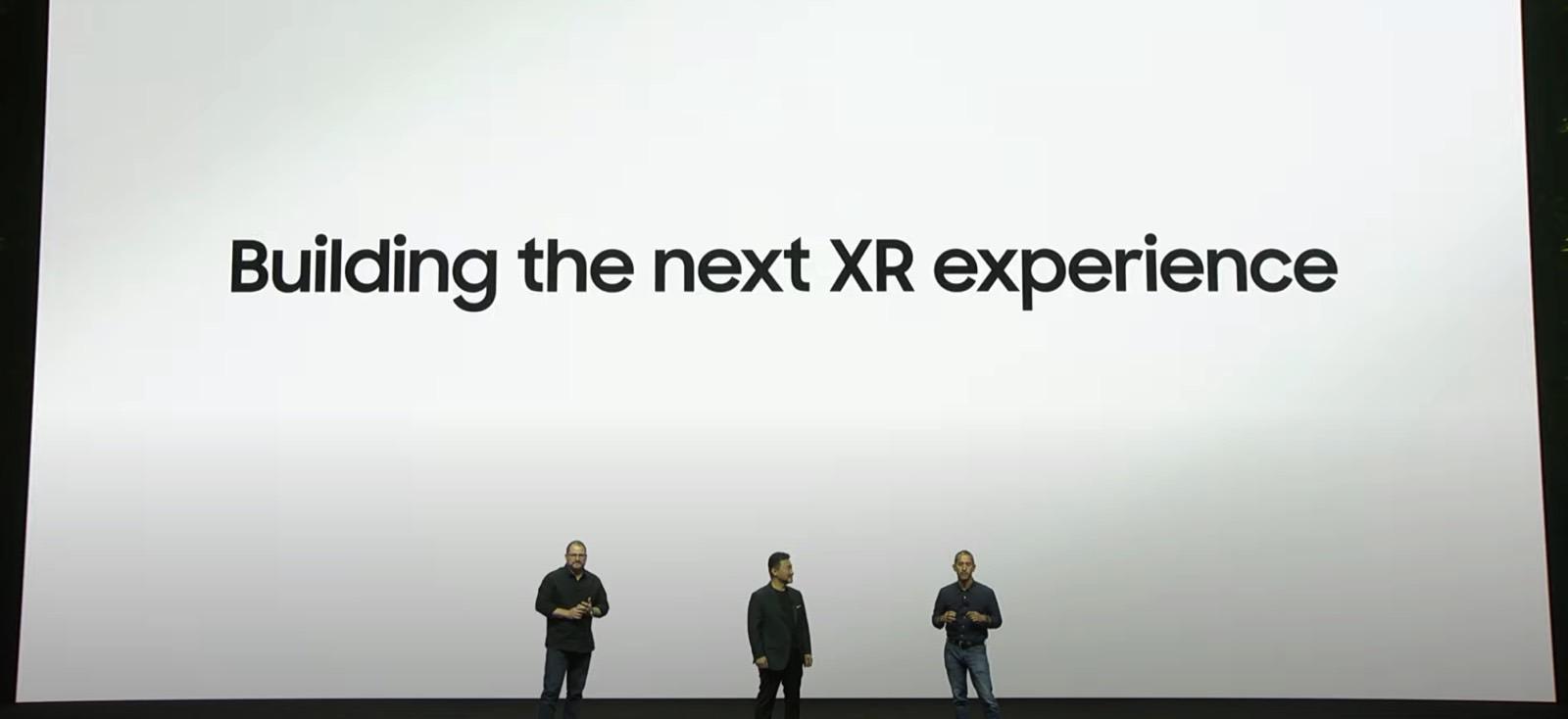
Remember when Samsung invited Google and Qualcomm to announce the “next XR experience“? I know I do because it happened in early February 2023, during the Galaxy S23 event. At the time, the web was filled with rumors about Apple’s mixed reality device, which would launch as the Vision Pro. Apple’s spatial computer dropped a few months after that teaser from Samsung, Google, and Qualcomm. It was immediately clear that the Vision Pro was so sophisticated that Samsung couldn’t possibly launch a rival anytime soon. 

Nearly two years later, that Samsung XR headset still doesn’t exist. But Samsung has been teasing it again recently, saying the device should be unveiled at some point next year.

While Samsung never detailed the specs and features of the XR device, a new leak may give us an idea of what Samsung is working on. Unsurprisingly, Samsung isn’t building a Vision Pro rival. Instead, it’s doing something that might be more useful to most people. The first Samsung XR device will apparently be a pair of glasses with Gemini AI at the core. And it turns out that we might have seen it already during Google’s Project Astra demo at I/O 2024.

Samsung had this to say about the unnamed XR headset a few weeks ago during its most recent quarterly earnings report:

Tech. Entertainment. Science. Your inbox.

Sign up for the most interesting tech & entertainment news out there.

By signing up, I agree to the Terms of Use and have reviewed the Privacy Notice.

We plan to contribute to the expansion of the Samsung Health ecosystem through the Galaxy Ring launched this year and to strengthen the connectivity experience between our products, such as the XR (eXtended Reality) device scheduled to be launched in the future.

I wouldn’t be surprised if Samsung brought the XR headset to the Galaxy S25 Unpacked launch event that’s supposed to happen in mid-January. Samsung could then keep teasing the XR glasses before giving them a summer 2025 launch. That’s what Samsung did with the Galaxy Ring last year.

A report from the Korean site Maeil Business Newspaper said a few days ago that Samsung will release smart glasses with built-in AI in the third quarter of 2025. Google and Qualcomm are named as Samsung’s partners. That means this is the “next XR experience” that Samsung teased nearly two years ago.

Meta Rayban SunglassesRay-Ban Meta smart glasses. Image source: Jonathan S. Geller

Samsung will manufacture some 500,000 units, according to a report from Chinese research company Wellsen XR.

In terms of specs, the Samsung XR headset will rely on Qualcomm’s AR1 chip as the main CPU and an auxiliary NXP chip. The headset will feature a 12-megapixel camera sporting a Sony IMX681 CMOS image sensor. The wearable will feature a 155 mAh battery and weigh 50 grams.

Gemini will be preinstalled, which is hardly a surprise. If Google is involved, that’s what Google can bring to the table. We’ve already seen Meta make great use of smart glasses for Meta AI features. Apple is also looking into creating smart glasses of its own.

The Samsung product will also support mobile payments via a QR code scanning feature. It’ll also recognize hand gestures.

As 9to5Google points out, the Samsung XR glasses feature an almost identical battery to the Ray-Ban Meta glasses, and they are almost similar in weight. This suggests that the Samsung XR device can’t possibly incorporate a screen. The reports from Asia make no mention of one.

All this suggests Samsung’s “next XR experience” device is more of a Ray-Ban Meta clone than a Vision Pro rival. That’s enough to give you an idea of what the glasses would look like. But I’ll also remind you of Google’s impressive Project Astra demo from I/O 2024.

OpenAI hosted an unexpected ChatGPT event in early May to introduce GPT-4o and Advanced Voice Mode. OpenAI’s demos showed the chatbot’s ability to handle multimodal inputs, including a new conversational voice mode that sounded like a real conversation between people.

Google used the smart glasses on the right to demo Project Astra (Gemini Live) at I/O 2024.Google used the smart glasses on the right to demo Project Astra (Gemini Live) at I/O 2024. Image source: Google


OpenAI stole Google’s thunder by a few days. Google’s Project Astra showed the same AI abilities for Gemini that OpenAI had just demoed for ChatGPT. Google used two devices to demo Project Astra: an unnamed Pixel device and an unnamed XR headset. The person talking to Gemini switched between them halfway through the demo.

The glasses are visible above, by the red apple. The clip at the end of this post will give you an even better look.

There’s no way to prove those are Samsung XR smart glasses. But I’d speculate that’s what it is. We’re looking at a prototype unit with Gemini preloaded.

Part of Project Astra became a reality rather quickly. That’s the Gemini Live conversational AI experience available on Pixel phones and other places. That’s all the more reason to indicate the smart glasses by the red apple are happening. Samsung is the likely partner in this endeavor.

Source