Posted on

Nvidia RTX 5080 benchmark suggests this will be a mighty laptop GPU, getting PC gamers excited about the RTX 5090 mobile

  • An RTX 5080 mobile benchmark has been shared from Geekbench
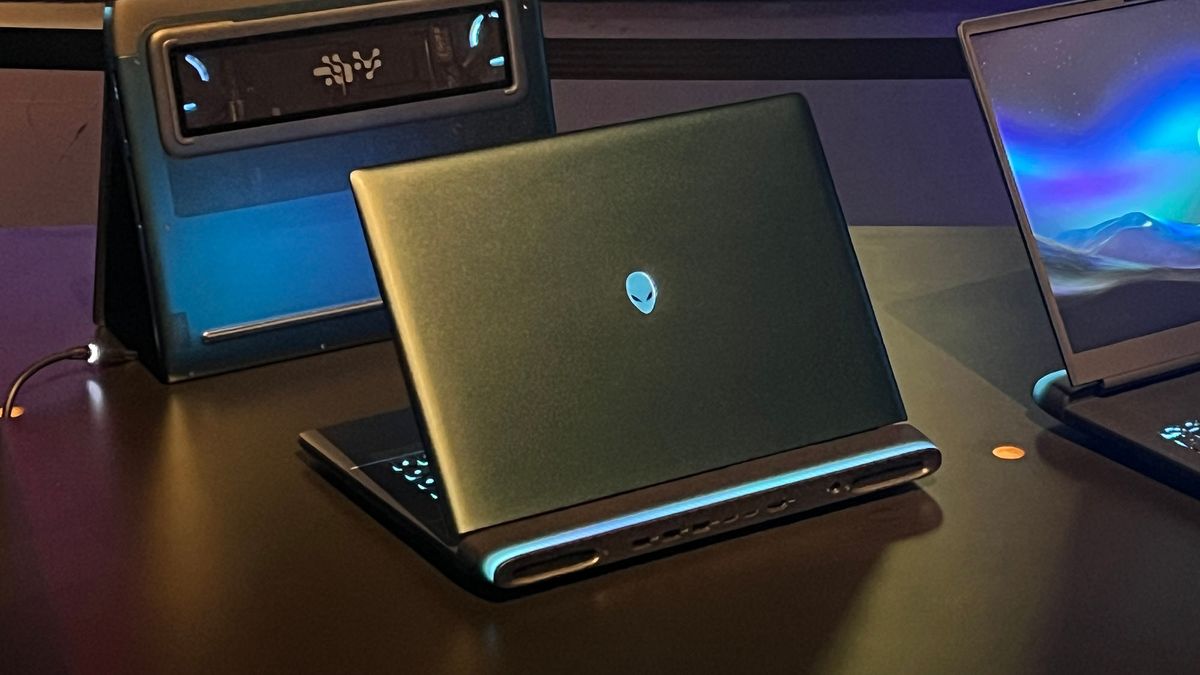
  • This was apparently conducted on an Alienware laptop at CES 2025
  • The result shows a nippy GPU, though it’s been greeted with somewhat mixed reactions

A benchmark has surfaced for the RTX 5080 laptop GPU, the first (unofficial) result we’ve seen for Nvidia’s next-gen mobile parts that were revealed at CES 2025 – although you shouldn’t get too excited about the score achieved (which is certainly the temptation here, as we’ll see).

Why not? Well, firstly it’s just a purported result – that could be some kind of fake – and secondly, the benchmark is from Geekbench, which is hardly the most useful metric for judging the gaming prowess of the RTX 5080.

The test was seemingly run by a rogue actor (hey, let’s throw in a bit of drama, why not?) on the CES 2025 show floor, who had access to an Alienware 18 Area 51 gaming laptop, and managed to get Geekbench going on the device (as noticed by VideoCardz).

The resulting Geekbench score of 190,326 in the OpenCL (graphics) test for the RTX 5080 has been greeted with somewhat mixed reactions.

Render of a new RTX 4000 Max-Q gaming laptop.

(Image credit: Nvidia)

Analysis: RTX 5080 looks promising for gaming laptops

That 190,000 score is around 18% faster than the RTX 4080 laptop GPU, so on the one hand, there’s been some chatter that this feels a bit on the lean side for a generational gain. Especially as some folks have chimed in online to say that their RTX 4080 notebook gets closer to 190,000 than the official Geekbench ranking data suggests.

However, if we stick to those official figures, the RTX 5080 is actually 6% faster than the RTX 4090 laptop GPU (and remember, that last-gen flagship has 25% more CUDA cores than the 5080). The RTX 5080 is also about equal to the RTX 4070 Super on the desktop – which is a lot of power packed into a mobile GPU.

Furthermore, this is (presumably) with pre-release drivers (so performance may be a little lacking due to that), and the clock speed is shown at 1.5GHz in this test, which is low – we’d expect it to be running at nearer 2GHz (with boost). The RTX 4080 mobile could boost to 2GHz, or even higher (up towards 2.2GHz).

{ window.reliablePageLoad.then(() => { var componentContainer = document.querySelector(“#slice-container-newsletterForm-articleInbodyContent-AYNYSdZzBG3Axeer8Qd73A”); if (componentContainer) { var data = {“layout”:”inbodyContent”,”header”:”Get daily insight, inspiration and deals in your inbox”,”tagline”:”Sign up for breaking news, reviews, opinion, top tech deals, and more.”,”formFooterText”:”By submitting your information you agree to the Terms & Conditions and Privacy Policy and are aged 16 or over.”,”successMessage”:{“body”:”Thank you for signing up. You will receive a confirmation email shortly.”},”failureMessage”:”There was a problem. Please refresh the page and try again.”,”method”:”POST”,”inputs”:[{“type”:”hidden”,”name”:”NAME”},{“type”:”email”,”name”:”MAIL”,”placeholder”:”Your Email Address”,”required”:true},{“type”:”hidden”,”name”:”NEWSLETTER_CODE”,”value”:”XTR-D”},{“type”:”hidden”,”name”:”LANG”,”value”:”EN”},{“type”:”hidden”,”name”:”SOURCE”,”value”:”60″},{“type”:”hidden”,”name”:”COUNTRY”},{“type”:”checkbox”,”name”:”CONTACT_OTHER_BRANDS”,”label”:{“text”:”Contact me with news and offers from other Future brands”}},{“type”:”checkbox”,”name”:”CONTACT_PARTNERS”,”label”:{“text”:”Receive email from us on behalf of our trusted partners or sponsors”}},{“type”:”submit”,”value”:”Sign me up”,”required”:true}],”endpoint”:”https://newsletter-subscribe.futureplc.com/v2/submission/submit”,”analytics”:[{“analyticsType”:”widgetViewed”}],”ariaLabels”:{}}; var triggerHydrate = function() { window.sliceComponents.newsletterForm.hydrate(data, componentContainer); } if (window.lazyObserveElement) { window.lazyObserveElement(componentContainer, triggerHydrate); } else { triggerHydrate(); } } }).catch(err => console.error(‘%c FTE ‘,’background: #9306F9; color: #ffffff’,’Hydration Script has failed for newsletterForm-articleInbodyContent-AYNYSdZzBG3Axeer8Qd73A Slice’, err)); }).catch(err => console.error(‘%c FTE ‘,’background: #9306F9; color: #ffffff’,’Externals script failed to load’, err)); ]]>

Sign up for breaking news, reviews, opinion, top tech deals, and more.

Of course, all this bodes well for the performance levels of the new Blackwell laptop flagship, the RTX 5090.

Before we get too carried away with the positivity, though, we need to exercise plenty of skepticism around the purported result – we don’t know much about how this Alienware gaming laptop was configured. And again, remember that Geekbench is far from the best way to put a gaming laptop through its paces (and synthetic tests in general aren’t nearly as useful as real in-game benchmarks).
You might also like

Source

Posted on

AMD blames Ryzen 9800X3D stock shortage on Intel’s ‘horrible’ Arrow Lake launch, rubbing salt in Team Blue’s CPU wounds

  • AMD’s Frank Azor has fired shots at Intel’s Arrow Lake desktop CPUs
  • He called the Core Ultra 200S CPUs ‘horrible’ and said this increased demand for the Ryzen 9800X3D
  • That higher demand has led to stock woes, Azor claims, and inventory issues won’t likely ease anytime soon

An AMD executive fired flak at Intel, calling Team Blue’s latest Arrow Lake desktop chips ‘horrible’ no less.

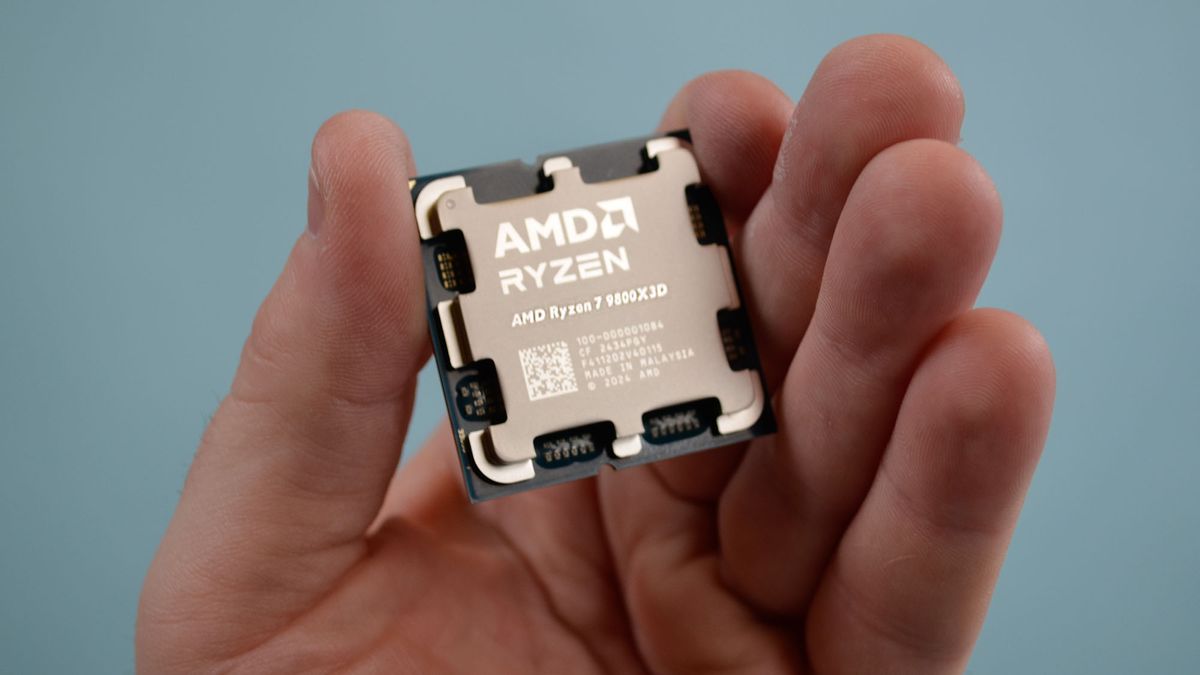
The quote came from a roundtable with AMD execs at CES 2025, where our sibling site, Tom’s Hardware, asked about the ongoing shortage of Ryzen 7 9800X3D stock (regarded as the best CPU for gaming that you can buy since its launch, and a processor that we gave a glowing review).

AMD observed that demand has outstripped supply – clearly enough – and the full quote from Frank Azor, who heads up consumer and gaming marketing at AMD, will surely leave Intel bigwigs suitably unimpressed.

Azor told Tom’s Hardware: “We knew we built a great part [in the 9800X3D]. We didn’t know the competitor [Intel] had built a horrible one [Arrow Lake]. So the demand has been a little higher than we forecasted.”

Ouch. You’ve probably noticed that Intel’s latest Arrow Lake desktop chips, which arrived in October 2024, experienced a rocky launch, with various problems that Team Blue still hasn’t fully put to bed.

We’ll come back to Intel’s misfortunes later, but what about the Ryzen 9800X3D stock situation?

David McAfee, VP and GM of Ryzen channel business at AMD, explained: “It’s crazy how much we have increased [our monthly, quarterly output of X3D parts] over what we were planning. I would say the demand we’ve seen for the 9800X3D and the 7800X3D has been unprecedented. So the demand has been higher than ever.”

{ window.reliablePageLoad.then(() => { var componentContainer = document.querySelector(“#slice-container-newsletterForm-articleInbodyContent-jJTEXM4CLaZ5VMt7iEHKE6”); if (componentContainer) { var data = {“layout”:”inbodyContent”,”header”:”Get daily insight, inspiration and deals in your inbox”,”tagline”:”Sign up for breaking news, reviews, opinion, top tech deals, and more.”,”formFooterText”:”By submitting your information you agree to the Terms & Conditions and Privacy Policy and are aged 16 or over.”,”successMessage”:{“body”:”Thank you for signing up. You will receive a confirmation email shortly.”},”failureMessage”:”There was a problem. Please refresh the page and try again.”,”method”:”POST”,”inputs”:[{“type”:”hidden”,”name”:”NAME”},{“type”:”email”,”name”:”MAIL”,”placeholder”:”Your Email Address”,”required”:true},{“type”:”hidden”,”name”:”NEWSLETTER_CODE”,”value”:”XTR-D”},{“type”:”hidden”,”name”:”LANG”,”value”:”EN”},{“type”:”hidden”,”name”:”SOURCE”,”value”:”60″},{“type”:”hidden”,”name”:”COUNTRY”},{“type”:”checkbox”,”name”:”CONTACT_OTHER_BRANDS”,”label”:{“text”:”Contact me with news and offers from other Future brands”}},{“type”:”checkbox”,”name”:”CONTACT_PARTNERS”,”label”:{“text”:”Receive email from us on behalf of our trusted partners or sponsors”}},{“type”:”submit”,”value”:”Sign me up”,”required”:true}],”endpoint”:”https://newsletter-subscribe.futureplc.com/v2/submission/submit”,”analytics”:[{“analyticsType”:”widgetViewed”}],”ariaLabels”:{}}; var triggerHydrate = function() { window.sliceComponents.newsletterForm.hydrate(data, componentContainer); } if (window.lazyObserveElement) { window.lazyObserveElement(componentContainer, triggerHydrate); } else { triggerHydrate(); } } }).catch(err => console.error(‘%c FTE ‘,’background: #9306F9; color: #ffffff’,’Hydration Script has failed for newsletterForm-articleInbodyContent-jJTEXM4CLaZ5VMt7iEHKE6 Slice’, err)); }).catch(err => console.error(‘%c FTE ‘,’background: #9306F9; color: #ffffff’,’Externals script failed to load’, err)); ]]>

Sign up for breaking news, reviews, opinion, top tech deals, and more.

McAfee notes that making chips takes some time – “it’s basically 12 to 13 weeks from when you start a wafer to when you get a product out the other end of the machine” – and that the 3D V-Cache stacking process adds complexity and is even more time consuming. Meaning it’s harder to catch up with unexpected spikes in demand.

The upshot? McAfee says: “I think as we go through the first half of this year, you’ll see us continue to increase the output of X3D.” And the exec further notes that in the future, AMD is “ramping capacity to ensure we catch up with that demand for as long as customers want those X3D parts.”

It’s the Ryzen 7 X3D processors which represent most of the demand, you’ll be unsurprised to learn – as the benefits of hopping up to a Ryzen 9 X3D chip are marginal for PC gamers (if anything, indeed, gaming performance may even dip). So the 9800X3D and its predecessor represent the sweet spot for gaming and value.

McAfee said the workhorse 8-core X3D parts outsell Ryzen 9 X3D flavors by a massive 10-to-1, all of which means that the introduction of Ryzen 9950X3D and 9900X3D CPUs (ushered in at CES 2025) isn’t going to ease any pressure on the stock levels of the 9800X3D.

Intel Core Ultra processor

(Image credit: Future / John Loeffler)

Analysis: Broken Arrow? Hardly…

In short, don’t expect the Ryzen 9800X3D to become more widely available for some time yet, though as we head into the second quarter of 2025, matters should ease and the CPU may well populate the shelves in greater numbers.

Back to the flak fired by AMD at Intel, and it’s pretty harsh to use a term like ‘horrible’ to describe a rival product. Is desktop Arrow Lake really that awful? Well, the launch wasn’t a disaster, but it was disappointing, particularly as gaming performance did not live up to Intel’s promises due to multiple issues.

That said, Intel’s fixes – which have now been deployed for Arrow Lake, all but one final measure – don’t help much, or at all, at least according to Tom’s Hardware’s (limited) testing. Something we’ll need to verify ourselves, mind you, so take that with plenty of caution at this stage.

At any rate, Arrow Lake desktop has been troubled since it was pushed out, there’s no denying that, and the problem is that this happened against a backdrop of more serious instability issues with Intel’s preceding Core CPU ranges (13th and 14th) on the desktop. Those were really nasty gremlins in the works, and while Intel had them fixed by the end of last year, that whole episode was a very dark cloud over 2024 for Team Blue – with considerable reputational damage done.

So, while that episode has nothing to do with Arrow Lake – which doesn’t suffer those instability woes – it still casts a deep shadow over Intel’s newest desktop range and the separate issues with these chips.

It’s a messy time for Intel in the CPU world, in short, and AMD pulling no punches isn’t really a surprise. Although as we’ve said, ‘horrible’ is going rather too far, and somewhat gleefully playing on Intel’s other mishaps of late.

It should be noted that AMD is not entirely without blemishes with its current-gen processors, as Ryzen 9000 launched to some disappointment with its generational uplift, again particularly for gaming – though the 9800X3D has gone a long way towards addressing that. The only problem is you can’t buy the thing at the moment, a situation which isn’t about to change, clearly.

You might also like

Source

Posted on

Show this AI a single image, and it can imagine an entire world

Imagine transforming a single still image into an entire virtual world. This futuristic capability isn’t just a dream; it’s the reality of GenEx (Generative World Explorer). Designed to eliminate the need for physical exploration, GenEx saves time and cost and reduces risk.

The potential of such a system spans from disaster response to immersive gaming, offering a new lens through which we can view and interact with the world, the researchers behind the new system explain in a pre-published paper. GenEx stands out for its human-like reasoning.

Much like how we infer the presence of a hidden object based on context, GenEx uses cues and prior knowledge to imagine unseen areas of an environment. This probabilistic prediction allows for logical decision-making even without direct observation, mimicking the cognitive leaps we make daily.

For instance, just as a driver deduces why a car suddenly stops, GenEx predicts unseen scenarios to guide decisions. The applications here are far-reaching. In disaster response, it can remotely explore hazardous zones using a single surveillance image, enabling safer and quicker rescue operations.

Tech. Entertainment. Science. Your inbox.

Sign up for the most interesting tech & entertainment news out there.

By signing up, I agree to the Terms of Use and have reviewed the Privacy Notice.

For navigation, GenEx enhances the training of autonomous robots and navigation apps by providing a detailed understanding of their environment. Gaming and virtual reality also stand to benefit from this technology, creating more immersive and lifelike experiences for users.

At the heart of GenEx are several key features. It generates synthetic, navigable environments from static images and employs “spherical consistency learning” to ensure seamless 360-degree panoramic views. With its “imagination-augmented policy,” GenEx empowers AI agents to make logical, adaptive decisions and flexibly navigate virtual spaces based on directional input and distance parameters.

Tests have shown that GenEx’s capabilities aren’t just theoretical. GenEx has outperformed traditional benchmarks in video generation and improved human decision-making in augmented scenarios. Looking ahead, integrating real-world sensor data and dynamic scenes could make virtual worlds even more realistic.

We’ve seen AI do some crazy things—like making accurate images based on street noise—but we’ve yet to see something as promising as GenEx and its virtual environment generation.

Source

Posted on

Meta is about to ruin WhatsApp with AI bots no one wants

Of all the generative AI assistants out there, Meta AI must be the most annoying for the simple fact that Meta is shoving it down our throats. No app is safe, from Facebook to Messenger to WhatsApp to Instagram. Meta AI is there whether you want it or not, and there’s no way to deactivate it.

Meanwhile, ChatGPT is entirely optional, not that OpenAI can really force it on anyone. Apple’s Apple Intelligence is also optional; you don’t have to use it even if you have access to it. Then there’s Google Gemini, which is baked into many Google products but doesn’t feel as intrusive as Meta AI. The same goes for Microsoft’s Copilot.

The worst part about Meta AI is that Meta isn’t done ruining its apps with overdoing the AI presence. We’ve just learned of AI profiles coming to Facebook and Instagram, which is extremely annoying. It gets worse; Meta will now give AI bots prime plans inside WhatsApp, a feature that nobody really asked for from the one Meta app that’s actually useful.

WhatsApp is the world’s largest chat app. It works on iPhone and Android and supports end-to-end encryption across platforms. That’s the only reason I’m still using it. That, and the fact that Meta relented on its annoying WhatsApp policy change a few years ago.

Tech. Entertainment. Science. Your inbox.

Sign up for the most interesting tech & entertainment news out there.

By signing up, I agree to the Terms of Use and have reviewed the Privacy Notice.

Come to think of it, the only reason WhatsApp is so good and still encrypted, is that the app was built this way well before Meta bought it for a small fortune.

The last thing I want in WhatsApp is support for AI chatbots. Yes, it’s great that you can save a ChatGPT number to chat with the chatbot from WhatsApp, but that’s optional.

Say that Meta feels like it has to put AI bots in WhatsApp to expose more people to Meta AI and potentially make some money in the process. I still hate the idea of WhatsApp getting a dedicated AI menu. That’s wasted screen real estate right there. It’s a feature I’ll never use, and I’m sure others will be equally uninterested.

The new AI bots menu in a WhatsApp beta release for Android.The new AI bots menu in a WhatsApp beta release for Android. Image source: WABetaInfo

Meta is testing the new interface in an Android beta version of WhatsApp. Always reliable WABetaInfo surfaced the image above that shows the new AI tab replacing the Communities tab. That menu, which might actually be useful, is merging with the Chats tab.

The new AI tab will include all sorts of AI chatbots to talk to, including third-party models that can talk to you about specific topics.

I don’t doubt that some WhatsApp users will want to use these services. I say that as a longtime ChatGPT user who chats with OpenAI’s chatbot about all sorts of things daily. But I absolutely hate the idea of any AI product being forced on me the way Meta is doing with Meta AI.

WhatsApp is especially important to me as I use it to talk to many people. It’s not just Android users in my family or friends group that like WhatsApp; plenty of iPhone owners prefer the platform over iMessage. AI isn’t needed. Or if it is, it should be hidden somewhere and accessible on demand.

It might get even worse than that. WABetaInfo found evidence in a different WhatsApp beta version that Meta wants to let users create custom AI chatbots right inside the app. The process might be similar to what’s already available on Instagram.

Support for custom AI bot creation in a WhatsApp beta release for Android.Support for custom AI bot creation in a WhatsApp beta release for Android. Image source: WABetaInfo
The feature resembles the custom chatbots available in ChatGPT and Gemini, so it’s not entirely surprising. But, again, it’s not something I want to clutter a key app like WhatsApp.

I don’t see any value in adding AI bots to WhatsApp or supporting the creation of custom ones.

Remember that if left unchecked, some custom AI chatbots might be harmful, especially when certain types of users are exposed to them. And it’s not like Meta is improving its content moderation policies, so we have no idea how it’ll police this universe of AIs it’s bringing to apps like WhatsApp and Instagram.

I can only hope that Meta will not bring these features out of beta, but that’s just wishful thinking. If anything, I take some solace in knowing that it’ll take longer for Meta to deploy the AI changes to WhatsApp in Europe.

Source

Posted on

Leaked Nvidia RTX 5090 laptop GPU benchmarks are weird

  • Nvidia’s RTX 5090 laptop GPU shows inconsistent Geekbench 6 performance scores
  • Fails to score higher than the RTX 4080 or 4090 laptop GPUs in Vulkan
  • It hasn’t launched yet, and there aren’t any official drivers available

CES 2025 finally gave us a look at Nvidia’s new RTX 5000 series of graphics cards, and the flagship RTX 5090 GPU’s performance capabilities compared to the last generation’s RTX 4090 – but early benchmarks for its laptop GPU don’t look very promising.

This comes from BenchLeaks on X, which claims to have leaked Geekbench 6 results of Nvidia‘s RTX 5090 laptop GPU using Vulkan (graphics API used in plenty of games), with its highest score of 114,821. Tom’s Hardware highlighted this as the fourth benchmark among five different tests, with the lowest score sitting at 51,831 and the final test scoring 77,989.

Each benchmark score points towards wildly inconsistent performance for Team Green’s flagship laptop GPU, which failed to score higher than the RTX 4080’s 145,067 and the RTX 4090’s 167,655 Geekbench scores in Vulkan (both of which are for the laptop versions of those GPUs). While these results might be cause for concern, it’s far too early to draw any conclusions.

Nvidia geforce 4070

(Image credit: Nvidia)

Should we be worried about these early benchmarks?

While these tests are almost certainly not great to see, it’s absolutely not a reason to panic. Aside from the fact that these benchmarks are not official, but are claimed to be leaked, the RTX 5000 series hasn’t even officially launched yet (the RTX 5090 will be available at the end of the month), which means the necessary drivers and optimizations have not been made yet.

It’s also important to note that in-game benchmarks are what matter most – while Geekbench 6 can be accurate for measuring the performance capabilities of a GPU, scores are never going to be the same as each test will often vary drastically or closely. Despite the inconsistent scores here, we should wait to see how the RTX 5090 laptop GPU fares across multiple games once Nvidia makes the necessary adjustments and official drivers have been released.

We should be getting both the desktop RTX 5090, alongside gaming laptops with the mobile version, in for review, so make sure you check out our full reviews when they are live for reliable and independent verdicts on just how good (or not) these new GPUs from Nvidia really are.

You may also like…

{ window.reliablePageLoad.then(() => { var componentContainer = document.querySelector(“#slice-container-newsletterForm-articleInbodyContent-ck4ufNKYg8pJpSq6jzS44J”); if (componentContainer) { var data = {“layout”:”inbodyContent”,”header”:”Get daily insight, inspiration and deals in your inbox”,”tagline”:”Sign up for breaking news, reviews, opinion, top tech deals, and more.”,”formFooterText”:”By submitting your information you agree to the Terms & Conditions and Privacy Policy and are aged 16 or over.”,”successMessage”:{“body”:”Thank you for signing up. You will receive a confirmation email shortly.”},”failureMessage”:”There was a problem. Please refresh the page and try again.”,”method”:”POST”,”inputs”:[{“type”:”hidden”,”name”:”NAME”},{“type”:”email”,”name”:”MAIL”,”placeholder”:”Your Email Address”,”required”:true},{“type”:”hidden”,”name”:”NEWSLETTER_CODE”,”value”:”XTR-D”},{“type”:”hidden”,”name”:”LANG”,”value”:”EN”},{“type”:”hidden”,”name”:”SOURCE”,”value”:”60″},{“type”:”hidden”,”name”:”COUNTRY”},{“type”:”checkbox”,”name”:”CONTACT_OTHER_BRANDS”,”label”:{“text”:”Contact me with news and offers from other Future brands”}},{“type”:”checkbox”,”name”:”CONTACT_PARTNERS”,”label”:{“text”:”Receive email from us on behalf of our trusted partners or sponsors”}},{“type”:”submit”,”value”:”Sign me up”,”required”:true}],”endpoint”:”https://newsletter-subscribe.futureplc.com/v2/submission/submit”,”analytics”:[{“analyticsType”:”widgetViewed”}],”ariaLabels”:{}}; var triggerHydrate = function() { window.sliceComponents.newsletterForm.hydrate(data, componentContainer); } if (window.lazyObserveElement) { window.lazyObserveElement(componentContainer, triggerHydrate); } else { triggerHydrate(); } } }).catch(err => console.error(‘%c FTE ‘,’background: #9306F9; color: #ffffff’,’Hydration Script has failed for newsletterForm-articleInbodyContent-ck4ufNKYg8pJpSq6jzS44J Slice’, err)); }).catch(err => console.error(‘%c FTE ‘,’background: #9306F9; color: #ffffff’,’Externals script failed to load’, err)); ]]>

Sign up for breaking news, reviews, opinion, top tech deals, and more.

Source

Posted on

AMD exec drops hints on RX 9070 pricing and some PC gamers are panicking – but this sounds like good news to me

  • AMD’s Frank Azor was interviewed by a Spanish YouTuber about RDNA 4
  • The exec told us that the RX 9070 will be a ‘very competitive product’
  • Pricing was also mentioned, in a vague way, and some gamers are taking it as a bad sign – but that’s jumping the GPU gun

AMD has given us some clues as to the price points RDNA 4 graphics cards will land at, albeit some very vague hints, courtesy of one of Team Red’s execs – and a good deal more interesting info on the next-gen GPUs besides.

All this comes from Frank Azor, AMD’s head of consumer and gaming marketing, who has been busy this week, firing some weighty flak at Intel’s Arrow Lake in the CPU world, and then sharing these fresh GPU details in another interview.

This chat was with Michael Quesada, a Spanish YouTuber who has a PC gaming channel. We should note that the conversation is in Spanish, and so the quotes we have here (courtesy of VideoCardz) are a translation (made with help from Spanish tech site El Chapuzas Informatico).

Quesada kicked off by questioning Azor on the flimsy RDNA 4 announcement at CES 2025, which provided very scant details, besides the names and existence of the RX 9070 and 9070 XT – why was this so light on information?

Azor repeated the assertion already made by AMD that there simply wasn’t time in the 45-minute CES 2025 keynote to fit in RDNA 4 and properly do it justice.

The marketing chief told us: “What are we announcing here? With the announcements of RDNA 2 and RDNA 3, we had dedicated events to present the architecture and performance improvements. We can’t cover that in five minutes. If we had, everyone would be angry with us for not giving the new graphics cards the attention they deserve.

“That’s why we decided to reserve the announcement of the new graphics cards for a separate event where we can give them proper focus.”

{ window.reliablePageLoad.then(() => { var componentContainer = document.querySelector(“#slice-container-newsletterForm-articleInbodyContent-gzsHZEiHegqJEbsKXNNaDL”); if (componentContainer) { var data = {“layout”:”inbodyContent”,”header”:”Get daily insight, inspiration and deals in your inbox”,”tagline”:”Sign up for breaking news, reviews, opinion, top tech deals, and more.”,”formFooterText”:”By submitting your information you agree to the Terms & Conditions and Privacy Policy and are aged 16 or over.”,”successMessage”:{“body”:”Thank you for signing up. You will receive a confirmation email shortly.”},”failureMessage”:”There was a problem. Please refresh the page and try again.”,”method”:”POST”,”inputs”:[{“type”:”hidden”,”name”:”NAME”},{“type”:”email”,”name”:”MAIL”,”placeholder”:”Your Email Address”,”required”:true},{“type”:”hidden”,”name”:”NEWSLETTER_CODE”,”value”:”XTR-D”},{“type”:”hidden”,”name”:”LANG”,”value”:”EN”},{“type”:”hidden”,”name”:”SOURCE”,”value”:”60″},{“type”:”hidden”,”name”:”COUNTRY”},{“type”:”checkbox”,”name”:”CONTACT_OTHER_BRANDS”,”label”:{“text”:”Contact me with news and offers from other Future brands”}},{“type”:”checkbox”,”name”:”CONTACT_PARTNERS”,”label”:{“text”:”Receive email from us on behalf of our trusted partners or sponsors”}},{“type”:”submit”,”value”:”Sign me up”,”required”:true}],”endpoint”:”https://newsletter-subscribe.futureplc.com/v2/submission/submit”,”analytics”:[{“analyticsType”:”widgetViewed”}],”ariaLabels”:{}}; var triggerHydrate = function() { window.sliceComponents.newsletterForm.hydrate(data, componentContainer); } if (window.lazyObserveElement) { window.lazyObserveElement(componentContainer, triggerHydrate); } else { triggerHydrate(); } } }).catch(err => console.error(‘%c FTE ‘,’background: #9306F9; color: #ffffff’,’Hydration Script has failed for newsletterForm-articleInbodyContent-gzsHZEiHegqJEbsKXNNaDL Slice’, err)); }).catch(err => console.error(‘%c FTE ‘,’background: #9306F9; color: #ffffff’,’Externals script failed to load’, err)); ]]>

Sign up for breaking news, reviews, opinion, top tech deals, and more.

Azor also poured cold water on any idea that the next-gen Radeon graphics cards might be delayed (as some theorized as to why AMD kept its 9070 revelations very bare).

Everything remains on track, we’re assured, and here’s where Azor made a very interesting statement. The translation in this case is direct from YouTube (and what I could make of it), so take this with a large dollop of caution, but the AMD exec appears to admit that the other reason Team Red didn’t reveal specs and pricing for the RX 9070 is that the firm wanted to look at what Nvidia was announcing and react to that.

In other words, AMD needed to ensure that RDNA 4 is competitive with what Nvidia was doing with RTX 5000, a theory I put forward earlier this week. (Not just me of course – it’s an obvious enough thought, really, but Azor is, translation wobbles aside, saying this was indeed what AMD was up to).

The most interesting part of the interview, though, is the clues about pricing I mentioned at the outset, which cropped up later.

Azor observed: “We’re going to bring a very competitive product [with RDNA 4]. Everyone will benefit from this launch. It will be worth the wait.

“The Radeon RX 7800 XT and RX 7900 GRE offered aggressive pricing for their performance. The market responded well, especially in a landscape where prices are constantly rising.”

“AMD remains focused on delivering value for money. When we announce RDNA 4, we’ll introduce a powerful graphics card – not a $300 card, but also not a $1,000 card.”

Frank Azor of AMD being interviewed at CES 2025

(Image credit: YouTube / Michael Quesada)

Analysis: Careful with that pitchfork, Eugene

There’s some refreshing plain speaking here, then, from Azor, regarding why AMD’s reveal was tissue-thin for details on the RX 9070 models, and the lack of any pricing. It was to better pitch RDNA 4 to be competitive with what Nvidia has cooked up with the RTX 5000 series.

The part of the interview relating to RDNA 4 pricing has predictably got every forum and social media outlet buzzing. Does this mean AMD is thinking about a $650 price tag for the RX 9070 XT, some folks are asking – as that’s the average of the two mentioned low and high prices (a total $1,300, divided by two).

Of course, it’s never going to be as simple as that. But whatever the RX 9070 XT and its vanilla sibling end up costing, AMD is going to make the price to performance ratio stand up and compete with Nvidia’s RTX 5070 in the mid-range.

Simply given AMD’s chosen name change – to the RX 9070, versus the RTX 5070 – the pricing has to make sense in terms of that showdown. The MSRPs will be “very competitive” as Azor puts it, based on the relative performance provided by RDNA 4 – and as we don’t know how peppy the RX 9070 XT will be yet, trying to work out pricing averages doesn’t make any sense. Neither does running down to cellars, looking for pitchforks and torches, while muttering about a $650 Radeon flagship being a rip-off based on past performance rumors for Navi 48.

Let’s not engage with that kind of nonsense. The main point to focus on here is not the dollar amounts Azor chose to mention – and the exec used such a huge spread, of course, to make them kind of meaningless – but what he said about the RX 9070 GPUs being very competitive with Nvidia. And that these next-gen offerings will match the RX 7900 GRE for price/performance, this is the other key point to home in on. That’s an excellent value graphics card and one that remains top of our list of best GPUs, in fact, where it has sat for some time.

AMD could well be waiting to test the RTX 5070 and 5070 Ti itself before finalizing pricing for RDNA 4 here. If I had to call a most likely price point, the recently aired rumor of $479, or around the $500 mark, seems more likely than anything higher than the RTX 5070’s MSRP ($549). But again, whatever it turns out to be, that price needs to be viewed through the lens of the card’s performance.

Roll on that incoming full RX 9070 launch event, then, so we can finally find out where price and performance will shake out. The rumor mill believes that an announcement is likely coming in just a couple of weeks (RDNA 4 pre-orders might kick off on January 23 based on one retailer leak). If true, that means the RX 9070 variants could be on sale at the end of January, ahead of the RTX 5070 models which aren’t out until February.

You might also like…

Source

Posted on

Samsung just hallucinated that it will become the global AI leader in 2025

Samsung was the first big smartphone vendor to launch a flagship phone with AI at the core of its marketing efforts. Last year’s Galaxy S24 series introduced the Galaxy AI suite of features. Samsung followed with the Galaxy Z Fold 6 and Flip 6, which got additional AI capabilities. Samsung then extended Galaxy AI support to older flagship devices. And in a few weeks, Samsung will launch the Galaxy S25 series, which should introduce even more Galaxy AI novelties.

But Samsung leadership is hallucinating worse than an AI program ever could about Samsung’s global role in genAI. In a New Year’s address, Samsung Electronics CEO and Vice Chairman Han Jong-hee and DS Division Vice Chairman Jeon Young-hyun addressed Galaxy AI, saying that Samsung should become the undisputed leader of device AI this year.

“Now is the time for bold innovation that goes beyond the existing success methods as we face an inflection point in AI technology,” the execs said, according to a machine-translated Samsung release. “Let’s establish ourselves as a clear device AI leader this year through advanced intelligence.”

The goal of becoming the undisputed AI leader is noble. It’s what you’d expect key execs to say ahead of a busy year when AI will continue to dominate the tech world. It’s also something officials at other leading tech companies could say, considering AI is the main priority right now.

Tech. Entertainment. Science. Your inbox.

Sign up for the most interesting tech & entertainment news out there.

By signing up, I agree to the Terms of Use and have reviewed the Privacy Notice.

But Samsung is nowhere close to being a leader in AI, and I don’t see it happening in 2025 either. The main problem with Samsung’s Galaxy AI approach is that it doesn’t have a meaningful model of its own to power the genAI tech on phones like the Galaxy S24 and S25.

Using Google's Circle to Search AI feature on the Galaxy S24 Ultra.Using Google’s Circle to Search AI feature on the Galaxy S24 Ultra. Image source: Samsung

Galaxy AI is a mix of AI technologies. Google’s Circle to Search is a good example. Also, Galaxy S25 phones are rumored to come with free Google Gemini Advanced, Google’s best version of Gemini AI.

I’ll also point out that Samsung’s upcoming XR devices, Project Moohan and unnamed AR smart glasses, will work on Google’s Android XR platform, with Gemini playing a key role. I expect Galaxy AI to be part of the picture for both types of products because Samsung can’t AI on its own.

Samsung doesn’t have an alternative to ChatGPT or Gemini. If it is working on Bixby upgrades and Gauss upgrades, matching these AI models will take a long time.

Also, Samsung doesn’t have a desktop presence. ChatGPT is my primary AI tool right now, and I use it across devices. Most of the time, I access it on my Mac rather than a mobile phone.

OpenAI and Google have better models. Meta, Claude, and Microsoft also have AI tools that are more advanced than Samsung’s. Apple is working on a Siri LLM that will behave like ChatGPT and has incorporated ChatGPT into Apple Intelligence on the iPhone.

As for on-device AI, Samsung might have been the first to push AI on mobile devices with Galaxy AI, but it’s not the only one. Google is doing it with Pixel phones and Android in general. Apple laid out an even better vision of on-device AI with Apple Intelligence this year, which Samsung doesn’t appear to be able to match.

Samsung's Project Moohan Android XR headset.Samsung’s Project Moohan Android XR headset. Image source: Samsung


Apple Intelligence might be behind Galaxy AI and other rivals, but Apple has something rivals can’t match: a massive base of devices that can use Apple Intelligence, and the list is growing rapidly. Once Apple Intelligence matures, Apple could very well become the undisputed device AI leader.

Speaking of Apple’s AI vision, Samsung has yet to match what Apple wants to do with iPhones. It’s not just about text and notification summaries, text generation, wallpaper generation, photo editing, and translation. It’s about Siri becoming a more useful assistant by accessing on-device contextual information about the user.

Apple has a plan, at least; one that Samsung might follow. Samsung’s Galaxy AI teasers during the Fold 6 and Flip 6 launch event revealed the company is working on a similar vision. But Samsung waited for Apple’s Apple Intelligence reveal before it unveiled its own plans.

I’ll also point out that Apple Intelligence is designed to offer more on-device AI features and better privacy for cloud-based AI than Galaxy AI can. Turn off Galaxy AI on your phone right now, and you’ll lose many of its useful features. Samsung has yet to match Apple’s Private Cloud Compute, a private cloud-based AI system.

What I’m getting at is that it’ll take years for any company to become the undisputed leader in device AI. If that ever happens. And it’s way too early for Samsung to call for that title, especially considering its massive reliance on partners like Google.

Also, suppose the Samsung execs only want the company to sell as many products that can run third-party AI programs within Galaxy AI. In that case, that still doesn’t qualify as being the undisputed leader of device AI.

Source

Posted on

Custom software and silicon set to define next-gen chips

Confidence in the semiconductor industry’s ability to meet demand is being hindered by geopolitical tensions, international trade restrictions and the push for sovereignty, according to a report from Capgemini. 

Authors of The semiconductor industry in the AI era report warn that as nations compete for control over vital technologies and resources, geopolitical tensions continue to impact the global semiconductor supply chain.

For instance, the flow of components, materials and completed semiconductor products has been hindered by international trade disputes, export restrictions and tariffs. As an example, Capgemini estimated that 14 consumer supply networks that rely on TSMC could be seriously disrupted by any military escalation involving China and Taiwan. Deteriorating US-China ties have also given rise to setbacks in the form of prohibitions on certain products and more stringent controls.

The report, based on a survey of 250 semiconductor firms and 800 “downstream” organisations that use semiconductors in their own products, found that 58% of semiconductor organisations expect higher demand for neural processing units to accompany growth in generative AI (GenAI) adoption. The study also shows that 57% of the chip manufacturers surveyed anticipate an increased need for high-performance chips, and 56% expect to see greater demand for memory-intensive chips, which, according to Capgemini, signals a shift towards advanced processing.

The report shows there is increased demand for custom chips and custom software optimised to run on them.

Jiani Zhang, executive vice-president and chief software officer at Capgemini Engineering, said advanced platforms and software are critical differentiators in the semiconductor industry, driving efficiency and scalability in design, manufacturing and deployment.

“With the growing complexity of AI, IoT [internet of things] and edge computing applications, the ability to integrate domain-specific software with hardware accelerators will define leadership,” she said. “To stay competitive, semiconductor players must embrace co-optimisation across the stack, from chip architecture to application interfaces, ensuring they can meet the escalating demands of data-intensive, low-latency markets.” 

Capgemini said that while the demand for AI chips, custom silicon chips and memory-intensive chips is expected to increase over the next 12 months, the semiconductor industry needs to capitalise on emerging opportunities. These include design and cutting-edge, sustainable fabrication methods, as well as investment in domestic sourcing and nearshoring to enhance stability.

“GenAI is driving accelerated demand for chips, and semiconductor companies face increasing demands from customers who want more personalised and software-centric experiences,” said Brett Bonthron, global high-tech industry leader at Capgemini.

“The industry should see this as an opportunity to ramp-up production and adopt a ‘chip-to-industry’ approach that supports a full-stack, ‘software-first’ set of capabilities,” he added.

“Investment in cutting-edge fabrication methods and design processes powered by AI and GenAI will be key to meet the specialised needs of emerging applications. Equally, it’s crucial that the industry further enhances sustainable manufacturing processes and uses advanced security to safeguard intellectual property.”

Source

Posted on

Look to the future: How the threat landscape may evolve next

It’s been quite the half-decade. In fact, it’s hard to know where to start when reflecting on it. The Covid-19 pandemic saw a (forced) mass shift towards hybrid working models, leaving security teams with a new and complex attack surface to secure quickly. Charges made against the CISOs of SolarWinds and Uber set a precedent of legal responsibilities for CISOs when it comes to cyberattacks and reporting. Elsewhere, new regulations are being written into law across the world to protect organisations and consumers everywhere, from NIS2 to the Cyber Resilience Act. Similarly, artificial intelligence (AI) has revolutionised cyber security, for good and bad. In some ways, AI has become a helpful ally for security teams when it comes to fighting threats, especially as teams are facing a barrage of new and novel threats daily. On the other hand, the uptick in attacks is likely due to the increased use of AI by cyber criminals to speed up and automate attacks. These notable events are just scratching the (attack) surface!

The cyber industry has always been fast paced and security teams are no stranger to change. However, the last five years have challenged the industry significantly, with the unprecedented volume and sophistication of new threats, talent retention issues and burnout rise. As always, these challenges have exemplified the resilience of the industry. We learn from one another and, as a community, we have become more open to speaking of our collective challenges and helping one another. As we head into the unknown once again, it’s critical that we continue to foster a continued sense of openness and community.

I find ‘predictions’ difficult. This feels like using sticks to find hidden wells of water. I have no crystal ball that will reveal the spring of vulnerabilities going to be released upon us in the next five years. But, I have seen some trends over the past few years that have proven hardy and are representative of significant problems that aren’t going away any time soon. These are the best spots I can look to for what lies ahead.

We might see the quantum computing event horizon in the next five years, in which case, all bets are off. I don’t think that that day will be like the vaunted Y2K that was foretold, but will be more problematic over a longer period of time. It will still be a good amount of time before quantum computing is easily accessible by criminal groups in such a way that will make it an everyday threat…governments protecting secrets though, are in a different boat.

I will also make the very spicy take that the AI, at least in the current form using LLMs or things of a similar stripe, is going to sputter and fall flat. We haven’t seen massive increases in uptake by significant parts of the economy for any of the leading companies, despite them shovelling money into the AI furnace by the billions. There are also reports that the current flavour of AI LLMs have reached their limit, with diminishing returns as there are no longer any major corpuses of human-created data and content to consume and use for training. There, I said it. We are nearing ‘peak AI’. Cue sad trombone.

And now for something completely different…

On a much more serious note, I think the major events relating to cyber security over the next five years will be driven largely by geopolitical crises, starting with China.

Between now and 2030 we will see increased aggression by China with some form of conflict both hot and cold, brought on by the possible ‘annexation’ of Taiwan. China has, for some time, been using police actions (and civilian fishing vessels) to encroach on the territorial sovereignty of regional nations including the Philippines and Taiwan. I worry that what happened in Hong Kong will be tried in a similar way, and these methods for attacking territorial water boundaries will continue, using this playbook in Taiwan, with a diminished role for some traditional western powers. If this comes to pass, and unfortunately it seems that’s the direction things are heading, this will be a cataclysmic global event with truly massive implications. Western-based manufacturers of silicon will become parts of the national security apparatus as critical national infrastructure, in a way that they have escaped thus far but are increasingly moving towards.

More critical national infrastructure will fail in larger ways, due to espionage, conflict or both, like we have seen with the actions of Volt Typhoon and Salt Typhoon, Chinese state-sponsored actors digging into infrastructure like ISPs and telcos and energy companies for use in a future potential conflict and to monitor communications of strategic importance. My fear is that disruption of telcos and other “everyday” critical infrastructure sectors that have not gone as far in their cyber security maturity journey will force governments to assert more explicit control through regulation and direct assistance. And some of this will be long overdue, for in the year 2024, is it really defensible to not require MFA for privileged (or all) users? Or not move away from memory unsafe languages? Or not keep logs on critical system events? These things shouldn’t be acceptable now but I’m afraid it will take an even bigger catastrophe than the cyber crises we’ve endured in the past few years for these requirements to get stated in a sufficiently forceful way that gets some orgs to take note.

Russia will continue its role as global bully, but we will see more cracks emerge when they struggle running out of updates to Windows devices and other western technologies that are no longer available due to sanctions. Russian-based ransomware groups will move in more close alignment with the government and become proxy actors of the Kremlin, even more explicitly than they are now.

Supply chains will get hit, again, and again, and some more. Unfortunately this is a growing trend over the past few years and as we saw with CrowdStrike this year (which wasn’t a supply chain attack…but the disruption of their software caused a global technology event that impacted millions of people, disrupted businesses, cancelled flights, and more) these technologies have become almost irreversibly intertwined with corporate enterprise IT to such an extent that they can cause cascade failures.

Whether the attackers are aggravated aggressor nation-states like Russian and China or neo-organised crime in the form of ransomware gangs, the next years will see disruptions with increasing frequency and magnitude. Eventually there will be a counterforce, deployed by governments, in the form of policy, law and cyber action. My hope for my friends still working in the halls of power in Washington and Whitehall, is that we can mount an effective response to acts of aggression in a way that is proportionate and lasting, not overcorrecting but likewise not wasting an opportunity to help set and enforce some norms around responsible stewardship of user data, technology and public services, as well as norms for conflict in cyberspace that are rooted in our principles and values as a society.

Elliott Wilkes is chief technology officer at Advanced Cyber Defence Systems (ACDS). A seasoned digital transformation leader and product manager, Wilkes has over a decade of experience working with both the American and British governments, most recently as a cyber security consultant to the Civil Service.

Source

Posted on

Intel announces new Core Ultra 200 series mobile CPUs at CES 2025, targeting enthusiasts and edge users

Intel announced its latest series of mobile processors at CES 2025, the Intel Core Ultra 200HX series, the Core Ultra 200H series, and the Core Ultra 200U series, targeting enthusiasts, premium, and thin and light laptop users, respectively.

The new chips, hot on the heels of the incredibly well-received Intel Lunar Lake chips (sold as the Intel Core Ultra 200V series), offer even more variety of processing power for users who found the Core Ultra 200V series to be good, but not quite powerful enough for their needs.

The new chip lines, which are built off the same Intel Arrow Lake architecture used in the Intel Core Ultra 200S series desktop processors (including the Intel Corez Ultra 9 285K and Core Ultra 5 265K), have a bit of an expectations problem.

Arrow Lake for desktop was rather underwhelming (for gamers at least) at launch and the arguably more advanced Intel Lunar Lake laptop chips currently on the market are simply some of the best laptop processors anyone has ever made, so following that up with an already maligned architecture will be tough.

That said, Intel Arrow Lake has a lot going for it, especially once you step away from gaming. In everyday and professional workloads. On desktop, The Intel Core Ultra 200S series chips came out pretty much even with the previous-gen Intel Raptor Lake Refresh chips (Intel’s Core 14000 series), while using less power to do so. The hope, it appears, is that Intel is offering at least even or better laptop chip performance compared to the previous generation with meaningfully less power consumption, something that actually matters for laptops.

It remains to be seen if any of this will sway anyone expecting big performance gains, but at least for these mobile chips, improved energy efficiency could be enough to tip the scales in their favor.

New Intel mobile SKUs

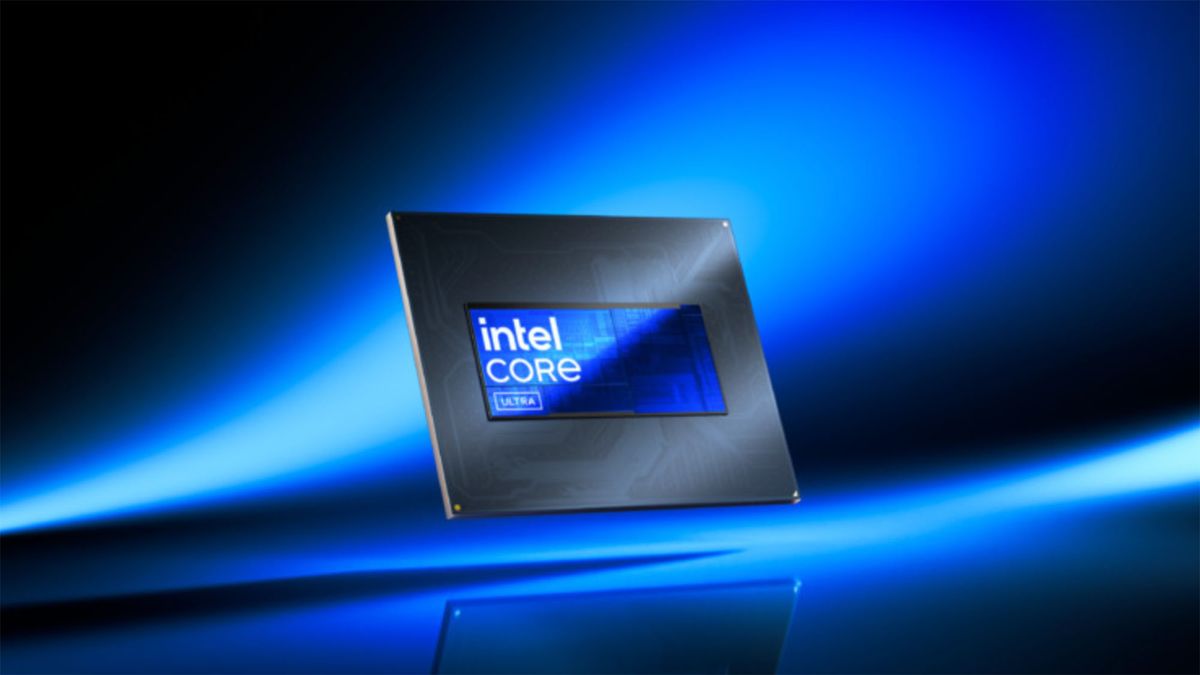
A mockup of the Intel Core Ultra 200HX against a blue swoosh background

(Image credit: Intel)

Here are all of the new Intel Core Ultra 200HX, Core Ultra 200H, and Core Ultra 200U SKUs announced during Intel’s CES 2025 keynote.

{ window.reliablePageLoad.then(() => { var componentContainer = document.querySelector(“#slice-container-newsletterForm-articleInbodyContent-KUyyNBD5QHn6aeGMEMgAa8”); if (componentContainer) { var data = {“layout”:”inbodyContent”,”header”:”Get daily insight, inspiration and deals in your inbox”,”tagline”:”Sign up for breaking news, reviews, opinion, top tech deals, and more.”,”formFooterText”:”By submitting your information you agree to the Terms & Conditions and Privacy Policy and are aged 16 or over.”,”successMessage”:{“body”:”Thank you for signing up. You will receive a confirmation email shortly.”},”failureMessage”:”There was a problem. Please refresh the page and try again.”,”method”:”POST”,”inputs”:[{“type”:”hidden”,”name”:”NAME”},{“type”:”email”,”name”:”MAIL”,”placeholder”:”Your Email Address”,”required”:true},{“type”:”hidden”,”name”:”NEWSLETTER_CODE”,”value”:”XTR-D”},{“type”:”hidden”,”name”:”LANG”,”value”:”EN”},{“type”:”hidden”,”name”:”SOURCE”,”value”:”60″},{“type”:”hidden”,”name”:”COUNTRY”},{“type”:”checkbox”,”name”:”CONTACT_OTHER_BRANDS”,”label”:{“text”:”Contact me with news and offers from other Future brands”}},{“type”:”checkbox”,”name”:”CONTACT_PARTNERS”,”label”:{“text”:”Receive email from us on behalf of our trusted partners or sponsors”}},{“type”:”submit”,”value”:”Sign me up”,”required”:true}],”endpoint”:”https://newsletter-subscribe.futureplc.com/v2/submission/submit”,”analytics”:[{“analyticsType”:”widgetViewed”}],”ariaLabels”:{}}; var triggerHydrate = function() { window.sliceComponents.newsletterForm.hydrate(data, componentContainer); } if (window.lazyObserveElement) { window.lazyObserveElement(componentContainer, triggerHydrate); } else { triggerHydrate(); } } }).catch(err => console.error(‘%c FTE ‘,’background: #9306F9; color: #ffffff’,’Hydration Script has failed for newsletterForm-articleInbodyContent-KUyyNBD5QHn6aeGMEMgAa8 Slice’, err)); }).catch(err => console.error(‘%c FTE ‘,’background: #9306F9; color: #ffffff’,’Externals script failed to load’, err)); ]]>

Sign up for breaking news, reviews, opinion, top tech deals, and more.

Swipe to scroll horizontally

Intel Core Ultra 200HX SKUs

Header Cell – Column 0 Core Ultra 9 285HX Core Ultra 9 275HX Core Ultra 7 265HX Core Ultra 7 255HX Core Ultra 5 245HX Core Ultra 5 235HX
P-Cores 8 8 8 8 6 6
E-Cores 16 16 12 12 8 8
Total Threads 24 24 20 20 14 14
L3 Cache (MB) 36 36 30 30 24 24
P-Core Max Clock (GHz) 5.5 5.4 5.3 5.2 5.1 5.1
E-Core Max Clock (GHz) 2.8 2.7 2.6 2.4 3.1 2.9
Graphics Intel Graphics Intel Graphics Intel Graphics Intel Graphics Intel Graphics Intel Graphics
Base TDP (W) 15 15 15 15 15 15
Max TDP (W) 57 57 57 57 57 57

Swipe to scroll horizontally

Intel Core Ultra 200H SKUs

Header Cell – Column 0 Core Ultra 9 258H Core Ultra 7 265H Core Ultra 7 255H Core Ultra 5 235H Core Ultra 5 225H
P-Cores 6 6 6 4 4
E-Cores 8 8 8 8 8
LPE-Cores 2 2 2 2 2
Total Threads 16 16 16 14 14
L3 Cache (MB) 24 24 24 18 18
P-Core Max Clock (GHz) 5.4 5.3 5.1 5.0 4.9
Graphics Intel Arc Graphics Intel Arc Graphics Intel Arc Graphics Intel Arc Graphics Intel Arc Graphics
Base TDP (W) 45 28 28 28 28
Max TDP (W) 115 115 115 115 115

Swipe to scroll horizontally

Intel Core Ultra 200U SKUs

Header Cell – Column 0 Core Ultra 7 265U Core Ultra 7 255U Core Ultra 5 235U Core Ultra 5 225U
P-Cores 2 2 2 2
E-Cores 8 8 8 8
LPE-Cores 2 2 2 2
Total Threads 12 12 12 12
L3 Cache (MB) 12 12 12 12
P-Core Max Clock (GHz) 5.3 5.2 4.9 4.8
Graphics Intel Graphics Intel Graphics Intel Graphics Intel Graphics
Base TDP (W) 15 15 15 15
Max TDP (W) 57 57 57 57

A mockup of the Intel Core Ultra 200H against a blue swoosh background

(Image credit: Intel)

There are some notable things about the specs we’ve gotten on these new SKUs.

For one, only the Core Ultra 200H series has integrated Intel Arc graphics, while the HX and U series chips all opt for the basic, lower-end Intel Graphics GPU. This makes some sense, as the 200HX series will likely be paired with a discrete GPU, so the basic integrated GPU will be more than enough for basic Windows use to save power.

The 200U series, meanwhile, won’t have a discrete GPU, but it also won’t likely be called upon to do any heavy-duty graphics like 3D gaming, so Intel Graphics is fine for the U series.

The 200H series, however, might need to do a little bit more gaming or video processing/encoding than the U series, but not enough to get a discrete GPU, so Intel opted to give it its higher-end integrated Arc GPU.

This is likely the same integrated Arc graphics found in Intel Meteor Lake chips since Arrow Lake is largely built off that architecture rather than the more advanced Lunar Lake Xe2 graphics. It also has a higher max TDP, likely to account for more GPU power than the other two chip series.

We also don’t have the max clock for the E-cores and LPE-cores on the 200H and 200U series SKUs yet, but hopefully, Intel will provide more detail in the days ahead.

The battle of the Core Ultra 200 series chips

The new Intel Core Ultra logo

(Image credit: Intel)

I’ll be honest, there’s simply no getting around how good Intel’s recent laptop chips are (the Intel Core Ultra 200V series, based on Lunar Lake).

Intel has had an Apple problem ever since Apple moved to its own M-series silicon based on ARM‘s BIG.little processor design, with several generations of its laptop chips simply not being able to keep pace with the best Apple had to offer.

However, all that changed with Intel Lunar Lake, released late last year. While Lunar Lake laptop chips still lag well behind Apple’s latest M4 chips, they are more than capable enough that you’d only be able to tell the difference if you had the two side-by-side.

Meanwhile, Lunar Lake’s greatly improved energy efficiency and powerful integrated GPU based on Intel Arc Battlemage architecture turned out to be an incredibly powerful combo that offered incredible battery life on a Windows PC to rival even the best MacBook Air models and a GPU powerful enough to play the best PC games remarkably well for a thin and light laptop processor.

Intel Lunar Lake isn’t an enthusiast-class processor, however, and those who demand the highest levels of performance from their laptops, whether for work or play, haven’t had much to look forward to for a least a year or more.

Needless to say, there’s a lot of pressure on Intel’s newest laptop chips to avoid the mistakes that undercut their desktop counterpart, and it remains to be seen if Intel can deliver.

You might also like…

Source